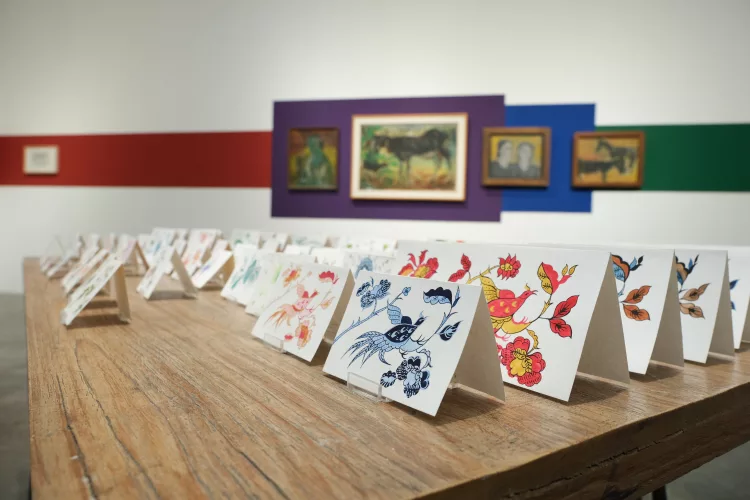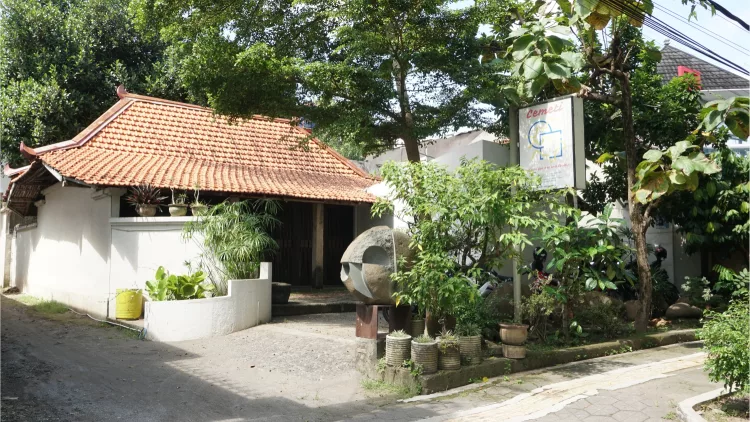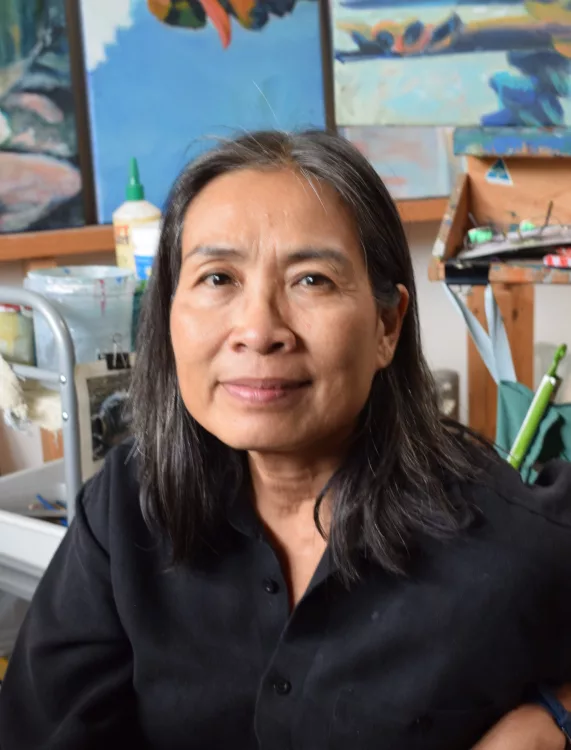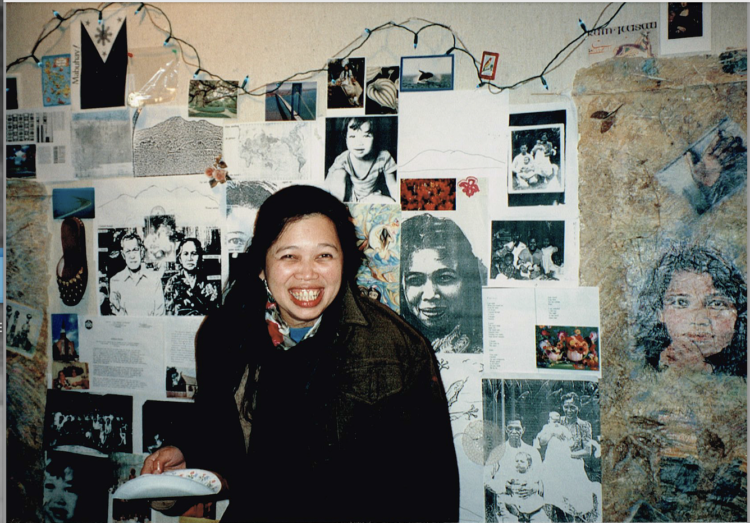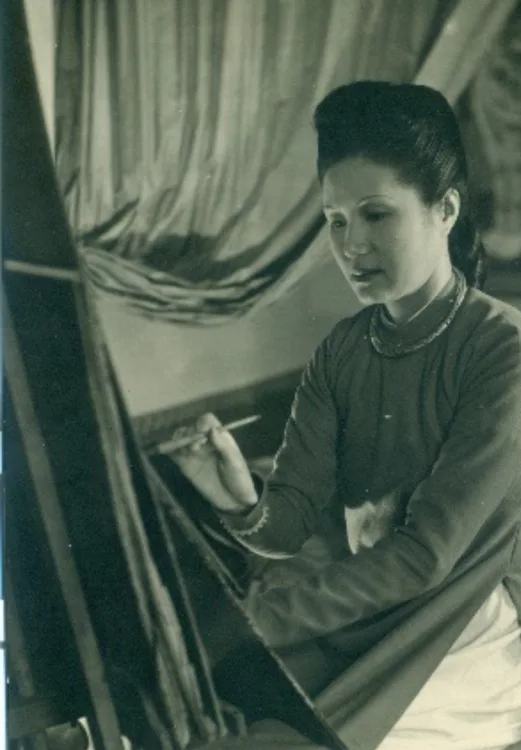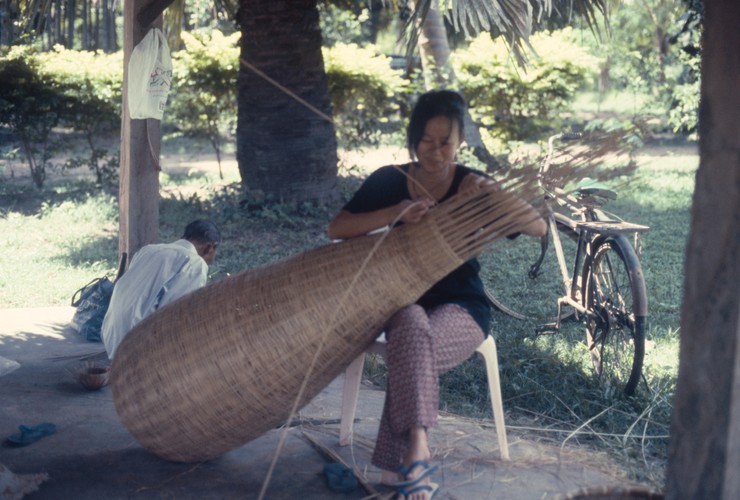
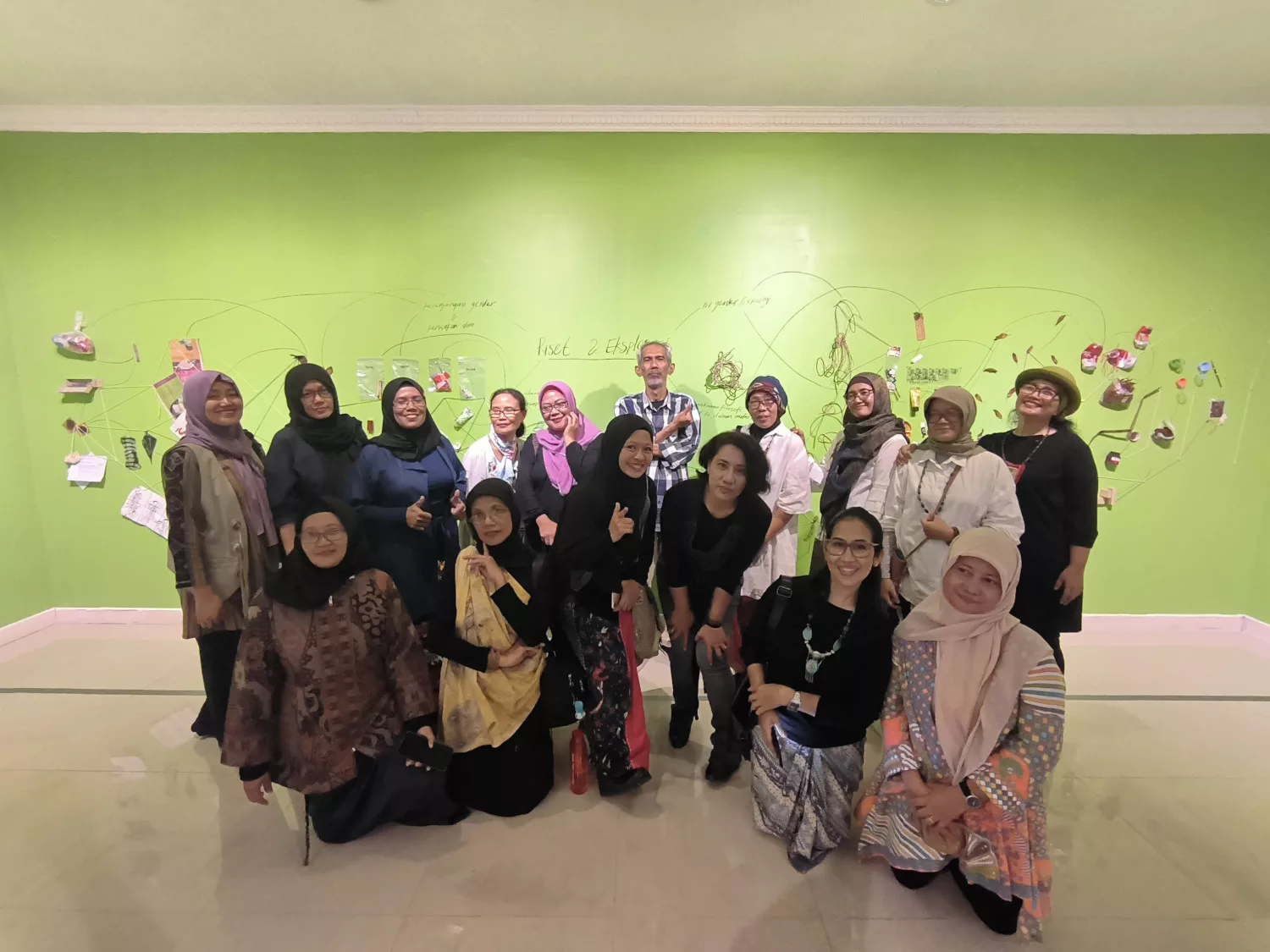
Plusieurs membres d’Empu Gampingan photographiés après le vernissage de l’exposition Tempatan avec le commissaire Frigidanto Agung, 2024 © Courtesy Empu Gampingan
Empu Gampingan se présente comme un groupe d’artistes femmes diplômées du département des beaux-arts et du design de l’Indonesian Institute of the Arts (FSRD-ISI) de Yogyakarta, entre 1990 et 1997. Le terme indonésien « Empu » désigne une personne hautement qualifiée dans un domaine ; c’est aussi la racine du mot « perempuan » (femme). Le campus de Gampingan (où était situé le FSRD-ISI avant son déménagement à Bantul en 1995) lie sur le plan affectif les vingt-sept membres d’Empu Gampingan, qui appartinrent à diverses promotions entre 1990 et 1997. Ce contexte historique fait d’Empu Gampingan un sujet unique, qui fit l’expérience directe de la restriction systématique des femmes à la sphère domestique par le régime de l’Ordre nouveau. Les récits de la vie domestique constituent souvent les thèmes centraux des expositions organisées par Empu Gampingan. Il est intéressant de noter que le groupe ne fut fondé par les artistes qu’en 2018, environ deux décennies après leurs études. Certaines avaient entre-temps connu de longues périodes d’inactivité sur le plan créatif. Cet article explore la manière dont les membres d’Empu Gampingan se saisissent collectivement de cette question durant leur temps libre, tout en se confrontant aux effets persistants du retranchement dans la sphère domestique imposé aux femmes par l’Ordre nouveau – car ces effets façonnent aujourd’hui encore le champ de l’art en Indonésie.
Empu Gampingan naquit de la solidarité entre des artistes femmes d’âge mûr qui essayaient de créer malgré leurs responsabilités domestiques. Selon Laila Tifah, membre du collectif, les femmes de sa génération partageaient le regret de voir nombre de leurs paires abandonner la création, en dépit de leurs fortes aspirations – elle qualifie cette situation de « désespoir1 ». Ce sentiment partagé devint le fondement de la solidarité de ces femmes et leur donna envie d’inciter leurs amies de longue date à se remettre à créer. Empu Gampingan fondé par dix-huit artistes issues de différents champs des arts visuels, ne cesse de croître, jusqu’à atteindre vingt-sept membres en 2025. En plus de ses activités de grande envergure, comme les expositions collectives, le groupe organise ponctuellement des événements publics, dont des sessions de dessin et des ateliers in situ. Les artistes explorent différent symboles, médiums et techniques, et puisent souvent leur inspiration dans l’univers domestique.
La première exposition d’Empu Gampingan, intitulée Estetika Domestika [Esthétique domestique], eut lieu à l’Institut français d’Indonésie de Yogyakarta, en 2018. Elle visait à donner aux routines domestiques et aux espaces quotidiens des membres du collectif une visibilité au sein de la galerie. Les expositions suivantes, organisées dans la même institution, continuent à dissoudre les frontières entre espace domestique et espace public. L’un des plus grands apports de ce groupe est l’enrichissement du spectre des récits sur l’espace domestique de nuances foncièrement personnelles, et la démonstration de la capacité des femmes à transcender les limites de la sphère privée.
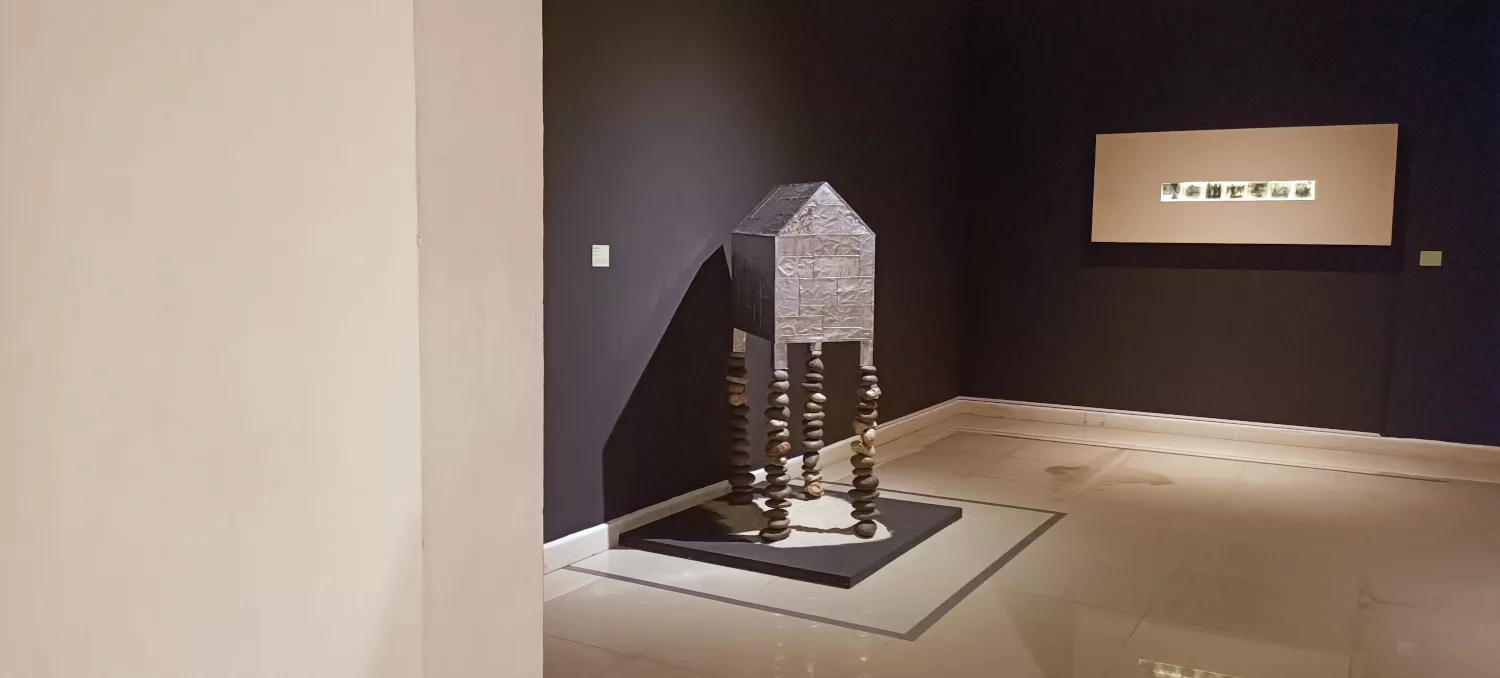
Vue de l’exposition du collectif Empu Gampingan Tempatan (2024). La photo montre des œuvres d’Utin Rini, Nest for The Rest, 2024, bois, pierre, fer, aluminium, 140 x 40 x 60 cm (à gauche) ; et Laila Tifah, 818, 2024, technique mixte : encre sur plastique et boîte en verre, 68 x 165 x 20 cm (à droite), Yogyakarta © Courtesy Empu Gampingan
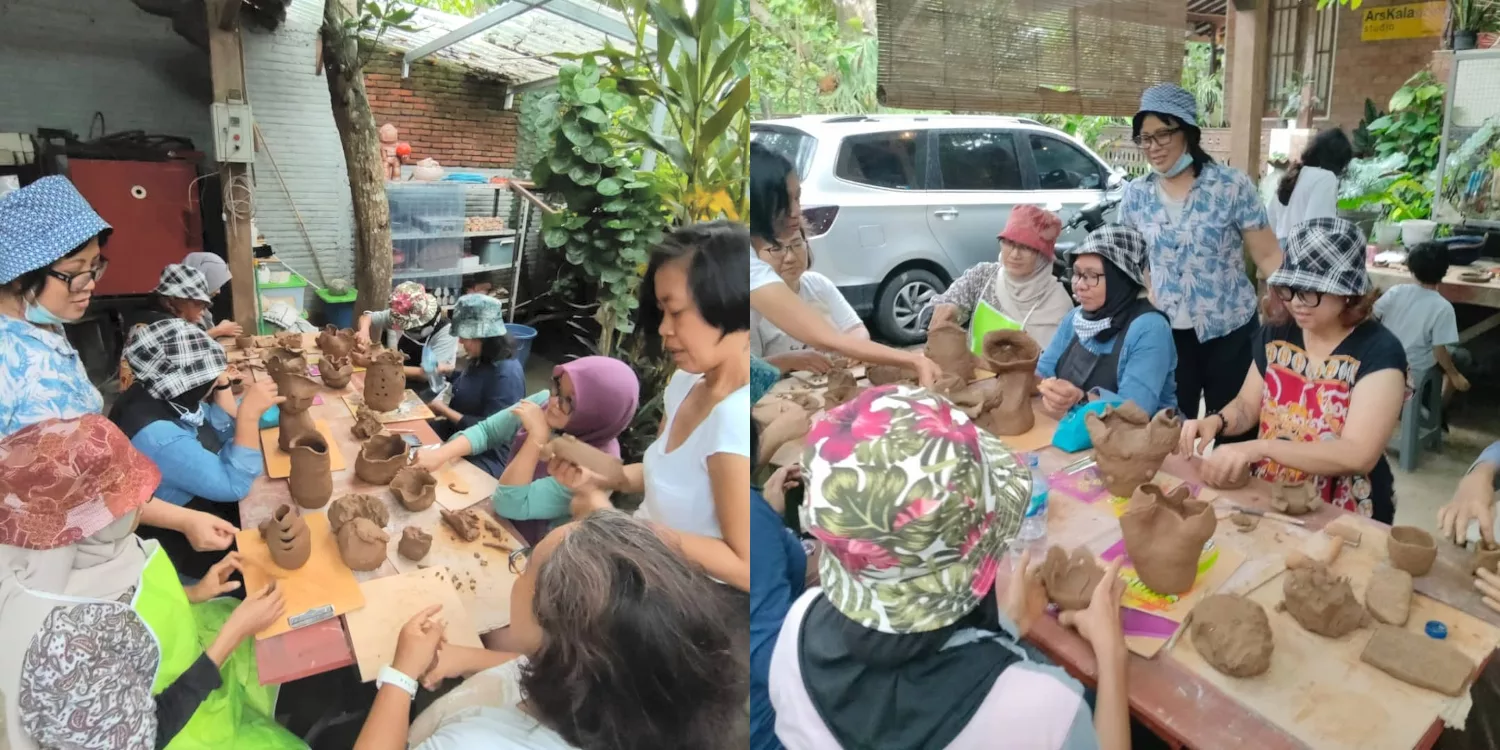
Atelier de céramique du collectif Empu Gampingan avec Endang Lestari, 2021 © Courtesy Empu Gampingan
Cet effort ressort clairement dans l’exposition Wadon [« Femme » en javanais], présentée au Fort Vredeburg Museum de Yogyakarta en 2022. Le titre est l’acronyme de trois slogans : « Woman Do Unlimited » [Les femmes n’ont pas de limites], « Wani Do Nglangkah » [Oser y aller] et « Wani Do Nrabas » [Oser percer]. L’exposition Republika Domestika [République domestique], qui se tint l’année suivante à Ruang Garasi, à Jakarta, réaffirmait la souveraineté des femmes, pour leur permettre de construire des identités fluides, au-delà des attentes sociétales les restreignant à la sphère domestique. Warana Warna [Décembre en couleurs], exposition présentée en 2024 à Plaza Indonesia, à Jakarta, célébrait la vie quotidienne d’artistes femmes d’âge mûr. À la Galerie nationale d’Indonésie de Jakarta, en 2024, l’exposition Tempatan [Vaisselle] adoptait le symbole du siwur (une louche en écorce de noix de coco utilisée pour transvaser de l’eau) comme une métaphore des mouvements distinctifs qu’effectuent les femmes entre la maison et l’espace public.
Empu Gampingan ne cherche pas à rejeter a priori la restriction des femmes à la sphère domestique, ni à reconstruire le récit de l’espace domestique imposé par l’Ordre nouveau par le biais d’une déclaration collective. En réalité, Empu Gampingan n’associe pas les récits sur l’espace domestique, centraux dans les idées du groupe, à l’Ordre nouveau. L’une de ses artistes, Kana Fuddy Prakoso, déclare : « Les femmes sont destinées à garder le nid. Dépasser cela est une tâche extrêmement difficile2. » Ce « destin » peut sembler pris pour acquis et hégémonique, mais c’est précisément ce qu’Empu Gampingan cherche à surpasser. Le groupe met en lumière le rôle duel joué par les femmes dans l’espace domestique et dans la sphère publique de l’art, et affirme leur force.
Si le cadre dans lequel évolue Empu Gampingan semble assez clair, ses membres ne souhaitent pas être étiquetées sous une idéologie perçue comme contraignante et trop politisée. Cette tendance reflète la réticence de nombre d’artistes femmes à s’identifier comme féministes sous l’Ordre nouveau. Dans ses recherches, Alia Swastika (2019) note que de telles étiquettes constituaient un obstacle à l’accès des artistes femmes aux expositions et au marché de l’art. L’Ordre nouveau cherchait à réprimer les mouvements féministes antérieurs à 1965 en effaçant systématiquement les noms de femmes de l’histoire culturelle de l’Indonésie, ce qui conduisit à des inégalités de genre dans les possibilités d’exposition publique3. En outre, l’intention de l’Ordre nouveau de restreindre les femmes à l’espace domestique eut un impact significatif sur la participation des artistes femmes à la sphère publique.
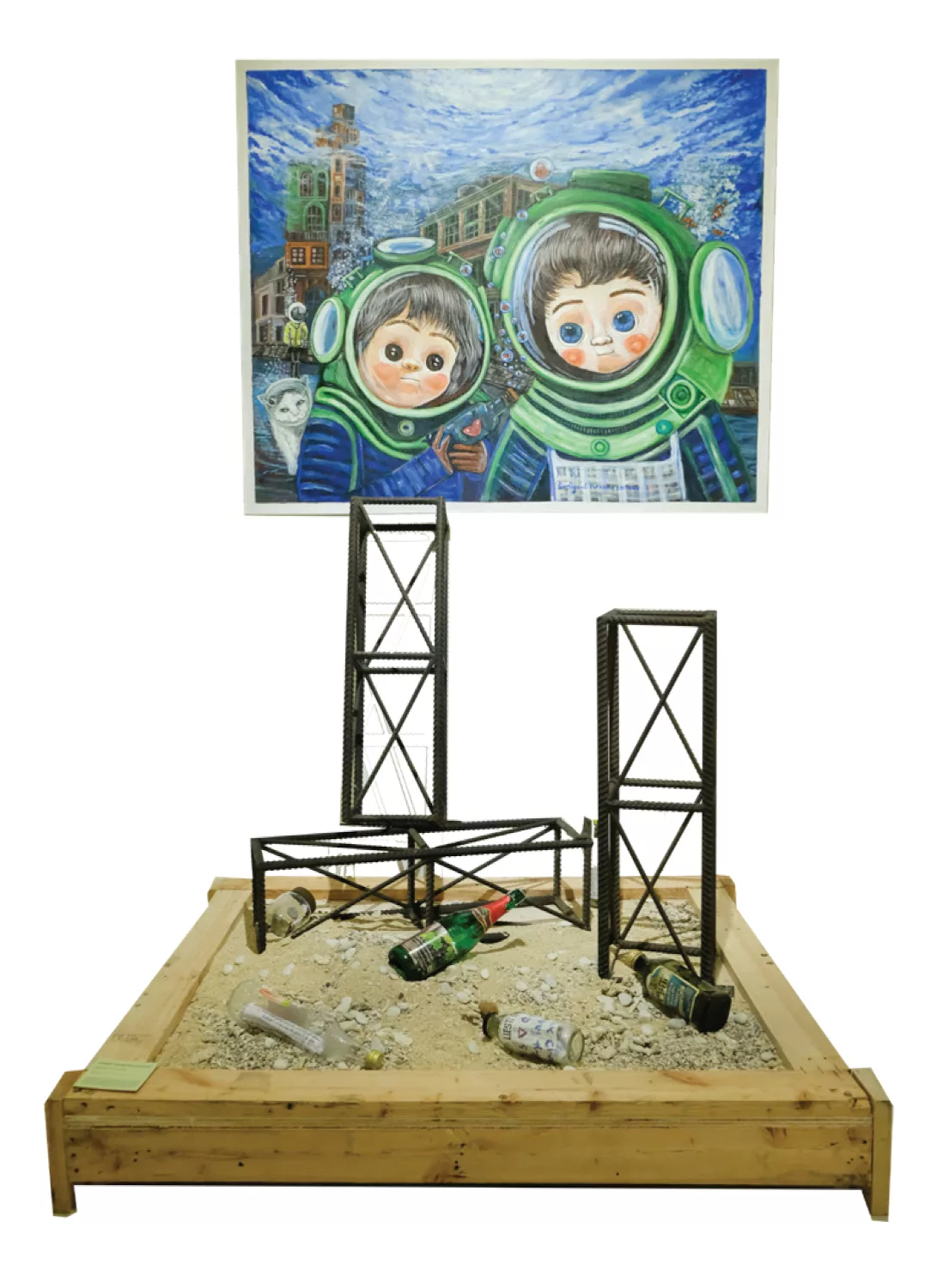
Liesti Yanti Purnomo, Message in the Bottle, 2024, technique mixte, 120 x 200 cm, Yogyakarta © Courtesy Liesti Yanti Purnomo
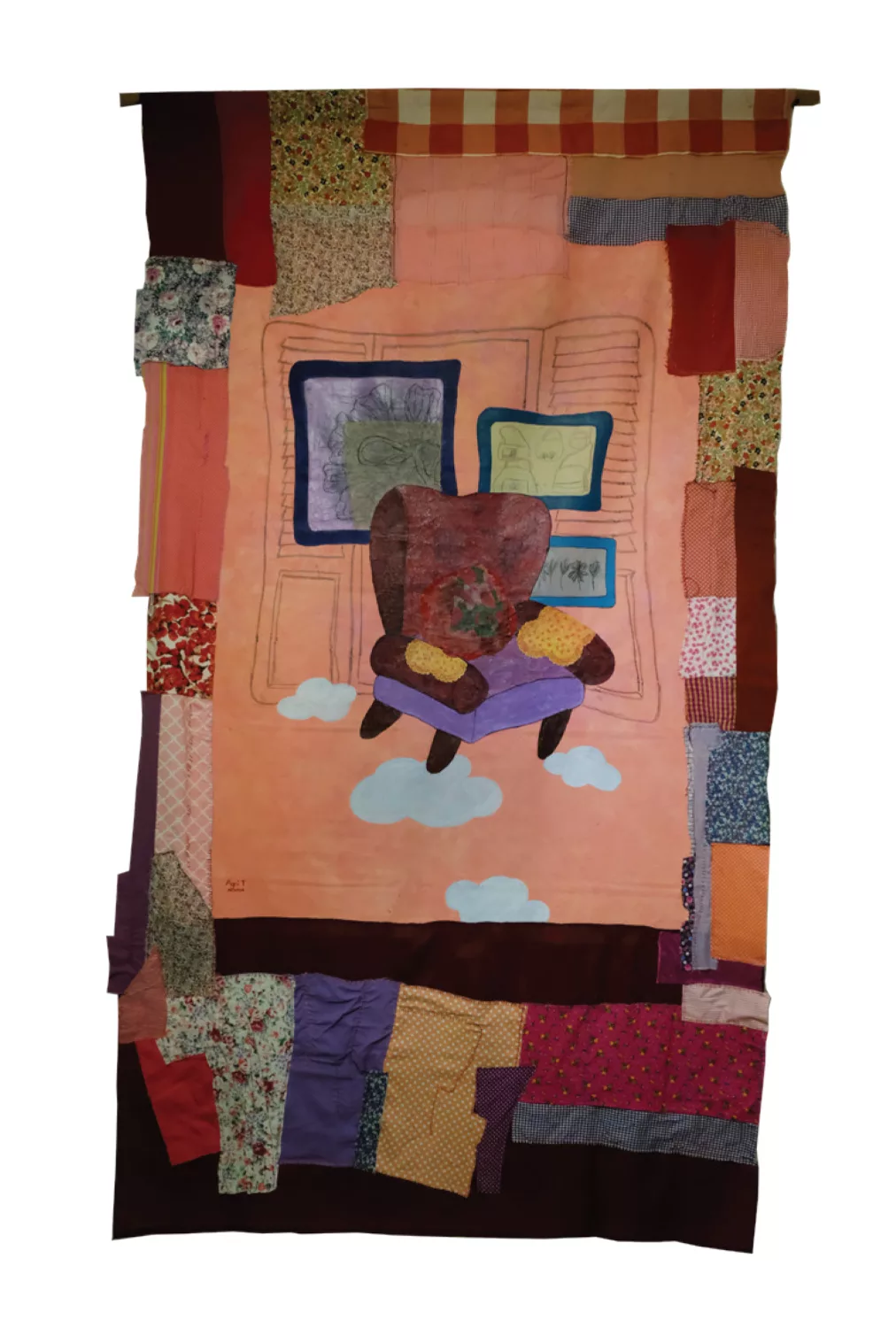
Agni Tripratiwi, Love Life Laugh, 2024, technique mixte, 150 x 275 cm, Malang © Courtesy Agni Tripratiwi
L’inactivité artistique de certaines membres d’Empu Gampingan peut être comprise comme l’un des effets durables du projet de restriction des femmes à la sphère domestique mis en œuvre par l’Ordre nouveau. Ce régime institutionnalisait une idéologie de genre baptisée par Julia Suryakusuma (2011) « ibuisme d’État », qui fait des femmes les maîtresses de maison, soutiens de leur mari et soignantes de la famille, afin d’assurer le progrès de la nation4. Dans le domaine de l’art, le développement du marché ainsi que la croissance économique de l’Indonésie contribuèrent également à créer un espace inégalitaire entre les hommes et les femmes. Le discours dominant sur la figure de « l’artiste » se construisit de façon à permettre aux hommes d’endosser des rôles de professionnels concourant pour des expositions, pour la représentation par des galeries et pour l’accès au marché. Dans le même temps, les femmes étaient souvent qualifiées d’« artistes amatrices » ou d’« artistes du dimanche »5.
Après la chute de l’Ordre nouveau en 1998, le climat de liberté d’expression permit le développement d’espaces artistiques alternatifs dans différentes villes à travers l’Indonésie, dont Yogyakarta. Le nombre de collectifs s’accrut dans la deuxième décennie de l’ère de la réforme (Reformasi), grâce à la multiplication des financements proposés par le gouvernement et par des institutions philanthropiques. Ces soutiens, sous la forme de mécénat, incitaient souvent les collectifs à adopter des programmes spécifiques, comme la durabilité et d’autres thèmes liés au développement. Empu Gampingan est l’un des collectifs apparus à cette époque, en partie en réponse au programme Danais Support du gouvernement du territoire spécial de Yogyakarta6. Cet effort s’avéra finalement vain, principalement car Empu Gampingan restait un collectif considéré comme « jeune » face à d’autres, déjà dotés d’un passif établi et d’un programme clairement défini.
Contrairement à la plupart des membres des collectifs nés de cette même vague, les artistes d’Empu Gampingan n’étaient plus « jeunes » quand elles commencèrent à s’organiser. Des raisons particulières justifient que les membres d’Empu Gampingan ne se soient réunies qu’après tant d’années. La plupart des étudiantes diplômées de l’ISI Yogyakarta de la promotion dont sont issues la majorité des artistes du collectif ne poursuivirent pas immédiatement de carrières professionnelles artistiques après leur diplôme, pour des motifs divers. Certaines choisirent de fonder une famille et repoussèrent à plus tard leurs ambitions créatrices. Liesti Yanti Purnomo, par exemple, ne se remit à l’art qu’à la fondation du collectif. Pour elle, il ne s’agissait pas seulement de s’arroger du temps libre en dehors des responsabilités domestiques. Elle attendait que ses enfants aient grandi et soient devenus indépendants, ce qui lui donna une plus grande liberté pour travailler en atelier.
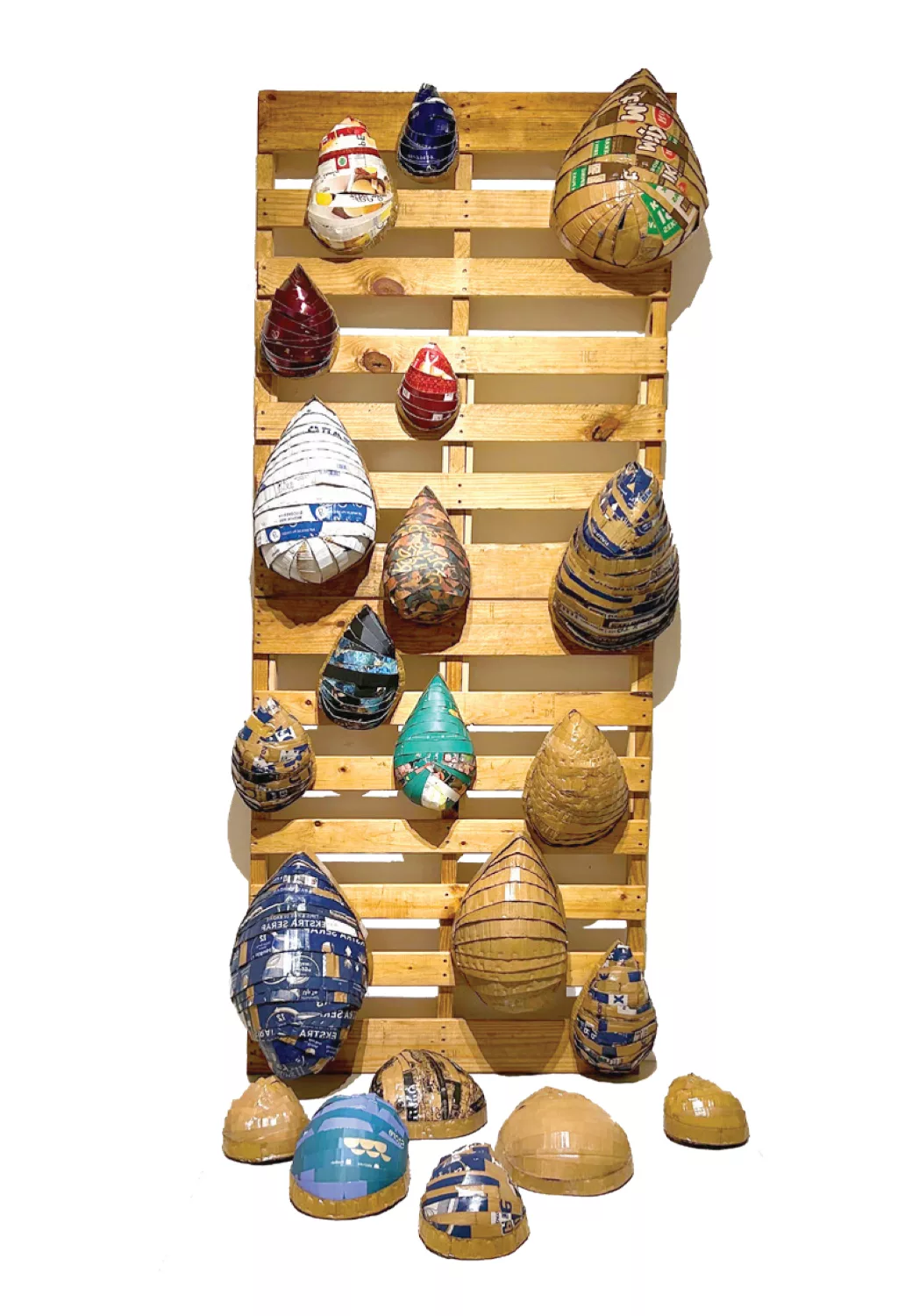
Kana Fuddy Prakoso, Kali Gelis, 2024, carton et bois, 224 x 102 x 10 cm, Jakarta Sud. Note : le titre Kali Gelis est tiré du nom d’une rivière rocheuse au débit rapide située à Kudus, qui peut être littéralement traduit par « rivière rapide » © Courtesy Kana Fuddy Prakoso
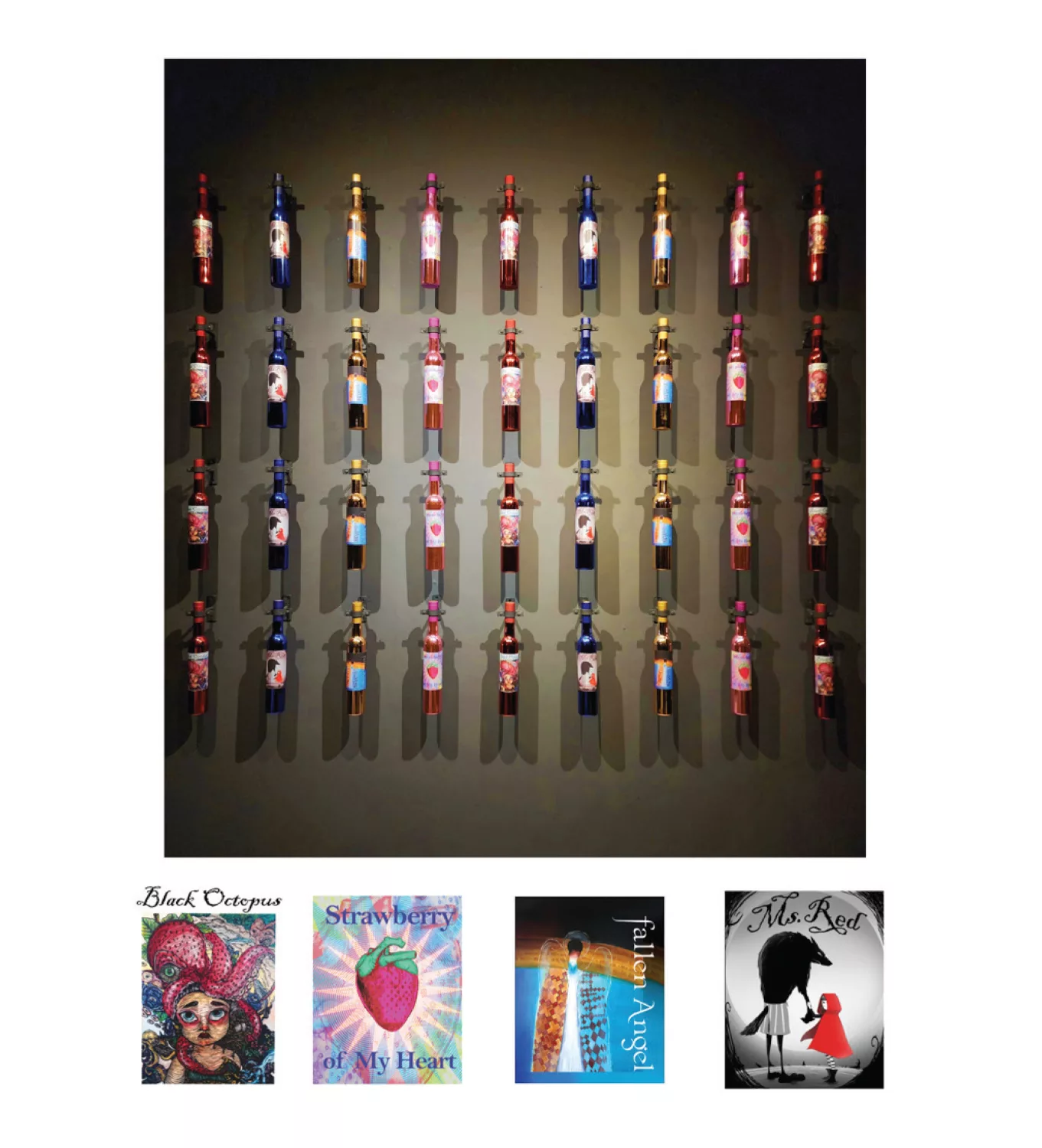
Retno Redwindsock, Indonesia Spice Up The World, 2024, installation de bouteilles en verre recouvertes d’un revêtement UV contenant des toniques fermentés bons pour la santé, 180 x 200 cm, Yogyakarta © Courtesy Retno Redwindsock
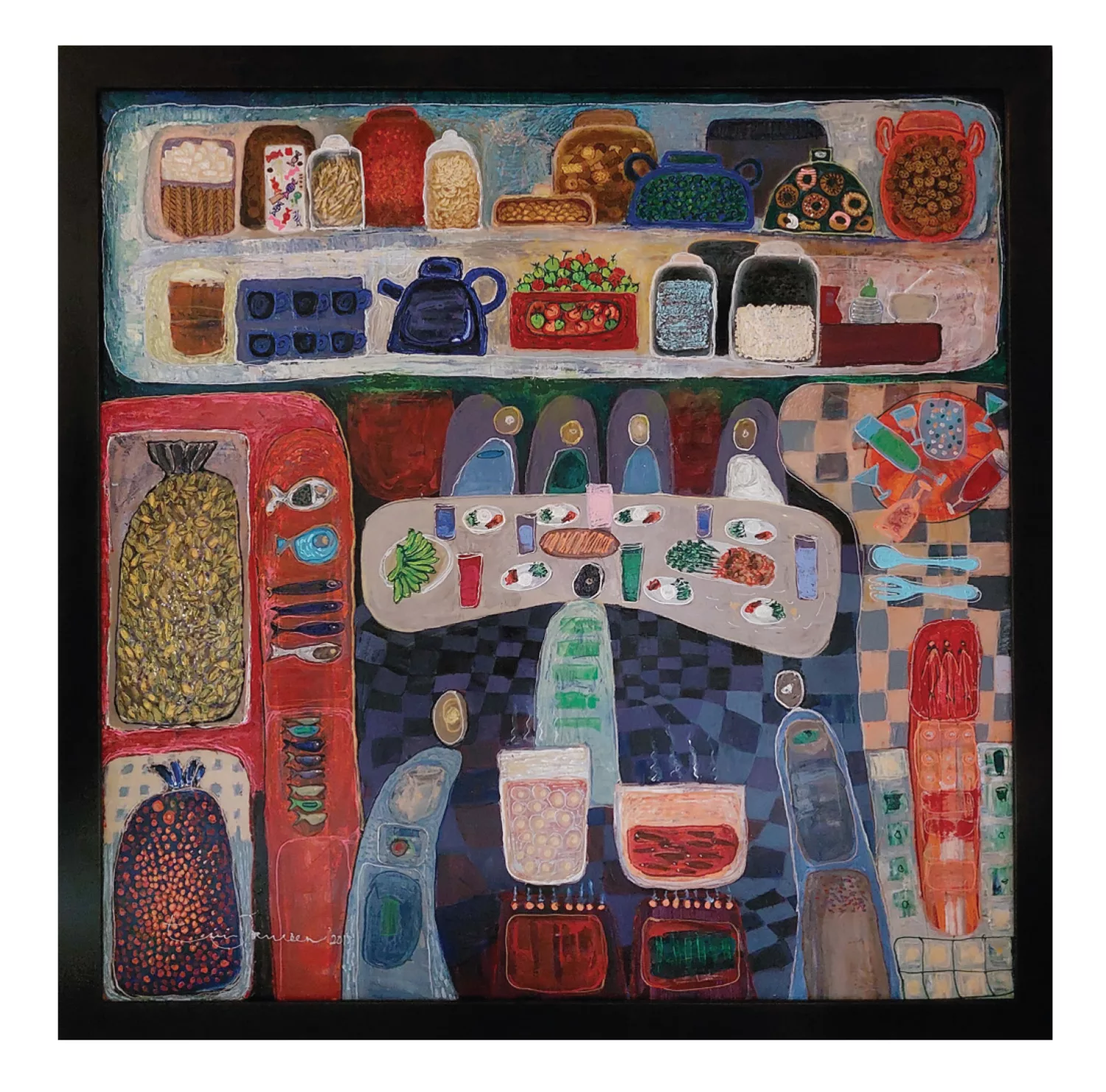
Tini Jameen, Dapur Ngebul [La Cuisine fume encore], 2018, acrylique sur toile, 100 x 100 cm, Yogyakarta. Remarque : « Dapur Ngebul » est une expression qui signifie la vie et la continuité au sein d’un foyer, marquée par la capacité à fournir de la nourriture © Courtesy Tini Jameen
Certaines artistes d’Empu Gampingan tentèrent de poursuivre leurs carrières plus tôt et de continuer à créer tout en assumant leurs responsabilités domestiques. L’une d’entre elles, Kana Fuddy Prakoso, s’illustra par son travail sur les possibilités plastiques du carton. Sa sixième exposition individuelle eut lieu en juin 2005. Lors d’une discussion clôturant la manifestation, l’artiste Ugo Untoro lui reprocha de ne pas explorer entièrement les potentialités du carton comme médium, mais de simplement l’utiliser comme un substitut de la toile. K. F. Prakoso répondit qu’elle serait ravie d’explorer ces différentes possibilités, mais qu’elle n’en avait tout simplement pas le temps. Dans son texte pour l’exposition de K. F. Prakoso, Yaksa Agus écrit que la trajectoire de l’artiste est pavée d’une éthique qui excède ses limites physiques, car l’artiste prend soin de son mari souffrant, de ses parents âgés et de son fils7. La simplicité de sa réponse nous invite à reconsidérer la manière dont le temps peut constituer un problème spécifique aux « artistes du dimanche ». Ce même problème apparaît également dans les conversations que nous avons menées avec d’autres artistes du collectif.
Réintégrer le monde de l’art après des années d’inactivité n’est pas chose aisée. Accumuler assez de capital symbolique pour être compétitif·ve en tant qu’artiste et pour s’assurer une position sur le marché de l’art prend du temps. Empu Gampingan n’est capable de se réunir qu’entre les activités domestiques de ses membres, ce qui limite leurs capacités à prendre part aux discours contemporains et à saisir les opportunités de financement. La réduction à la sphère domestique eut des effets durables sur les artistes femmes d’âge mûr, car elle les cantonna au statut d’« artistes du dimanche ». Par là même, elle cantonna Empu Gampingan au statut de « collectif du dimanche », si l’on peut le dire ainsi. Pourtant, le caractère collectif distinctif d’Empu Gampingan enrichit notre compréhension des mouvements pour les droits des femmes, qui émergèrent d’un besoin fondamental : s’entraider et ouvrir des possibilités au sein des modèles professionnels et institutionnels dominants dans le monde de l’art contemporain.
Hidayatul Azmi, dite Ami, cofonde avec des amies en 2015, à Bukittinggi (Sumatra occidental), le forum Ladang Rupa, un espace d’apprentissage alternatif centré sur le développement de modes d’appréciation de l’art. Elle obtient un diplôme en pédagogie artistique en 2019 et un master en études culturelles et médias en 2025. Ses champs d’intérêt actuels portent sur les dialogues interculturels et les pratiques artistiques collectives.