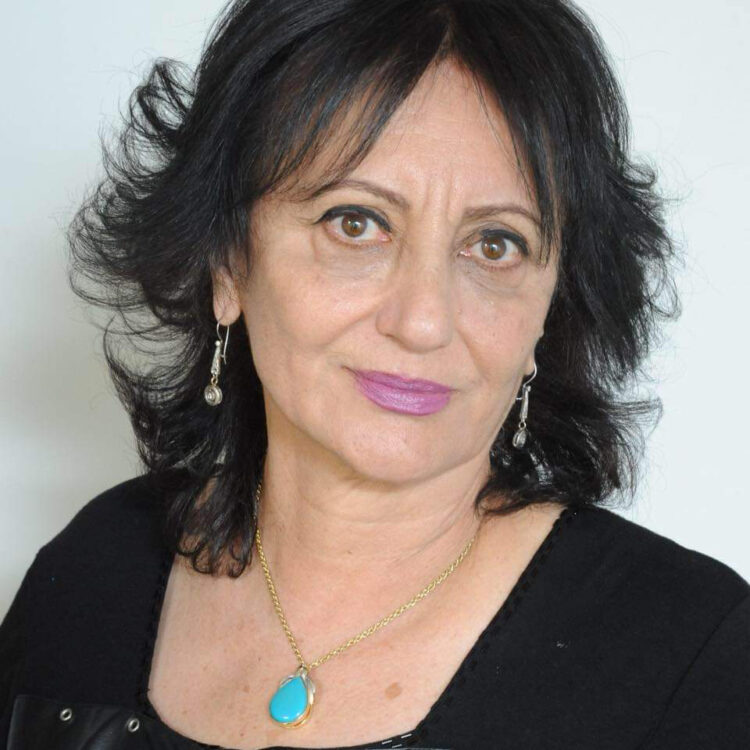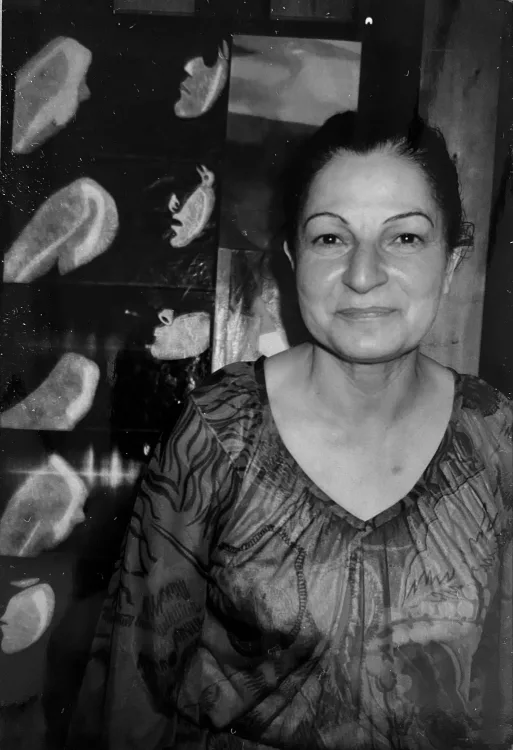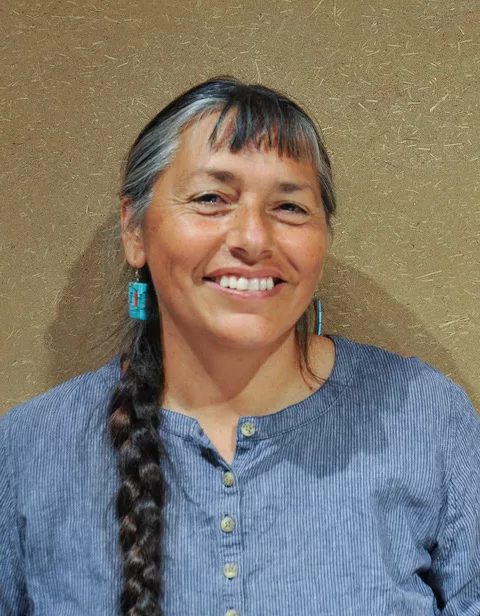
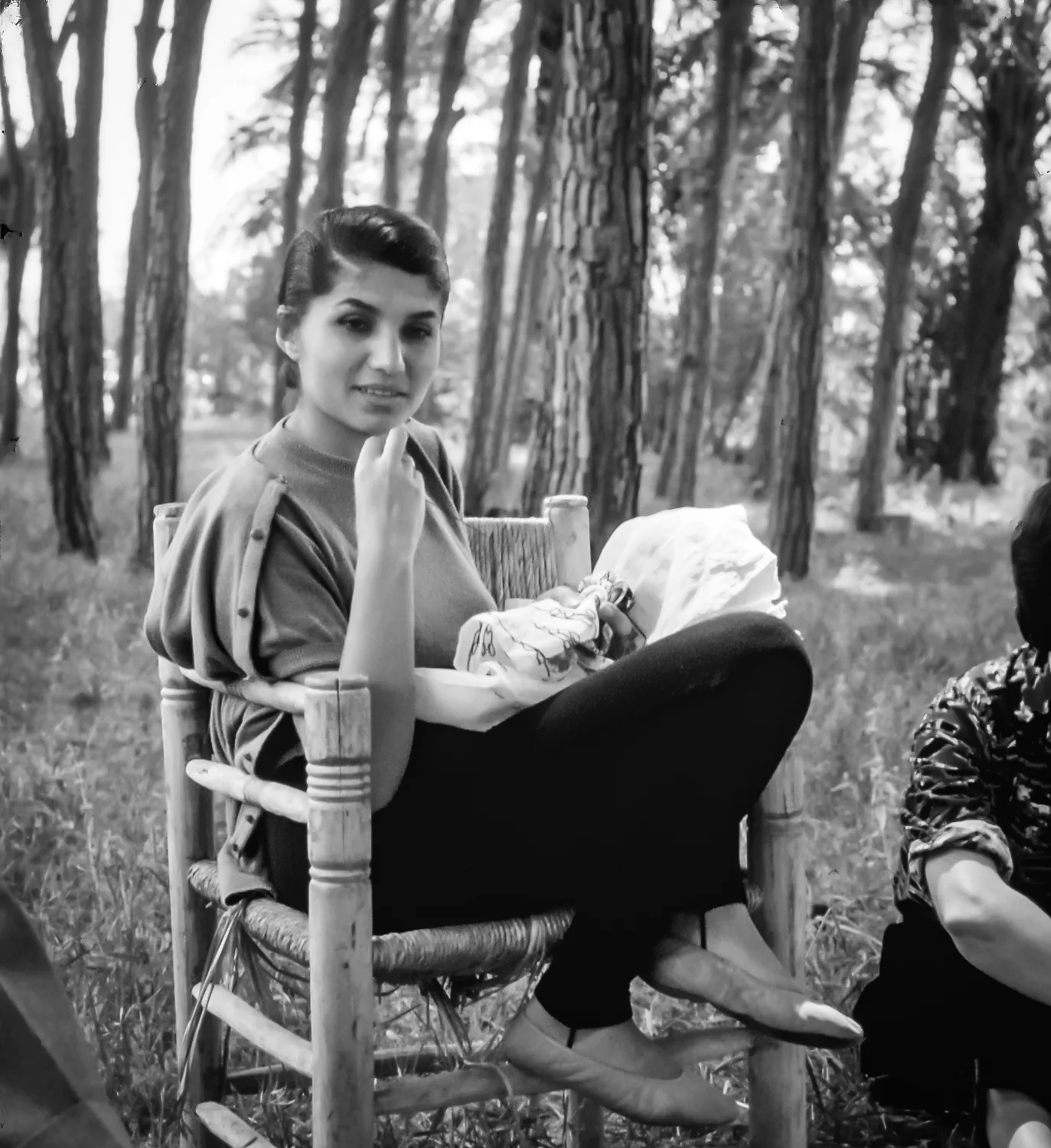
Portrait de Jumana El-Husseini
Boullata, Kamal, « Artists Re-Member Palestine in Beirut, » Journal of Palestine Studies 32, 4 (été 2003), p. 31-32
→Dedman, Rachel, « The Politicisation of Palestinian Embroidery Since 1948, » in Mahawatte, Royce & Jacki Willson (dir.), Dangerous Bodies: New Global Perspectives on Fashion and Transgression, Cham, Palgrave Macmillan, 2023, p. 97-116
→Halaby, Samia, A., Liberation Art of Palestine, New York, H.T.T.B. Publications, 2001
Jumana El-Husseini, Abdul Hameed Shoman Foundation, Amman, 1 février –1 mai 1991
→The First Biennale of Arab Art, Baghdad, mars 1974
→4e Salon d’Automne, Sursock Museum, Beirut, 15 décembre 1964 – 15 January 1965
Peintre, sculptrice et brodeuse palestinienne.
Jumana El-Husseini, aussi connue sous le nom de Jumana El-Husseini Bayazid, vient d’une famille engagée dans la politique et dans les arts. Son père, Jamal El-Husseini, est un leader du mouvement de résistance palestinienne dans les années 1930. Après l’exil de son père par les Britanniques en Rhodésie en 1945, la famille déménage à Bagdad et finit par s’installe au Liban en 1949. J. El-Husseini entreprend une formation en sciences politiques au Beirut College for Women en 1953. En 1956, elle change de cursus pour étudier les beaux-arts à l’American University of Beirut.
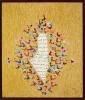
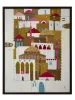
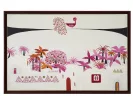
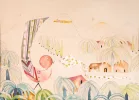
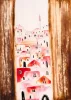
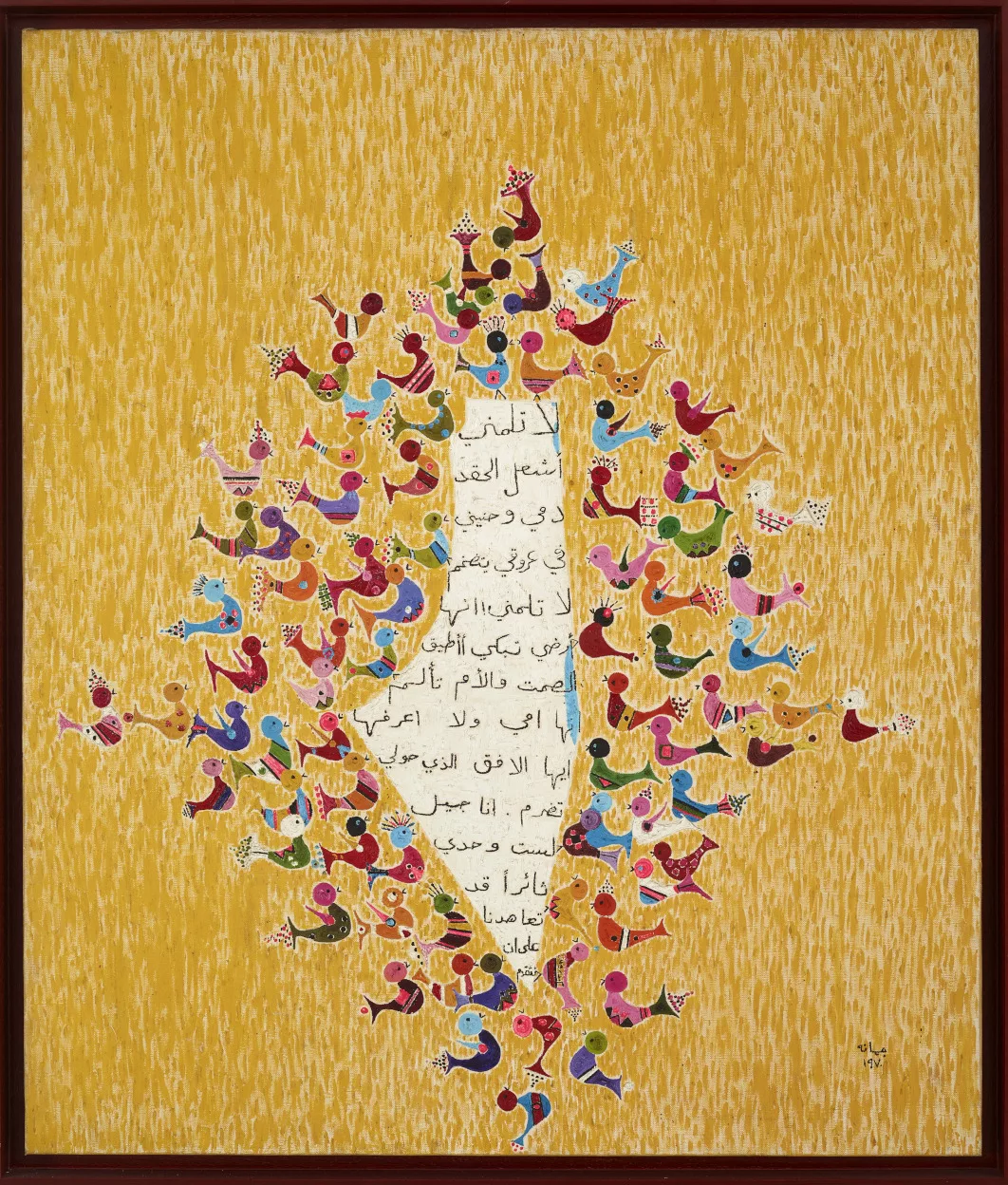
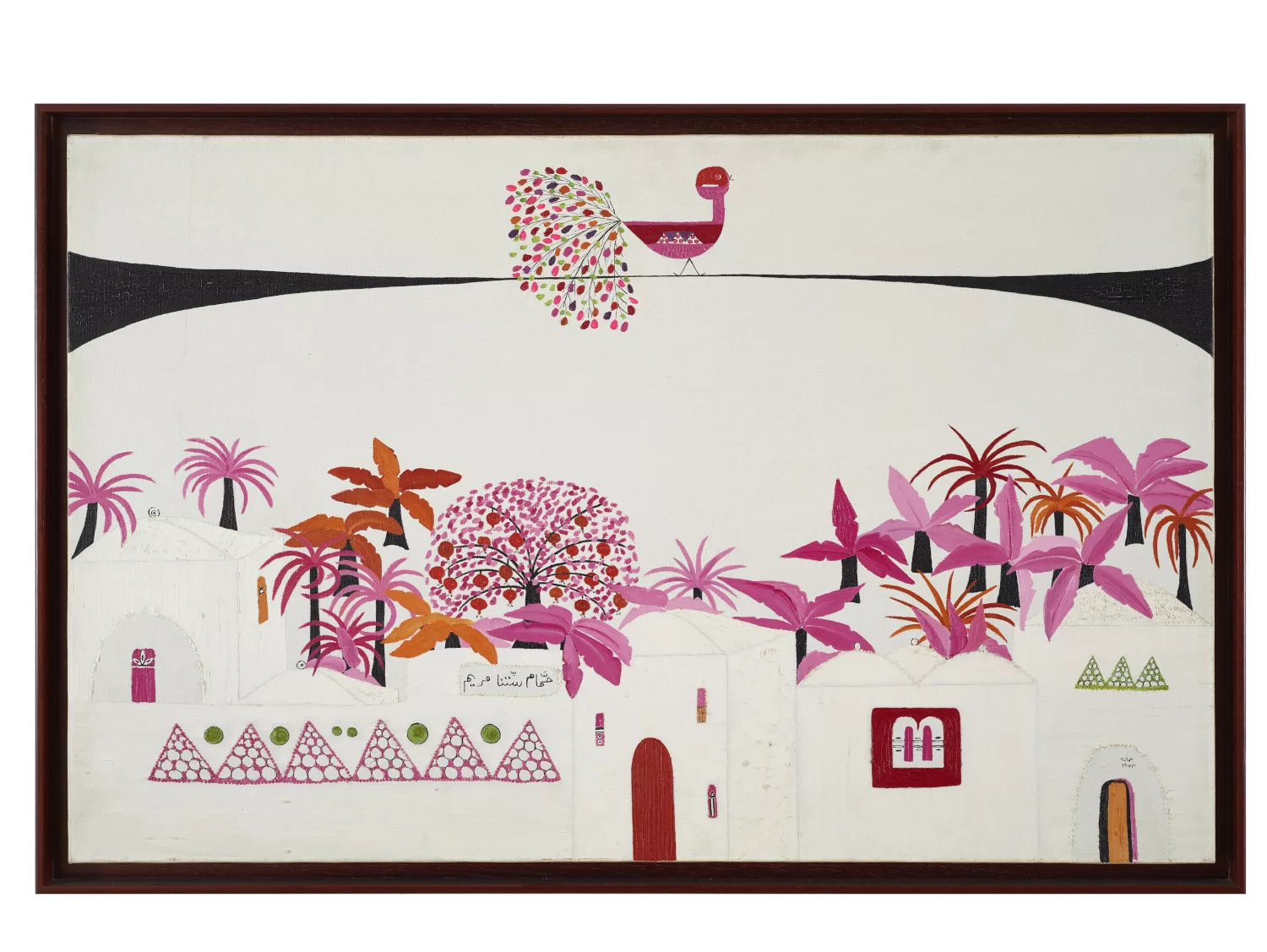
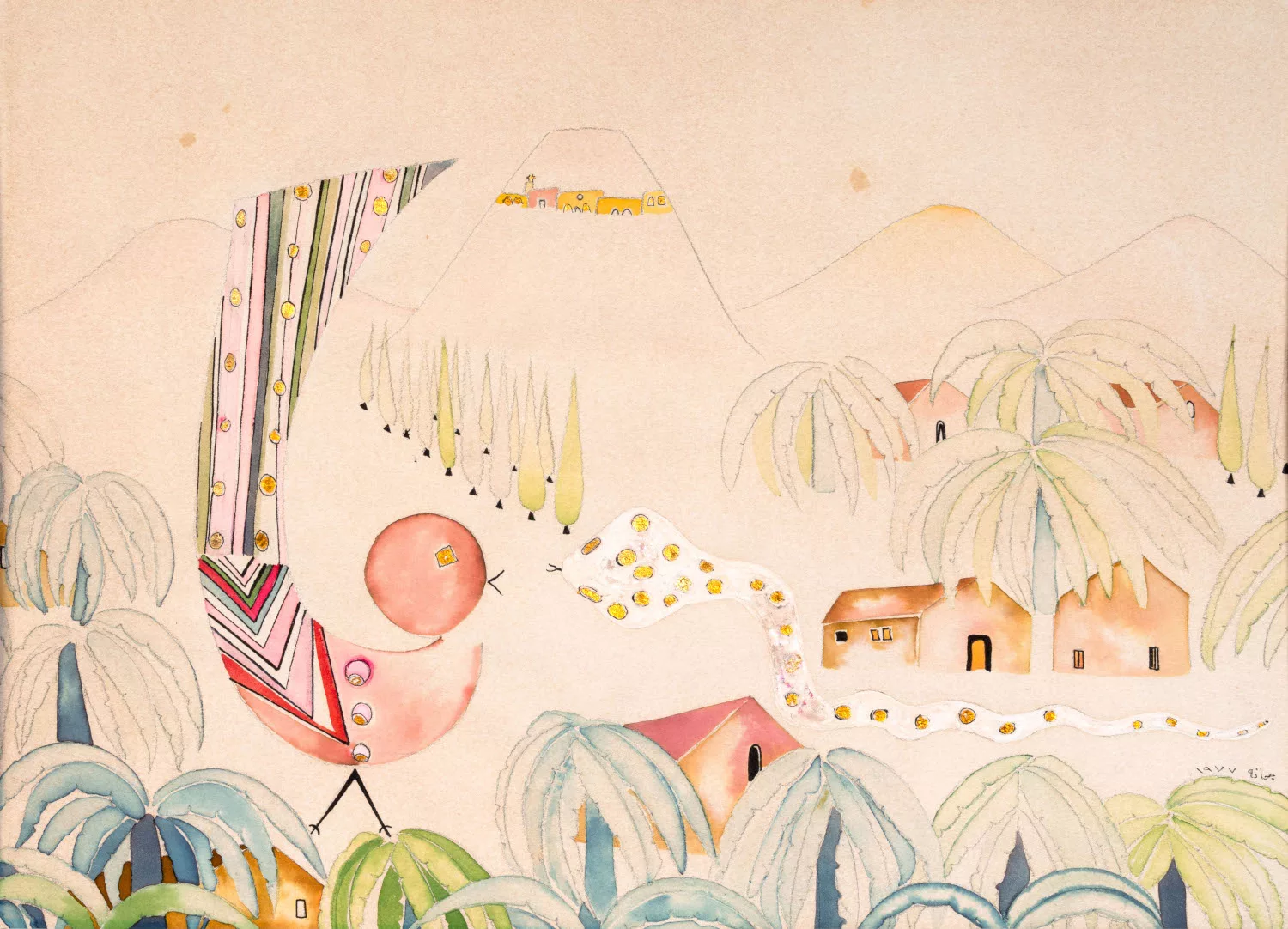
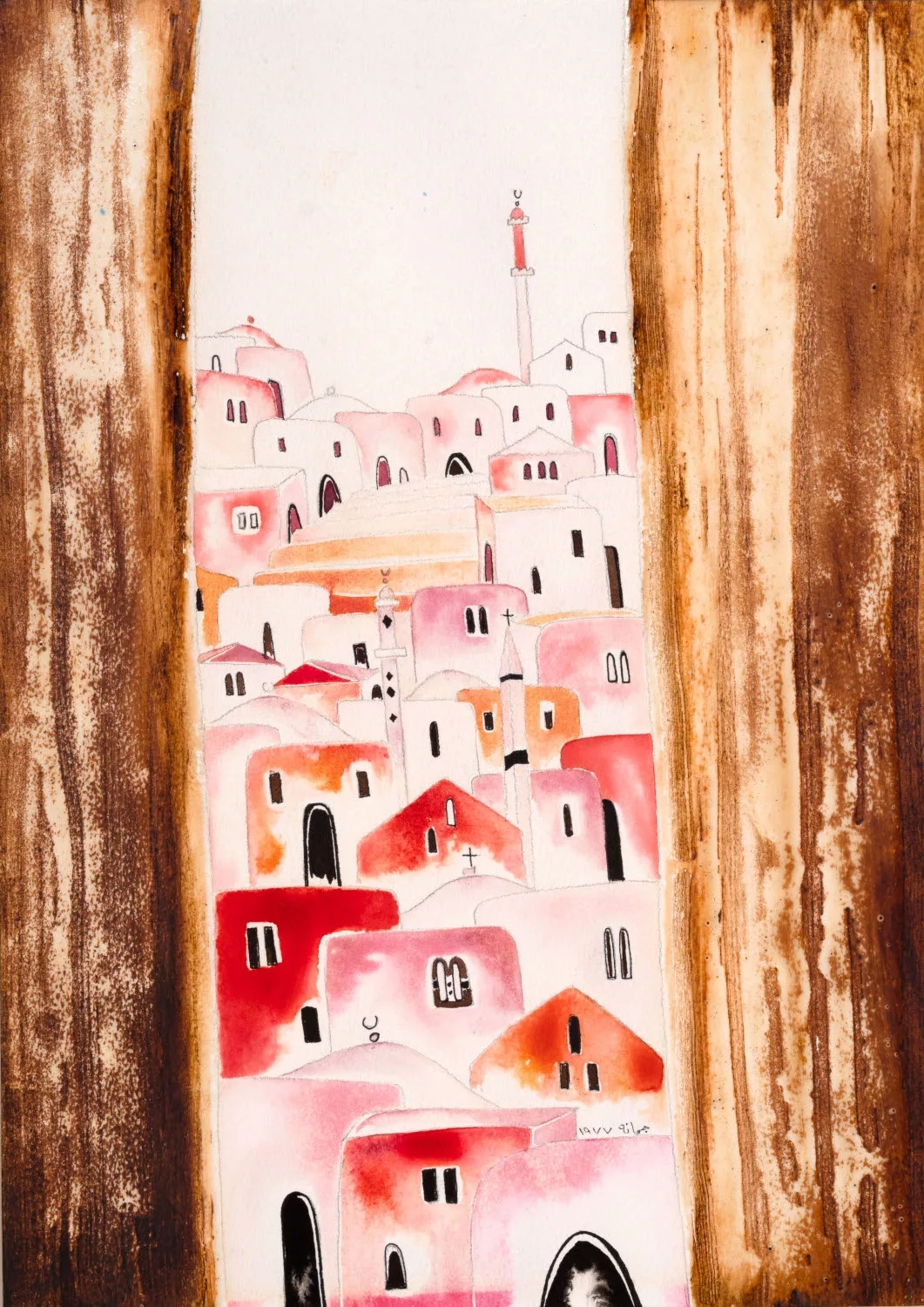
Ses premières œuvres, comme The Magic Horse (vers 1966) et Henna Night (1967), sont caractérisées par des cercles, des arcs et des divisions entre des couleurs vives, dont l’or, métaphores visuelles de Jérusalem et du désir de retour. Elles reflètent l’expérience du déplacement vécue par la communauté palestinienne. L’artiste tire aussi son inspiration de poètes tels que Samih al-Qassim (1939-2014) et Mahmoud Darwish (1941-2008), incluant leurs vers dans ses peintures dont les compositions se rapprochent du collage. Ses œuvres présentent souvent des oiseaux et des éléments traditionnels, comme dans The Spring of Palestine (1970), où les formes colorées se mêlent à des volatiles, des inscriptions et une carte, symbolisant la résilience de son pays natal.
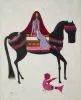
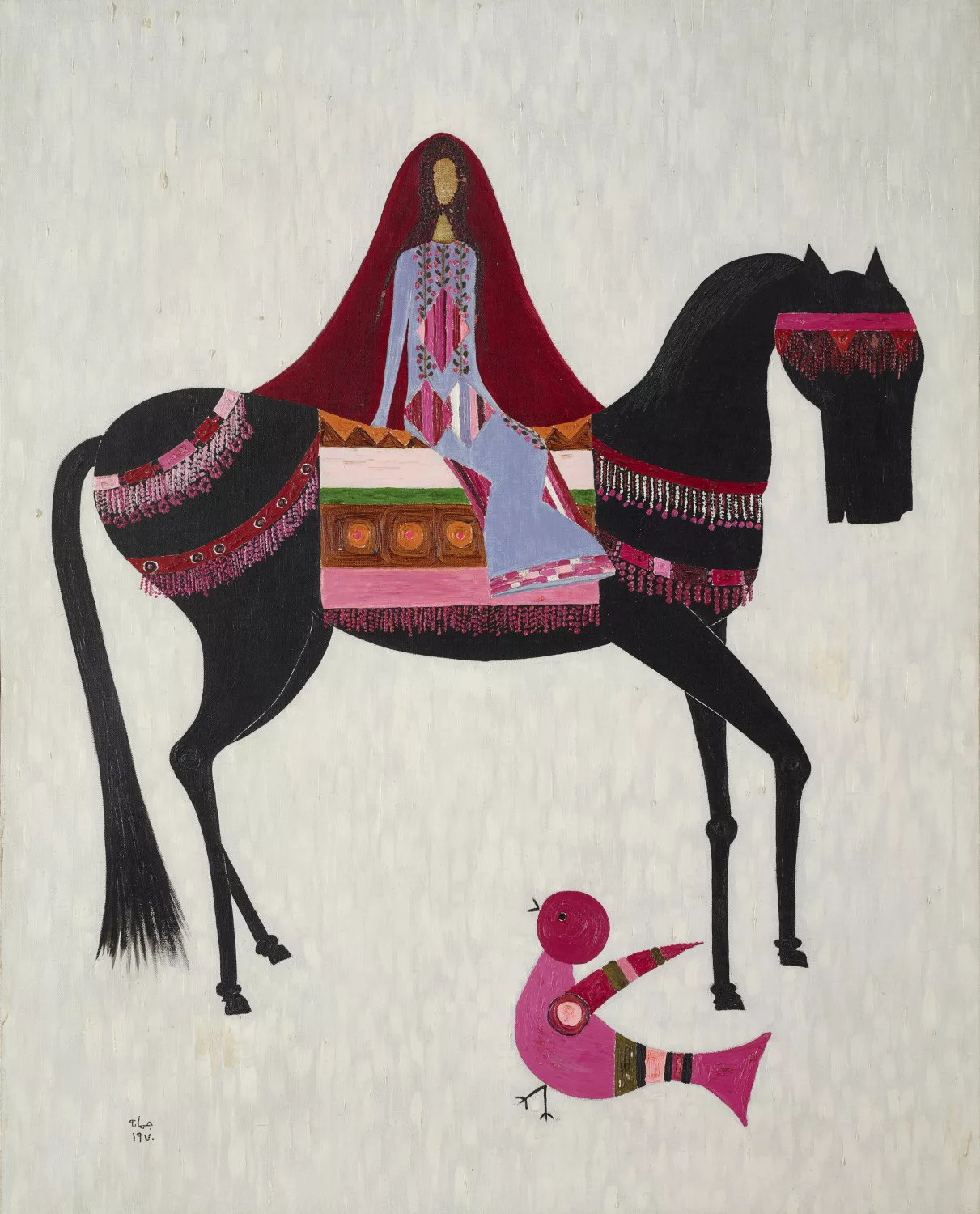
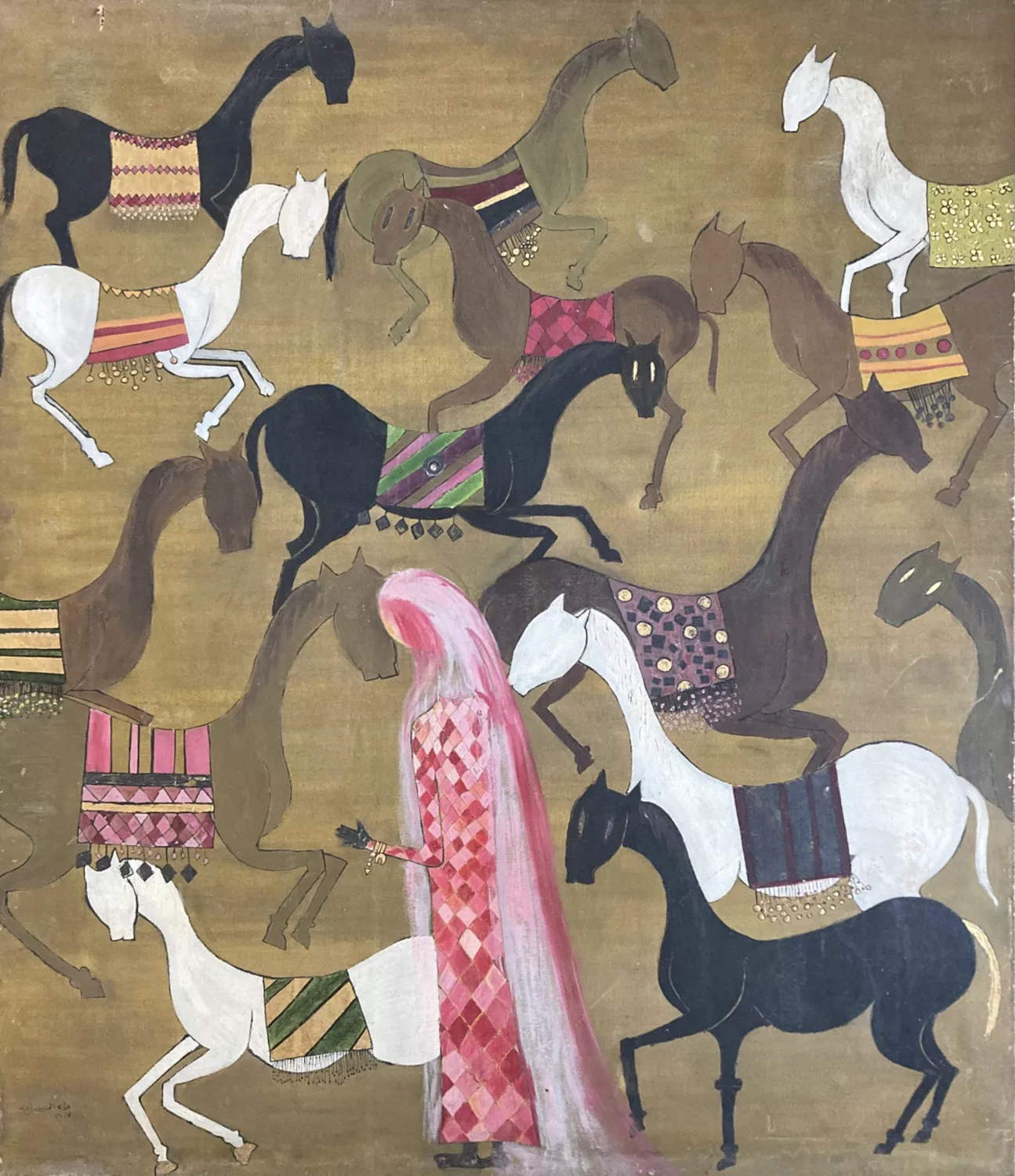
Au cours des années 1960 et 1970, les œuvres de J. El-Husseini sont présentées dans d’importantes expositions locales, comme le Salon d’automne du Sursock Museum. Elles figurent en couverture de Shu’un Filastiniyya [Affaires palestiniennes], revue publiée par l’Organisation de libération de la Palestine. Membre fondateur de l’Association pour le développement des camps palestiniens (INAASH), fondée en 1969 à Beyrouth par l’artiste Huguette Caland (1931-2019), J. El-Husseini enseigne les motifs de broderie traditionnels aux femmes palestiniennes de l’association. La broderie est aussi un élément clef de ses tableaux, comme Untitled (1970), qui représente une femme assise sur un cheval noir, toustes deux orné·es de motifs brodés.
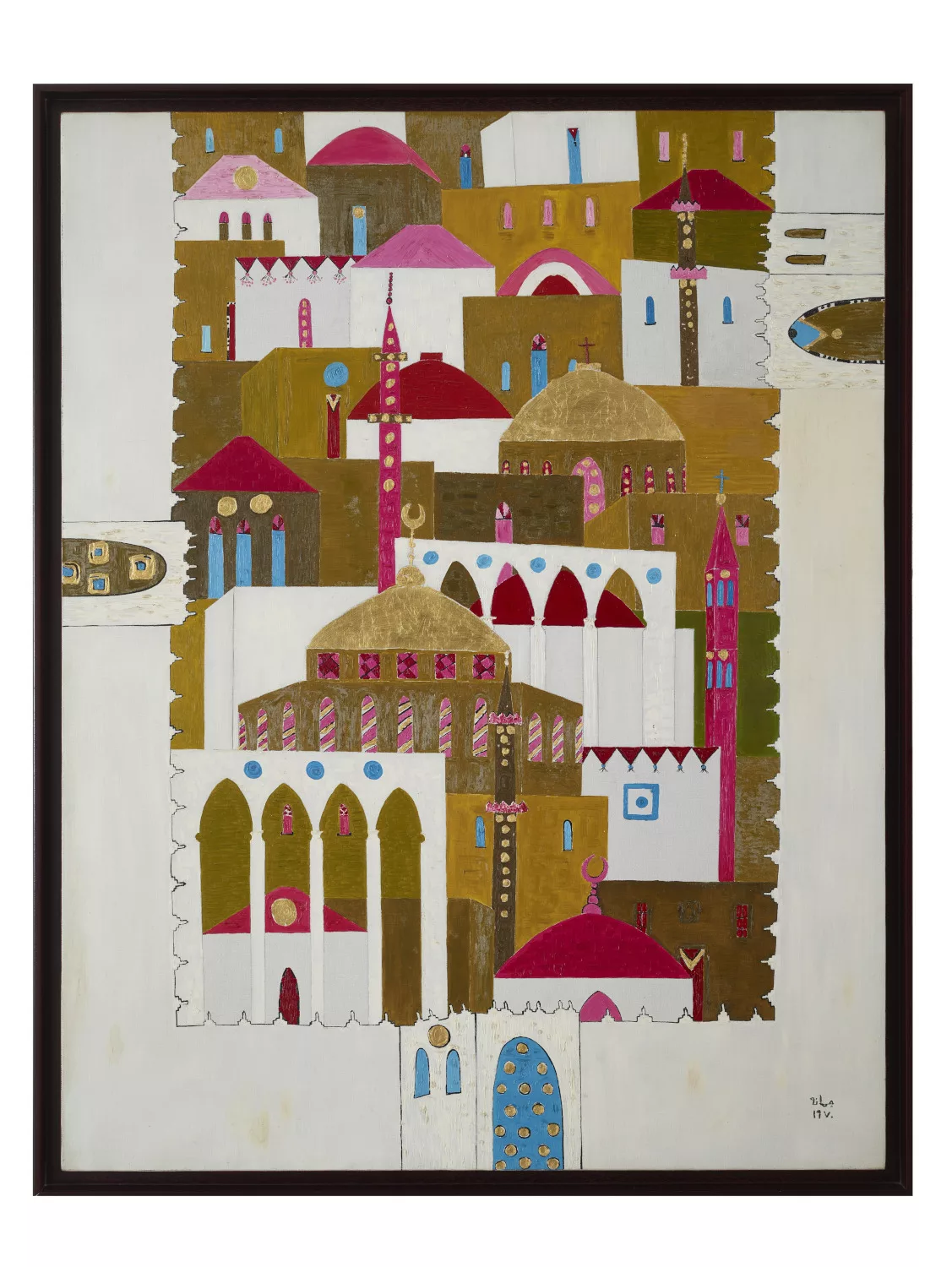
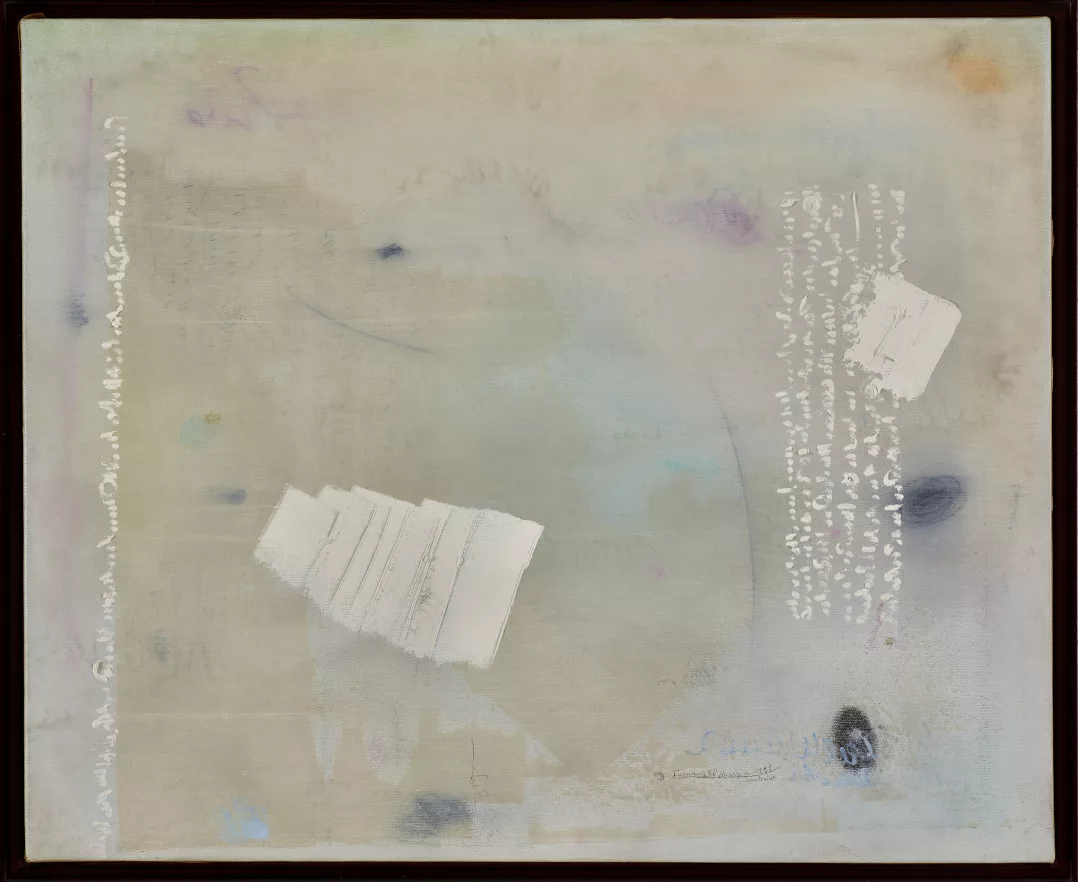
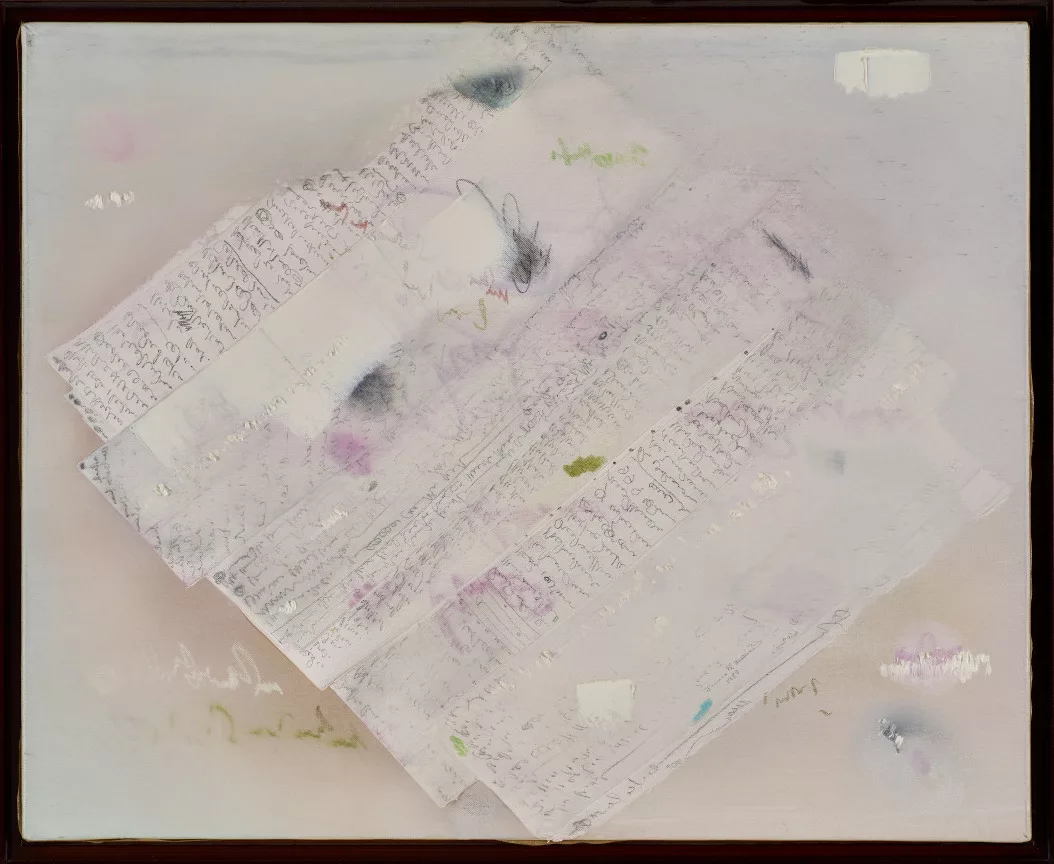
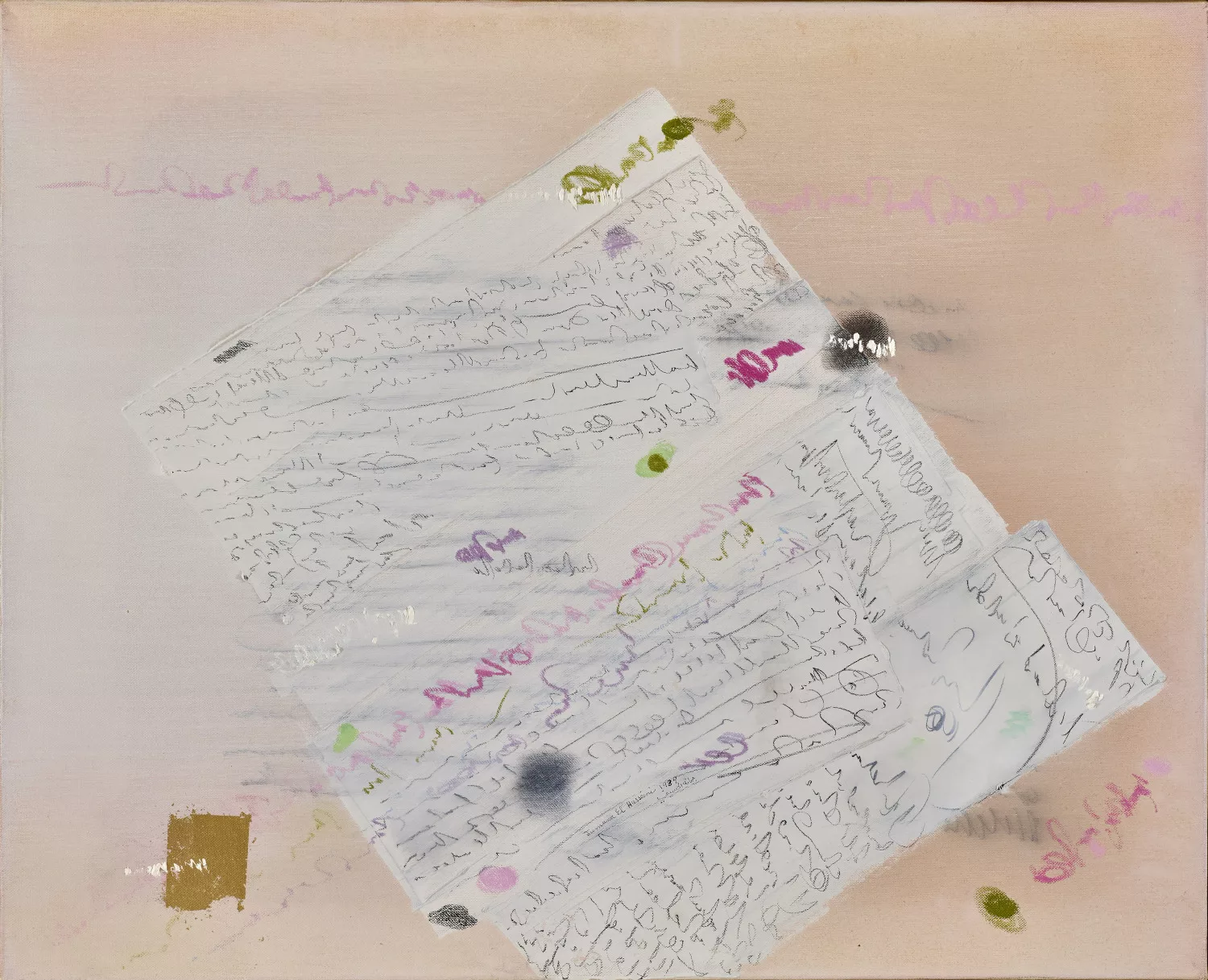
En 1982, l’invasion israélienne du Liban contraint J. El-Husseini à partir pour Paris. Ses études à l’École nationale supérieure des beaux-arts en 1990 influencent sa transition vers l’abstraction. La calligraphie et les motifs architecturaux, en particulier les références à la mosquée Al-Aqsa, deviennent des éléments centraux de son œuvre. Ils symbolisent son engagement à documenter la culture palestinienne en danger, tout en maintenant, par l’entremise des formes, un lien spirituel avec la terre.
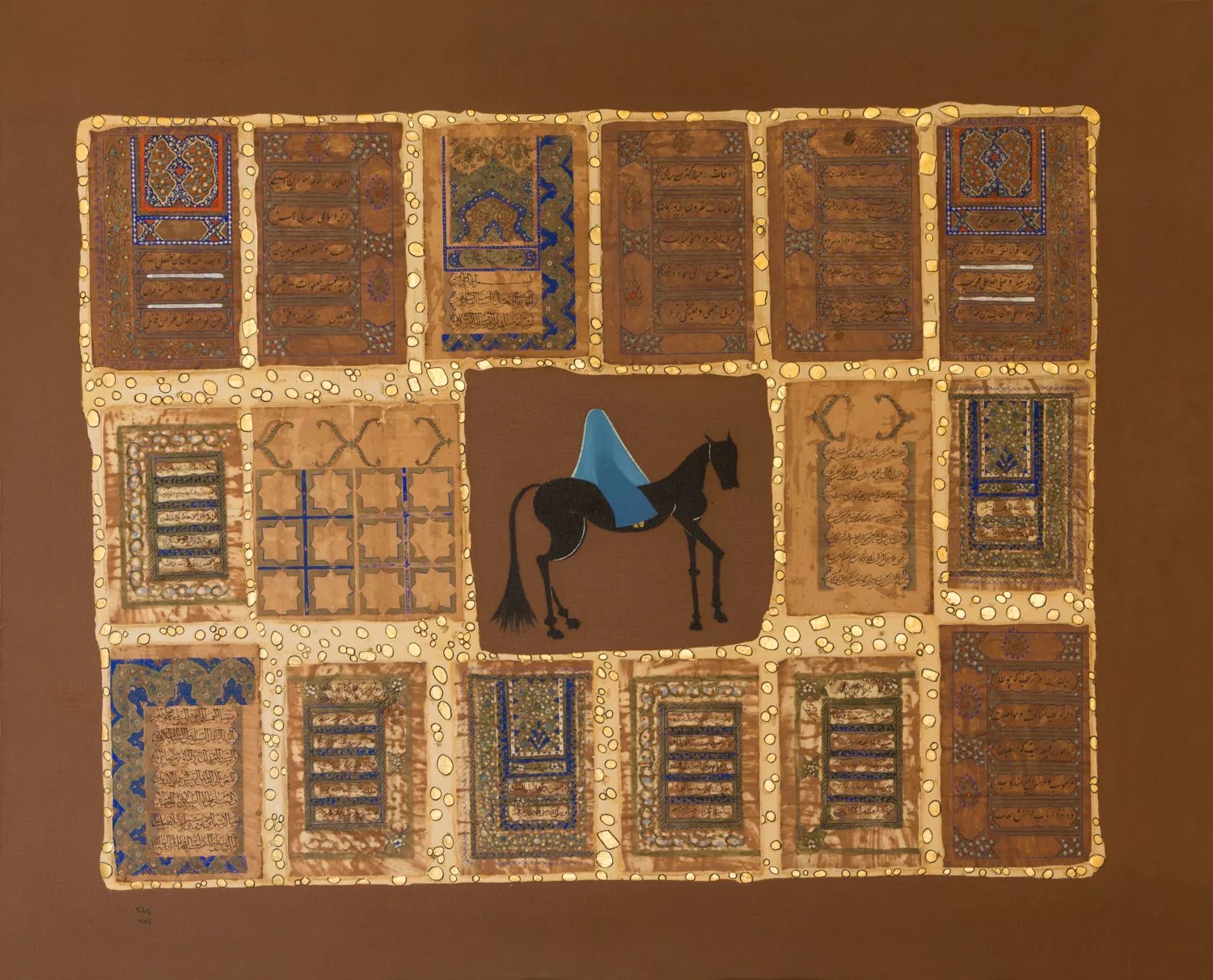
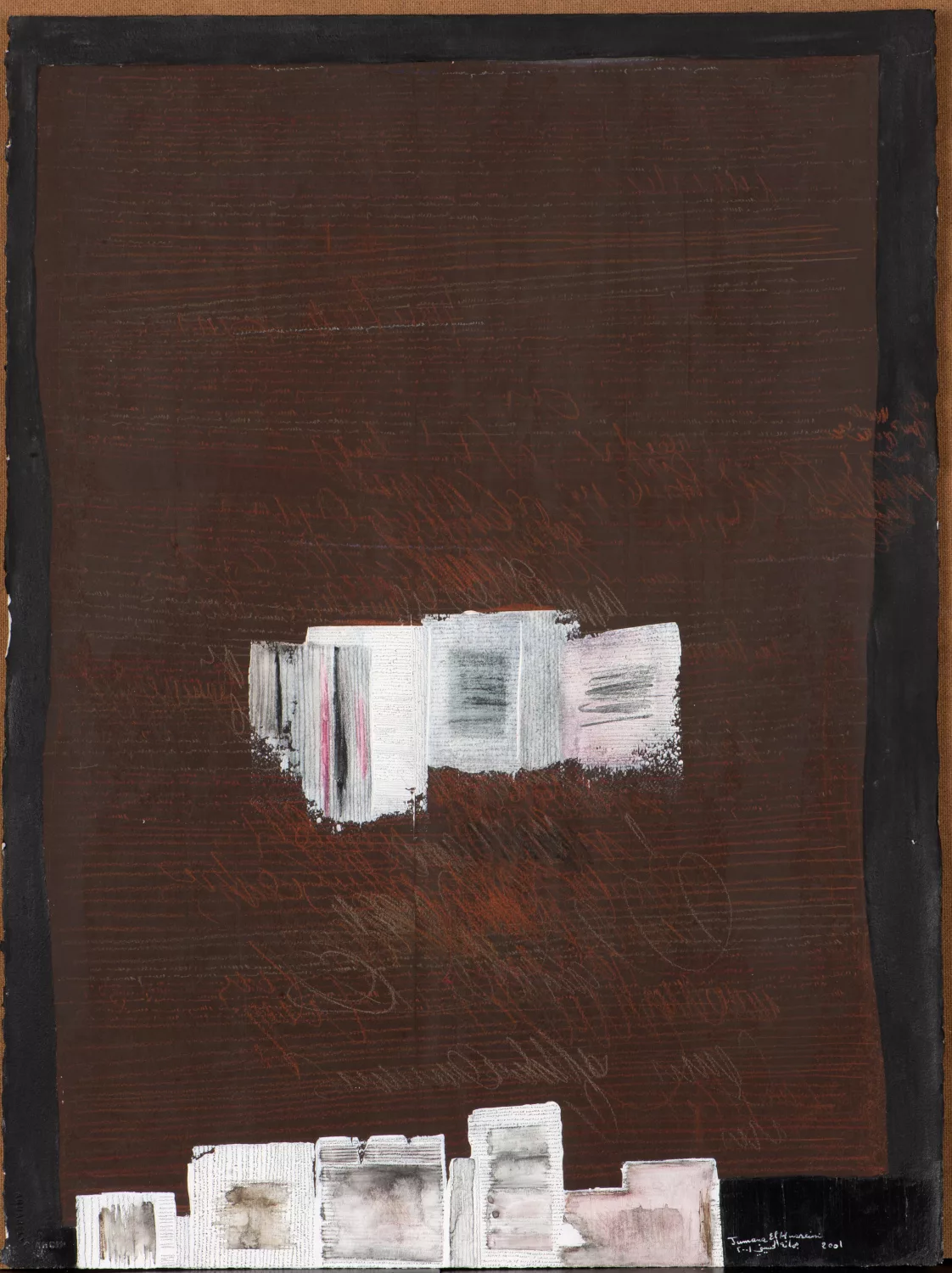
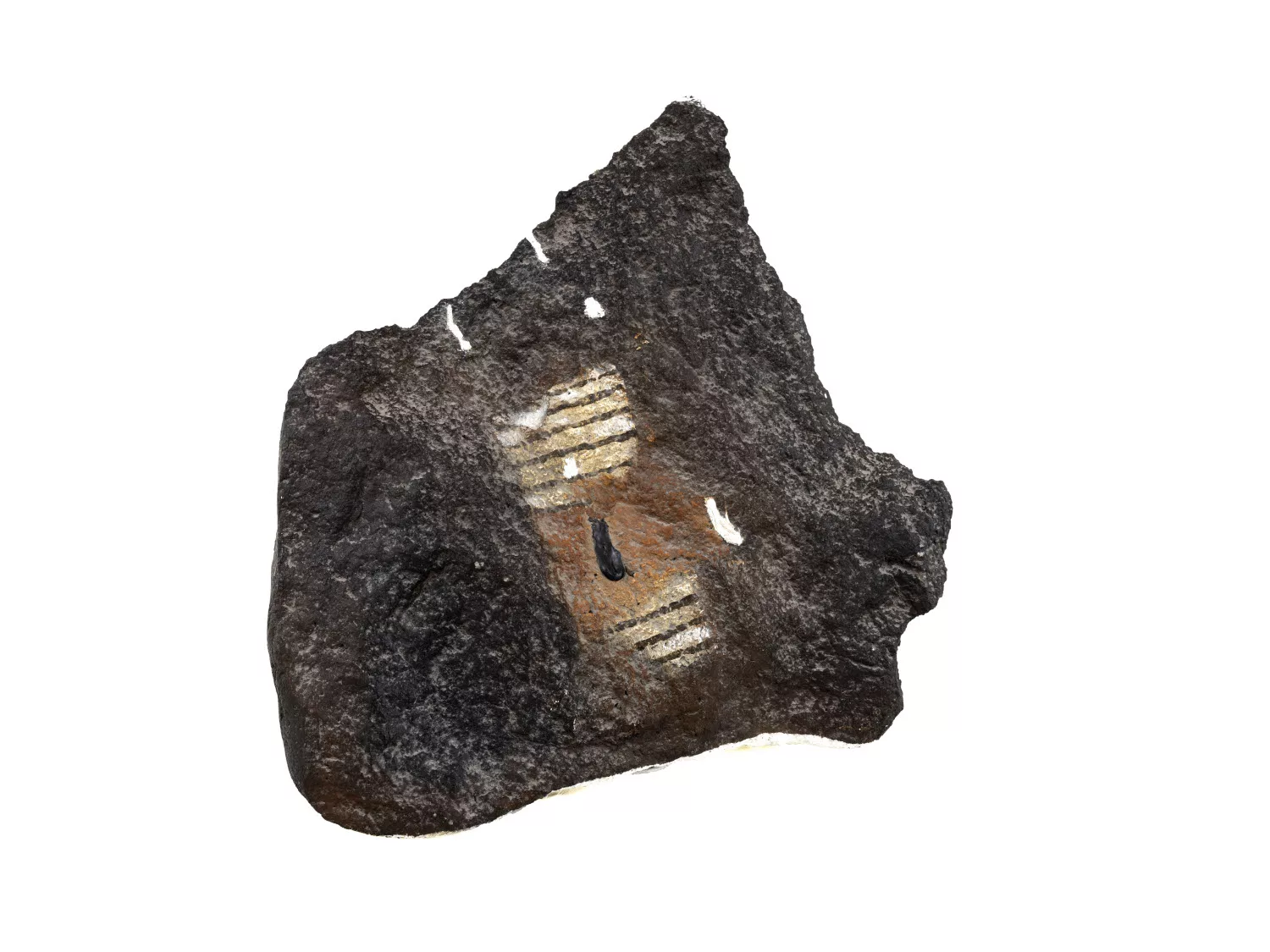
Durant la première intifada (1987-1993), son travail se fait plus abstrait, avec des teintes plus sombres et l’emploi de matériaux tels que le bois et les pierres de la mer Morte. Pour ses œuvres plus tardives, comme Untitled (1990), elle emploie la méthode du palimpseste, avec des motifs calligraphiques appliqués par strates, en hommage à l’histoire riche et complexe du Levant. Derrière la surface sont cachés des éléments du paysage et du patrimoine palestiniens – une technique que l’artiste décrit comme une « archéologie inversée ».
J. El-Husseini expose dans différents lieux à Beyrouth ainsi qu’à Amman et participe à d’importantes expositions collectives, dont la XXXVIIIeBiennale de Venise (1979) et des expositions itinérantes de la Smithsonian Institution (1987). Ses œuvres font partie de collections prestigieuses, comme celles de la Ramzi and Saeda Dalloul Art Foundation, de la Khalid Shoman Foundation et de la Barjeel Art Foundation.
Une notice réalisée dans le cadre du réseau académique d’AWARE, TEAM : Teaching, E-learning, Agency and Mentoring
© Archives of Women Artists, Research and Exhibitions, 2026