Desta Hagos


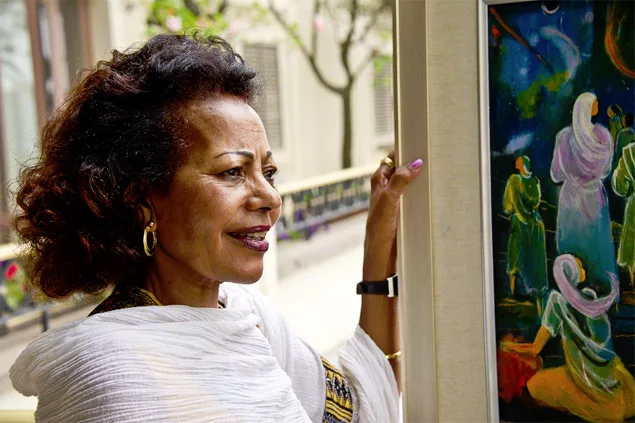
Desta Hagos © Desta Hagos
Taye Tadesse, Short Biographies of Some Ethiopian Artists. Part one (1869–1957) & two (1959–1984), Addis Ababa, Kuraz Publishing Agency, second edition, 1991, 250 p.
→Biasio, Elisabeth, “The burden of women: women artists in Ethiopia”, in Marcus, Harold G. (ed.), New trends in Ethiopian studies: papers of the 12th International Conference of Ethiopian Studies, Michigan State University, 5-10 September 1994, Lawrenceville, Red Sea Press, 1994, pp. 304-334
→Elizabeth Wolde Giorgis, Modernist art in Ethiopia, Athens, Ohio University Press, 2019, 339 p.
Retrospective solo exhibition, Modern Art Museum Gebre Kristos Desta Center (Goethe-Institut), Addis Ababa, Ethiopia, October 2025
→Return to the Roots: The Art of Desta Hagos ‘74, William Rolland Gallery of Fine Art, California Lutheran University, Thousand Oaks, USA, 11–21 December 2015
→Solo exhibition, Ras Hotel, Addis Ababa, Ethiopia, 1969
Ethiopian painter.
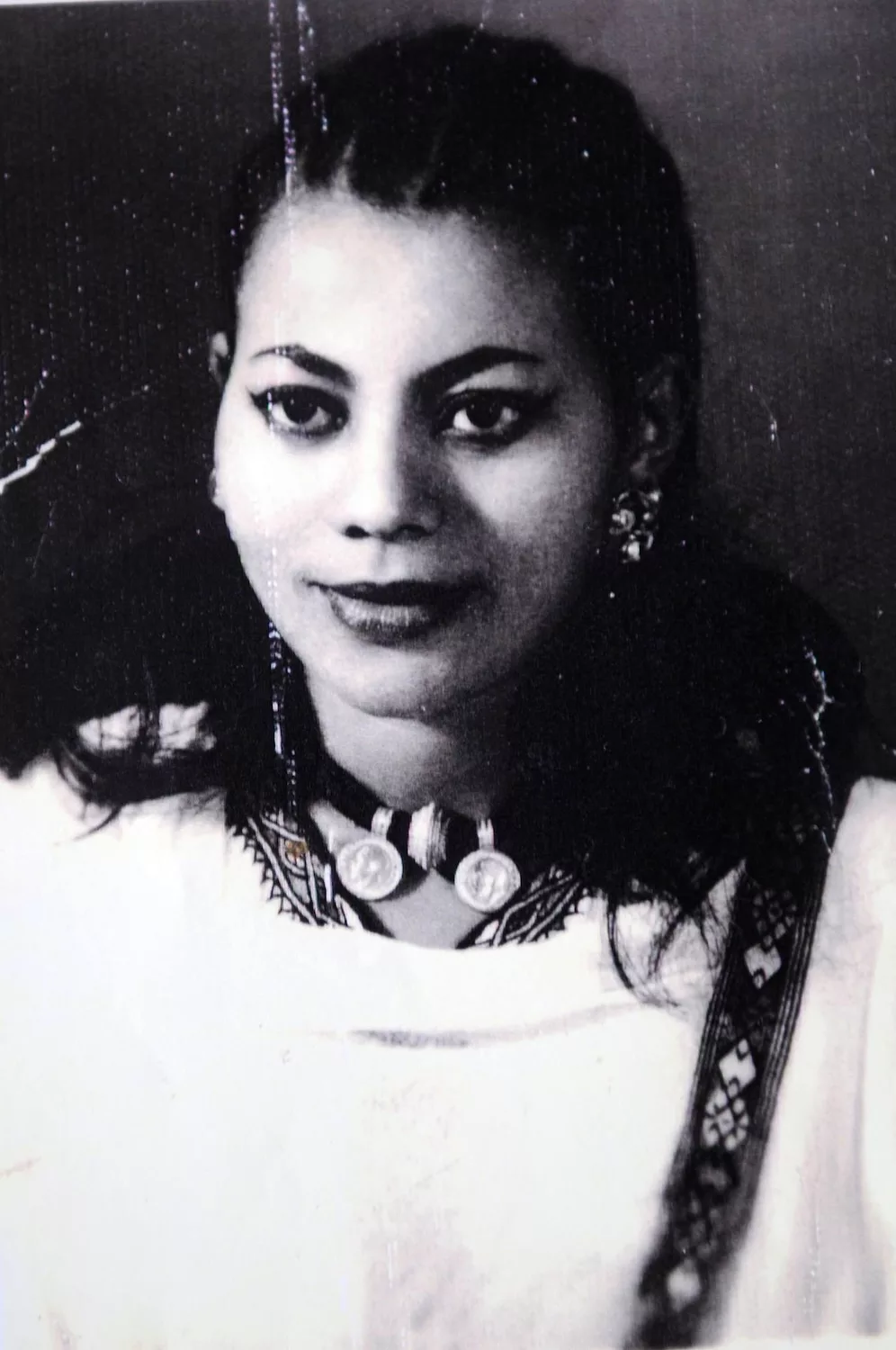
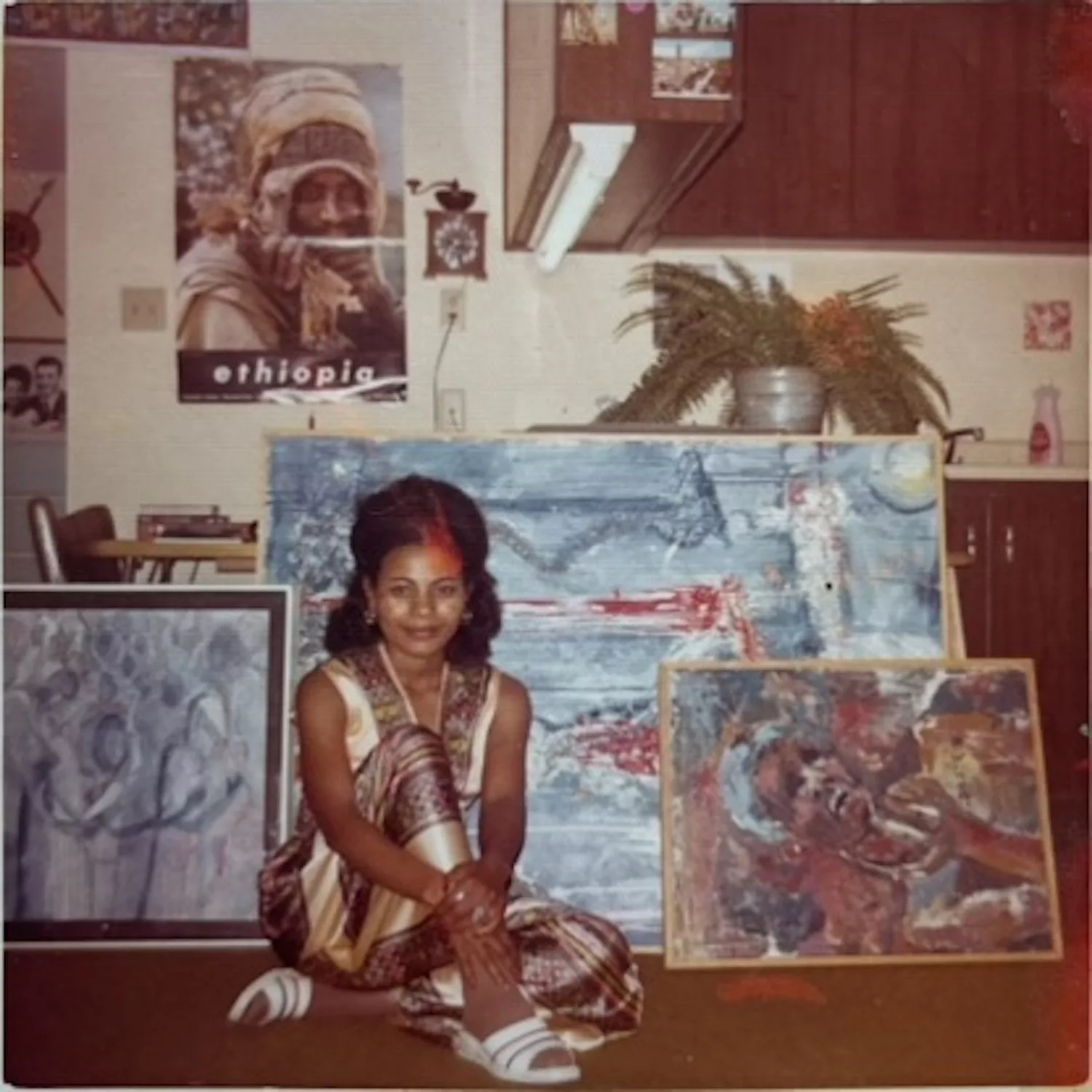
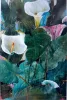
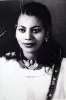
Desta Hagos was born in 1952 in Adwa, in the northern Ethiopian region of Tigray. She traces her artistic awakening back to childhood: while she spent her days picking flowers, her father – a fellow botany enthusiast – encouraged her instead to draw them. He gave her a box of pencils, a gesture D. Hagos later described as the origin of her vocation. She aspired to be an artist who would not only express ideas but also convey the emotions and moods of everyday Ethiopian life.
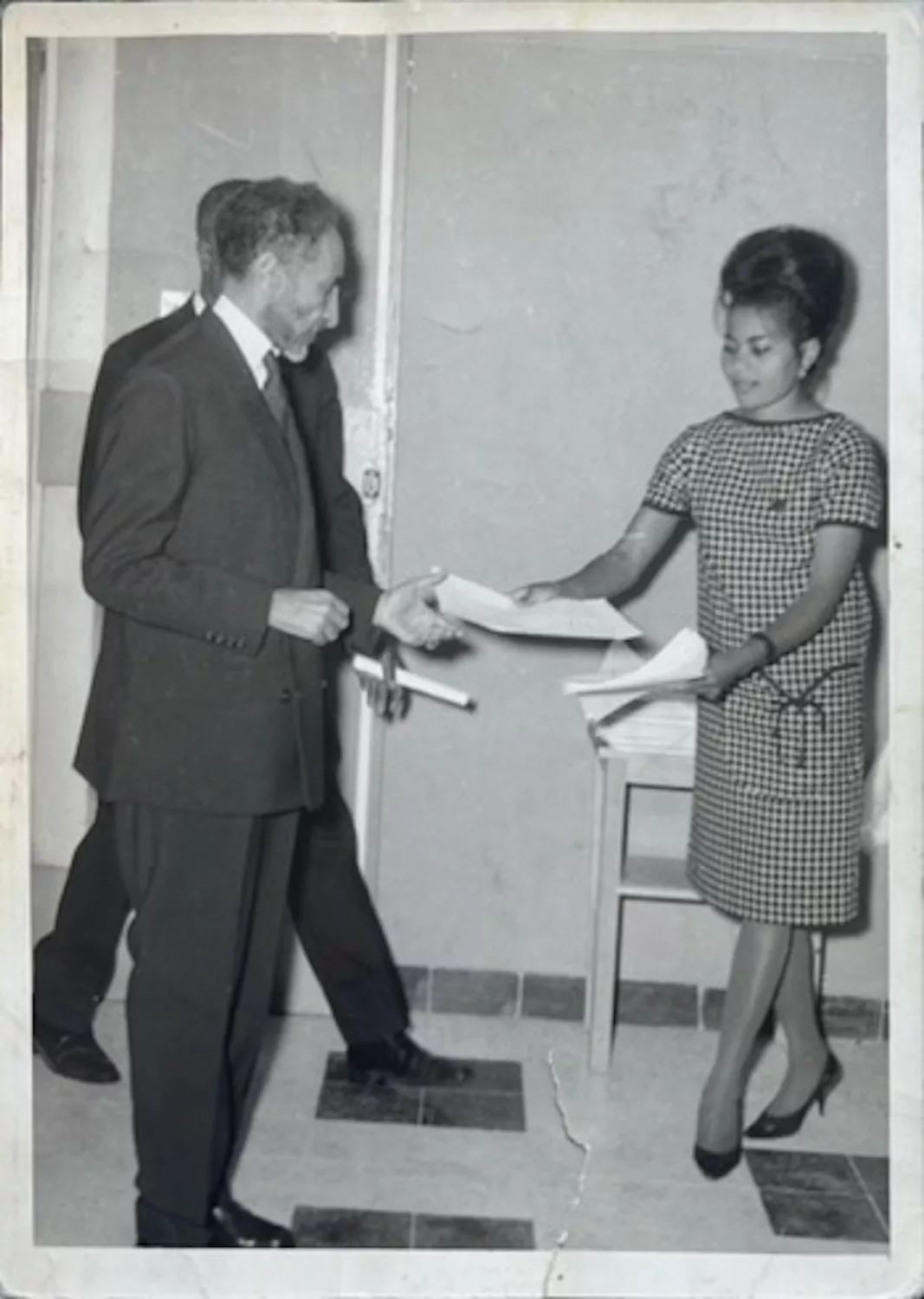
Educated at Empress Menen School in Addis Ababa in the 1950s, D. Hagos was part of the first generation of women admitted to the School of Fine Arts. Founded by the Ethiopian painter Allefelege Selam (1924–2016) with the patronage of Emperor Haile Selassie I (r. 1930–1974), the establishment had admitted the artist Katsala Atenafu (dates unknown) upon its opening in 1957. In 1964, D. Hagos joined the school alongside Menen Mengesha (dates unknown) and Almaz Amenisa (dates unknown). Yet amongst this pioneering cohort, D. Hagos would be the only one to go on to pursue an artistic career.
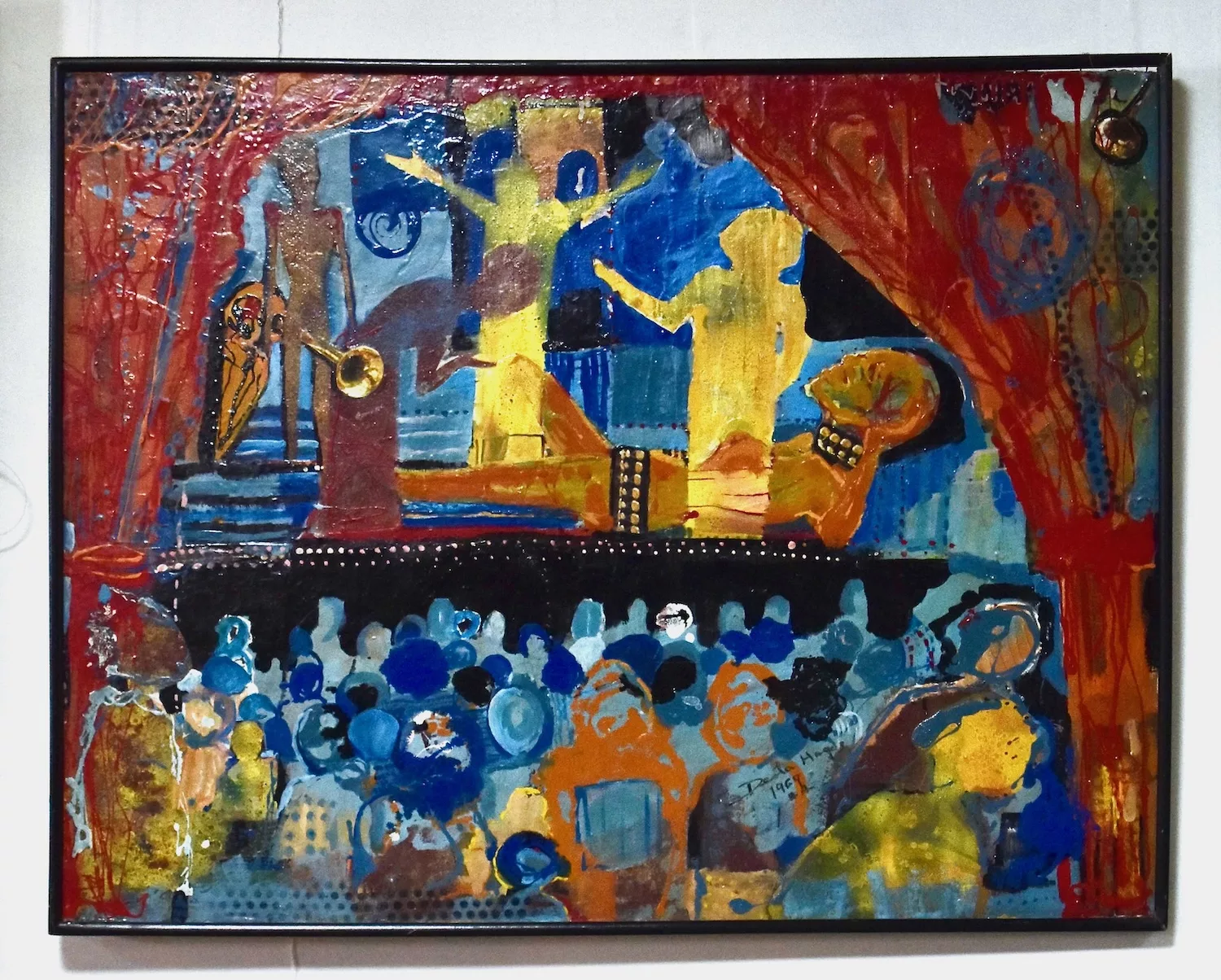
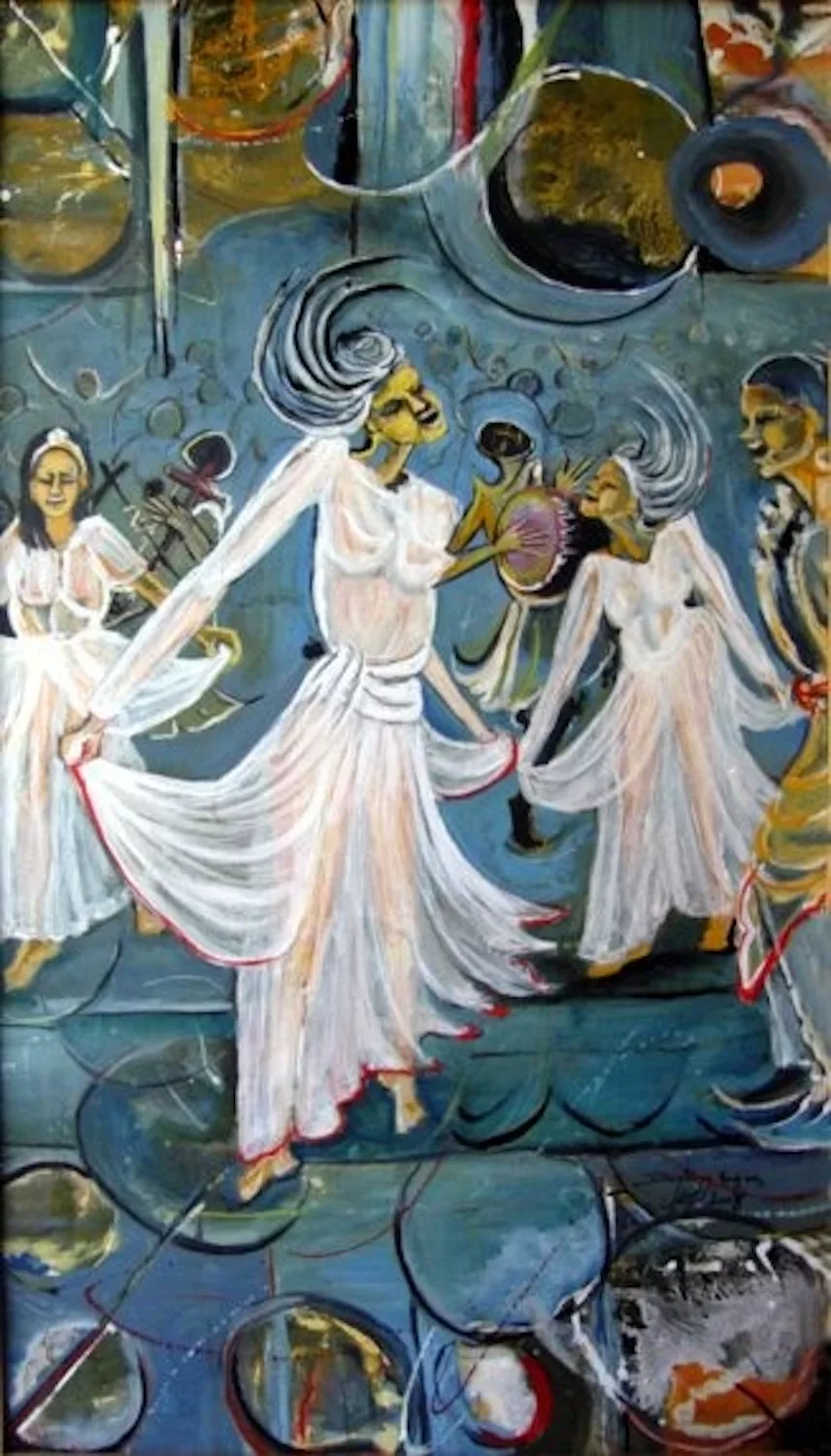
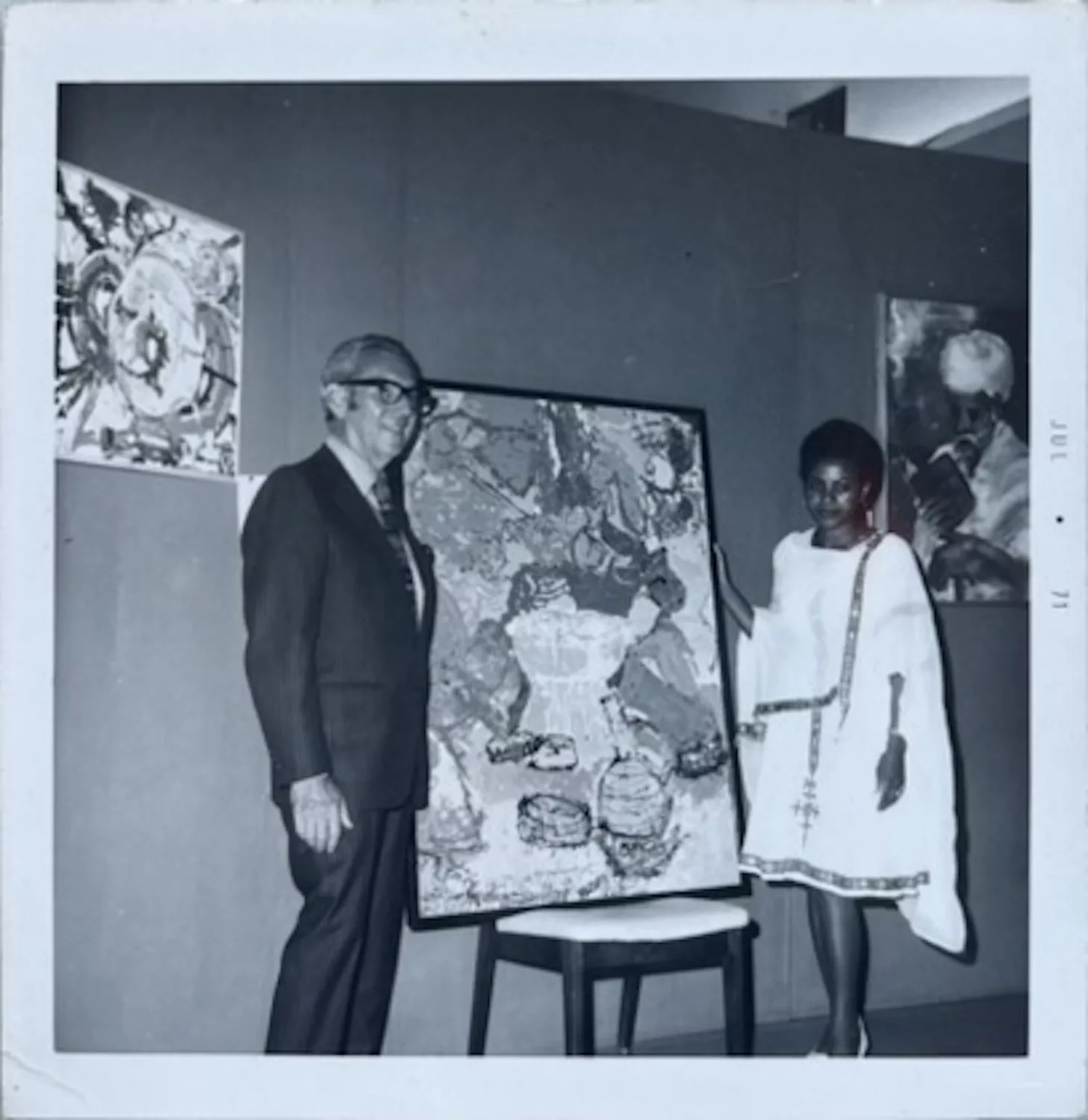
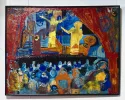
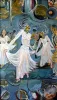
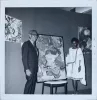
At the School of Fine Arts, D. Hagos studied painting with Gebre Kristos Desta (1932–1981) and received guidance from Alexander “Skunder” Boghossian (1937–2003), and German engraver Hansen Bahia (1915–1978). She also frequented the Creative Arts Center, then a gateway to Addis Ababa’s flourishing literary scene of the 1960s: the artist would even take on a role in Dandiew Chabude (date unknown), a play by poet and playwright Mengistu Lemma (1924–1988), adapted from Anton Chekhov’s The Bear (1888). Her affinity for theatre is reflected in The Stage (1969), the painting she created for her graduation project, which she successfully attained in 1969: it portrays a theatre stage on which actors perform before an audience. The work was included in her first solo exhibition in the same year, in Addis Ababa at the Ras Hotel, which was inaugurated by Empress Hirut Desta.
From 1971 to 1973, D. Hagos lived in the USA, earning a Bachelor of Arts degree from California Lutheran University in Thousand Oaks. Upon her return to Addis Ababa, her family found itself torn apart by the political revolution that culminated in the overthrow of Emperor Haile Selassie I in 1974. Her husband, threatened with execution, fled to Kenya, while D. Hagos remained in Ethiopia, raising their daughter Feben alone. She pursued her artistic career while working at the Ethiopian Tourism Office, and later the Ethiopian Tourist Trading Enterprise, retiring in 2002. D. Hagos still lives in Addis Ababa.
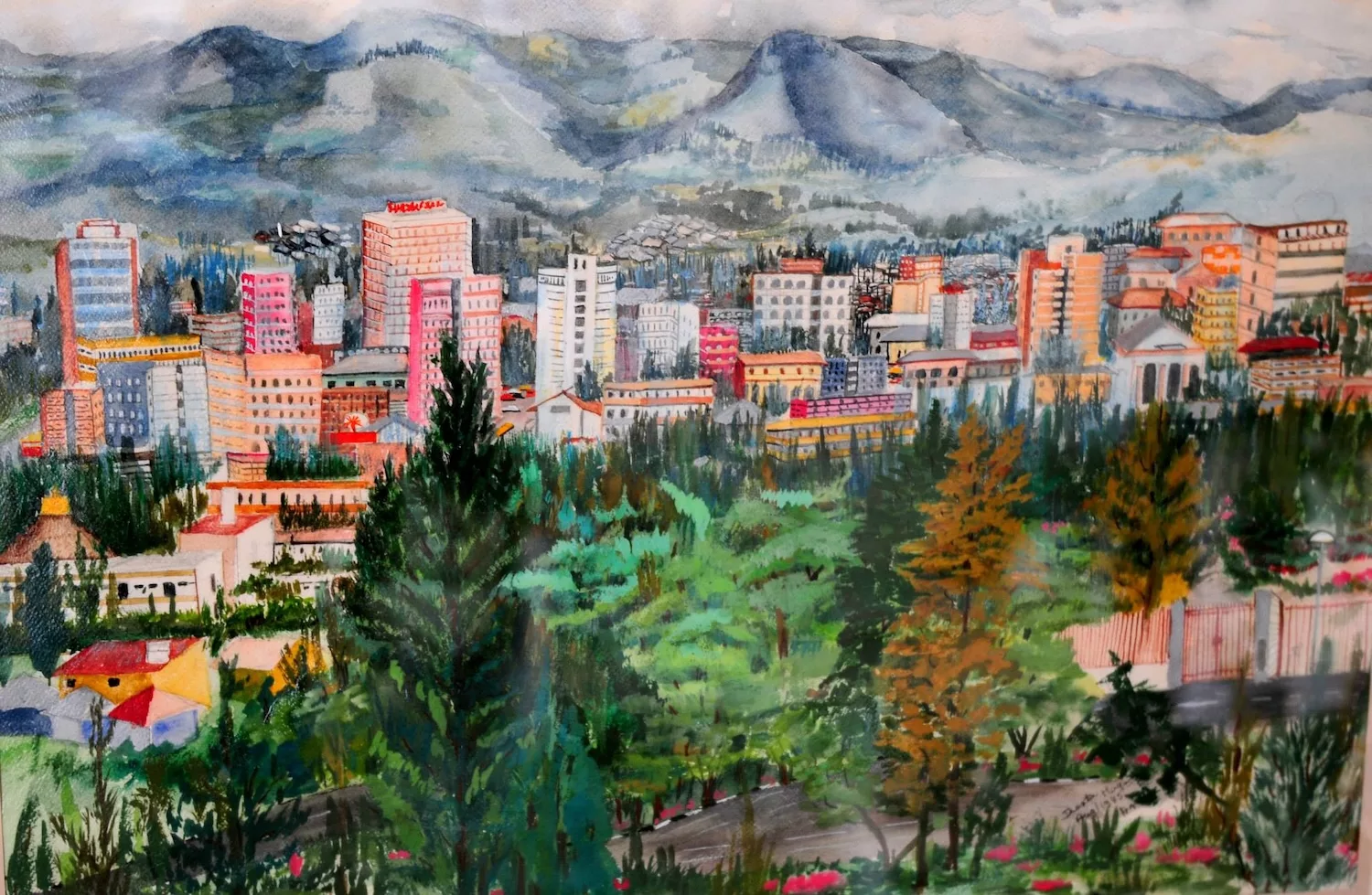
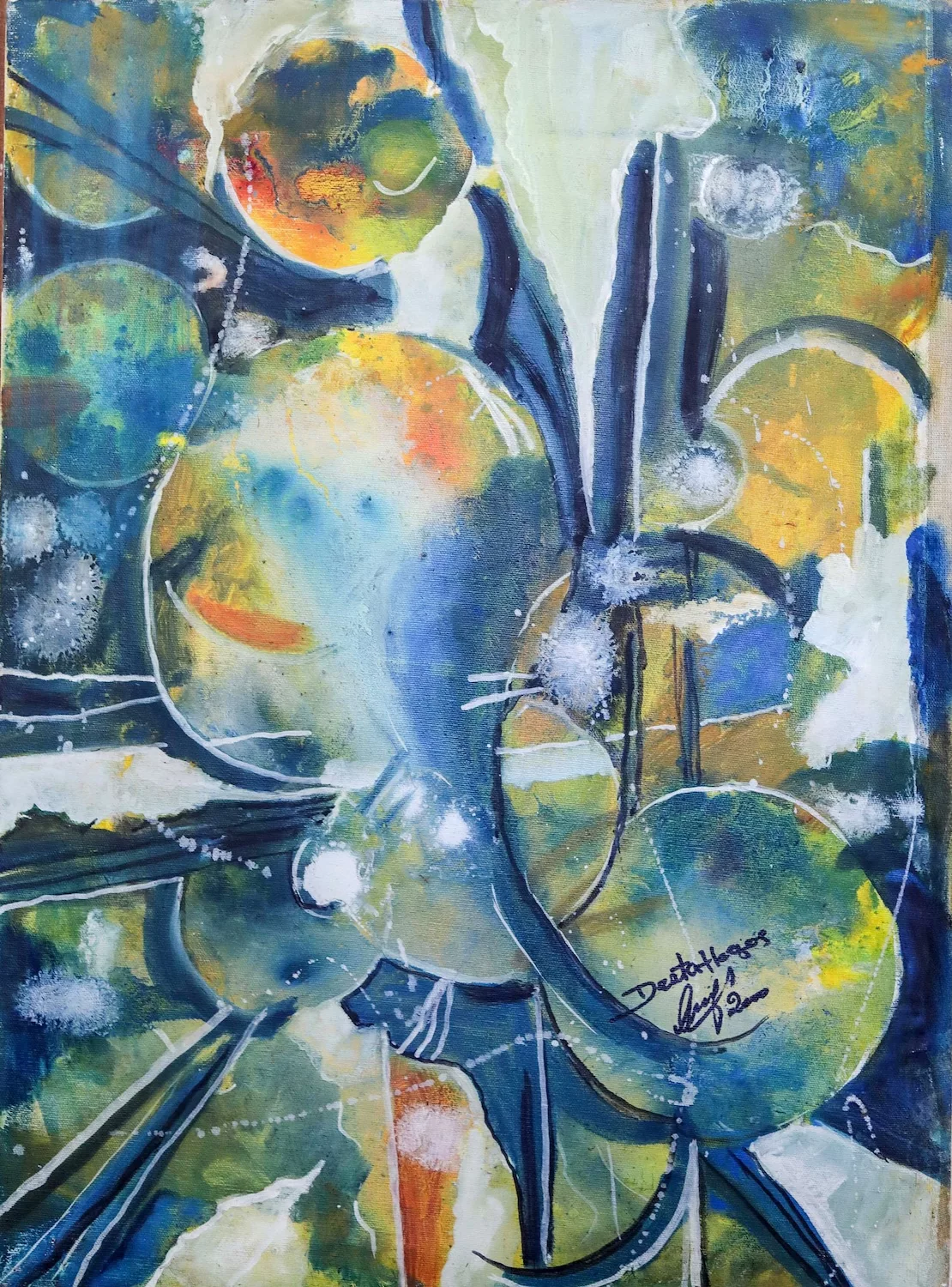
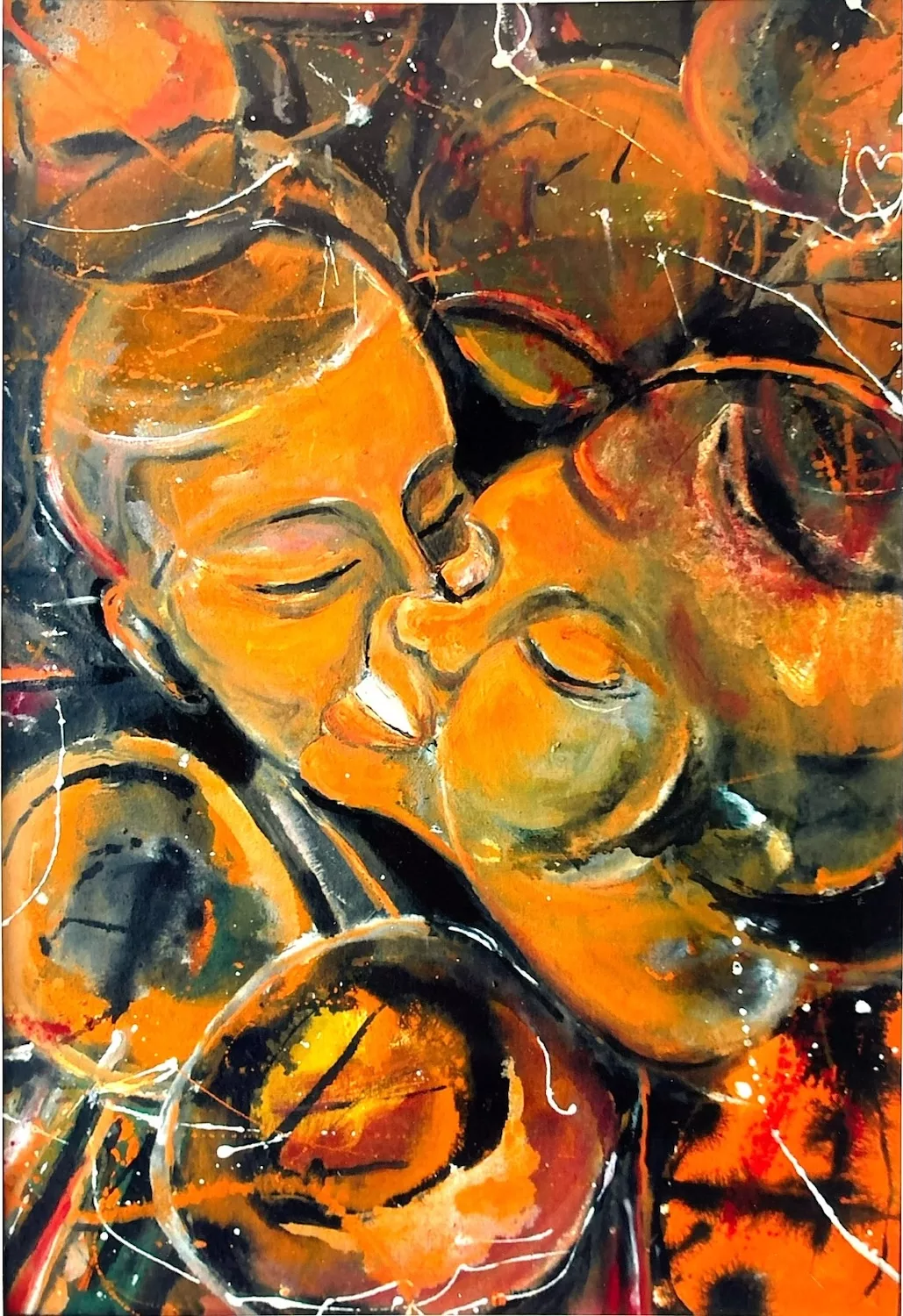
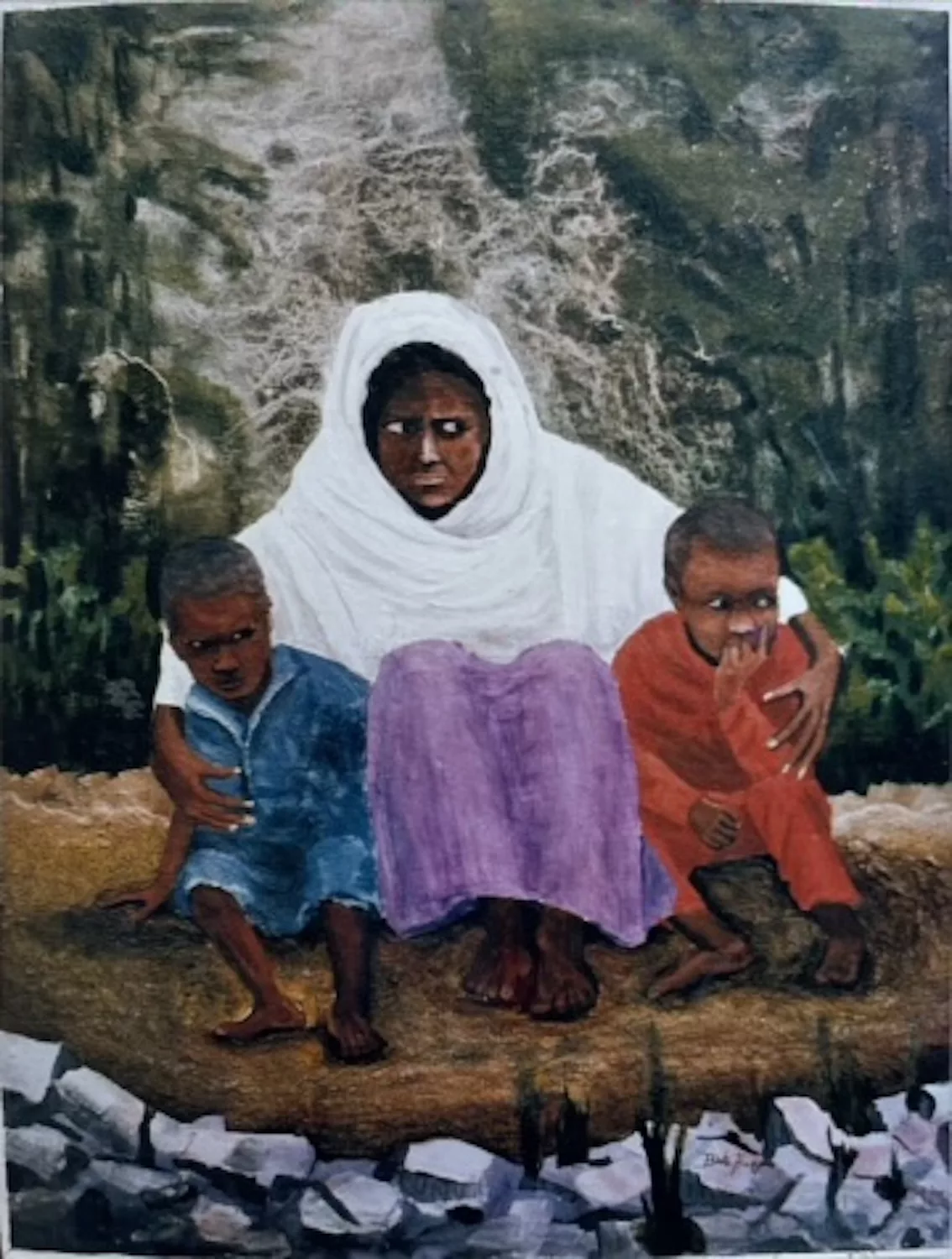
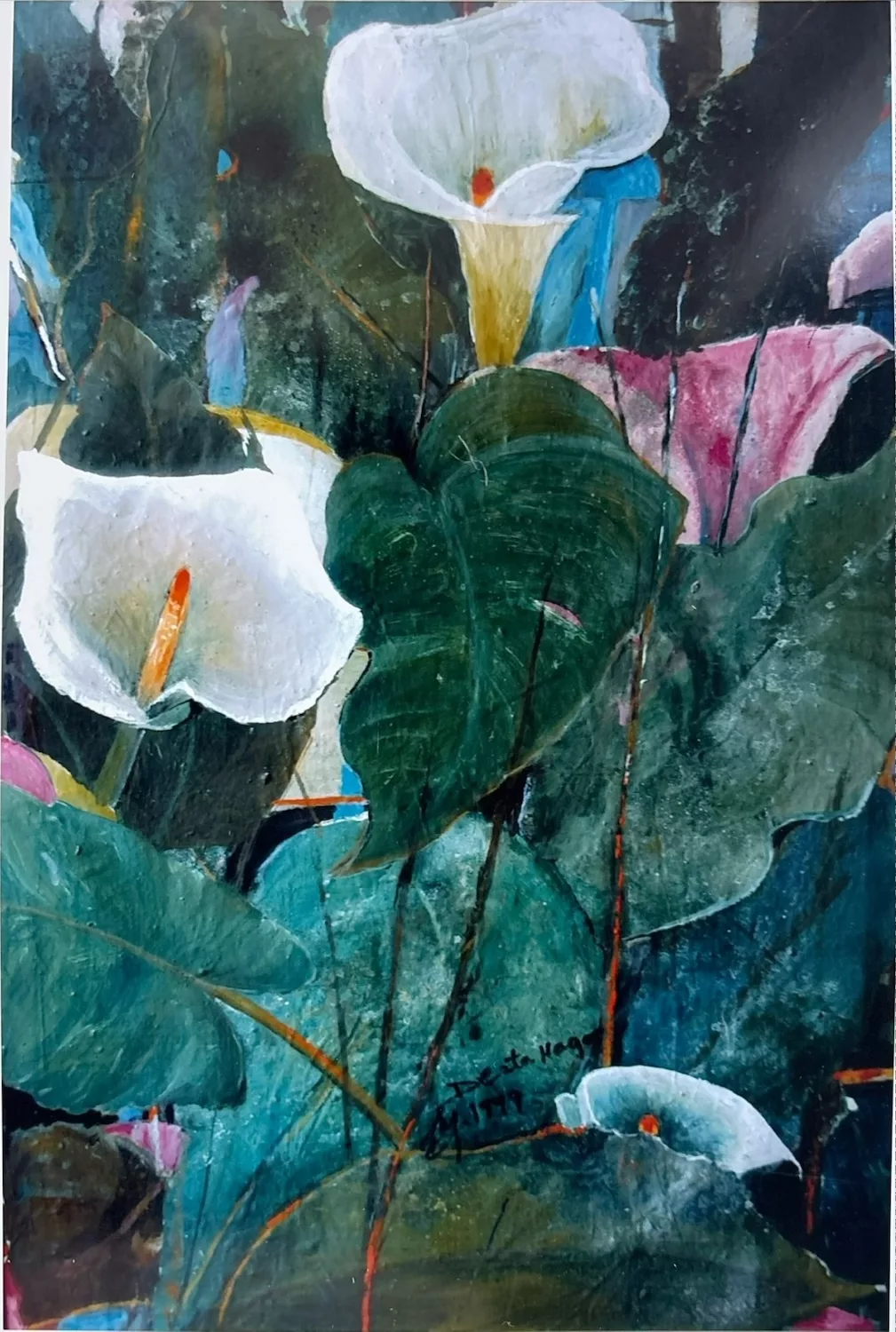
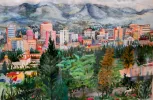
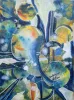
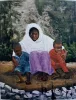
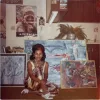
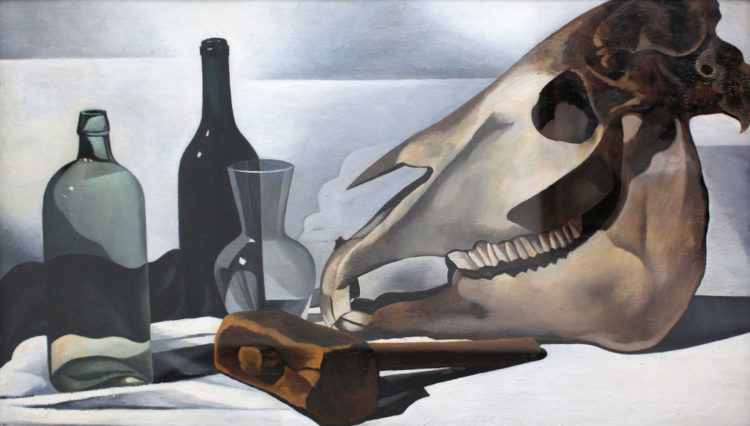
Over the course of her career, D. Hagos has taken part in over fifty exhibitions, both in Ethiopia and abroad, including in the USA, Spain and Denmark. Her works are held in the collections of the National Museum of Ethiopia and the Alliance Ethio-Française in Addis Ababa, amongst others. She is one of the few women artists to gain recognition in Ethiopia’s predominantly male art world. While D. Hagos openly acknowledges drawing upon the expressionist vocabulary of her teacher, Gebre Kristos Desta – particularly in her handling of form and colour – she has, over time, developed a distinctly personal pictorial language. In it unfolds the artistic ambition of her youth: to reflect the emotions and moods of everyday Ethiopian life – an intimate world inhabited by women, landscapes and flowers.
A biography produced as part of the project Tracing a Decade: Women Artists of the 1960s in Africa, in collaboration with the Njabala Foundation
© Archives of Women Artists, Research and Exhibitions, 2025