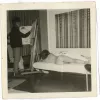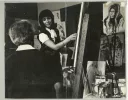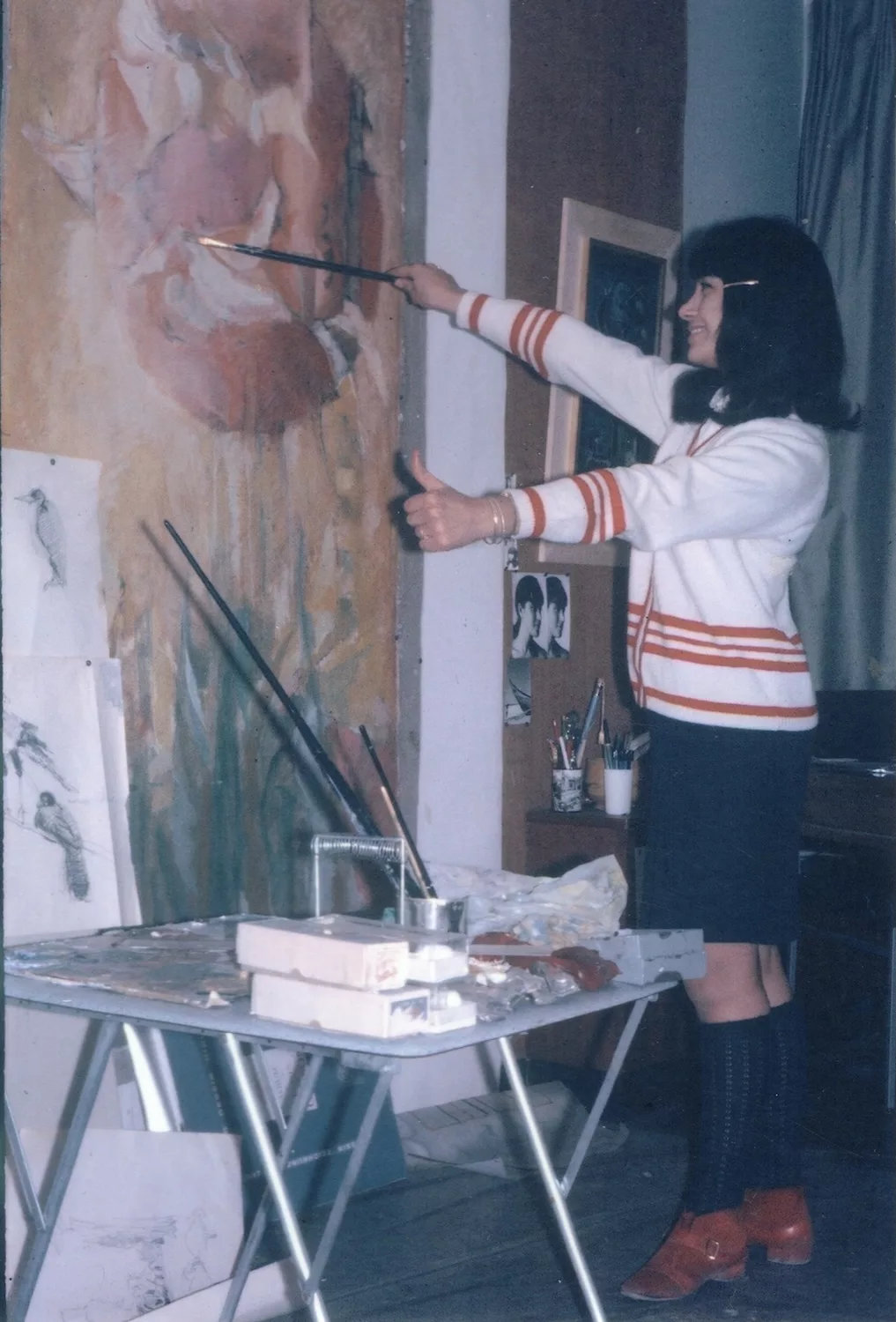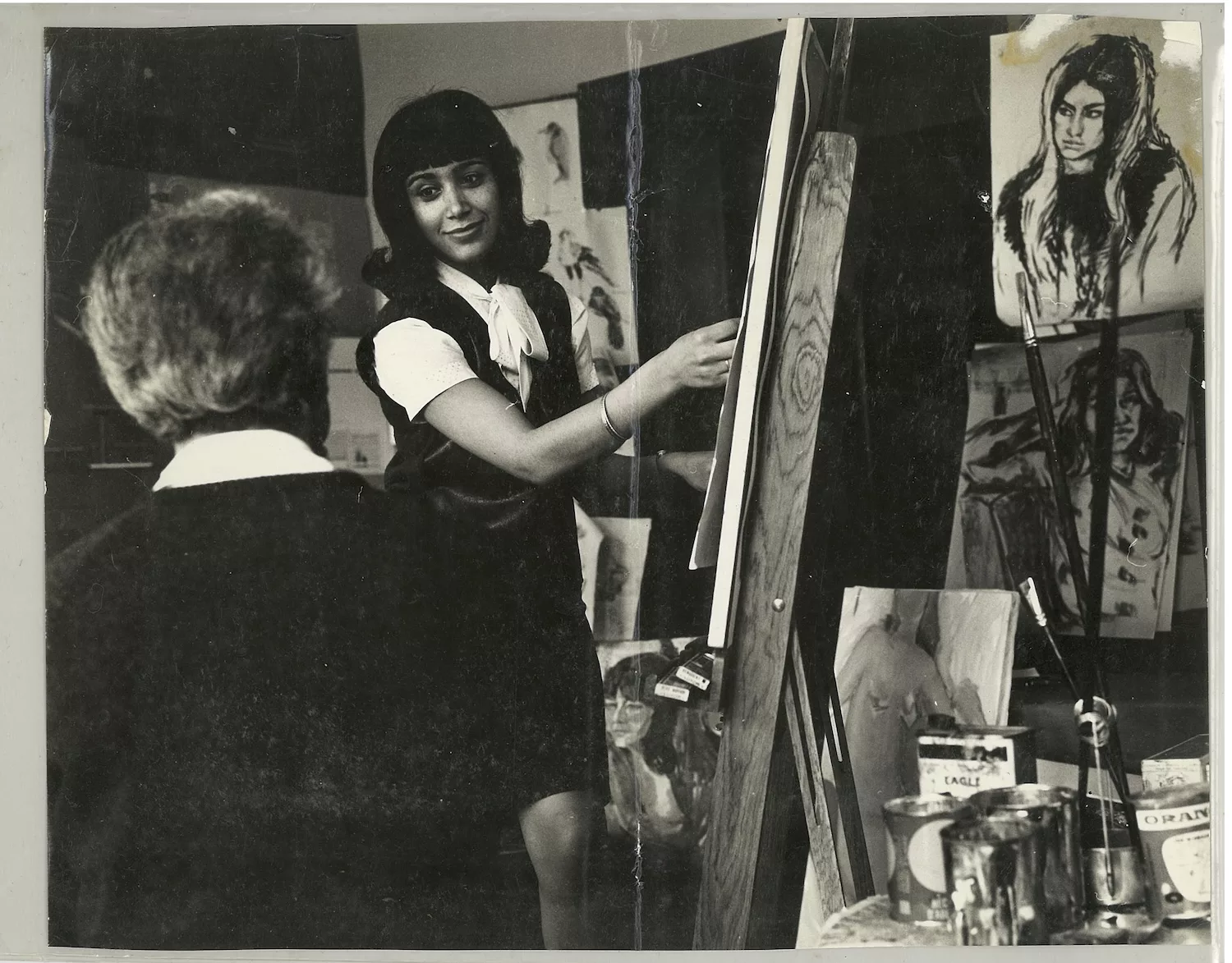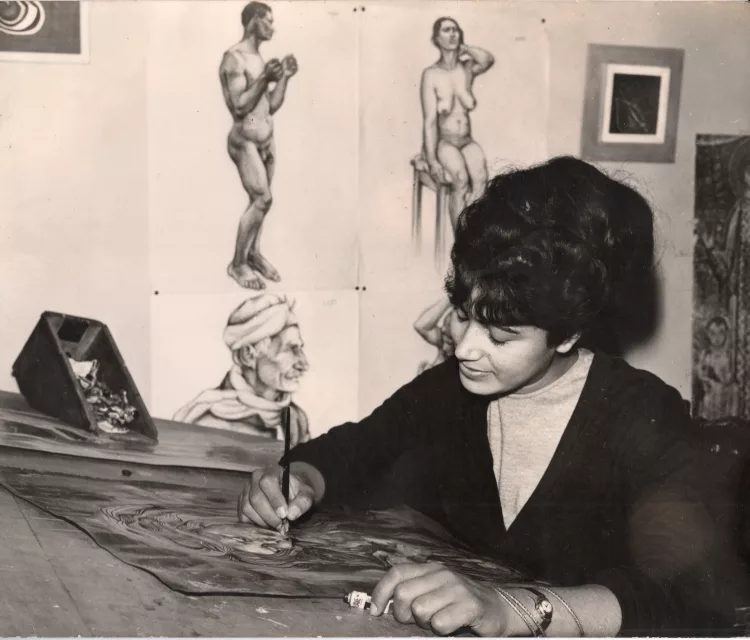
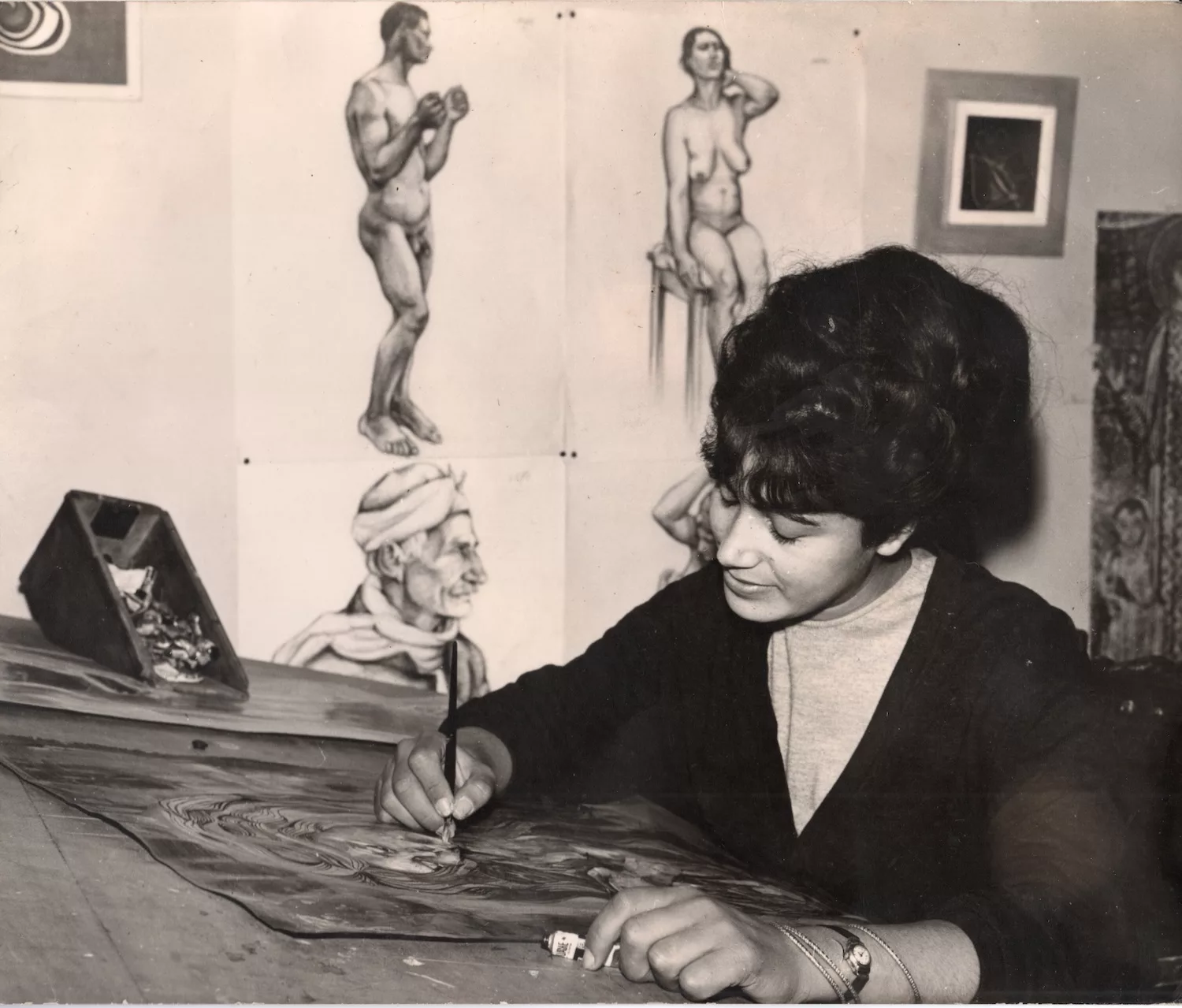
Fela Kefi Leroux, in her studio, 5 Passage d’Elbe, Tunis, c. 1965, artist’s archives, Tunis; courtesy of the artist
Hamza, Alya, ‘La pratique plastique de Fela Kefi : Le fil renoue’, La Presse, 6 June 2025
→Othmani, Beya, ‘Fela Kefi Leroux, Embracing Blackness at the First World Festival of Black Arts’, Hyperallergic, 6 March 2023
→Gerschultz, Jessica, Decorative Arts of the Tunisian École, University Park, Pennsylvania, The Pennsylvania State University Press, 2019
Présences Arabes. Art moderne et décolonisation, Paris 1908-1988, Musée d’Art Moderne de Paris, April–August 2024
→Partisans of the Nude: An Arab Art Genre in an Era of Contest, Wallach Art Gallery, Columbia University Lenfest Center of the Arts, New York, October 2023–January 2024
→Tendances et Confrontations, Festival Mondial des Arts Nègres, Dakar, April 1966
Tunisian-French ceramicist, painter, and interior designer.
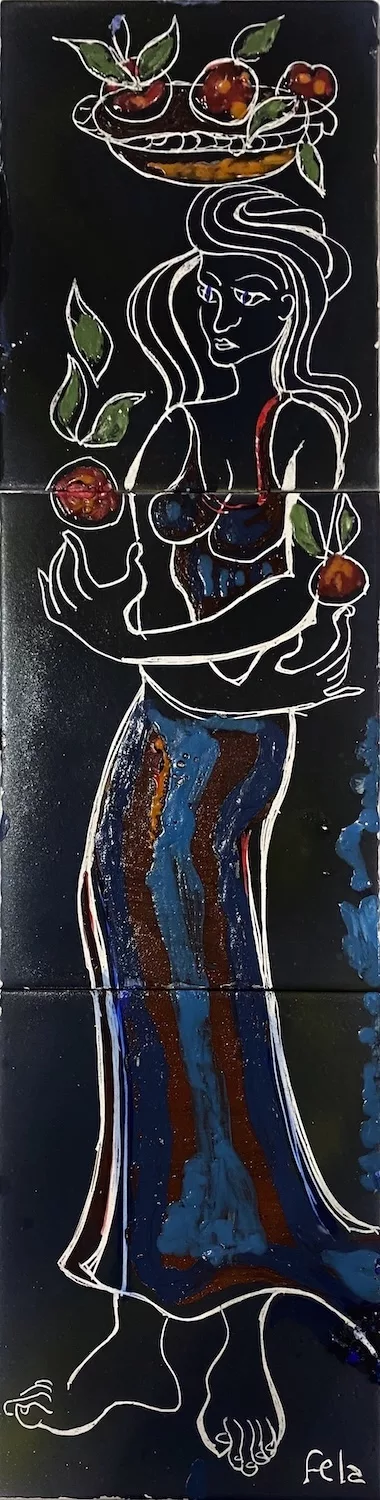
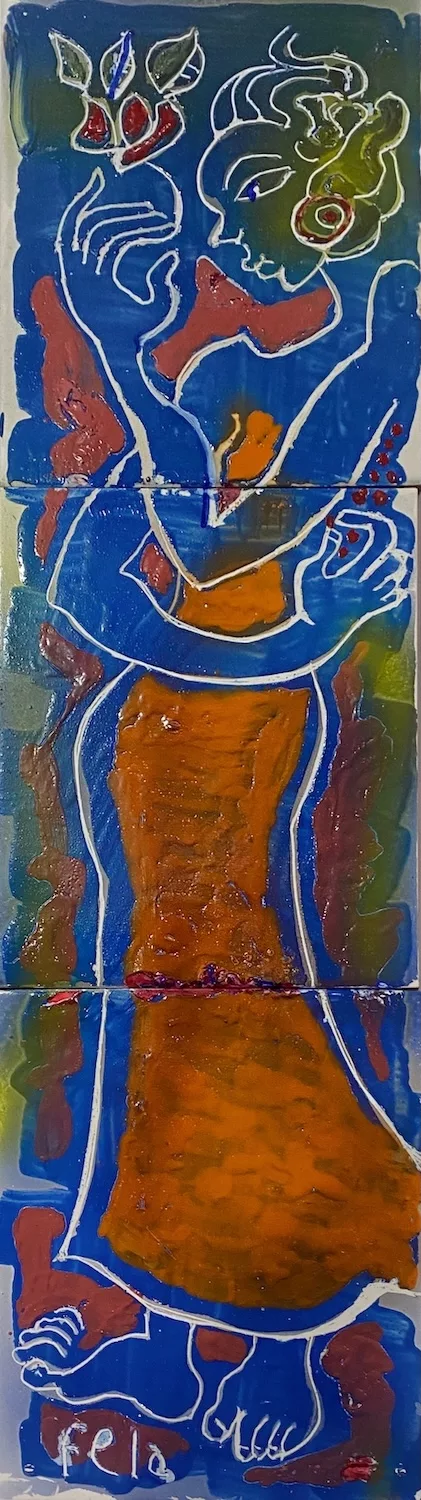
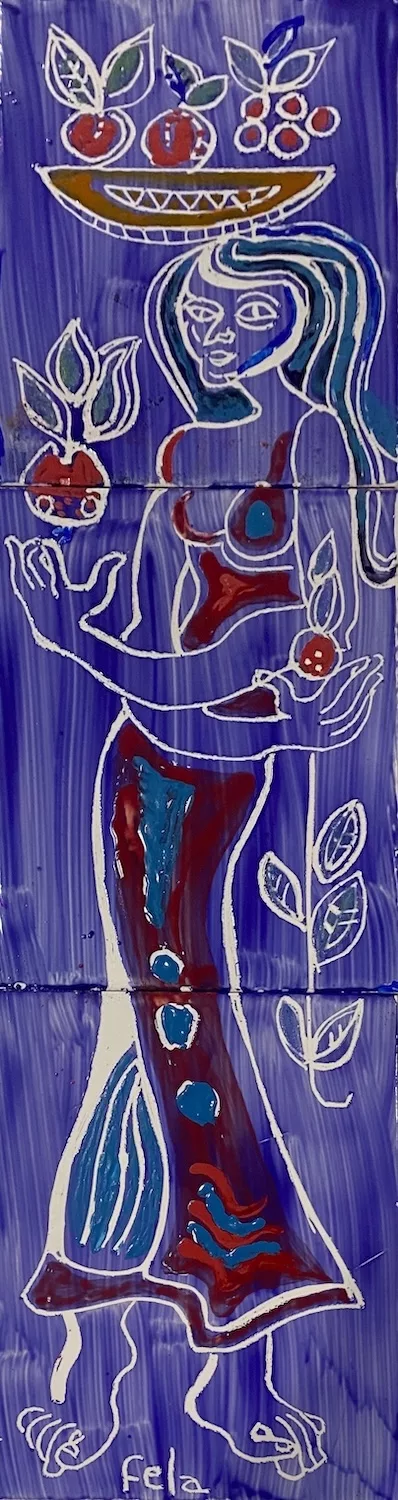
Fela Kefi Leroux belongs to the first generation of Tunisian artists trained within the orbit of the modernist École de Tunis. Enrolled at the École des Beaux-Arts of Tunis from 1961, she specialised in ceramics, attending the studio of Abdelaziz Gorgi (1928–2008) – a central figure of the École de Tunis. He encouraged her to move away from traditional ornamental ceramic motifs and instead use the medium to create original works of art. Working on flat tile panels, F. Kefi Leroux developed stylised images inspired by Tunisian heritage and popular culture, favouring dark, uniform backgrounds and simple outlines. She employed the faïence technique, utilising a wooden stick, paintbrush and airbrush to render her designs.
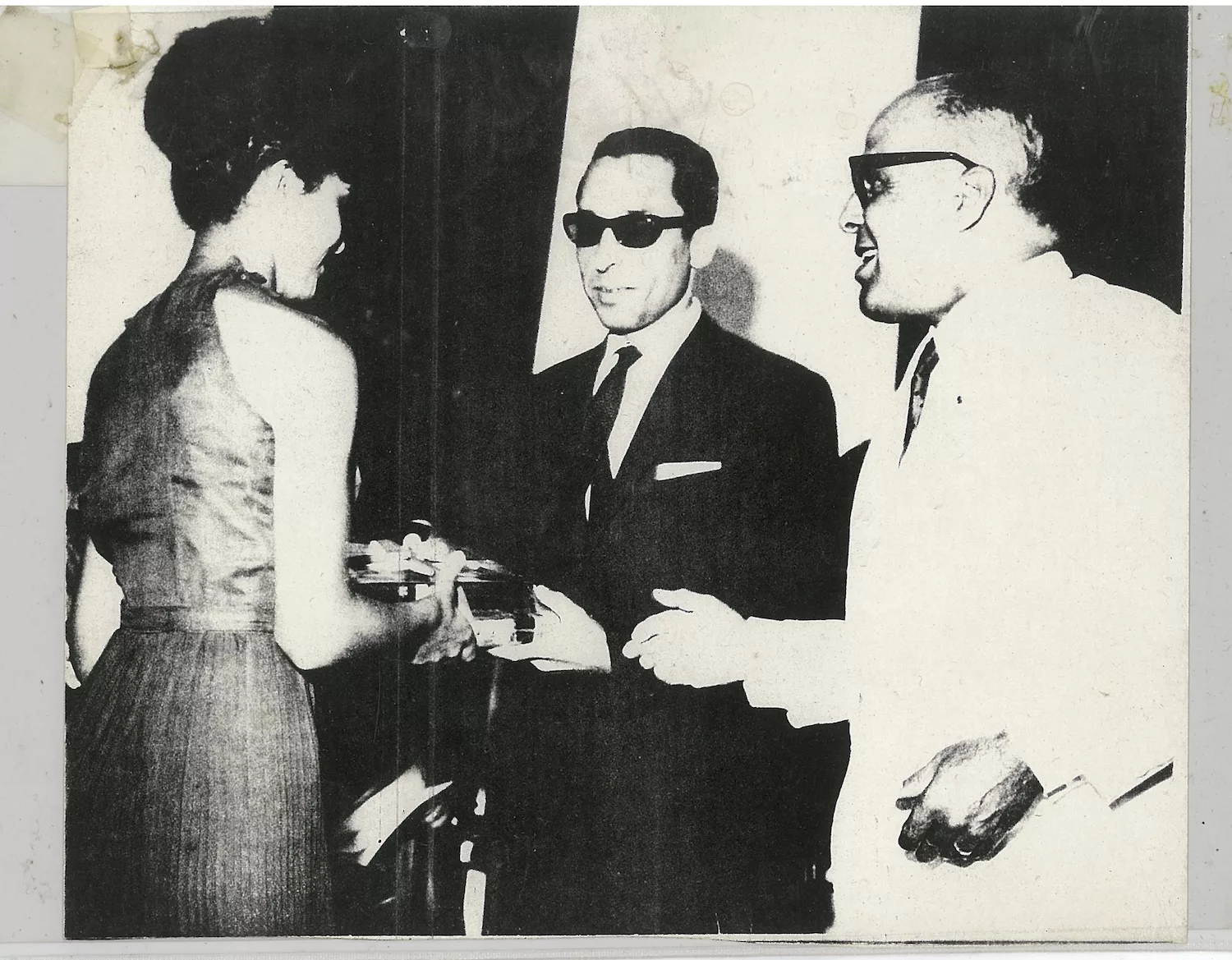
While still a student, F. Kefi Leroux received numerous distinctions, including the first prize at the 1964 annual Salon Tunisien at the Galerie municipale des arts de Tunis (now Galerie Yahia) for her gouache Richesse de la Tunisie [Wealth of Tunisia, 1964]. In the same year, she won a national competition with her ceramic maquette L’Agriculture [Agriculture, 1964], commissioned for the Ministry of Agriculture. A monumental version of L’Agriculture was later installed at the Office des Terres Domaniales in Tunis, making F. Kefi Leroux the first Tunisian woman student to realise a mural for a public institution. In recognition of her contributions to the decorative arts, she was awarded the Presidential Award for Excellence in 1964.
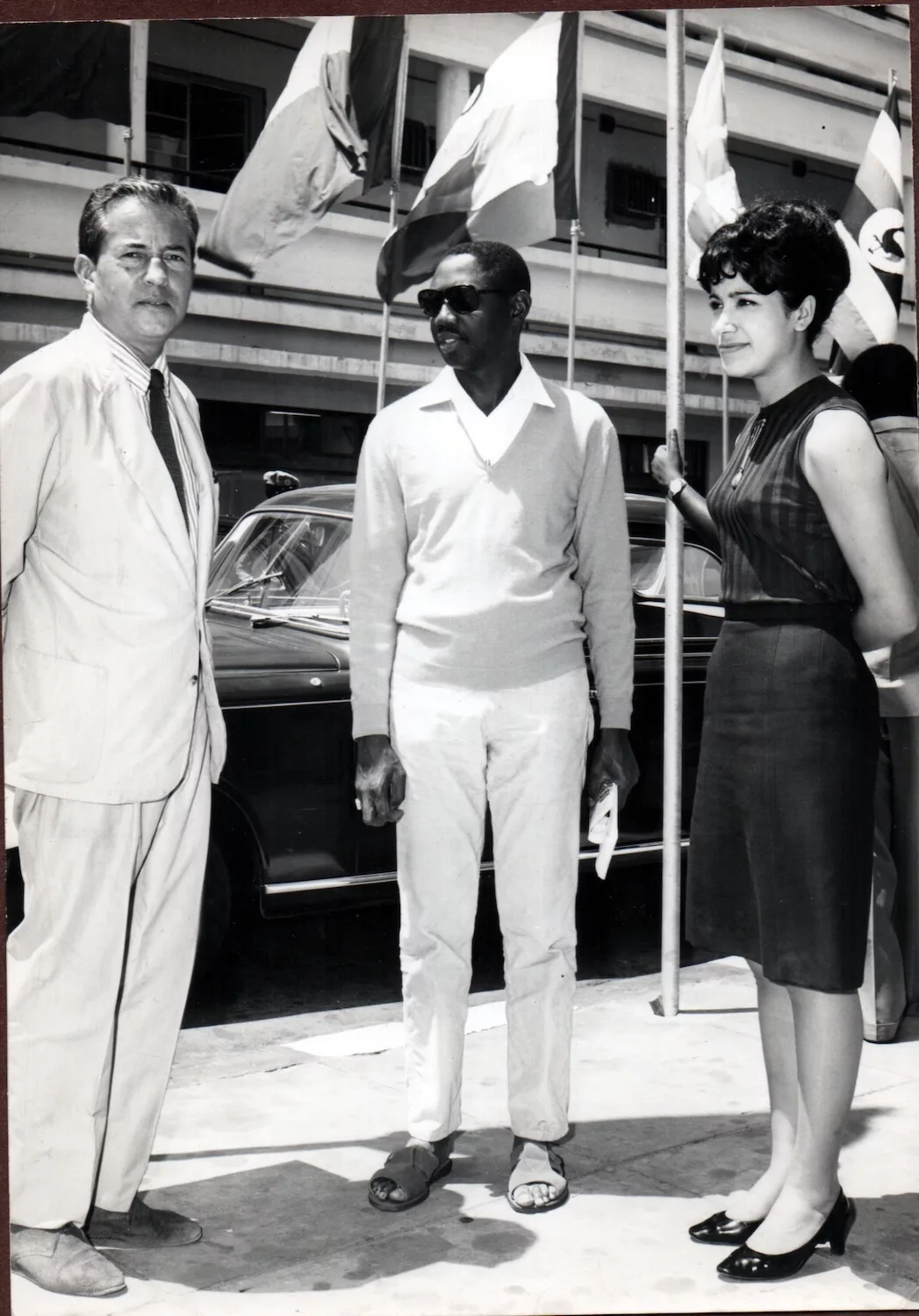
Buoyed by this early recognition, F. Kefi Leroux continued her studies at the École des Arts Décoratifs in Paris from 1965 to 1969, specialising in interior design. During her time in Paris, she was invited to participate in the FESMAN, held in Dakar in 1966, where she represented the French African diaspora in the contemporary art exhibition Tendances et Confrontations. For the occasion, F. Kefi Leroux presented three ceramic tile panels, including L’Été [Summer, 1964] from the series Les Quatres Saisons [The Four Seasons, 1963–64] and L’Olivier [The Olive Tree, c. 1964].
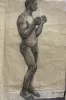
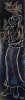
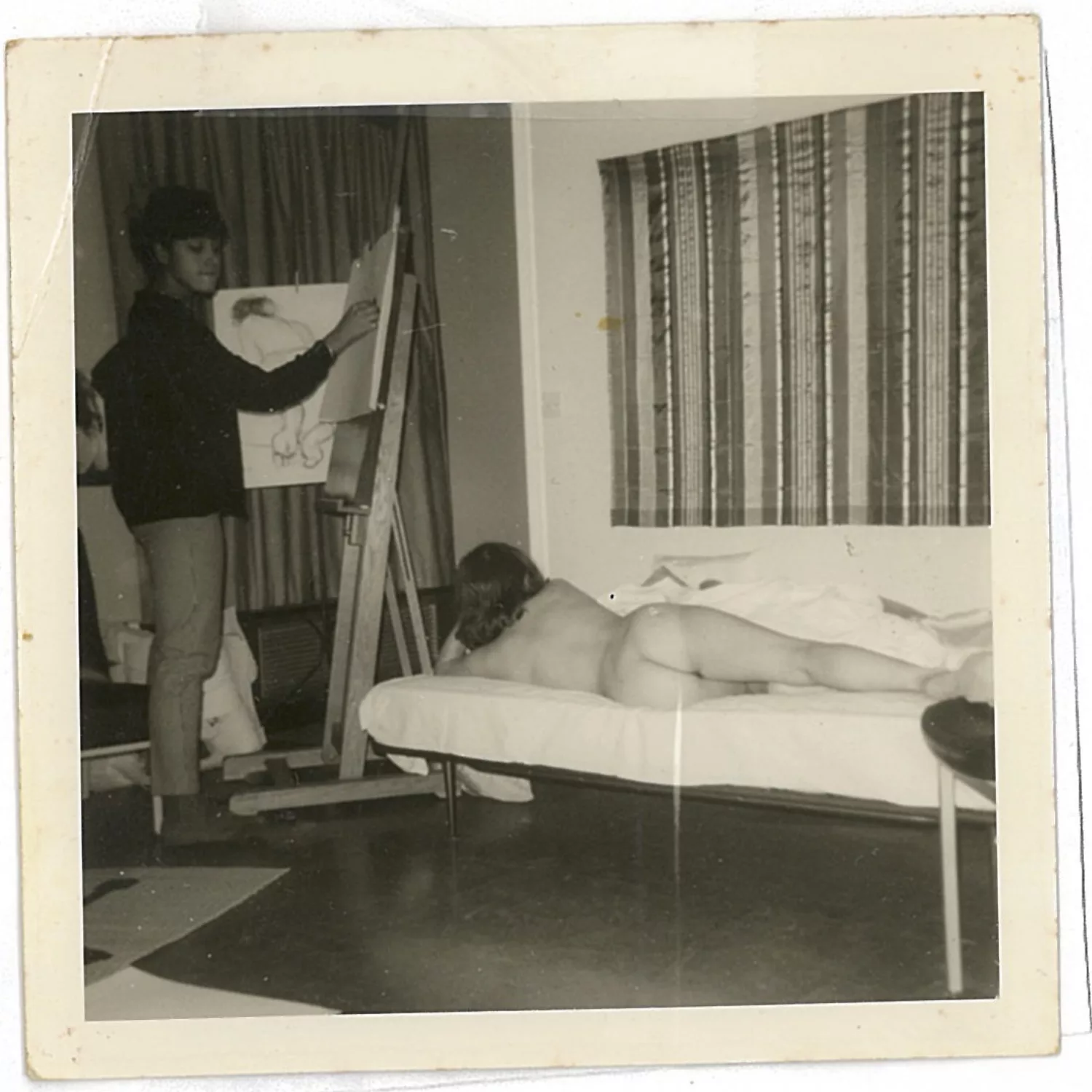
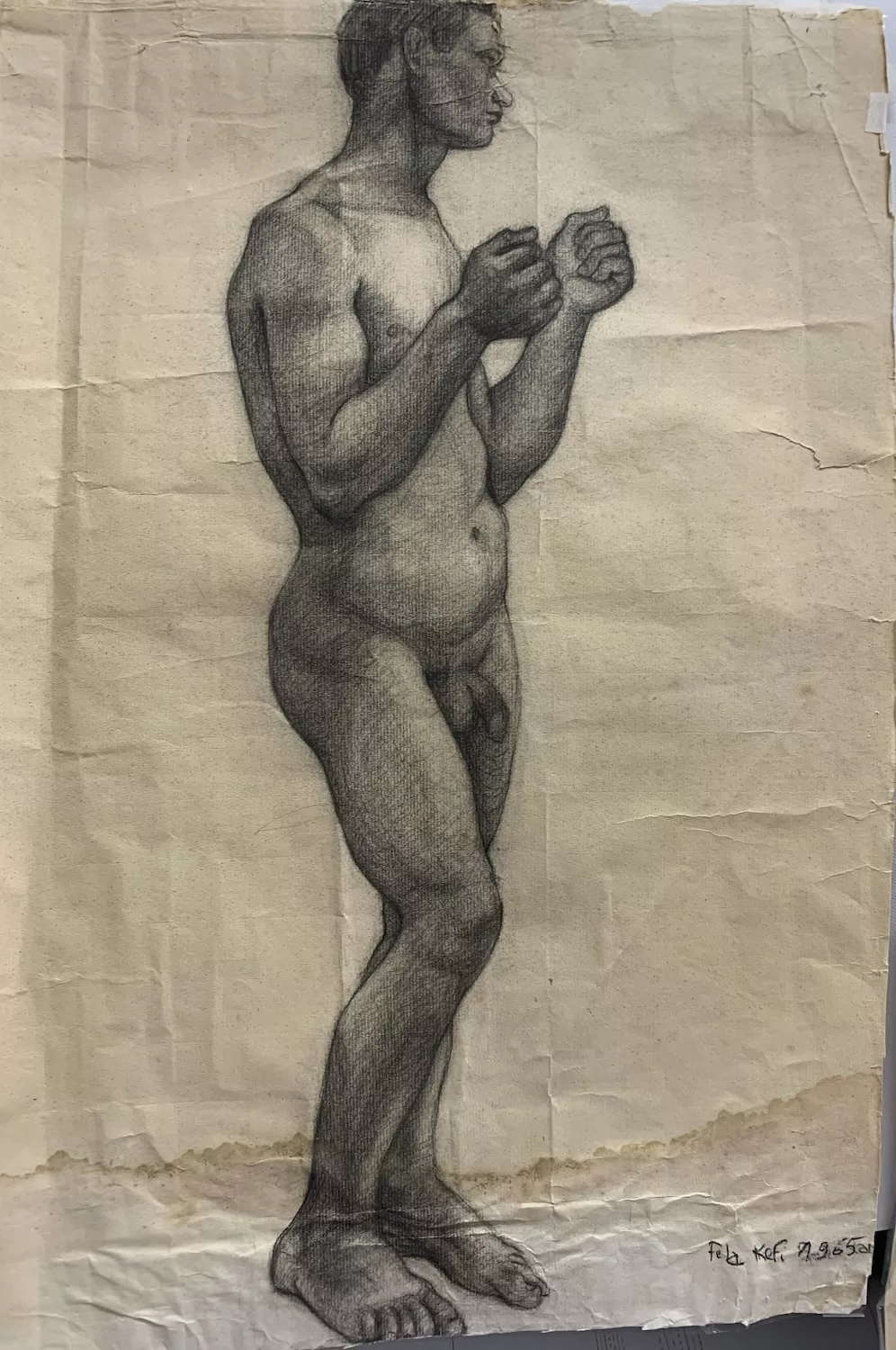
Following her successful participation in FESMAN, F. Kefi Leroux was awarded a residency at the Cité Internationale des Arts in Paris, which she held from August 1966 to November 1968. During this period, she primarily produced drawings and paintings, including Le Couple [The Couple, 1968]. After graduating from the École des Arts Décoratifs in 1969, F. Kefi Leroux temporarily set aside her artistic practice to focus on interior design. In the early 1980s, she started attending nude drawing classes at the Académie de la Grande Chaumière – a practice she continues to pursue as of 2025. Her interest in the genre, however, dates back to her student years: three early drawings, La Voyante [The Fortune Teller, 1964], Le Solitaire implorant [The Imploring Hermit, 1965] and Le Petit Saïd [Little Saïd, 1965], were featured in the 2023–2024 exhibition Partisans of the Nude: An Arab Art Genre in an Era of Contestat the Wallach Art Gallery in New York.
F. Kefi Leroux briefly taught drawing at the École des Beaux-Arts of Tunis between 1993 and 1995, and in 1998 earned a Diplôme d’Études Approfondies in Arts plastiques from l’Université de la Sorbonne in Paris. Her career took an unexpected turn in 2019, when her work attracted renewed attention from art historians and collectors, prompting her to resume her artistic practice. Her recent portfolio encompasses drawings, ceramics, such as La Dame en Bleu [The Lady in Blue, 2024] and paintings, including Bijoux à ces dames (hier et aujourd’hui) [Jewels for the Ladies (Yesterday and Today), 1963–2024]. In this new body of work, F. Kefi Leroux restaged characters from her 1960s oeuvre, building on her earlier narratives and aesthetic directions.
F. Kefi Leroux’s works are held in the collections of the Barjeel Art Foundation in Sharjah and the Guggenheim Abu Dhabi in the United Arab Emirates, as well as the Office des Terres Domaniales in Tunis, Tunisia, and several private collections.
A biography produced as part of the project Tracing a Decade: Women Artists of the 1960s in Africa, in collaboration with the Njabala Foundation
© Archives of Women Artists, Research and Exhibitions, 2025