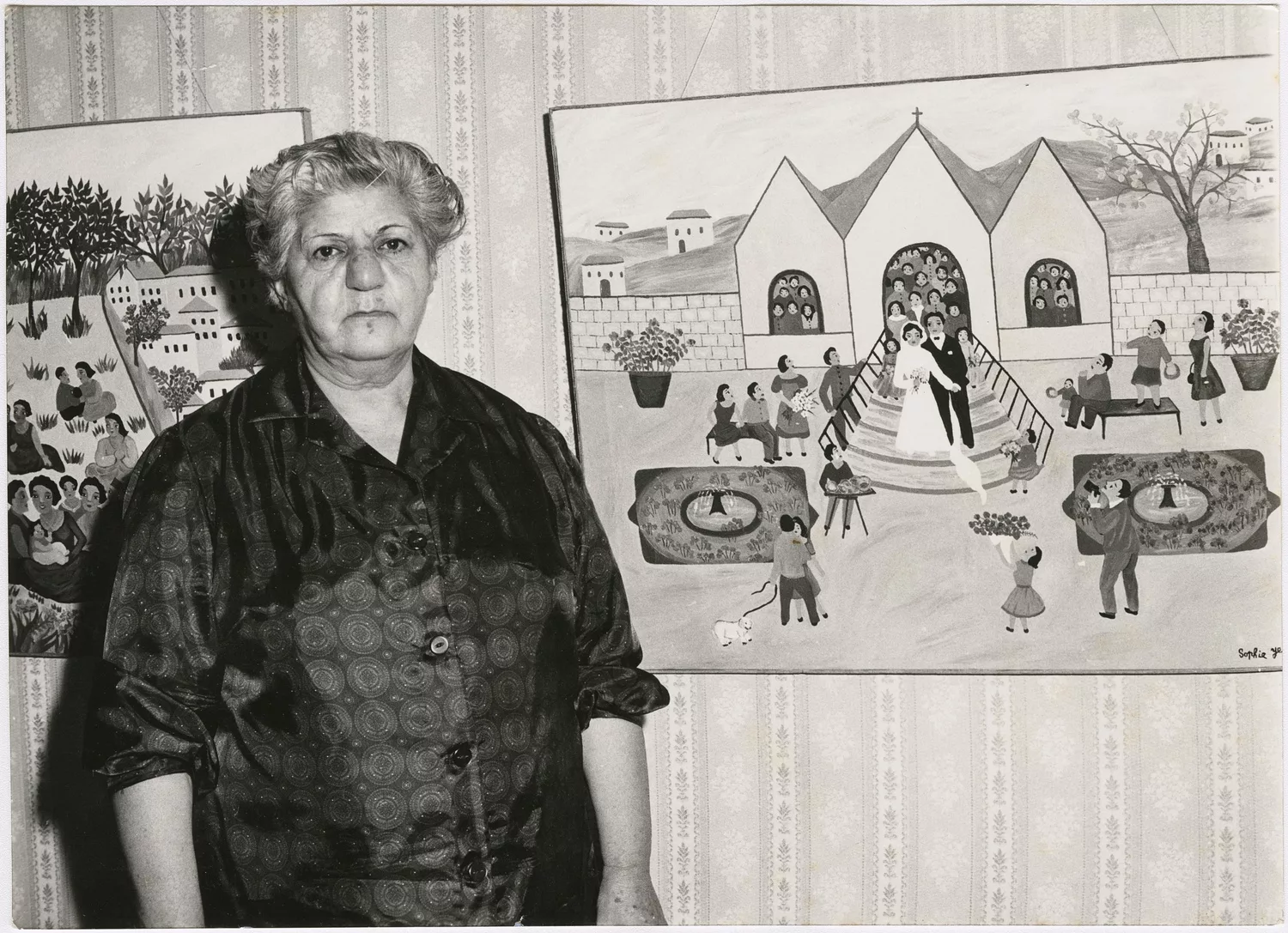
Portrait of Sophie Yeramian, circa 1975–1980, Courtesy of the Nicolas Sursock Museum, Richard Chahine archives, Beirut
Chahine, Richard, Cent Ans d’Art Plastique au Liban 1880-1980, Beirut, 1982
Des peintures naïves de Sophie Yeramian, Académie Libanaise des Beaux-Arts, Beirut, May 1982
→Le Liban Patrimoine et Liban Fleuri, Galerie Chahine, Beirut, April 1981
→Sophie Yeramian, Carlton Hotel, Beirut, March 1964
Lebanese painter.
A self-taught painter, Sophie Yeramian started her artistic career late in life. Born as Souraya Kandalaft in Ankara at the end of the Ottoman Empire, she left with her family for Aleppo – likely due to the forced deportation of Christians from Anatolia. She then came to Beirut after marrying Alphonse Yeramian. When her husband lost his eyesight in the late 1950s, S. Yeramian turned to painting to deal with the difficult situation. Through her art, she looked at the bright side of life, and shared her work with her husband by patiently describing it to him.
Starting with her participation in the first Salon d’Automne of the newly opened Sursock Museum in 1961, S. Yeramian regularly exhibited her work in Beirut. She was soon recognised as one of Lebanon’s main naïve painters, together with Khalil Zghaib (1911–1975). With one exception in the middle of the Lebanese civil war, S. Yeramian participated in every single Sursock Museum Salon edition held during her lifetime. Indeed, when she died shortly before the 13th Salon opened in December 1987, the museum turned her final participation into an homage to her.
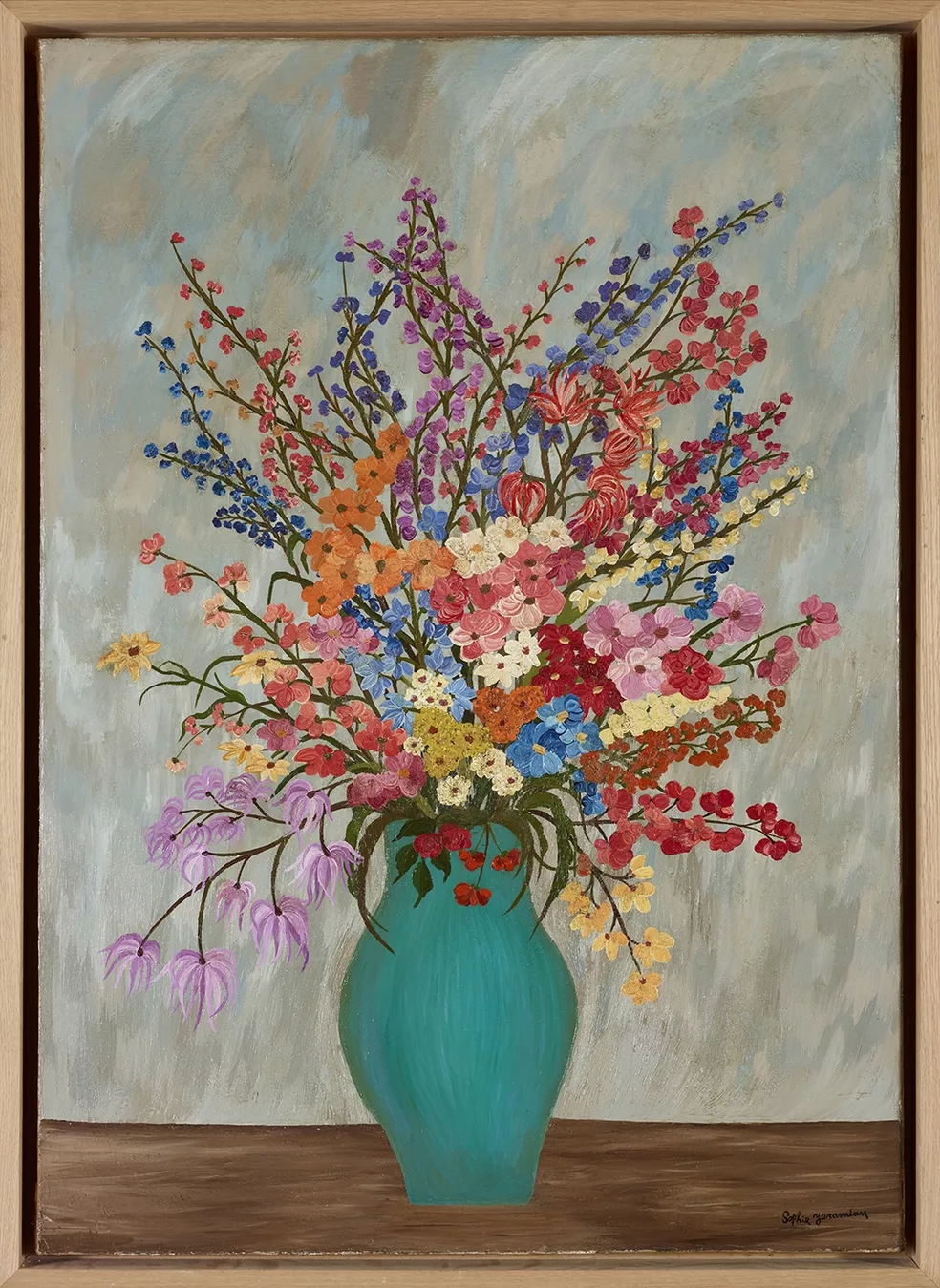
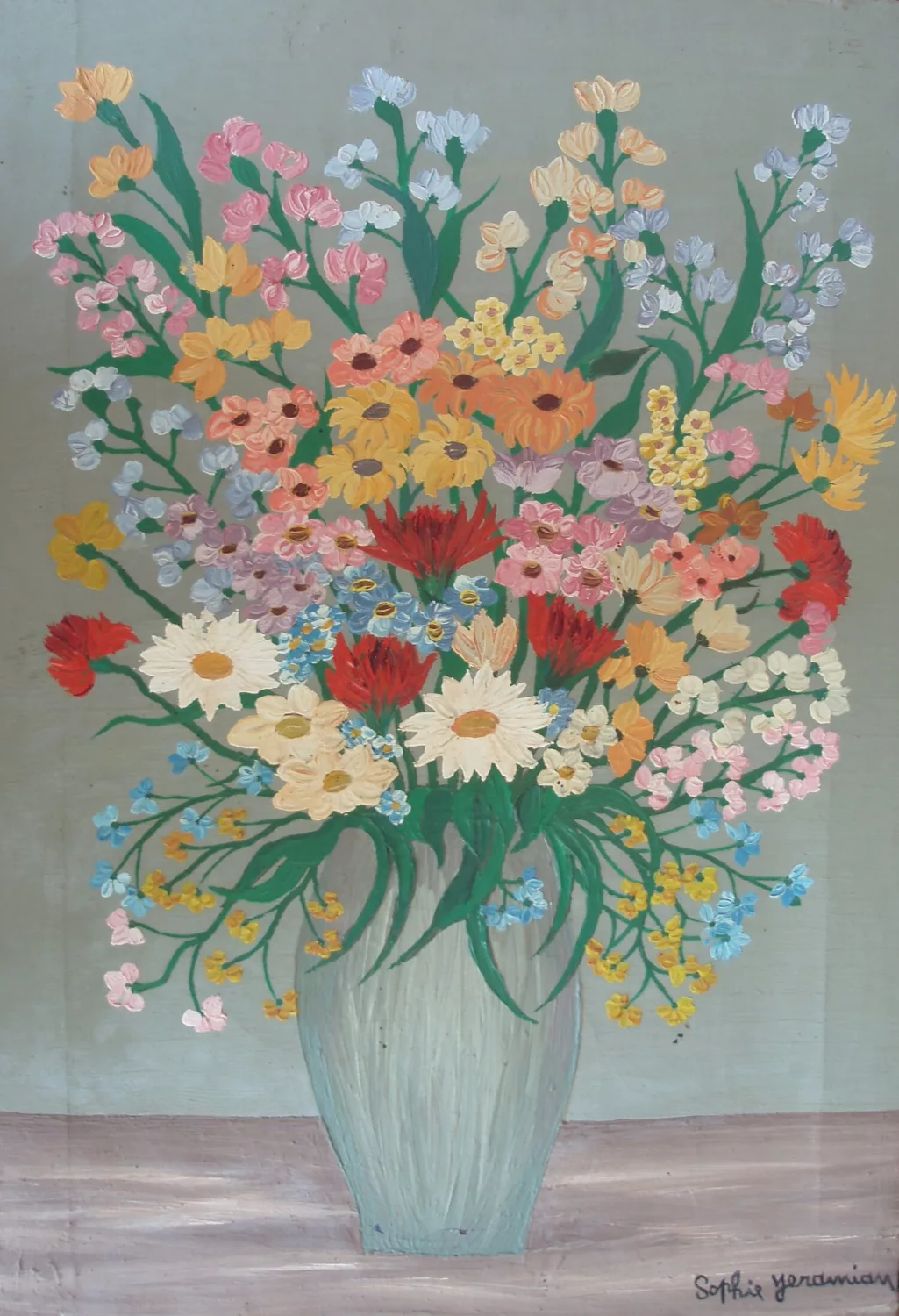
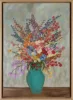
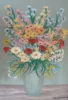
At the 8th Salon in 1968, her Vase de Fleurs (1968) was awarded the second prize for painting, and subsequently bought by the museum. After her participation at the 9th São Paulo Biennial in 1967, the first time that Lebanon took part in the biennial, the Brazilian government purchased her exhibited work Orange Harvest (1966). Other than participating in group exhibitions such as the Sursock Museum salons and those organised by the Lebanese Ministry of National Education and Fine Arts, S. Yeramian regularly held solo shows at various locations across the Lebanese capital, including the gallery of the newspaper L’Orient (1963), Carlton Hotel (1964), Alumni Club (1967), Saint-Georges Hotel (1969, 1974), Hotel Vendome (1970, 1972), Galerie Chahine (1980) and at the Académie Libanaise des Beaux-Arts (1982).
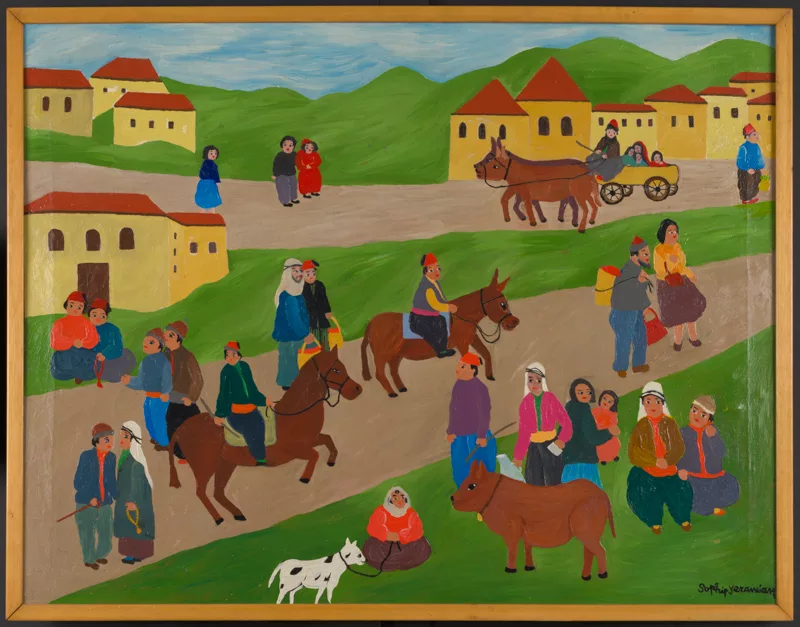
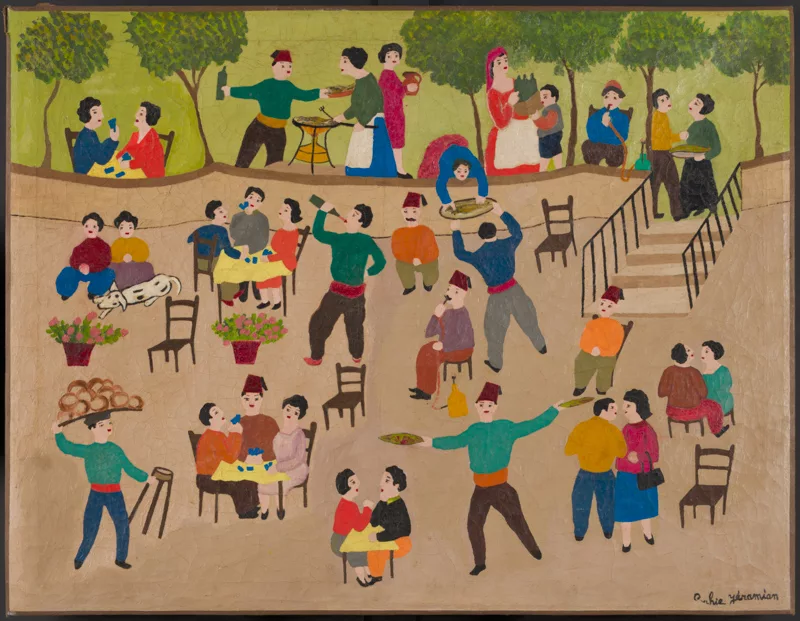
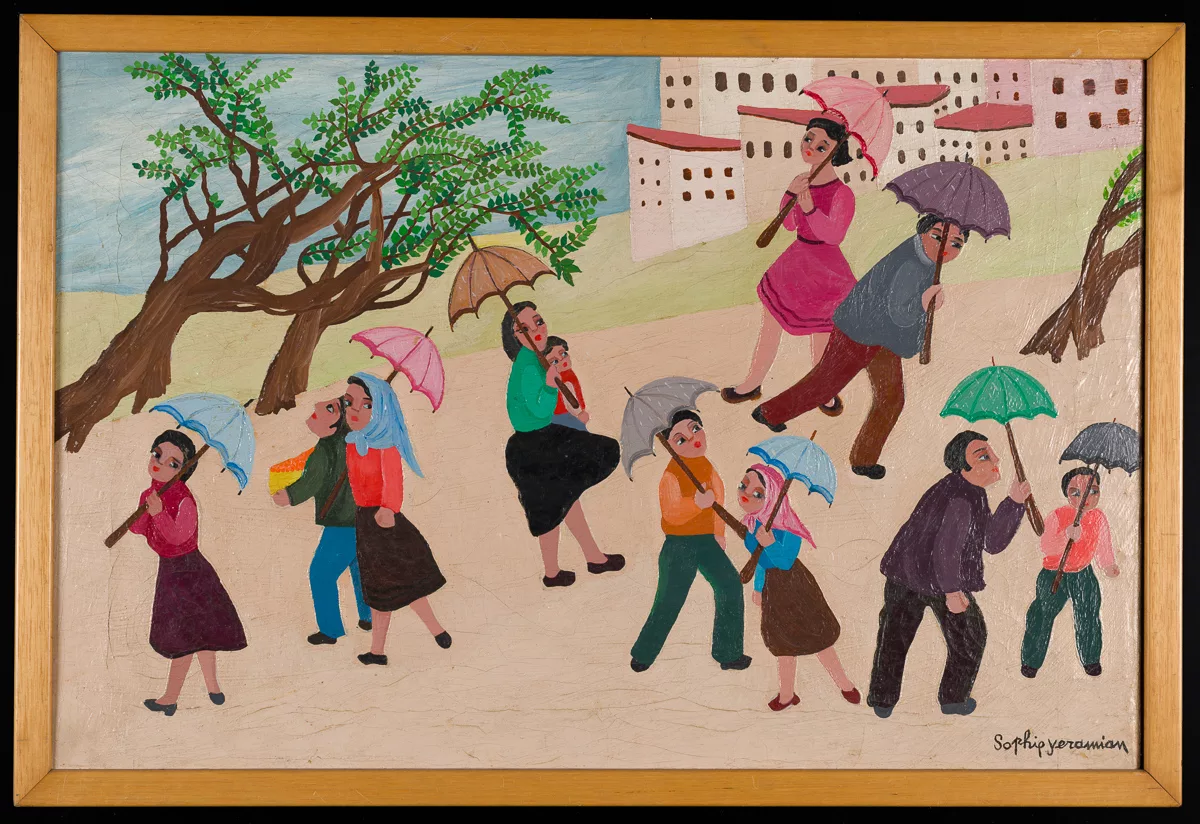
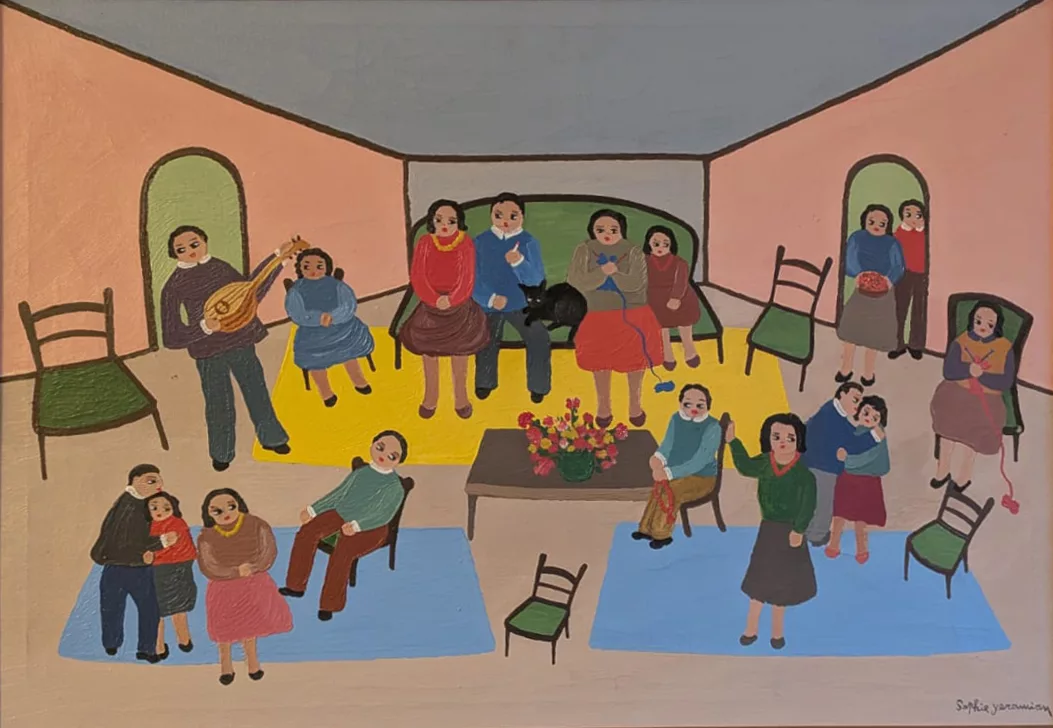
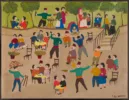
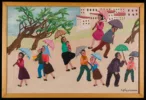
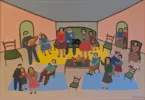
Through her work illustrating instances of daily life, such as village scenes, weddings, dances, children playing or women bathing, S. Yeramian invites the viewer to join in with these merry happenings. Her paintings are full of people and animals moving in different directions, and life amongst the red-roofed houses or in nature is lived in community. Café (undated) gives a good idea of her style. In a simple outdoor setting, people sit and talk, drink, eat, smoke an argileh, share and discuss. The paintings are usually flat and colourful. If she is not depicting daily life in all its movement, she paints bouquets of flowers.
S. Yeramian’s work can be found in major public collections of art from Lebanon, such as the Sursock Museum and the Beirut Museum of Art, and in many private collections across Lebanon and beyond. Her melodious depictions of village life in their simple cheerfulness appealed to all.
A biography produced by AWARE: Archives of Women Artists, Research and Exhibitions in partnership with The Beirut Museum of Art (BeMA)


 5 de pic – Sophie Yeramian, produced by Télé Liban, 2017