


Bettina Samson
Nominee of Prix 2026

Portrait of Bettina Samson
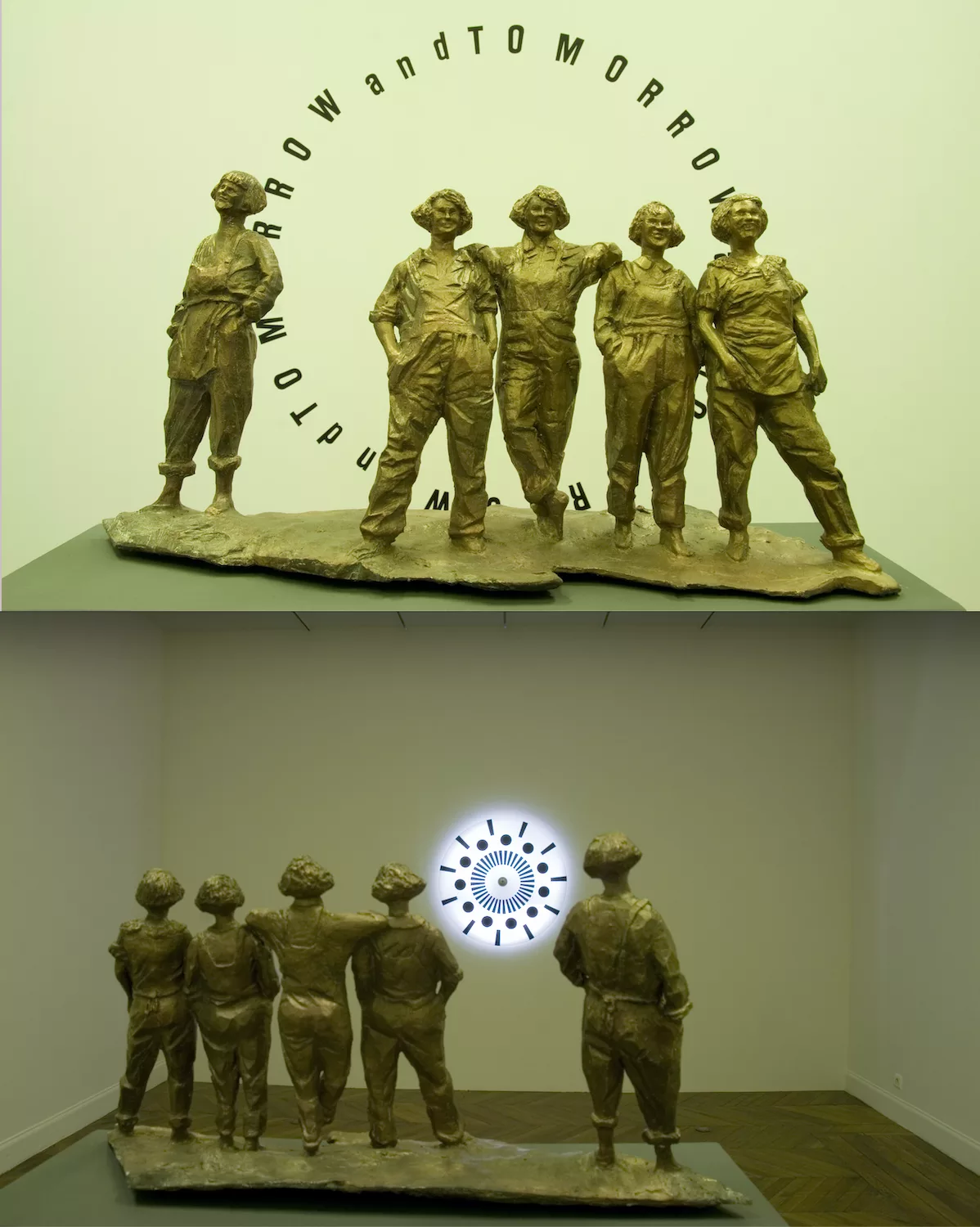
Bettina Samson, Tomorrow and Tomorrow and Tomorrow, installation with Tomorrow and Tomorrow and Tomorrow, 2009, adhesive lettering on a wall, facing a rotating stroboscopic device made of opal plexiglass, adhesive cutouts, motor, timer, neon lighting, filters, 100 × 100 cm ; members of the Utopian Commune of Llano del Rio, as unseen by Aldous Huxley, who lived next to its ruins years after, 2009, raw bronze, 26 × 45 × 18 cm, personal exhibition, La Galerie, Noisy-le-Sec, 2009-2010 cur. Marianne Lanavère, © Photo: Cédrick Eymenier
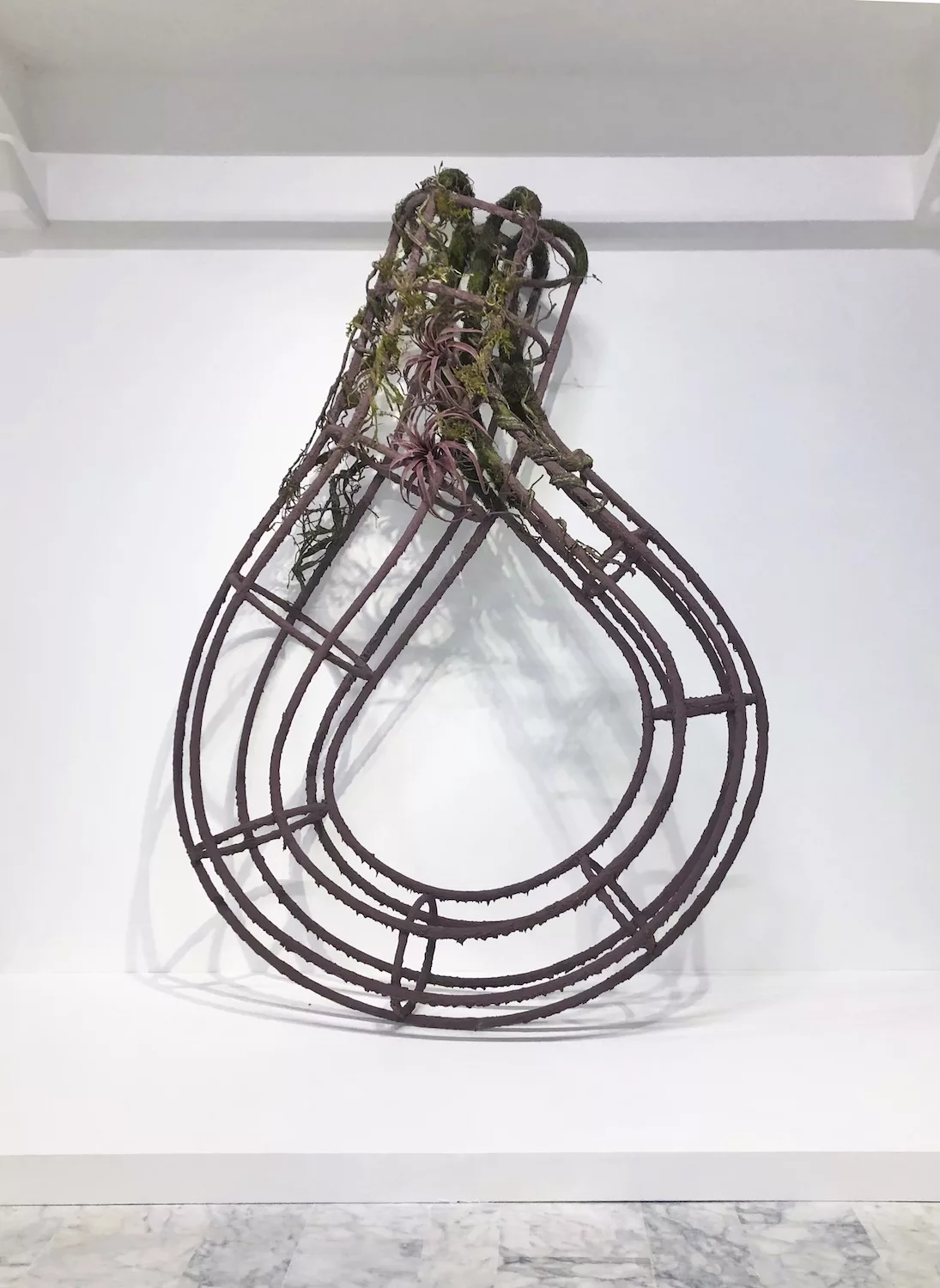
Bettina Samson, Three Loops for a Fourth Dimension, 2013, steel, resin, pigments, sand, artificial vines, 250 × 180 × 65 cm, © Photo : MAC Marseille, exposition collective Parade, Musée d’Art Contemporain de Marseille, 2023
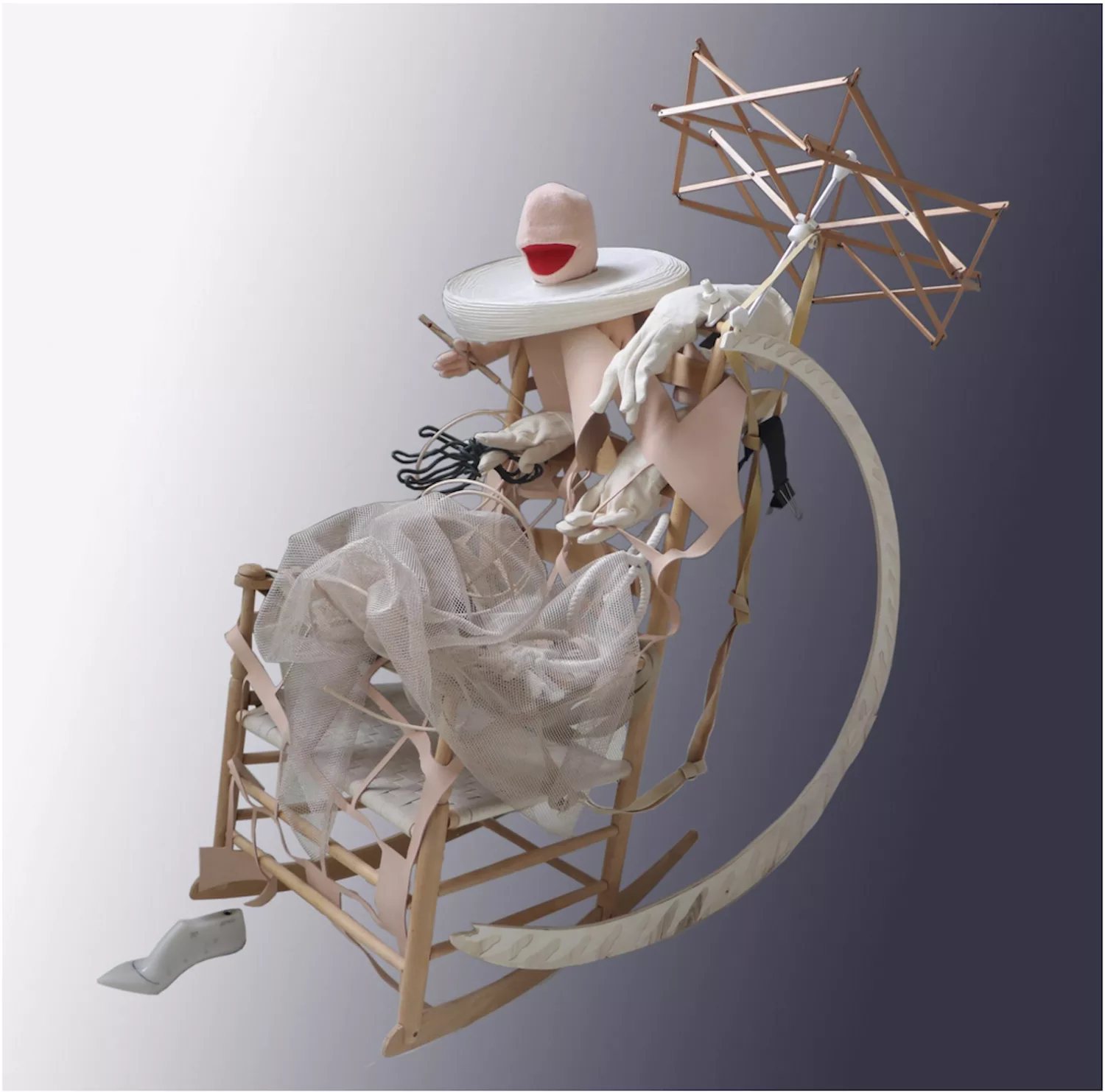
Bettina Samson, Tabitha Babbitt’s Chariot (Circular Saw Rocking Chair), 2019, shaker chair, wood, leather, textiles, felt, composite materials, 80 × 145 × 125 cm, © Photo: Bettina Samson
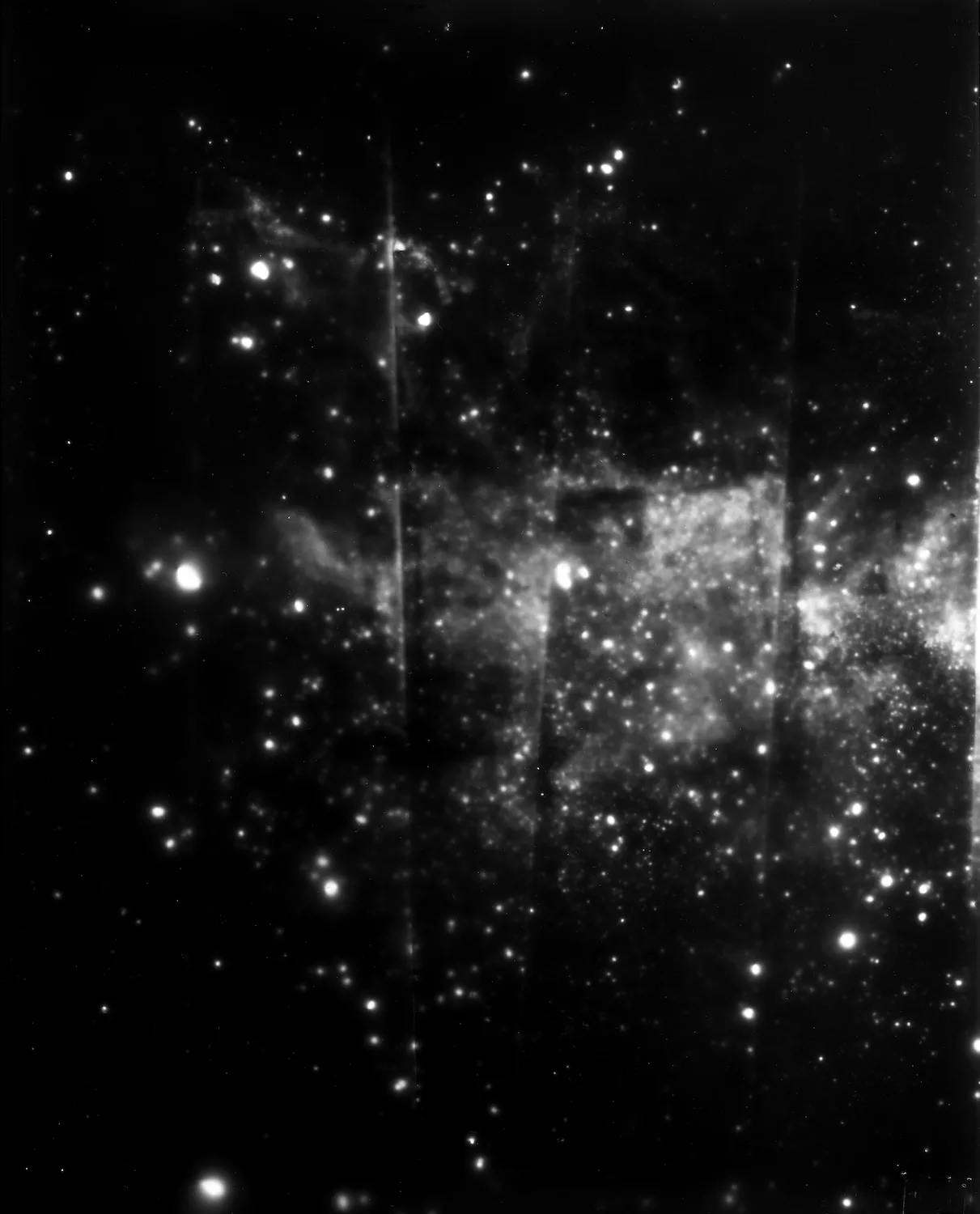
Bettina Samson, Silver Nuclear Dust II, 2014, black and white gelatin silver print on baryta paper, 175 × 140 cm, © Photo: Bettina Samson
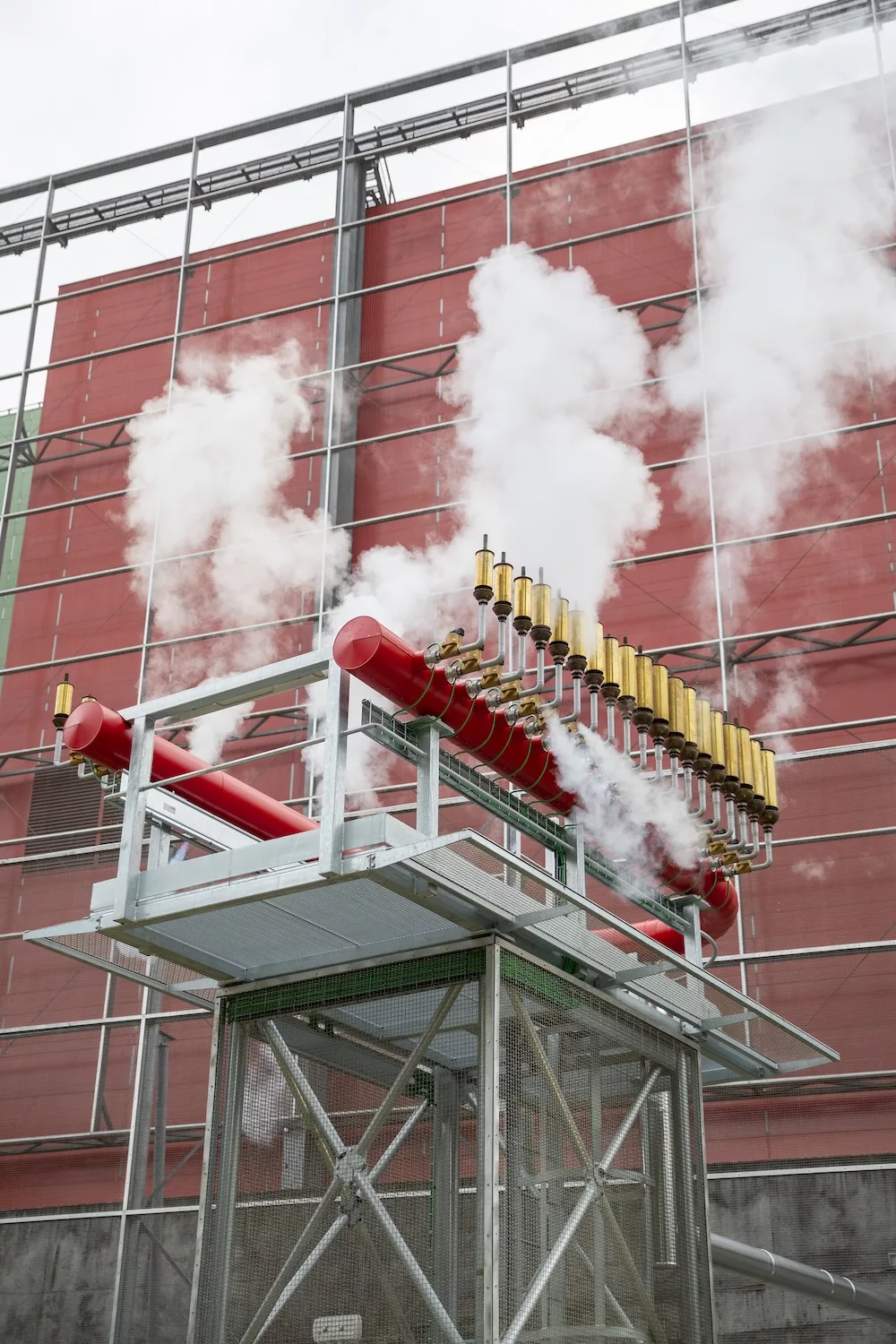
Bettina Samson, La Vase et le Sel, 2019, public commission Garonne Bordeaux Métropole – Art in the City, location: site of the Environmental Technical Center in Bègles, rue Louis Blériot, Garonne side on the towpath, project manager Zebra 3, © Photo: Jean-Baptiste Mengès for Bordeaux Métropole
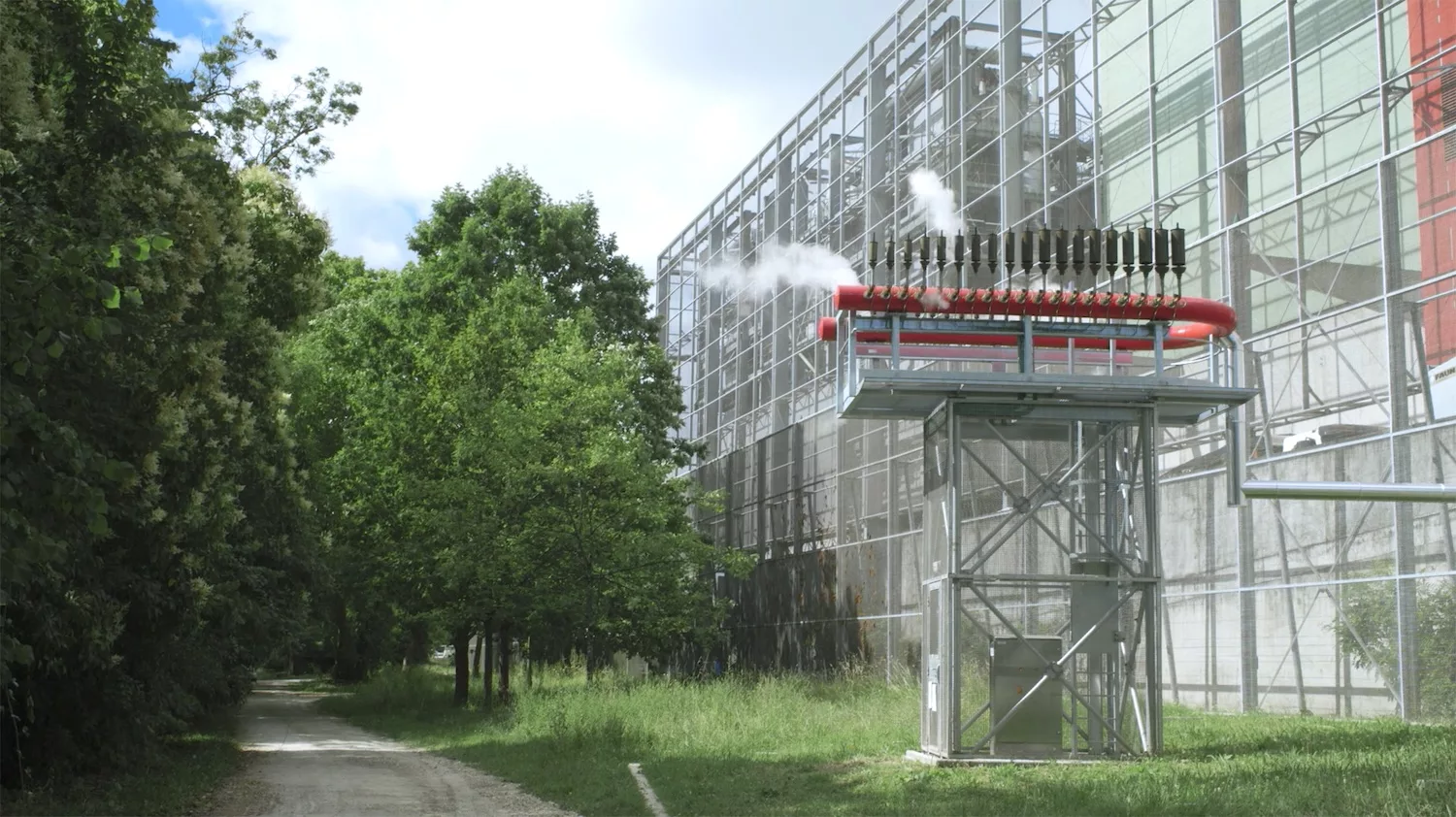
Bettina Samson, La Vase et le Sel, 2019, public commission Garonne, Bordeaux Métropole – Art in the city, location: site of the Technical Centre for the Environment in Bègles, rue Louis Blériot, Garonne side on the towpath, project manager Zebra 3, © image taken from the film La Vase et le Sel (Hoodoo Calliope), by Stanislas Cadéo, Ombline Ley and Caroline Capelle, 2020
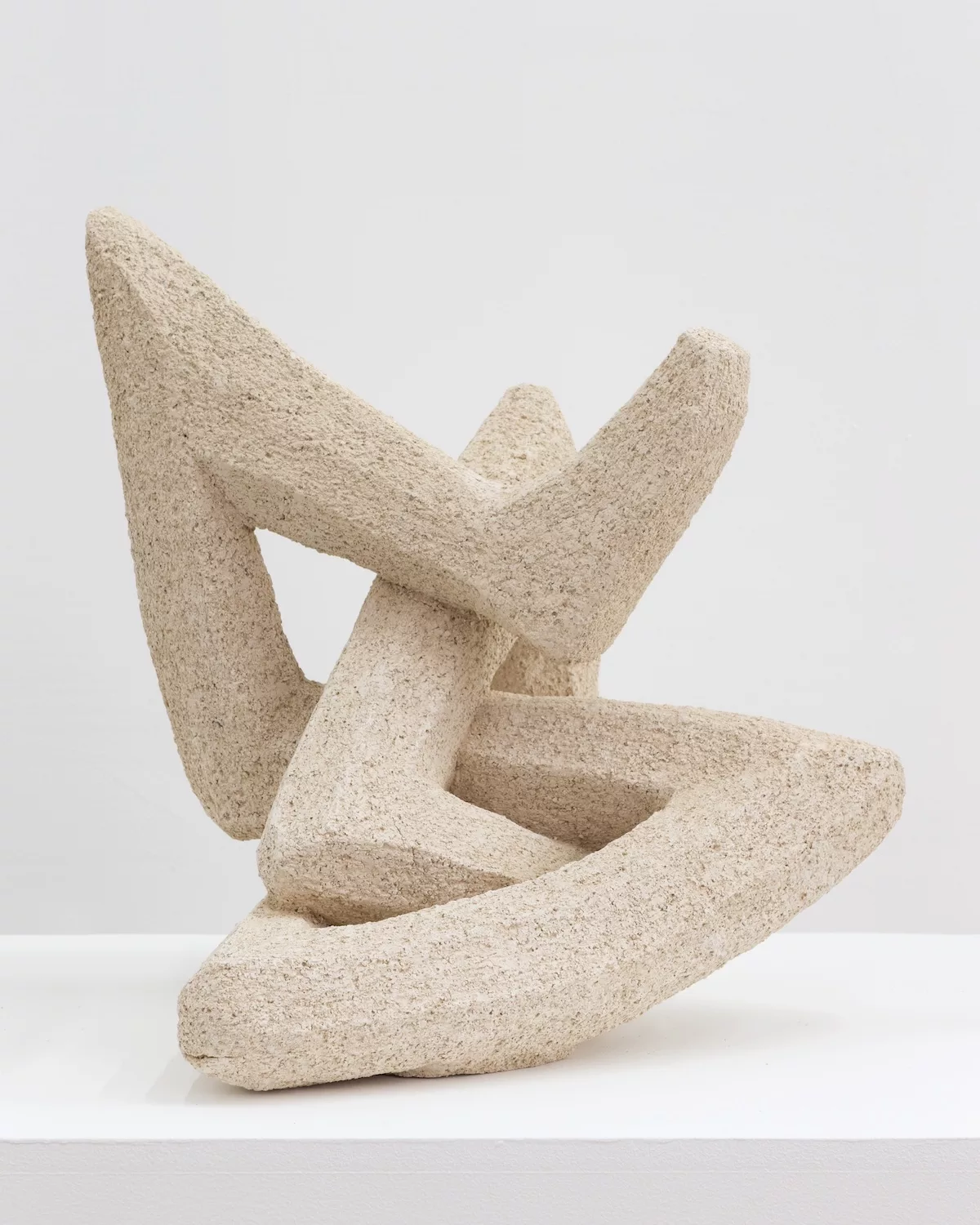
Bettina Samson, Kink (More Honour’d in the Breach) IV, 2015, chamotte stoneware, low temperature firing, 50 × 50 × 45 cm, private collection, © Photo: Claire Dorn
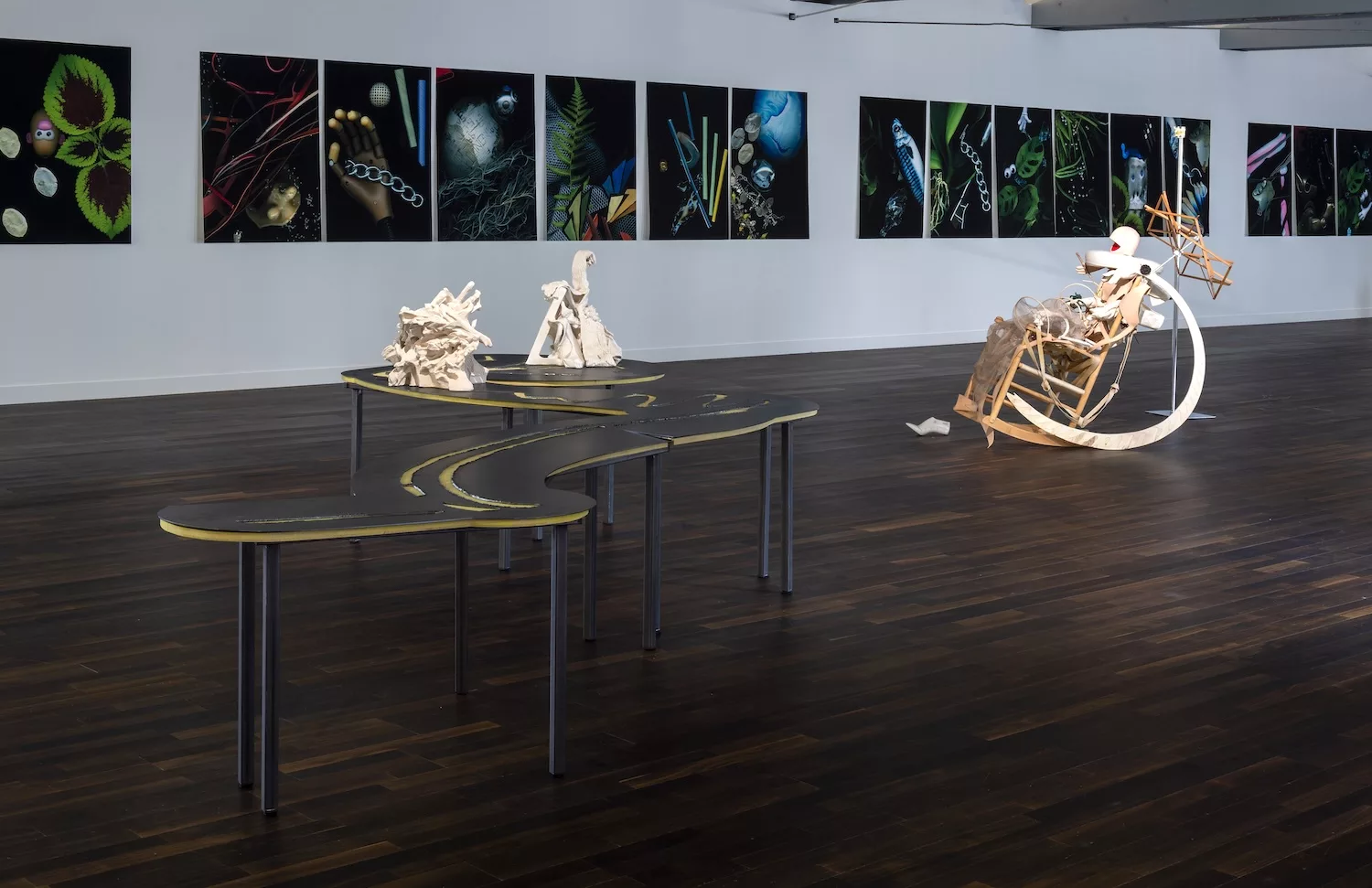
Bettina Samson, view of the exhibition Krypton Series, 2021, Frac Normandie, Caen, with the works: Krypton Series 1-19, 2019, set of posters, four-color printing on smooth matte art paper, 84 × 120 cm ; Tabitha Babbitt’s Chariot (Circular Saw Rocking Chair), 2019, wood, leather, textiles, felt, composite materials, 80 × 145 × 125 cm ; Mesh Sculpture I, 2020, raw earthenware, 50 × 40 × 55 cm ; Mesh Sculpture II, 2020, raw earthenware, 50 × 45 × 45 cm ; two sculptures are placed on Gift Drawing Tables, 2019, laser-cut and manually oxy-cut steel, wood, magnets, variable dimensions, © Photo: Marc Domage
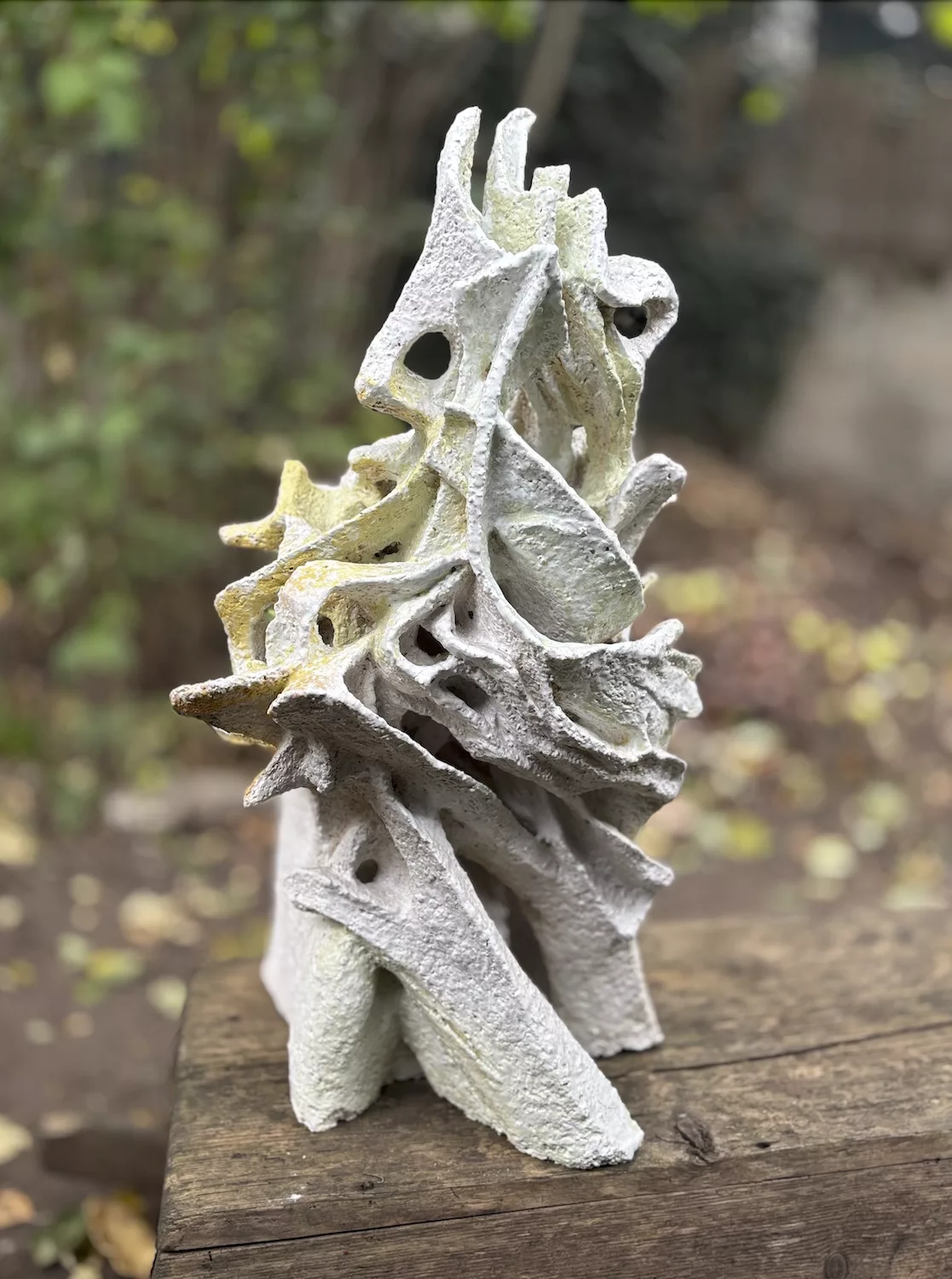
Bettina Samson, Frozen / Garden, 2024, ceramic, glazed chamotte stoneware, high-temperature firing, 40 × 45 × 70 cm, © Photo: Bettina Samson
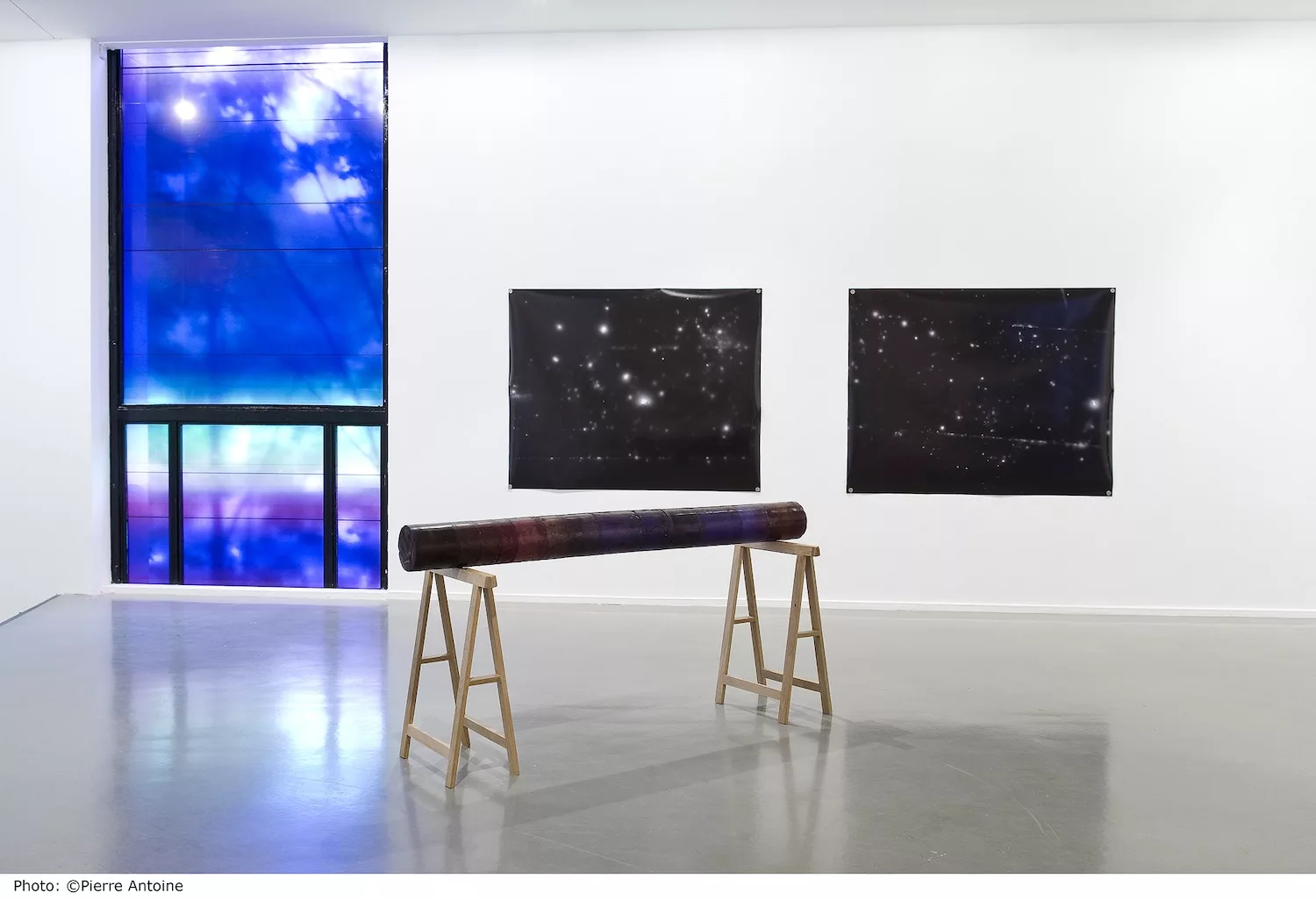
Bettina Samson, Dynasty, 2010, group exhibition, Musée d’Art moderne de la Ville de Paris/ARC, Spectres, installation composée de : Première photographie du spectre solaire, altérée par le temps et avec raies d’absorption, 2009, inkjet printing on adhesive vinyl with a transparent background, 210 × 405 cm, artwork created for the exhibition Dynasty the size of a window in the Musée d’Art Moderne de la Ville de Paris and produced by the City of Paris, Paris Musées, with the support of the Friends of the Musée d’Art Moderne de la Ville de Paris; Première photographie du spectre solaire, altérée par le temps et sous la forme rêvée d’un carottage, 2009, epoxy resin, dyes, oak wood, 200 × 40 × 75 cm ; Nuclear Dust, 2009, two inkjet photographic prints, 150 × 190 cm, © Photo: Pierre Antoine
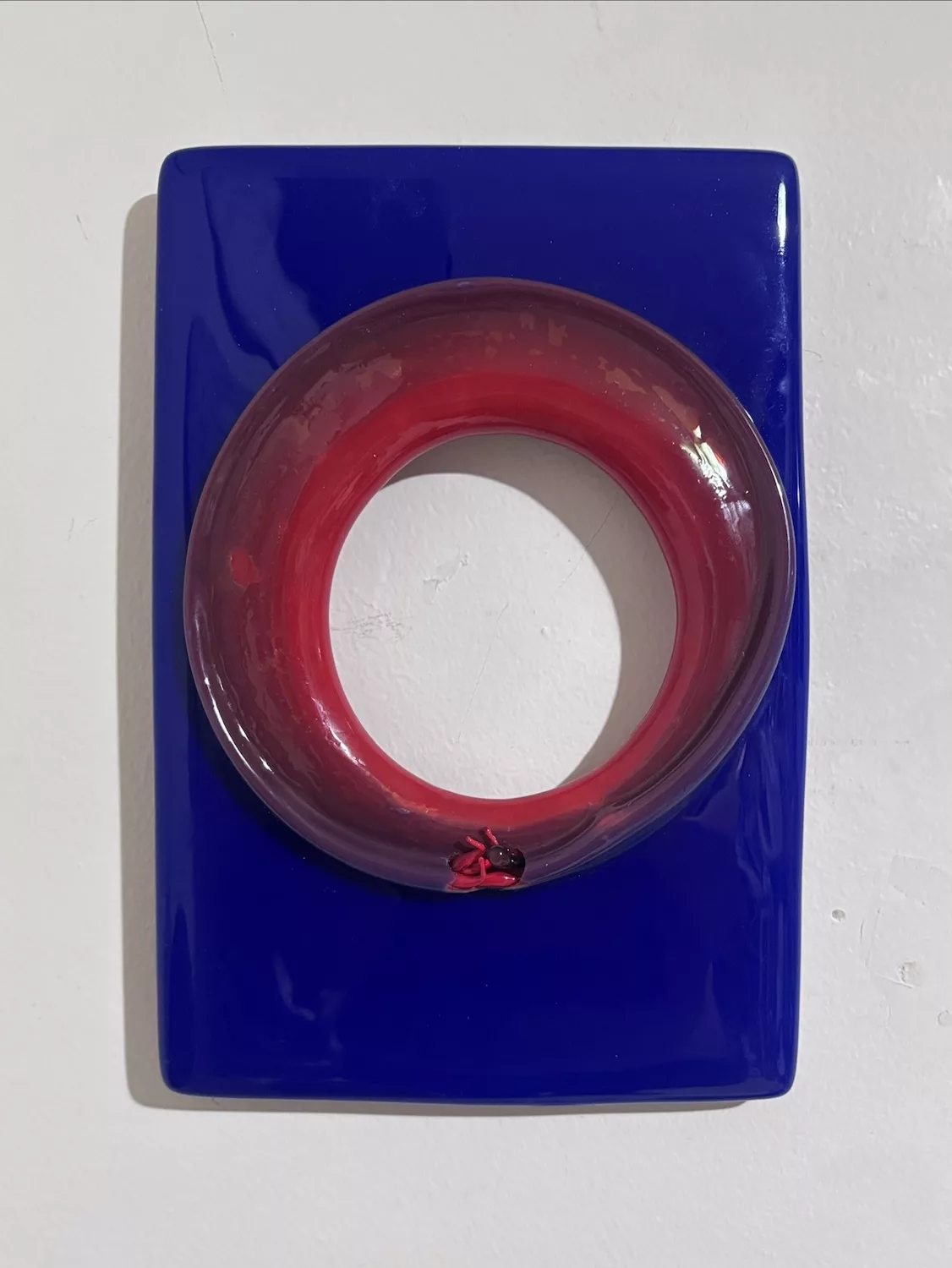
Bettina Samson, Dead Heat II, 2016-2025, fused and blown colored glass, 28 × 19 × 3.7 cm, © Photo: Bettina Samson
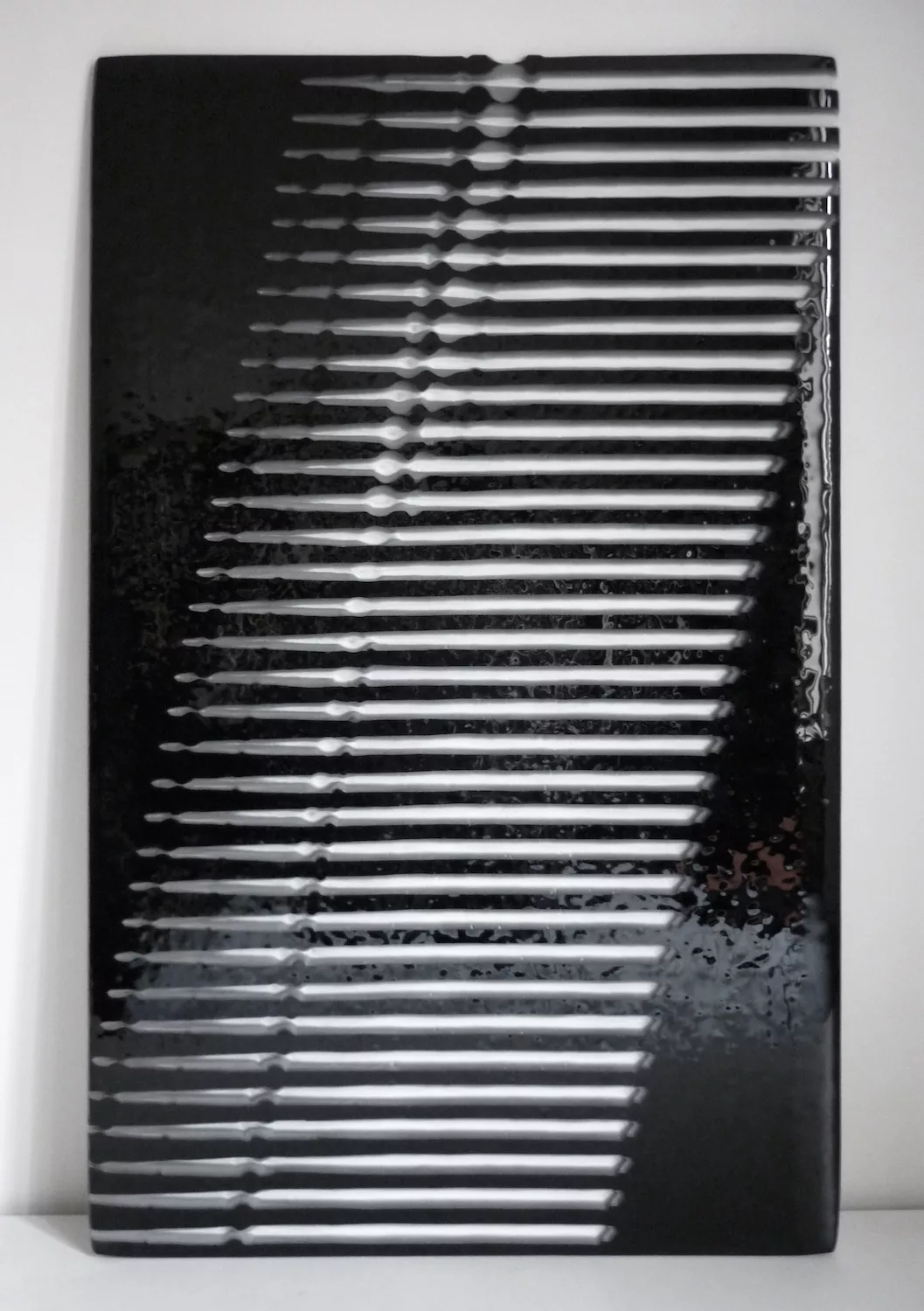
Bettina Samson, Contre-Jour (For a future Observation of Dark Matter) II, 2013, fused glass, sandblasted and engraved, 62 × 102 × 2 cm, this work is part of a series of nine created following a residency at the OSU Institut Pythéas and Frédéric Zamkotsian’s laboratory at the LAM (Laboratoire d’Astrophysique de Marseille), as part of the Euro-Mediterranean Workshops of Marseille-Provence 2013, in partnership with the Frac PACA., exhibition La Fabrique des Possibles, Frac PACA, 2013, © Photo: Bettina Samson
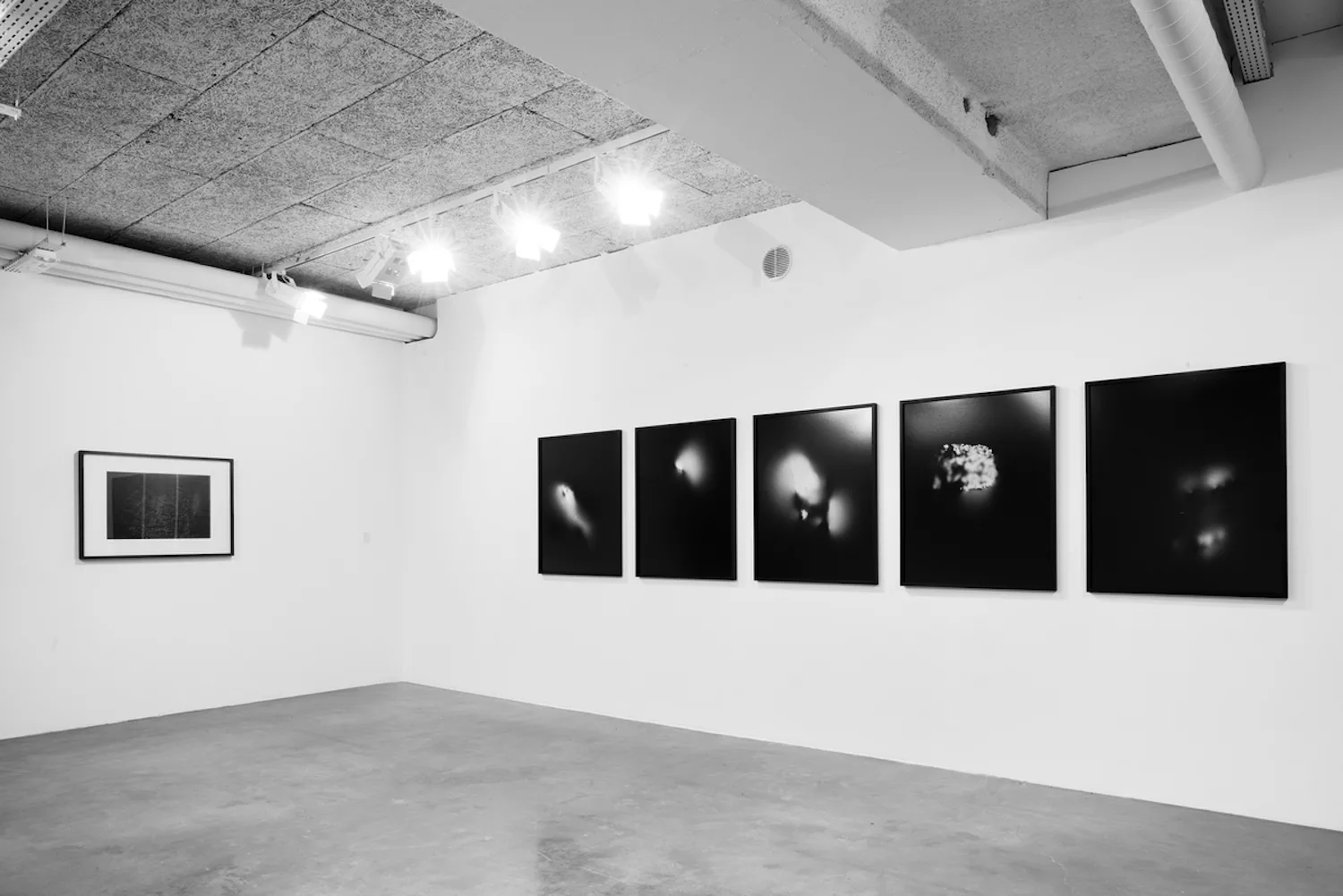
Bettina Samson, Comment, par hasard Henri Becquerel découvrit la radioactivité, 2009, 5 black and white gelatin silver prints on baryta paper, from the series of 9, 80 × 100 cm, by photography, Collection FRAC Ile-de-France, exposition Paint it Black, Frac Ile-de-France, Le Plateau, 2013, © Photo: Martin Argyrogl
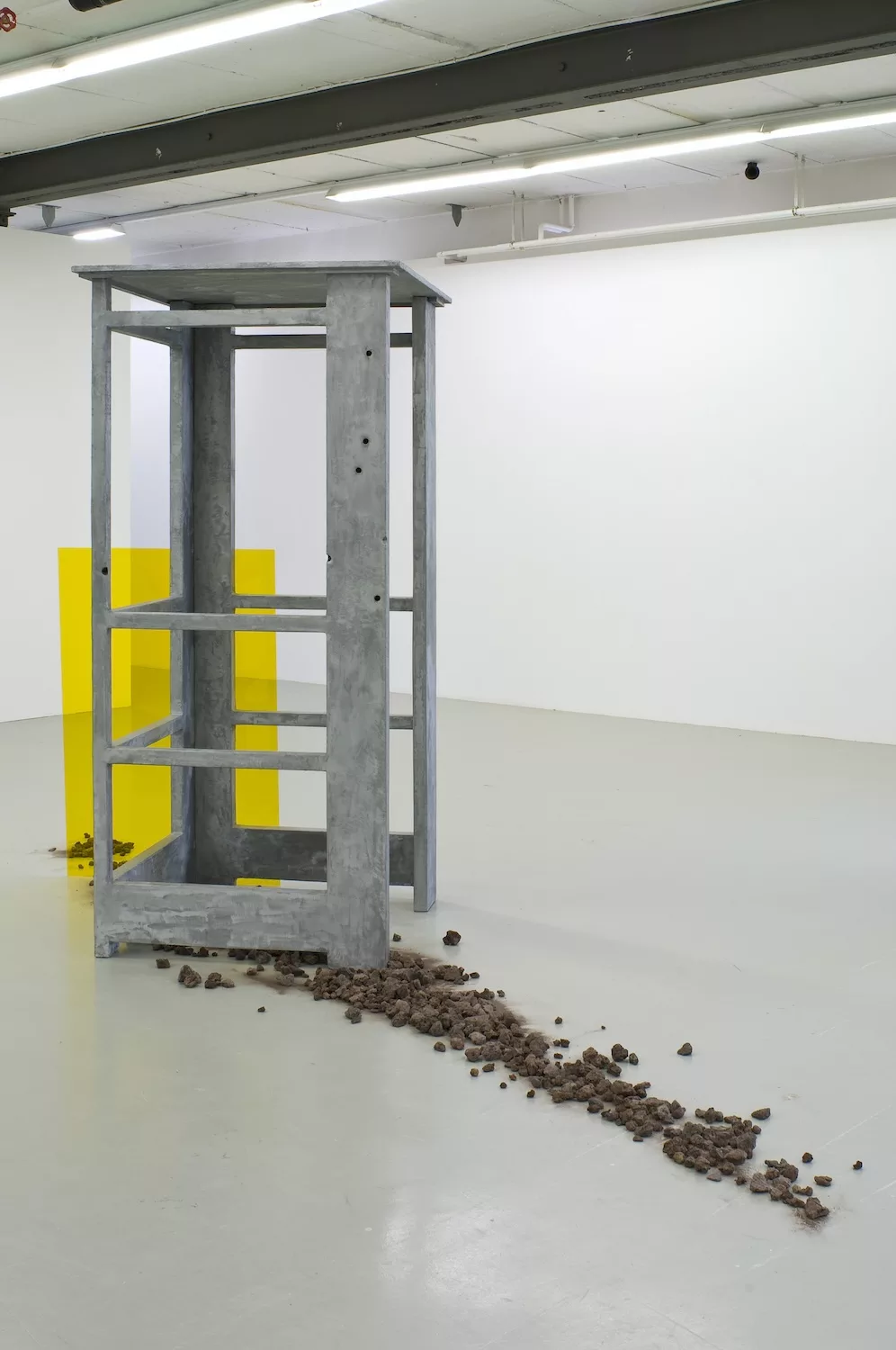
Bettina Samson, Cinder Peak Phone Booth Replica (Bluejacking), 2008, resin, aluminum, wood, plexiglass, volcanic stones, PC, and Bluetooth dongle, 210 × 100 × 300 cm minimum, © Photo: Umberto Romito, exposition Die Wiederholung der Zeichen, cur. Fanny Gonella, Altefabrik, Rapperswil, Suisse collection privée
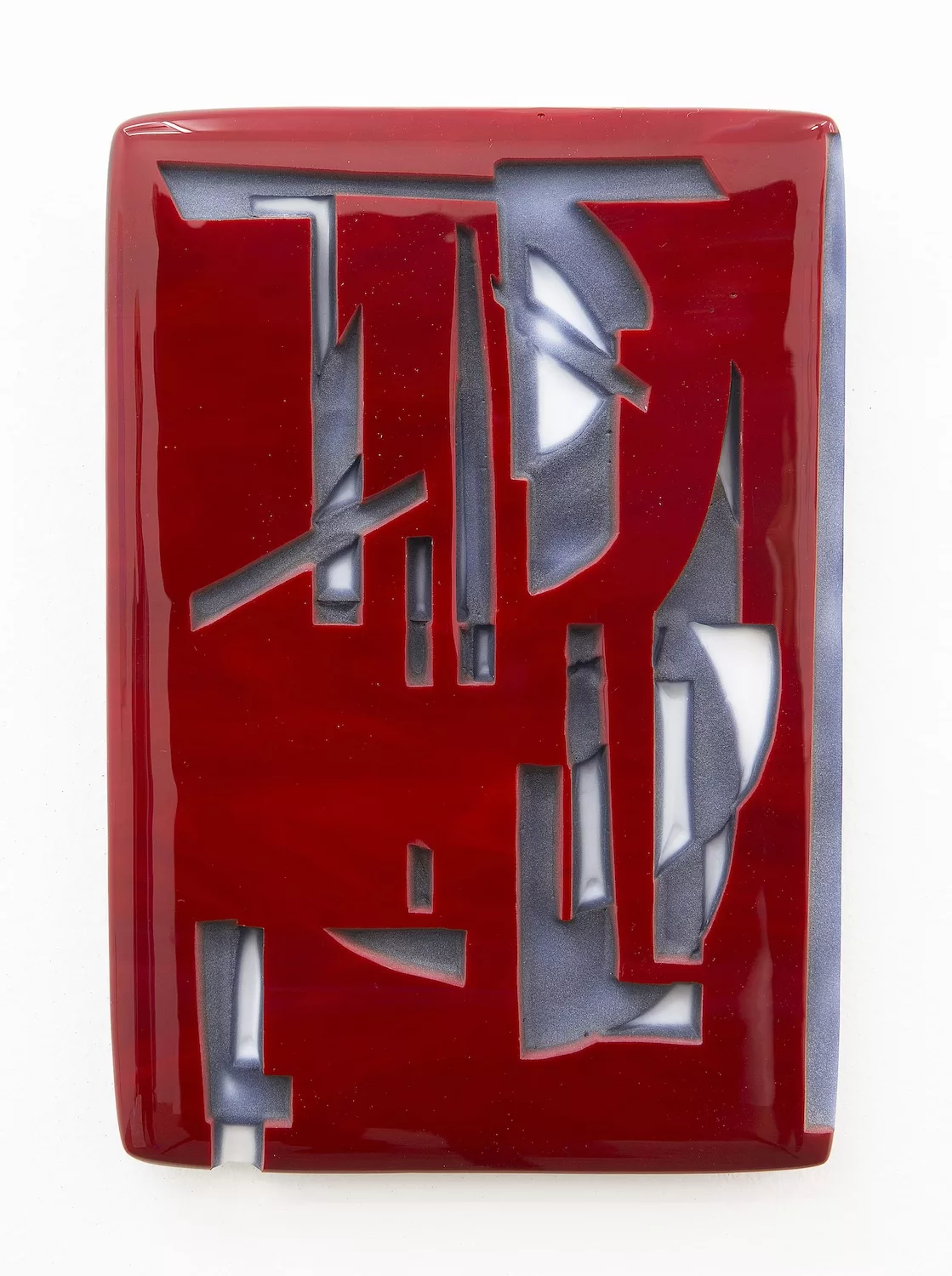
Bettina Samson, By the Hollow I, fused and sandblasted colored glass, 16 × 23 × 2 cm, collection privée, © Photo: Claire Dorn
Bettina Samson now calmly reveals what was until recently unutterable: the deep origins underpinning her creations. Eclectic, formed through wanderings and experimentation, punctuated by accidents and invisible forces, sustained by a hand-to-hand struggle with matter as a lifeline, they are inspired by the disorientation induced by the studio at night. Central figures – doctors, curators and fellow artists – join B. Samson and make up the living fabric of her practice, maintaining active vigilance in the face of uncertainty, where every accident and hesitation becomes a path to explore. Since her clinical remission in 2003, she has compared her investigative approach to survival, creating work that explores optics and natural forces detectable solely via their tangible impact on the physical world. Les Batailles Nocturnes, for example, poetic works compiled on the Illness Narratives site (2024–2025)1 illuminate the effects of violence and the absurdity of ableist experiences that lead to horror and from which only fiction can bring release.
B. Samson channels her medical history – fraught with emergencies, loss of agency, wanderings, accidents and invasive procedures on her body – in creating borderless, permeable and life-tested bodies. Accordingly, her Mètis Metiista glass pieces and all of her ceramics function as systems of representation made available to others. They flirt with familiar forms – here we can make out an eye, there a limb – and host a constant journey between the interior and the exterior, refining themselves and exposing their cavities. This infinite motion and vitality make the crip2 rhythm of the depicted body perceptible.
Research on gravity, dark matter and the effects of radiation informs B. Samson’s inquiries in numerous works, such as the series Comment, Par Hasard, Henri Becquerel Découvrit la Radioactivité. In La Vase et le Sel, pulses from whistles and puffs of steam become mediums crossing through matter. This monumental installation is also an enigmatic self-portrait of the artist. If breath should be lacking and words no longer suffice, an opportunity to scream presents itself. As in Tomorrow and Tomorrow and Tomorrow, a temporality emerges that is specific to the medical experience, which establishes an endured, floating time, close to the altered states involved in shock – a reversible time, capable of unravelling and turning back on itself. Driven by uncompromising vitalism and moving to avoid being caught, B. Samson’s works are independent, living on their own, sustained by an energy that resists stillness.
Bettina Samson’s multidisciplinary practice encompasses sculpture, site-specific installation and photography. Her projects draw equally upon folk art, the avant-garde and utopian movements, technological developments and natural phenomena. Interweaving archival research and storytelling, her pieces bring to light overlooked narratives, including those connected to feminist movements. Through formal improvisation and extensive experimentation with materials such as ceramics, B. Samson plays with scale, perception and process, inviting the viewer to explore a world at the crossroads of science, history and mysticism.
Lucie Camous and Amélie Deschamps (duo)

