


Cécile B. Evans
Nominee of Prix 2026
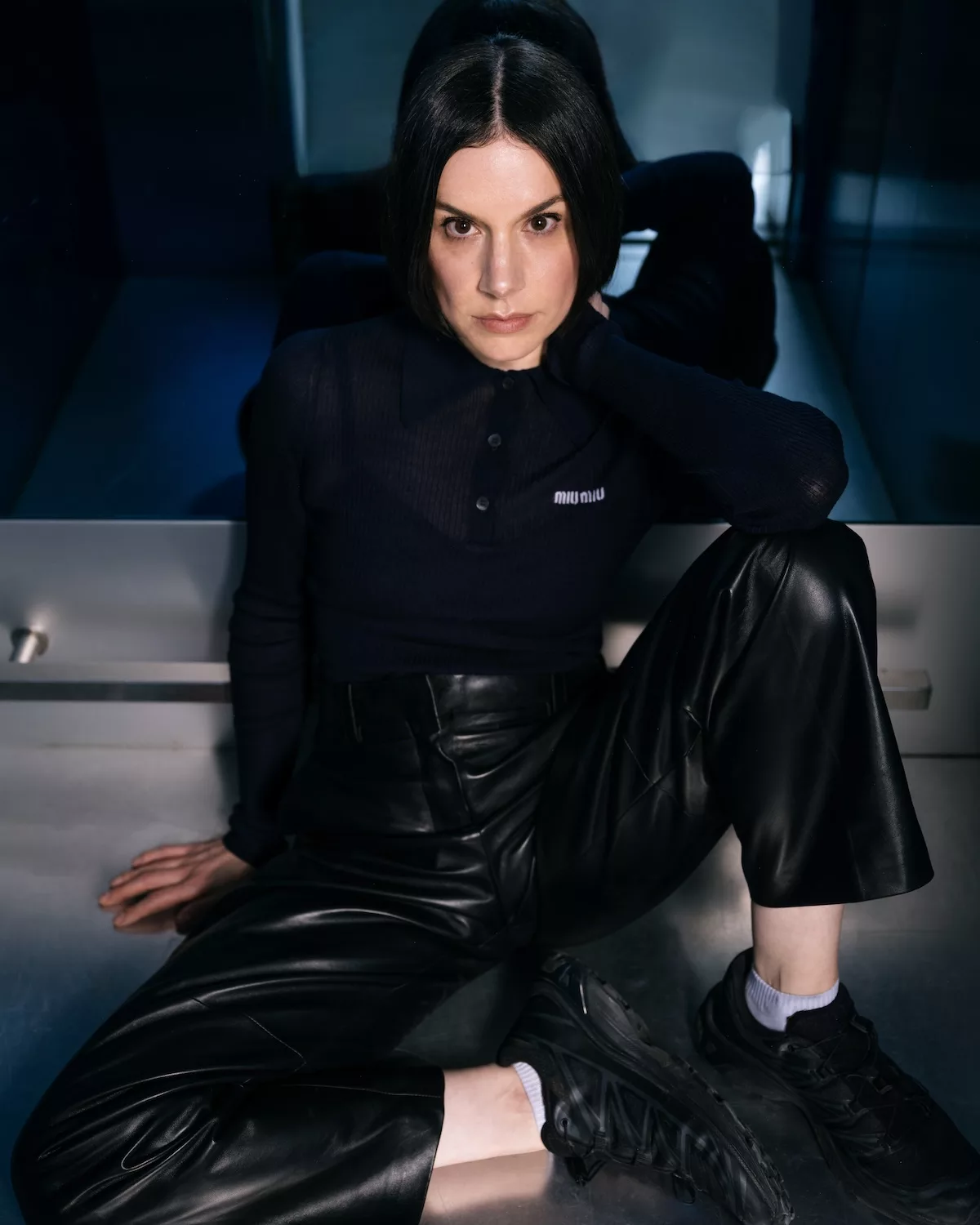
Portrait of Cécile B. Evans, © Ines Manai
Born in 1983 in the United States, in Cleveland (Ohio), and based in Saint-Denis, Belgian-American artist Cécile B. Evans’s (they-them) work lies at the point where human emotion intersects with the systems created for it, whether political, technological, or ideological. With a background training as an actor at NYU and later at the Cours Florent in Paris, C. B. Evans has developed, over the past fifteen years, a rich body of work rooted in film as a kind of expanded cinema. Often produced episodically, the films are frequently choreographed into large-scale installations that include sculpture.
Their practice resonates with a broader generation of artists attentive to the infrastructure of the digital economy often defined as ‘post-Internet’. Where much of the work associated with this generation foregrounds abstraction or alienation, C. B. Evans focuses instead on the ways human emotions, often treated as ineffable or interior, might be regulated and instrumentalised within technological, social and political systems. Their work renders those emotions tangible, examining how they might fail, resist or reorganise in the face of these forces.
C. B. Evans constructs complex worlds drawn from politics, literature, film and popular culture, using them as reference points that open onto speculative narratives. Through a collage of diverse animation methods, staged live action and found footage, their video works are built around storytelling. Typically centered on a protagonist accompanied by a constellation of other characters — human and non-human, fictional and real —, these narratives unfold through a layering of voices and images. Together they form dense, at times dizzying, dramaturgies in which subjectivity is constantly negotiated.
One of their earlier works, Hyperlinks or It Didn’t Happen (2014), consists of a semi-animated film narrated by PHIL, a badly rendered CGI copy of the late actor Philip Seymour Hoffman. Through this character, C. B. Evans interlaces a range of digital entities from bots to holograms, each searching for meaning in a world increasingly mediated by technological interfaces.
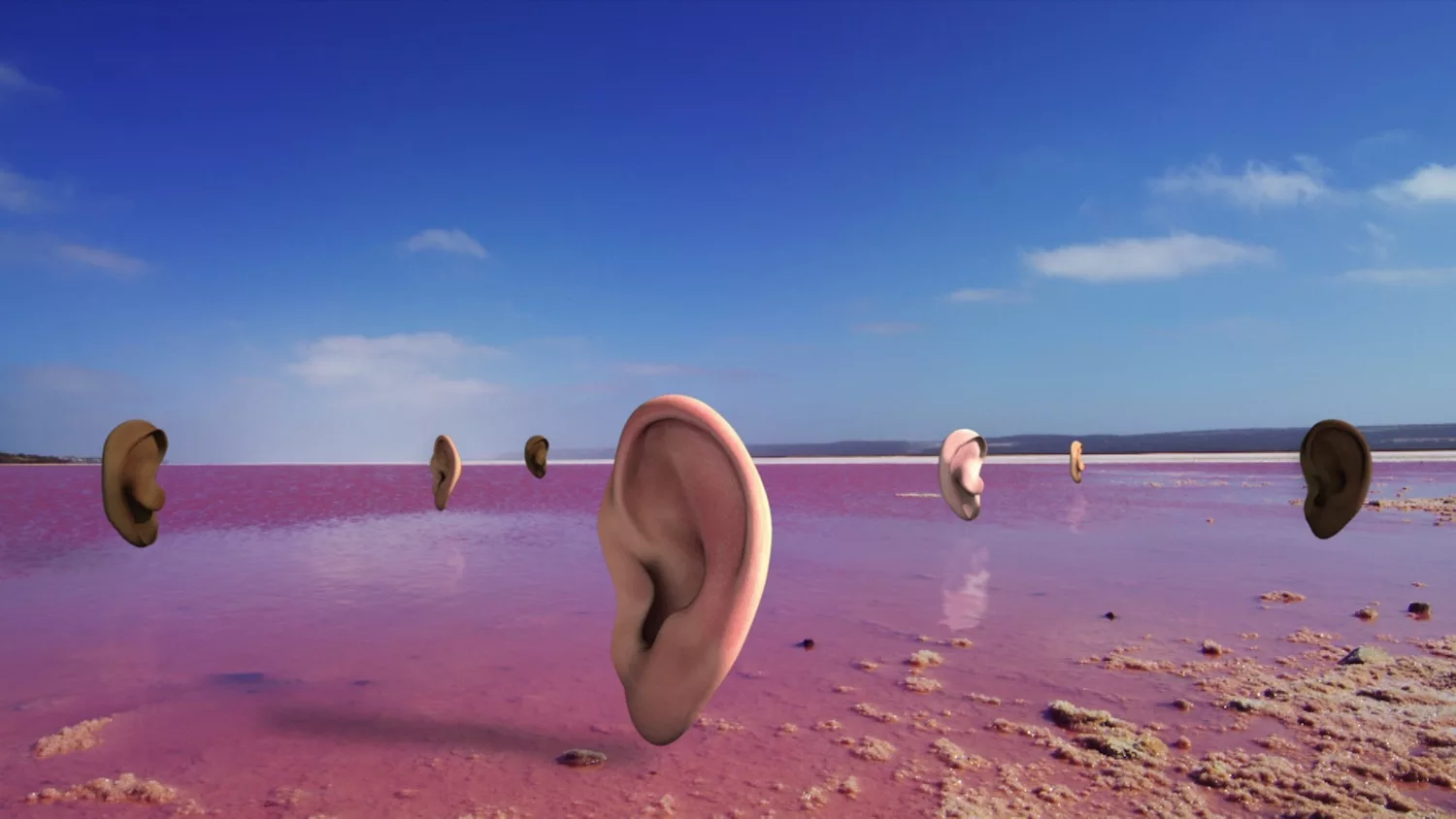
Cécile B. Evans, What the Heart Wants, 2016, HD Video, 41:05 min (video still), Courtesy the artist
Cécile B. Evans, What the Heart Wants, 2016, HD Video, 41:05 min (video still), Courtesy the artist
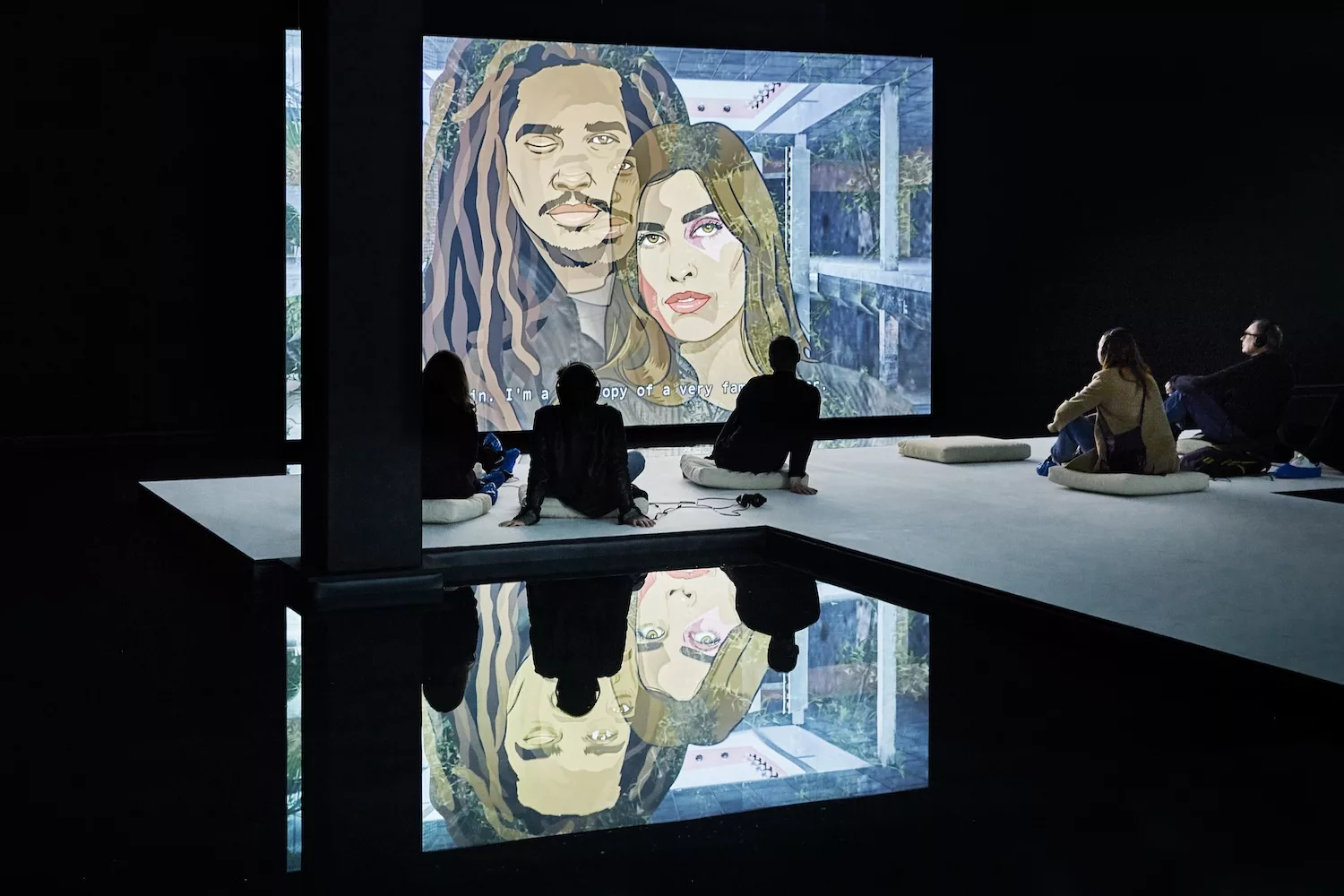
Installation view from Kunsthal Aarhus, 2017, courtesy of the artist and Emanuel Layr Galerie, Vienna and Rome, © Photo : Kaare Viemose
First presented in an early iteration at the Musée d’Art Moderne de la Ville de Paris and later reconfigured as an installation for the 9th Berlin Biennale, What the Heart Wants (2016) expands on this visual language. The work manifests as a large video projection set within a flooded exhibition space, and preceded by sculptural constellations of LCD screens and holocubes mounted on sweating plexiglass stands. It speculates on what it might mean to be human in the future, centring on HYPER — an omnipresent system that has achieved personhood — who enters into dialogue with a constellation of protagonists, together reflecting on the conditions of humanity.
In Amos’ World (2019), C. B. Evans’s speculative framework takes on a more concrete social setting. Structured across three episodes and presented as an installation incorporating architectural elements in concrete, the work adopts the format of a television series. It follows the character Amos, an archetypal starchitect, confronted with the growing discontent of residents living in the socially progressive housing complex he designed.
The four-part video installation Future Adaptations (2019–2022) adopts a similar episodic structure, drawing on the 19th century ballet Giselle. Produced in part with the National Ballet de Marseille under (LA)HORDE, and partly commissioned and later acquired by the Centre Pompidou, the work revisits Giselle as an eco-feminist thriller set in a near-future community where mutability, multiplicity and solidarity across human and non-human systems come to function as tools of resistance in the face of dark forces.
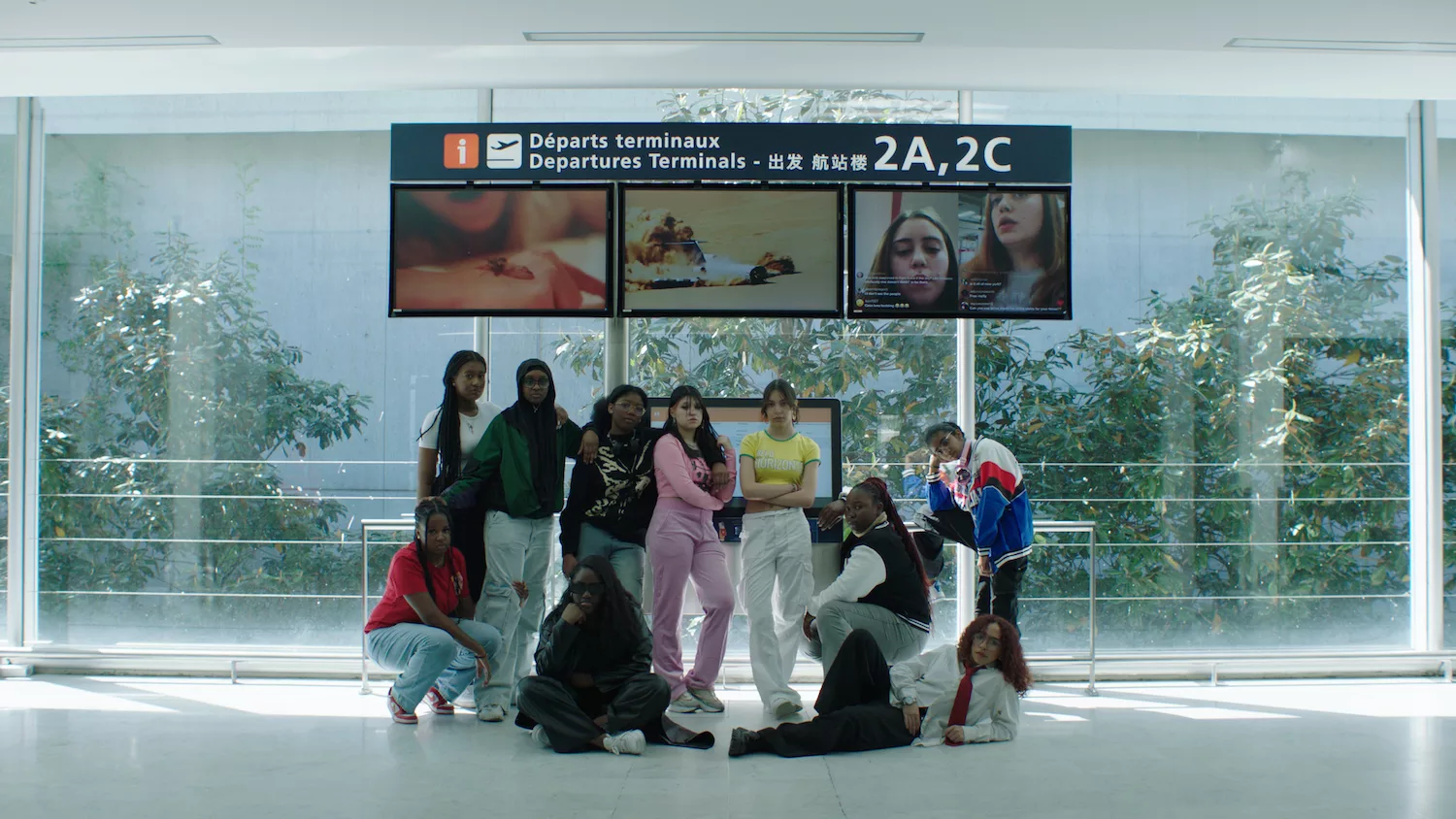
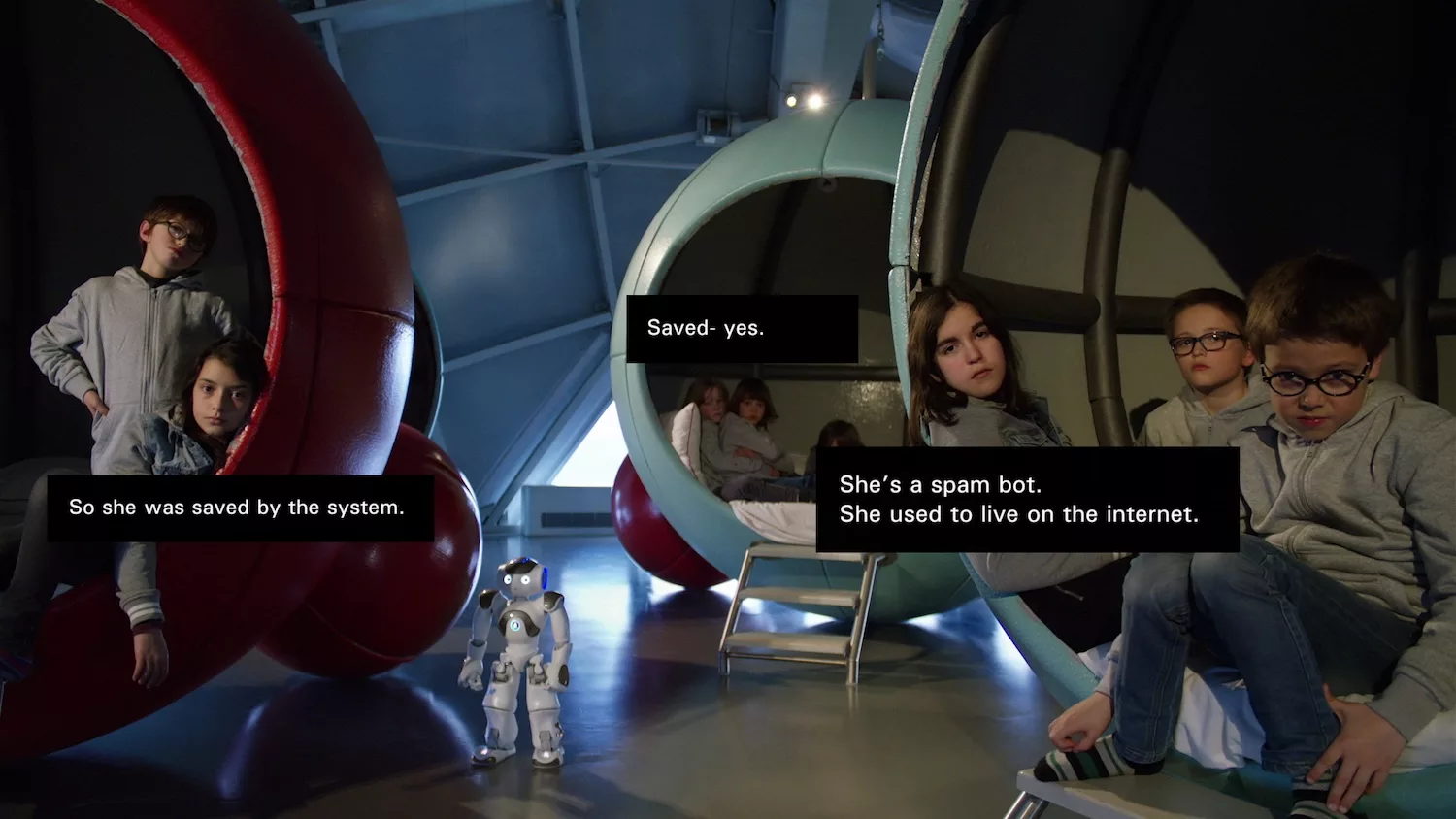
Cécile B. Evans, Reality or Not, 2023, courtesy the artist and Chateau Shatto, commissioned by Lafayette Anticipations, MaMBo, Fondazione MAST, Singapore Art Museum, SoDA Manchester, and Le Fresnoy
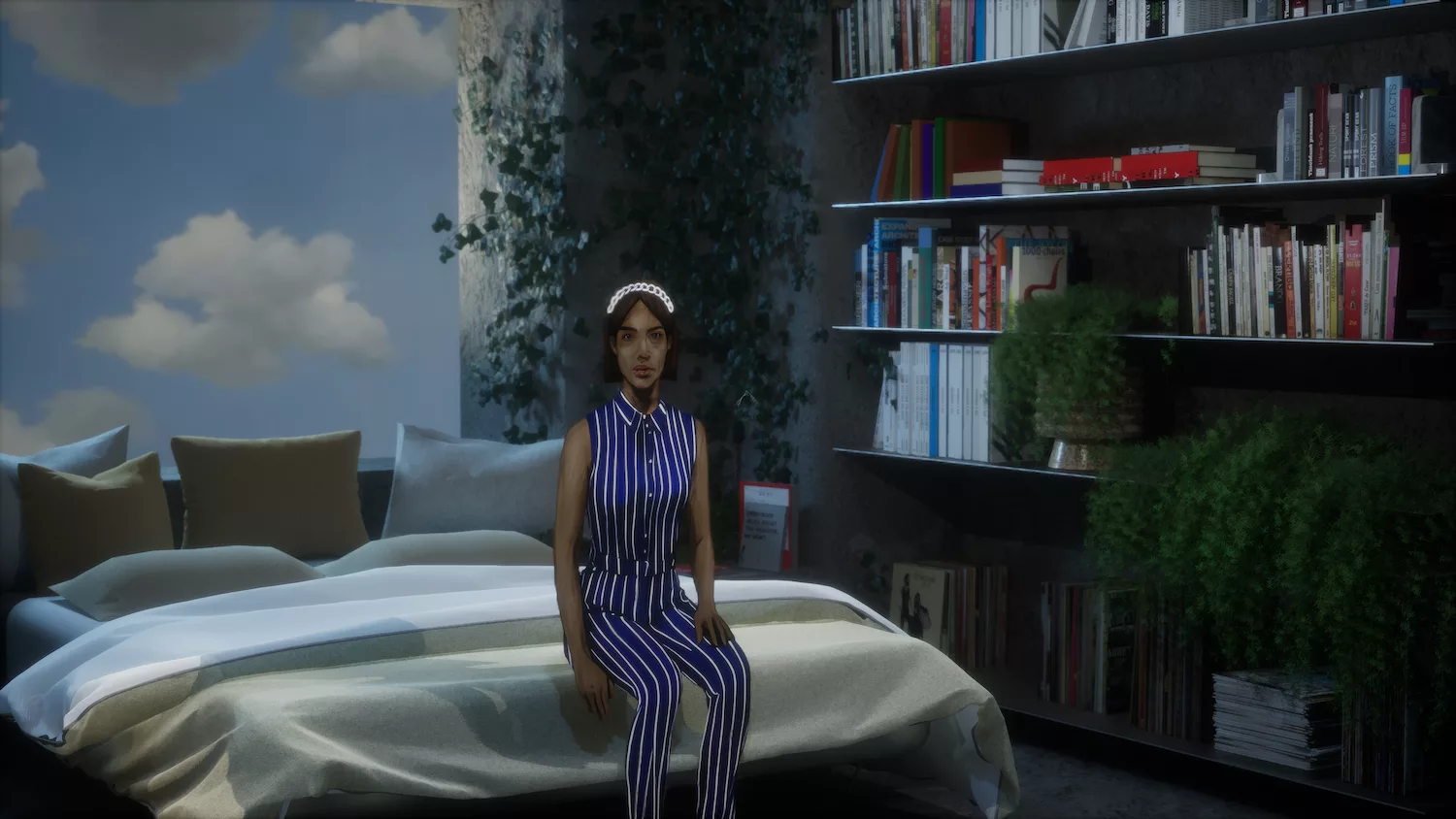
Cécile B. Evans, Reality or Not, 2023, courtesy the artist and Chateau Shatto, commissioned by Lafayette Anticipations, MaMBo, Fondazione MAST, Singapore Art Museum, SoDA Manchester, and Le Fresnoy
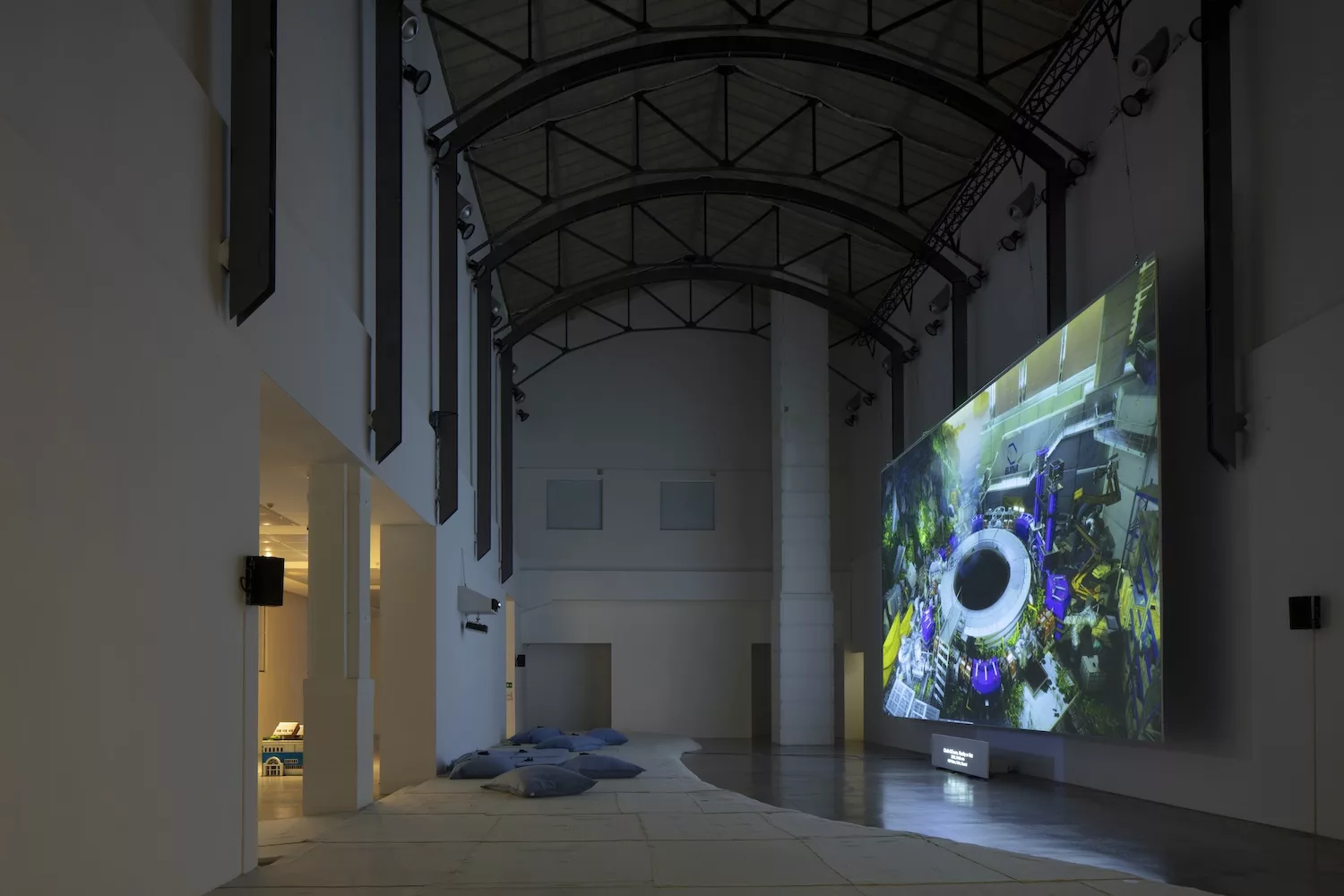
Installation view Reality or Not, 2023, Museo d’Arte Moderna di Bologna and Fondazione MAST, © Photo: Luca Capuano
In their more recent video and installation work Reality or Not (2023) C. B. Evans returns to a diverse constellation of references, mobilising the genre of reality TV to explore how reality is constructed. The work interlaces different characters including a ‘narrator’ — played by Alexandra Stewart, the English-language voice of Chris Marker’s Sans Soleil (1983), embodying institutional authority — with a group of real high school students from C. B. Evans’s neighbourhood in Saint-Denis. The group, self-named collective ‘Realitarians’, participate in a reality TV programme that prompts them to question dominant constructions of reality and imagine other alternatives.
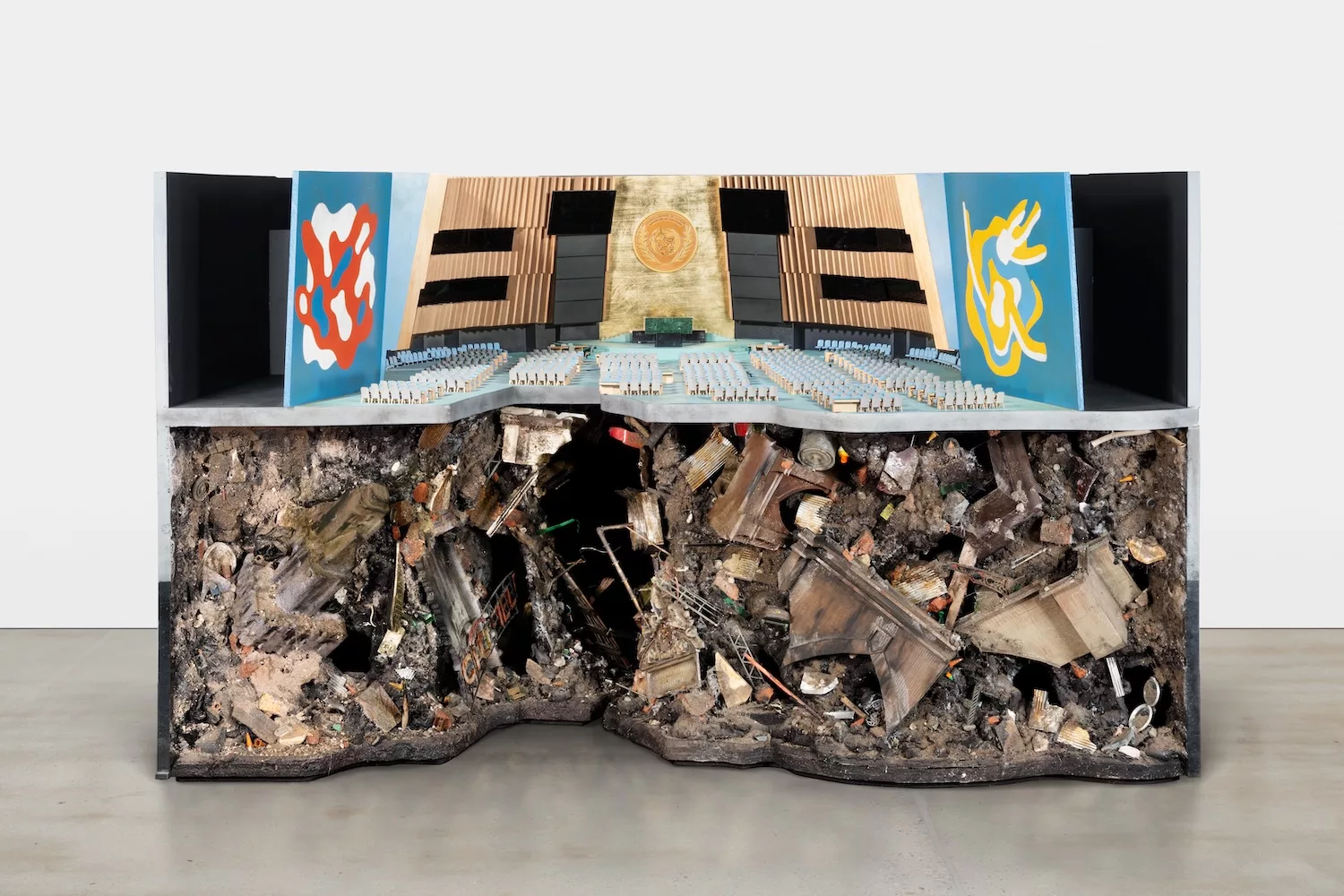
Cécile B. Evans, Ad Hoc Order (Your collapse was witnessed, your destruction cataloged and banked at the wreckage of the hope meant to heal you. Every fibre will be used to knit a duvet.), 2024, acrylic, laser cut acrylic, plywood, poplar wood with dye stain, steel rod, foamboard, foam, acrylic paint, enamel paint, 3D printed nylon, ABS, PLA, and acrylic resin, concrete, stone, marble, dirt, archival ink, found objects, 49.7 x 39.7 x 40.4 in [126.2 x 100.9 x 102.6 cm], © Photo: Rosy Warren
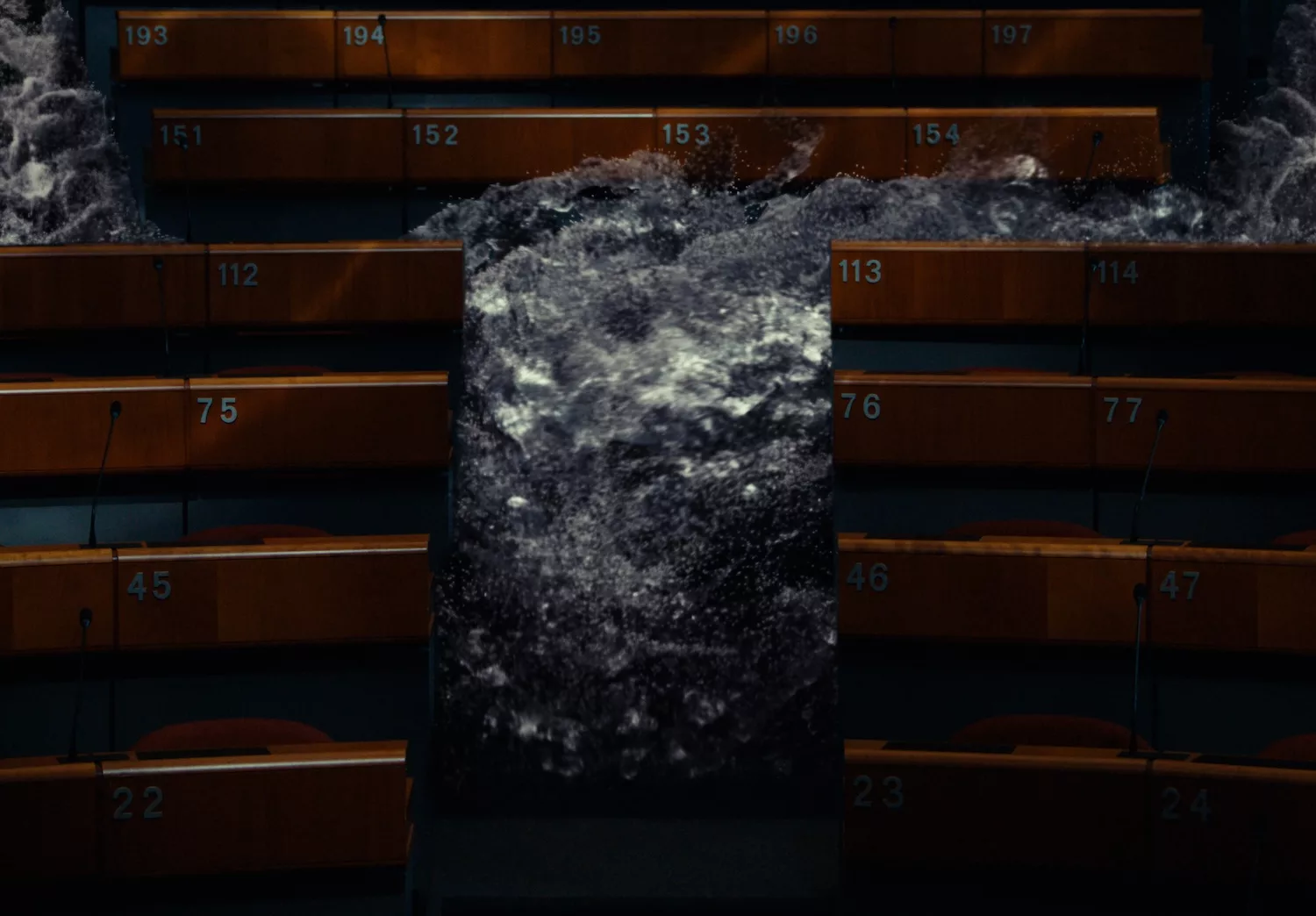
Cécile B. Evans, video stills from RECEPTION!, 2024 video Special project commissioned by Miu Miu, 1,26 min, HD video, color, sound
C. B. Evans’s most recent works continue to address the entanglement of affect, memory and systems of power. The videos RECEPTION! (2024), a special commission by Miu Miu, and MEMORY! (2025) were presented as part of an installation at the Sharjah Biennial 16, alongside the sculpture Ad Hoc Order (2025), a scale model of the UN General Assembly Hall, split open into five pieces and sitting atop a subterranean mass consisting of the ruins of New York City. Set against the backdrop of ecological collapse and the mass erasure of personal data, the video works follow the character ‘Reception’, played by the French actress Guslagie Malanda, one of the last human translators, who transcribes the remaining fragments of memory.
Yet C. B. Evans’s work ultimately resists the closure of dystopia. Through what the artist has described as a form of ‘compassionate pessimism’, it instead proposes tools for imagining new worlds emerging from the mistakes and ruins of the present. In doing so, C. B. Evans has become one of the most distinctive artistic voices of the past fifteen years, offering ways to navigate and critically inhabit the shifting and unstable terrain of the twenty-first century.
Juliette Desorgues
Cécile B. Evans is an American-Belgian artist living and working in Saint Denis. C. B. Evans’s work examines the value of emotion and its rebellion as it comes into contact with ideological, physical and technological structures. In 2024 they were invited to a special project by Miu Miu and in 2025 they were commissioned for a site specific installation for the 16th Sharjah Biennial. They have previously realised new commissions at Centre Pompidou (FR), Museo d’Arte Moderne di Bologna (IT), Tate Liverpool (UK), Lafayette Anticipations (FR), Tramway (UK), Serpentine Galleries (UK), Castello di Rivoli (IT), Museum Abteiberg (DE), Berlin Biennale (DE), Sydney Biennale (AU), and exhibited work at High Line (US), Whitechapel Gallery (UK), Haus der Kunst (DE), Renaissance Society Chicago (US), Singapore Art Museum (SG) and Mito Art Tower (JP), amongst others. C. B. Evans’s films have been screened at festivals such as the New York Film Festival and Rotterdam International. C. B. Evans’s work is held in public collections such as MoMA (US), the Whitney Museum (US), Centre Pompidou (FR), Louisiana Museum of Modern Art (DK) and the National Museum of Modern and Contemporary Art Seoul (KR).

