


Laura Gozlan
Nominee of Prix 2026
Portrait of Laura Gozlan
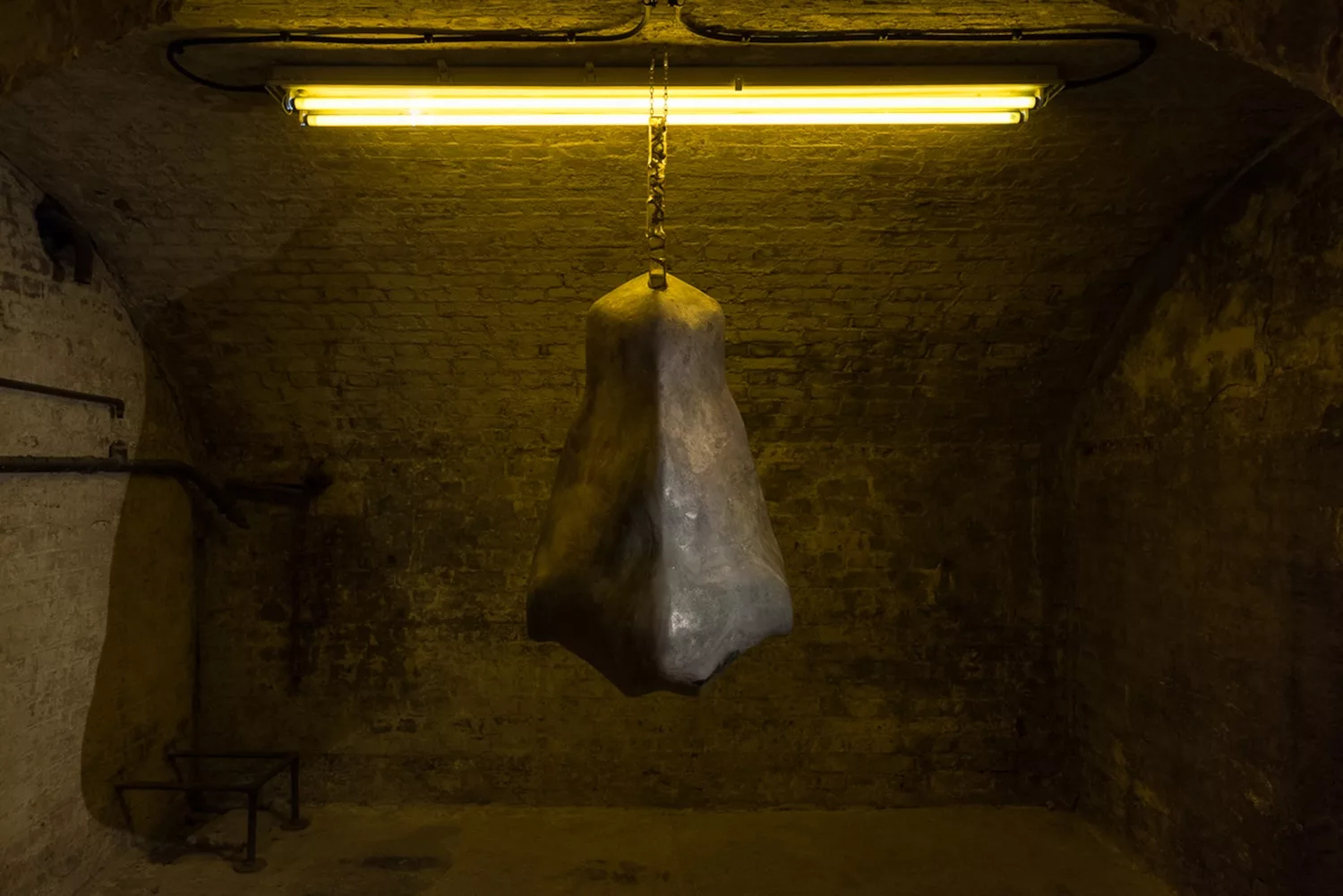
Laura Gozlan, Sensorium, 2017, microcrystalline wax, plexiglass, ginseng, octopuses, USB cables, wood, 220 × 43 × 62 cm, view the solo show Hail to the New Flesh, White Crypt, Londres, 2017, © Photo: Damian Griffiths
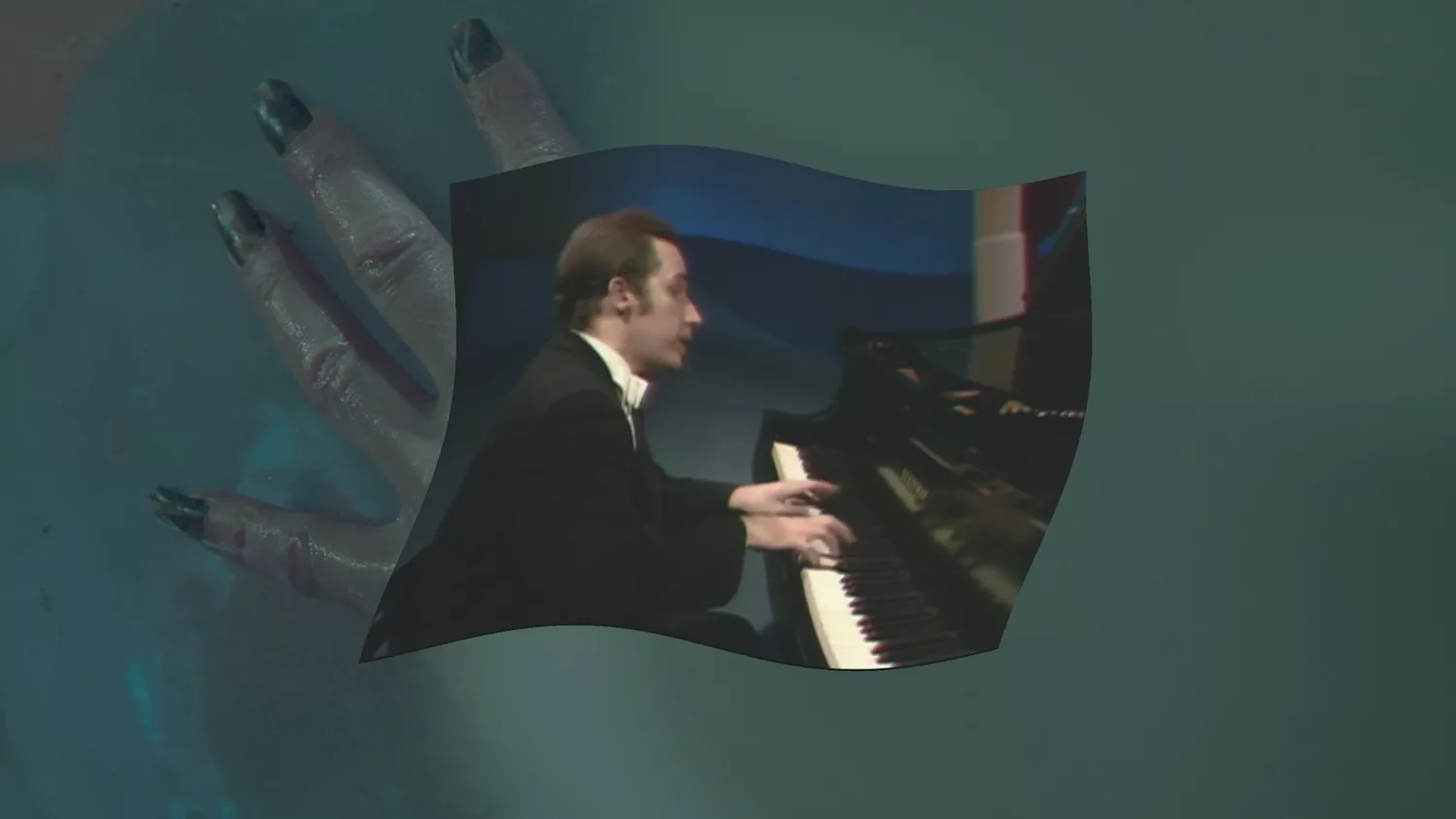
Laura Gozlan, G Minor, 2020, film, HD video, color, stereo sound, 2’28”, Production Les Bains-Douches, Alençon, Collection of the FRAC Nouvelle-Aquitaine, Méca
Laura Gozlan studied scenography at the University of Art and Design in Helsinki before graduating from the École Nationale Supérieure des Arts Décoratifs (ENSAD) in Paris and Le Fresnoy – Studio National des Arts Contemporains in Tourcoing. Today, she lives and works in Paris. Drawing on multiple references, her films portray abrupt situations and ambiguous characters, oscillating between desire and (dis)satisfaction in contrasting environments. In a series of micro-fictions featuring herself, L. Gozlan documents the transformations of MuM, an androgynous figure navigating between different ages and various altered states of consciousness. Marked by an aesthetic centred around prosthetics and ageing, her creations blur the boundaries of the post-human body. Her work has been featured in both solo and group exhibitions at the Kunstraum Niederoesterreich (Vienna) in 2024, Les Bains-Douches (Alençon) in 2022, MO.CO. (Montpellier), 40mcube (Rennes) in 2021, FUTURA (Prague) in 2020, CAC Parc Saint Léger (Pougues-les-Eaux) in 2018 and the Rencontres de la Photographie (Arles) in 2016.
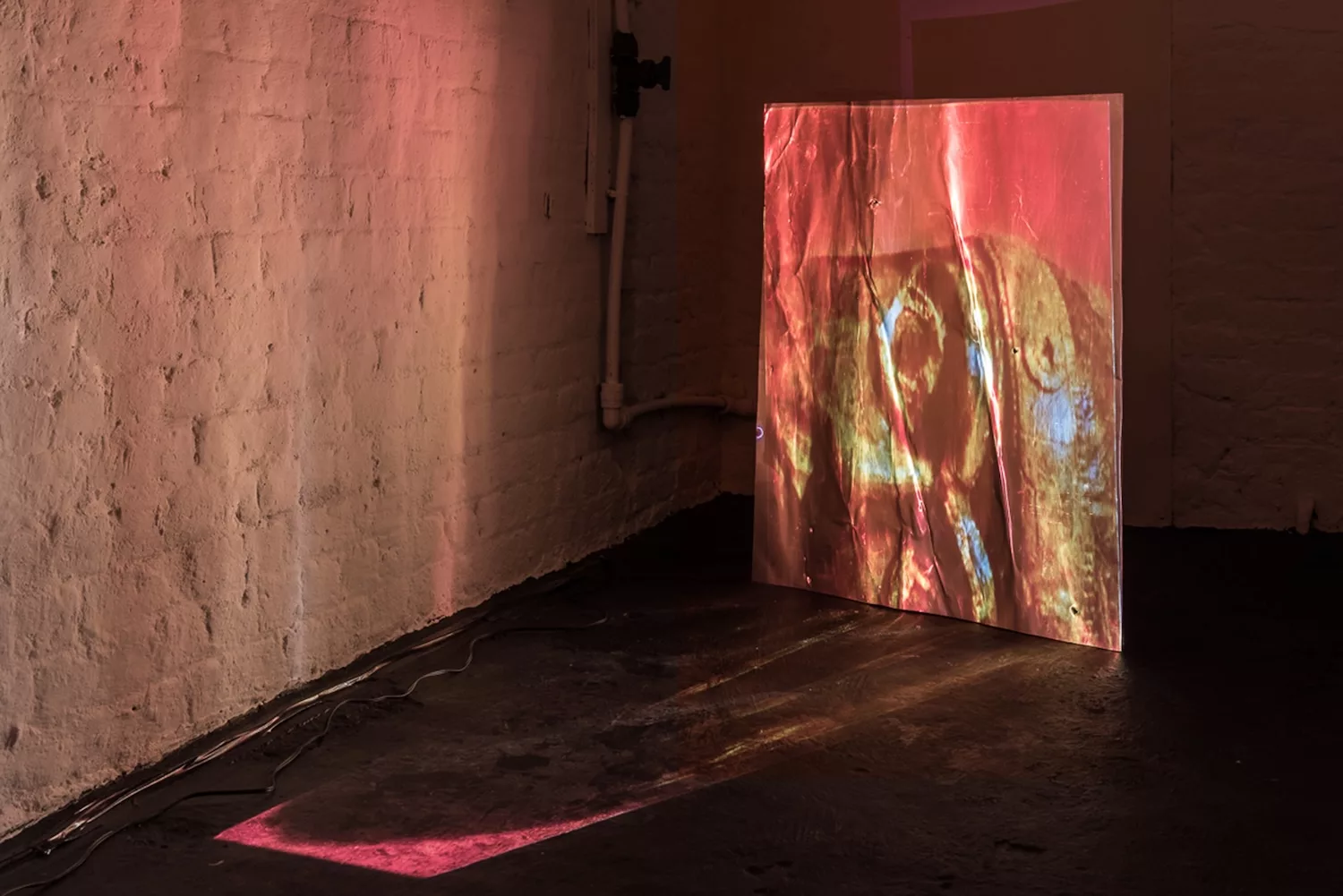
Laura Gozlan, Mold II, 2016, video installation, single-channel 11″ projection, HD, color, stereo sound, folded aluminum sheet, variable dimensions, view the solo show Hail to the New Flesh, White Crypt, Londres, 2017, © Photo: Damian Griffiths, Collection du FRAC Occitanie
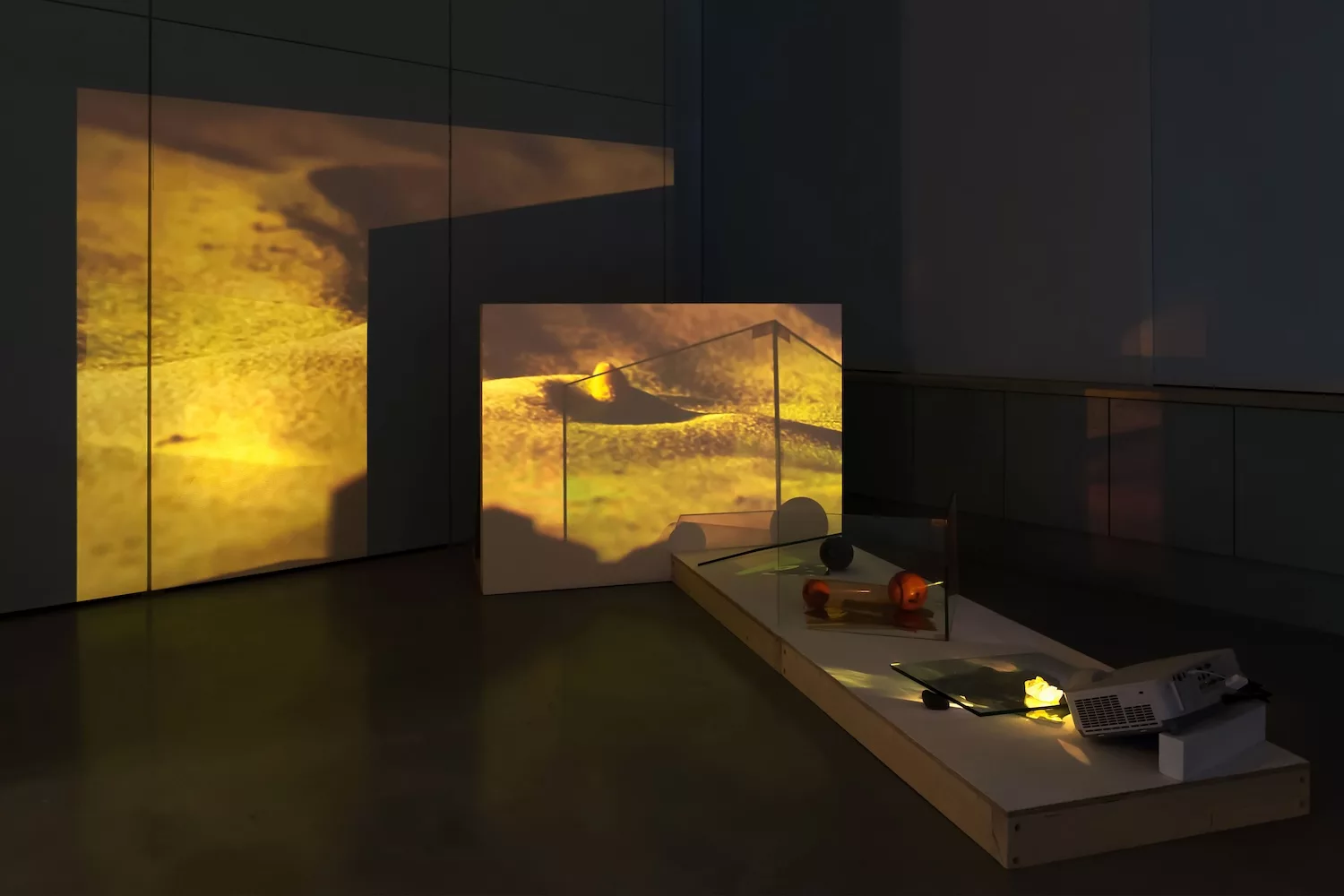
Laura Gozlan, Remote Viewing, 2014, video installation, single-channel projection, HD, color, stereo sound, 16′, glass, mirror, crystals, wood, wax globes, 252 × 160 × 120 cm, view of the exhibition Ce qui manque, La Panacée, MOCO, Montpellier, 2014, © Photo: Thierry Fournier, Collection of the FRAC Normandie
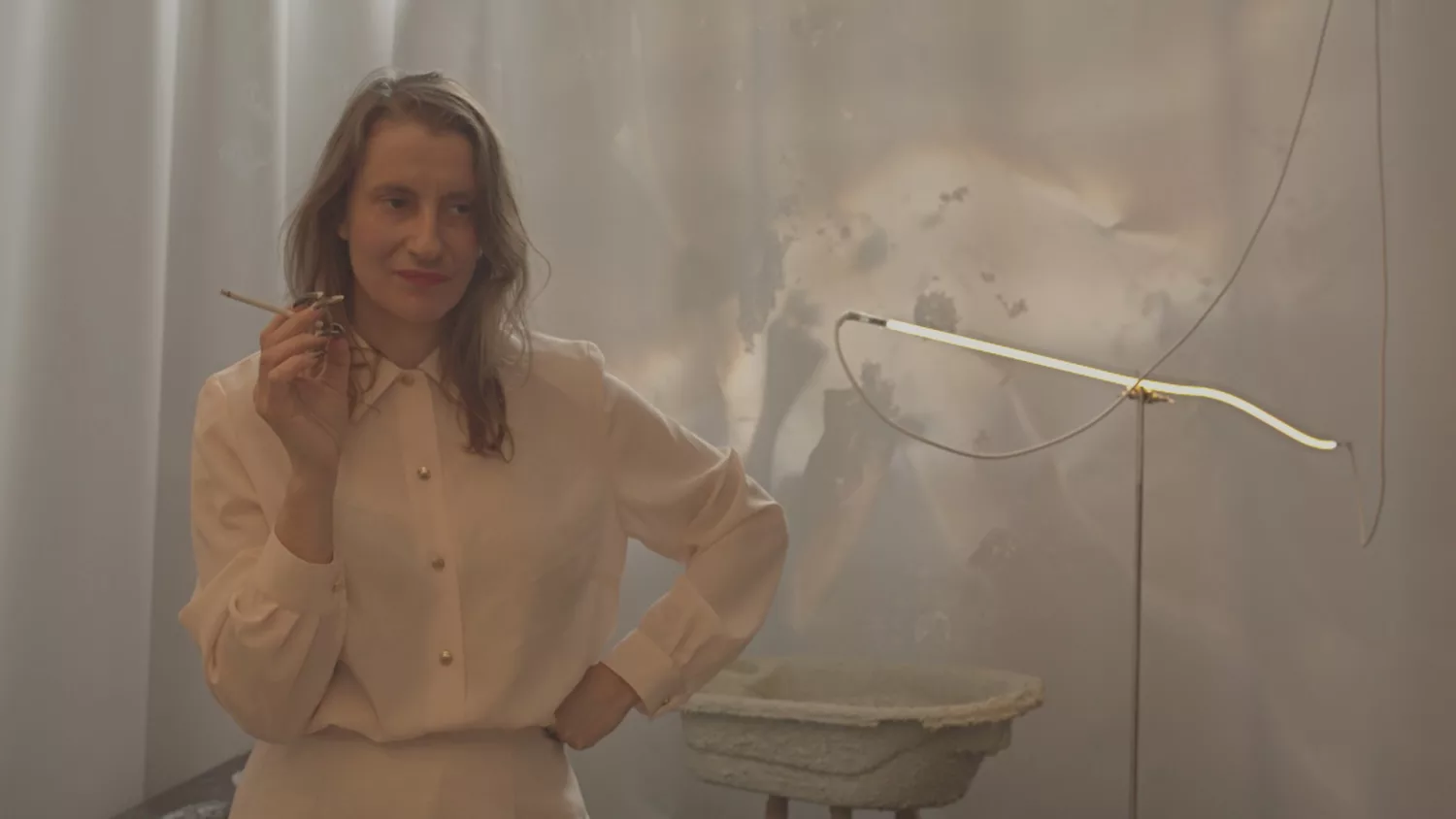
Laura Gozlan, Youth Enhancement Systems, 2019, photogram, video trilogy, HD, color, stereo sound, 5′, 6′, 5′, CNAP Collections
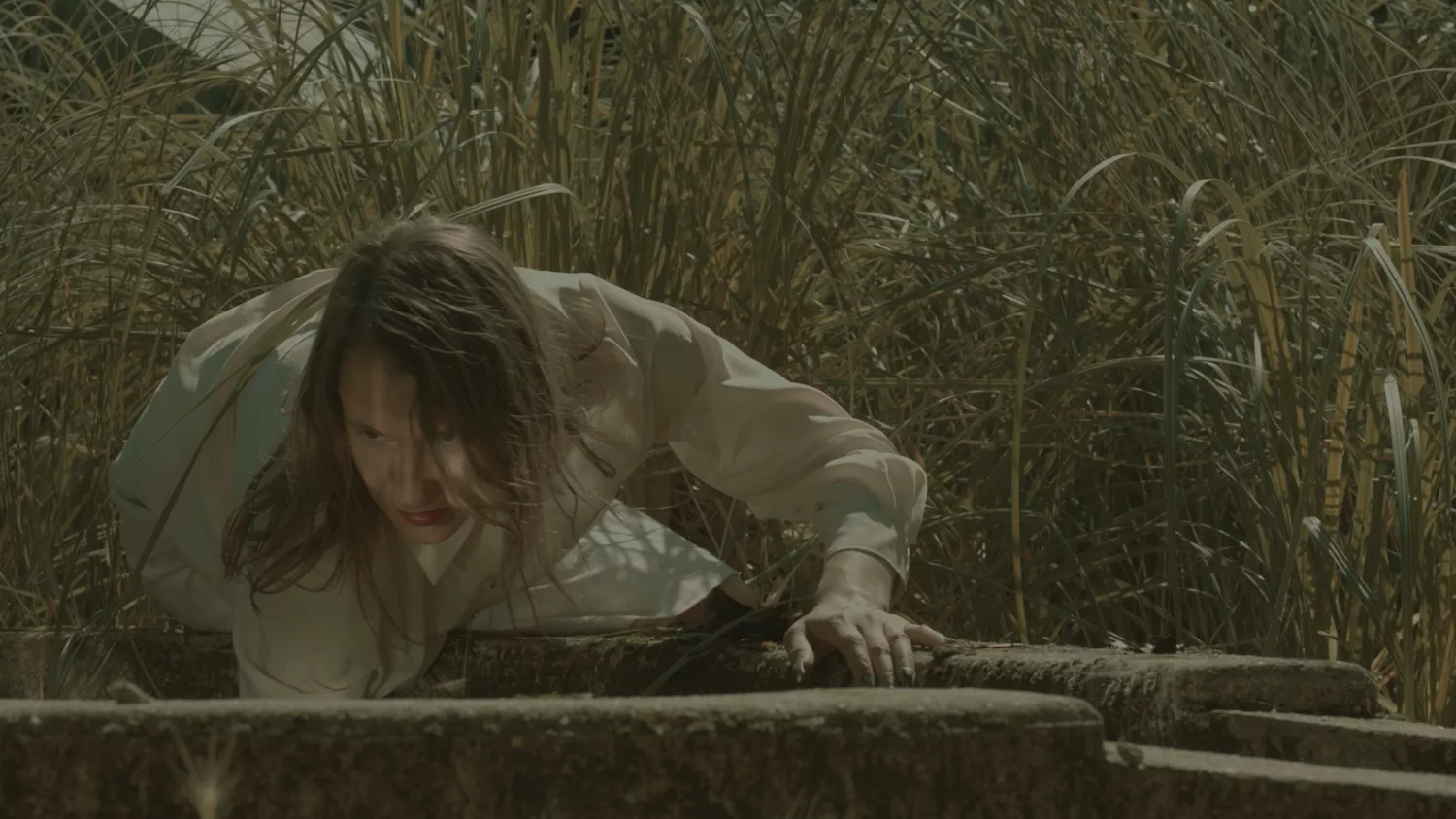
Laura Gozlan, Youth Enhancement Systems, 2019, photogram, video trilogy, HD, color, stereo sound, 5′, 6′, 5′, CNAP Collections
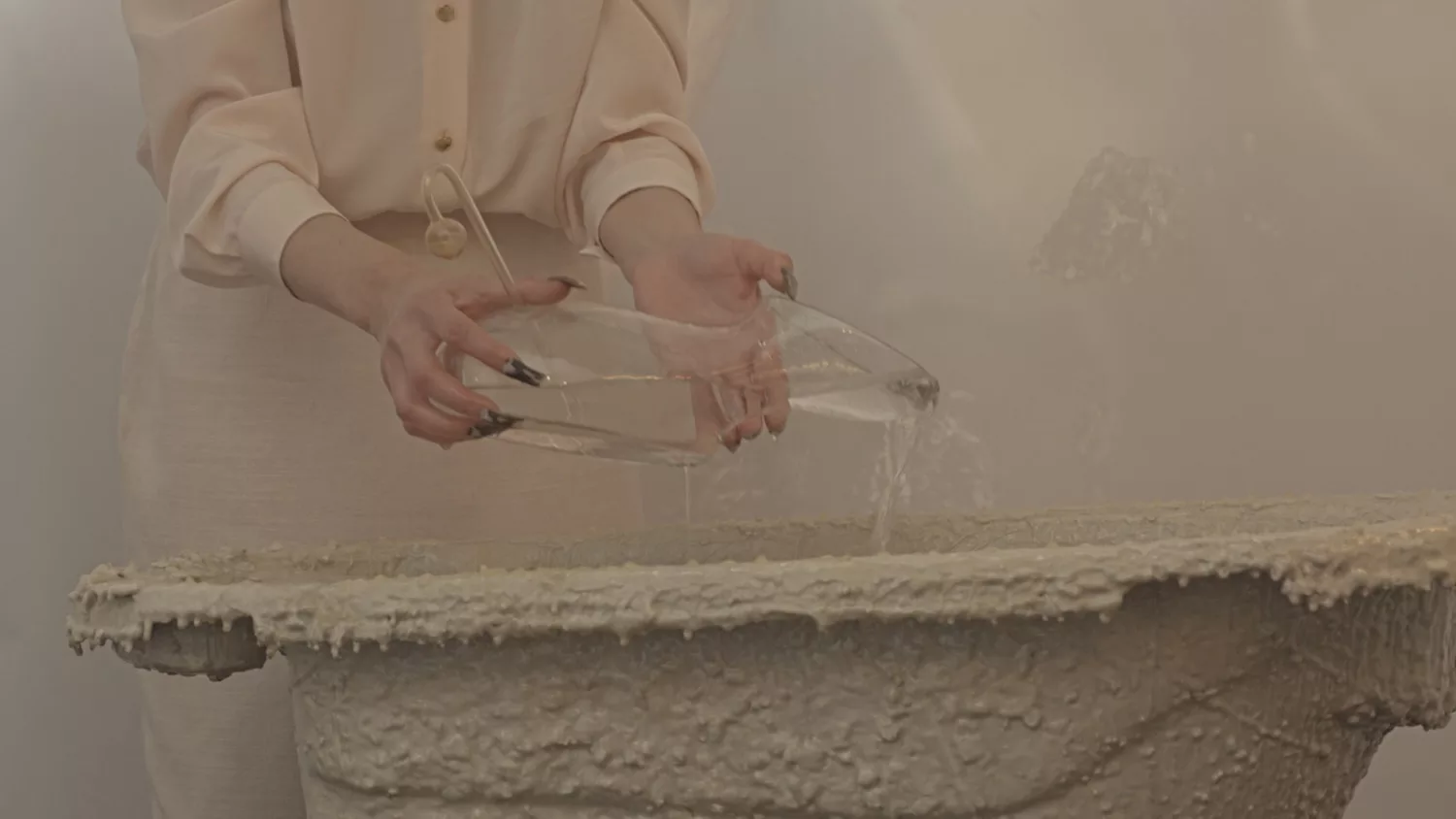
Laura Gozlan, Youth Enhancement Systems, 2019, photogram, video trilogy, HD, color, stereo sound, 5′, 6′, 5′, CNAP Collections
Over the past fifteen years, L. Gozlan’s practice has evolved through a process of multifaceted metamorphosis. This dynamic is reflected in the profusion of archival, literary and cinematic materials – from found footage gathered online to Italian gialli and Japanese manga, alongside scientific documents, ancestral legends and dystopian narratives – that converge and intertwine in her works, forming a vast iconographic constellation and fuelling a perpetually expanding narrative universe.1
Rooted in the legacy of ‘expanded cinema’,2 her early installations – built around projections onto glass and reflective surfaces (Mold II, Remote Viewing) – activated processes of image ‘defragmentation’3 that generated diverse perceptual frameworks. In L. Gozlan’s work, an image is never dissociated from the systems that govern its production, circulation and sensory reception. Indeed, these same technologies not only mould depictions and potentials of the (post-)human body, the locus of all fantasies of self-preservation and rejuvenation, from Egyptian mummification to transhumanist cryogenics (Youth Enhancement Systems®), but also deeply influence the unconscious inhabiting it, the ultimate territory exploited by late-stage capitalism.
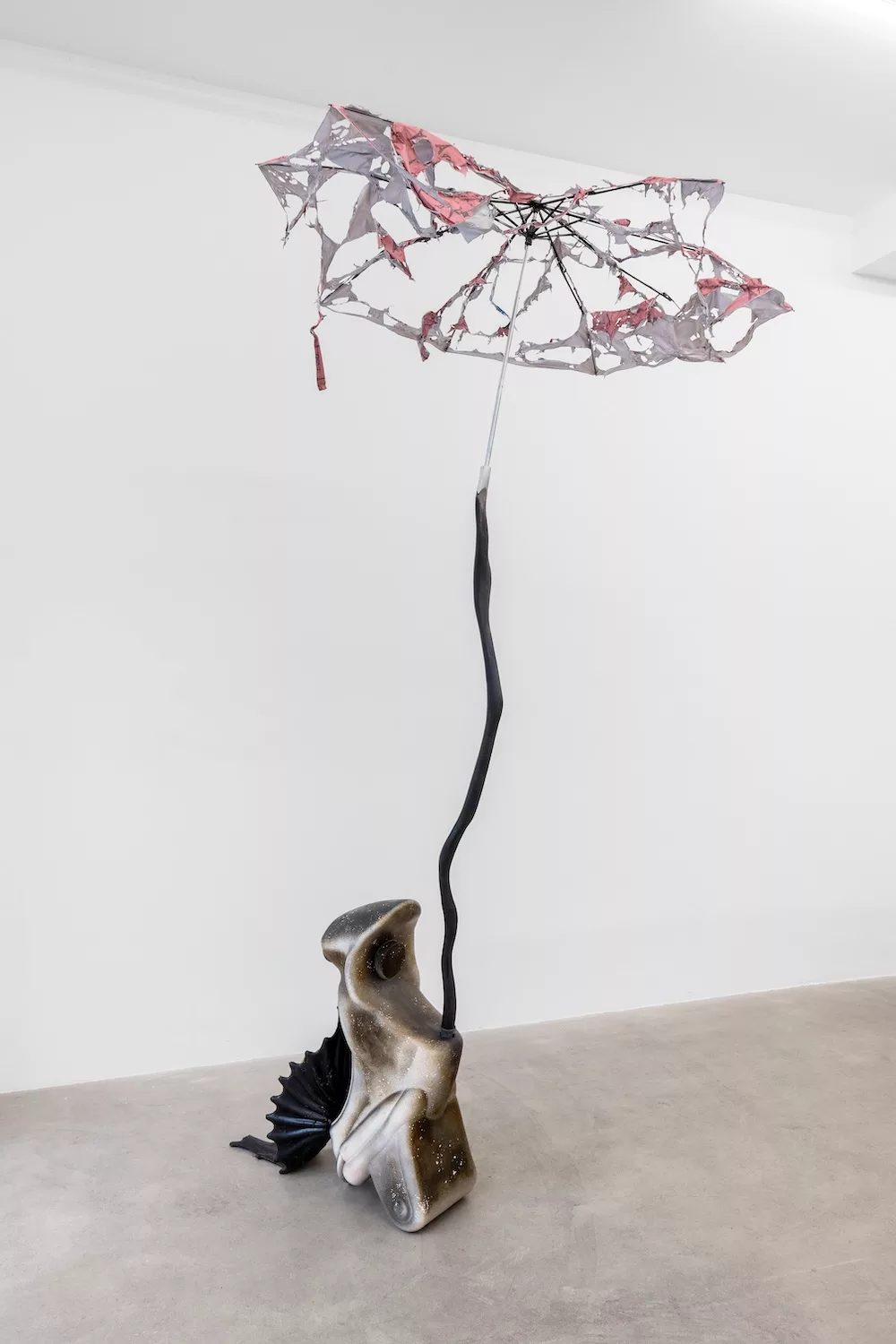
Laura Gozlan, Some like it hot III, 2022, Jesmonite, aluminum, wood, torn umbrella, 180 × 75 × 60 cm, produced by Les Limbes, Saint-Etienne, view the solo show Liminalities, Galerie Valeria Cetraro, Paris, 2024, © Photo: Romain Darnaud
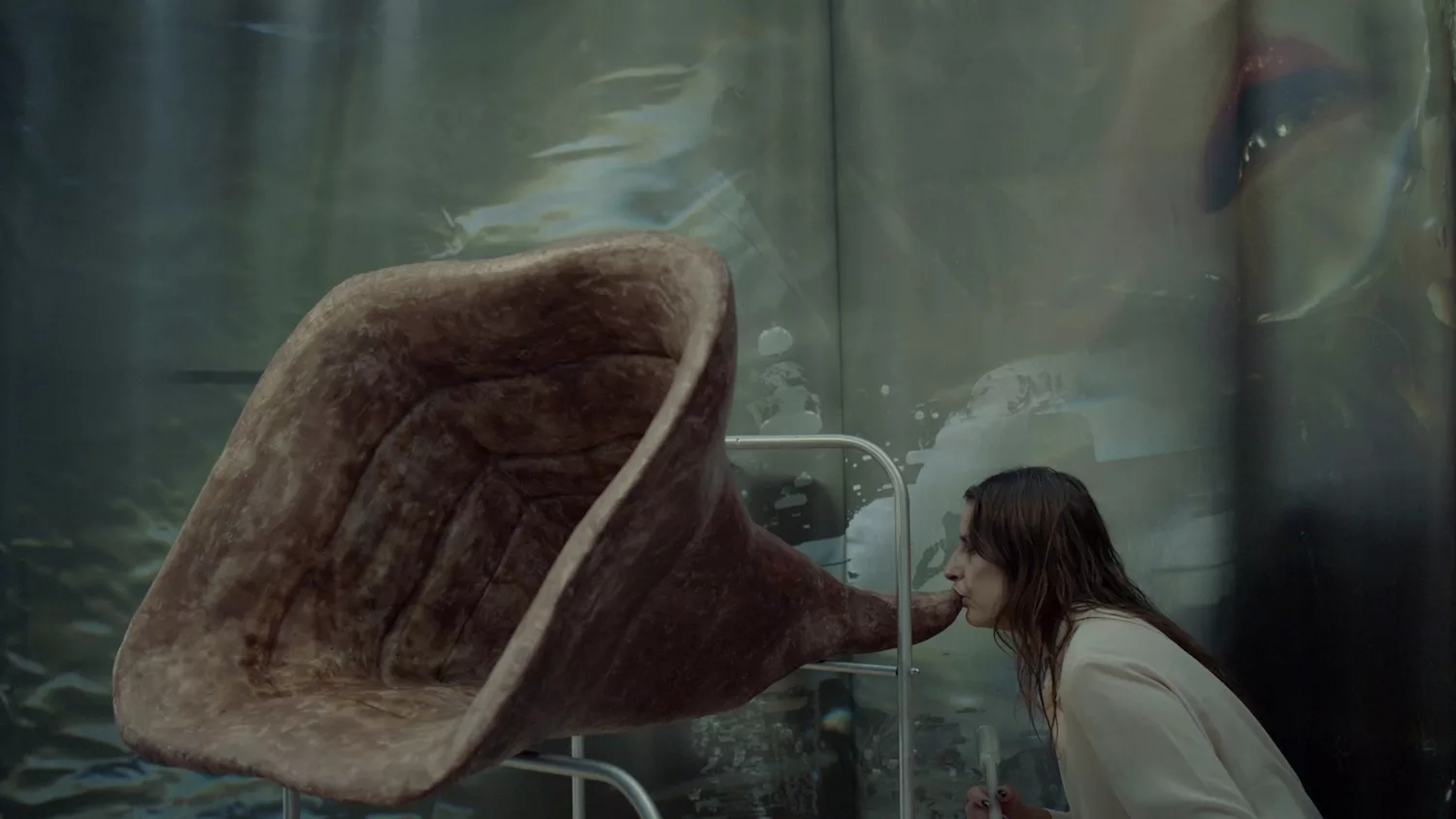
Laura Gozlan, Dead Fingers Talk, 2021, video trilogy, HD, color, stereo sound, 4’30, 2’20, 4’10, Production CNAP
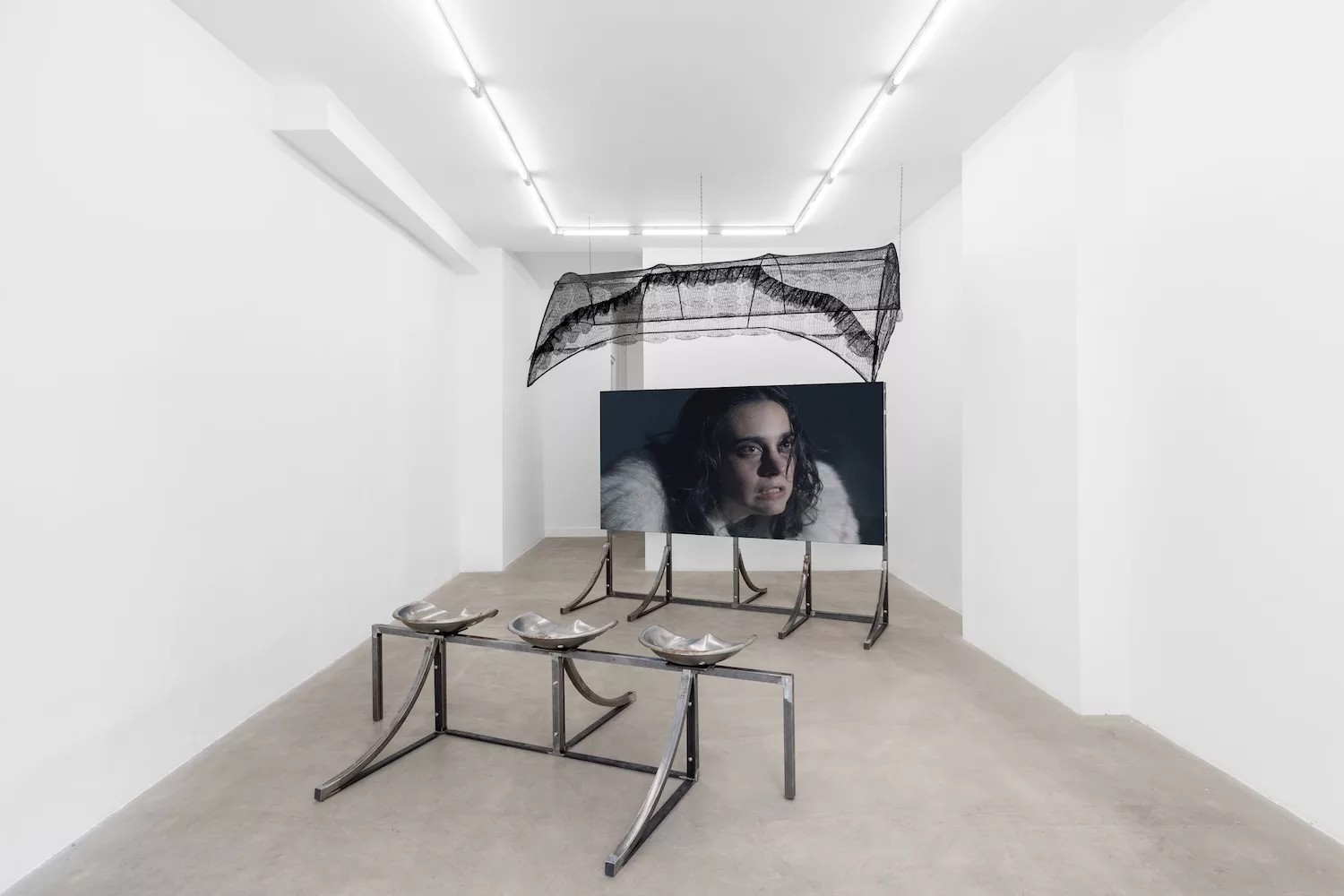
Laura Gozlan, Now you’re inside me, it doesn’t mean we’ll collegially agree on all topics, 2024, film, 4K video, color, stereo sound, 13′, steel structure, 2 × 1m LED screen, steel bench, canopy with steel structure and Calais lace, 220 × 240 × 350 cm, Production SEMIS — Lieu de fabrication, FRAC Picardie, DRAC Hauts-de-France, view the solo show Now you’re inside me, Galerie Valeria Cetraro, Paris, 2024, © Photo: Romain Darnaud
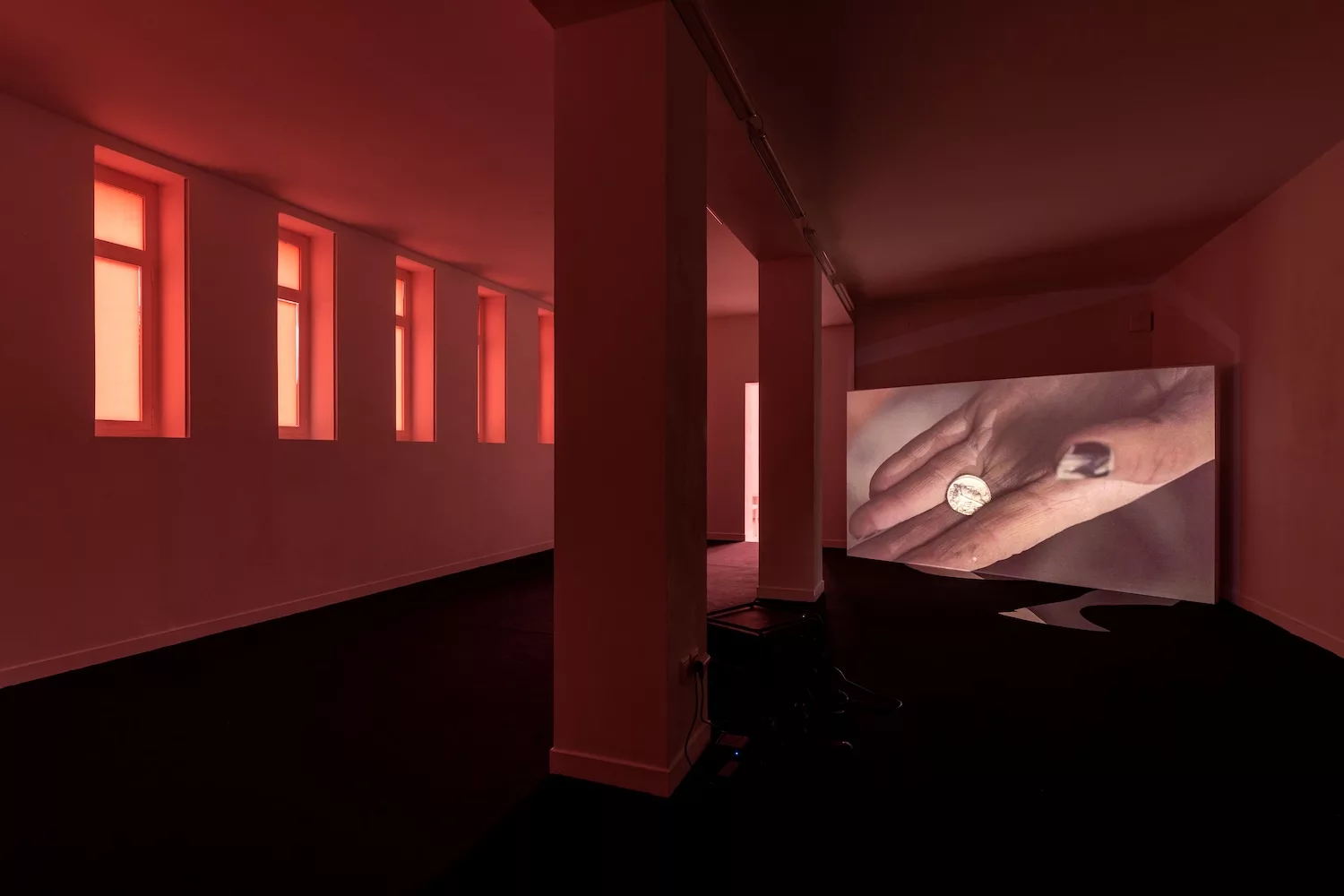
Laura Gozlan, Foulplay, 2022-24, film, 4K video, color, stereo sound, 12′, video installation, single-channel projection, plexiglass fragments, ruby gelatin, variable dimensions, Production Les Bains-Douches, Alençon, CNAP, view the solo show The Hierarchy of Lows, les Bains-Douches, Alençon, 2022, © Photo: Romain Darnaud
In L. Gozlan’s sculptures, the body is presented as profoundly malleable, dissected and rearticulated as wax prostheses cast from her own body (Sensorium), frozen in liminal developmental states4 or fused with objects that enhance its hybridity and haptic sensuality (Some Like It Hot). Exhibiting a certain postural febrility, these fragments of composite flesh bring forth ambivalent emotions shaped in part by the abjection mechanisms of the ‘monstrous feminine’5 that her films seek precisely to deconstruct. MuM, a matrixial figure with multiple identities who is also L. Gozlan’s alter ego, is the ultimate embodiment of this grotesque otherness. MuM is capable variously of granting a wish by reaching the G-spot in sync with a musical climax (G Minor), using her magical onanism to self-generate (Dead Fingers Talk), transferring her soul into Faust’s body to give it a parasitic form of survival (Now You’re Inside Me) and swaying an election outcome with an orgasm that has the power to avert a fascist threat (Foulplay).
In this way, L. Gozlan’s oeuvre sketches out a form of radical ‘eropolitics’6 that subverts reductive assignments through experimentation with a complex, malleable desire altered by the consumption of all manner of psychotropics, resistant to the imperatives of heteronormative (re)productivity and animated by chthonic forces granting it an ecstatic, transcendental and deeply radical power.
Vincent Enjalbert

