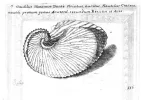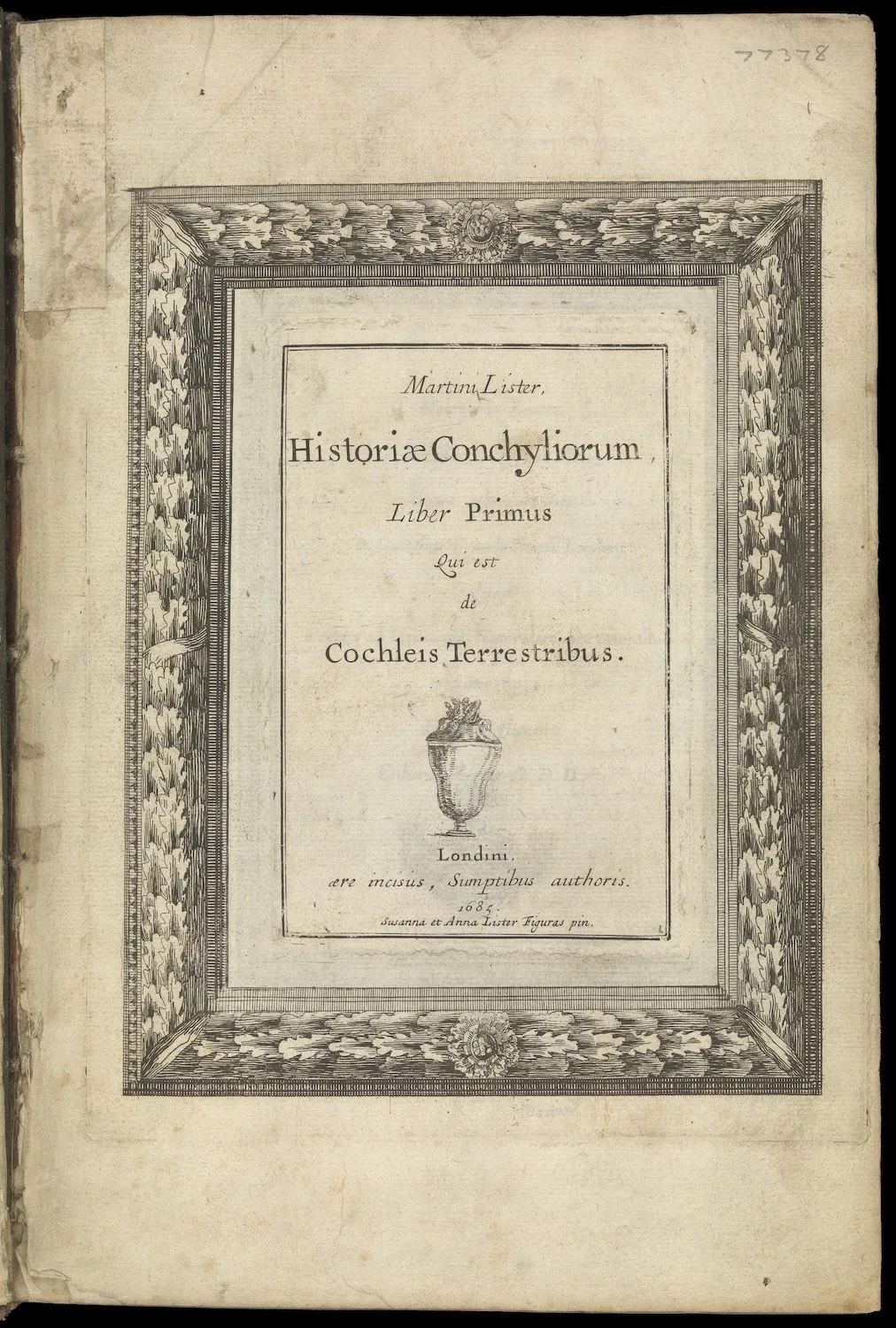
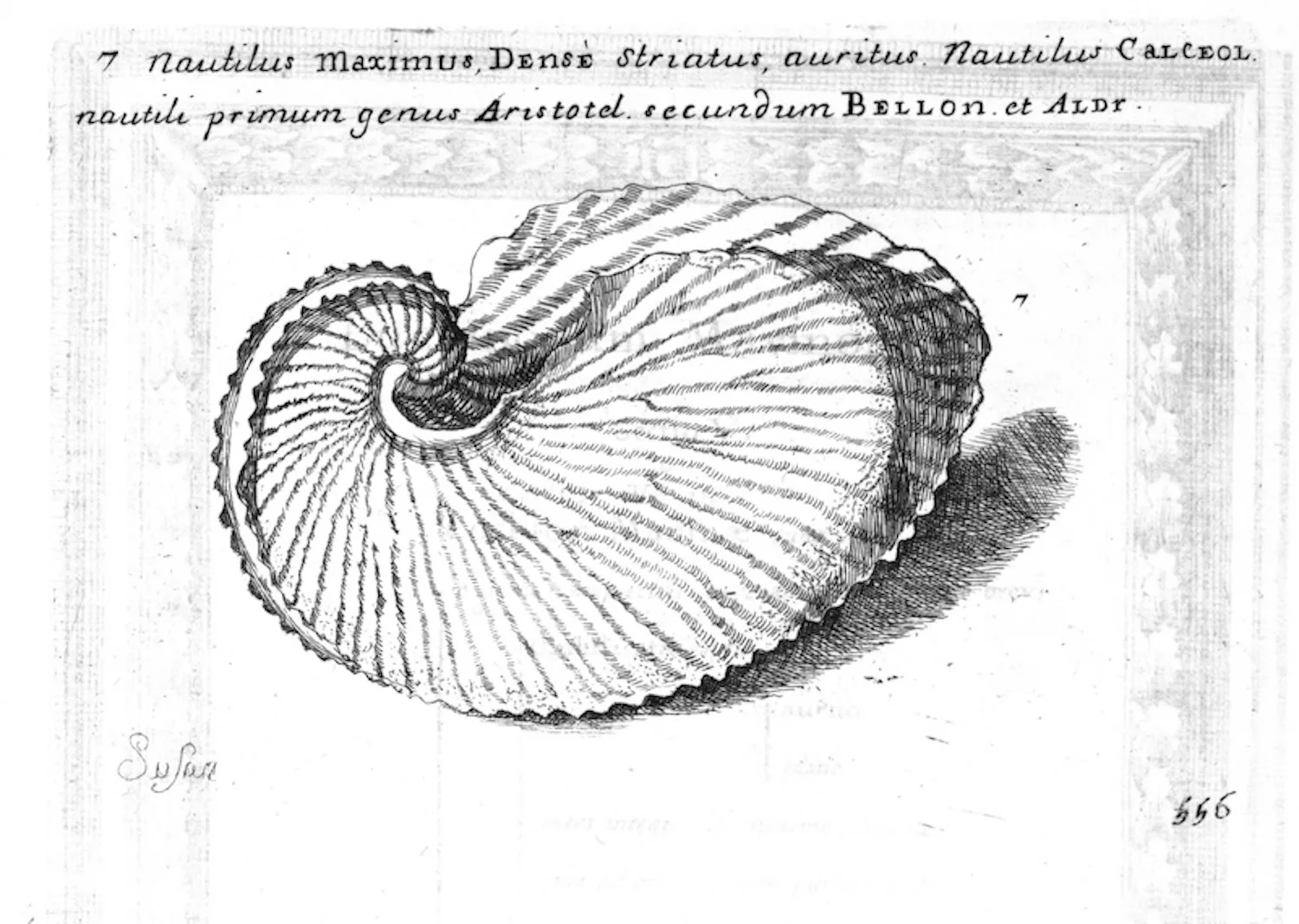
Susanna Lister, Nautilus shell, etching with annotation by Martin Lister; in Martin Lister, De Cochleis tam terrestribus (published by the author, London, 1685), figure 84a, Bodleian Library, Shelfmark L95
Roos, Anna Marie, Martin Lister and His Remarkable Daughters, Oxford, Bodleian Publishing, 2018
→Wilkins, Guy L., ‘Notes on the Historia Conchyliorum of Martin Lister (1638-1712)’, Journal of the Society for the Bibliography of Natural History, 3, 4, January 1957, p. 196-205
→Woodley, J.D., ‘Anne Lister, illustrator of Martin Lister’s Historiae Conchyliorum (1685-1692)’, Archives of Natural History, 21, 2, 1994, p. 225-229
The Lister Sisters and the Art of Seventeenth-Century Science, Bodleian Library, University of Oxford, Oxford, 18 August 2012 – 30 September 2012
English scientific illustrators; drawing, etching, engraving.
The daughters of English physician and naturalist Martin Lister, Fellow of the Royal Society and founder of arachnology and conchology, Susanna and Anna Lister are increasingly recognised for the role they played in the visual production of their father’s scientific oeuvre. In 1683 M. Lister wrote to his wife Hannah enclosing pigments and brushes for the girls. Within a decade, these initial exercises had developed into a sustained professional collaboration, with the sisters producing drawings, etchings and engravings for his scientific papers and major publications.
Scientific illustration in the late 17th century was an emerging genre requiring a rare synthesis of empirical observation, accurate perspectival rendering and an ability to direct the viewer’s attention to salient features without loss of contextual or proportional integrity. The expense and technical complexity of copperplate engraving, coupled with printers’ reluctance to undertake natural history works with limited commercial appeal, made such projects especially difficult. After unsatisfactory experiences with professional artists such as Francis Place (1647–1728) and William Lodge (1649–1689), M. Lister undertook to train his daughters in the art of science.
Although limning was considered a genteel accomplishment for young women of the period, S. Lister’s and A. Lister’s work moved decisively beyond decorative convention into the realm of scientific documentation. Their most significant contribution was to M. Lister’s Historiae Conchyliorum (1685–1692), the first comprehensive conchological treatise. Comprising over 1,000 copperplates, the work incorporated specimens from Sir Hans Sloane’s collections and the Ashmolean Museum. Surviving preparatory sketches, proofs and copperplates attest to the sisters’ technical skill and to the collaborative nature of the enterprise. Although most plates are unsigned, some bear initials or signatures (‘A’, ‘AL’, ‘Susan’), indicating multiple hands. Plates were both etched and engraved.
It is possible that the etching, engraving and printing was conducted in the Lister household, an arrangement that enabled iterative revision and circumvented the logistical and financial constraints of commercial presses. This domestic production model was technically sophisticated: pre-engraved ornamental borders were overprinted with specimen images, and the thin paper stock – identical to that used for M. Lister’s correspondence – was sometimes reinforced when the press cut through the sheet.
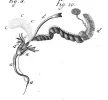
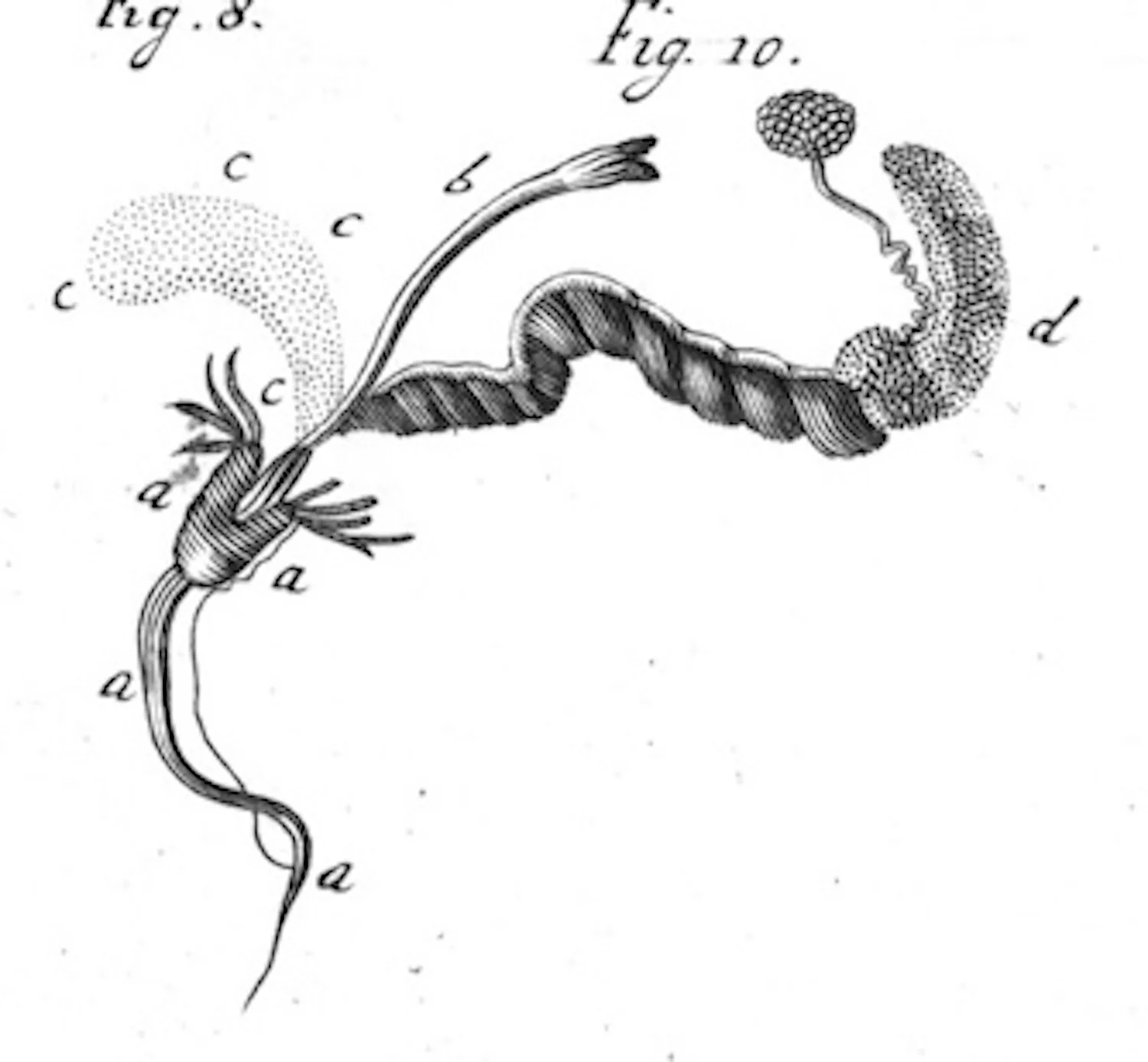
The Lister sisters were also amongst the earliest documented women to employ microscopes for scientific illustration. While M. Lister adopted a compound microscope in the 1690s, the younger women’s visual acuity made them especially adept at sustained microscopic observation. Plates by A. Lister, described as ex microscopio, depict fine anatomical structures such as brachiopod gills and molluscan reproductive organs, integrating micrographic detail into taxonomic representation. Their practice of synthesising features from multiple specimens to produce “type” images established a classificatory clarity that shaped conchology well into the nineteenth century.
Their work attracted contemporary notice. In 1694, John Place, physician to the Duke of Tuscany, conveyed the Duke’s extreme surprise upon learning the engravings were by M. Lister’s daughters, and reciprocated with gifts of Florentine wine.
Although largely effaced from the historical record until recent scholarship recovered their contributions, S. Lister and A. Lister occupy a distinctive position at the intersection of art, natural philosophy and women’s intellectual labour in the early Royal Society. Their work remains a testament to the collaborative, material and technical dimensions of early modern scientific knowledge-making.
A biography produced as part of the programme “Common Ground”
© Archives of Women Artists, Research and Exhibitions, 2026