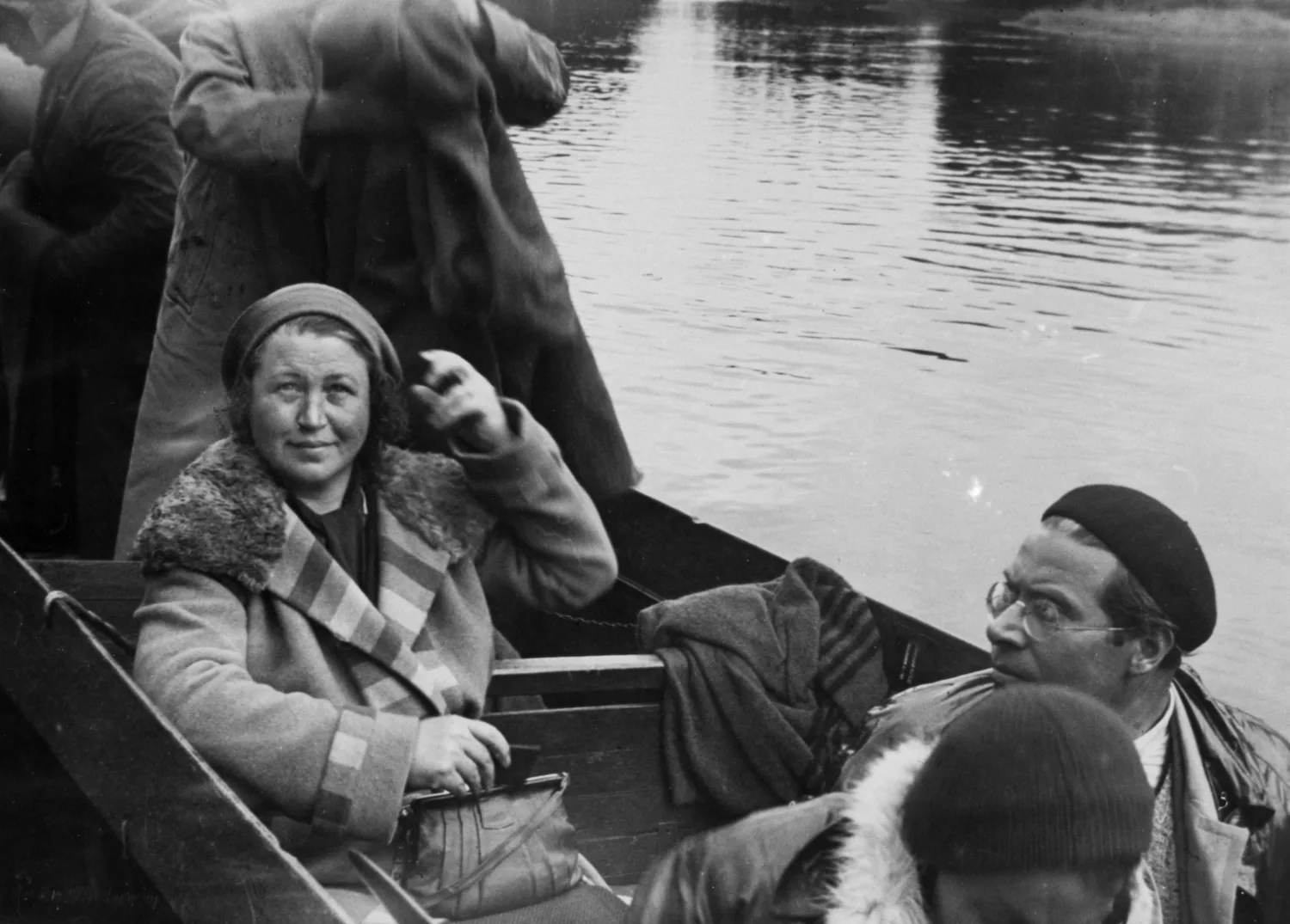
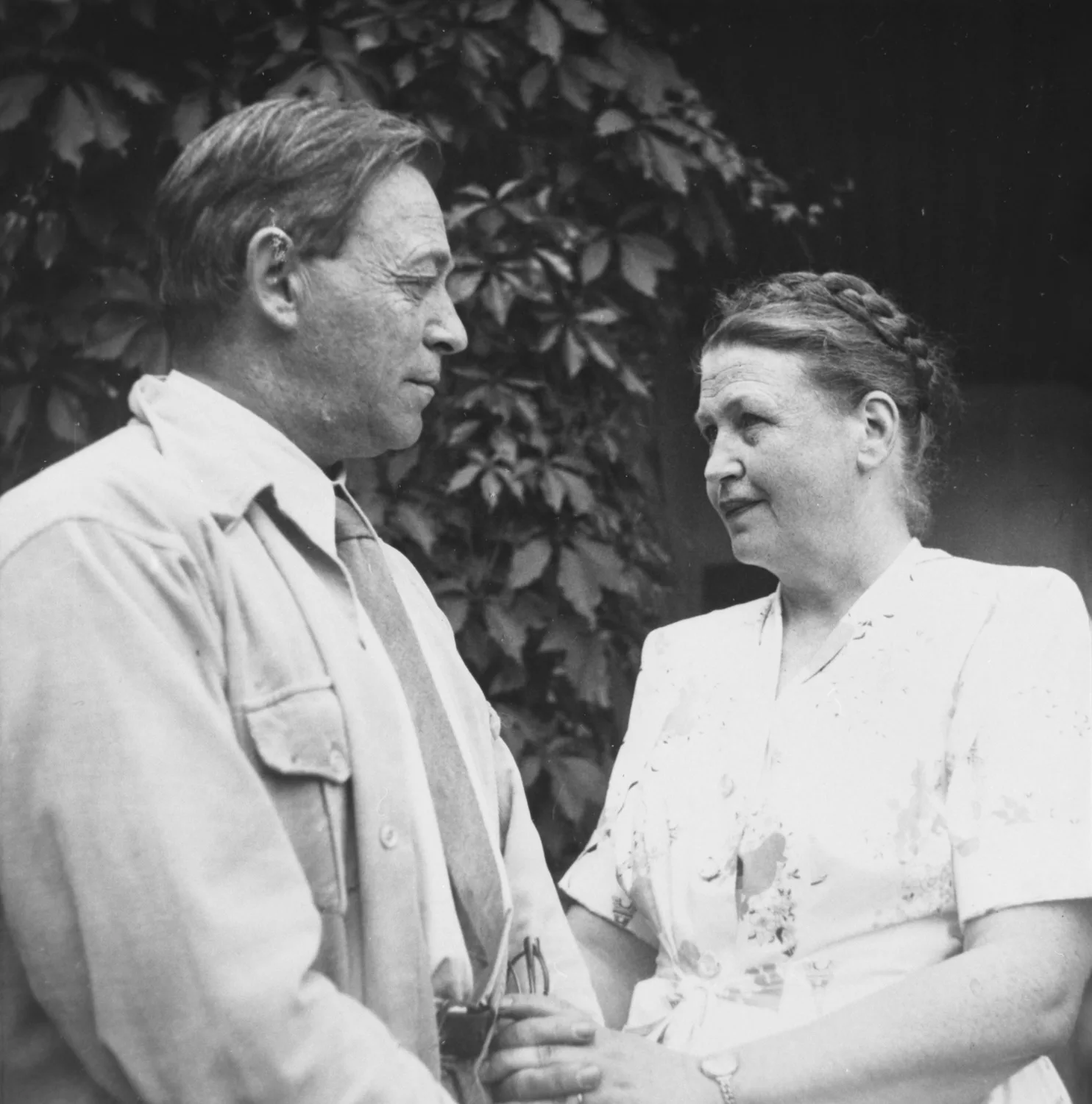
Alvar and Aino Aalto in their home garden in 1947, © Photo: Alvar Aalto Foundation
Ulla Kinnunen, Aino Aalto, Alvar Aalto Museum, Jyväskylä 2004
→Renja Suominen-Kokkonen, Aino and Alvar Aalto – A Shared Journey. Interpretations of an Everyday Modernism, Helsinki, coll. Aalto Studies1, Alvar Aalto Foundation, Alvar Aalto Museum, 2007
→Nina Stritzel-Levine, Timo Riekko, Artek and the Aaltos, New York, Bard Graduate Center, 2016
Aino Aalto, Alvar Aalto Museum, Jyväskylä, November 2004 – January 2005
→Aino Aalto, Gallery A-quad, Tokio, August 2016 – October 2016
Architect, furniture and textile designer.
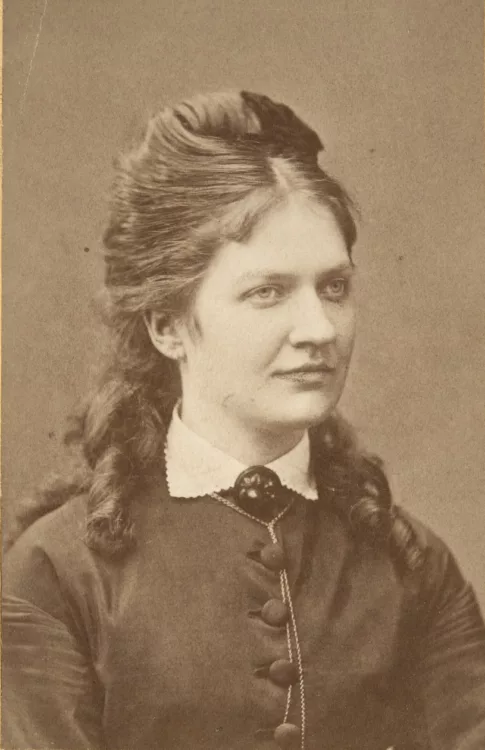
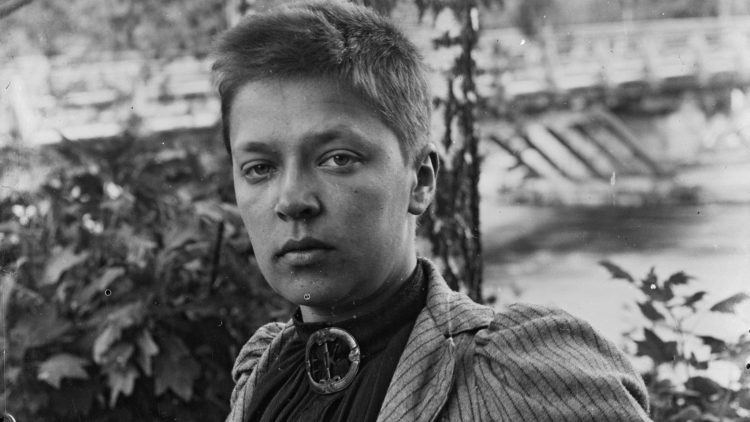
After leaving school, Aino Marsio enrolled at Helsinki University of Technology in 1913. She chose to study architecture, which had been possible for women since 1879, and was the 33rd woman to be awarded a degree as an architect. She got her diploma in 1920 and began her professional architectural career at the offices of more experienced architects in Helsinki. In 1923 she moved to work in Jyväskylä, and 1924 began working in the office of her former student friend, architect Alvar Aalto (1898–1976). They were married in the same year, and worked in the town until 1927, when they moved their family to Turku after their office won a competition there.
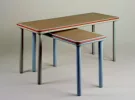
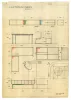
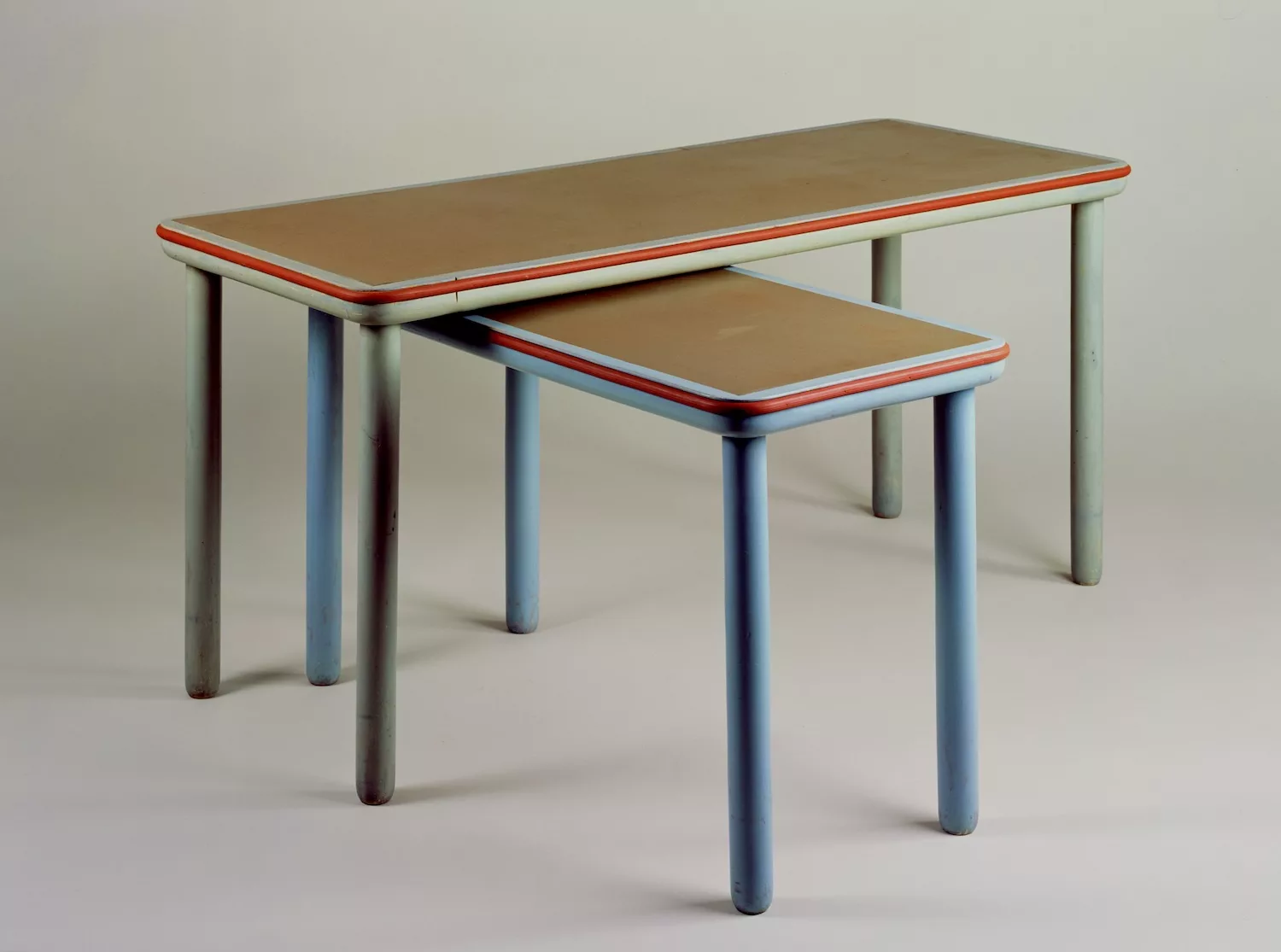
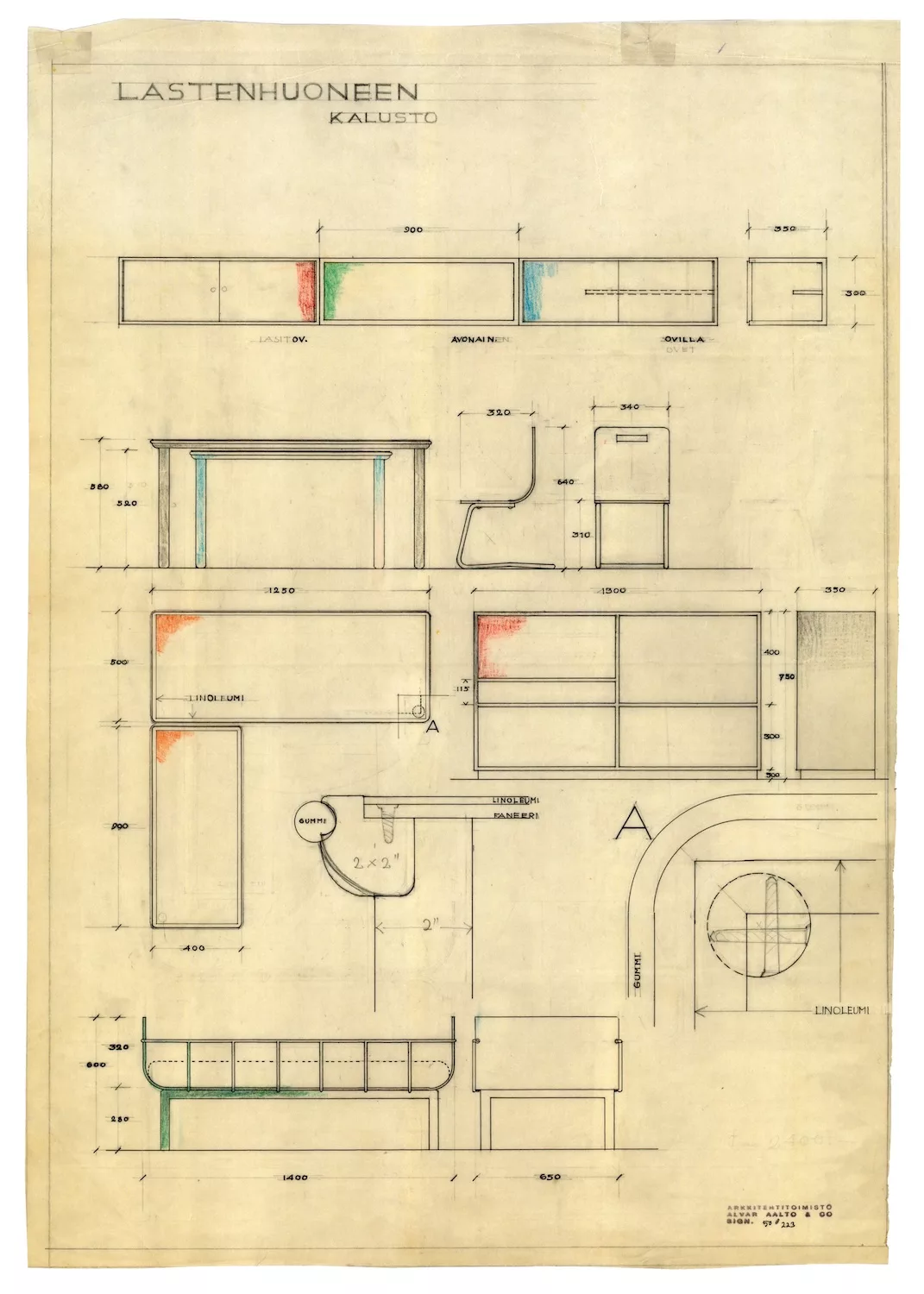
From the beginning of her career, A. Marsio-Aalto was interested in modern interior design, and her first novel designs were done for the house she and her husband planned in Turku. She designed furniture for her two children, and the tables and chairs were serially manufactured and exhibited in newspapers and exhibitions in 1929. This was also the year in which the Aaltos’ architectural office won a major competition for the tuberculosis sanatorium in Paimio. As well as the sanatorium itself, the design included the construction of staff housing. A. Marsio-Aalto was particularly involved in the designs for the apartments of the hospital staff, and some furniture designs for the sanatorium.
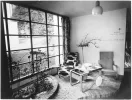
In 1934, during the worldwide economic depression, the Aaltos moved to the Finnish capital Helsinki. They soon had the opportunity to design their own house in Munkkiniemi, close to Helsinki. This Aalto House, constructed in 1935, was a collaboration between both Aaltos. A. Marsio-Aalto designed several special items fo furniture and was responsible for the whole of the interior design. However, the depression years were not easy for architects, and in 1935 the Aaltos and a number of wealthy backers started Artek, a new interior firm in Helsinki, with clear Bauhausian ideals. A. Marsio-Aalto was the artistic director of this firm.
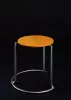
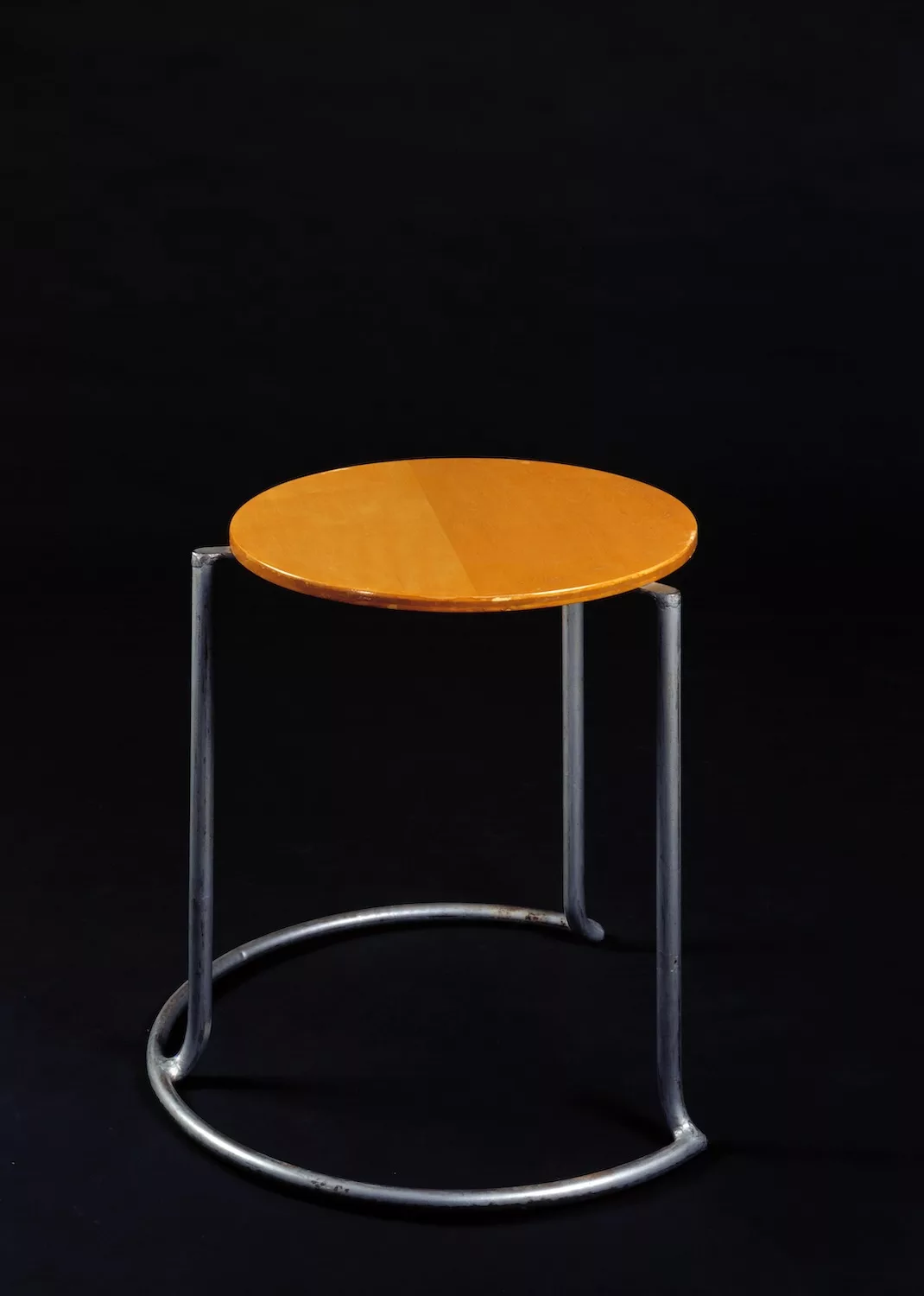
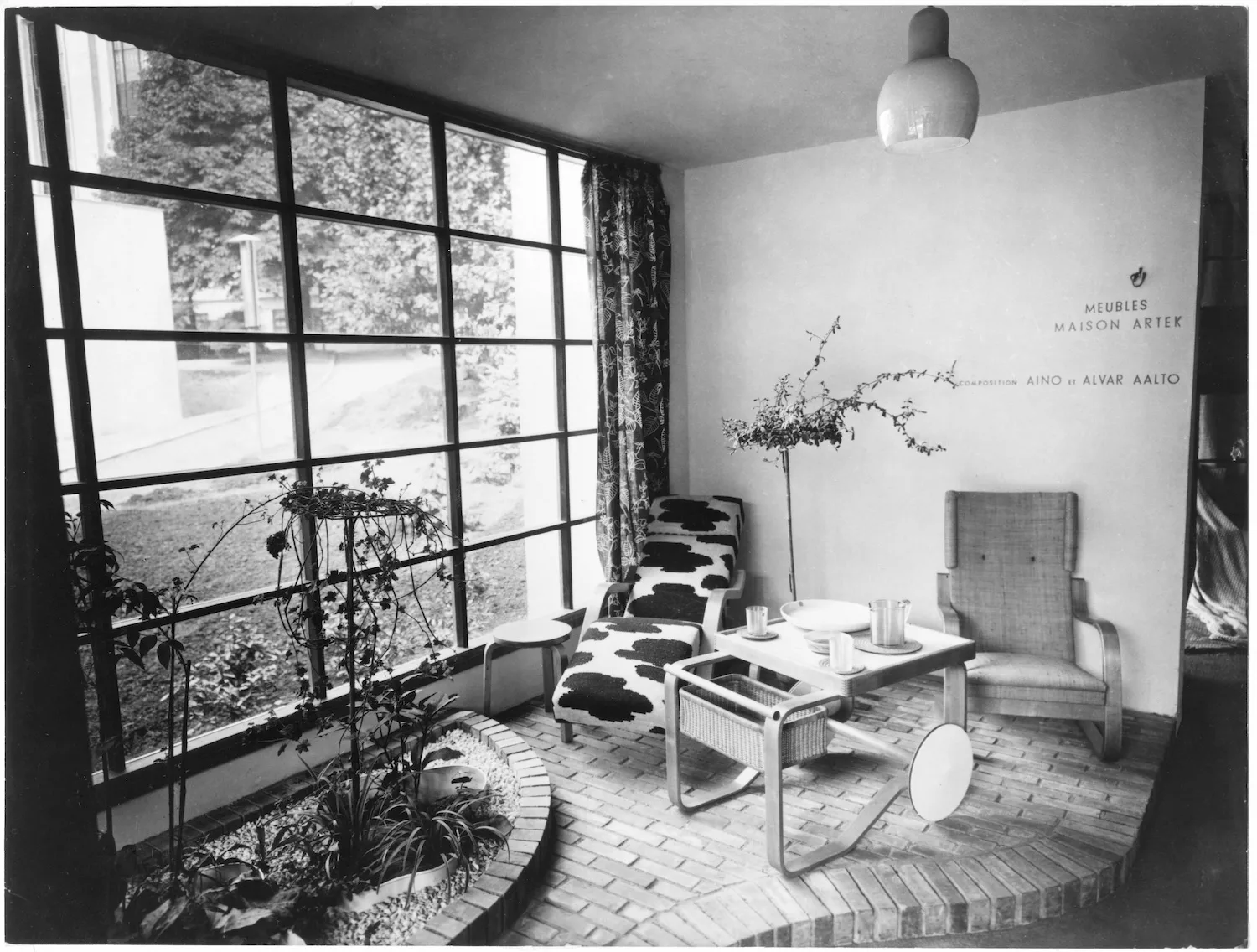
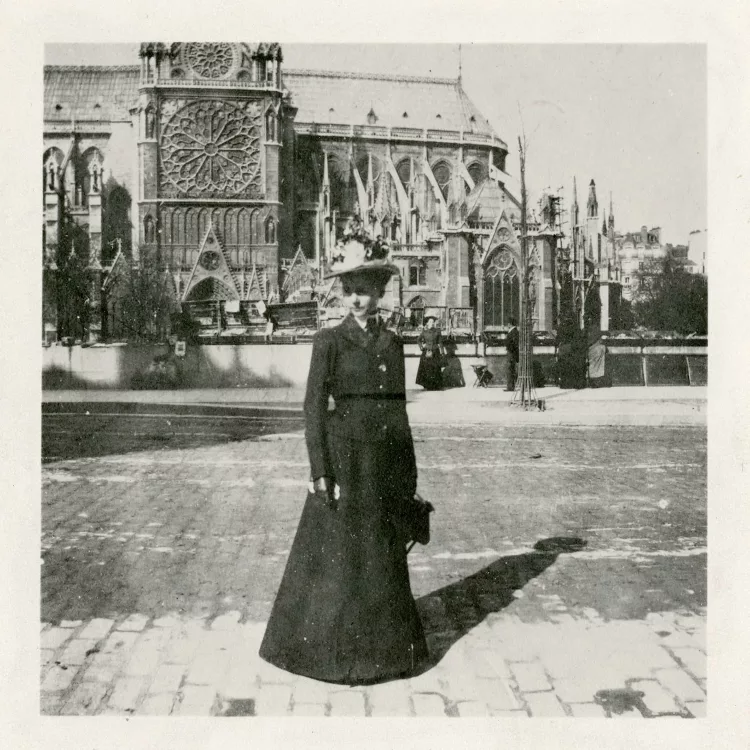
Her role as a designer brought her greater fame through several international exhibitions, such as the Milan Triennale of 1936, where she was awarded a gold medal for her Artek designs and another for her glass designs. For Artek she produced hundreds of different furniture models, which were also exhibited internationally at the Paris World Fair of 1937 and the Finland Pavilion of the 1939 New York World Fair, which was designed by A. Aalto and his spouse. A. Marsio-Aalto’s design area was broad, and for Artek she designed also interior textiles, as she was interested in new technology and new fibres.
In the most luxurious villa in Finland, Villa Mairea, her role was crucial. The building, from 1939, is one of A. Aalto’s ingenious designs. As the owners of the house were personal friends of the Aaltos, the interior design perhaps also represents the peak achievement for A. Marsio-Aalto and Artek. She designed special furniture for the house and was responsible for the interior changes.
In the early 1930s A. Marsio-Aalto began to have health problems and had to undergo a number of operations. During the war years she worked hard with Artek, acting as artistic director as well as CEO for the firm. In 1946 she was diagnosed with cancer, although she kept on working until the autumn of 1948. She died on the 13 January 1949.