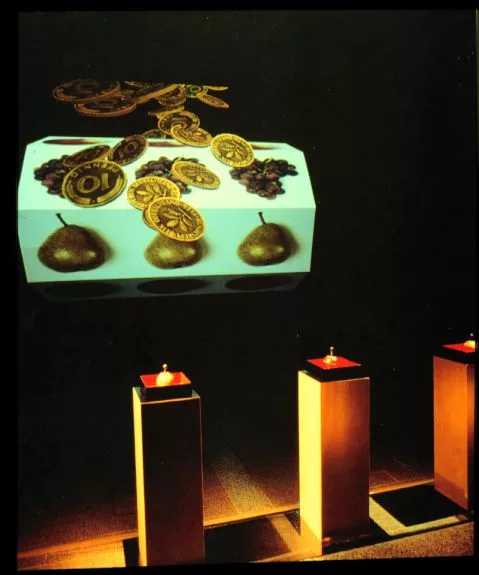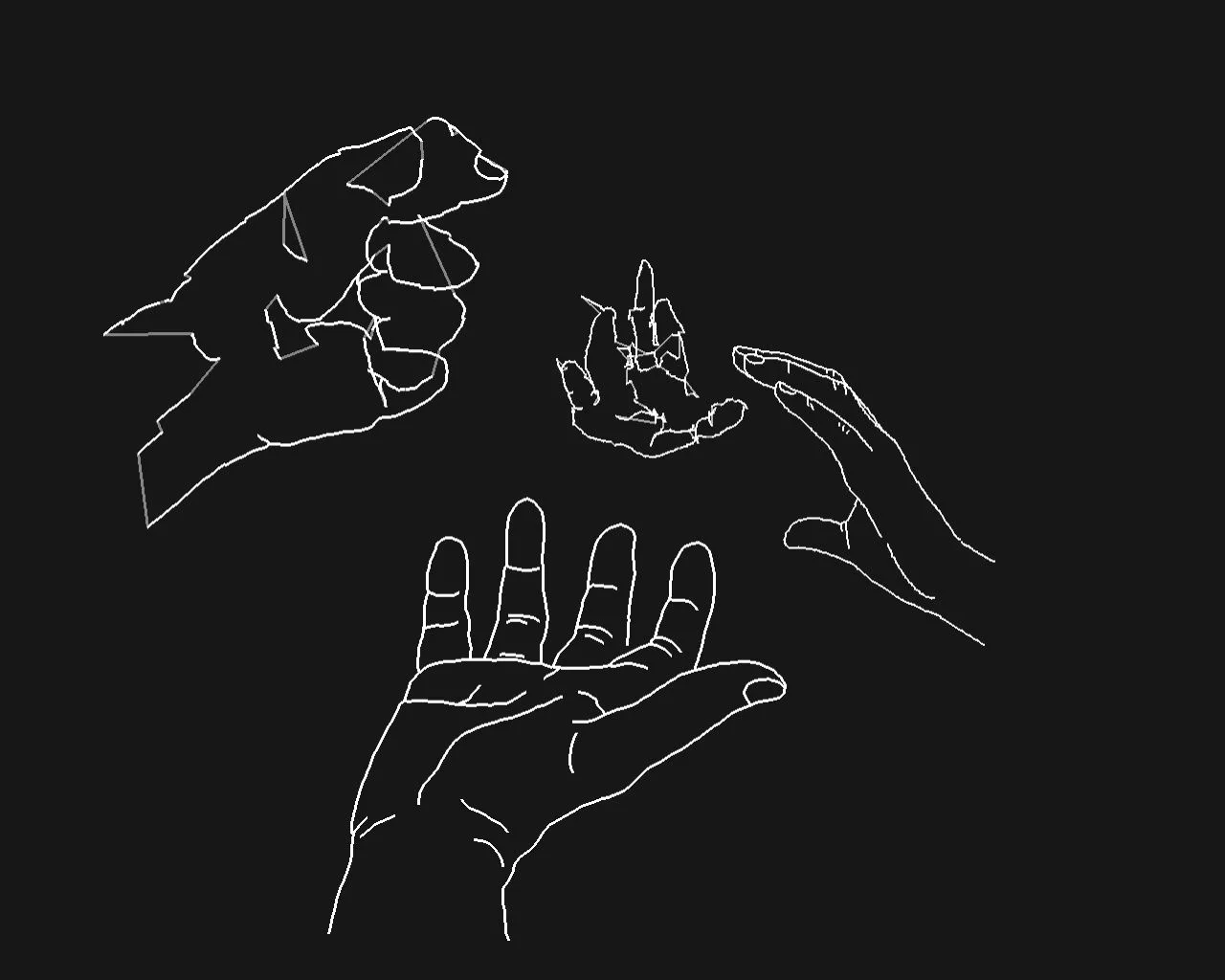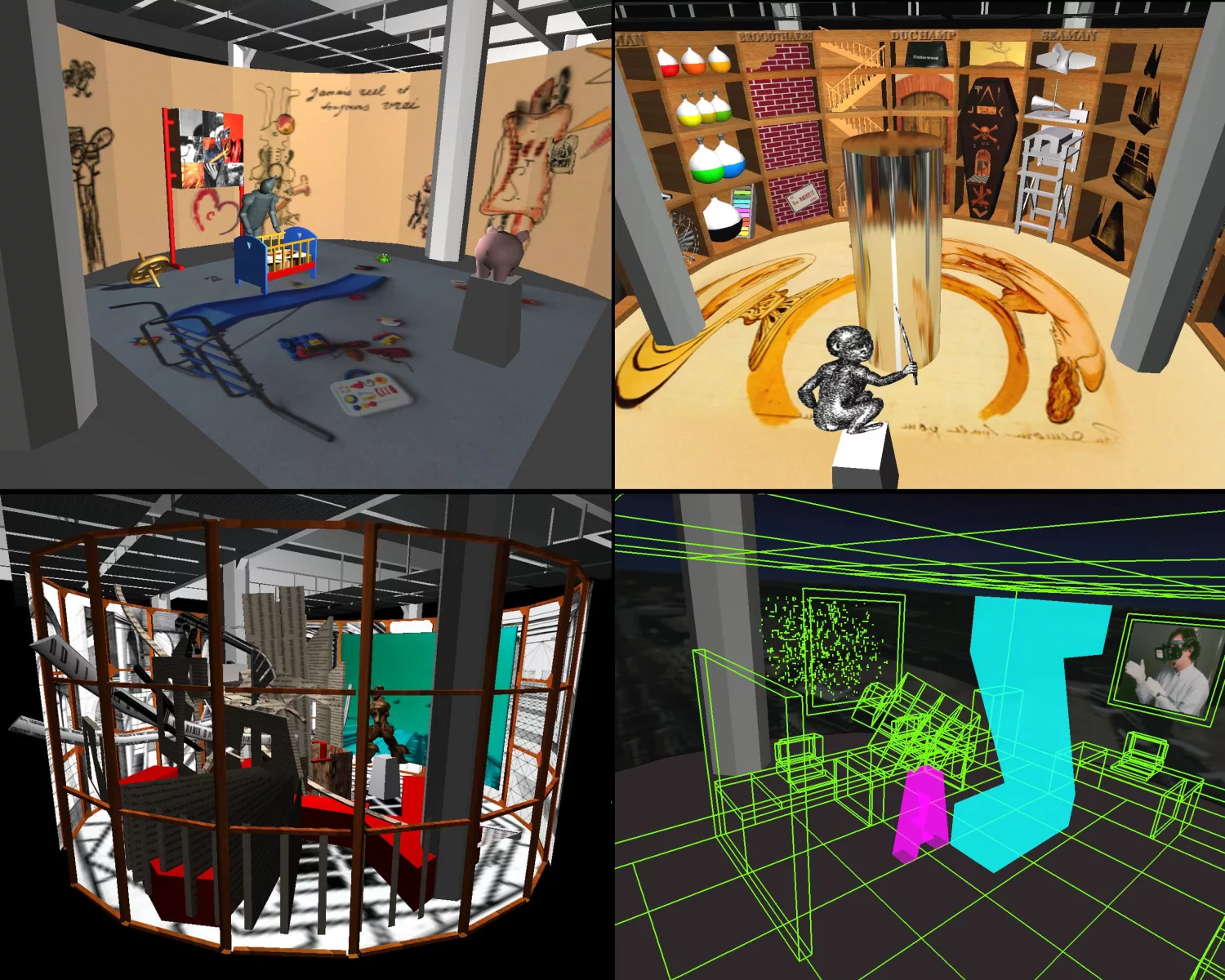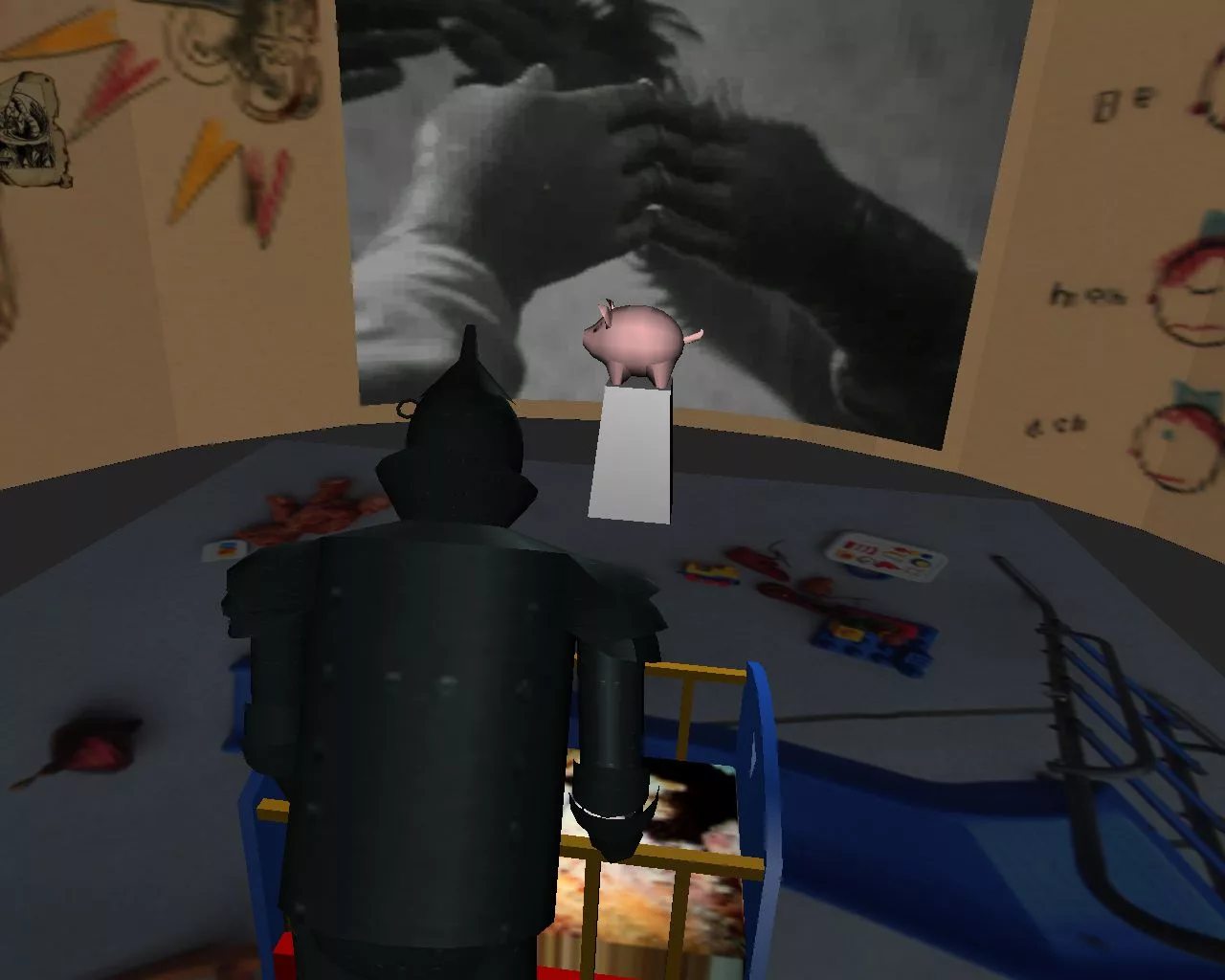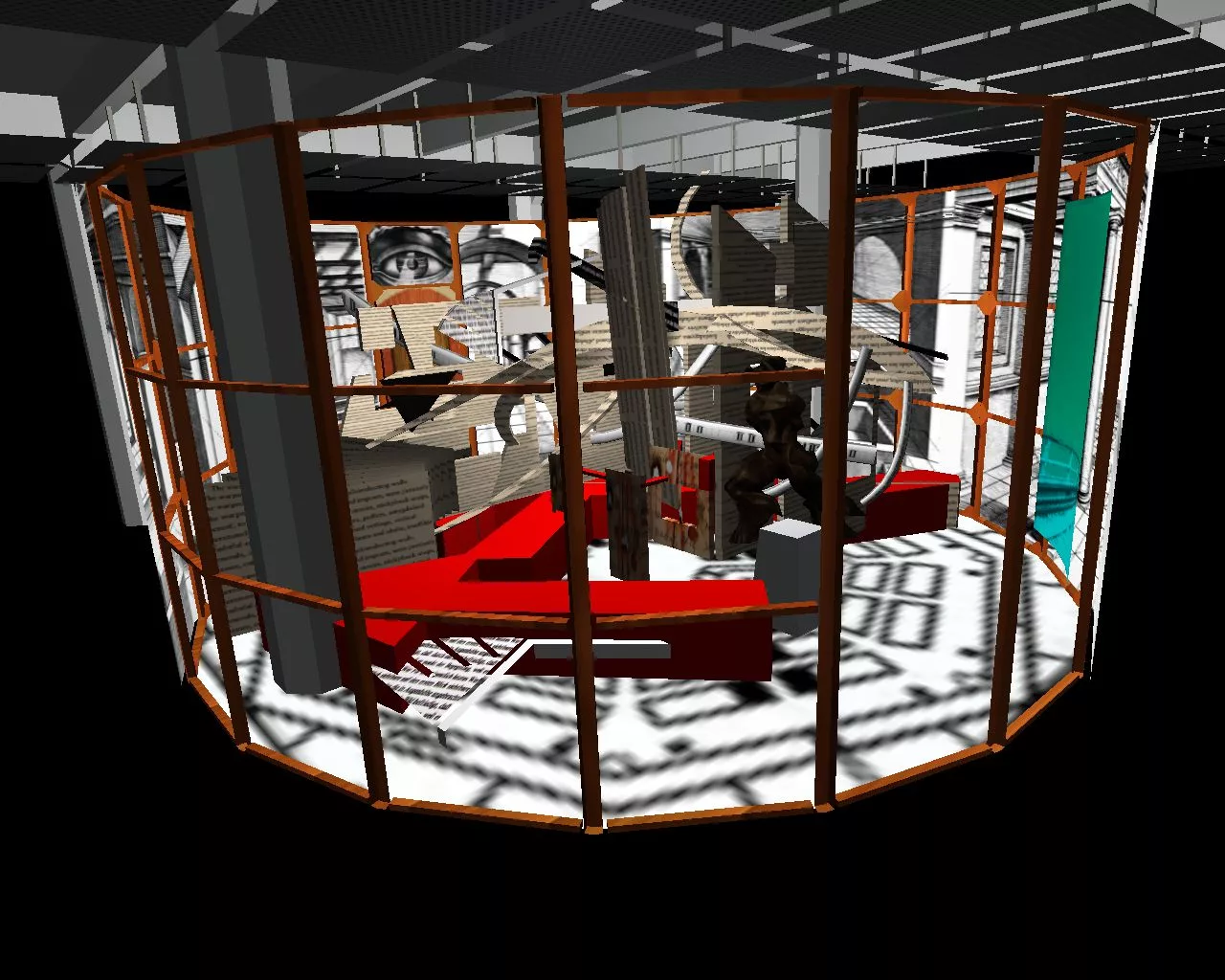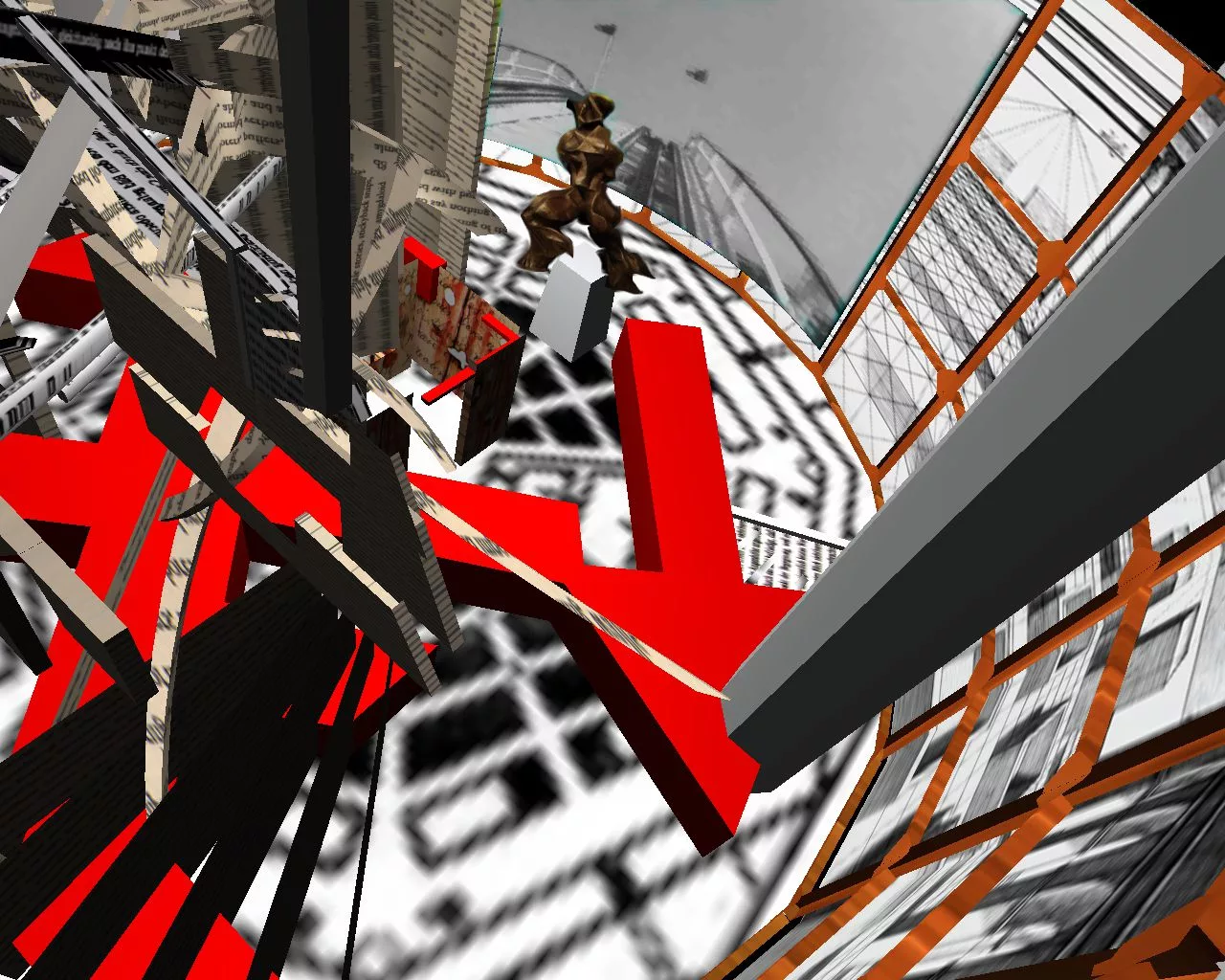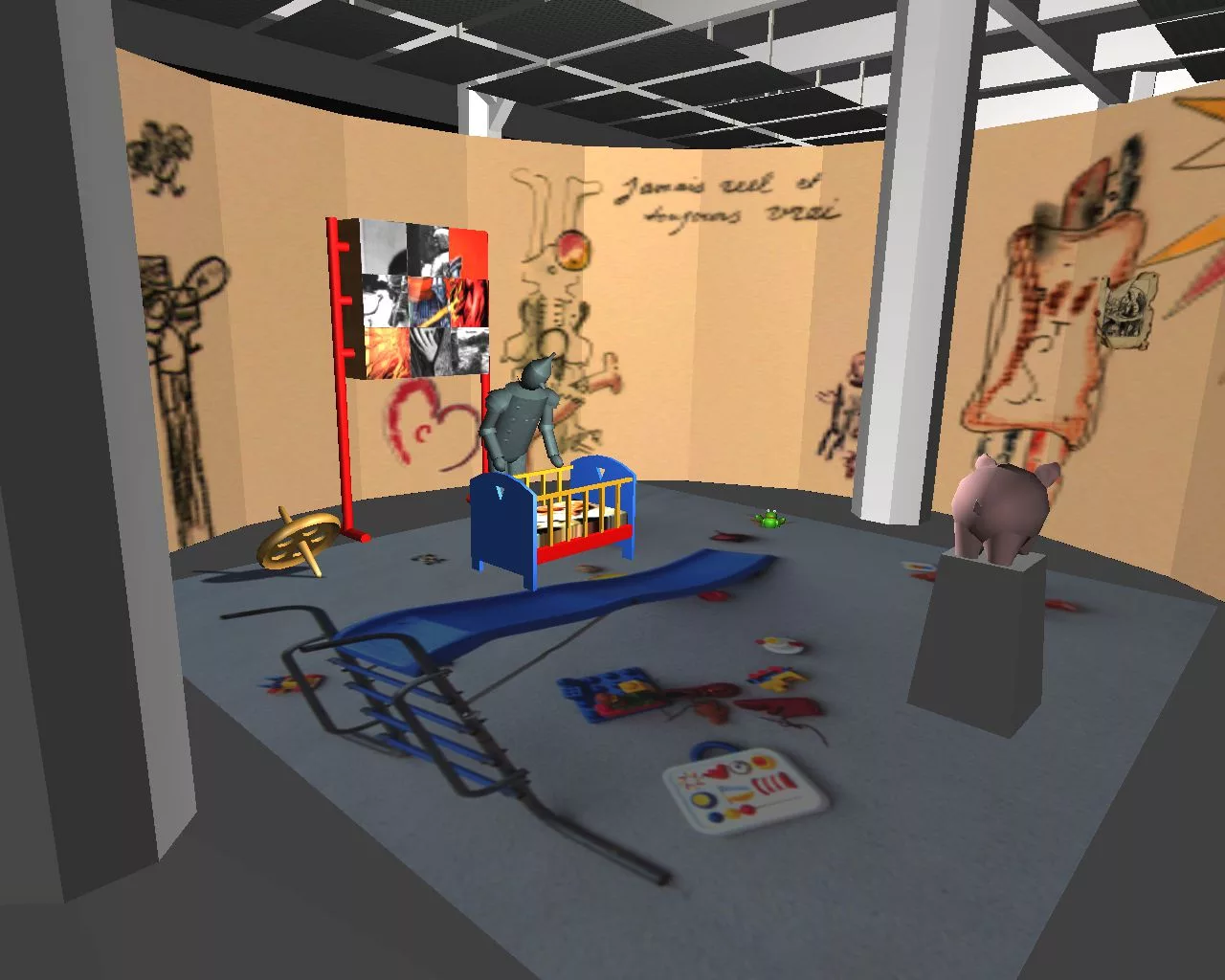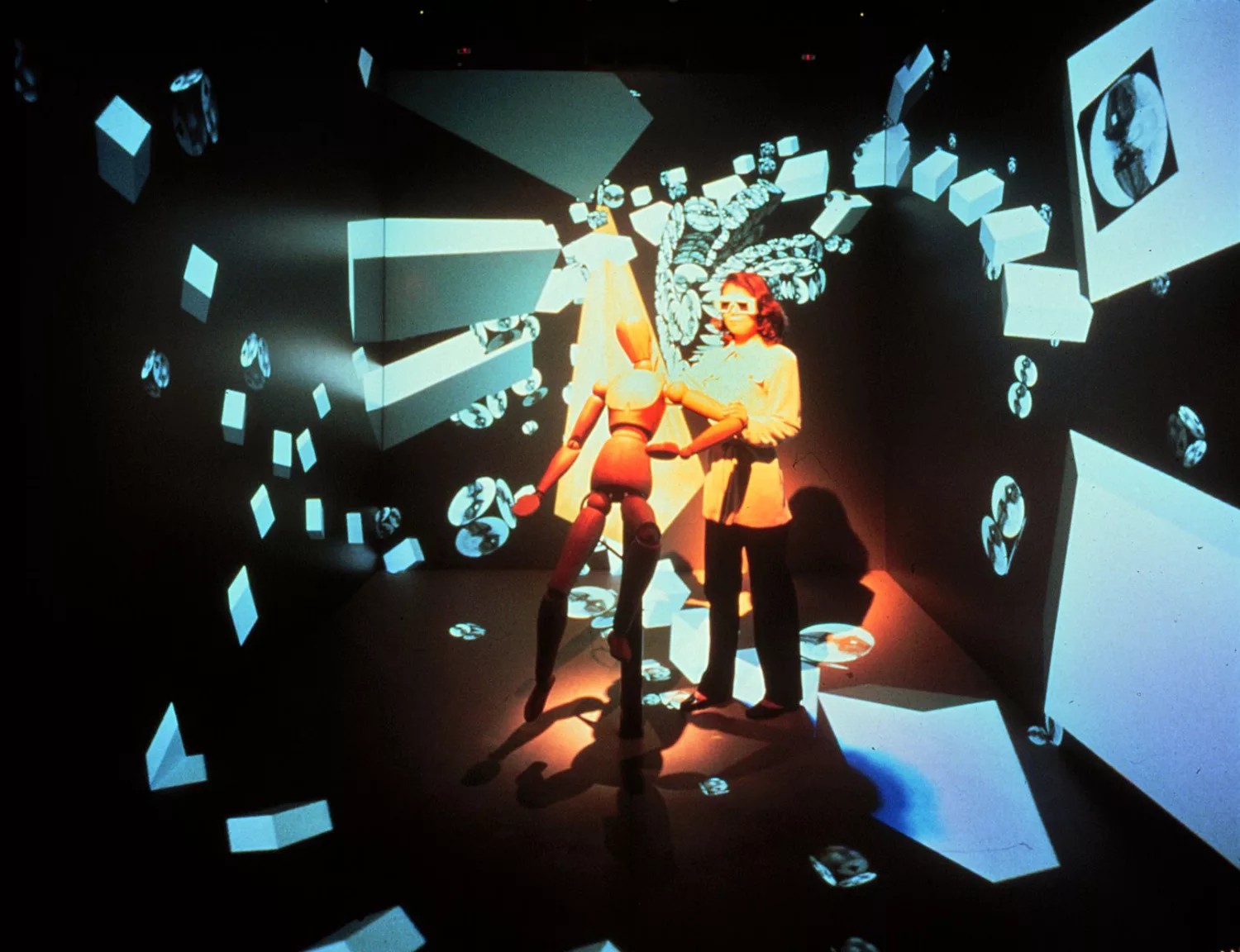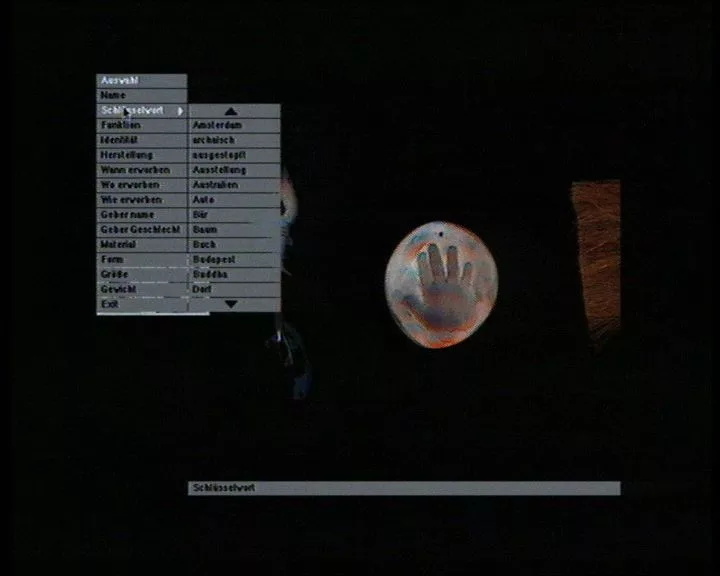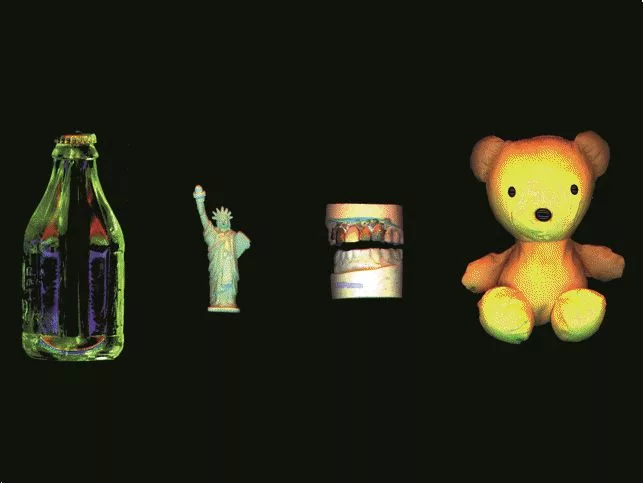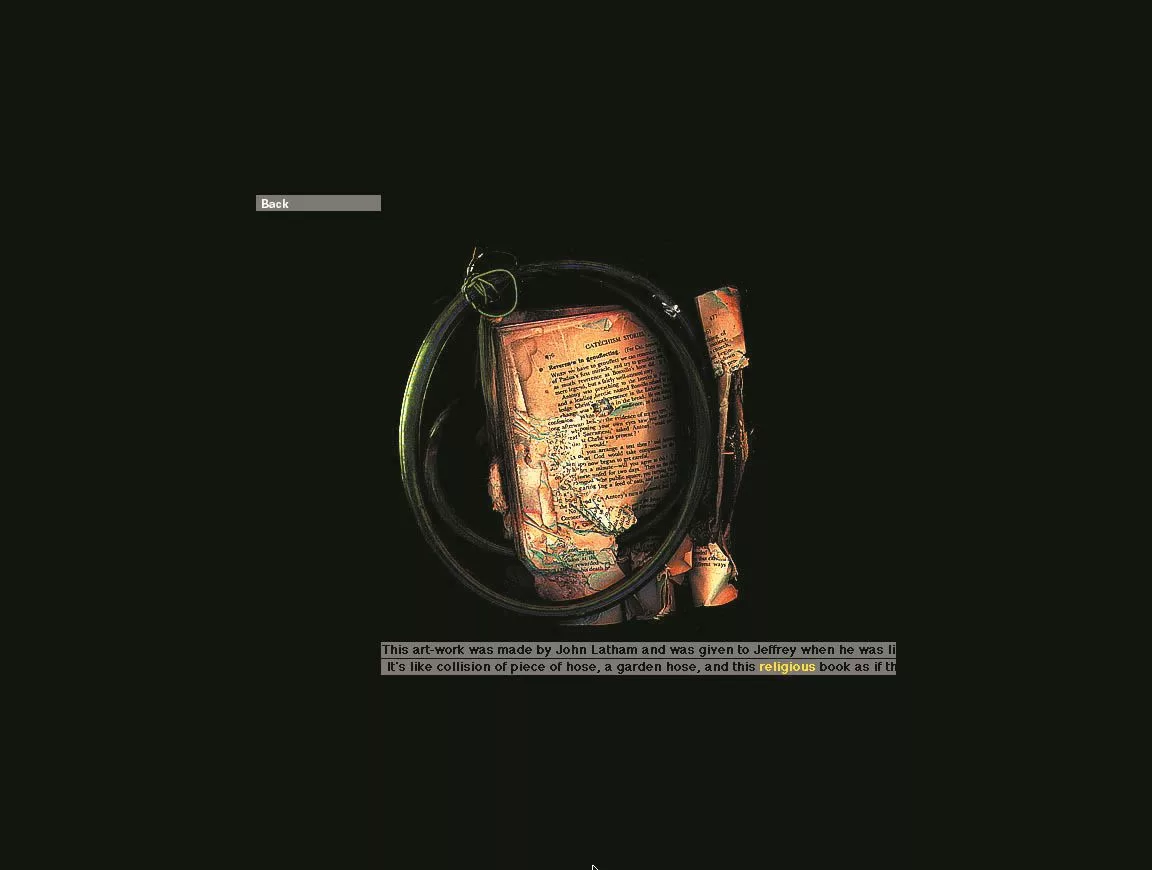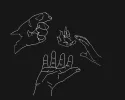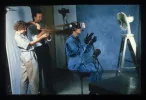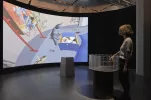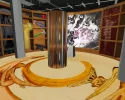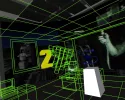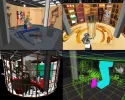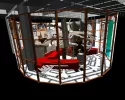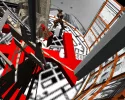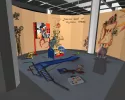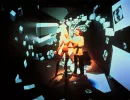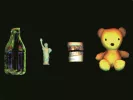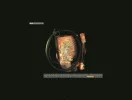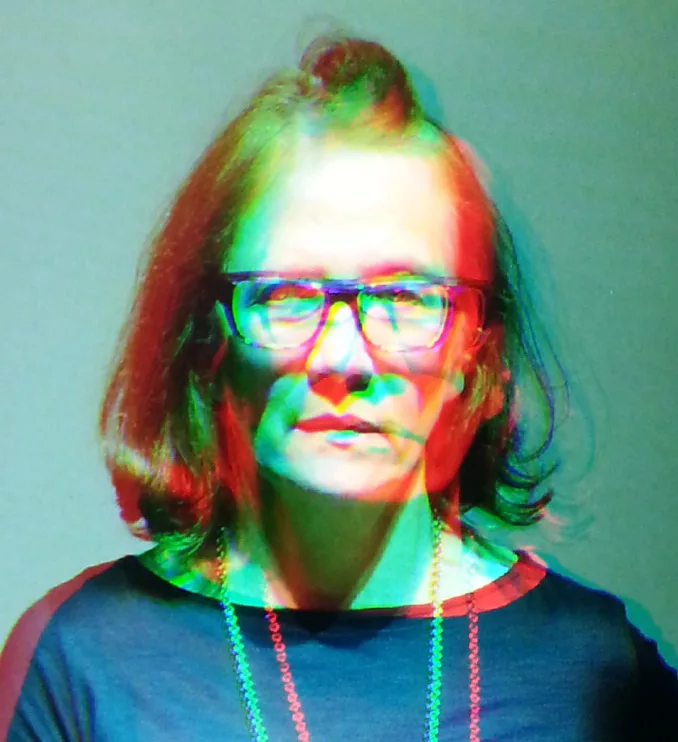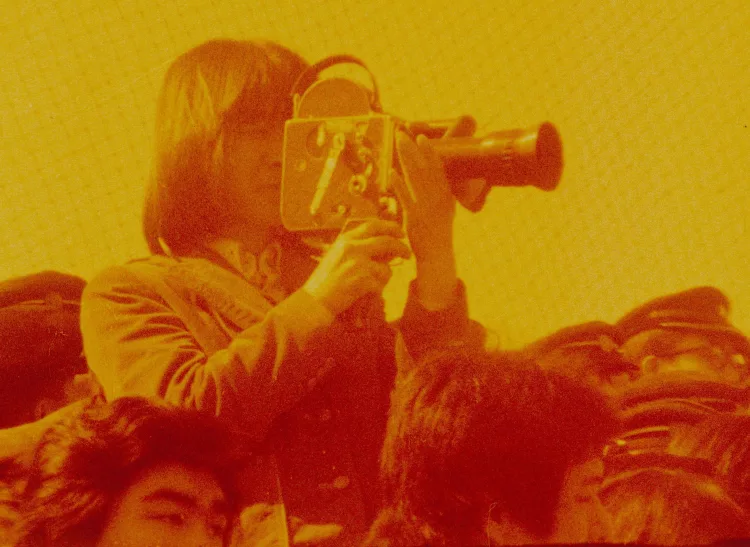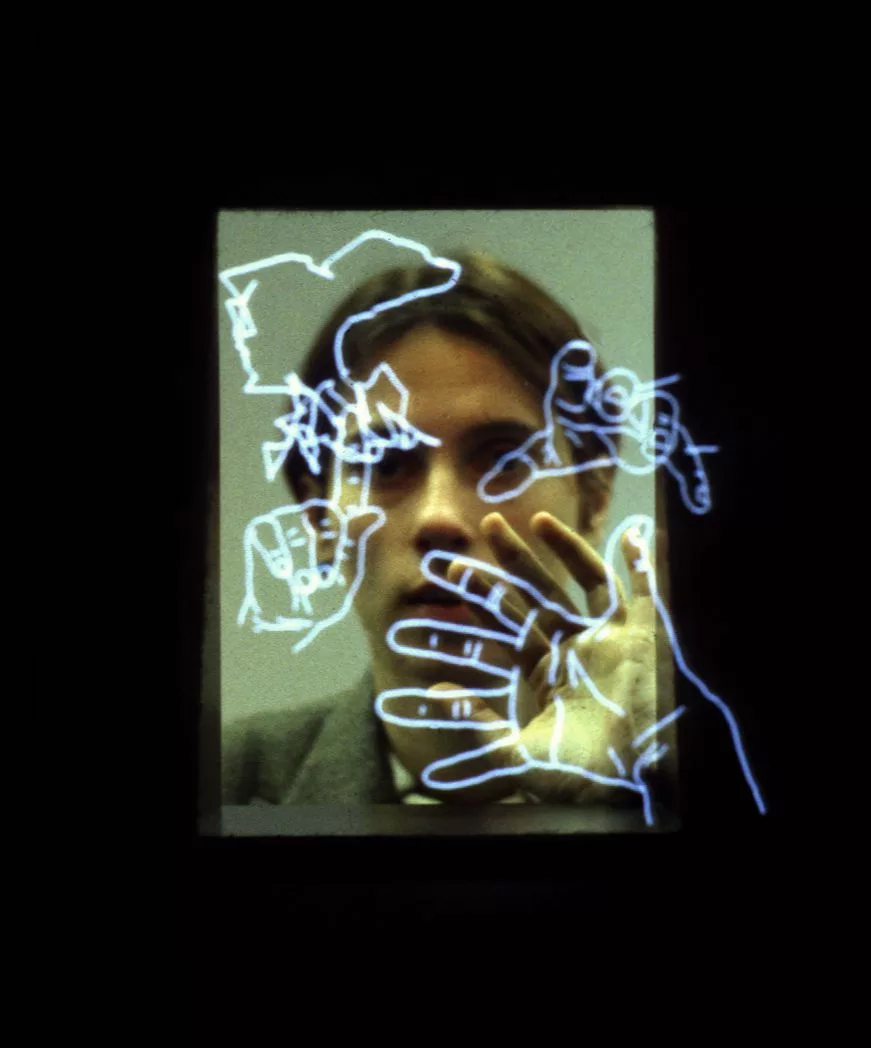
Agnes Hegedüs, Between the Words, 1995, © Agnes Hegedüs, © Photo: ZKM | Center for Art and Media Karlsruhe
Agnes Hegedüs, “My Autobiographical Media History: Metaphors of Interaction, Communication and Body Using Electronic Media,” in Women, Art and Technology, ed. Judy Malloy, Cambridge, MA: MIT Press, 2003
→Agnes Hegedüs and ZKM | Zentrum für Kunst und Medientechnologie Karlsruhe (eds.), Agnes Hegedüs: Interactive Works, ZKM | Karlsruhe, 1995
→ICC Tokyo (ed.), Media Passage: InterCommunication’93: Agnes Hegedüs, Matt Mullican, Jeffrey Shaw, Tokyo 1993
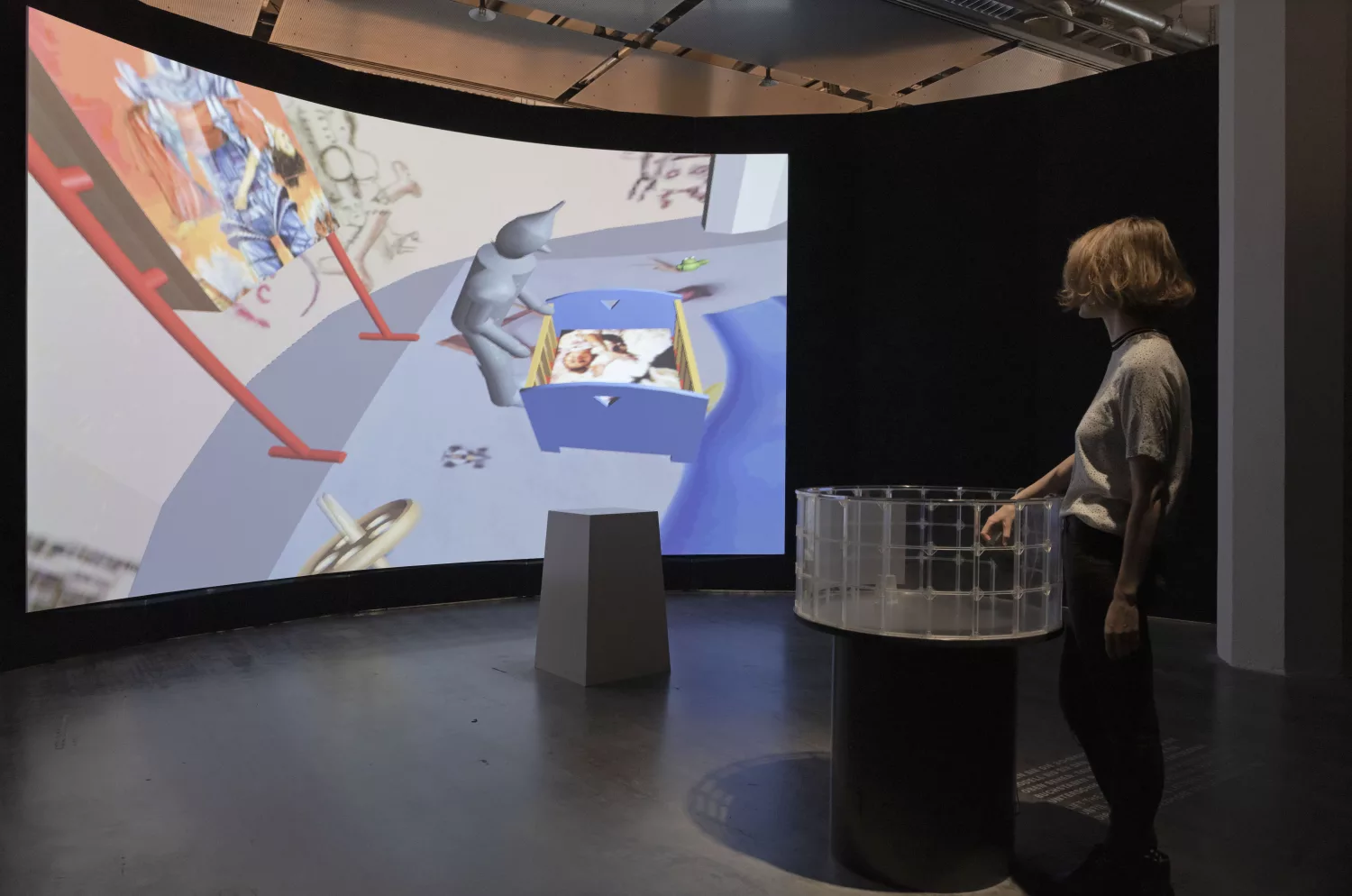
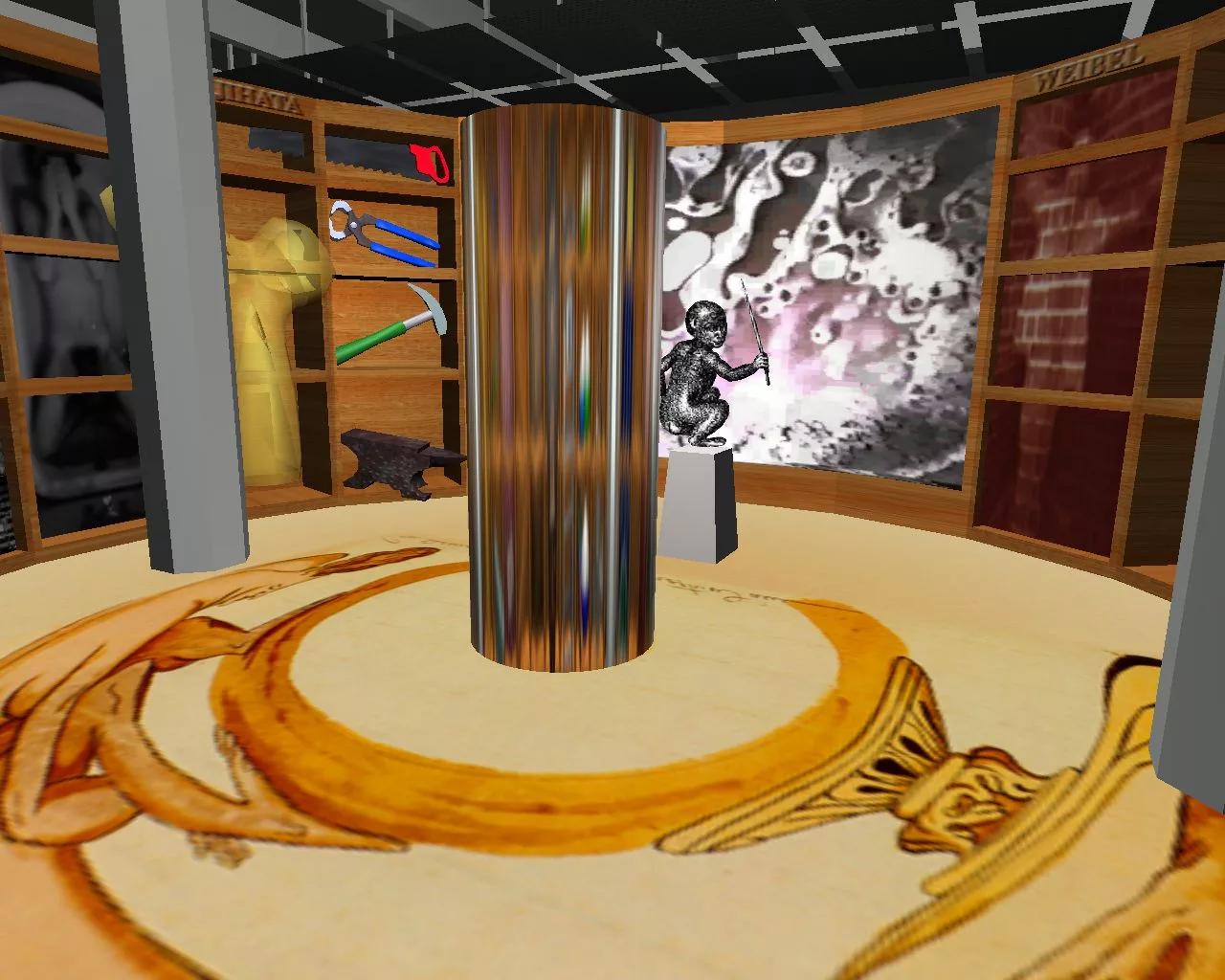
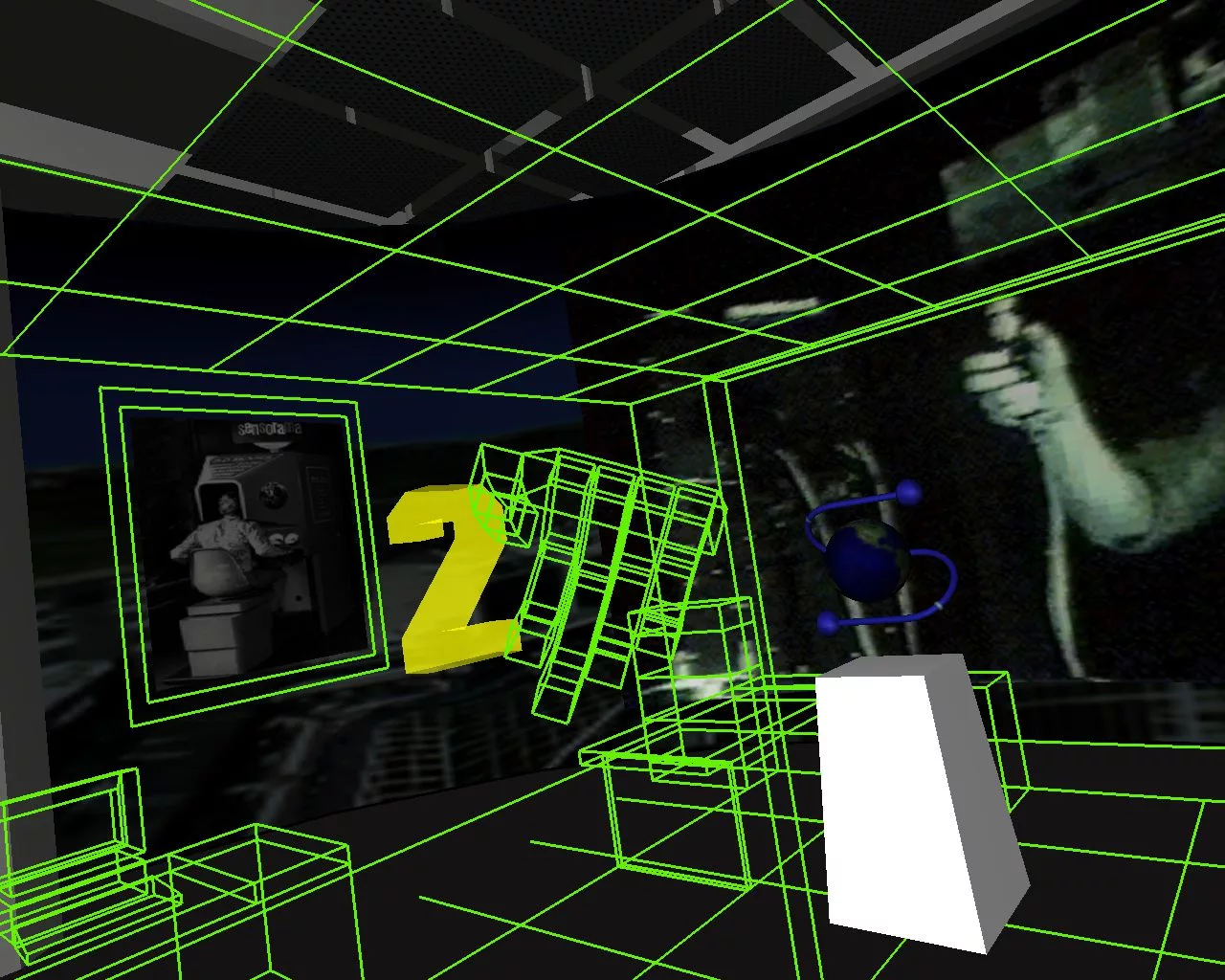
Memory Theater VR, as part of the permanent exhibition (1997–2015) and as part of the exhibition Writing the History of the Future (23 February, 2019–9 January, 2022), in the ZKM | Zentrum für Kunst und Medien Karlsruhe
→Between the Words, Kunst- und Ausstellungshalle der Bundesrepublik Deutschland, Bonn, March 10–May 7, 1995 (solo exhibition)
→Interactive Media Festival, Spark, Los Angeles Convention Center, Los Angeles, June 6–August 6, 1994 (group exhibition)
New media artist, living in Brisbane, Australia.
After studying photography, graphic design, and video art at the Hungarian Academy of Applied Art in Budapest (1985–1988), A. Hegedüs continued her studies in the Netherlands at the Minerva Academy in Groningen (1988) and the AKI Art Academy in Enschede (1988–1990), followed by postgraduate work at the Institut für Neue Medien at the Städelschule in Frankfurt am Main, Germany. She belongs to the generation of artists who embraced digital media early in their careers, as new media started to offer unprecedented creative possibilities and became more accessible for artistic use. Between the end of the 1980s and 2001, A. Hegedüs created a remarkable body of work, almost all of them exist now only in form of documentation, using computer-based interactivity as a core element of artistic expression, pioneering the fields of artistic videogames, Extended Reality, and interfaces.
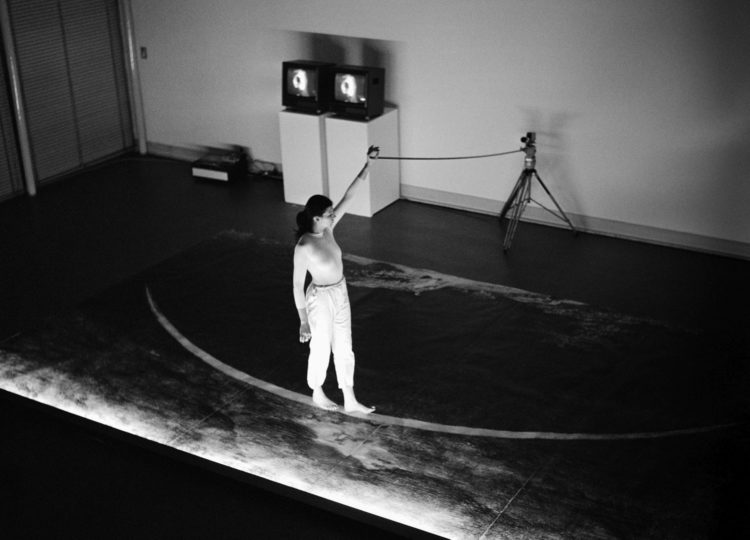
Beginning as a video artist in the late 1980s, she explored the interplay between computer-manipulated images, sound, and live video in works such as Hierosgamos, Ise d’Oil, and And Grind Hard Stones to Meal (1987–1990). These early pieces often took the form of real-time recordings of closed-circuit interactions between image and sound. As she became acquainted with interactivity, real-time computer graphics, and novel interface devices around 1989, A. Hegedüs discovered new possibilities for perceptual and participatory art. Her interactive installations of the early 1990s invited viewers to become travelers within mental and sensory spaces—ones that blurred the boundaries between perception, interpretation, memory, and experience. Her creative ambition was to embody, with various media, and to create, with the potential of new audiovisual media, synesthetic artworks and experiences. Often drawing on game structures or historical prototypes while bringing in motifs from her earlier works, these pieces focus on the nature of perception and virtual reality, exploring the shifting relations between body, space, and virtuality.
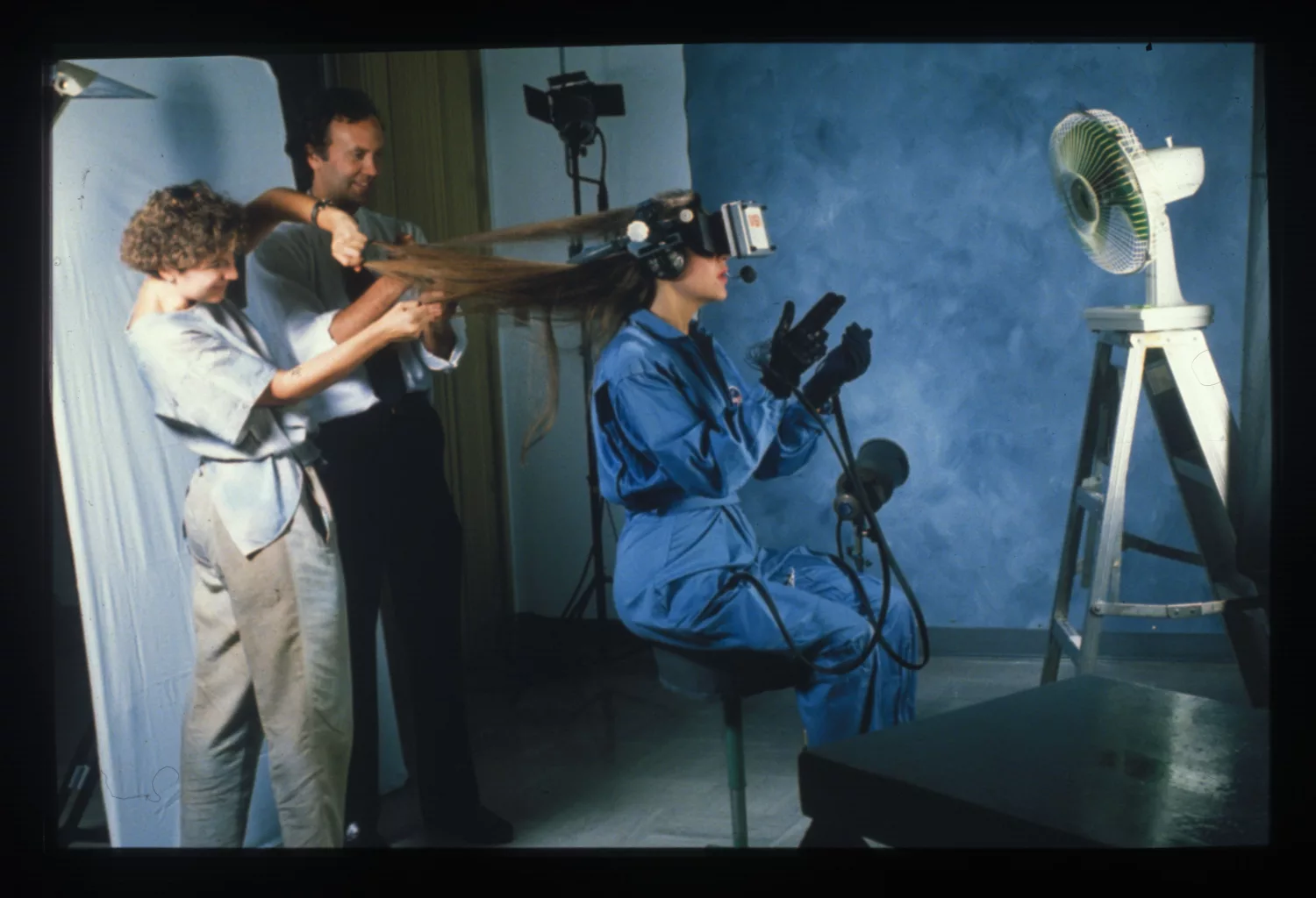
In The Fruit Machine (1991), three players must cooperatively align a segmented cylinder using multi-axis joysticks. Here A. Hegedüs reconfigures gaming vocabulary into a communal aesthetic experience: This piece is not about competition but about skillful coordination and collaboration between the players. Handsight (1992/1993) and Between the Words (1995) explore the fragile relationship between body and virtuality through interfaces that foreground tactile engagement, sensory re-embodiment, and signification by the viewer’s hands. ConFIGURING the CAVE (1997) is a collaborative work that expands these investigations into an immersive environment. Here, a wooden puppet becomes the interface, allowing users to manipulate images and sound across seven pictorial domains. Through this surrogate body, a meta-language is constructed, linking corporeal gestures and spatial transformations, critically situating the body within boundless virtual space. In Memory Theater VR (1997), A. Hegedüs echoes Renaissance memory theaters, creating a virtual museum structured as a cylindrical cabinet of curiosities. Navigating four distinct thematic worlds, viewers encounter a personal cultural history of virtual reality, where film, art, literature, science, and architecture intermingle. Things Spoken (1998–2001) explores the contrast between officially valued cultural artifacts and personally meaningful objects from ordinary lives, highlighting how individual experiences contribute to building of the collective.
A biography produced as part of the programme “Living with two brains: Women in New Media Art, 1960s-1990s”
© Archives of Women Artists, Research and Exhibitions, 2026