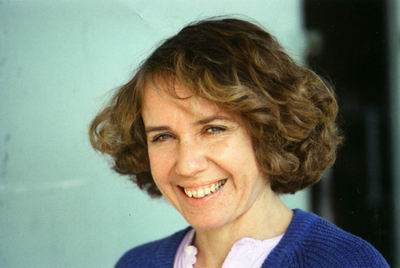
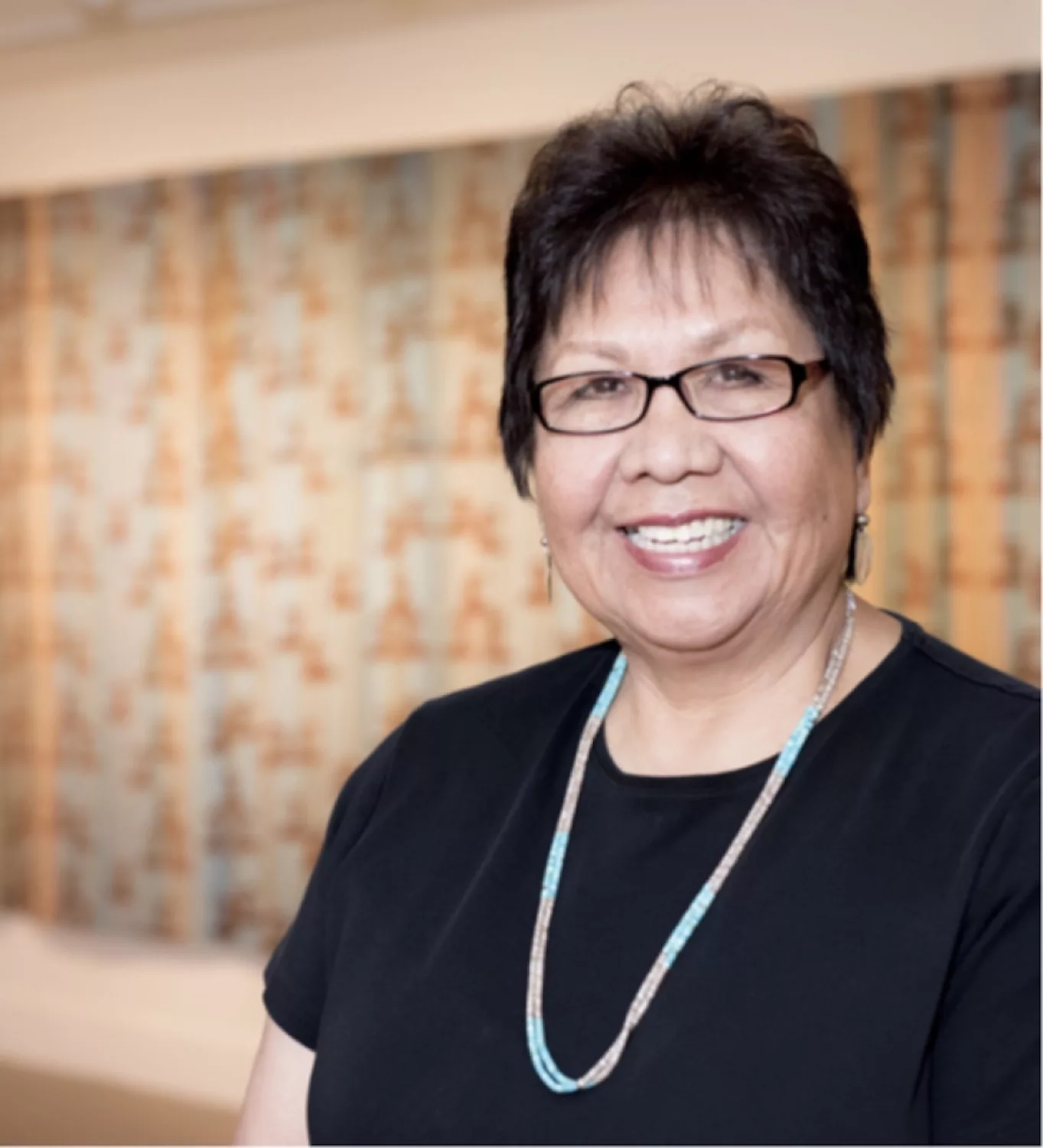
Portrait of Linda Lomahaftewa
Schneider, Wolf, “Art Gallery: Abstract Pioneer Linda Lomahaftewa,” Cowboys & Indians, 1 August, 2024, https://www.cowboysindians.com/2024/08/art-gallery-abstract-pioneer-linda-lomahaftewa/
→Abbot, Lawrence (ed.), I Stand in the Center of the Good: Interviews with Contemporary Native American Artists, Lincoln, University of Nebraska Press, 1994, p. 149–159
→Archuleta, Margaret, Strickland, Rennard (ed.), Shared Visions: Native American Painters and Sculptors in the Twentieth Century, exh. cat., Heard Museum, Phoenix (13 April–28 July, 1991), Phoenix, Heard Museum, 1991, p. 56–94
Space Makers: Indigenous Expression and a New American Art, Crystal Bridges Museum of American Art, Bentonville, 13 April–30 September, 2024
→The Land Carries Our Ancestors: Contemporary Art by Native Americans, National Gallery of Art, Washington D.C., 22 September, 2023–15 January, 2024
→The Moving Land: 60+ Years of Art by Linda Lomahaftewa, Institute of American Indian Arts, Santa Fe, 28 January–17 July, 2021
American, Hopi and Choctaw painter, printmaker and mixed-media artist.
Linda Lomahaftewa was born to a Hopi father and a Choctaw mother. She attended mission schools and Bureau of Indian Affairs-run schools until 1962 when she joined the inaugural class of the Institute of American Indian Arts (IAIA). She attended alongside other influential artists such as T. C. Cannon (1946–1978) and Kevin Red Star (1943–). She earned a Bachelor of Fine Arts in painting in 1970 from the San Francisco Art Institute, and a Master of Fine Arts in painting in 1971 from the same institution. She began her teaching career in 1971 and taught courses on Native American art and studies at Sonoma State University from 1971 to 1974 and the University of California, Berkeley from 1974 to 1976. For over forty years, from 1976 to 2017, she taught Studio Art at IAIA.
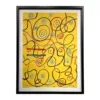
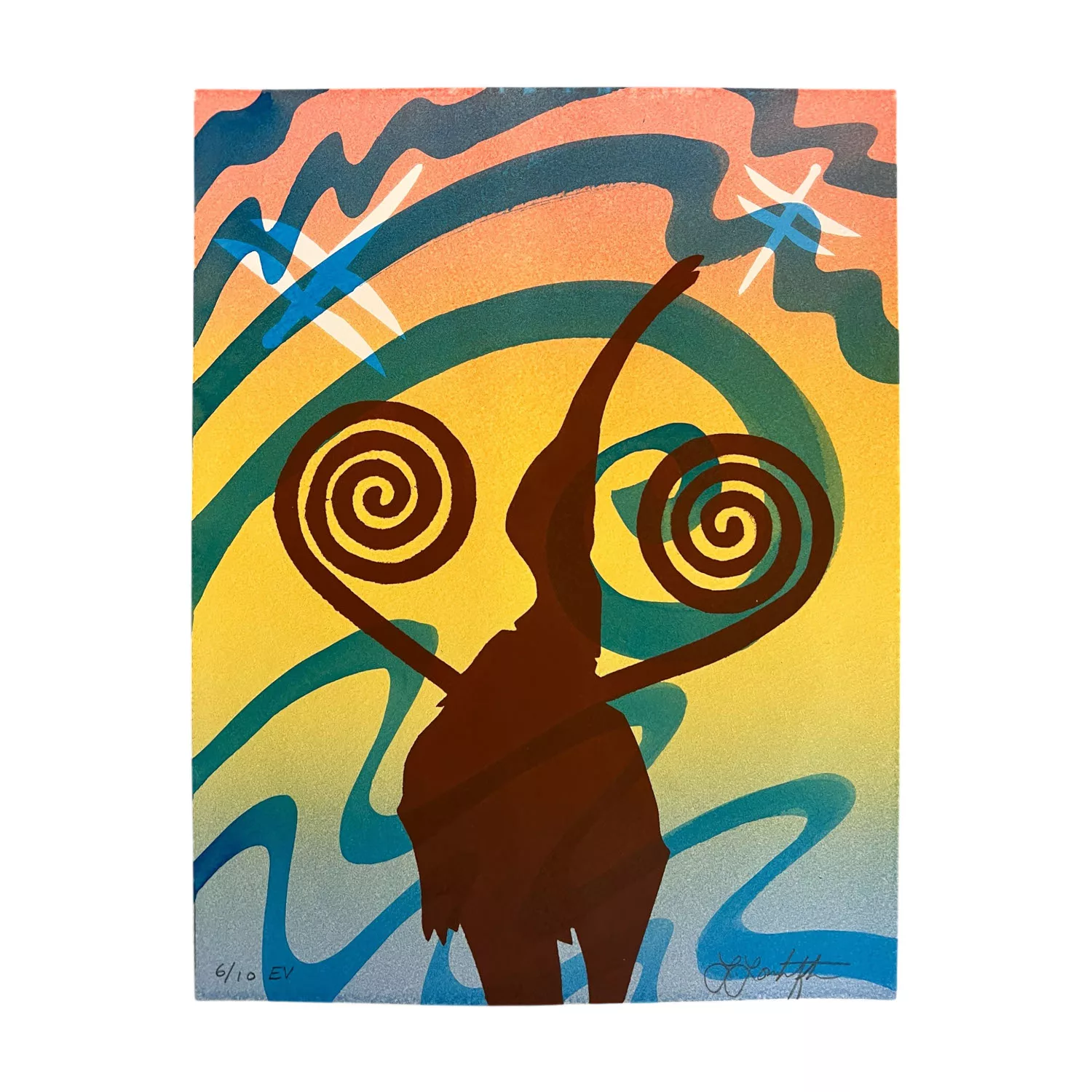
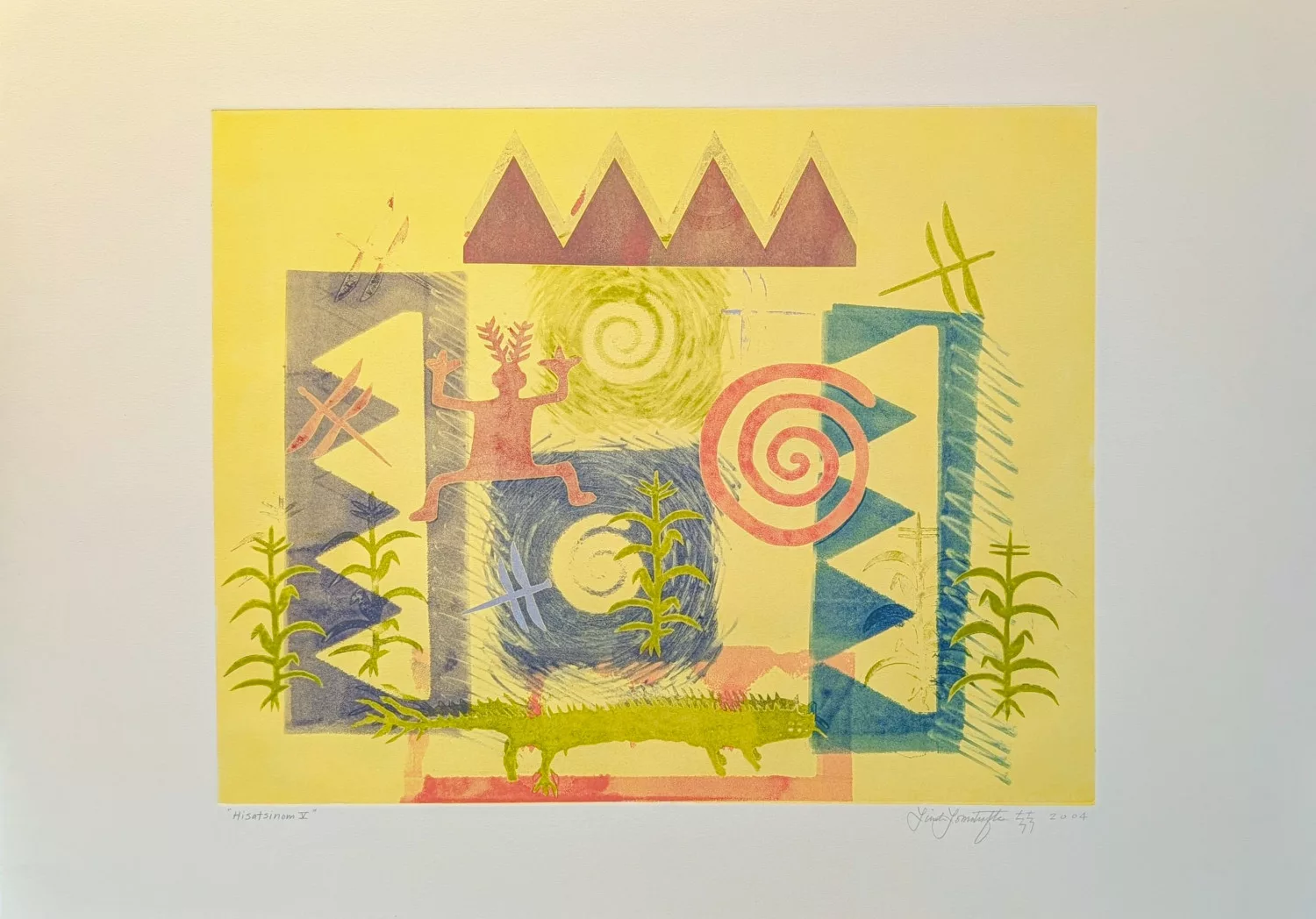
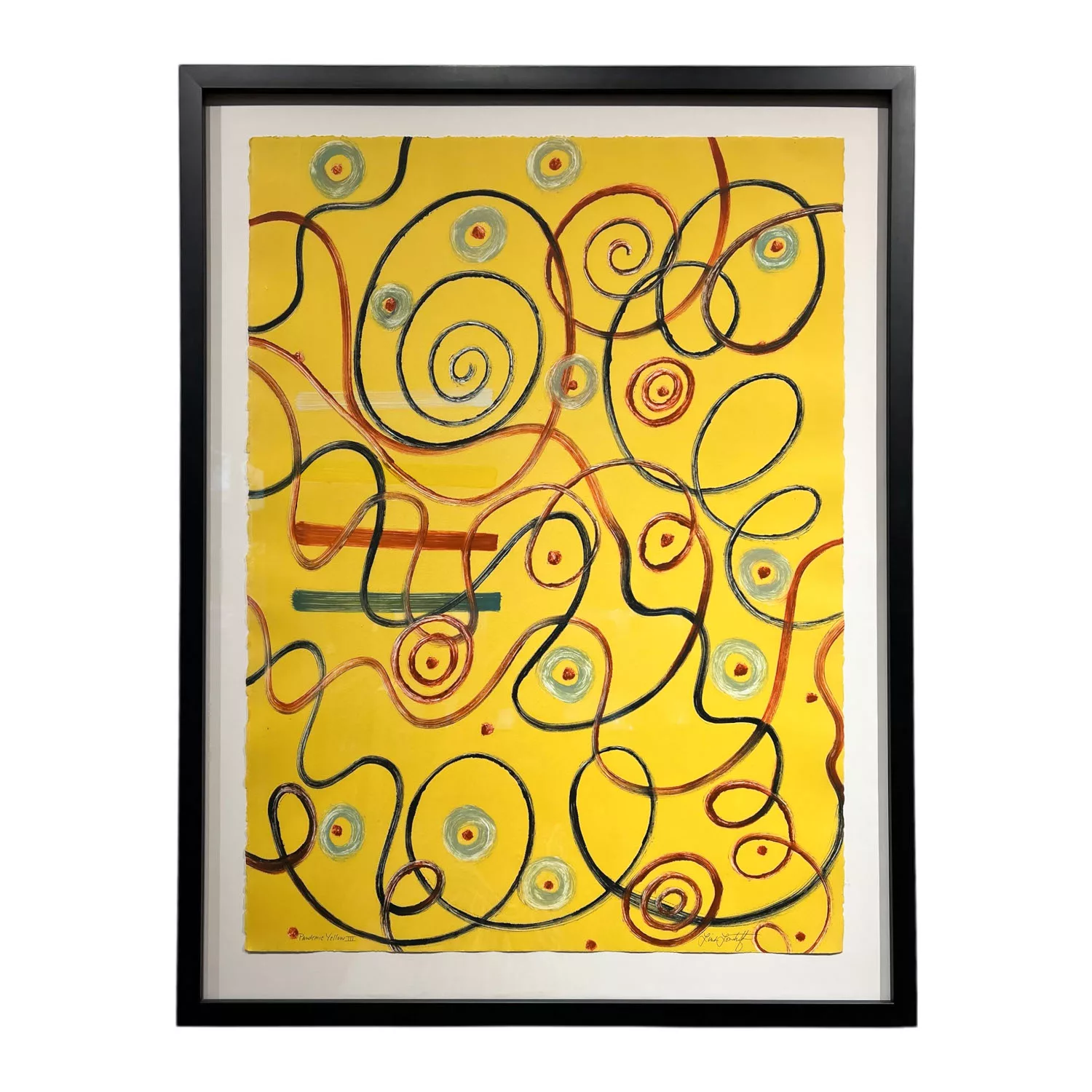
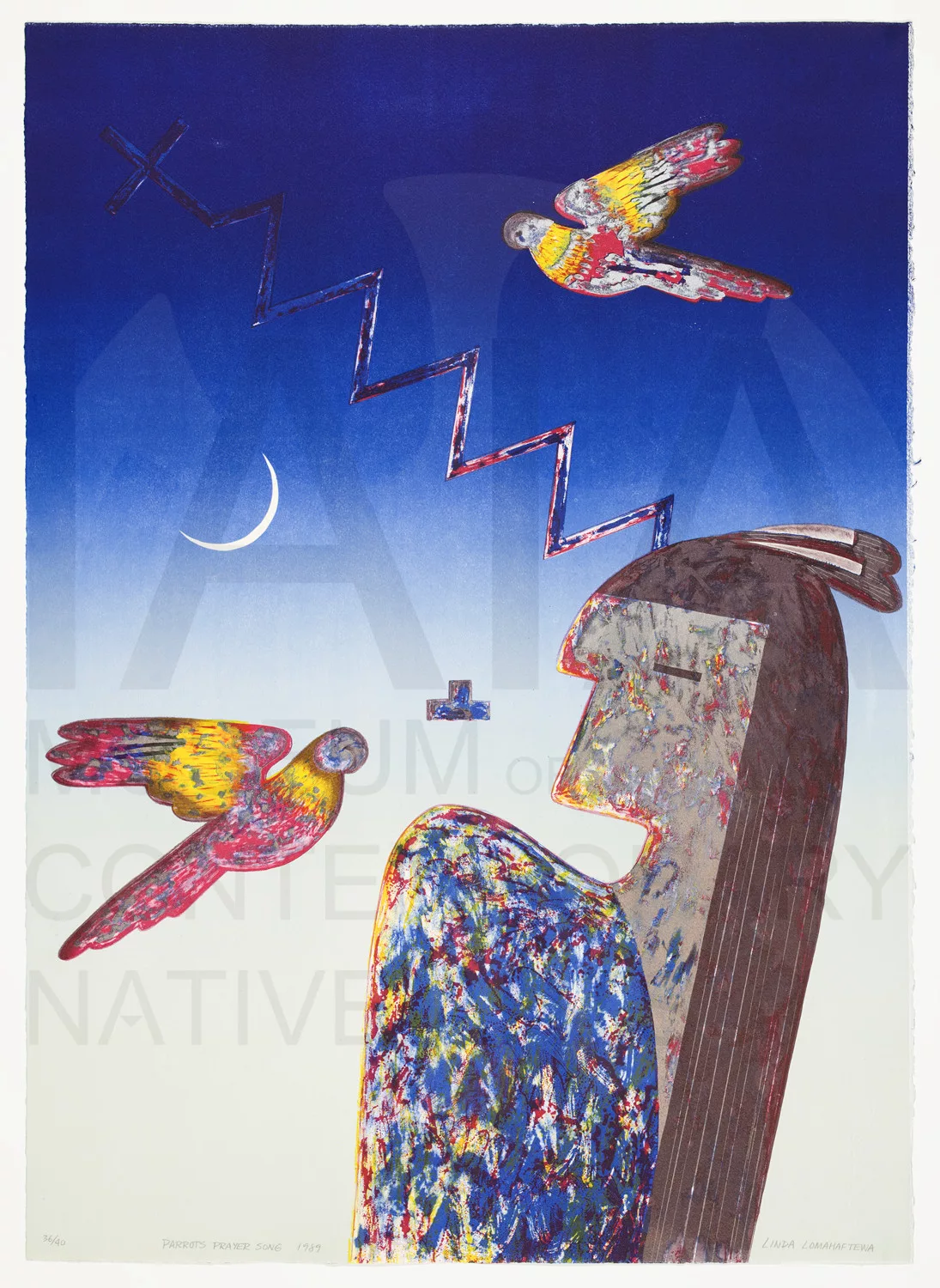
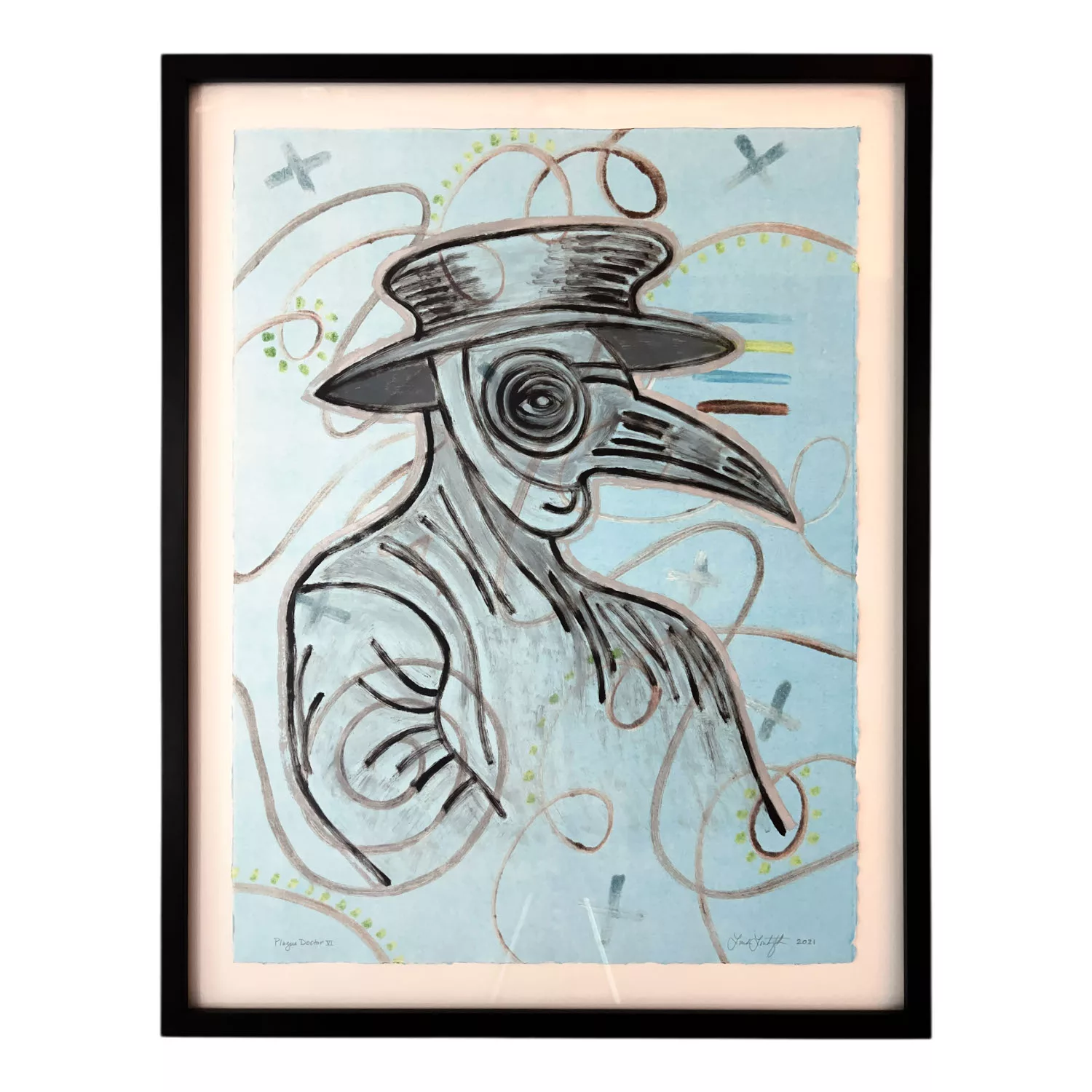
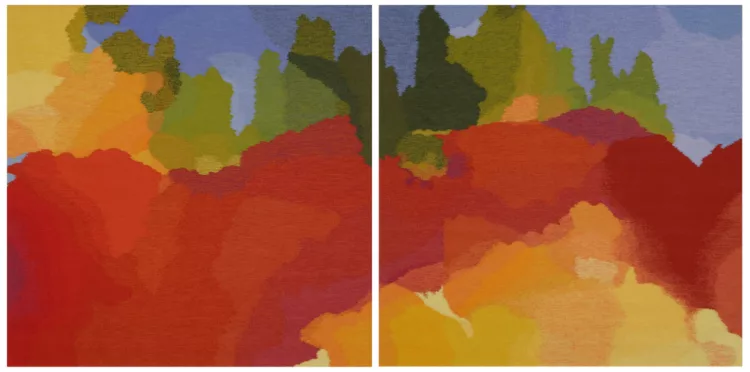
Throughout her artistic career, L. Lomahaftewa has defined herself as a mixed-media artist with emphasis on acrylic painting and printmaking. Her artwork combines modernist abstractionist forms with references to Hopi and Choctaw ceremonies, creation stories and landscapes. Throughout her career, she has been a leading voice in the modern Native American art movement and an influential educator.
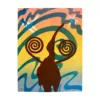
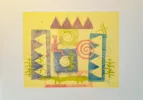
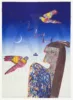
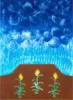
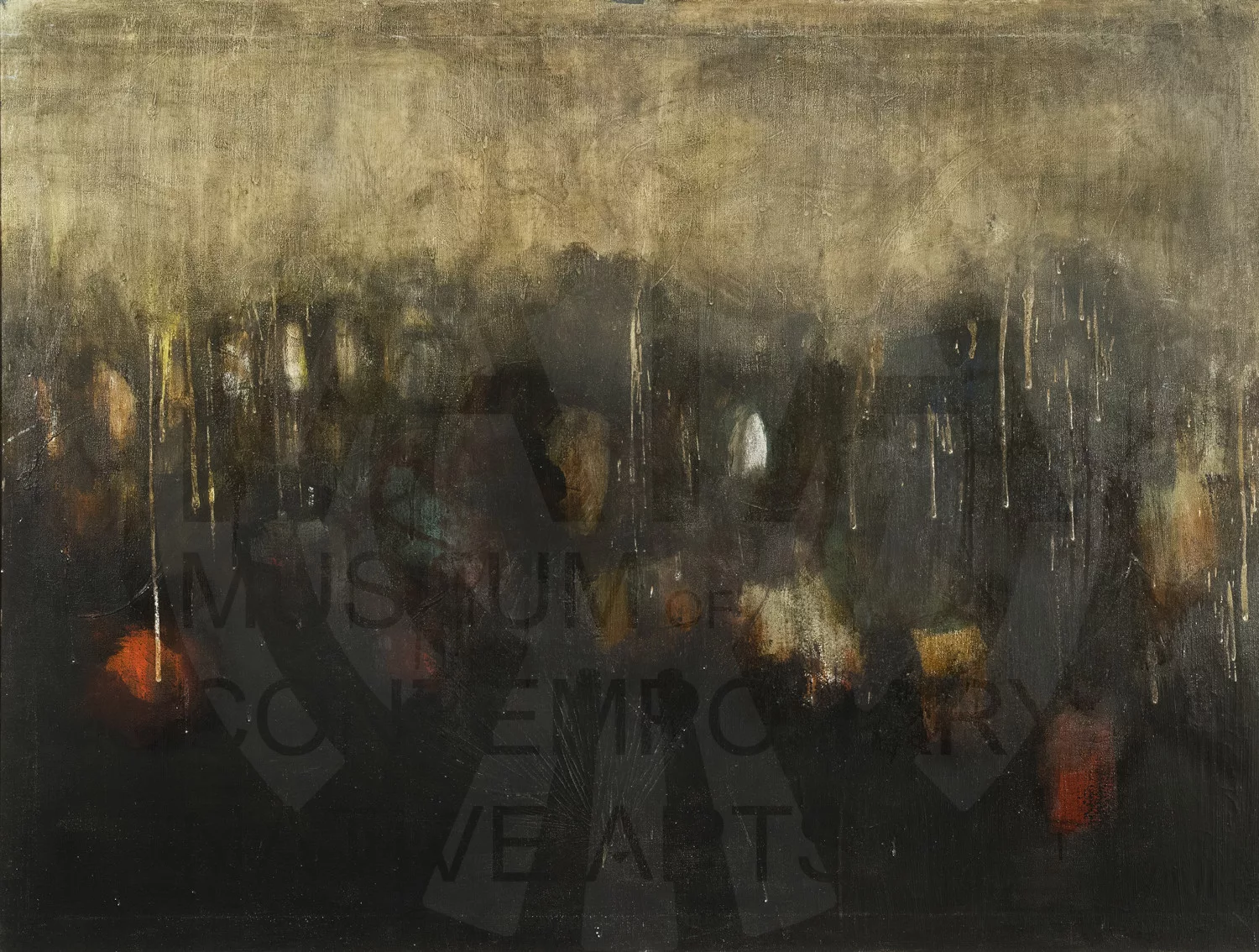
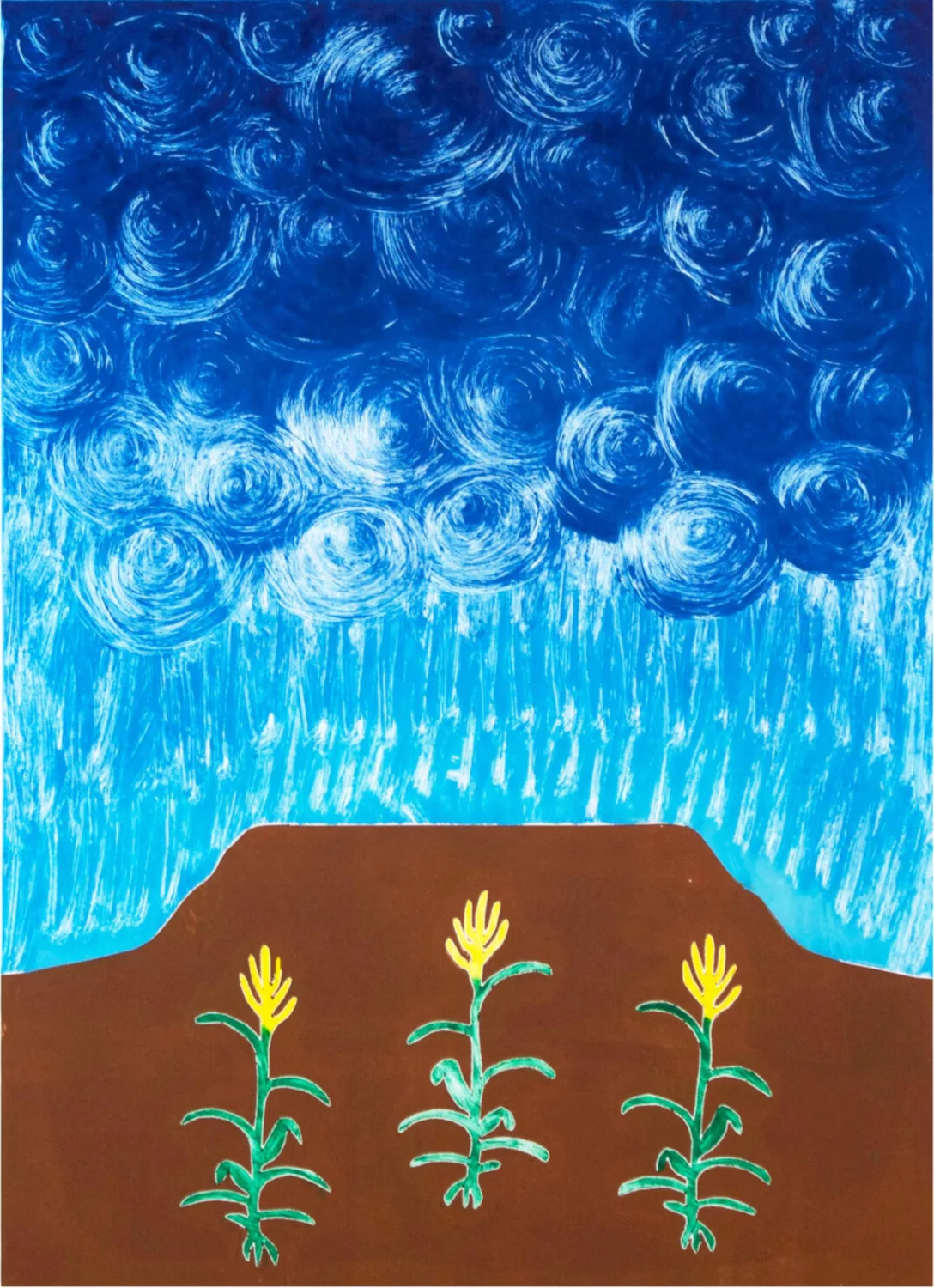
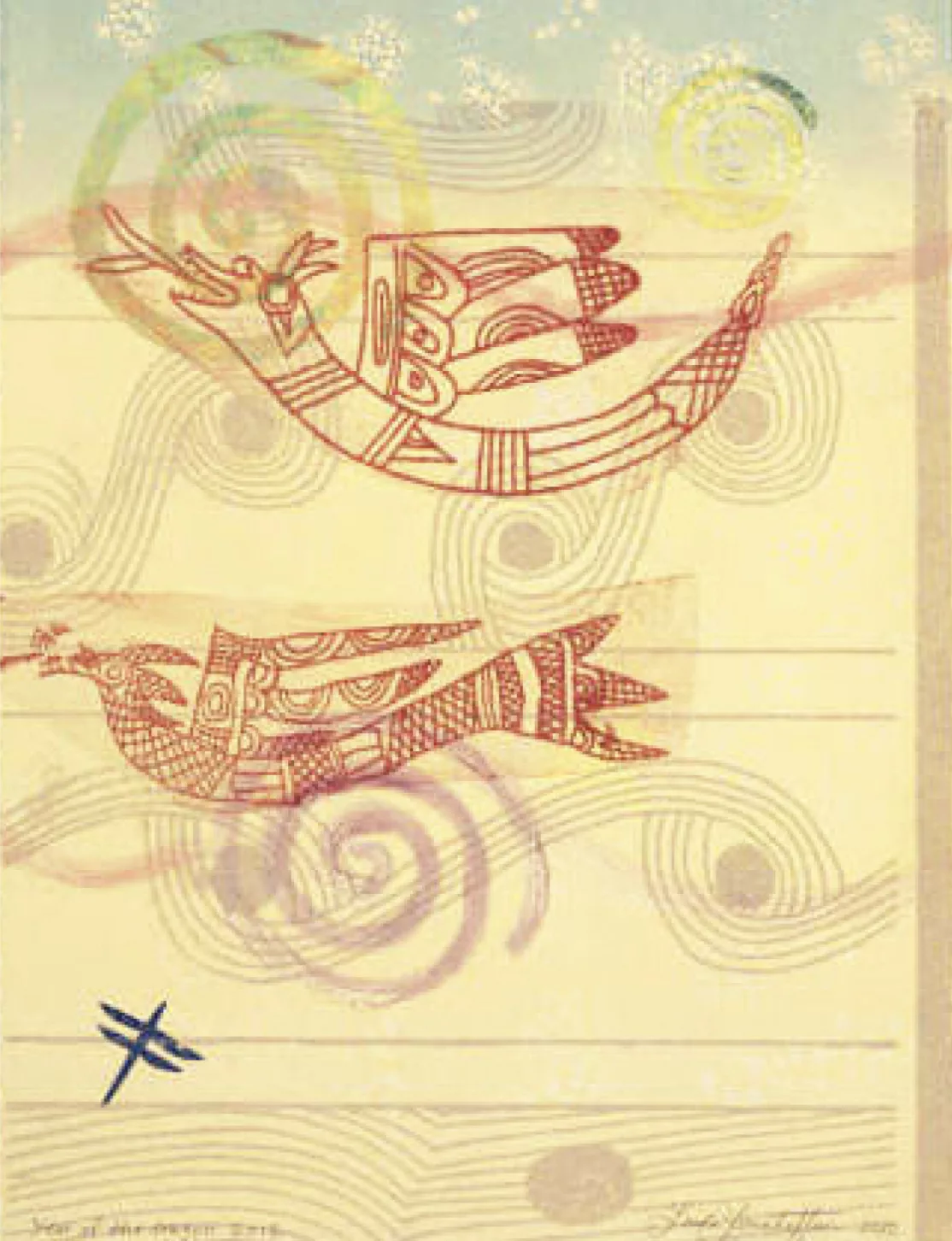
As a student at IAIA, L. Lomahaftewa originally aimed to become a commercial artist but was persuaded by her instructors to pursue fine arts. Early in her artistic practice, with works like The Quiet Land, The Warm Land (1965), she experimented with abstract colour field oil paintings. As a student at the San Francisco Art Institute, her paintings such as Sustenance #1 (circa 1970) incorporated more vibrant colour palettes and surrealist compositions. By the 1980s, she increasingly utilised more overt references to her Hopi heritage and began focusing more on printmaking rather than painting. She primarily works in monotypes and lithographs. From this period onward, both her prints and paintings feature more depictions of human figures, animals and symbols used in Hopi ceremonial practices. Honouring her connection to her homelands of Sungopovi at the Hopi Second Mesa in northern Arizona, she incorporates important cultural symbols like parrots, corn and petroglyph designs. In addition to drawing inspiration from both her Hopi and Choctaw heritage, she has also formed transnational connections with other Indigenous artists and artforms. In the 1990s she was a visiting artist in New Zealand/Aotearoa where she worked with Māori artists. Those visits inspired collage works, like Dancing Spirits (1996), which combine traditional Māori aesthetics and ephemeral materials from her travels. Since retiring from her teaching career in 2017, L. Lomahaftewa has continued her printmaking practice.
L. Lomahaftewa’s artworks have been featured in both group and solo exhibitions nationally and internationally. In 2021 she held a career retrospective, entitled The Moving Land: 60+ Years of Art by Linda Lomahaftewa, at the Institute of American Indian Art Museum of Contemporary Native Arts in Santa Fe, New Mexico. Additionally, she has been the recipient of prestigious awards, such as the Robert Rauschenberg Foundation’s Power of Art Award in 2001. Her work is part of the collections of the National Gallery of Art, Washington D.C., the Heard Museum, Phoenix and the Wheelwright Museum of the American Indian, Santa Fe, amongst others.
A notice produced as part of the TEAM international academic network: Teaching, E-learning, Agency and Mentoring