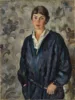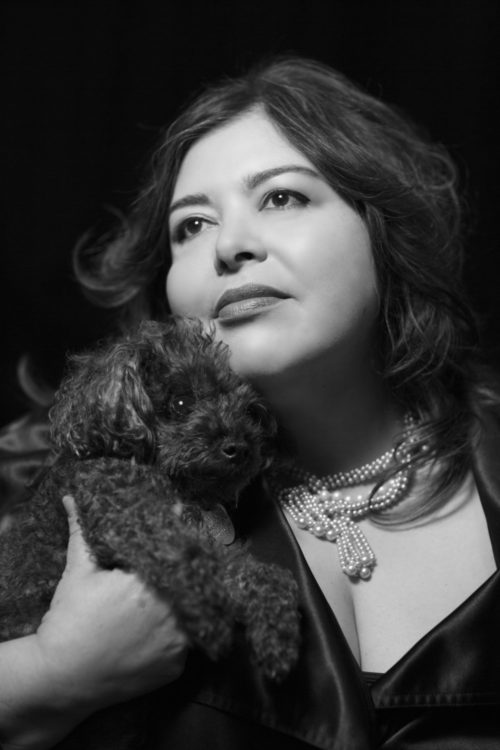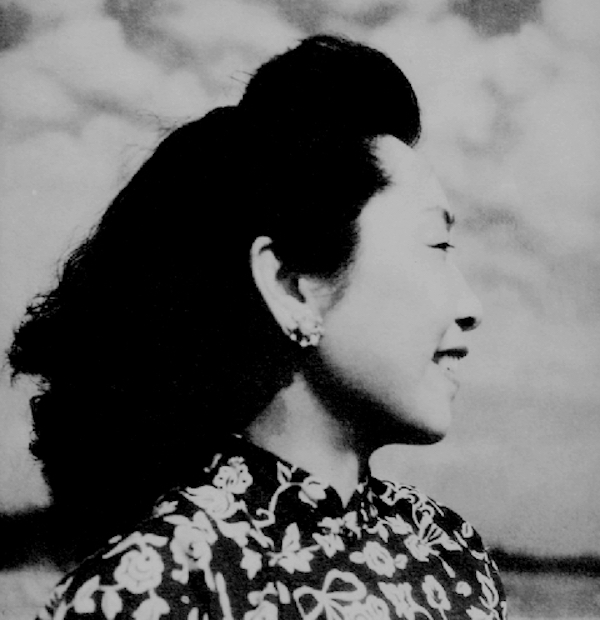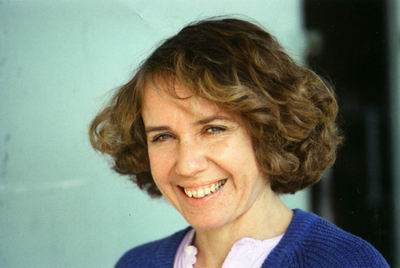
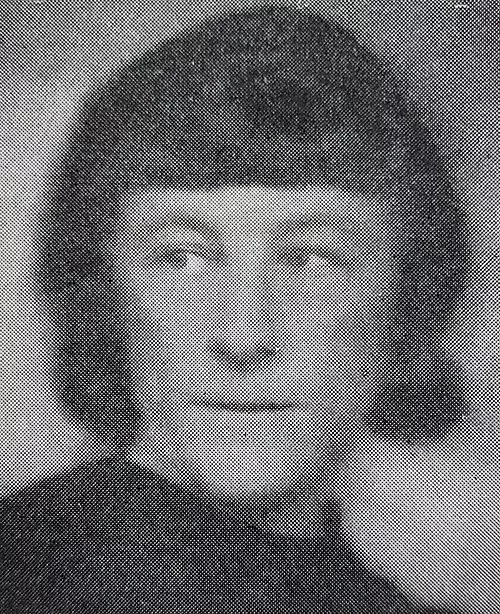
Portrait of Lul Krag
Reidar, Nedrebø, Meo, Wenche, Honerød, Anne Grete, Lul Krags Rosendal, Oslo, Baroniet Rosendal, 199
→Kielland, Else Christie, “Lul Krag og hennes tegninger”, Kunst og Kultur, vol. 42 , 1959, p. 30–44
→Nilssen, Jappe, “Nye utstillinger hos Blomqvist. Lul Krag”, Dagbladet, Oslo, 21 November, 1922
Solo exhibition, Oslo Kunstgalleri, Oslo, February–March, 1981
→Etterlatte tegninger, Bergen Kunstforening, Bergen, January, 1958
→Solo exhibition, Blomkvist, Kristiania, Oslo, November, 1922
Norwegian painter.
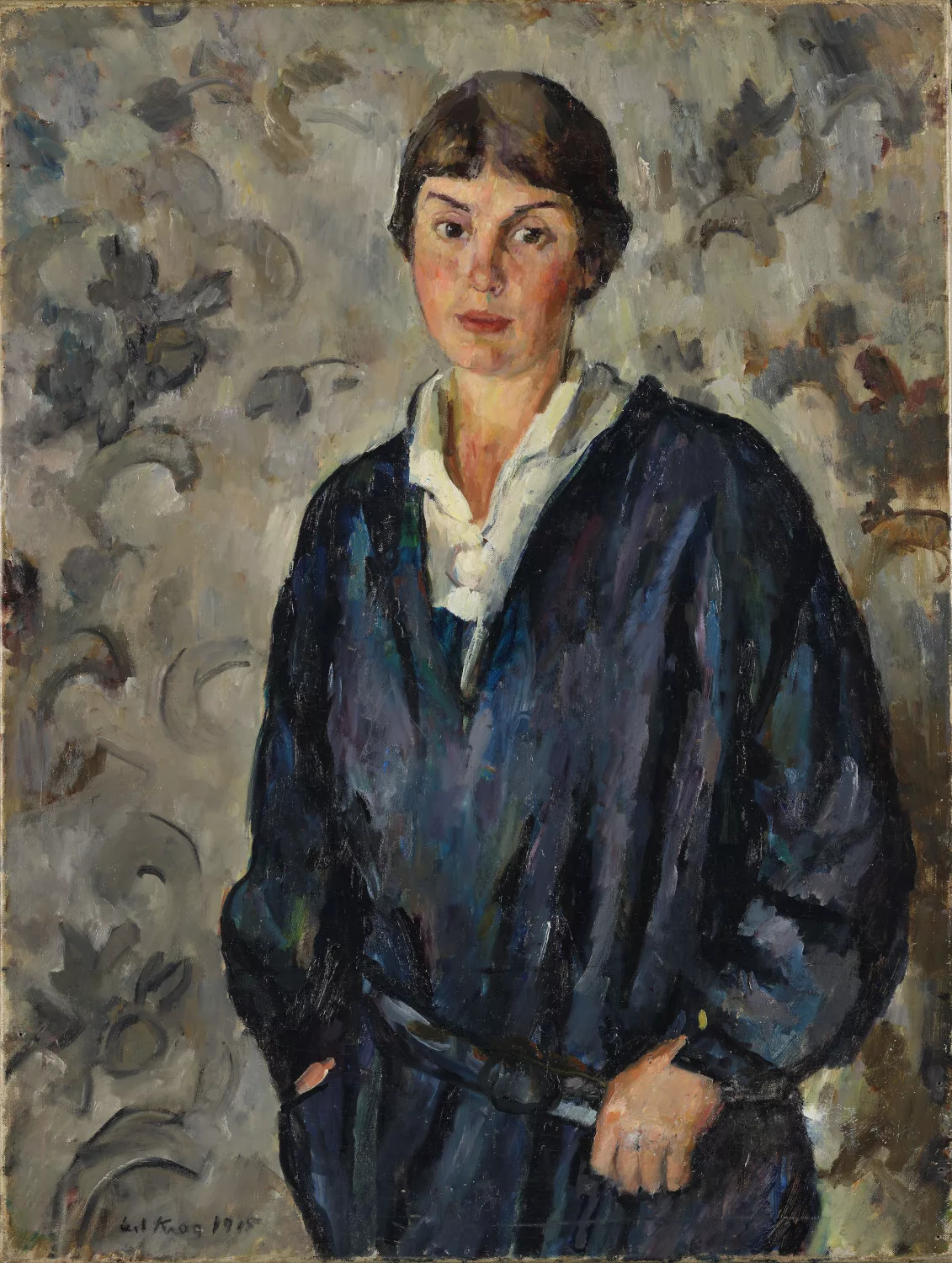
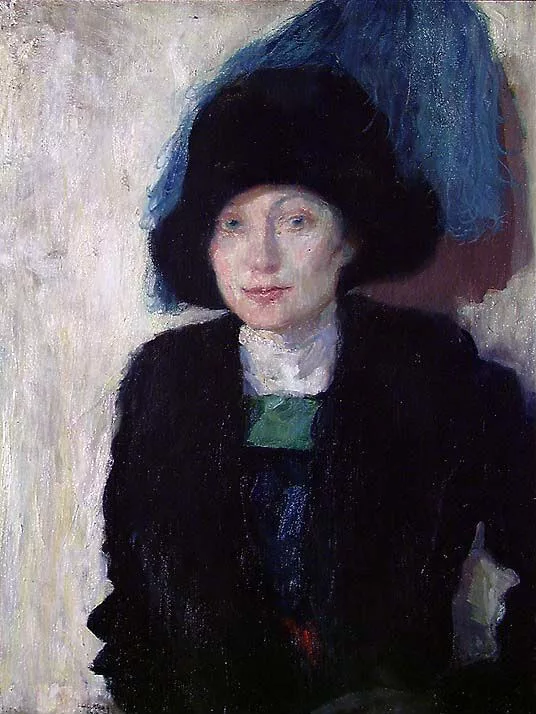
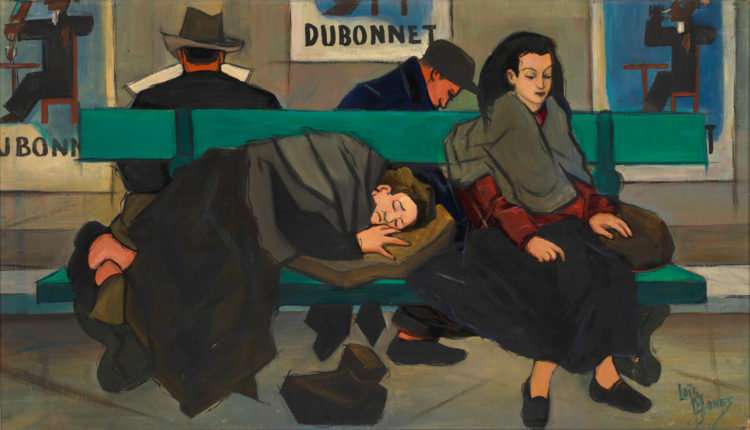
As a 20 year-old in 1898, Lul Krag studied drawing in London, and in the same year she applied to the well-respected painter Harriet Backer’s (1845–1932) school of painting for women in what is now Oslo. Here, she became acquainted with and connected to the community of women painters flourishing at the time. In 1903 L. Krag enrolled at the private art school Académie Colarossi in Paris, France, where she studied under painter Christian Krohg (1852–1925). In 1907 L. Krag displayed her paintings for the first time at the prestigious National Art Exhibition in Norway Höstutstillingen. Between 1908 and 1910, L. Krag travelled again to France where she was mentored by painters Lucien Simon (1861–1945) and Hélène Olga Boznańska (1865–1940). In these early years, L. Krag painted oil landscapes and some portraits, such as those of actress Elisabeth Dybwad (1869–1949) from 1912 and of her colleague Astri Welhaven Heiberg (1881–1961) from 1915, both now in the collection of the National Museum in Oslo.
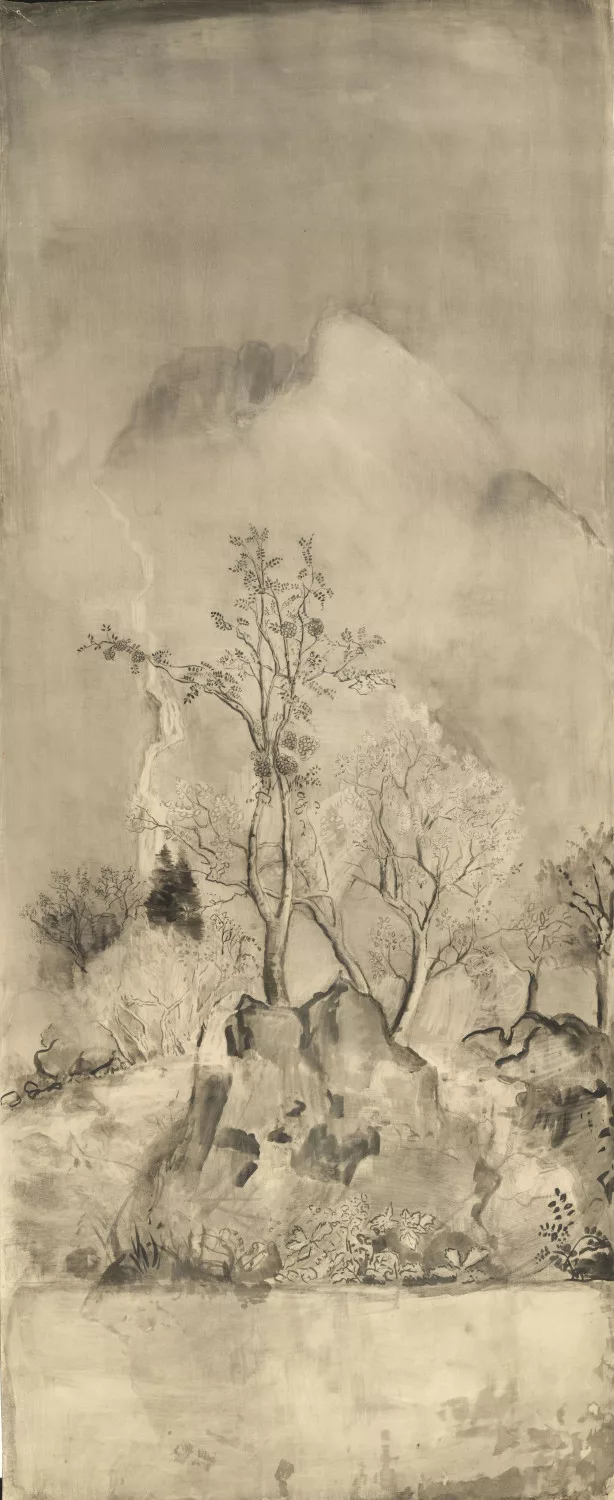
After her second period in Paris she settled in Norway, while participating in exhibitions both at home and abroad. In a review of her first solo-exhibition in 1922, art critic Jappe Nilssen noticed a distinct “Japanese simplicity and monumentality” in her works on paper, using coal and ink. Crediting her for her landscape paintings on canvas inspired by “older French painting”, he noted that her coal and ink works bore witness to her centrality as an artist. L. Krag continued to develop on these techniques in the latter part of her career.
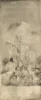
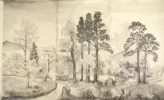
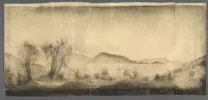
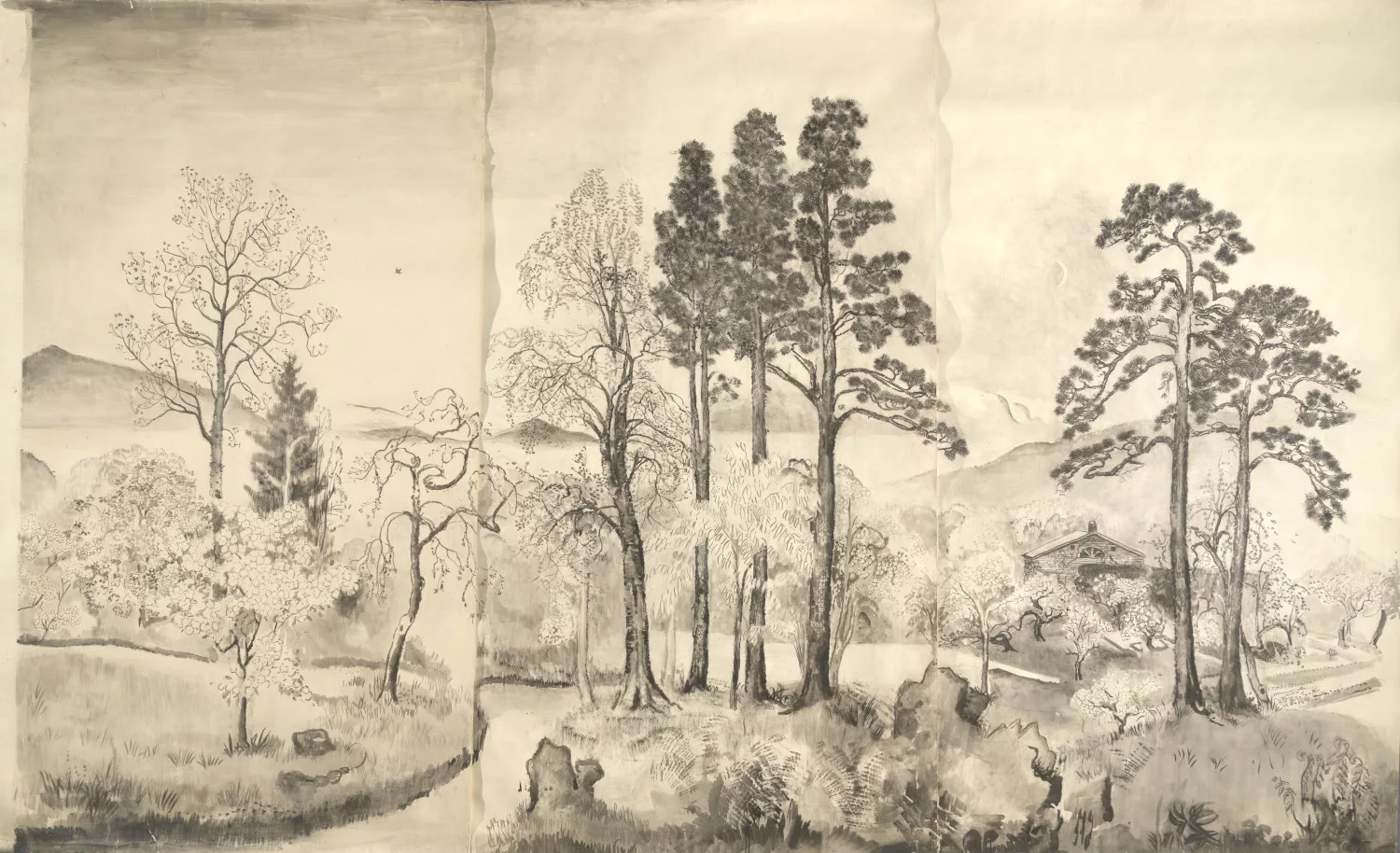
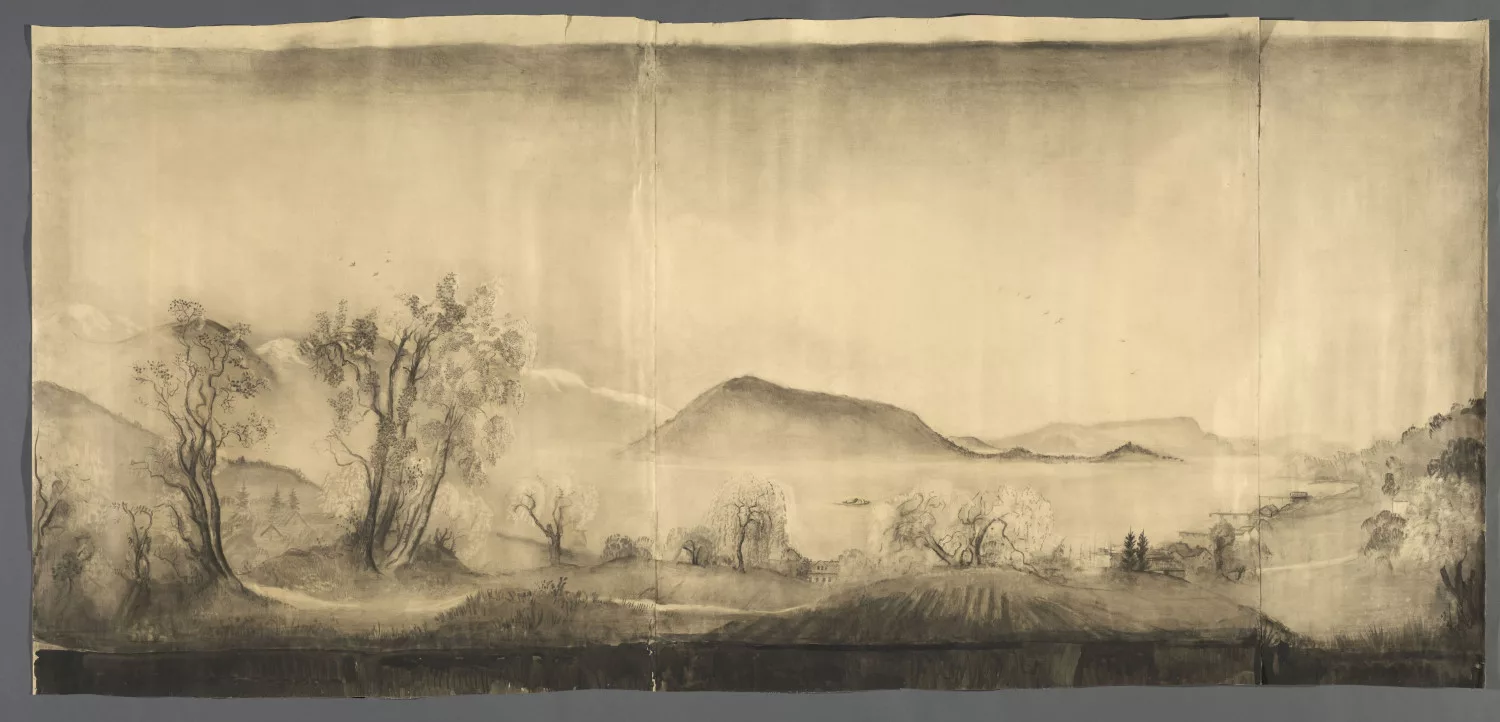
Her later compositions, such as The Garden at the Barony Rosendal, (undated, ca. 1933–1954), were influenced by expressions and techniques from Japanese and Chinese painting. Her choice of both format and motif, her almost mystical renderings of trees and mountains, and her use of silhouettes and graphically stylised depictions of branches and leaves resemble those seen in traditional Japanese woodcuts. L. Krag was thus more interested in the memory and sensation of the landscape than in a naturalistic representation of it.
Around 1930, L. Krag moved from the capital to the picturesque countryside of Rosendal. Many works on paper from this period are part of the collection of the National Museum in Oslo, such as the triptych The Garden House (undated, ca. 1933–1954). Apart from these works’ distinctive stylised characteristics, for which L. Krag became known and appreciated, the noticeable romanticisation of the Rosendal area is underscored by a heavy emphasis on landscape as a marker of national identity in Norwegian art history.
L. Krag’s works from her Rosendal period were particularly well preserved, thanks to fellow artists Agnes Hiorth (1899–1984) and Else Christie Kielland (1903–1993), who secured this part of her artistic legacy after her death in 1956. Today a selection of L. Krag’s works can be found in Bergen Art Museum and the National Museum in Oslo.
A notice produced as part of the TEAM international academic network: Teaching, E-learning, Agency and Mentoring
© Archives of Women Artists, Research and Exhibitions, 2026