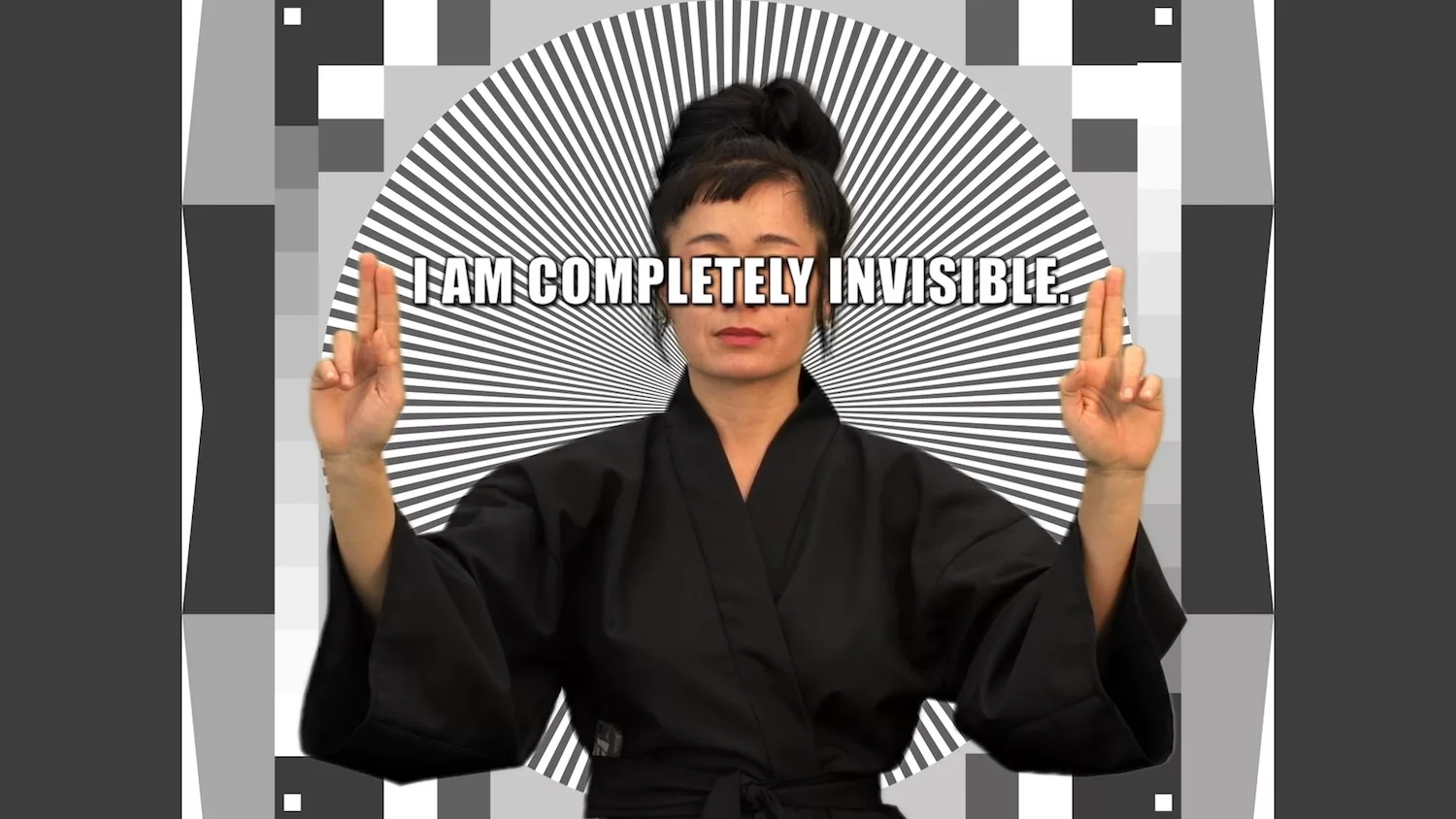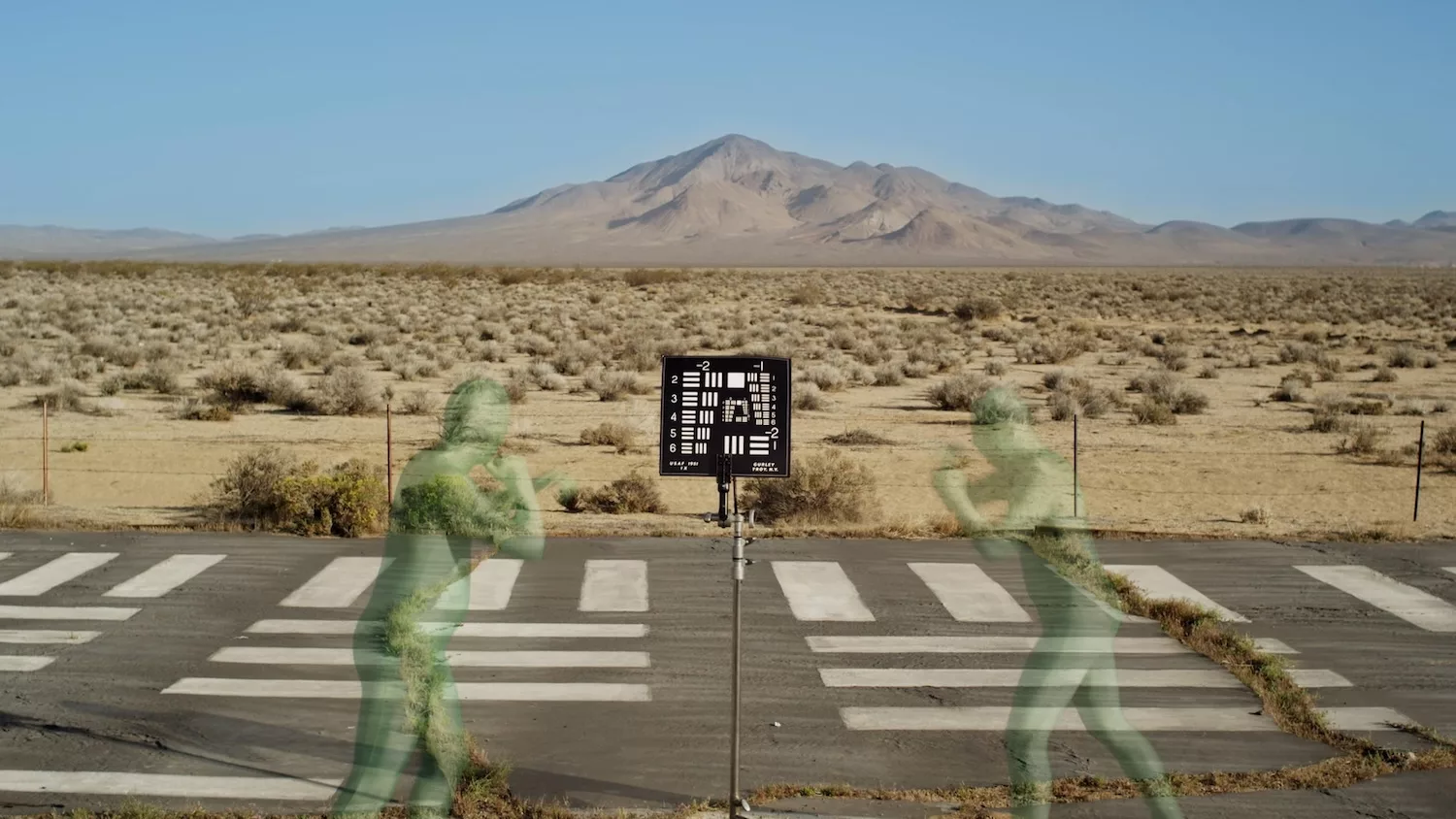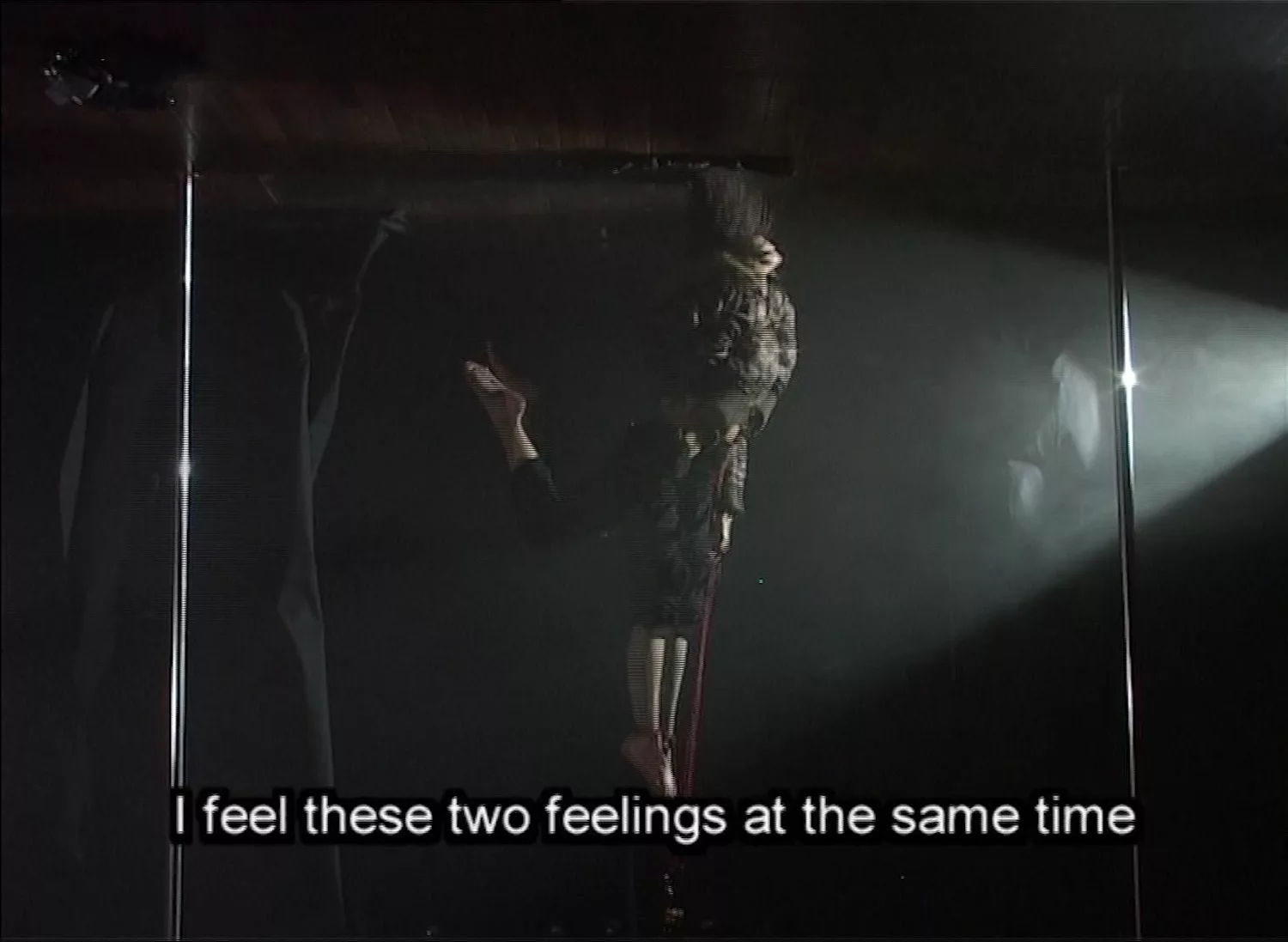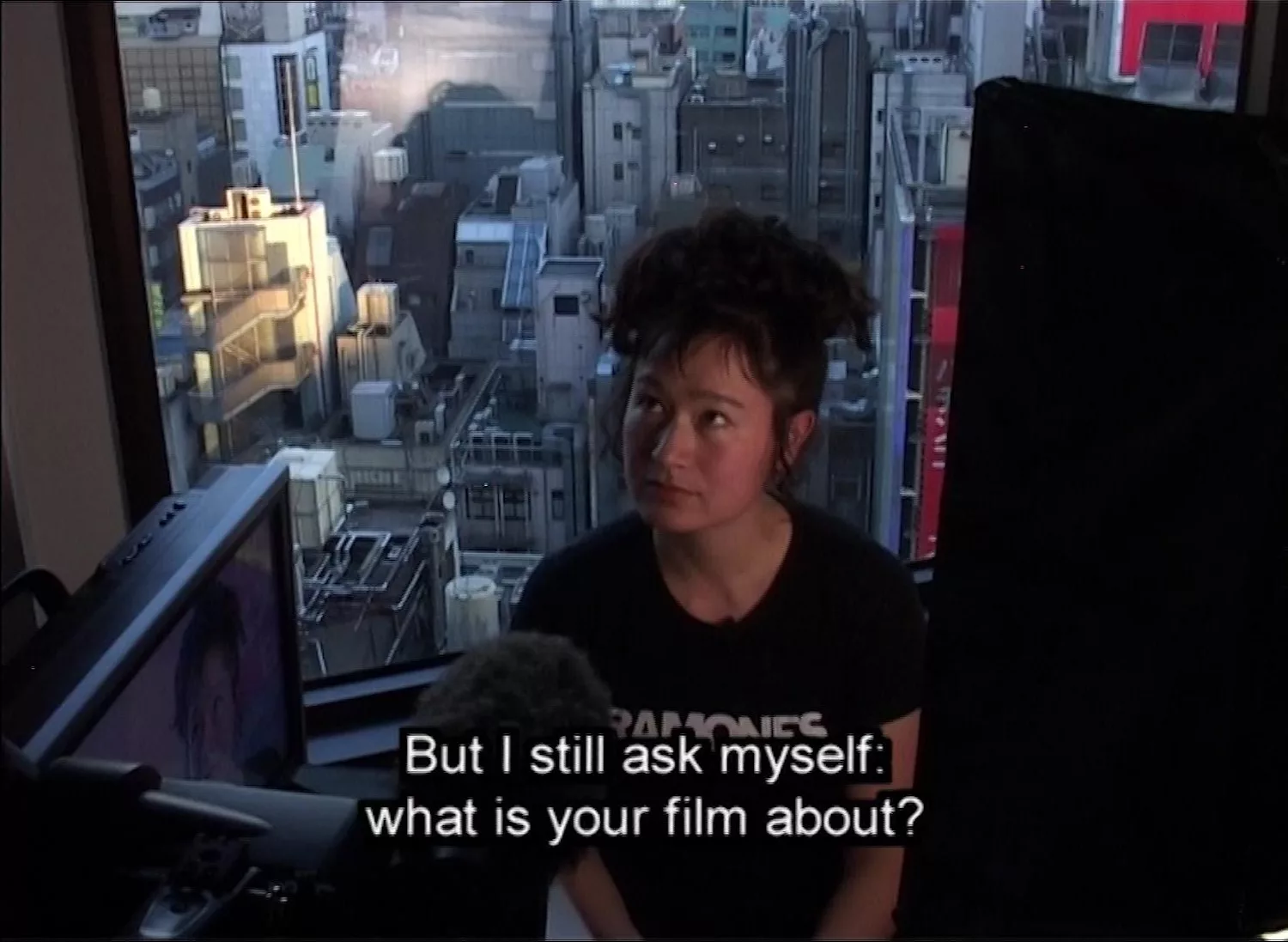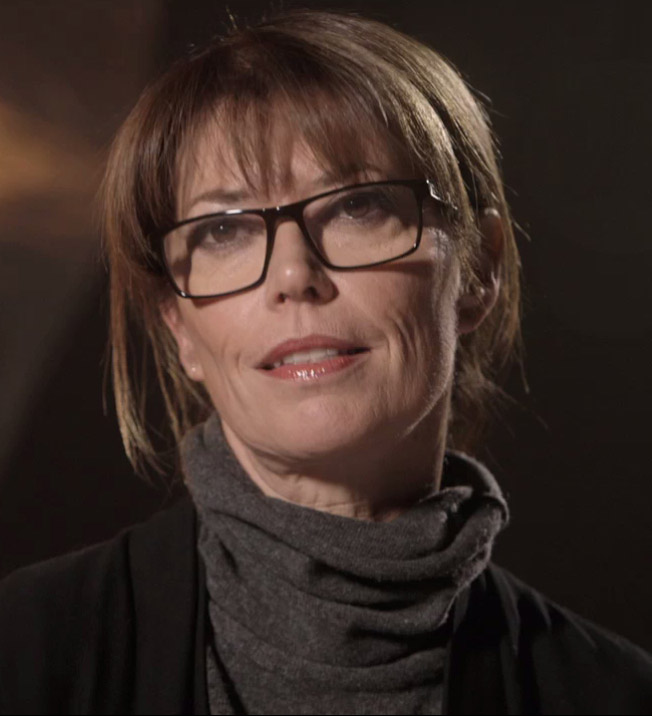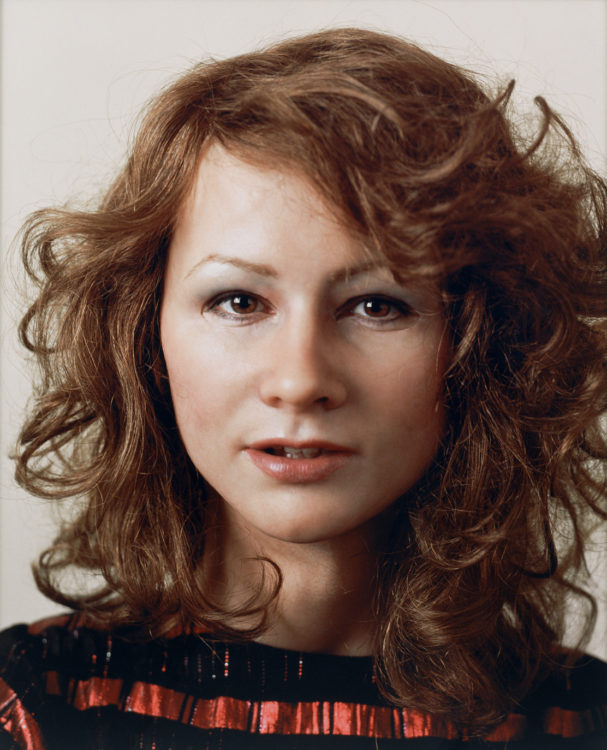
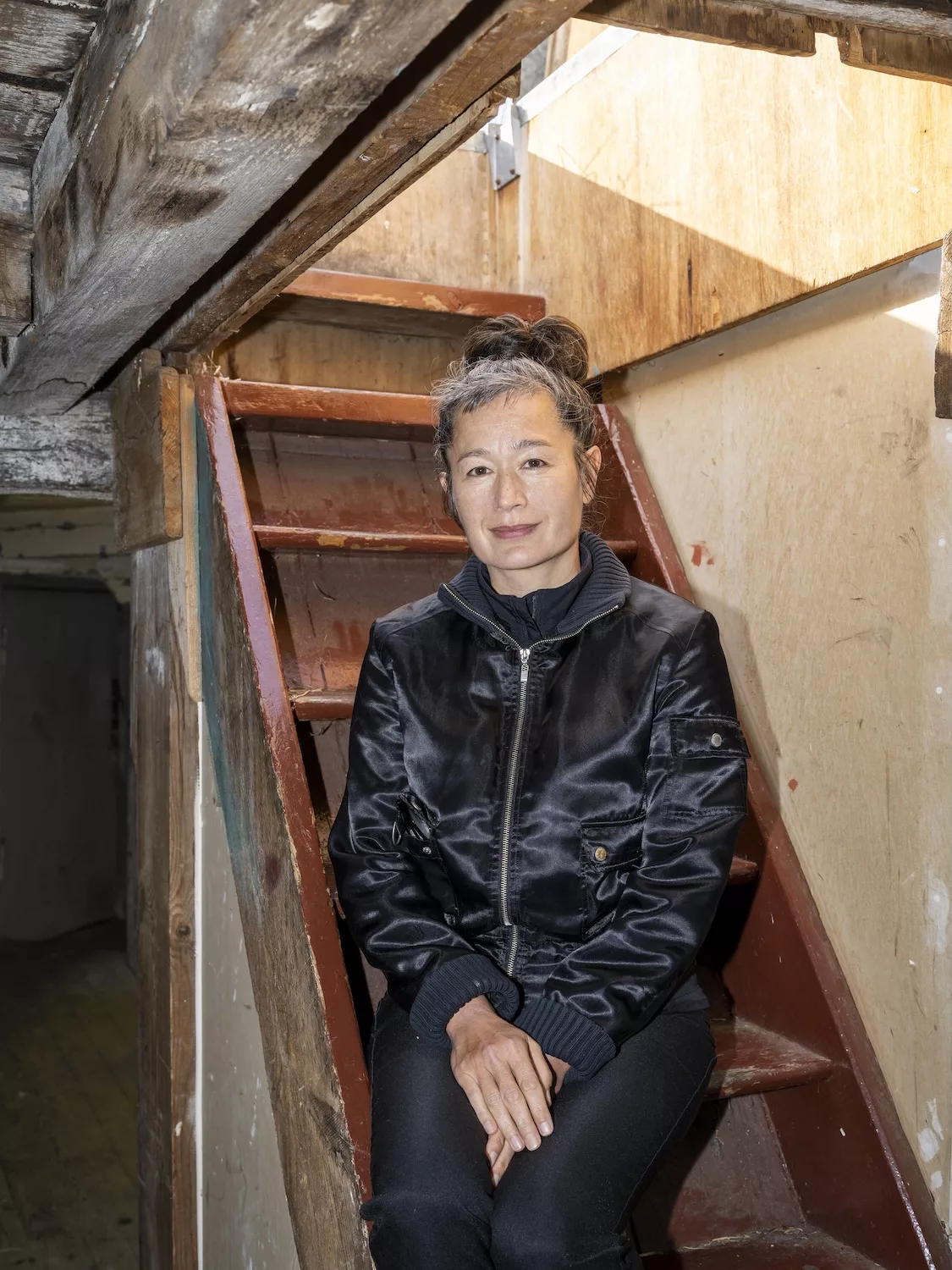
Portrait of Hito Steyerl © Photo: Leon Kahane, Image CC 4.0 Hito Steyerl, Image courtesy of the artist, Andrew Kreps Gallery, New York and Esther Schipper, Berlin/Paris/Seoul
Lou Silhol-Macher, “Self-Suspension in Frames: Hito Steyerl’s Lovely Andrea,” Camera Obscura 38, no. 3 (2023): 173–201
→Ebner, S. Gaensheimer, D. Krystof, M. Lista (eds.), Hito Steyerl: I Will Survive, exh. cat., Centre Pompidou Paris and K21 Düsseldorf, Leipzig, Spector Books, 2021
→Hito Steyerl, Duty Free Art: Art in the Age of Planetary Civil War, London: Verso, 2017
Hito Steyerl: I Will Survive, Centre Pompidou, Paris, and K21, Düsseldorf, May–July 2021
→Hito Steyerl: Factory of the Sun, MOCA, Los Angeles, February 2016–September 2016
→Focus: Hito Steyerl, Art Institute of Chicago, November 2012–January 2013
German filmmaker and author.
Working across documentary film, video installation, performance, and essayistic writing, Hito Steyerl’s practice combines theoretical inquiry with experimental forms of moving-image production to examine how images operate as agents within systems of capital, governance, and violence. Her influence in contemporary art and discourse is marked not only by the international visibility of her artworks but also by the widespread uptake of her theoretical texts.
From 1987 to 1998, H. Steyerl formed her sensibility as a filmmaker while studying first at the Japan Institute of the Moving Image in Tokyo, then at the University of Television and Film in Munich under the guidance of Helmut Färber. She earned a PhD in philosophy from the Academy of Fine Arts Vienna in 2003. Alongside her artistic practice, H. Steyerl has maintained a sustained engagement with teaching and research. In 2024, she became Professor of Emergent Digital Media at the Academy of Fine Arts Munich, having previously taught at the Berlin University of the Arts, where she co-founded the Research Center for Proxy Politics.
During the early phase of her career, H. Steyerl focused on documentary and essay film, developing a hybrid form that combines historical research, autobiographical (albeit indirect) reflection, and media analysis. Works such as Die leere Mitte [The Empty Centre, 1998] examine enduring issues of colonialism, nationalism, and visibility in post-reunification Germany, foregrounding the political conditions under which images are produced and circulated.
A decisive biographical event—the disappearance and murder of her friend Andrea Wolf, an activist in the Kurdish liberation movement—had a lasting impact on H. Steyerl’s work. This loss informs November (2004), which reflects on issues of collective and individual political action by following Wolf’s afterlife as an image and literal icon at protests and commemorations. In 2007, her film Lovely Andrea, shown at Documenta 12, staged a quest to find bondage pictures taken of H. Steyerl under the pseudonym Andrea in Japan decades earlier, dealing with issues of control and networked relationality, gendered and racial violence, and the role of images in global warfare.
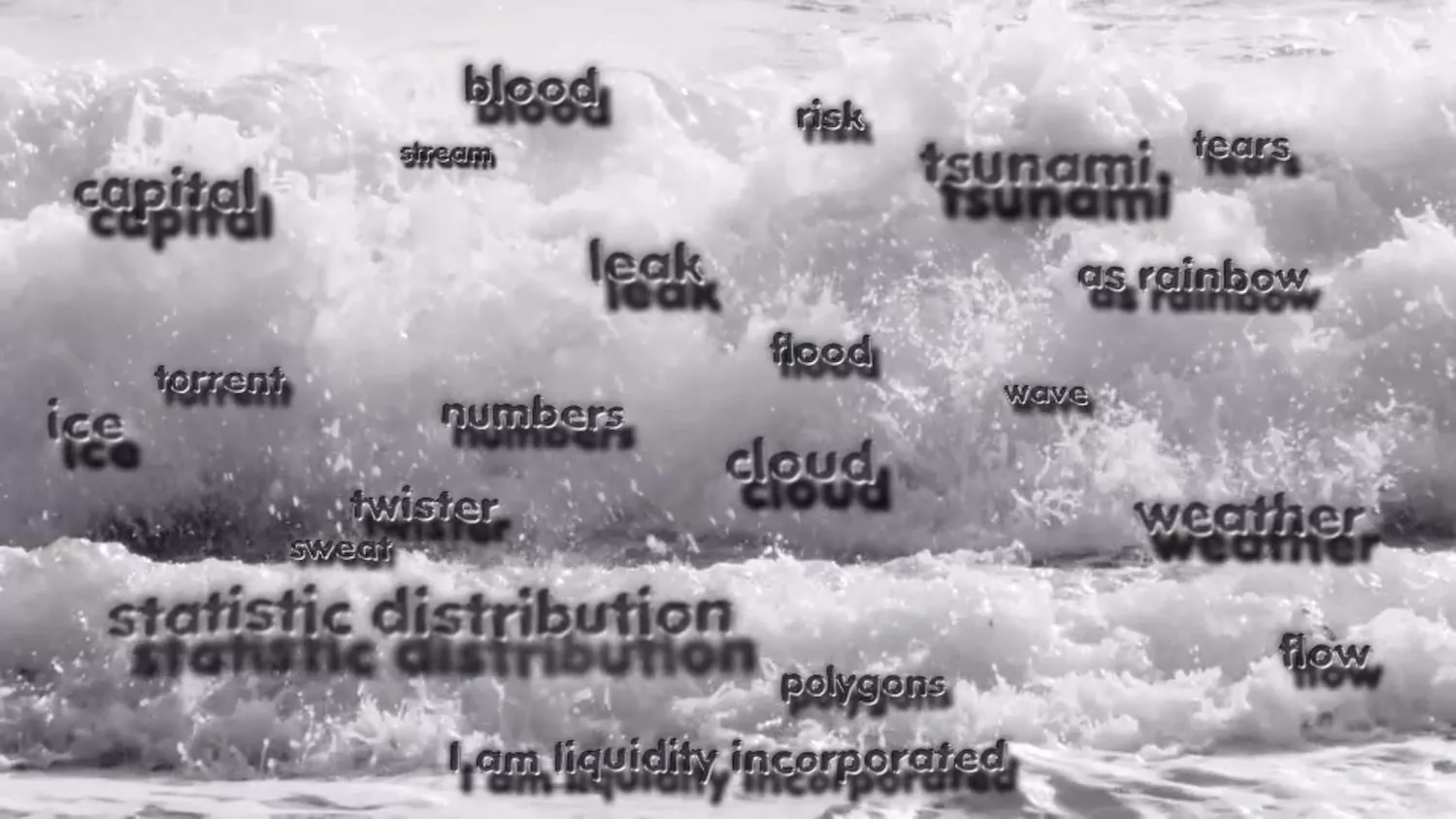
From the late 2000s onward, her work increasingly addressed the conditions of digital images under global militarization and surveillance. Her essay “In Defense of the Poor Image” (2009) and the video How Not to Be Seen: A Fucking Didactic Educational .MOV File (2013) became widely circulated and taught in academic contexts, consolidating her position as a central theorist-practitioner of digital media.
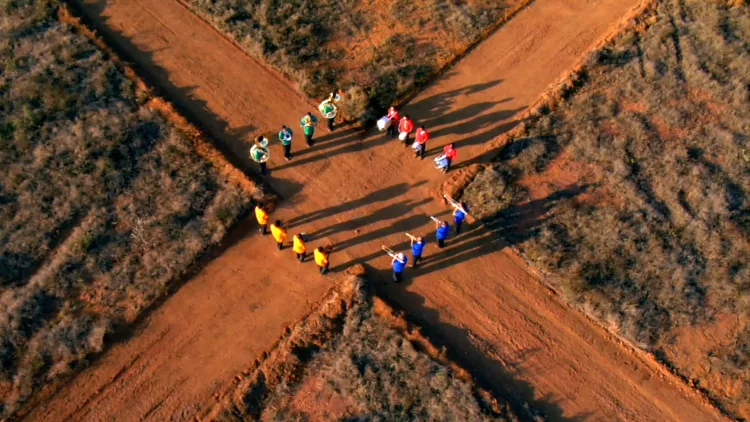
Since the late 2010s, H. Steyerl’s work has focused on the role of algorithmic media and generative AI in capitalist systems of surveillance, notably in Dancing Mania (2021) and Mechanical Kurds (2025), which respectively explore the expansion of policing through the use of predictive algorithms and the exploitation of Kurdish refugee laborers in training facial recognition technologies.
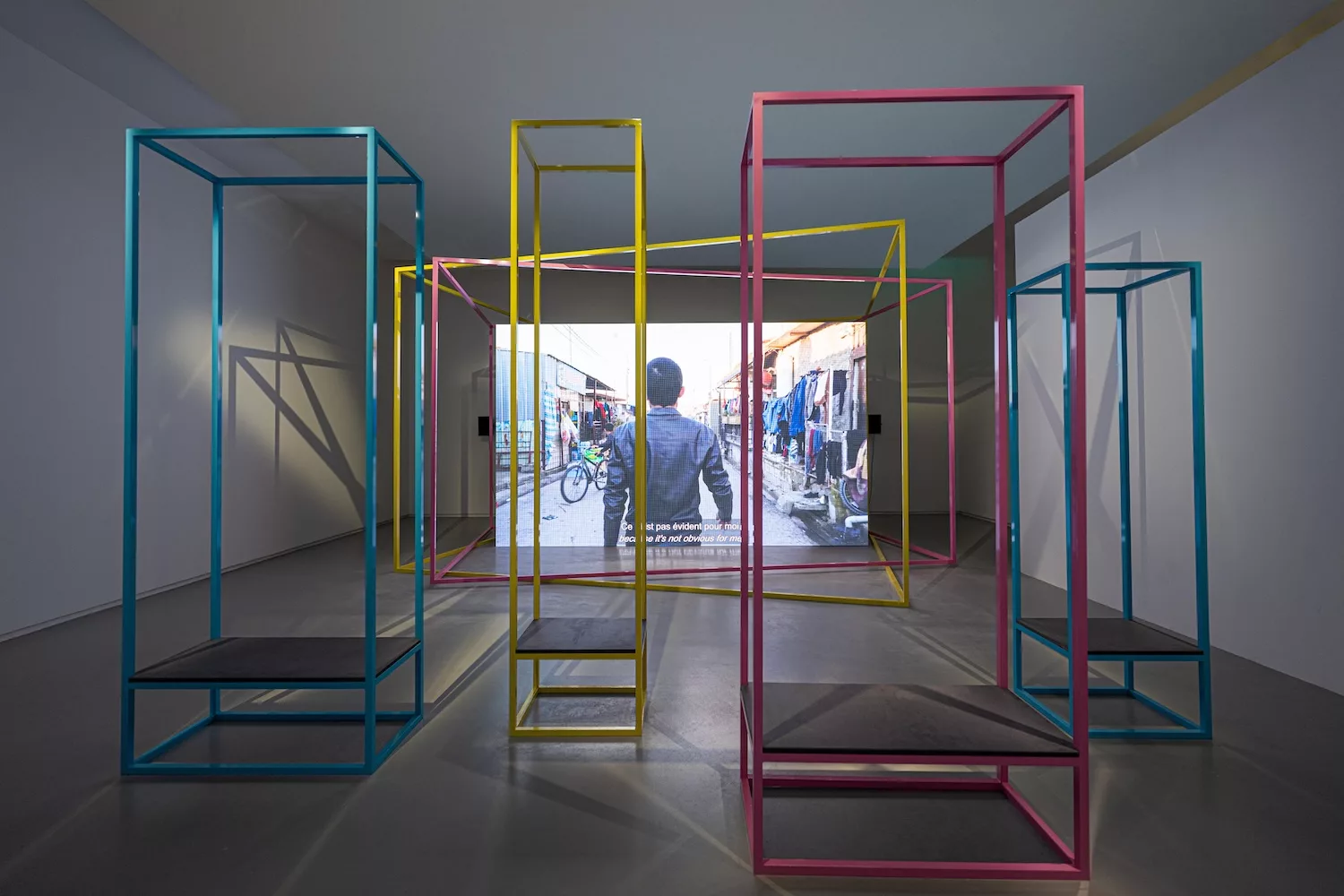
H. Steyerl has participated in major international shows including Manifesta 5, Documenta 12, and the Shanghai, Gwangju, Taipei, and Venice biennials. Her work has been the subject of numerous solo exhibitions, including at the Art Institute of Chicago, the Museum of Contemporary Art Los Angeles, the Serpentine Galleries, the Centre Pompidou, the Stedelijk Museum, and the Museo Reina Sofía.
A biography produced as part of the programme “Living with two brains: Women in New Media Art, 1960s-1990s”.


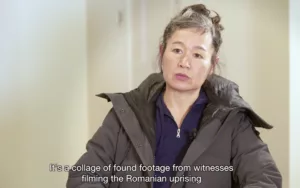 Short interview about Harun Farocki’s influence on H. Steyerl’s work for duo exhibit at Thaddaeus Ropac Gallery in November 2020: “Harun Farocki & Hito Steyerl | Life Captured Still | 2020
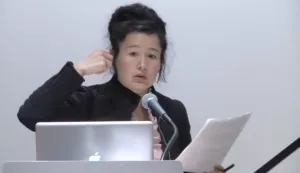 Lecture at The New School in April 2013: “The Photographic Universe | Photography and Political Agency? with Victoria Hattam and Hito Steyerl”