Azize Vargas, Yamila, “Tenía su firma pero no la veían: Amalia Cletos Noa: Maestra de la pintura del Siglo XIX en Puerto Rico”, in Yamila Azize Vargas (ed.), Pioneras del Siglo XIX en las artes y la educación, San Juan, Liga de Arte de San Juan y Fundación Puertorriqueña de las Humanidades, 2025, p. 11-44
→Angelis, María Luisa, “Amalia Cletos Noa”, Mujeres puertorriqueñas: que se han distinguido en el cultivo de las ciencias, las letras y las artes desde el siglo XVII hasta nuestros días, San Juan, Tip. de Real Hermanos, 1910, p. 53-54
→Daubón, José Antonio, “Amalia Cletos Noa, Mi corazón”, Cosas de Puerto Rico, San Juan, Tipografía del Boletín Mercantil, 1905, p. 65-68
Segunda Exposición Pública de Bellas Artes, Agricultura y la Industria en San Juan, 10–29 June, 1855, Junta de Comercio y Fomento, San Juan
→Primera Exposición Pública de la Industria, Agricultura y Bellas Artes en San Juan, 8–30 June, 1854, San Juan
Puerto Rican artist and educator.
Born into an Afro-descendant family, Amalia Balbina Cletos Noa was the eldest of three daughters (Amalia, Asunción and Magdalena) of Simona Graulló and Juan Cletos Noa (ca. 1800–ca. 1885). Her father was a self-taught artisan who painted street signs in San Juan and created official scrolls for the government. He mentored each of his three daughters in art, all of them going on to become painters. The family founded the Taller Cletos Noa, a studio which functioned as a cultural centre, a school for young women, a museum and a gathering place for music and theatre. The Taller publicly exhibited its work twice and gained outstanding recognition with gold and silver medals: in June 1854 at Primera Exposición Pública de la Industria, Agricultura y Bellas Artes en San Juan [First Public Exhibition of Industry, Agriculture and Fine Arts] and in June 1855 at Segunda Exposición Pública de Bellas Artes, Agricultura y la Industria en San Juan [Second Public Exhibition of Fine Arts, Agriculture and Industry].
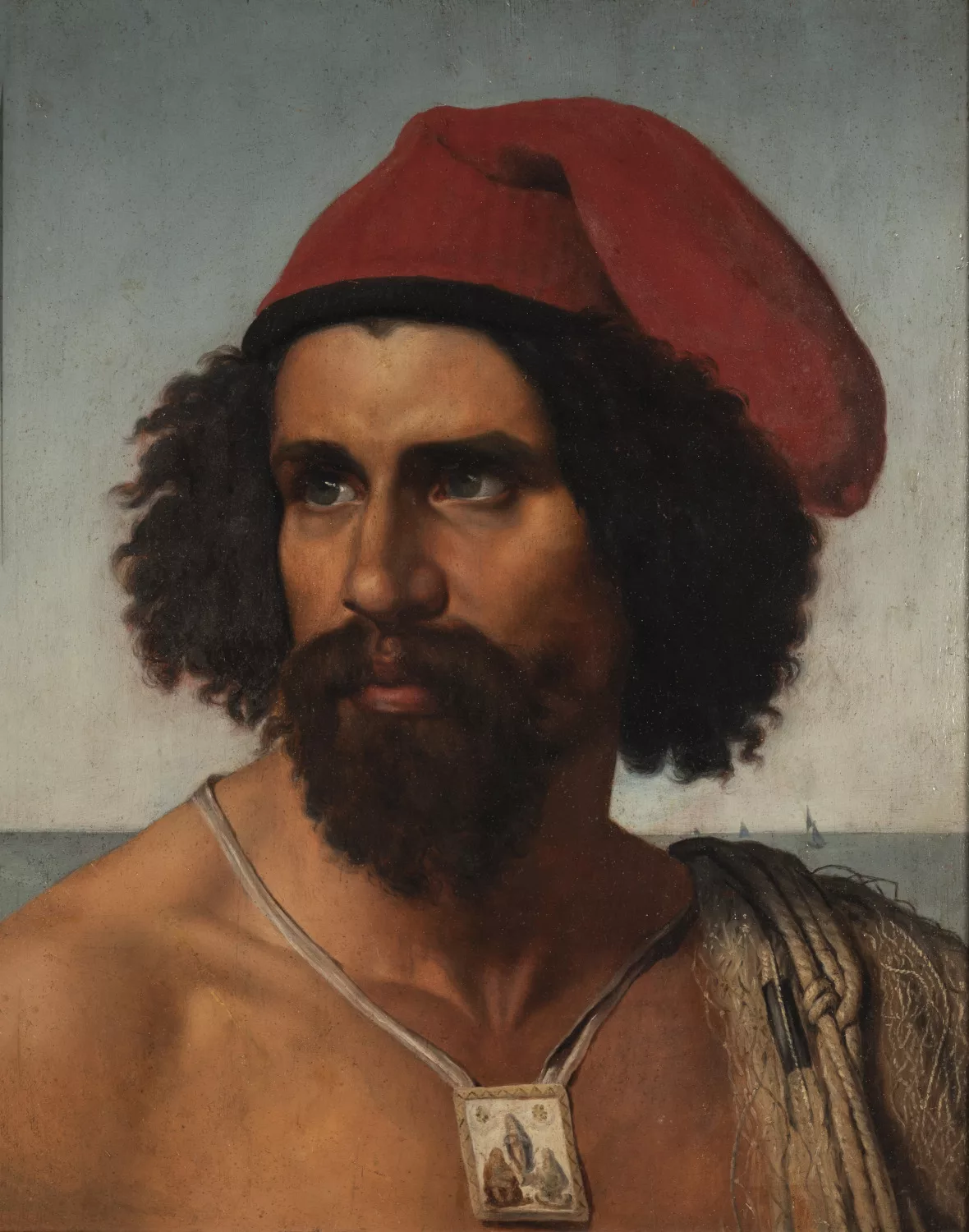
One painting by San Pedro titled Un santo [A Saint, 1854], a gold medal winner, survives from the first exhibition. Another work remains from the second exhibition: El pescador napolitano [The Neapolitan Fisherman, 1855], presently on display at the Museo de Arte de Puerto Rico. This is a powerful depiction of Masaniello, who led an uprising against the Spanish monarchy in Naples in 1647 and became an iconic European figure – inspiring operas, historical novels and countless paintings. He is shown wearing the red Phrygian cap, a symbol of the struggle for freedom, popularised after the French Revolution. When A. B. Cletos Noa exhibited this work, Puerto Rico was a Spanish colony.
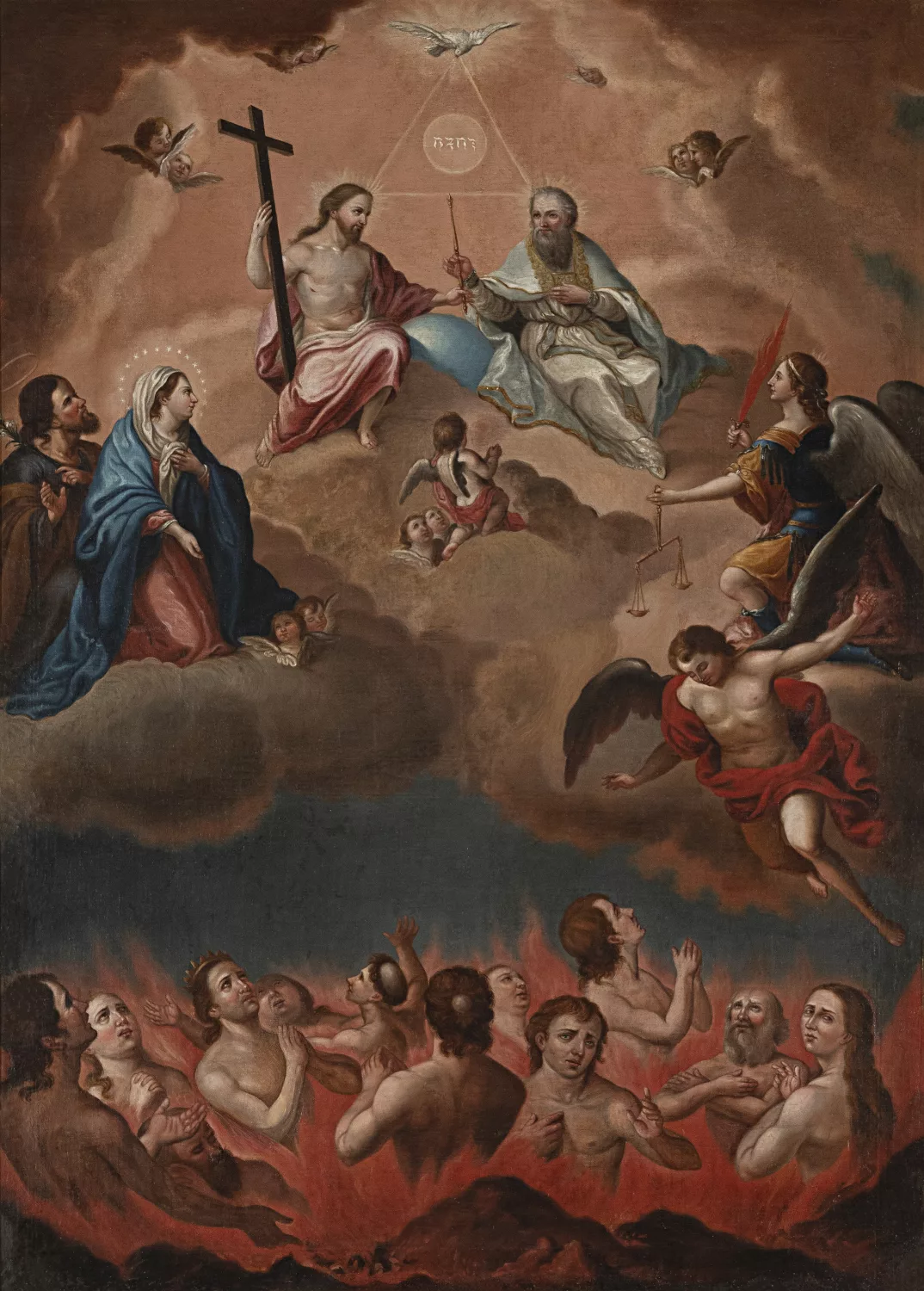
To date, only seven paintings by A. B. Cletos Noa have been found – in addition to the two mentioned above, these are: La Dolorosa [Our Lady of Sorrows, 1847]; Las ánimas del purgatorio [The Souls in Purgatory, 1855] Un monje [ A Monk, ca. 1855]; Santísima Trinidad [Holy Trinity, 1868] and Virgen del Carmen [Our Lady of Mount Carmel, 1861]. However, the many catalogued titles of her work attest to her prolific production as well as to her refined intellectual and artistic mastery. Those works suggest technical skill across various media, including oil painting, watercolour, encaustic, drawing and embroidery. Her subjects were history, mythology, opera, sculpture and religion. Press notices at her death, along with two brief biographies, bear witness to the recognition she earned within her community as both artist and educator. She was also remembered as a “skilled teacher”.
The story of A.B. Cletos Noa was brought to light in 2021. When an imposing painting in the Church of San Germán de Auxerre in Puerto Rico was taken down for restoration, an inscription was discovered on the back of the canvas: “Amalia B. Cletos Noa, pinxit, September 28, 1855”. For over a century, the painting, Las ánimas del purgatorio, had been attributed to José Campeche (1751–1809) – a prominent 18th-century Puerto Rican painter. In fact, this copy painted by A. B. Cletos Noa after J. Campeche is twice the size of the original. She was also the author of another two oil paintings bearing her signature but attributed to him: Santísima Trinidad and Virgen del Carmen. Most art historians have regarded her as a “copyist” while failing to recognise her artistic originality, intellectual depth and career as a pioneer of 19th-century Puerto Rican art.