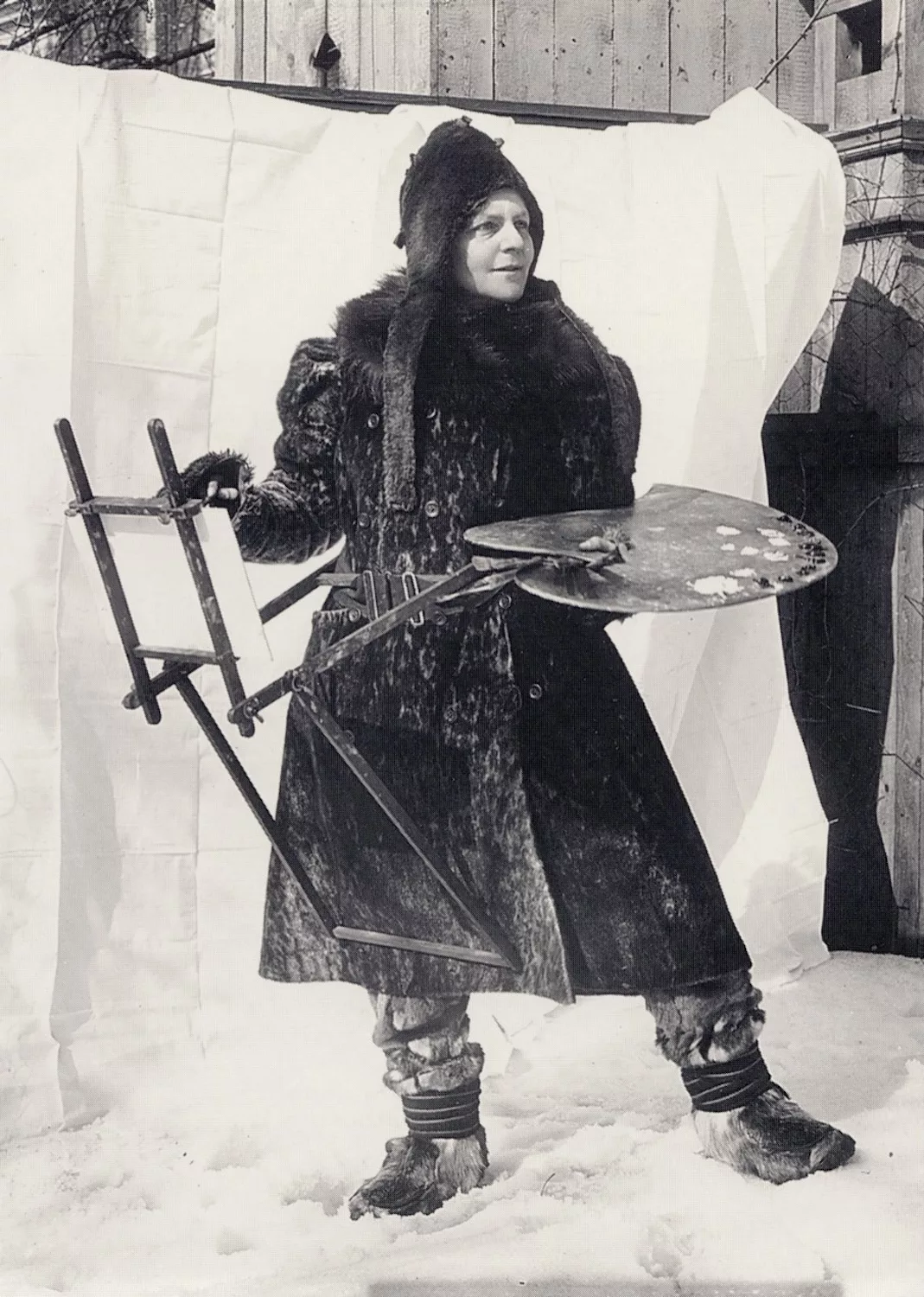
Anna Boberg, 1910
Marit Christina Lie, Bergtatt av Lofoten. Maleren Anna Boberg [Mountains of Lofoten. The painter Anna Boberg], Orkana, 2025
→Eva-Charlotta Mebius, “‘Sweden’s Greatest Artist”: The Reception of the Landscapes of Anna Boberg’ in Art Bulletin of Nationalmuseum, 2020, pp. 91-98
→Karin Sidén (ed.), Kvinnliga pionjärer. Visionära landskap. Ester Almqvist, Anna Boberg, Ellen Trotzig, Charlotte Wahlström [Female pioneers. Visionary landscapes. Ester Almqvist, Anna Boberg, Ellen Trotzig, Charlotte Wahlström], Prins Eugens Waldemarsudde, 2023
Les îles Lofoten série de tableaux de l’Extrème-Nord par Anna Boberg, Galerie Durand-Ruel, Paris, March 19 – April 5, 1910
→Madame Anna Boberg: Exposition de ses tableaux, Galerie des artistes moderne, Paris, March 28 – April 8, 1905
→Vinterbilder från Lofoten [Winter pictures from Lofoten], Konstföreningens lokal, Stockholm, February 28 – March 13, 1903
Swedish painter.
After receiving a private education in Rome and briefly at Académie Julian, Anna Boberg exhibited her first watercolours in 1886 in Stockholm. After her marriage in 1888 she dedicated herself to life as an artist. Later that year, we find her among the exhibitors at the Swedish General Art Association, alongside artists such as Hilma af Klint (1862–1944). Her early works from the 1880s and 1890s show her abiding interest in the natural world.
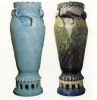
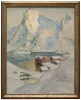
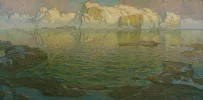
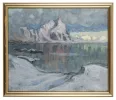
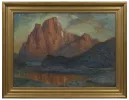
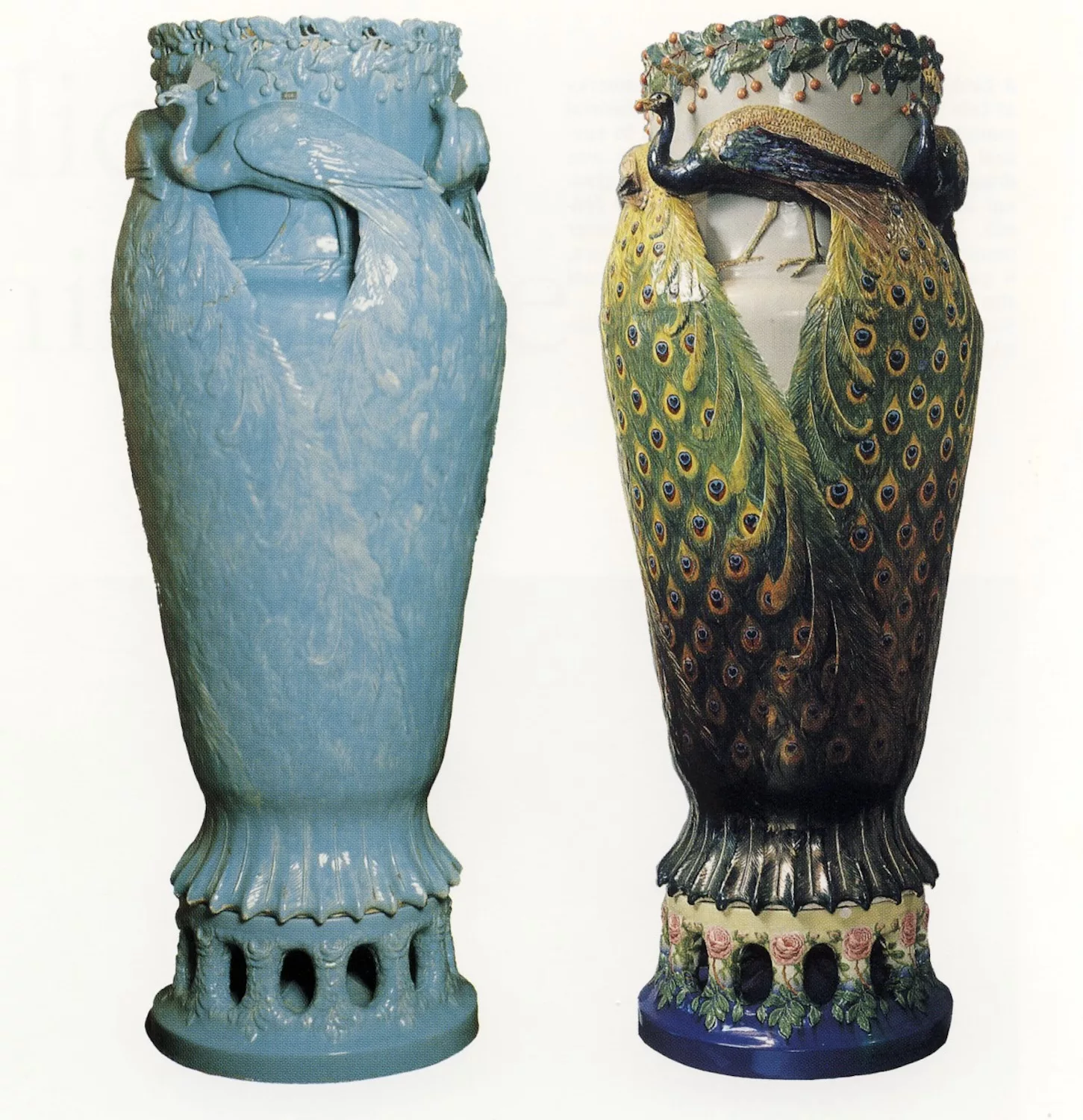
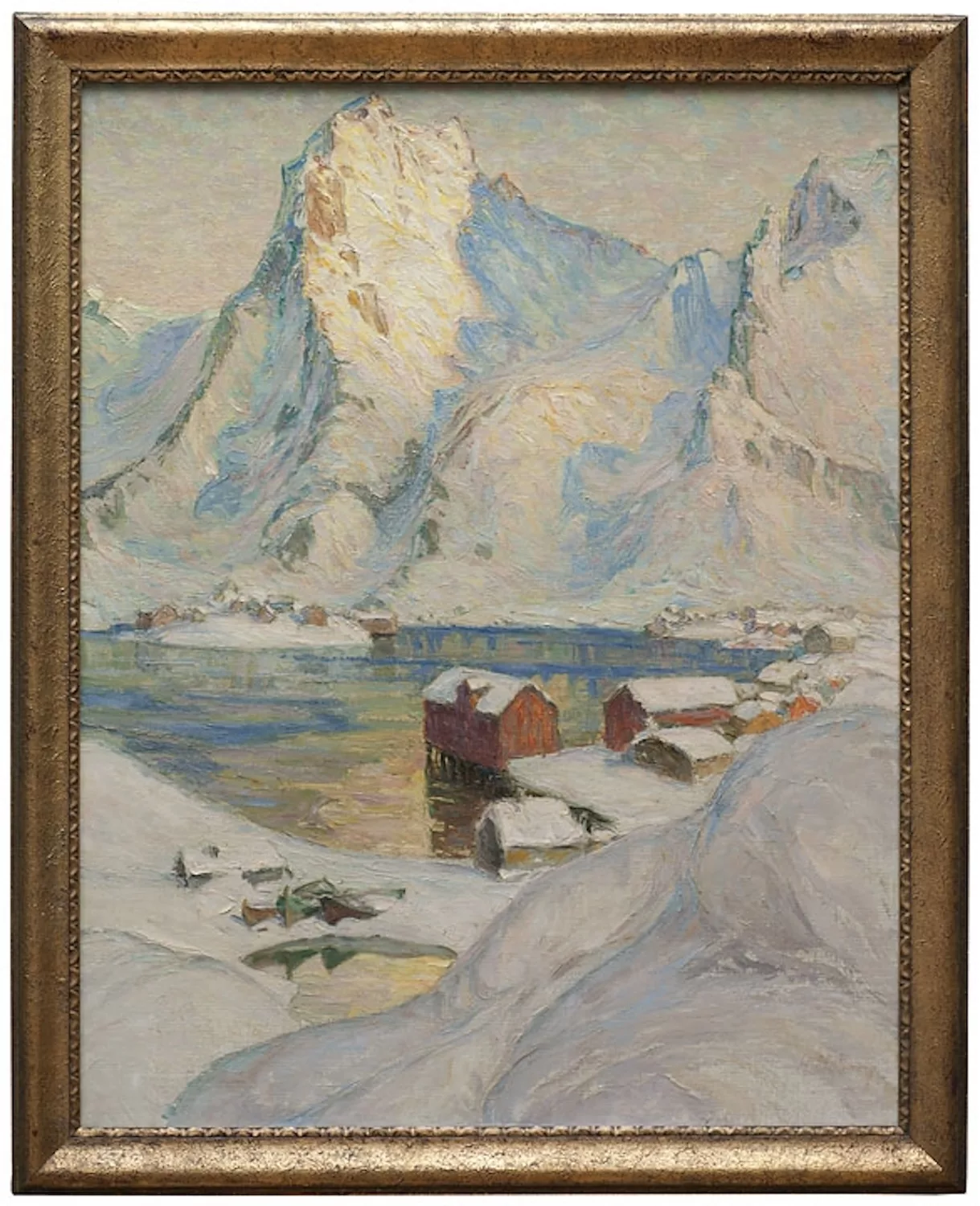
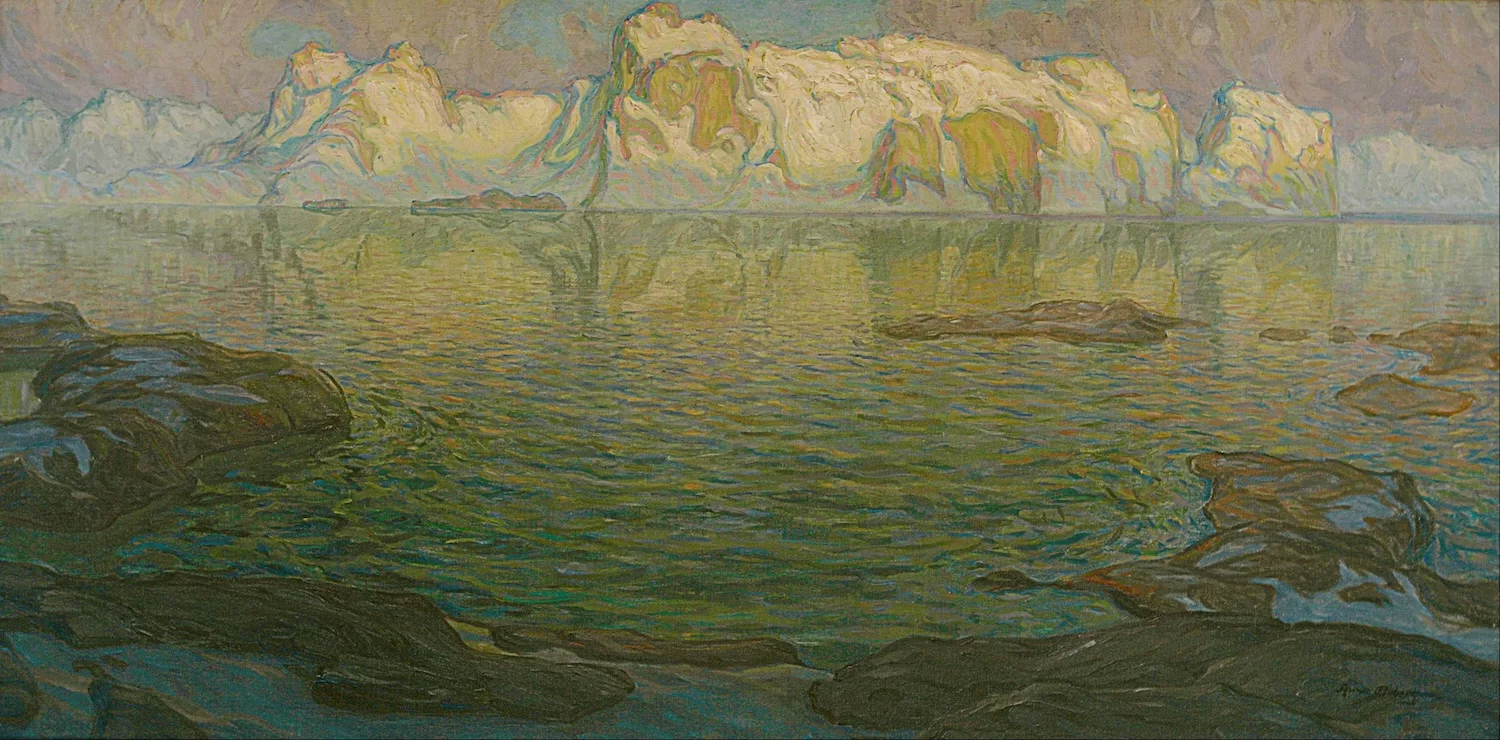
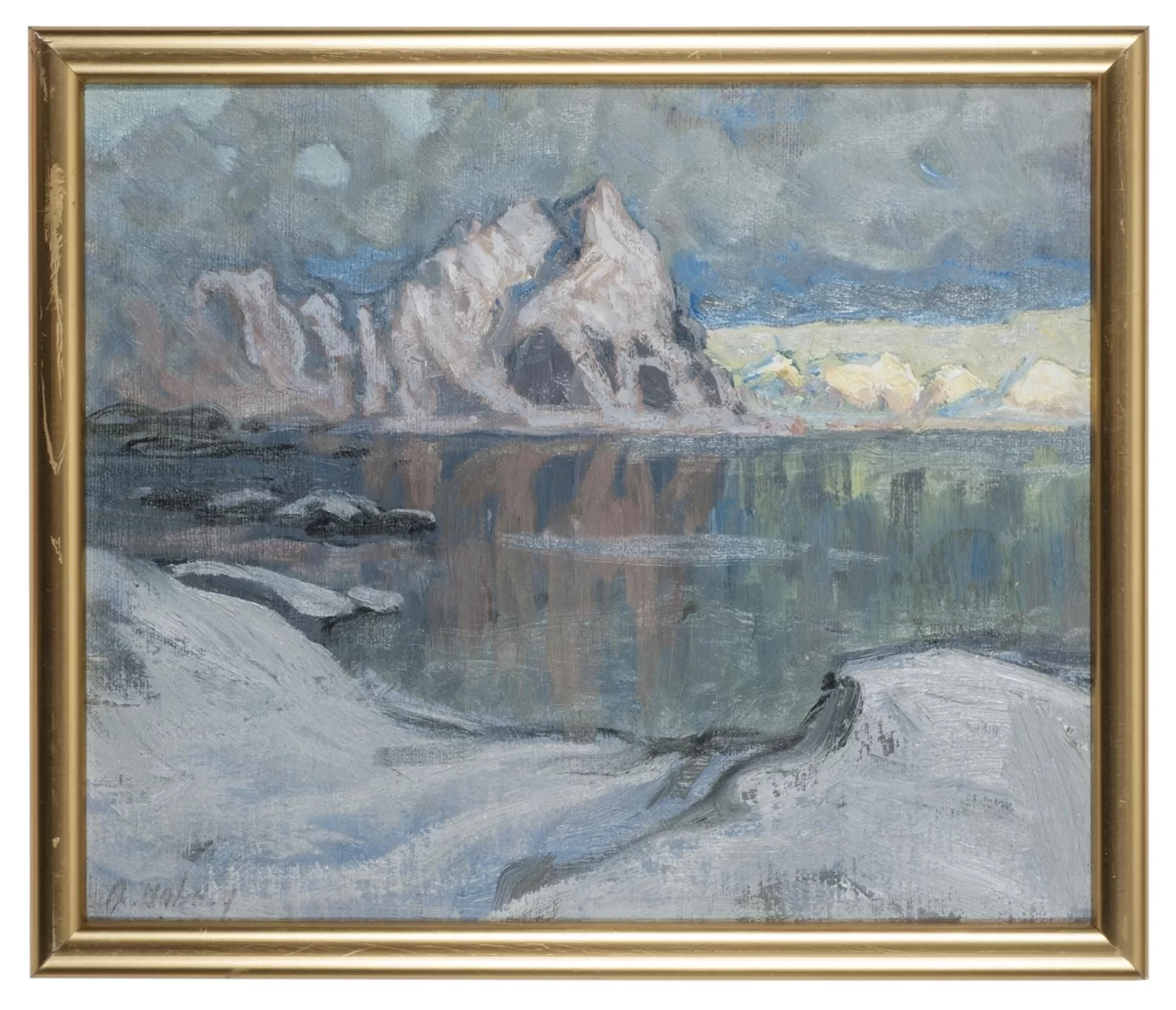
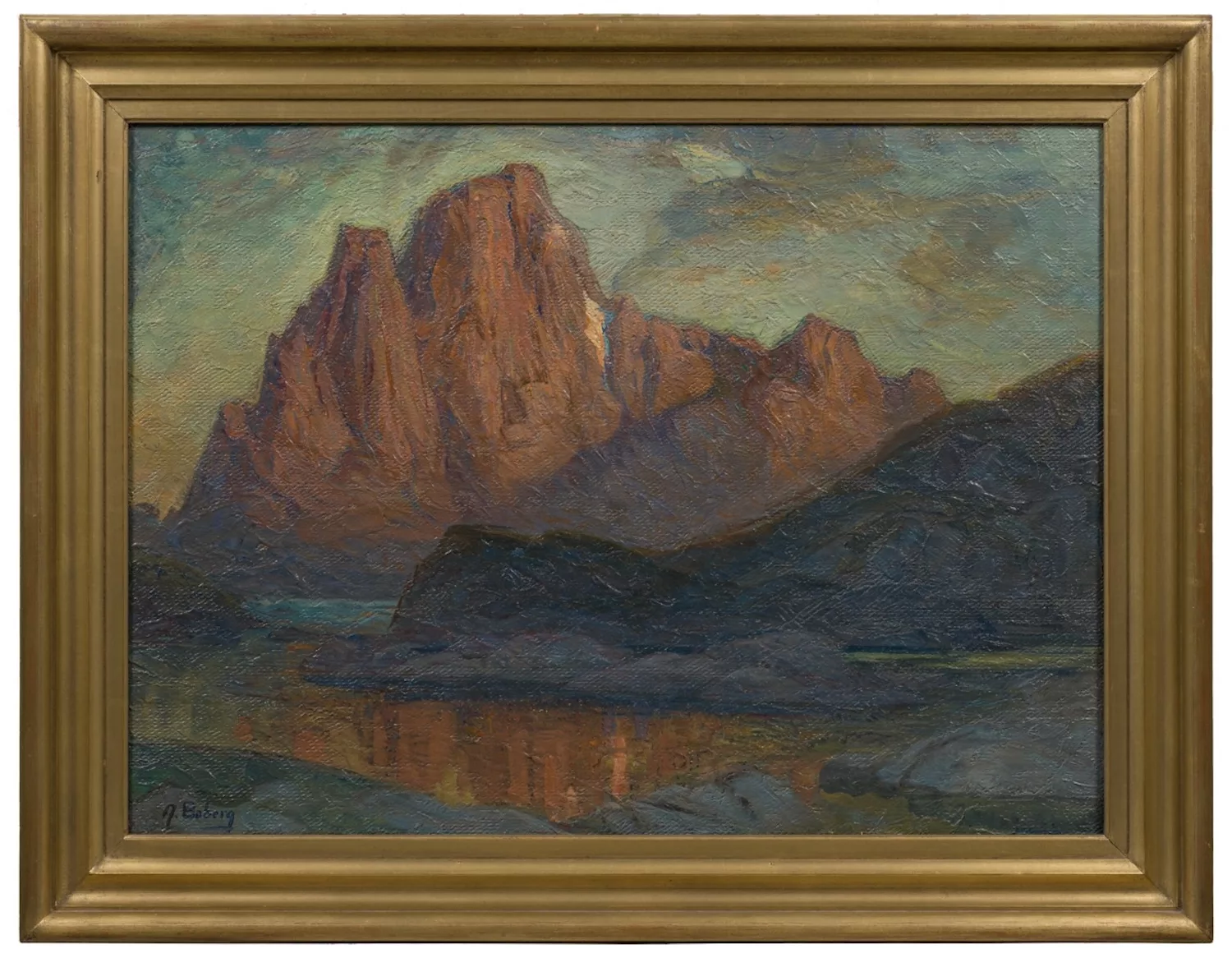
In 1901 A. Boberg travelled with her husband, the architect Ferdinand Boberg (1860-1946), through Sapmí to Lofoten. The excursion would come to define the next thirty years of her life. By the time they arrived in Lofoten, A. Boberg had already established herself as a prominent decorative artist in Sweden, much admired for her paintings, textiles, ceramics, glass, and her libretto and costume designs for the Viking opera Tirfing (1898). A. Boberg became enamoured with the Lofoten wall. She described the peaks as giants “who, since the dawn of time, have stood knee-deep in the sea with their snow-covered heads above the clouds resisting the furious onslaught of hurricanes”. She saw herself as a medium who had been given the task of interpreting this environment. During her first visit in the summer, she felt as if the Three Greats of Lofoten (the wind, ocean and mountains) had asked her to return to witness the winter. She was bewitched.
Several trips followed and in 1903 her first exhibition of Lofoten landscapes opened in Stockholm, to critical acclaim, before travelling to Galerie Eduard Schulte in Berlin. Critics noted her ‘strange’ technique of using a palette knife and she was compared to Claude Monet (1840–1926) and Giovanni Segantini (1858–1899). The exhibition was a sensation, and in 1905 she had further success in Paris at the Galerie des artistes modernes.
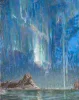
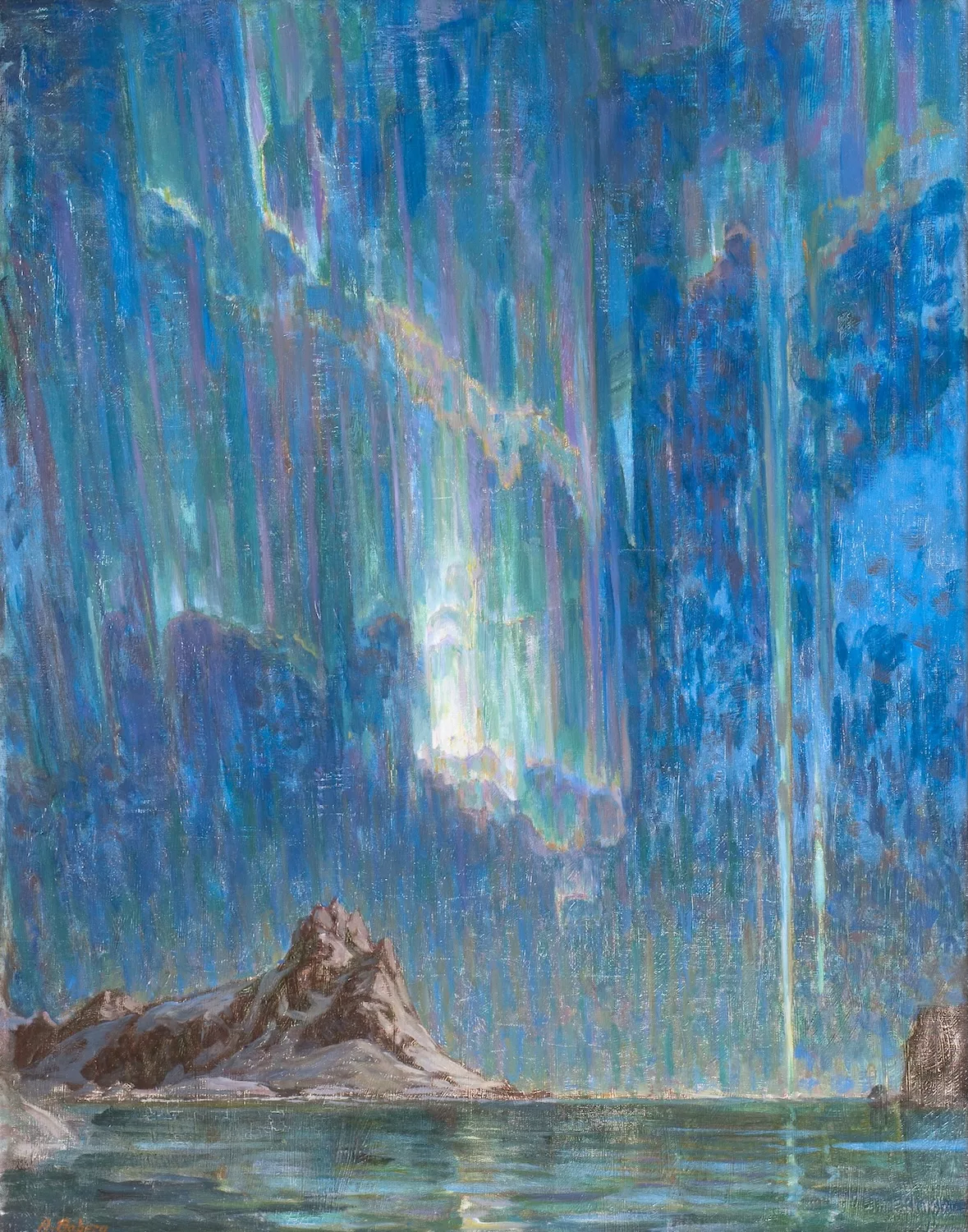
After her Parisian triumph she became a transatlantic phenomenon known for her daring plein air practice in the harsh arctic environment, and synonymous with the opalescent light captured in her snow-covered landscapes. Through her original and innovative depictions of Arctic phenomena, such as her aurora borealis inspired by Loïe Fuller, she was known as a brilliant colourist. Selwyn Brinton, writing in The Studio noted how the Swedish pavilion was one of the best at the Venice Biennale in 1907, and how “above all, we have the work of that wonderful colourist, Anna Boberg”.
Yet to fully grasp her artistic practice during this period one must also view it as part of the turn toward Theosophy. While she would later distance herself from the religion, she was involved in the movement until at least 1913, when she participated in an exhibition on Visingsö that coincided with the International Theosophical Peace Congress.
Many commented on the mystical dimension of A. Boberg’s Arctic painting séances, as she called them. In a letter published at the time of her second exhibition in Paris in 1906 in L’Art et les Artistes, A. Boberg described her relationship with Lofoten as a spiritual quest. The critic Louis Vauxcelles felt she was deciphering the rarest of secrets in her art.
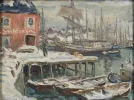
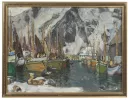
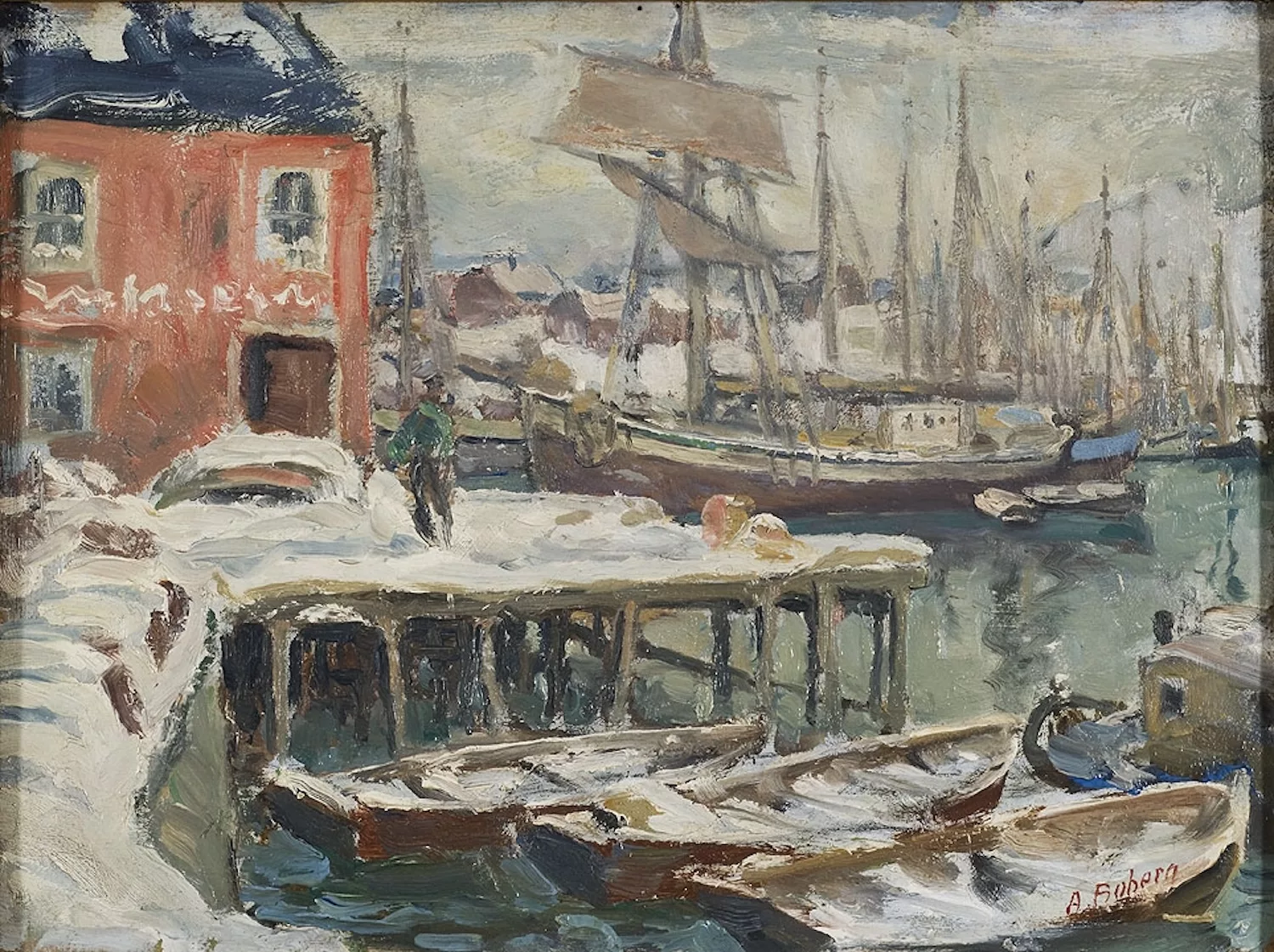
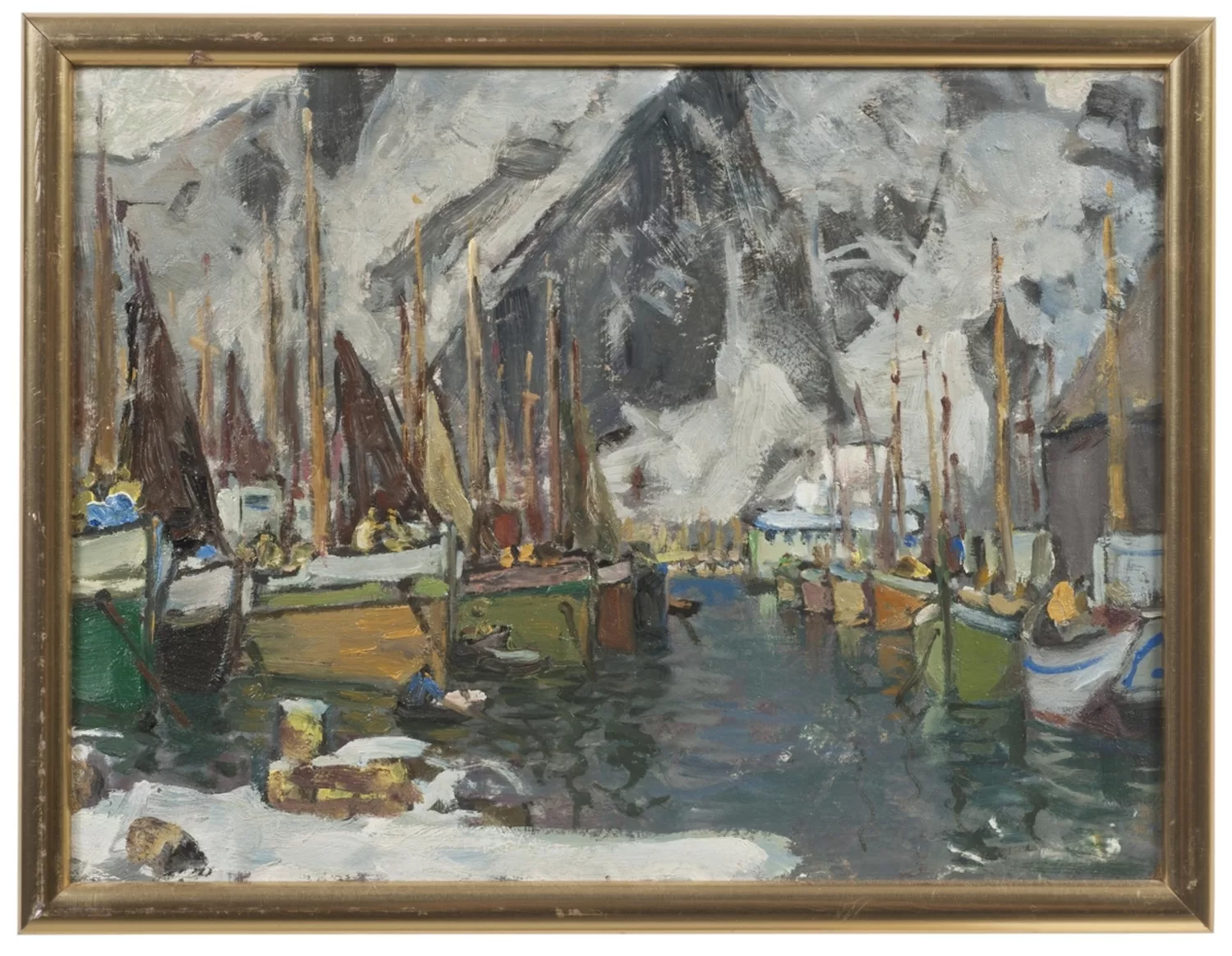
But the Arctic was not only an otherworldly environment. For her, the archipelago appeared both poetic and prosaic. Her art reflects both aspects, and the mystical mists enveloping the mountains blend with the billowing smoke from the whale oil factory. In addition to the striking snow-covered Schlaraffenland of the winter that she adored, later exhibitions showed that A. Boberg was equally enamoured with the green rocky coastline of midsummer. She also delighted in studying lichens, moss and the forest.
In recent years A. Boberg’s work has garnered much attention. While briefly ‘forgotten’ after her death in 1935, she and her special relationship to the Arctic archipelago that became her métier and second home are today acknowledged as an important example of the exploration of the landscape in twentieth-century art.
Published in partnership with SMK – National Gallery of Denmark, as part of the exhibition Against All Odds: Historical Women and New Algorithms
© Archives of Women Artists, Research and Exhibitions, 2026