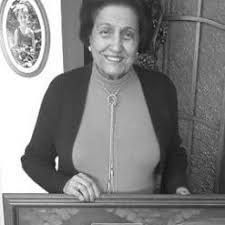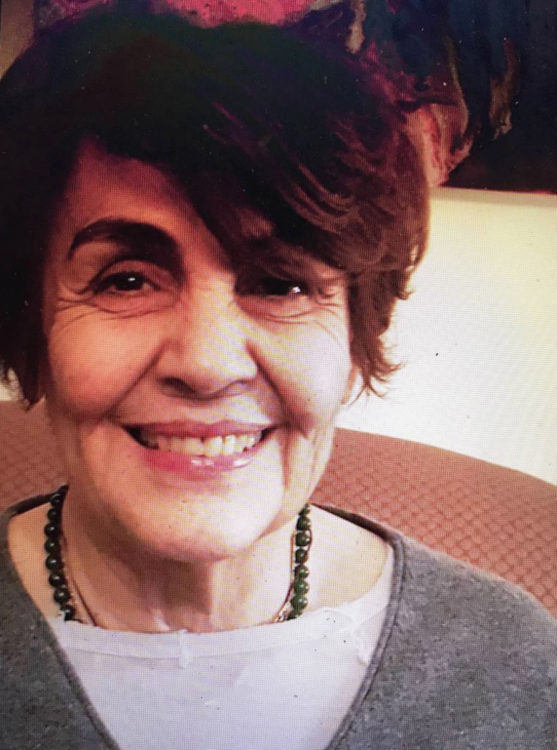
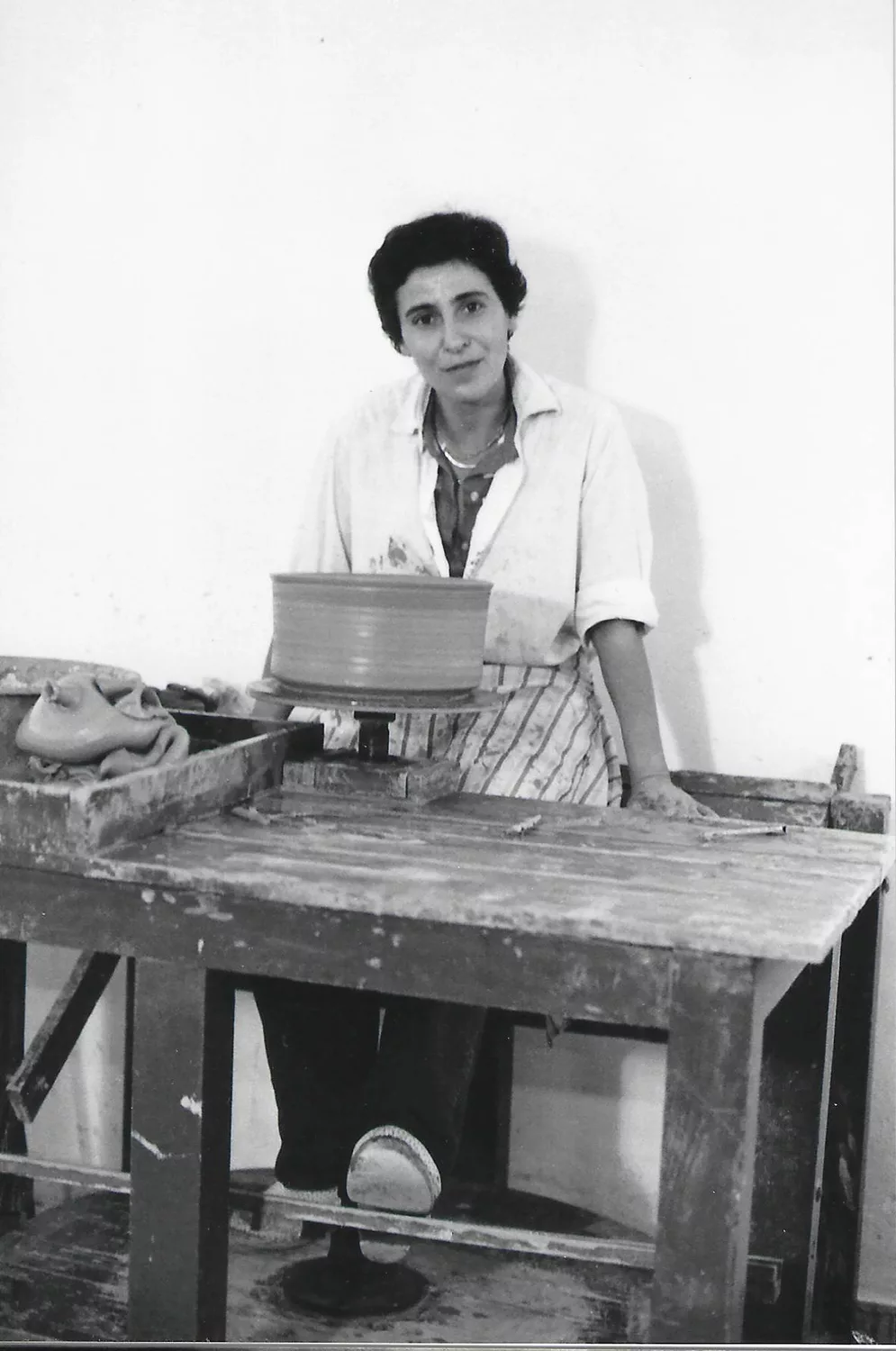
Portrait of Dorothy Salhab Kazemi, Courtesy of Dorothy Salhab Kazemi Museum
Chammas, Carla, Dedman, Rachel and Kholeif, Omar (eds.), Helen Khal: Gallery One and Beirut in the 1960s, foreword by Christine Tohmé, London, Sternberg Press, 2023
→Khal, Helen, “Dorothy Kazemi,” The Woman Artist in Lebanon, Beirut, Institute for Women’s Studies in the Arab World, 1987, p. 135
→The Spirit of the Pot: Dorothy Salhab Kazemi, Beirut, Librairie Antoine, 2009
The Age of Ceramics: Dorothy Salhab Kazemi, MACAM, Alita, Lebanon, 2017
→The First National Art Exhibition for Arab Women Artists, Modern Art Gallery (National Museum of Modern Art), Baghdad, 1980
→Designmuseum Danmark, Copenhagen, 1975
Lebanese ceramic artist.
Dorothy Salhab Kazemi was an avant-garde Lebanese ceramist and educator who established Lebanon’s first formal ceramics department. She grew up between Tripoli, in northern Lebanon, and Beirut, and travelled extensively throughout her life. However, Roumieh remained an important foundation for her studio practice. Despite the years of war that marked much of her life, D. Salhab Kazemi maintained a profound commitment to ceramics as a sculptural language. Her use of locally sourced clay connected her work closely to the Lebanese landscape, while her practice brought traditional and modern pottery techniques into dialogue.
D. Salhab Kazemi’s artistic education began at Beirut College for Women (now the Lebanese American University, LAU), where she took art courses. She later studied English literature at the American University of Beirut, graduating in 1963. In 1964 she continued her studies at the School of Arts and Crafts (now the Royal Danish Academy) in Denmark. During this period, she participated in one of her earliest international exhibitions, at Den Frie in Copenhagen. This time paved the way for her further training, beginning in 1966 with the Danish ceramist Gutte Eriksen (1918–2008), whose large-textured pottery drew upon East Asian ceramic traditions. Through her work with Eriksen, D. Salhab Kazemi developed her knowledge of glazing and firing, becoming particularly accomplished in high-temperature firing. She later applied this knowledge to her work with local clay and to her production of stoneware and porcelain in Lebanon.
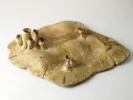
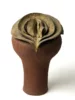
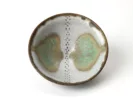
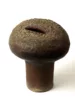
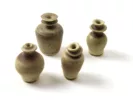
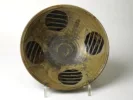
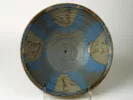
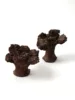
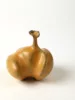
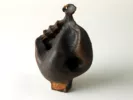
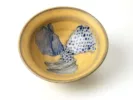
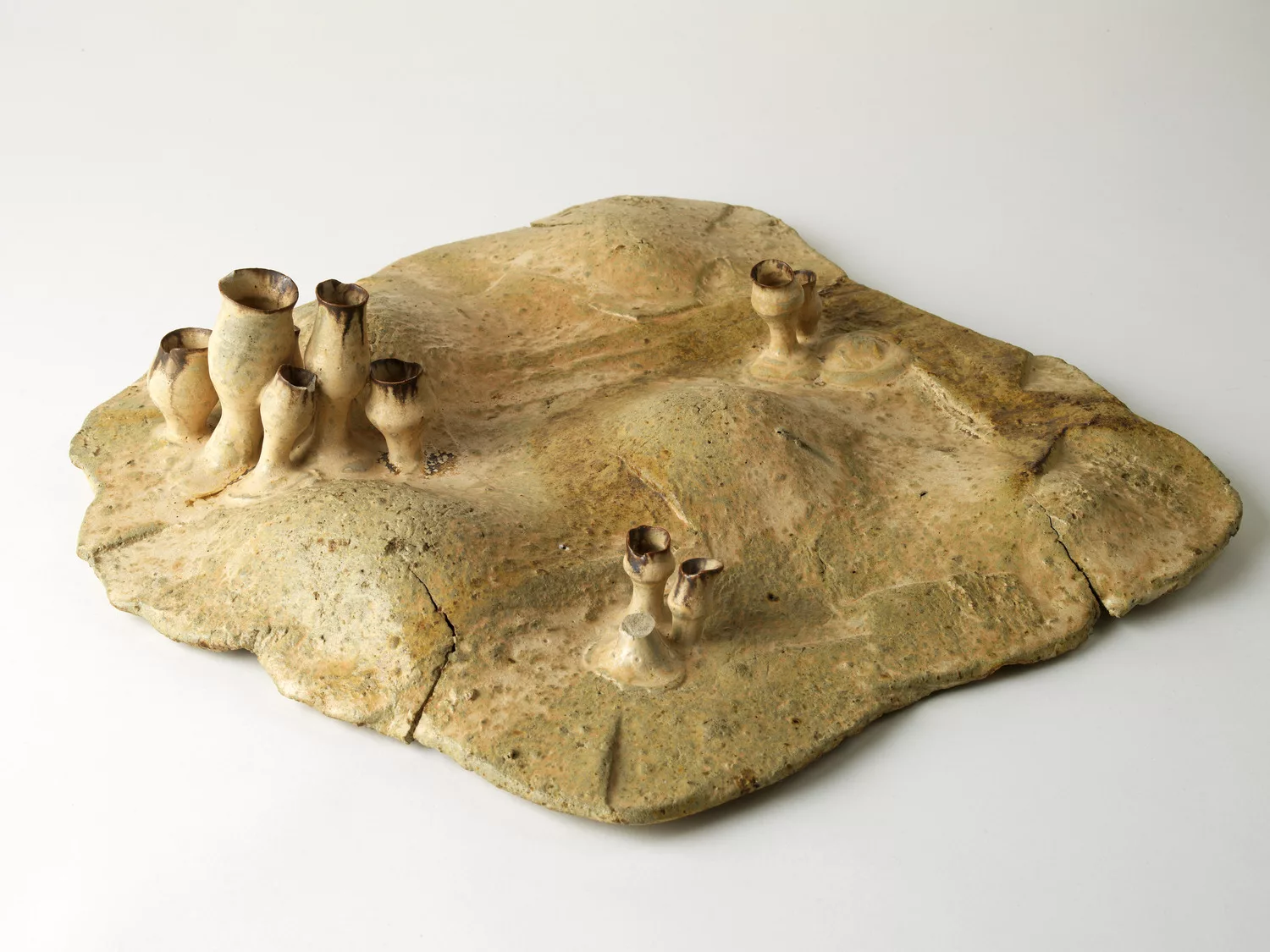
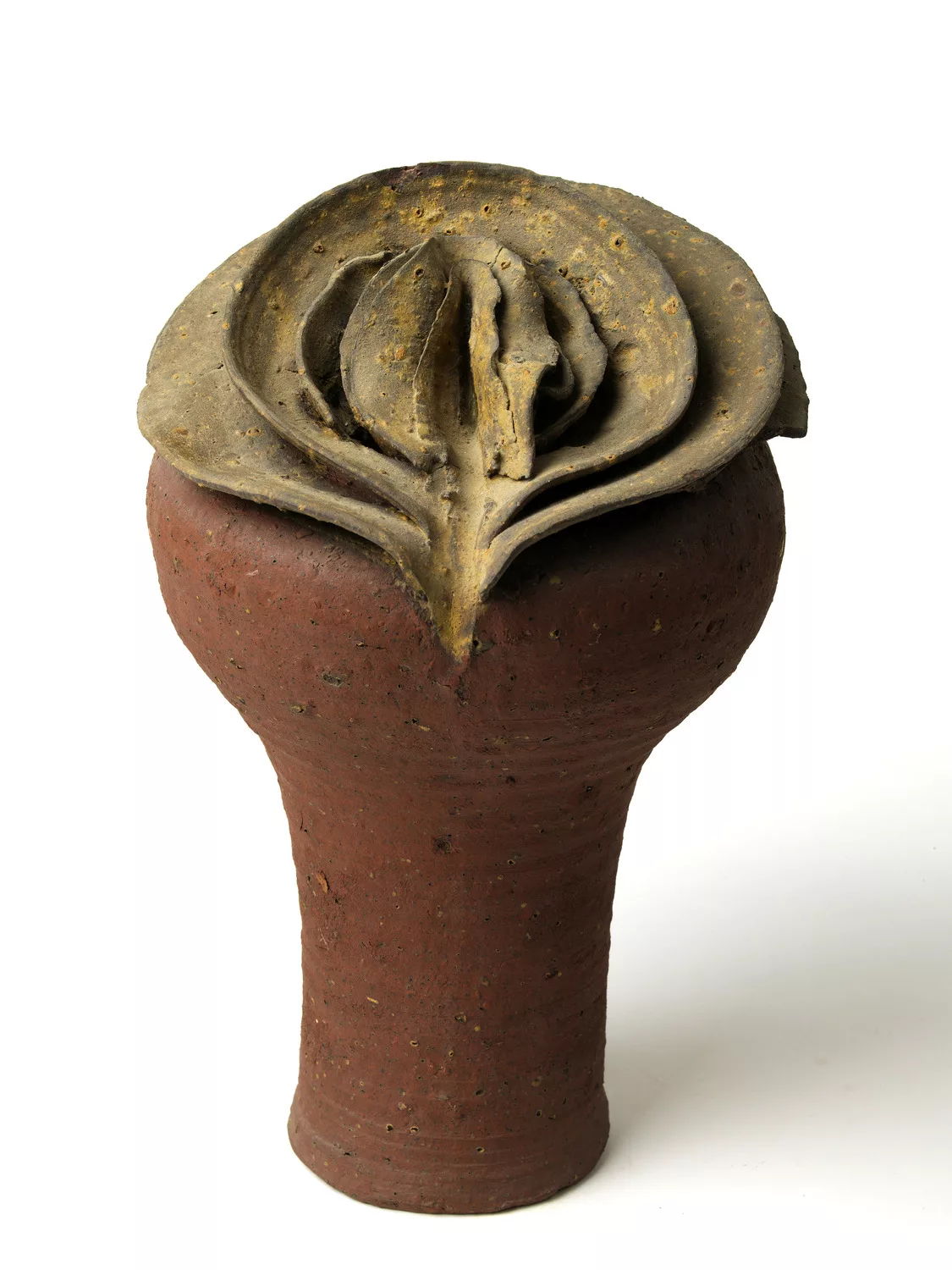
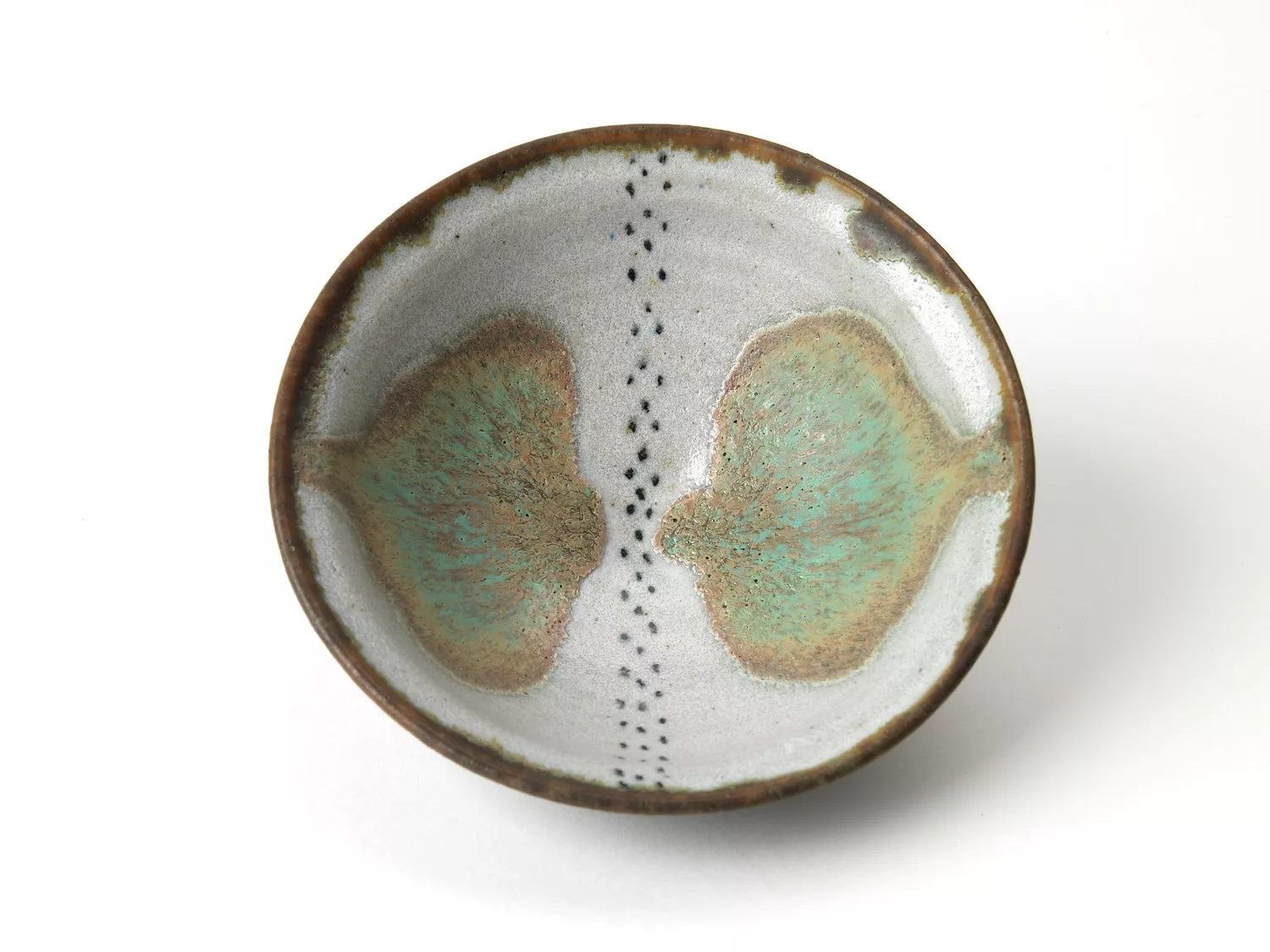
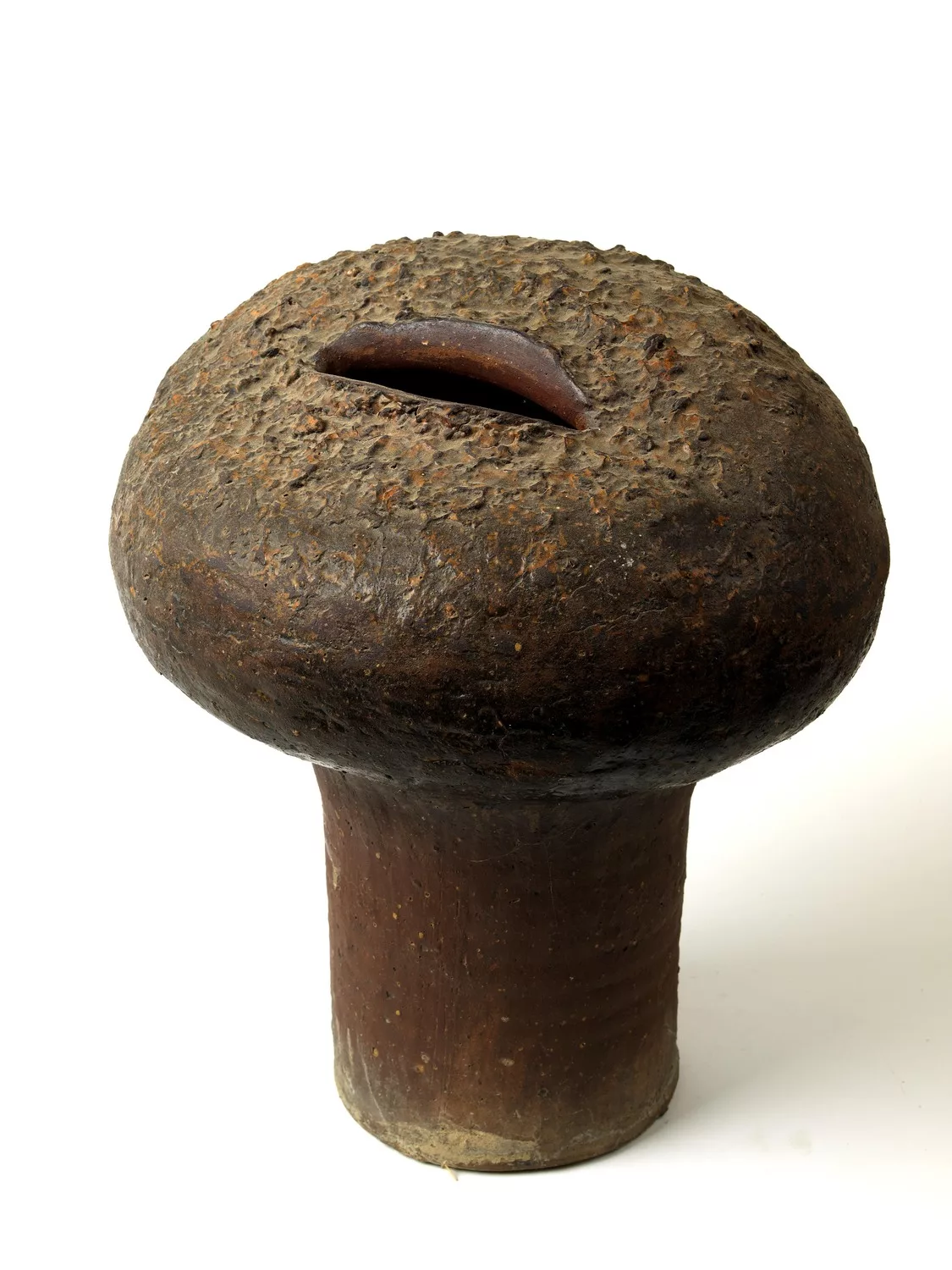
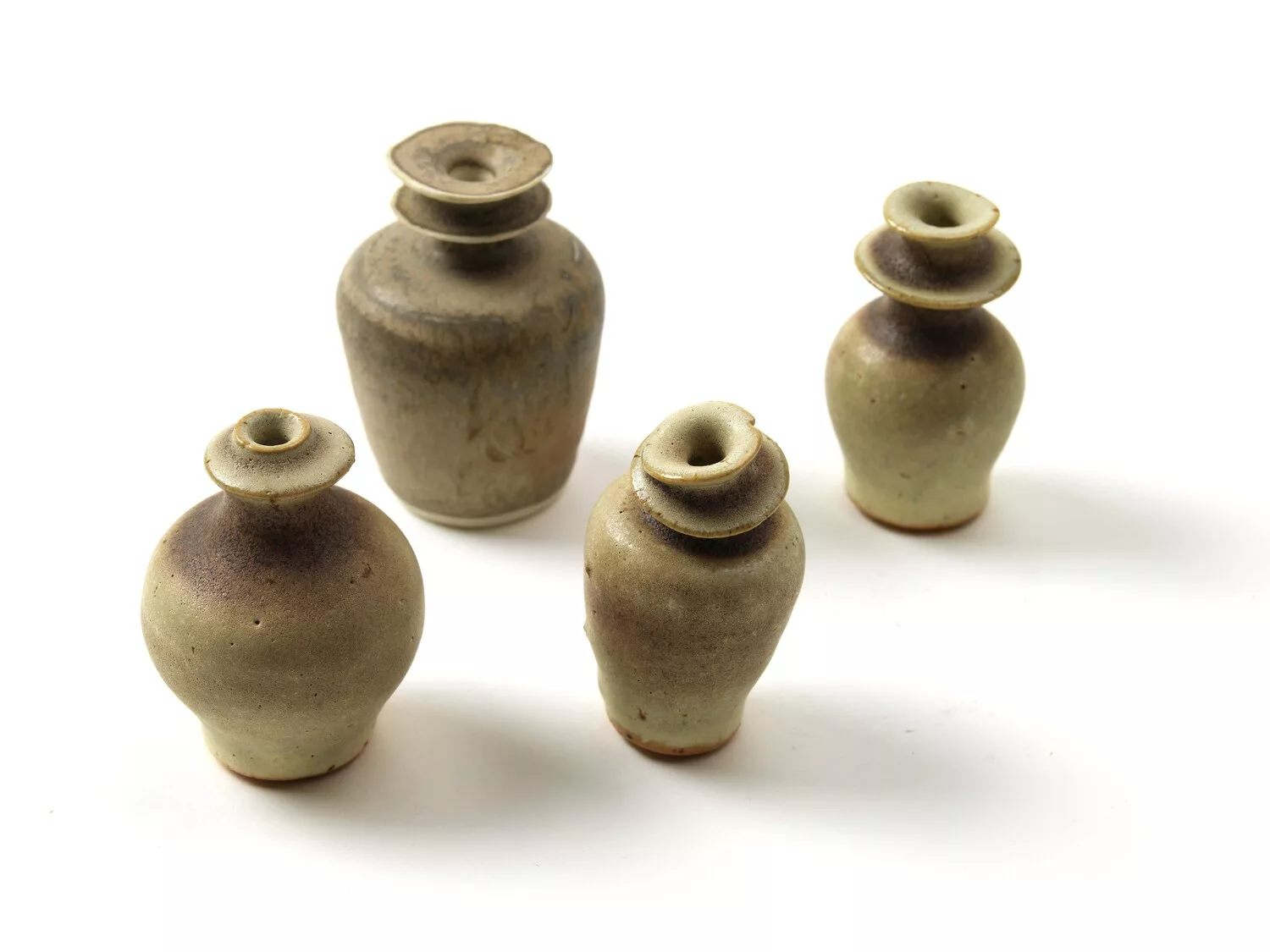
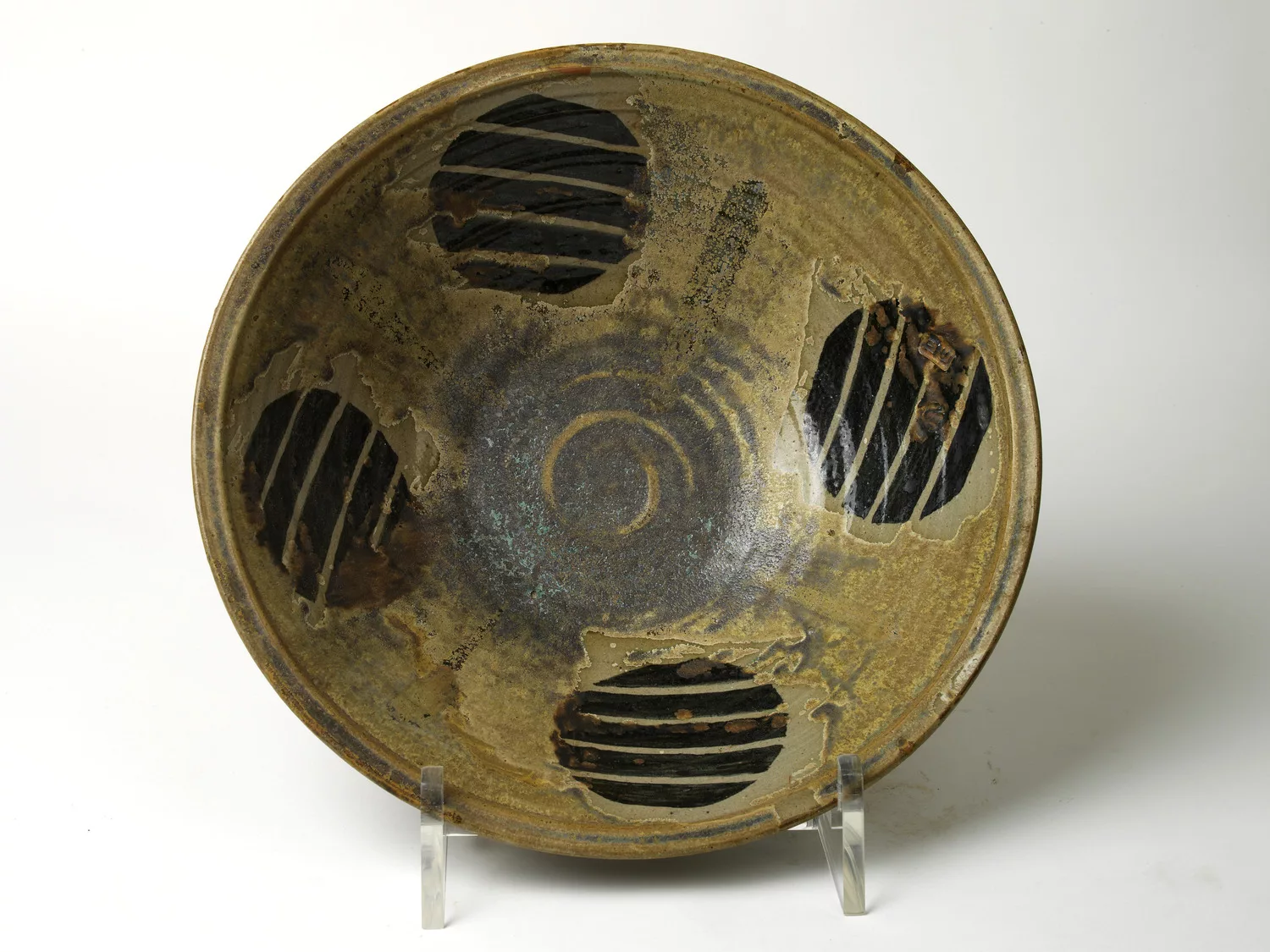
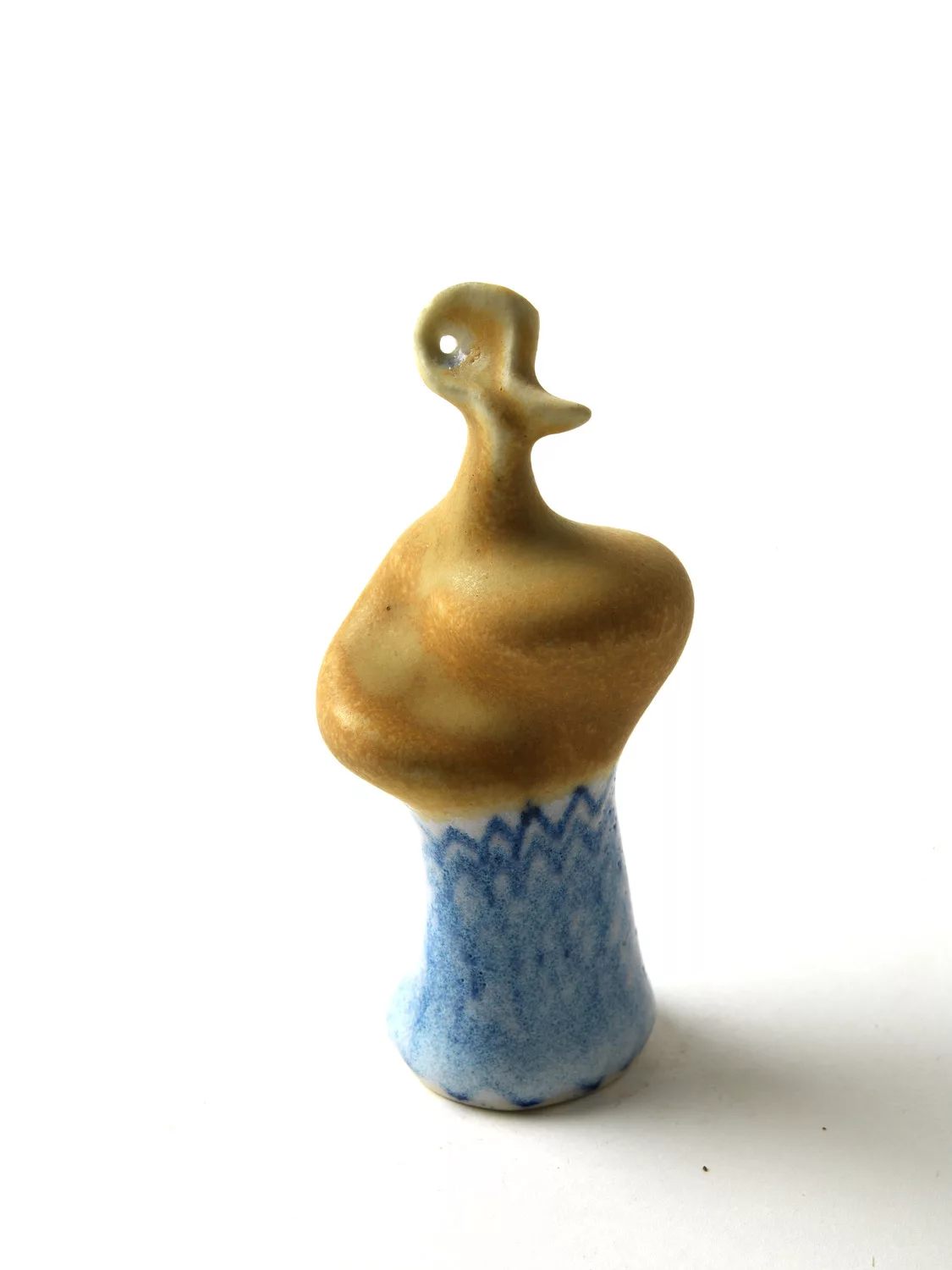
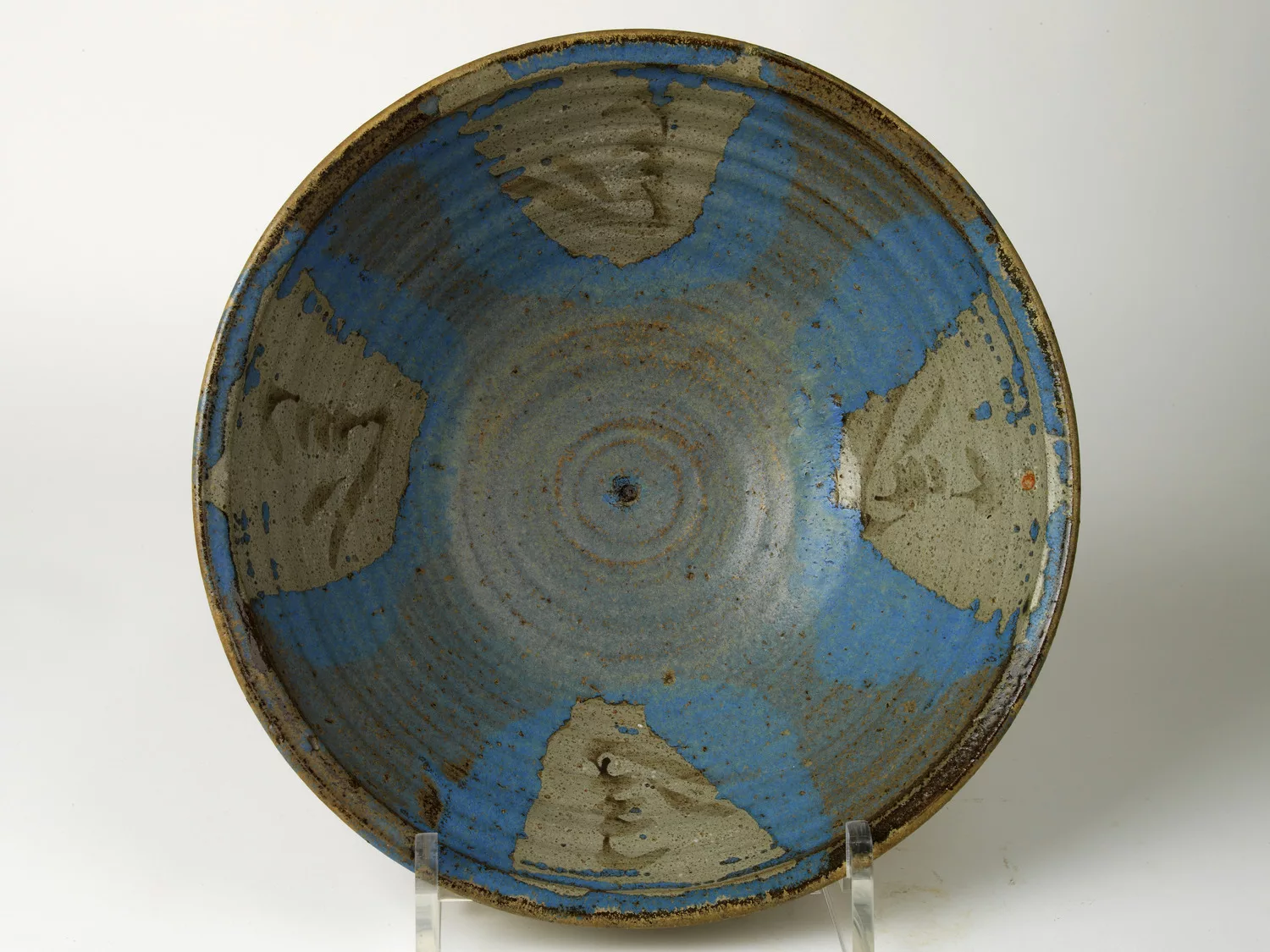
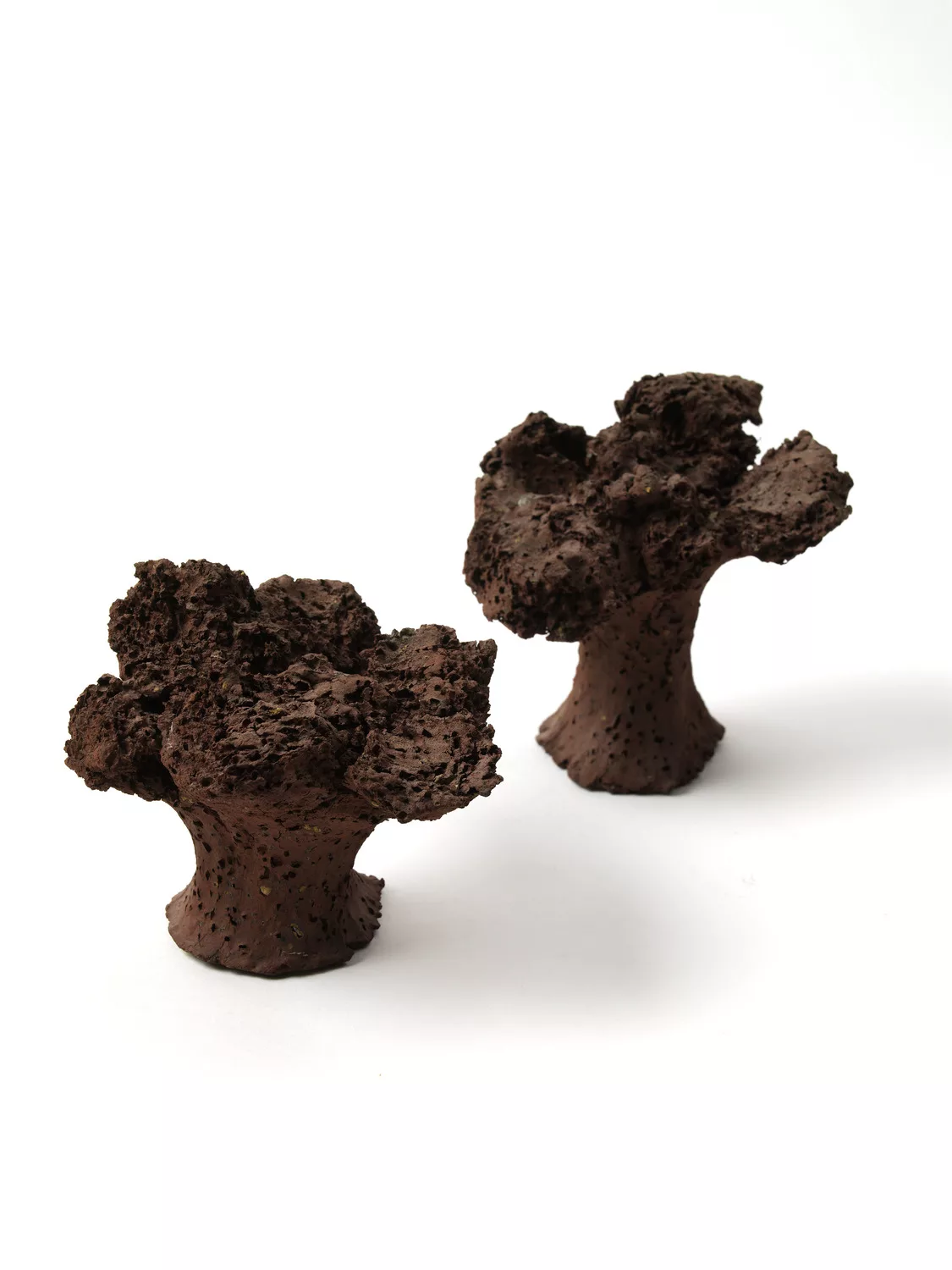
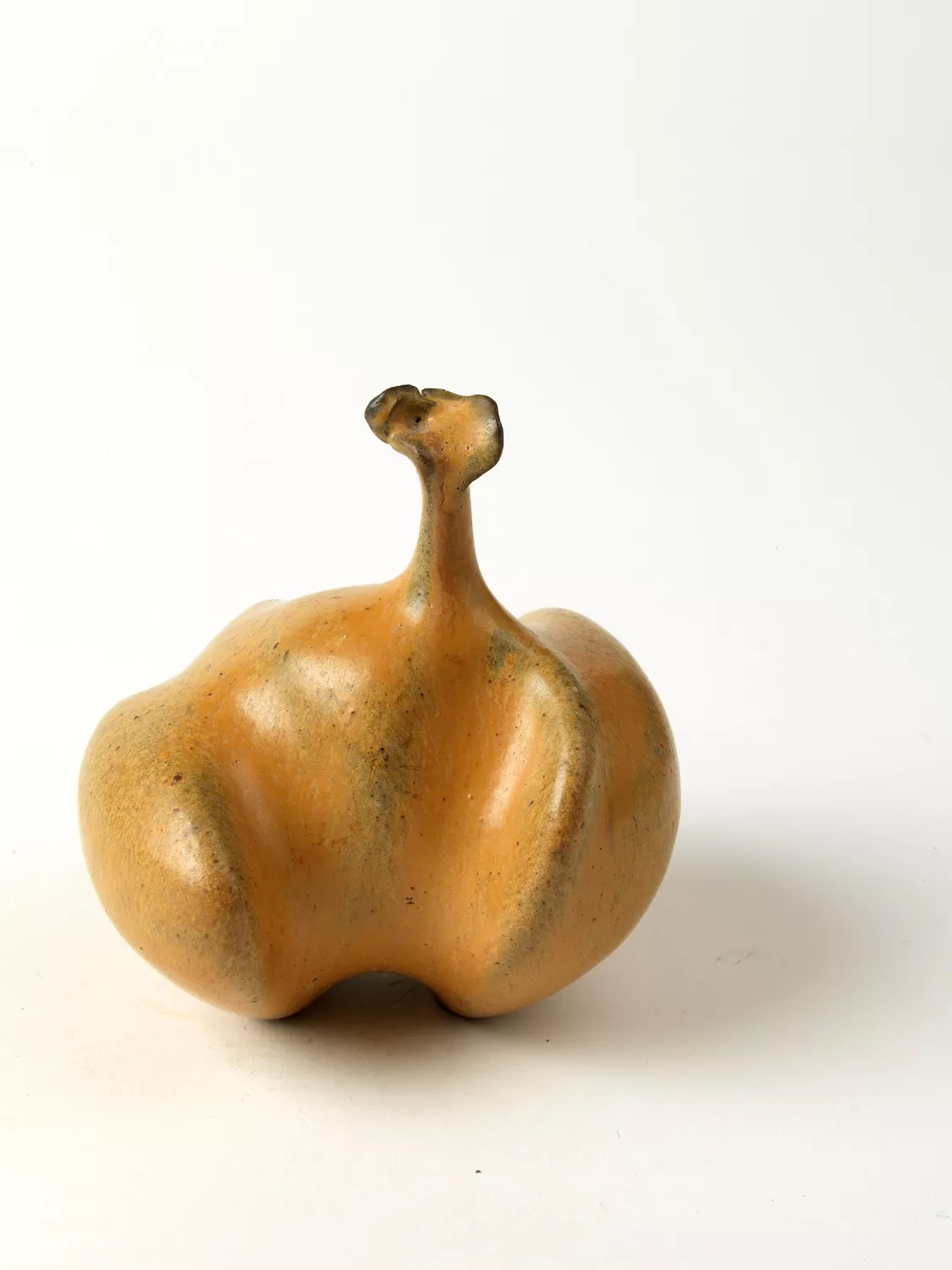
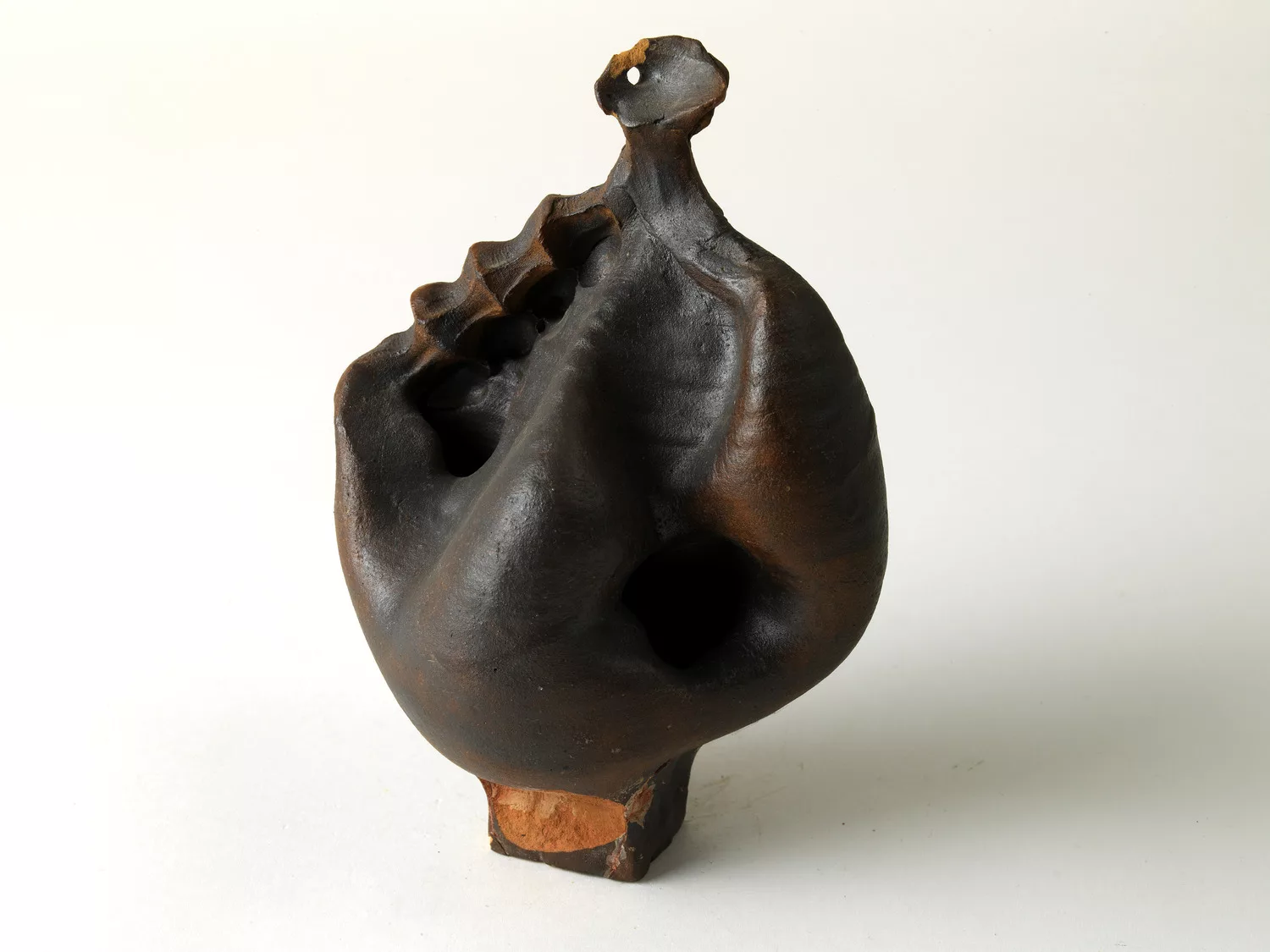
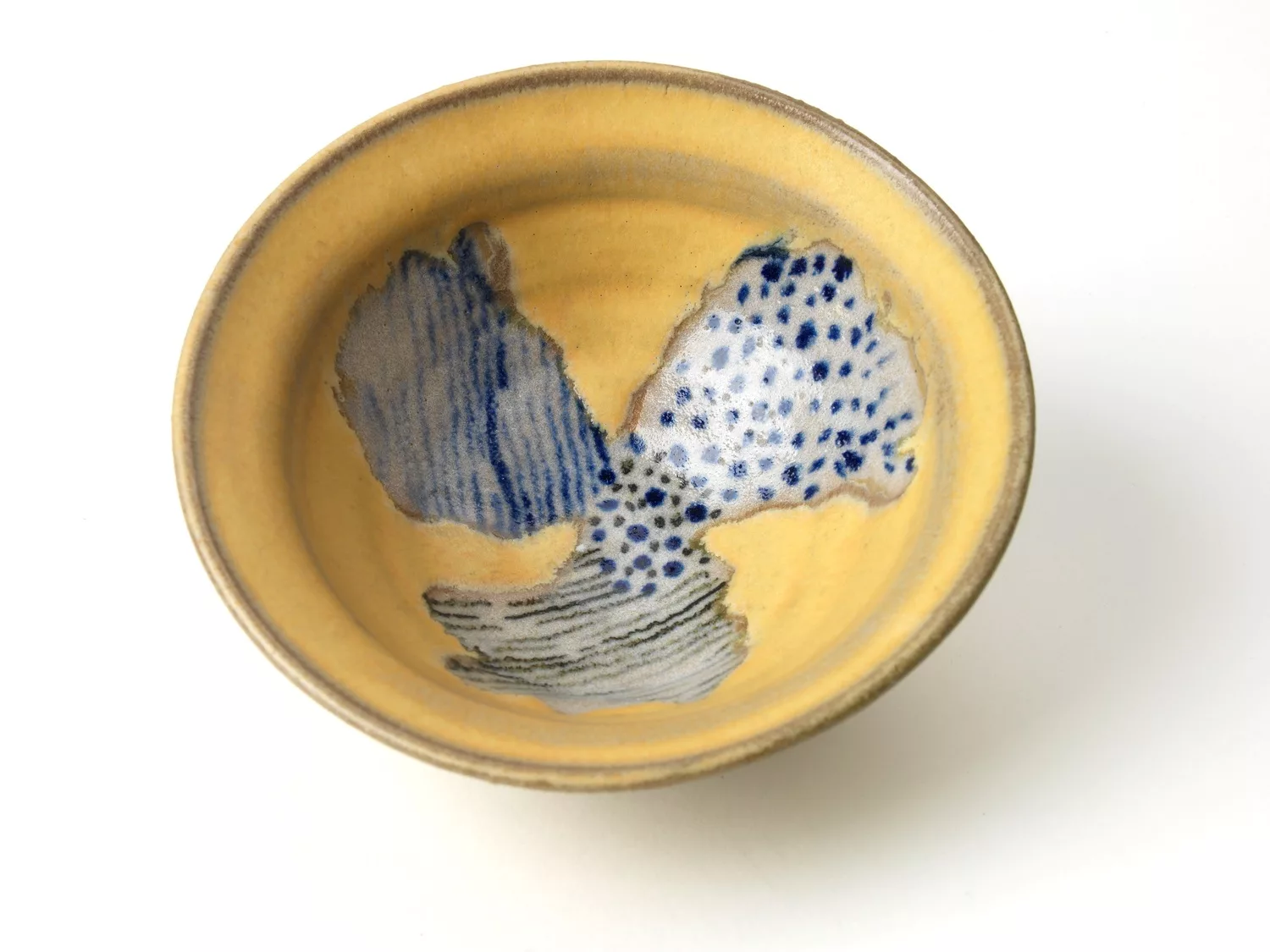
D. Salhab Kazemi moved to Glasgow, where she taught ceramics between 1968 and 1970. During this period, her artistic vocabulary developed through her engagement with international modernist and ceramic traditions, including the Japanese Mingei movement and Kazimir Malevich’s (1879-1935) Suprematism. In 1971, upon returning to her hometown, D. Salhab Kazemi founded the Ceramics Department at Beirut University College (today LAU), where she taught until 1982. These years were marked by intensive production and exhibition activity in Beirut, Baghdad, Damascus and Riberac, in Southwestern France. She produced both sculptural and functional ceramics, including jars, vases, plates and pots. Their surfaces and forms incorporated subtle references to plants, fruits, calligraphy, rocks and the body. Through her controlled firing and glazing, she also developed an earthy chromatic range of browns, blacks and greys, occasionally punctuated by restrained strokes of blue and yellow. In her studio, she experimented with earth materials such as ashes of olive and citrus trees.
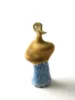
Throwing on the wheel was central to her process. Its circular movement allowed her to explore the spiral, the body and the inner volume of the vessel. In some works, openings puncture the ceramic body, while spiralling contours and pointed elements evoke erotic organic forms, as seen in Sculpture (1974), and her Untitled works from the 1970s. Other ceramics evoke Islamic and Japanese artistic traditions, through decorative pots and plates featuring near-symmetrical geometric patterns while retaining rough, tactile surfaces. Her engagement with Islamic art and archaeological objects became particularly significant during her time in Syria. She conducted research in Damascus and participated in archaeological excavations in Mayadine al-Rahaba in 1983. The experience brought her into direct contact with archaeological objects while enabling her to study their forms within a wider historical context.
Her materials, however, remained sourced locally, including from Rashaya al-Foukhar, a village known for its reddish clay and its multigenerational community of potters and craftspeople, in the south of Lebanon. D. Salhab Kazemi’s ceramics were deeply connected to the landscapes and material conditions of Lebanon, including those of the mountains of Roumieh and Sannine, so that the forms carry a material memory of nature.
Following her marriage to the economist Shams Kazemi, she lived in several countries, including Switzerland, Scotland and later France. She died at the age of forty-eight in 1990. In 1998, the Sursock Museum established an annual art prize in her memory, awarded to young artists. A large collection of her work is held by the Dorothy Salhab Kazemi Museum in Lebanon, which commemorates her life and artistic legacy.
A biography produced by AWARE: Archives of Women Artists, Research and Exhibitions in partnership with The Beirut Museum of Art (BeMA).