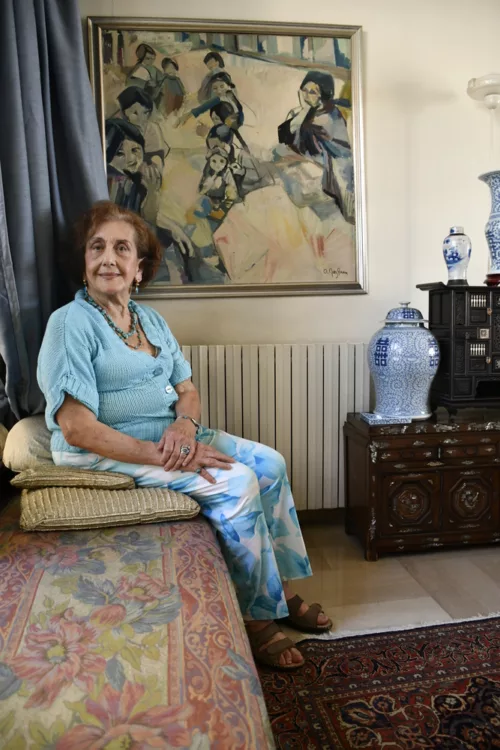
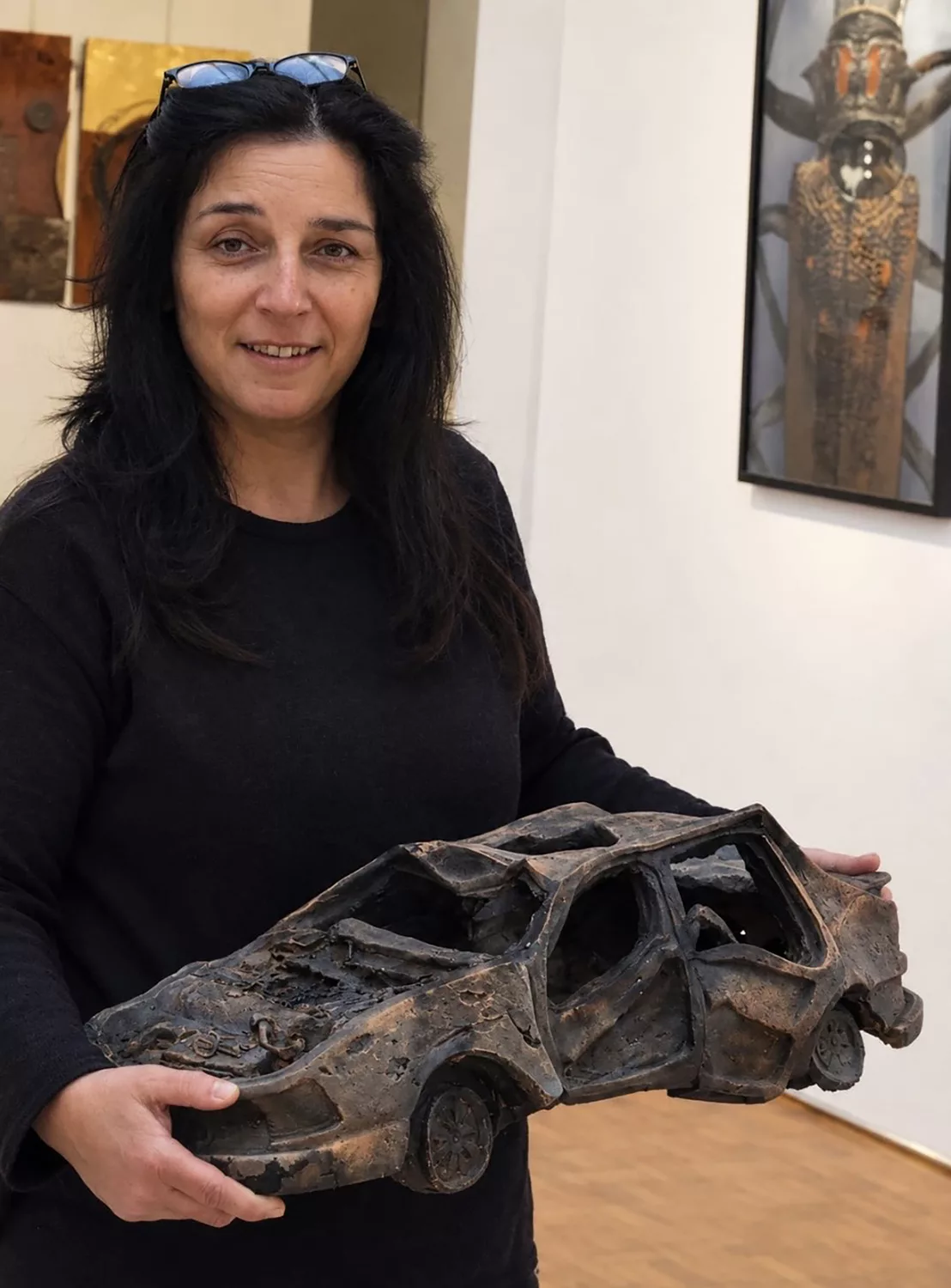
Portrait of Samar Mogharbel, photo: © Faisal Sultan (Artist and Critic)
El-Hafez, Ramzi, The Anthology of Visual Arts in Lebanon, Beirut, Infopro and Gallery Magazine, 2025
→Nachabe Taan, Yasmine, “Disaster seen by Three Female Contemporary Lebanese Artists,” in Hartman, Michelle and Abisaab, Malek, Women’s War Stories: The Lebanese Civil War as Lived by Women, Syracuse, Syracuse University Press, 2022, pp. 61–70
→Contemporary Ceramics in Lebanon, American University of Beirut, Beirut, 2001
Art de Triomphe, Saleh Barakat Gallery, Beirut, December 11, 2019–January 16, 2020
→Without Traces, Agial Art Gallery, Beirut, February 11–28, 2015
→Interception, Agial Art Gallery, Beirut, October 27–November 19, 2011
Lebanese ceramic artist.
For more than four decades, Samar Mogharbel’s work has explored the intersections of memory, conflict, archaeology, architecture and collective trauma, drawing deeply on Lebanon’s turbulent modern history. Living through successive wars, from the Lebanese Civil War to repeated Israeli invasions, has profoundly shaped both the themes and material language of her practice.
S. Mogharbel trained under the pioneering Lebanese ceramist Dorothy Salhab Kazemi (1942–1990). In 1983, at the height of the Lebanese Civil War, she established her own studio in Beirut, producing functional earthenware vessels distinguished by their rich glaze experimentation. Following her first solo exhibition in 1987, she pursued postgraduate diploma in ceramics at Goldsmiths’ College, University of London – an experience that further expanded her artistic vocabulary. Since 1983 she has been teaching Ceramics at the Lebanese American University in Beirut.
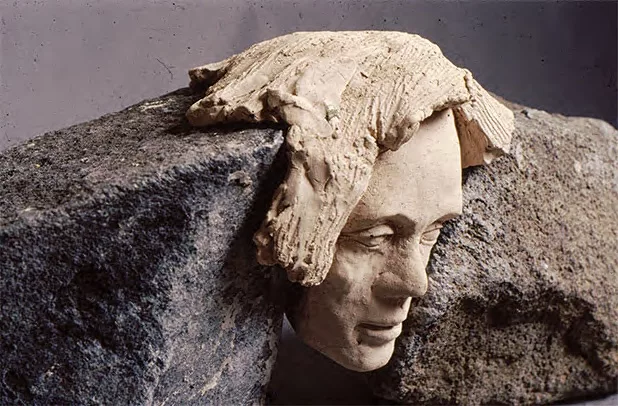
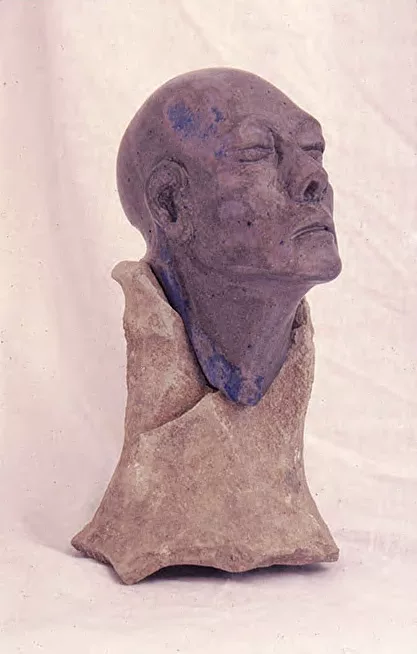
Returning to Beirut as the Civil War was ending, S. Mogharbel witnessed the large-scale demolition and reconstruction of the city’s historic centre. This experience inspired Beirut Blues (1998), an exhibition reflecting on the loss of the urban fabric and the emotional scars of reconstruction. Later, while participating in archaeological excavations in downtown Beirut, she encountered Roman ceramic fragments that became central to Face Efface (1999), where ancient sherds were combined with sculpted ceramic heads to explore themes of history, identity and erasure.
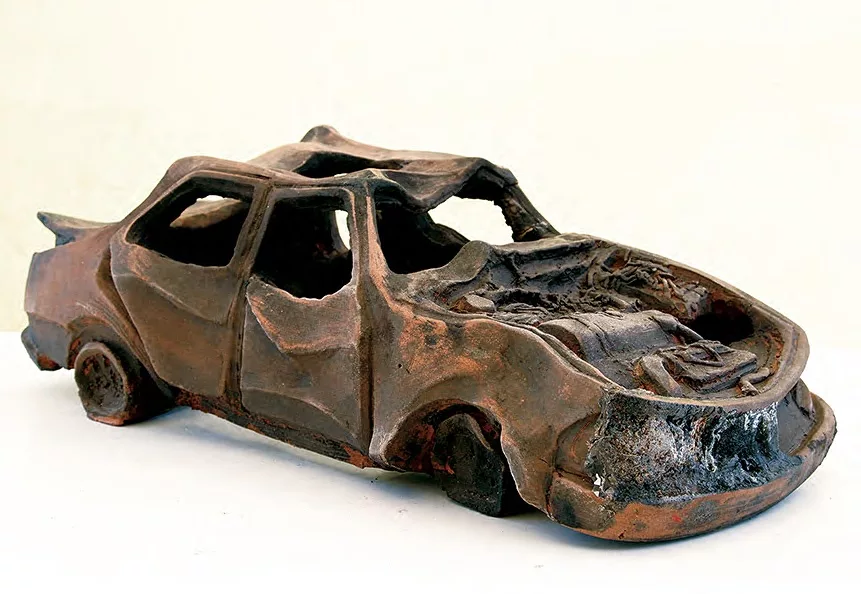
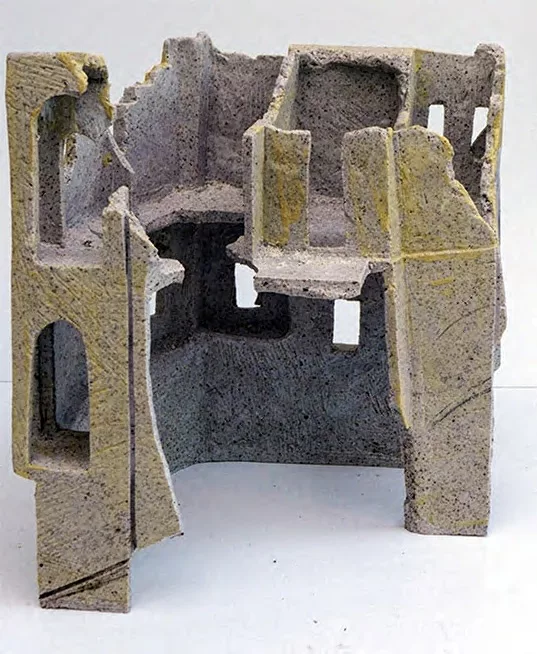
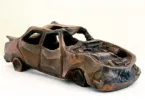
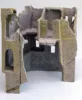
Throughout her career, S. Mogharbel has consistently responded to moments of political violence through clay. The wave of political assassinations that struck Lebanon in 2005 resulted in her acclaimed series of six exploded ceramic cars, whose meticulously polished and smoke-fired surfaces transformed symbols of destruction into powerful meditations on mortality and remembrance. The series received First Prize at the Sursock Museum Salon d’Automne in 2006. Her later exhibitions continued this dialogue between personal memory and national history. Interception (2011) examined violence through sculptural representations of children holding cameras and water-shooting devices, transforming acts of aggression into unexpected moments of beauty. Without Traces (2015) revisited Beirut’s disappearing domestic architecture through ceramic sculptures of early twentieth-century Lebanese houses threatened by demolition, preserving their memory at a moment of rapid urban transformation.
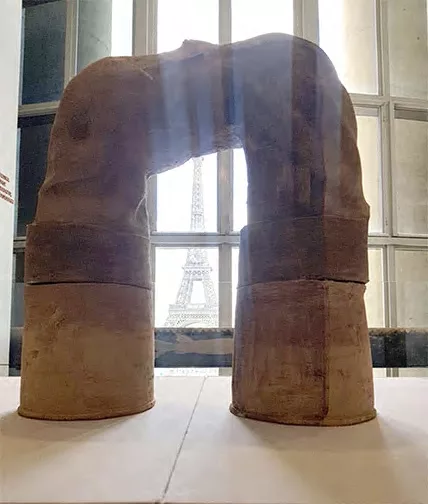
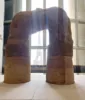
In 2020, S. Mogharbel presented Art de Triomphe, an exhibition featuring a series of elongated clay tubes whose forms appear to buckle, collapse and distort under their own weight. Rather than maintaining the rigidity and symmetry associated with a conventional vessel, the clay seems to sag and bend, recording the movement of the material as it responds to gravity. For S. Mogharbel, these forms became a way of expressing, as she puts it, “the exhaustion of living incessant difficulties”.
Alongside her sculptural practice, S. Mogharbel has produced several stop-motion animation films since 2004, further expanding her exploration of memory, conflict and transformation across media.
Her work has been exhibited extensively in Lebanon and internationally, including the Musée de l’Homme in Paris, Expo Dubai, Art Paris, the Cairo Biennale and numerous international ceramic biennials, symposia and art fairs across Europe, Asia and Latin America. In collaboration with artist Greta Naufal, she presented a major exhibition at Millesgården Museum in Stockholm, where works by both artists entered the museum’s permanent collection. A member of the International Academy of Ceramics (IAC) since 2019, Mogharbel has received numerous distinctions, including the Sursock Museum First Prize (2006), the Shanghai International Teapot Prize (2010), Silver Plaques at Zagreb Clay Fest (2014) and MIKS Zagreb (2020) and an Honorary Mention at the Macsabal Wood Firing Symposium (2018). In 2025, she completed a two-month residency at the Taoxichuan Art Center in Jingdezhen, China, one of the world’s foremost centres of ceramic production.
Through an unwavering commitment to clay, S. Mogharbel has established a distinctive artistic practice in which ceramics become both witnesses to history and vessels of cultural memory, transforming traces of destruction into acts of remembrance.
A biography produced by AWARE: Archives of Women Artists, Research and Exhibitions in partnership with The Beirut Museum of Art (BeMA).


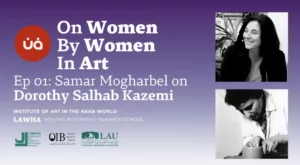 Samar Mogharbel on Dorothy Salhab Kazemi, "On Women By Women in Art" Podcast, 2023
 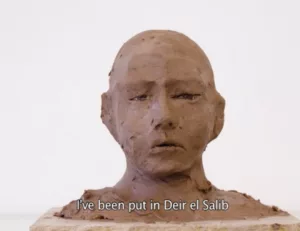 Samar Mogharbel, Deir el Salib, 2009, stop motion
 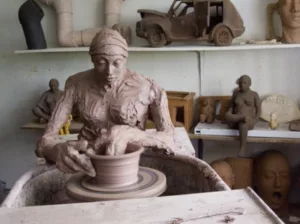 Samar Mogharbel, Clay from Clay, stop motion
 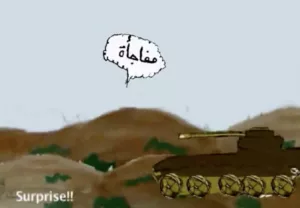 Samar Mogharbel, The war on Lebanon from the eyes of the kids, 2006, stop motion