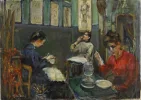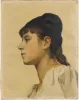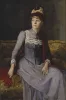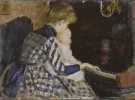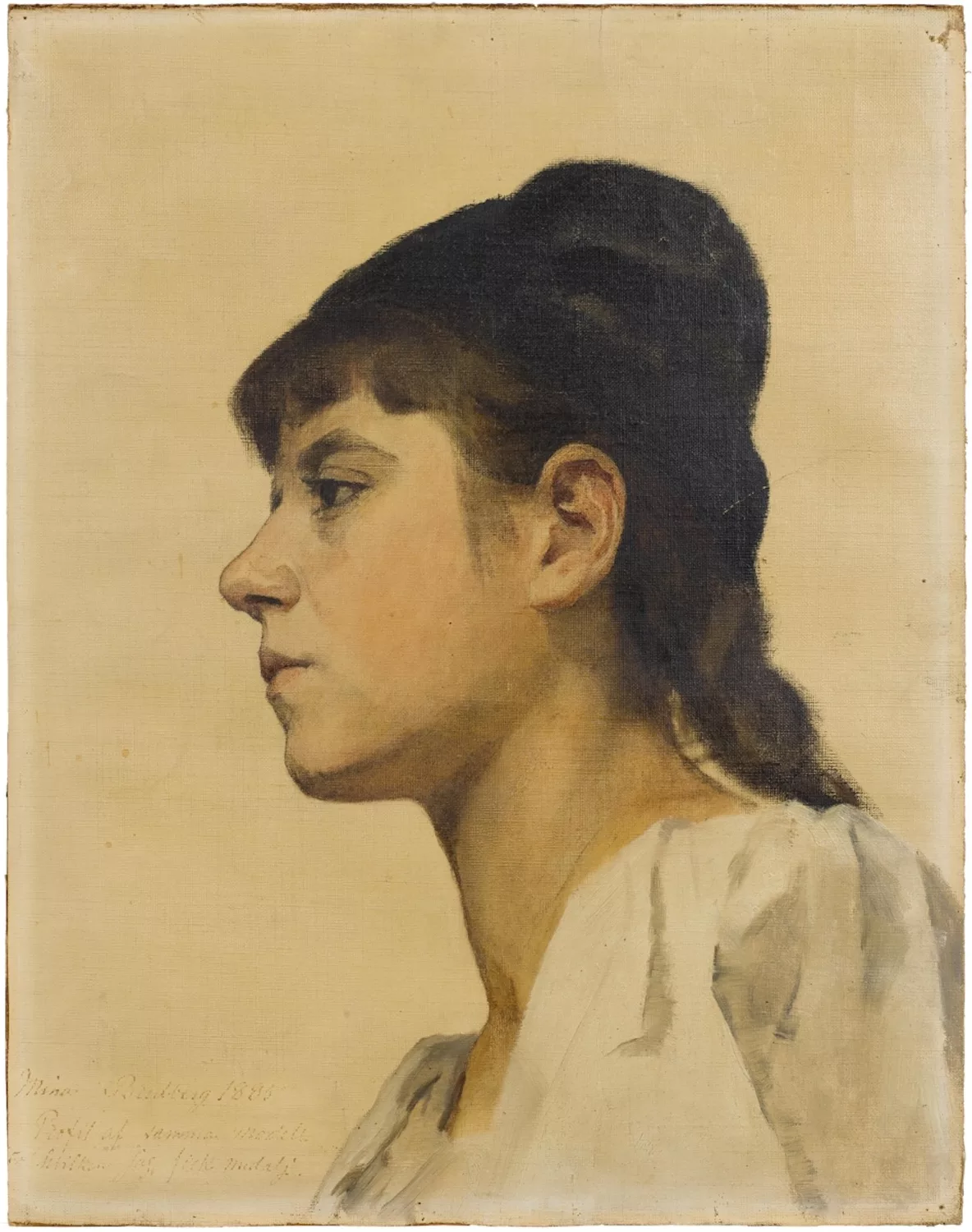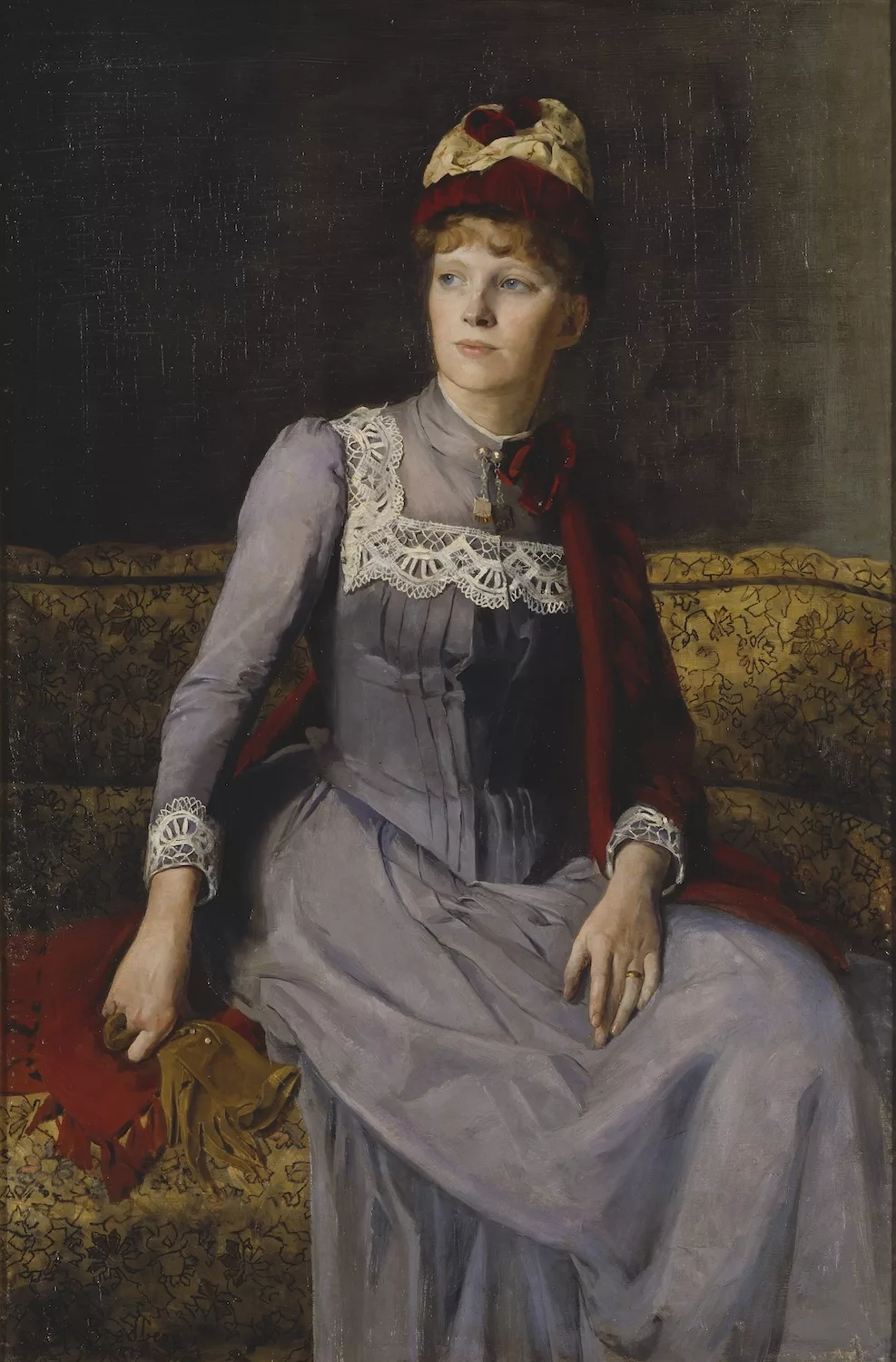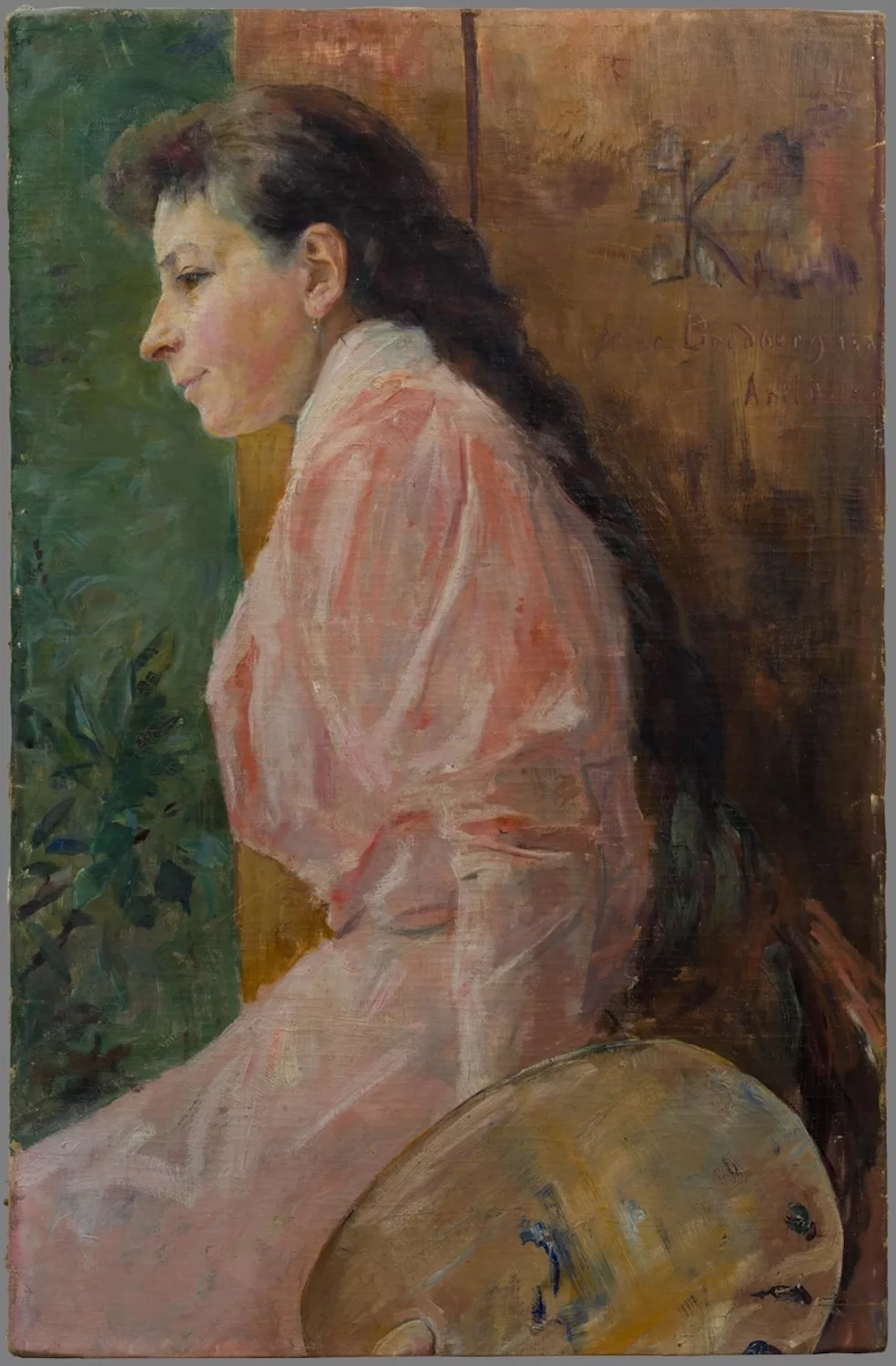
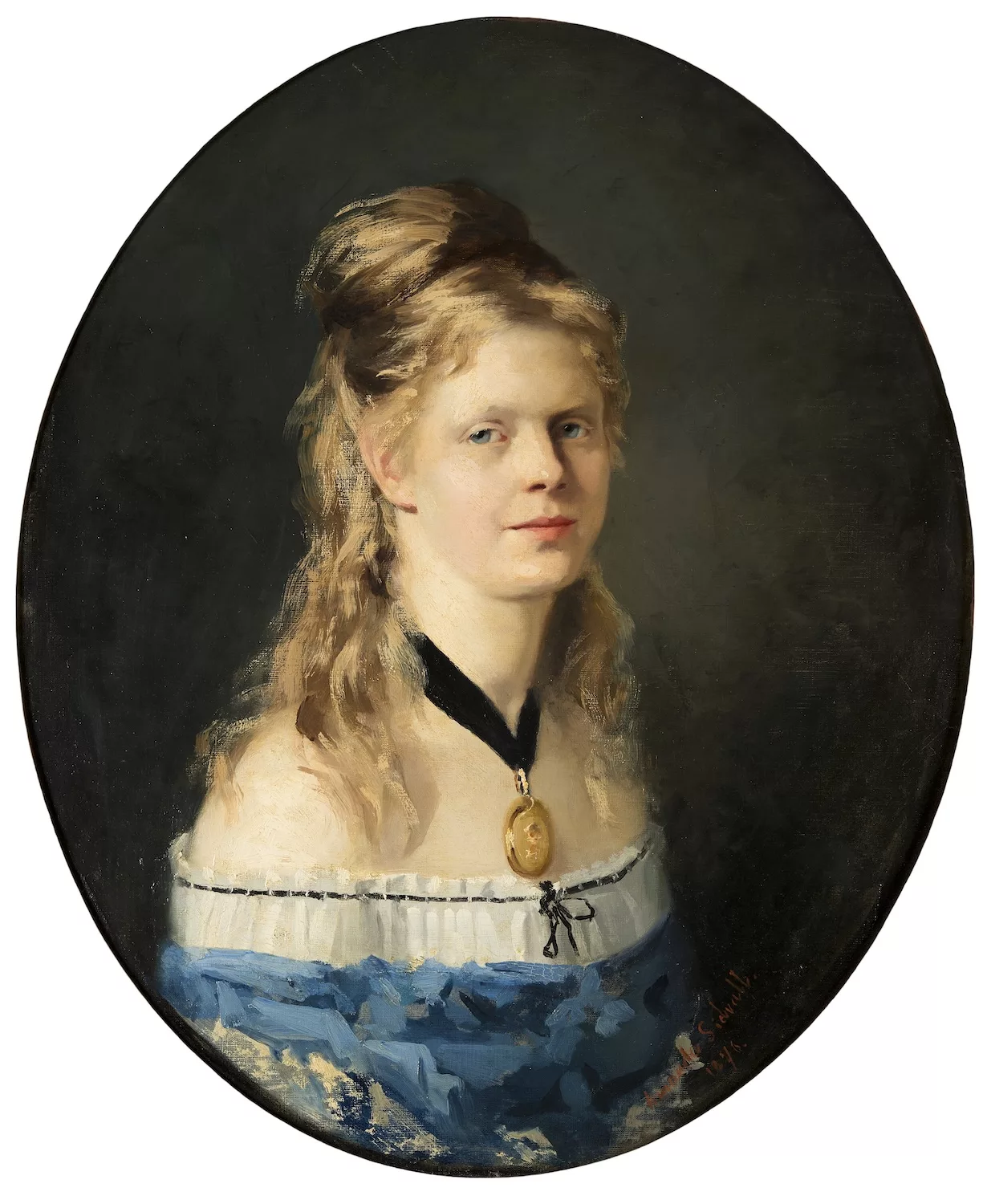
Amanda Sidvall, Portrait de Mina Carlson- Bredberg, the Portrait, 1876, oil on canvas, 73 × 60 cm, Nationalmuseum Sweden
Ahnoff, Lisbet, ”Wilhelmina (Mina) Carlson-Bredberg”, Svenskt kvinnobiografiskt lexikon [Swedish women’s biographical dictionary], November 2020
→Brusewitz-Hansson, Anita. Mina Carlson-Bredberg: Från Lidingö till Björnholmen [Mina Carlson-Bredberg: From Lidingö to Björnholmen], Stockholm: Stockholms Stadsmuseum, 1971
→Rech, Carina, Becoming Artists: Self-Portraits, Friendship Images and Studio Scenes by Nordic Women Painters in the 1880s, Gothenburg: Makadam, 2021
Ett halvsekel som målarinna [Half a century as a painter], Galleri Modern, Stockholm, 1931
→Utställning av Fru Mina Carlson-Bredbergs Målningar [Exhibition of Mrs. Mina Carlson-Bredberg’s Paintings], Sigge Björcks Konsthandel A.B., Stockholm, September 18 – October 7, 1920
Swedish painter.
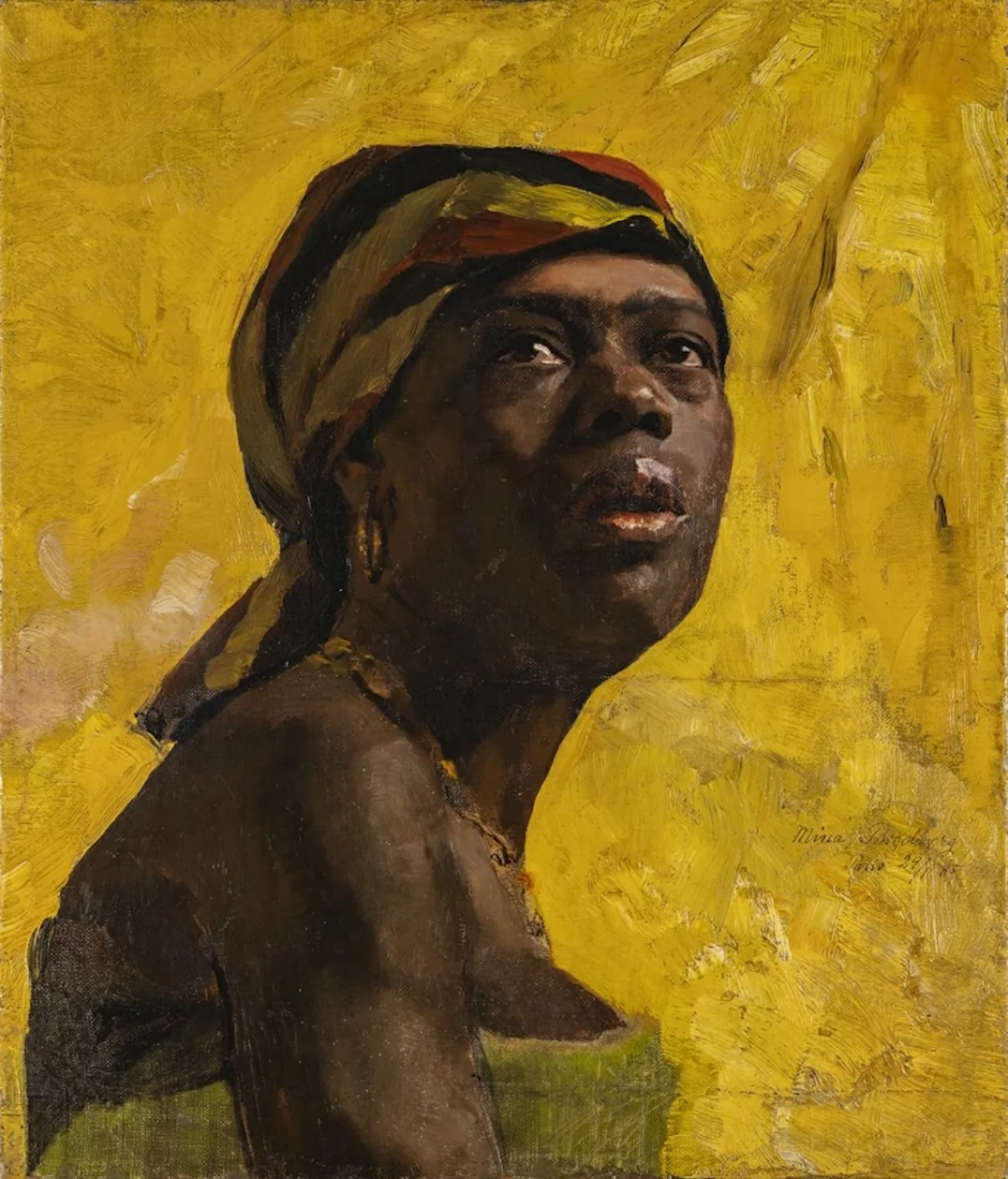
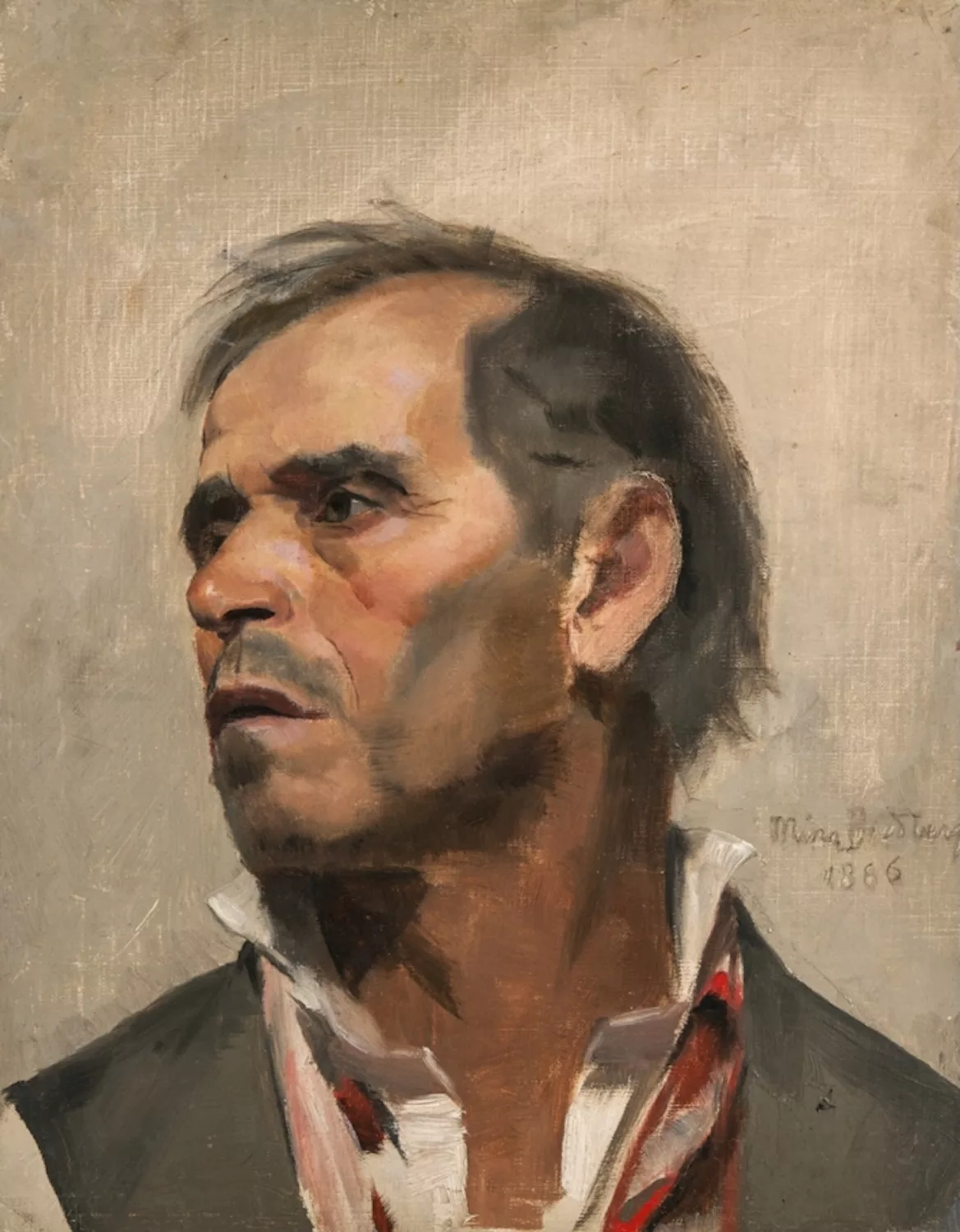
In the 19th century, an increasing number of Swedish painters sought their way to the French capital. Amongst them was the artist Mina Carlson-Bredberg, who was born in 1857 in Stockholm, to a family at the heart of the cultural and political life of the capital. After a brief and unsuccessful marriage, she went to France to study painting at the Académie Julian between 1883 and 1889.
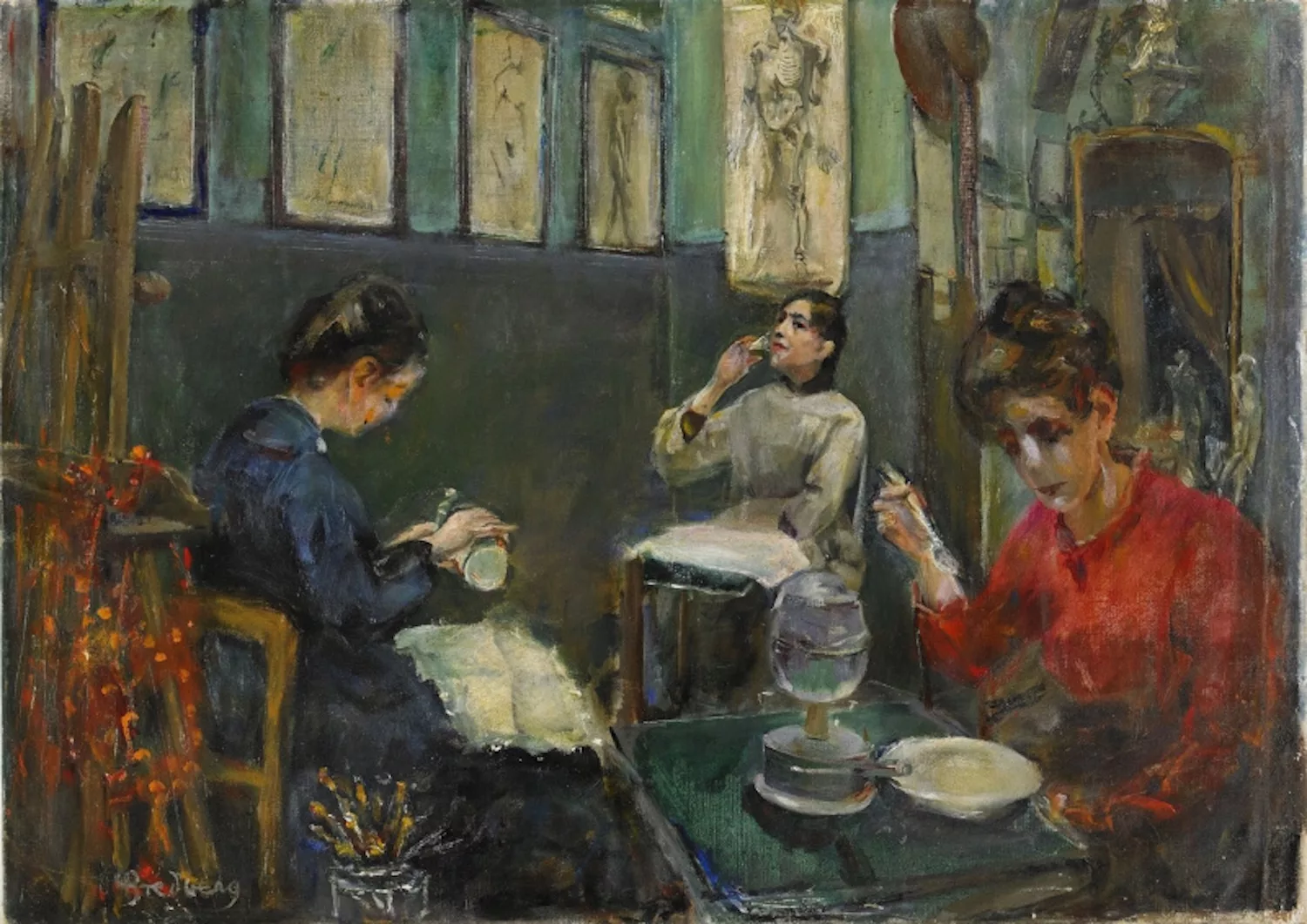
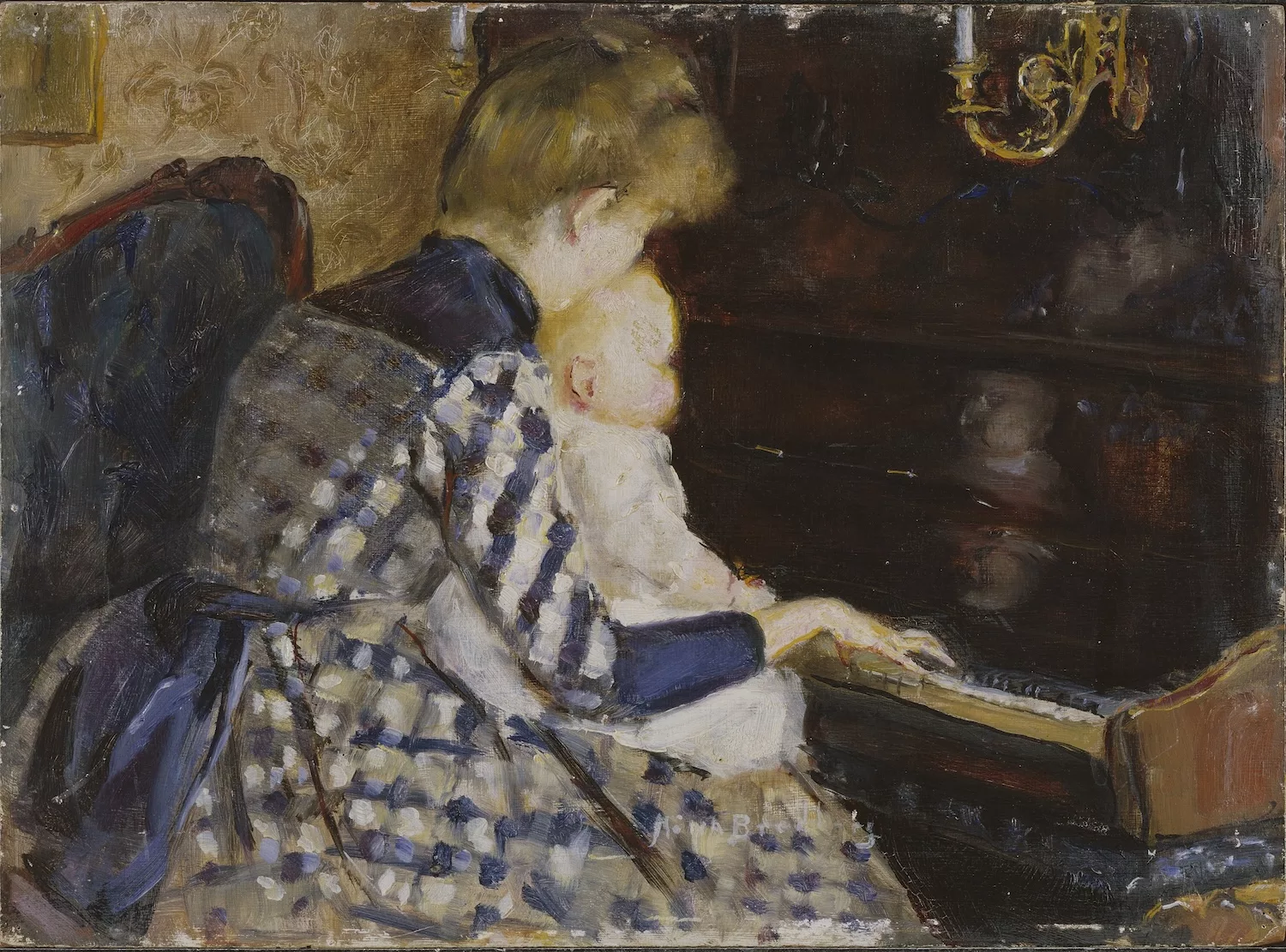
She soon found her place in the art world there, sharing a studio with artists such as Anna Bilińska (1854–1893) and Amélie Beaury-Saurel (1849–1924). M. Carlson-Bredberg captured this creative and competitive milieu in paintings (Académie Julian with Mademoiselle Beson drinking, 1884), sketches and drawings (Atelier Julian, 1884). She won the Académie Julian’s silver-medal for Têtes peintes et dessinées in 1885.
M. Carlson-Bredberg received further education in Italy and the United Kingdom, and upon her return to Sweden she made herself known by the sincerity of her work. After marrying Georg Carlson in 1895, she exhibited internationally in Chicago, London, Copenhagen and Paris, but it is said that she all but abandoned her craft due to her marriage. She remained on the boundary between obscurity and celebrity in art circles, but marked a return to art in 1917 at Liljevalchs konsthall in Stockholm, where she participated in the exhibition organised by the societies Föreningen Svenska Konstnärinnor and Vereinigung Bildender Künstlerinnen Österreich.
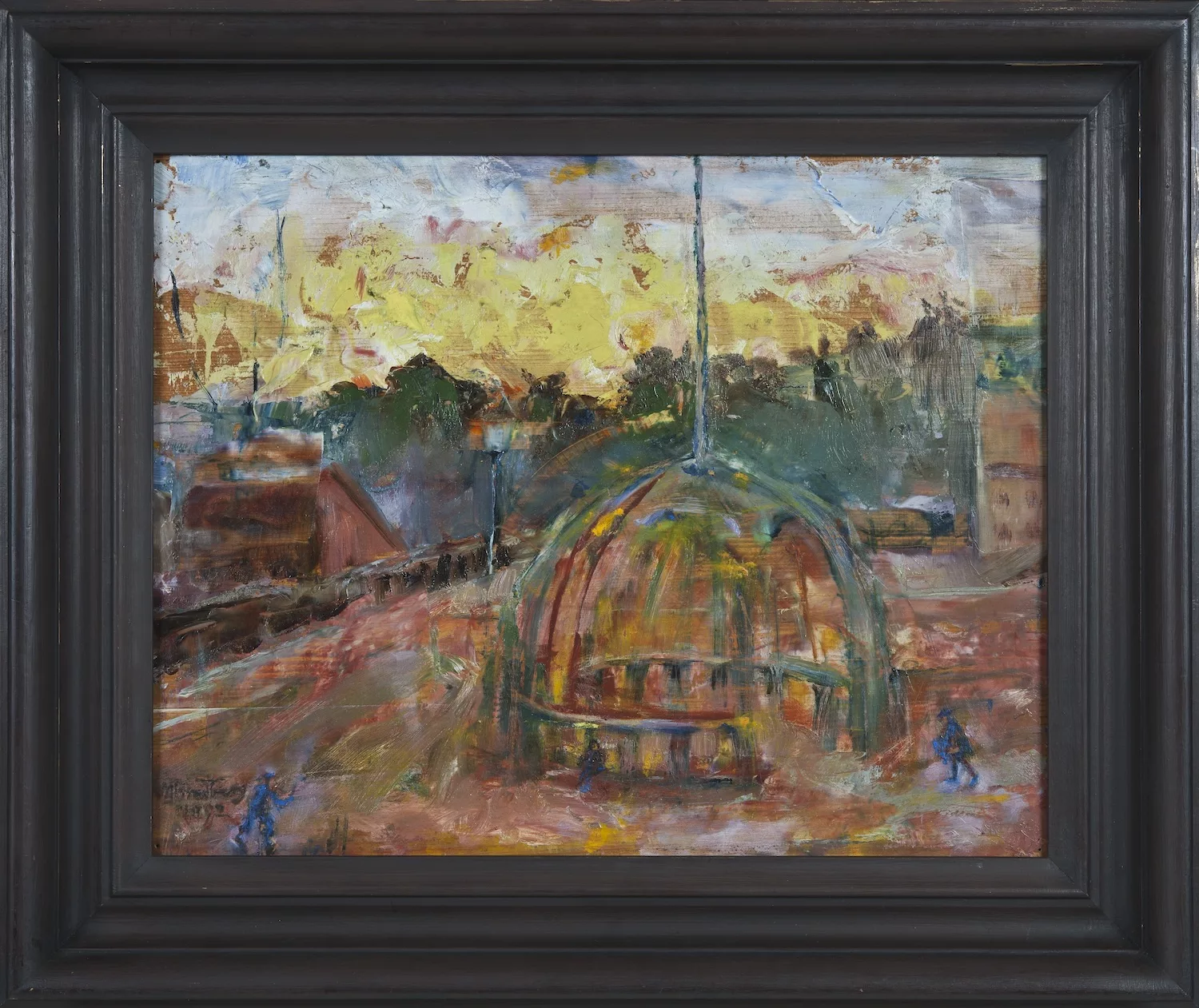
M. Carlson-Bredberg became particularly known for her exploration of the psychology of Queen Kristina of Sweden and Saint Bridget of Sweden in her history paintings (1894). The psychological complexity of her portraits was praised continuously throughout her career. Her brushwork and compositions were variously attributed to the influence of the Venetian school, Jules Bastien-Lepage (1848–1884) and James McNeill Whistler (1834–1903). In later explorations of light and colour in landscapes and cityscapes, her interest in Joseph Mallord William Turner (1775–1851) can be seen. Allegedly, the artist Lewis Foreman Day (1845–1910) introduced her to his work during her time in England, where she found much inspiration in the work of the Arts and Crafts movement.
Her portraits not only tell intriguing stories about her sitters, but also illustrate her extensive transnational artistic network. For example, as a tribute to their close friendship she exhibited a portrait of L. F. Day and his wife Ruth Emma Morrish (1850–1929) in 1892 at the Exhibition of the Anonymous in Stockholm. Under the pseudonyms “New” and “Old”, she showed the portrait of the artist couple as well as a portrait of an Olga Jalensky at her easel (1886), also known as Russian Painter. Olga Zalenska. The portrait of O. Jalensky, dressed in black, reminded one critic of the style of Théodule-Augustin Ribot (1823–1891), and is suggestive of how M. Carlson-Bredberg was not afraid to experiment with technique.
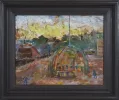
Today her most well-known painting may be her frank and celebrated Self-portrait from 1889, which she exhibited at the Exposition Universelle in 1889 and the New Gallery in 1892. It is now in the collection of Prins Eugens Waldemarsudde.
M. Carlson-Bredberg continued to exhibit her work internationally throughout her career with a particular focus on portraiture, landscapes and scenes from urban life. In Paris at the Salon, she received favourable reviews from Félix Jahyer and Paul Heusy, while in Stockholm in 1927 her Portrait de Mme Esché (1894) caught the eye of critic André Meller.
A retrospective exhibition that marked half a century as a painter was organised in 1931. In the final years of her life, her portraits from the 1880s attracted new audiences in a group exhibition in 1941. M. Carlson-Bredberg remains an important figure in European art at the turn of the last century and her attentive, ardent and searching portraiture continues to find new devotees.
Published in partnership with SMK – National Gallery of Denmark, as part of the exhibition Against All Odds: Historical Women and New Algorithms
© Archives of Women Artists, Research and Exhibitions, 2025