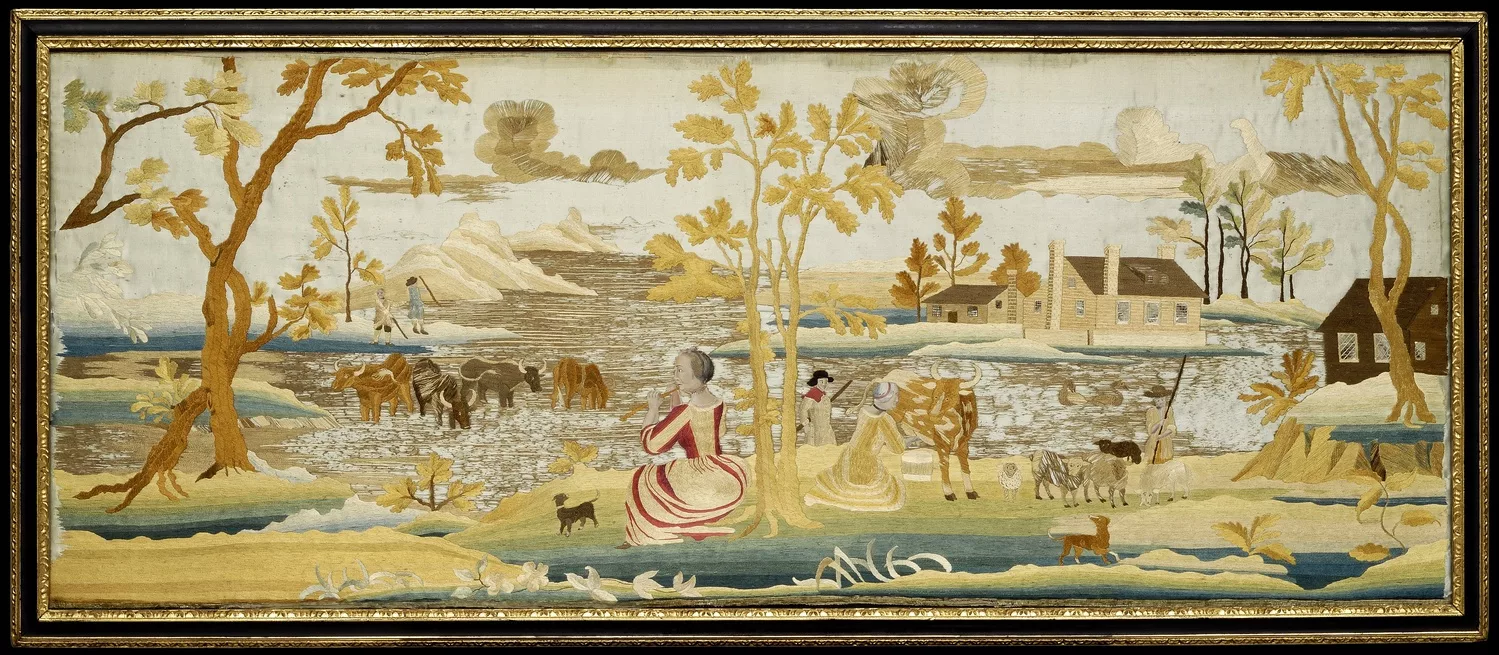
Faith Trumbull, Overmantel, 1754, embroidery, 20 ⅜ × 51 1/16 in. (51.75 × 129.70 cm) (unframed), Connecticut Museum of Culture and History, Hartford, Museum purchase
The period covered by this study begins in 1708, with the arrival in what is now Charleston (South Carolina) of Henrietta Johnston (1674–1729), the first professional artist and pastellist (male or female)1 to practise in the British colonies of North America. It ends during the presidency of Andrew Jackson (1829–1837), in the years preceding the American Civil War. This period was marked by major historical turning points, foremost amongst them the American Revolution and the Declaration of Independence of the United States, whose 250th anniversary is being commemorated in 2026. The invention of photography in 1839 transformed artistic practice and contributed to the decline of miniature portraiture, which had until then been widely practised in the young nation by women artists.
The artists discussed here were descended from European settlers who had established themselves primarily in the northern regions that would later become New England. They were the daughters or wives of members of religious minorities who had fled Europe, or of artisans seeking better opportunities. The younger generation came from families of Euro-American patriots who opposed British interests and those of Indigenous peoples, with the aim of taking their lands. By painting an idealised portrait of the emerging American mercantile and political elite, these artists gave prominence to imperialist expansion and, in doing so, played an active part in constructing the nation’s founding myth.
Although New York, Boston and Philadelphia were thriving cities, most of the colonies remained predominantly rural and only thirty-seven women artists are documented before 1800.2 These women faced considerable obstacles arising from a Puritan religious culture and a patriarchal system that placed the family at the centre of communal life. They were financially dependent on their husbands. Widows and unmarried women were the only exceptions: this opening in the established social order enabled some to fund their own training and achieve professional independence. As in Europe, education was shaped by gender. Most women attended private schools, where they received a basic education alongside instruction in drawing, painting, needlework and other decorative skills. Women aspiring to become professional artists trained with fathers or brothers who were artists, as Sarah Miriam Peale (1800–1885) and her two sisters did, or studied with private tutors, as Faith Trumbull (1743–1775) and Sarah Goodridge (1788–1853) did. Others were self-taught. While men could pursue their training in the capital cities of Europe, women had to rely on printed reproductions, as there were no museums. In 1805, the founding of the Pennsylvania Academy of the Fine Arts (PAFA), which combined an art school and a museum, went some way towards filling this gap. Works by women artists began to feature in its exhibitions in 1811. S. M. Peale and Anna Claypoole Peale (1791–1878) became the first women to be elected to the academy in 1824.
After completing their studies, some women worked alongside their husbands, like Ellen Sharples (1769–1849), while others, such as Mary Way (1769–1833), shared a studio with their sisters, giving them greater freedom to seek commissions. Some also opened schools for girls. M. Way, for instance, ran a drawing school in New York from 1811 to 1818.
The transition from colony to nation brought a structural paradox into focus. The young republic recognised women’s significant responsibilities and leading cultural role, thereby enhancing the status of their education. Yet this apparent openness was not intended to increase their autonomy, but rather to reinforce the patriarchal system. Women’s education was, in effect, driven by the need to raise future citizens who were cultivated and refined, in keeping with the concept of “Republican Motherhood”, while women continued to be denied political citizenship. Artistic talent was viewed in much the same way: it was considered a desirable quality in a woman, provided it remained compatible with her domestic role.
Faith Trumbull, Overmantel, 1754, embroidery, 20 ⅜ × 51 1/16 in. (51.75 × 129.70 cm) (unframed), Connecticut Museum of Culture and History, Hartford, Museum purchase
F. Trumbull’s embroidery is an example of such devotion to patriotic ideals. She was the daughter of one of the heroes of the American Revolution and the sister of painter John Trumbull (1756–1843). She learnt canvas-work embroidery at Elizabeth Murray’s renowned school in Boston. Her finely crafted works depict rural landscapes or biblical scenes imbued with patriotic meaning. They are primarily worked on silk satin, with the faces, arms and hands painted in gouache. F. Trumbull devised her compositions herself rather than simply reproducing seventeenth-century engravings from her collection. Her idyllic landscapes celebrate a natural world made fertile and productive through arduous labour guided by the Protestant work ethic. The pastures needed to raise livestock on her family’s farm were created through deforestation, which was then regarded as an improvement upon nature. Her work thus reflects the agricultural practices of the period and the ongoing transformation of ecosystems. It celebrates her family’s social standing while depicting the transmission of wealth3 from one generation to the next. These horizontally oriented embroideries were designed to adorn chimney pieces and were displayed in the semi-public space of the home, where Connecticut’s most influential men gathered. F. Trumbull’s life was short, marked by bereavement and severe depression, which led her to take her own life in 1775, at the age of thirty-two.
Although the prospect of challenging the status quo seemed remote at the time, some voices did speak out against the prevailing opinion. Foremost amongst them was Abigail Adams, who, in a letter written in March 1776, urged her husband, John Adams, not to forget women as he helped establish the new government: “Do not put such unlimited power into the hands of Husbands. If particular care and attention is not paid to the Ladies, we are determined to foment a rebellion, and will not hold ourselves bound by any Laws in which we have no voice or Representation.”4 In August of the same year, she complained about the lack of educational opportunities afforded to women, threatening to submit a petition to Congress. The caustic reply from her husband, the future president, suggests just how essential women’s subordinate status was considered to be in maintaining order during the revolutionary transition.5
In this context, portraiture was the only genre considered acceptable for women artists, preferably in small formats. Between 1750 and 1840, miniature portraiture became particularly popular for its intimate, refined character and portability. Miniaturists could respond quickly to private patrons keen to assert their social standing. The technique also required little space or equipment, which was relatively expensive to import from England at the time. Yet this apparent advantage came at considerable cost, confining women artists to the least profitable sector of the art market.
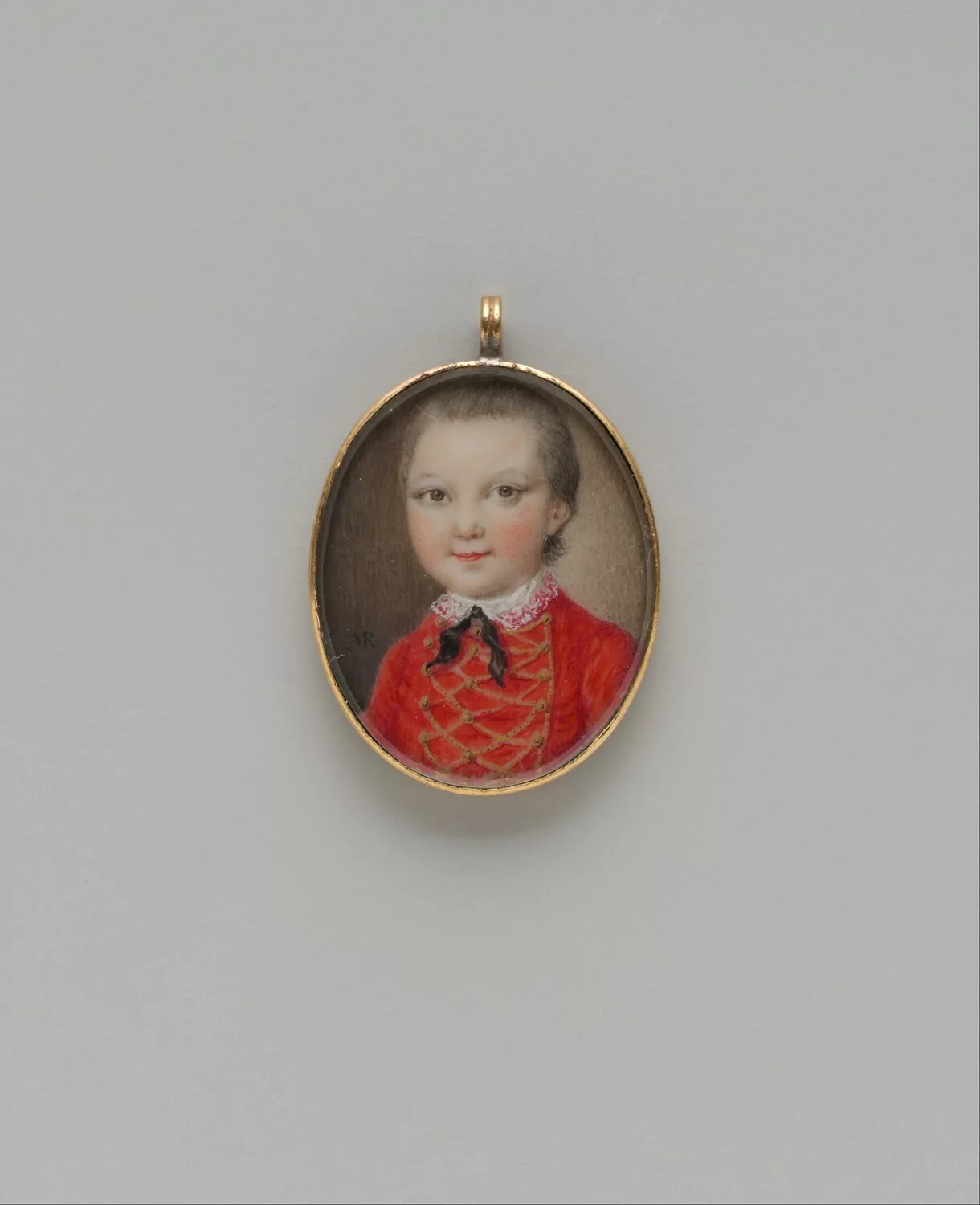
Mary Roberts, Williams Middleton, c. 1752-58, watercolor on ivory, 1 ½ × 1 in. (3.8 × 2.5 cm), Metropolitan Museum of Art, New York, purchase, Dale T. Johnson Fund and Jan and Warren Adelson Gift, 2007
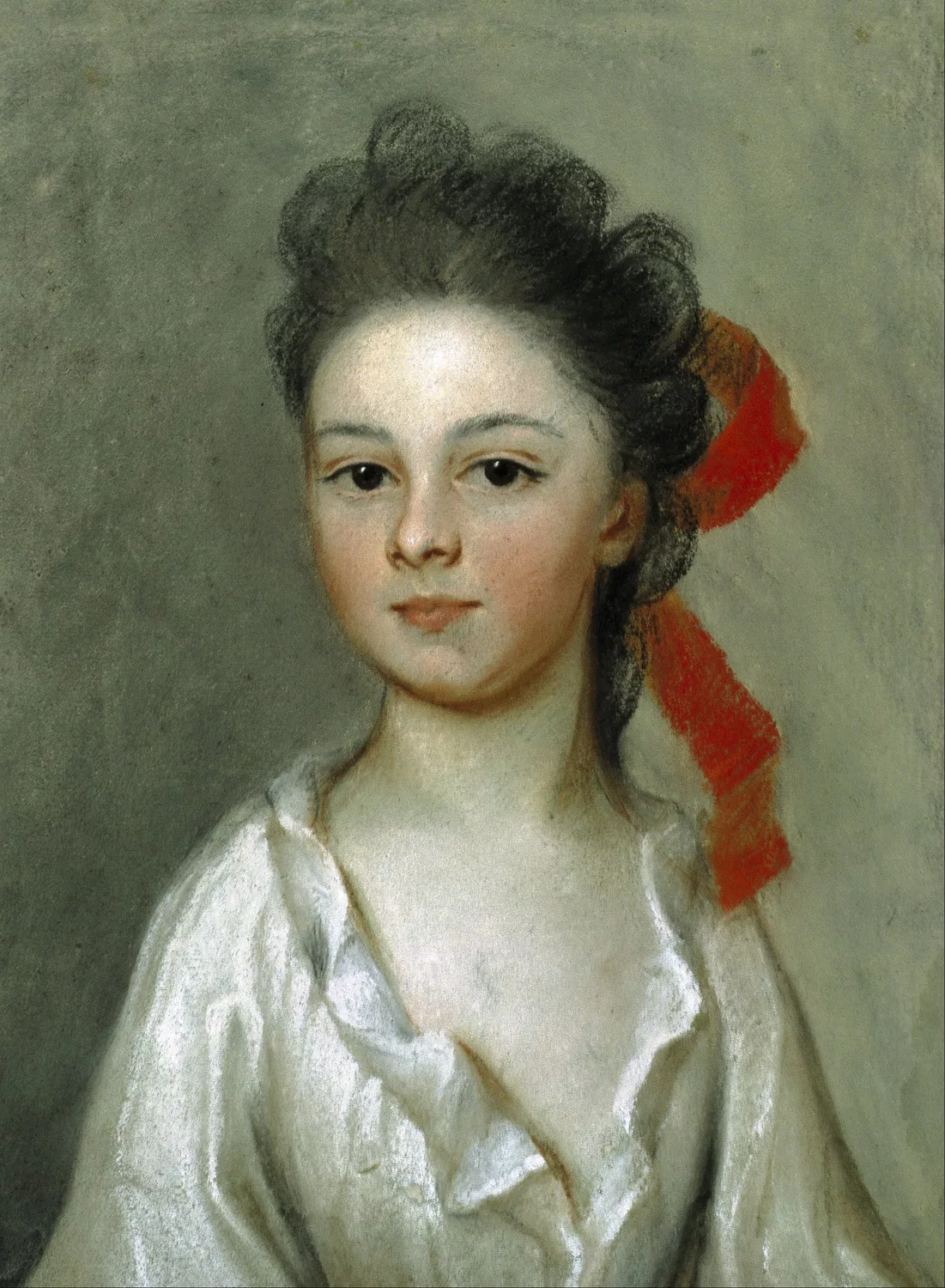
Henrietta Johnston, Henriette Charlotte Chastaigner (Mrs. Nathaniel Broughton), 1711, pastel on paper, 11 ¾ x 9 in., Gibbes Museum of Art, Charleston, gift of Victor A. Morawetz, 1938
The first female portraitists to emigrate from Britain to colonial North America were H. Johnston and Mary Roberts (1726–1815). Having trained in Europe, they arrived in South Carolina in the early eighteenth century with their husbands, both clergymen sent on missions by the Church of England. Their skills as portraitists helped sustain financially precarious households, and both were widowed with children still to support. They were in great demand amongst the emerging class of plantation owners, who sought to cultivate an idealised image of themselves as sober and austere. M. Roberts, who appears to have been the first artist to produce miniature portraits professionally in watercolour on ivory, was renowned for her depictions of plump, fair-skinned, fair-haired children, with rosy cheeks and lips and delicate smiles. A gifted pastellist, Henrietta Johnston portrayed the local elite of Charles Town and members of the Huguenot community, to which she herself belonged. Her sitters are depicted in straightforward poses and contemporary dress: women in understated gowns and men in formal attire. Her palette favoured natural earth tones and plain backgrounds, probably owing to the limited availability of pigments. On a return voyage from England, where she had gone to replenish her art supplies, Johnston narrowly escaped death when her ship was attacked by pirates.
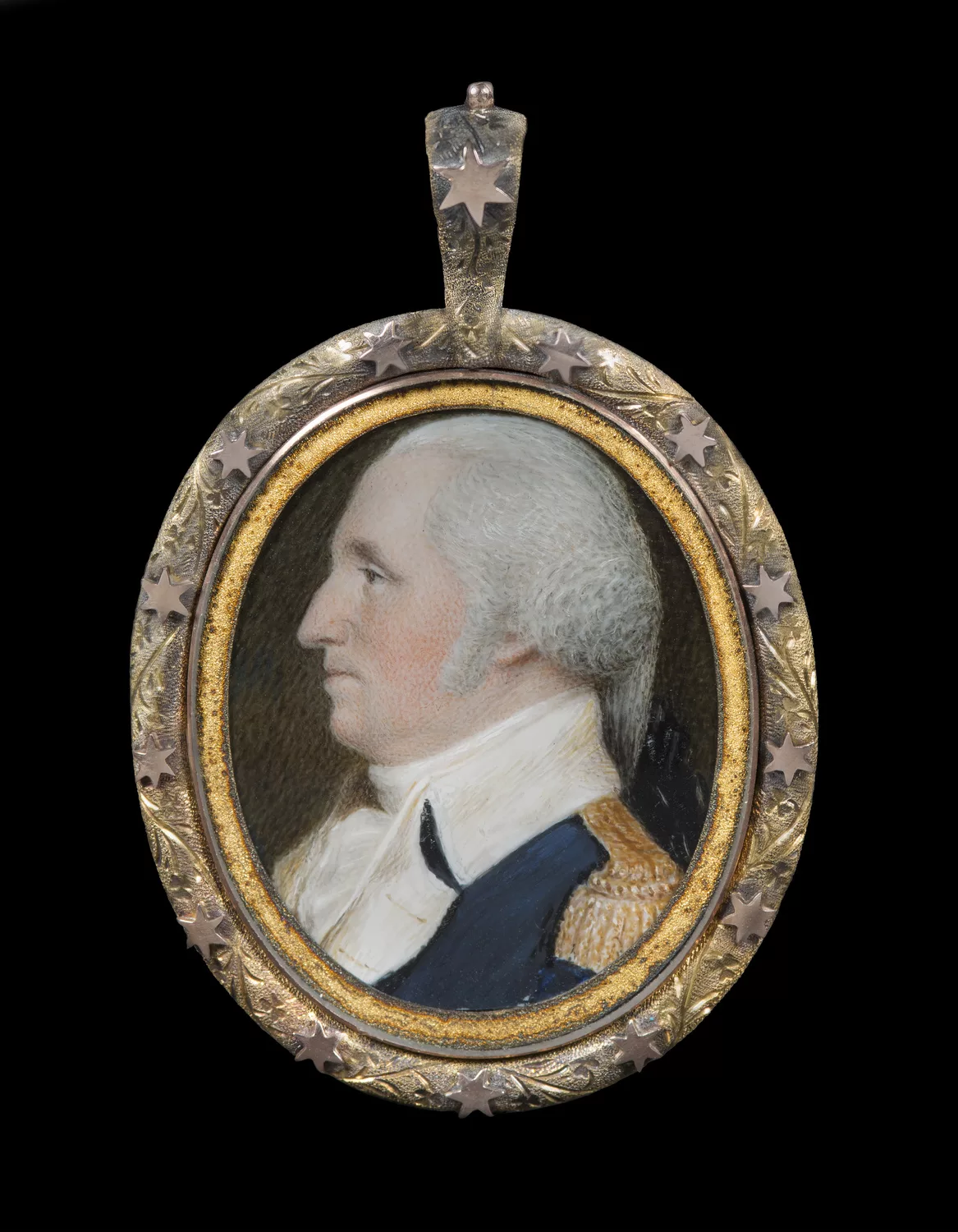
Ellen Sharples, George Washington, c. 1796., watercolor on ivory (?), gilt copper, glass, silk, 2 1/2 × 1 5/8 × 3/16 in. (6.35 × 4.13 × 0.48 cm), George Washington’s Mount Vernon Museum, Mount Vernon, gift of Katherine Merle-Smith Thomas, 2010, Courtesy of The Mount Vernon Ladies’ Association
To meet the sustained demand for portraits, James and Ellen Sharples also left England in 1794 for Washington, where they established a thriving practice. James (1751/52–1811) concentrated primarily on portraits of American politicians, including George Washington and James Madison, while Ellen produced copies of his works on commission. Offering an alternative to the imposing, formal oil paintings of Gilbert Stuart (1755–1828), John Singleton Copley (1738–1815) and John Trumbull, their small-format pastels made a significant contribution to the development of the portrait market in the young federal republic, while also serving as effective promotional tools. As competition in this increasingly crowded market intensified, the constant search for commissions led James and Ellen Sharples to adopt an almost itinerant way of life. The style of the two artists’ pastels is so similar that it is difficult to distinguish their respective works, particularly as their early ones are unsigned. Alongside producing copies, Ellens also created miniatures on ivory and undertook embroidery, including an unusual needlework portrait of George Washington in 1796.6
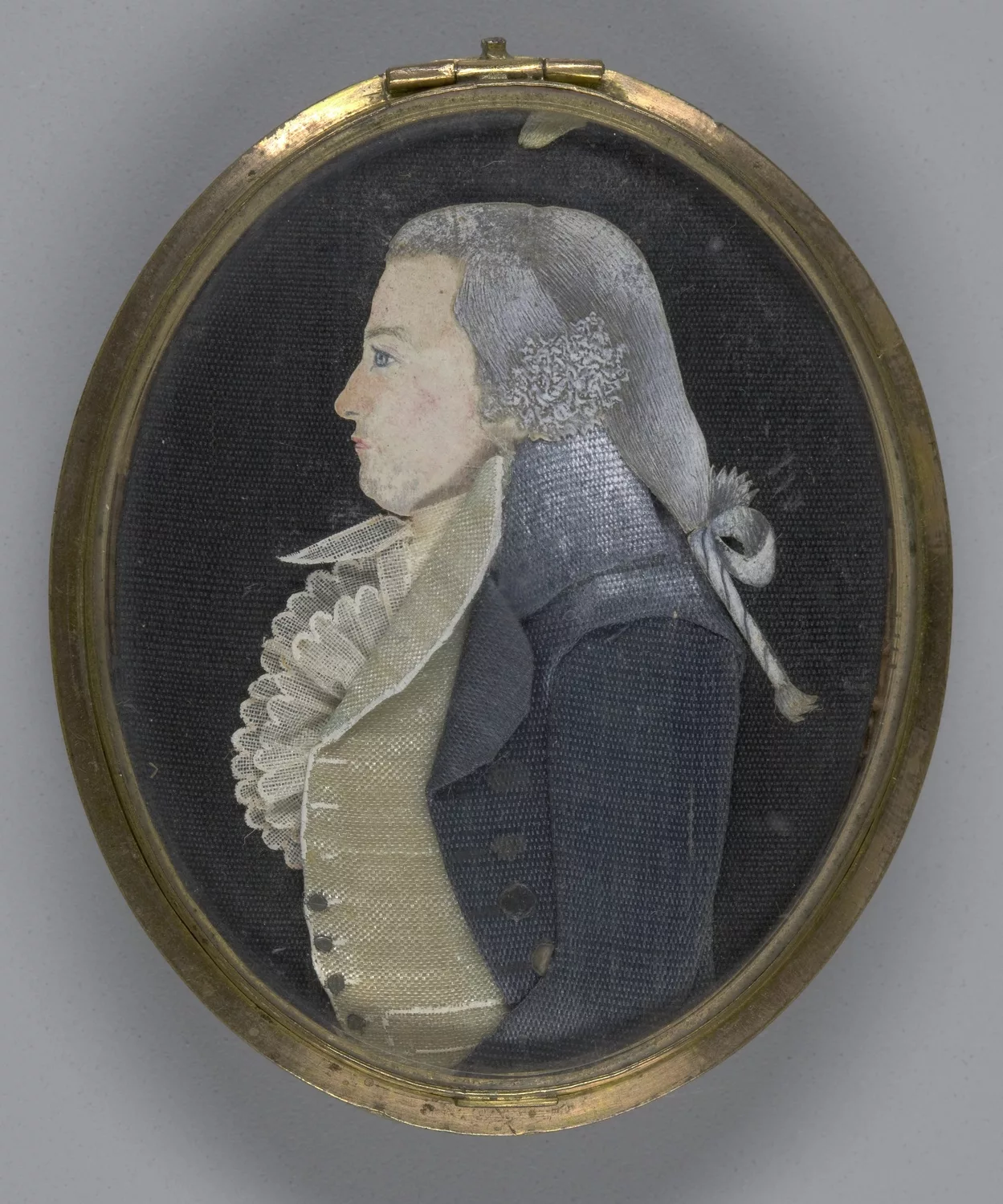
Mary Way, Gentleman, c. 1800, collage-applique on fabric, 2 5/8 × 2 in. (6.7 × 5.1 cm), Yale University Art Gallery, Lelia A. and John Hill Morgan Collection
The relationship between textile arts and portraiture gave rise to some original experiments. Born in New London, Connecticut, the Way sisters developed “dressed miniatures” between 1790 and 1805, combining watercolour, textile collage and embroidery. The sitter’s face, painted on paper and cut out in profile, was attached to a bust made from actual pieces of fabric, ribbons, lace and trimmings, which recreated the details of their clothing. By doing this, the Way sisters transformed what were regarded as “feminine accomplishments” into an artistic technique that could be practised professionally for payment. M. Way never married. Unlike her sister Elisabeth, who remained in Connecticut with her family, she moved to New York at the age of forty-two to promote her art. In a letter to her sister, she expressed her opinion of her own abilities: “I have seen but few equal, and none superior to my own – concluding therefore I had nearly arrived at perfection. I very modestly set myself down as a first rate genius.”7 Within a few years, she had established a substantial network of contacts and, in 1818, exhibited two works at the American Academy of Fine Arts. Nevertheless, she never succeeded in securing fair remuneration for her work.8
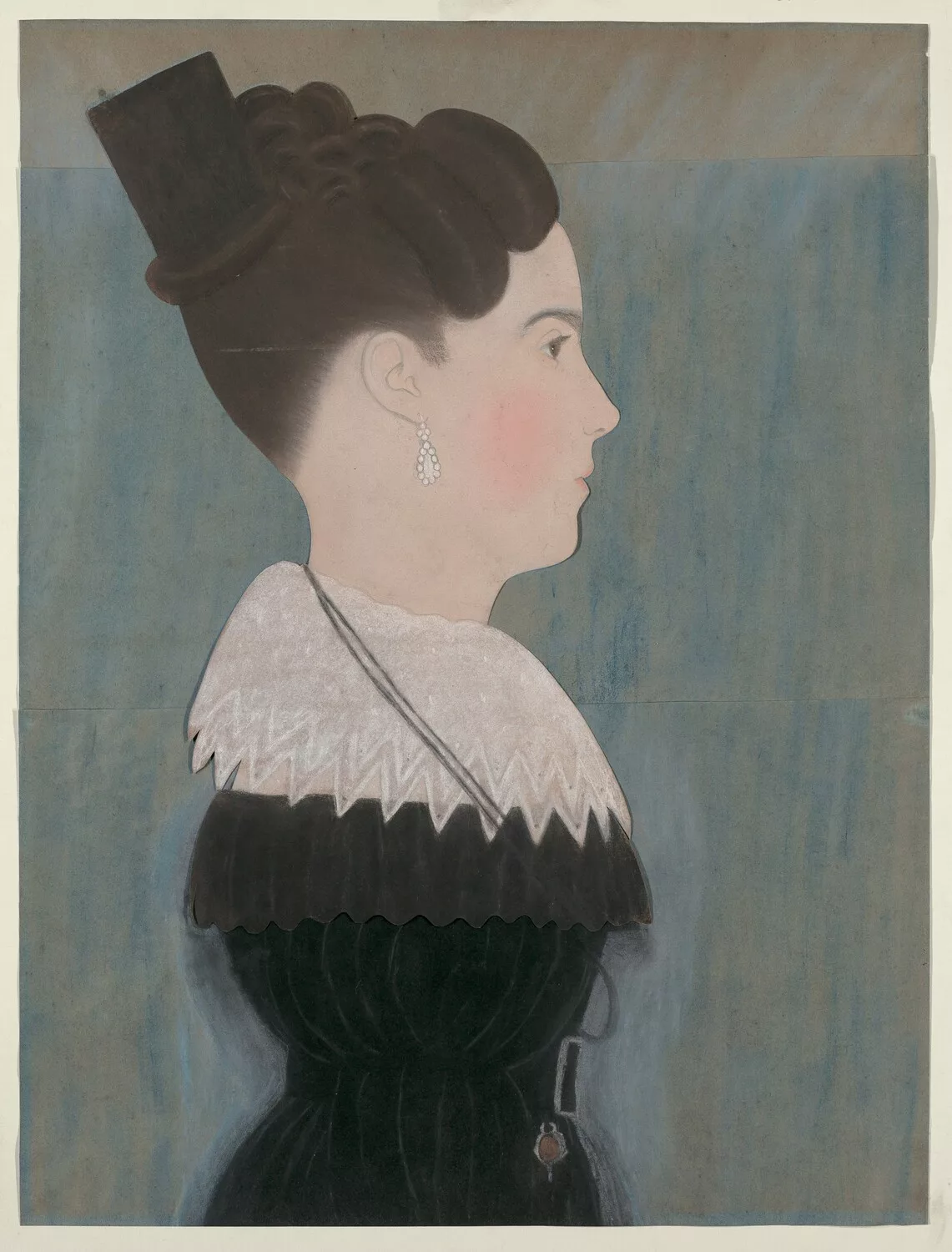
Ruth Henshaw Bascom, Mrs. Williams Waters, c. 1825-30, pastel and graphite with watercolor on four sheets of adhered paper (cut paper silhouette), 24 15/16 × 18 ⅞ in. (63.4 x 47.9 cm), National Gallery of Art, Washington, D.C., gift of Edgar William and Bernice Chrysler Garbisch, 1980
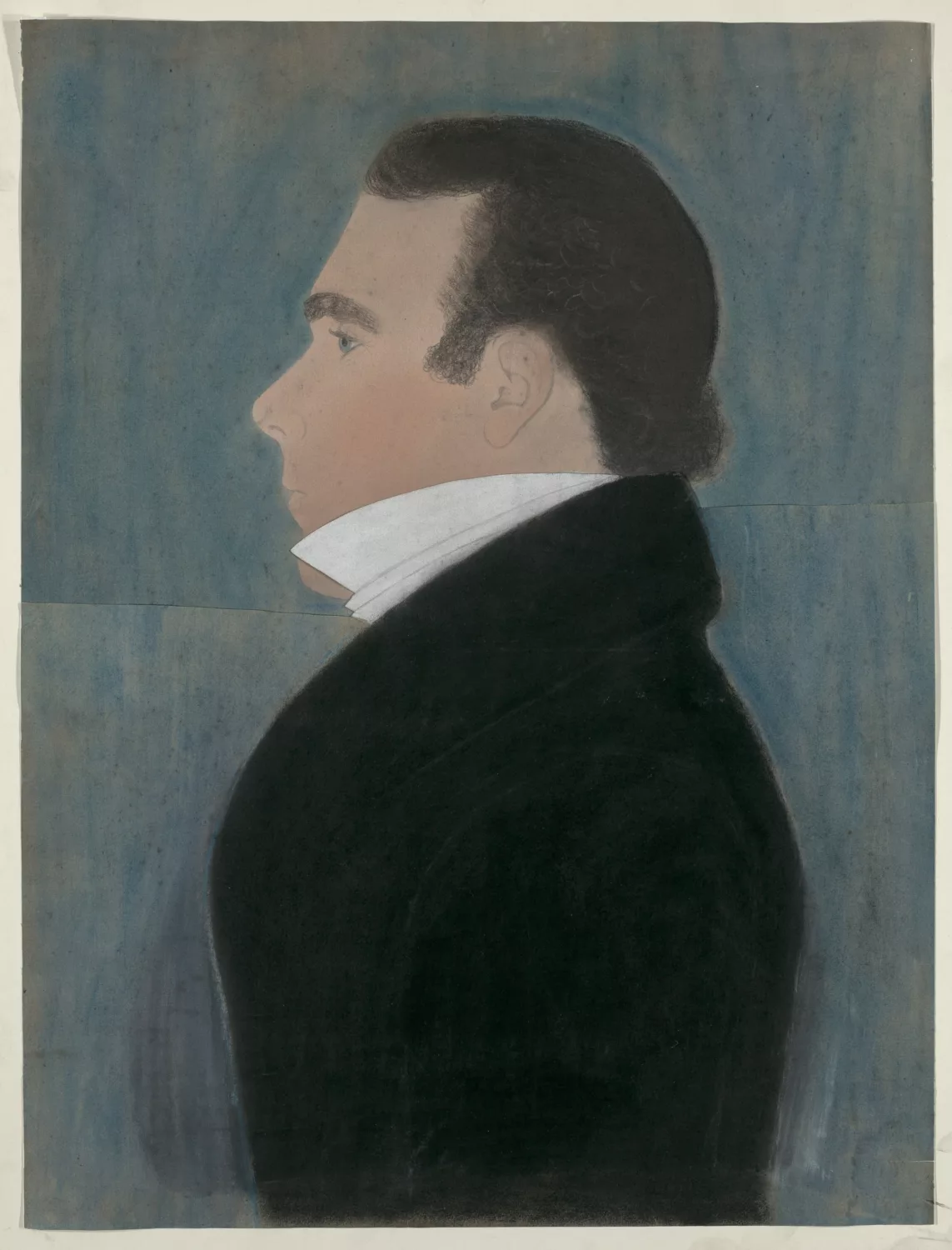
Ruth Henshaw Bascom, Mr. Williams Waters, c. 1825-30, pastel and graphite with watercolor on four sheets of adhered paper (cut paper silhouette), 24 15/16 × 18 ⅞ in. (63.4 × 47.9 cm), National Gallery of Art, Washington, D.C., gift of Edgar William and Bernice Chrysler Garbisch, 1980
Ruth Henshaw Bascom (1772–1848), from Massachusetts, developed a form of mixed-media portraiture between 1820 and 1830, combining pencil and pastel with paper cutting and collage, as well as the application of clothing elements and decorative details in metal leaf. The sharply defined profile, derived from the silhouette technique, lends the work a strikingly modern graphic quality.
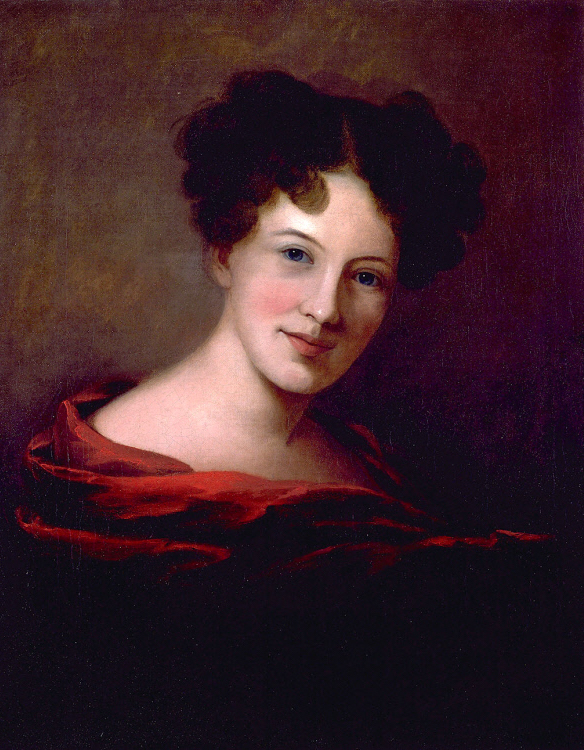
Around the same time, S. M. Peale and S. Goodridge each produced a self-portrait that stands as a powerful statement of artistic intent. For S. M. Peale, painting was a means of asserting her identity and shaping her image as an artist, while S. Goodridge’s work was an exploration of the representation of her own naked body. Unlike the two sisters who specialised in miniature portraiture, S. M. Peale chose to devote herself to large-format oil portraiture, thereby rivalling her male counterparts. In her Self-Portrait of 1818, painted when she was eighteen, she faces the viewer directly, her gaze meeting theirs. S. M. Peale never married. Her portraits were much sought after by politicians who frequented her studio, first in Baltimore and, from 1847 onwards, in St Louis.
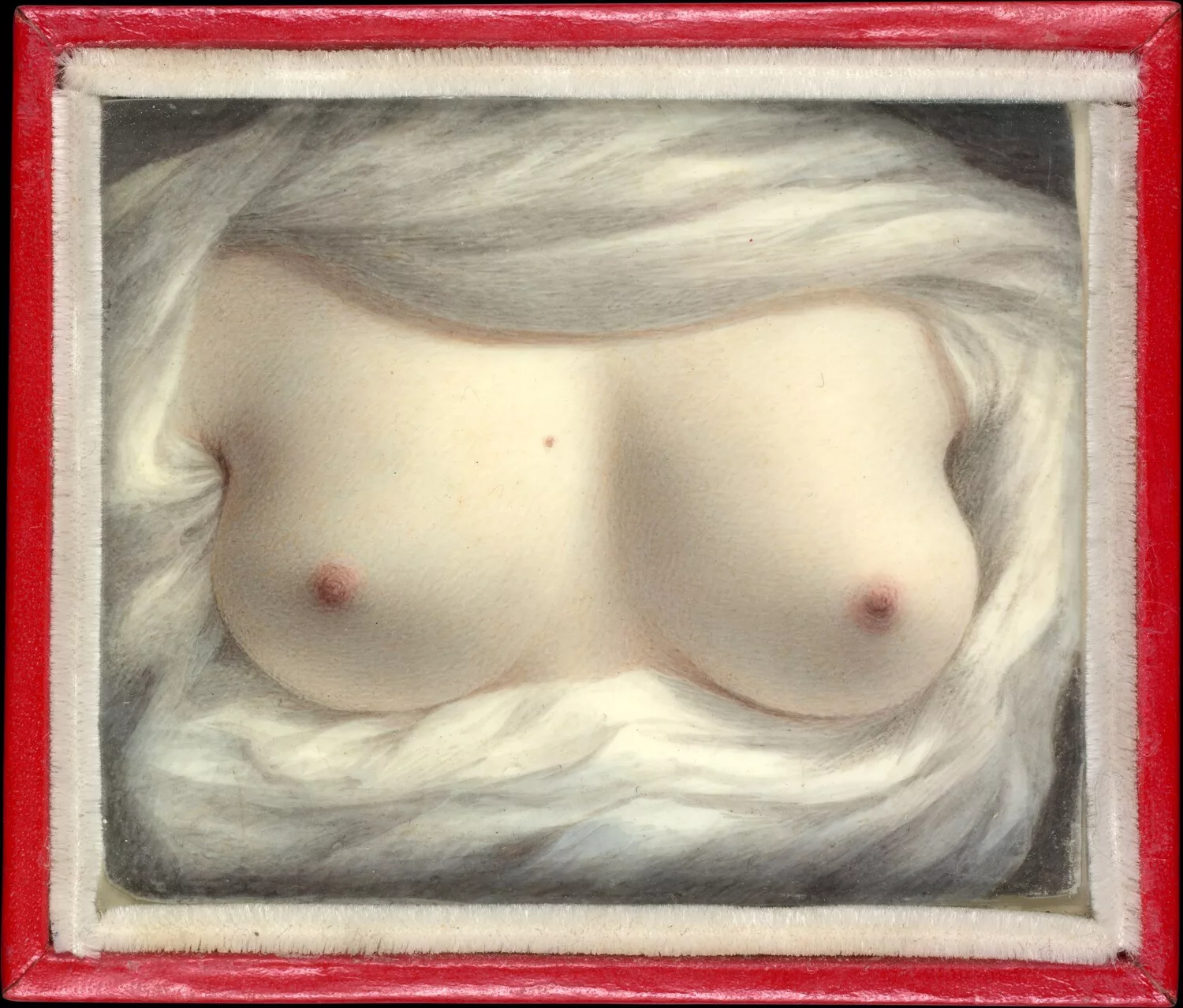
Sarah Goodridge, Beauty Revealed, 1828, watercolor on ivory, 2 ⅝ × 3 ⅛ in. (6.7 × 7.9 cm), Metropolitan Museum of Art, New York, gift of Gloria Manney, 2006
S. Goodridge also remained unmarried and pursued a career in Boston as a miniaturist. Her work Beauty Revealed, painted in 1828 when she was forty, is a self-portrait unlike any other, particularly in the Puritan context of the time. In this miniature on ivory, intended for private viewing, the artist depicts her bare breasts frontally, framed by a white cloth like jewels in a case. S. Goodridge gave the work to Senator Daniel Webster, who had recently been widowed. Although the nature of their relationship cannot be established, the decision to depict and present her own bare breasts was a bold one, as was the title of the painting. The luminous quality of the skin against the ivory support, the milky whiteness and firm appearance of the flesh, and the extraordinary precision of the strokes combine to create an eroticised and idealised image in which the artist is both painter and sitter. She alone determines how her body is presented to the viewer. Beauty Revealed thus introduced a form of self-representation that was unique for its time. The miniature’s private purpose and intimate nature created a space for freedom and transgression that would otherwise have been unimaginable.
Lucia Pesapane is an Art Historian and curator specializing in the promotion of women artists from the 19th century to the present. After her degree in Art History from the Faculty of Arts and Humanities of Milan, she began her career at the Centre Pompidou in the Department of Modern and Contemporary Art. A leading expert on Niki de Saint Phalle, she has curated major exhibitions worldwide. Formerly Head Curator at the Monnaie de Paris, she now works independently on museum and editorial projects, focusing on rediscovering overlooked women artists. She has recently curated the show “Women Artists of the American West” at the Jackson Hole Museum, Wyoming.