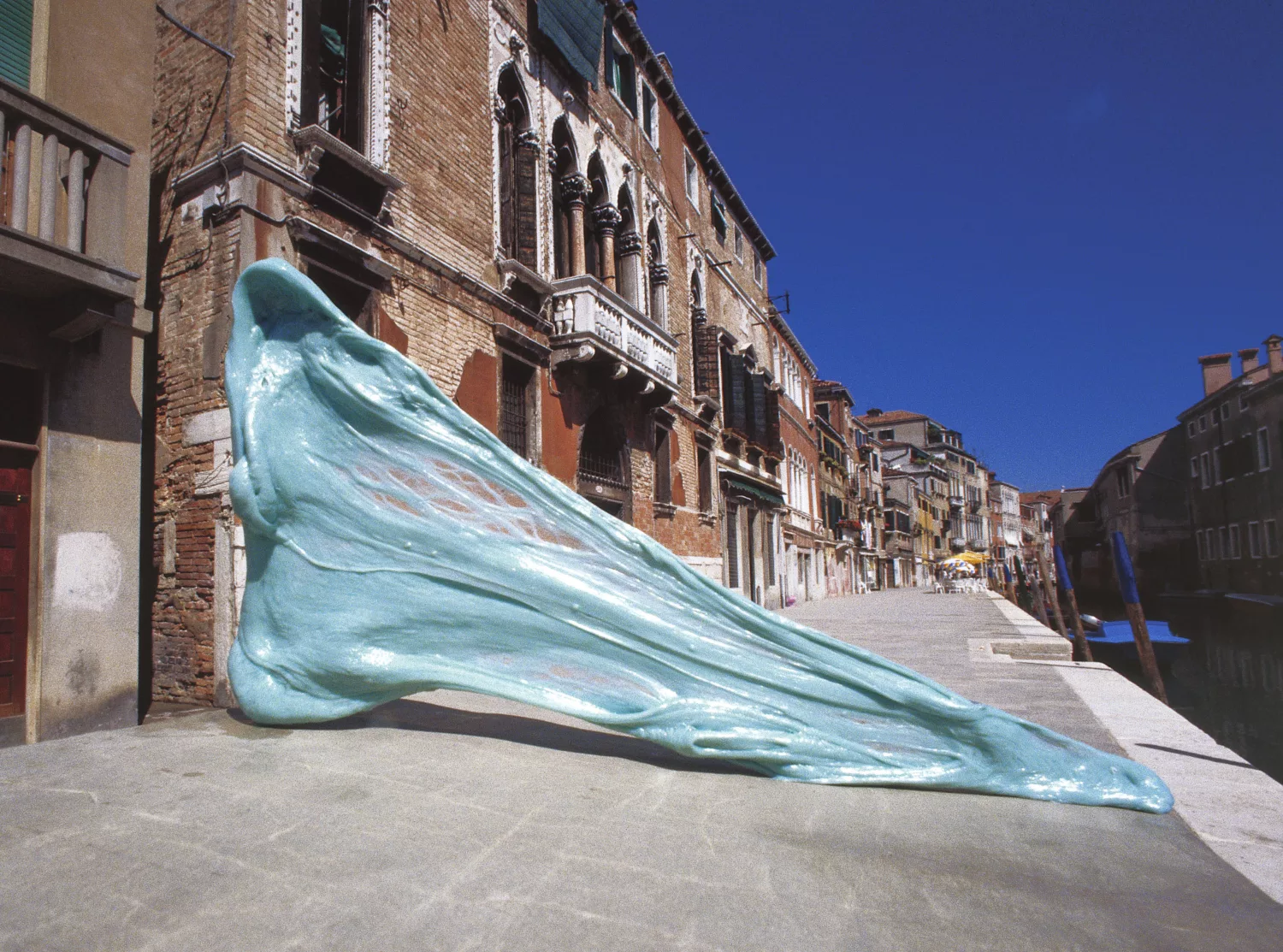
Simone Decker, Chewing in Venice, 1999, 2 series of 15 photographs, Ilfochrome Classic on Dibond, each 67 x 98 cm, Venice, 48th Biennale © Courtesy Simone Decker, © Adagp, Paris, 2026
This article will offer a global perspective on the particularities of Luxembourg between 1919 and 2025 with regard to women artists. Starting in 1919, after the First World War, the history of women artists in Luxembourg slowly took shape as both a reconstruction and an emancipation, specifically through a growing structuring of the artistic landscape. More and more salons appeared each year, as well as prizes and some public commissions, all within the context of a singular cultural geography. Luxembourg is a small, multilingual territory, an enclave traversed by the circulations of Europe. It is worth noting that this very specific configuration has proved a hindrance to artistic careers, especially for women from working class backgrounds, who were simply barred from access. Yet the post-war period was marked by an unexpected acceleration which would take the country from the gradual development of institutional grants to a national pavilion at the Venice Biennale by the end of the 1980s and, today, to the increasingly flexible presence of a number of contemporary institutions.
As in many European countries, the years between 1919 and 1938 saw an emancipation and a certain liberalisation in women’s lives and rights, a situation that would continue during the Second World War. The first women artists with career trajectories in Luxembourg began to emerge in the interwar period around the Cercle Artistique de Luxembourg (CAL), founded in 1893, and its salon, still active today. A prominent example is the artist and poet Lily Unden (1908–1989), one of the period’s emblematic figures. Trained in Brussels, Paris and Strasbourg, before the war she regularly exhibited at CAL before joining the Resistance and being deported to Ravensbrück. Upon her return in 1945 she began teaching drawing and painting in various secondary schools, all while pursuing her artistic career and creating a body of work (still lifes, mainly bouquets, and landscapes as well as illustrations) that would become a national reference point. Her trajectory combines artistic practice with pedagogy and a commitment to collective memory. It demonstrates how the recognition of women artists has long been conveyed by para-artistic channels, notably in and through education and civic memory. The purely institutional model would remain dominated by men, with women a minority until the 1970s.
From 1945 to 1968, the professionalisation of women in art continued to evolve and their work slowly gained visibility. Certain opportunities appeared: the Prix Grand-Duc Adolphe, created in 1902 and given to an artist or artists exhibiting at the CAL Salon, was awarded to women laureates beginning in the interwar period, and particularly after 1945, including Charlotte Engels (1920–1993) in 1952 and Yola Mersch-Reding (1927–) in 1963. The prize had been conceived by Grand Duchess Marie-Adélaïde (1894–1924), herself a painter, and would play a symbolic role in the legitimisation of women creators. Following the war, the careers of women artists contributed to the country’s reconstruction in two ways: through art education and via public commissions and salon participation. Though their visibility remained restricted and their presence on the local art market anecdotal, some individuals would nonetheless succeed in making a name for themselves thanks to cross-border networks (Belgium, France, Germany) and national prizes. This period saw the consolidation of the figure of the ‘polyvalent’ Luxembourgish woman artist who circulated between studio, school, group exhibition and crafts, a model that would establish itself in Luxembourg over the longer term.
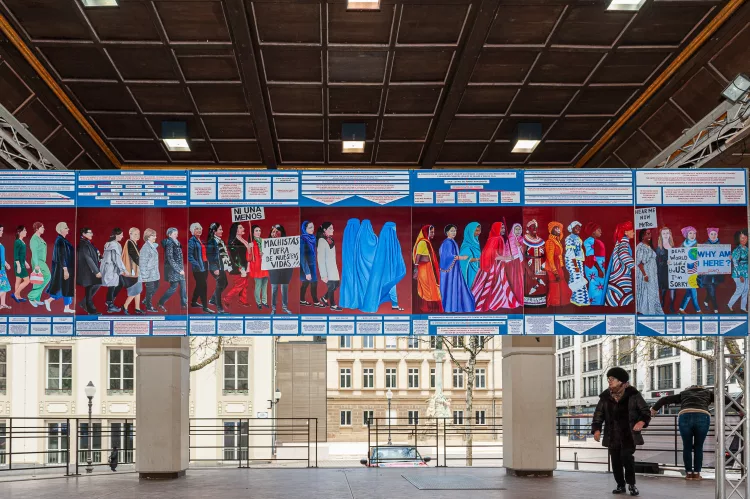
The period between 1968 and 1990 marked the arrival of the contemporary and the irruption of feminism. The end of the 1960s was a turning point. In 1969, Berthe Lutgen (1935–) inaugurated the practice of happenings in Luxembourg and in 1971 helped found the Women’s Liberation Movement (MLF) and the Groupe de Recherche d’Art Politique (GRAP). In her work, pictorial practice is explicitly linked with the communist feminist struggle, from the perspective of women’s rights and bodies as well as the violence they experience. For subsequent generations it would come to represent a point of reference. In La Marche des femmes [Women’s Strike, 2017–2019] Berthe Lutgen affirms a deeply political practice. Today, the artist’s work is displayed in museums across the country, and in 2022 she was awarded the Ministry of Culture’s Lëtzebuerger Konschtpräis.
In parallel to this, in the 1980s Luxembourg would begin to develop a more consistent approach to cultural policy, notably through the 1982 creation of the Fonds Culturel National (FOCUNA), later to be joined by Kultur | lx – Arts Council Luxembourg in 2020. In an art market with little room for manoeuvre these two structures would provide crucial support for women artists often less connected to commercial circuits.
Simone Decker, Chewing in Venice, 1999, 2 series of 15 photographs, Ilfochrome Classic on Dibond, each 67 x 98 cm, Venice, 48th Biennale © Courtesy Simone Decker, © Adagp, Paris, 2026
Between 1990 and 2006, Luxembourg initiated a clear internationalisation of its art scene which saw the appearance of various important spaces. In 1996, the Casino Luxembourg – Forum d’art contemporain became the country’s leading art centre with a programme resolutely focused on experimentation and on emerging artists, for whom it would be of decisive assistance. Simone Decker (1968–) stands out in particular. Her participation in the 1999 Venice Biennale with her series of photographs Chewing in Venice, in which giant pieces of chewed gum invade the city in a trompe-l’oeil effect, was a now almost canonical artistic gesture, a point of departure for a generation that would begin to consider spaces and institutions with greater irony.
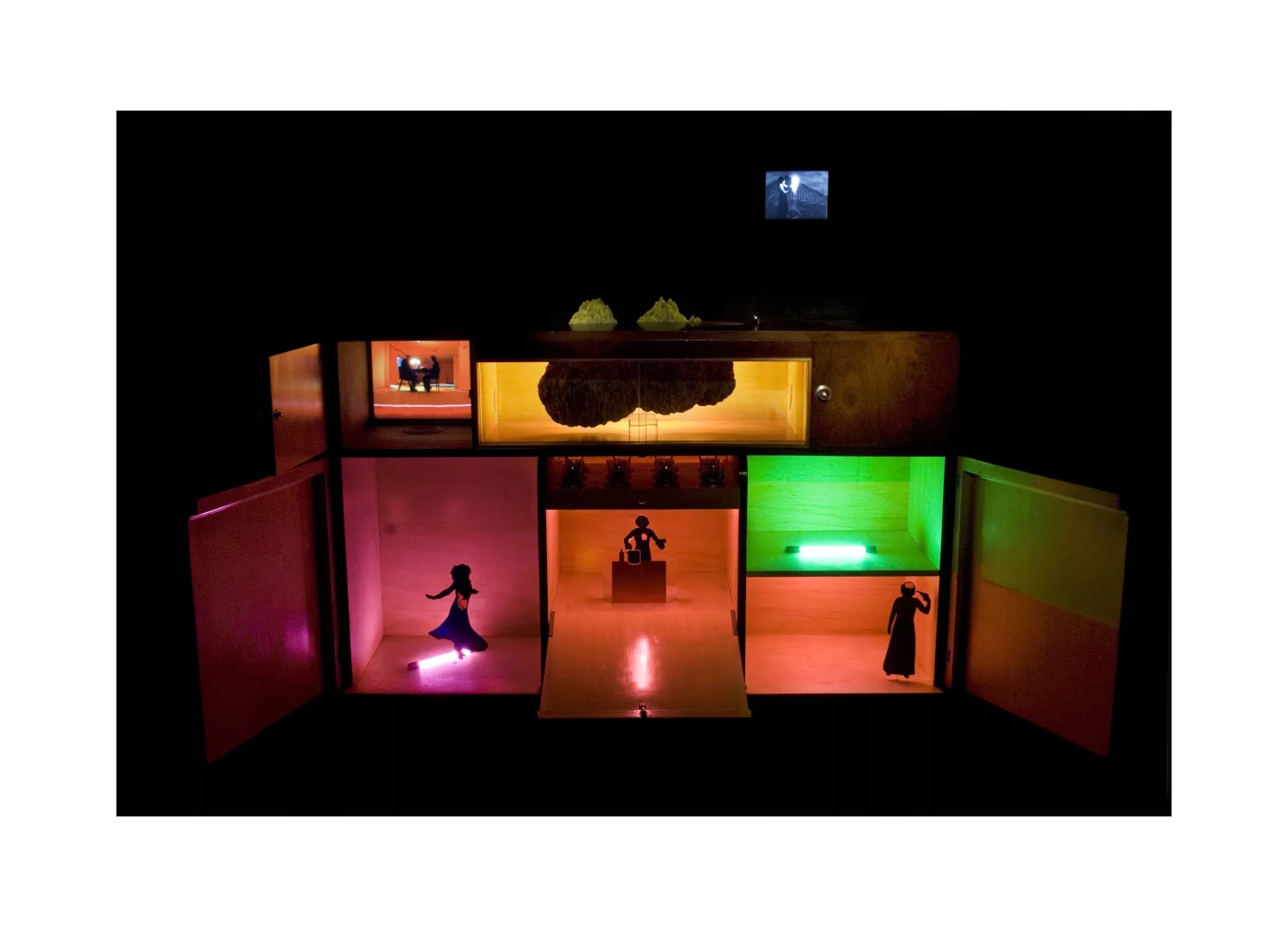
Trixi Weis, Me, Myself and I, 2005, multimedia installation, kinetic sculptures, videos, photo by Bruno Baltzer © Adagp, Paris, 2026
Women artists were also making their mark on the public space during the period. Sculptor and medalist Yvette Gastauer-Claire’s (1957–) contribution can be found in the pocket of every citizen: in 2002, she conceived the national face of Luxembourg’s euro coins for the Central Bank, thus defining the state’s monetary iconography. In-situ installations by creators such as Trixi Weis (1967–) proliferated: performance, sculpture and scenography would populate the public and institutional space with forms ‘tailor-made for Luxembourg’ These works are often mobile, transdisciplinary and adaptable according to each commission.
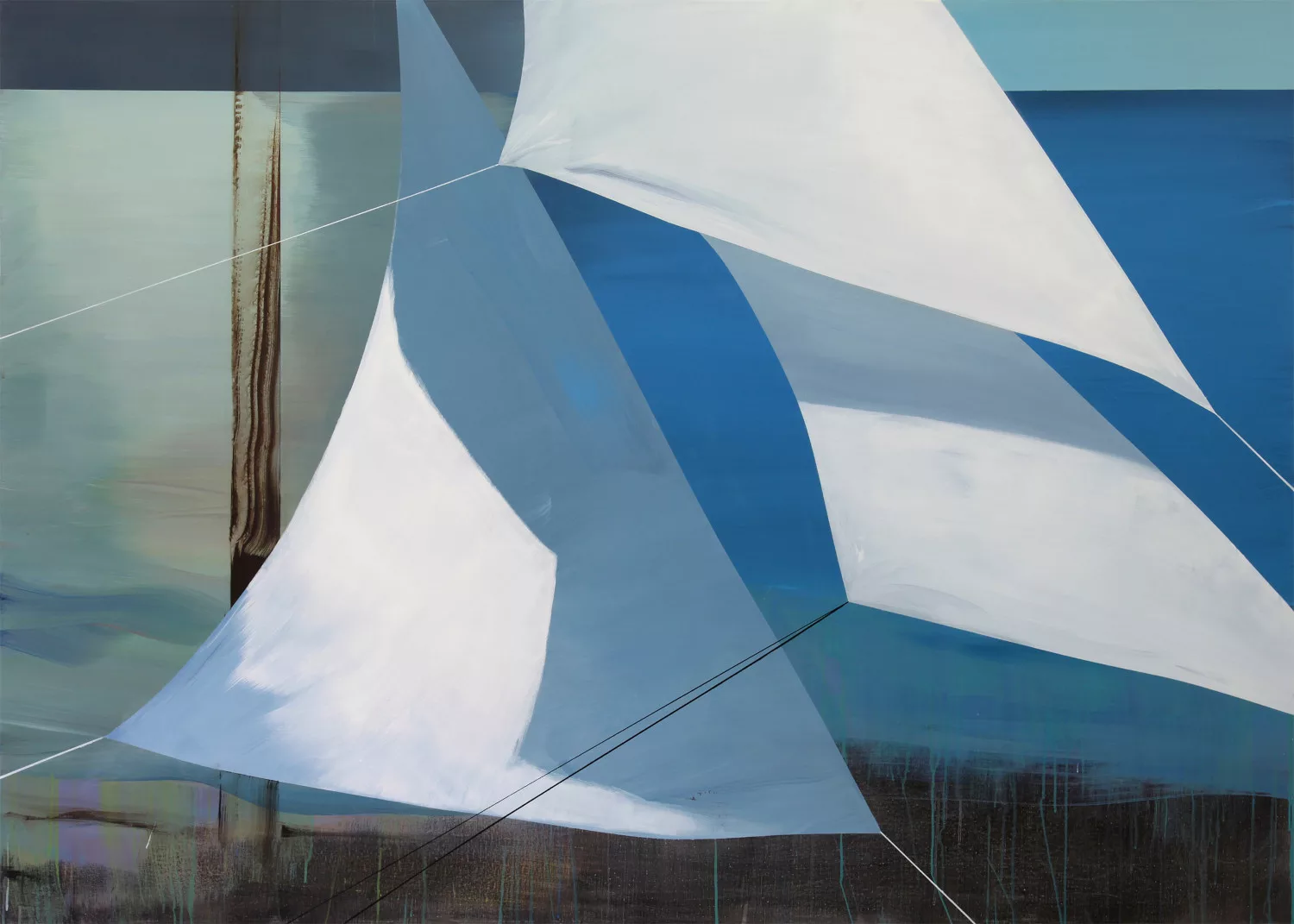
Tina Gillen, Half Light, 2024, acrylic on canvas, 150 x 210 cm, Private collection © Adagp, Paris, 2026
From 2003 to the present day, the presence of women at the Venice Biennale has been a major contribution to their visibility. In 2003 Su-Mei Tse (1973–) brought home the Golden Lion for Best National Participation at the Venice Biennale: a decisive moment. Her work Air Conditioned combined video, music and installation and confirmed the maturity of both a singular artist and a scene. Such national representation at one of the most important events on the contemporary artistic landscape has been an essential step for women artists, and some among them have been able to establish their projects durably as a result, such as Martine Feipel (1975–), present at Venice in 2011 alongside Jean Bechameil (1964–). The pair has since developed an installation-based, sculptural body of work based around architecture, industrialisation and modernity. In 2022 Tina Gillen (1972–) would develop her project Faraway So Close. This vast pictorial installation revisits notions of shelter and architecture as mobile sets, almost cinematic visions, and attests to the power of painting amongst women artists in Luxembourg.
The enrichment of national collections such as that of the National Museum of Archaeology, History and Art has also helped women artists develop their careers. In 2006, the Grand Duke Jean Museum of Modern Art (Mudam) opened its doors and provided the Luxembourg scene with a contemporary museal tool, one that would collect and exhibit both local and international artists with an increasing focus on women’s representation. Through the acquisition of works by Germaine Hoffmann (1930–2025) and Berthe Lutgen, and the positioning of Carine Krecké (1965–) at the heart of its presentation of its collection in 2025, the museum has explicitly placed a focus on ‘generations of women artists’, evidence that a process of institutional and curatorial rebalancing is underway.
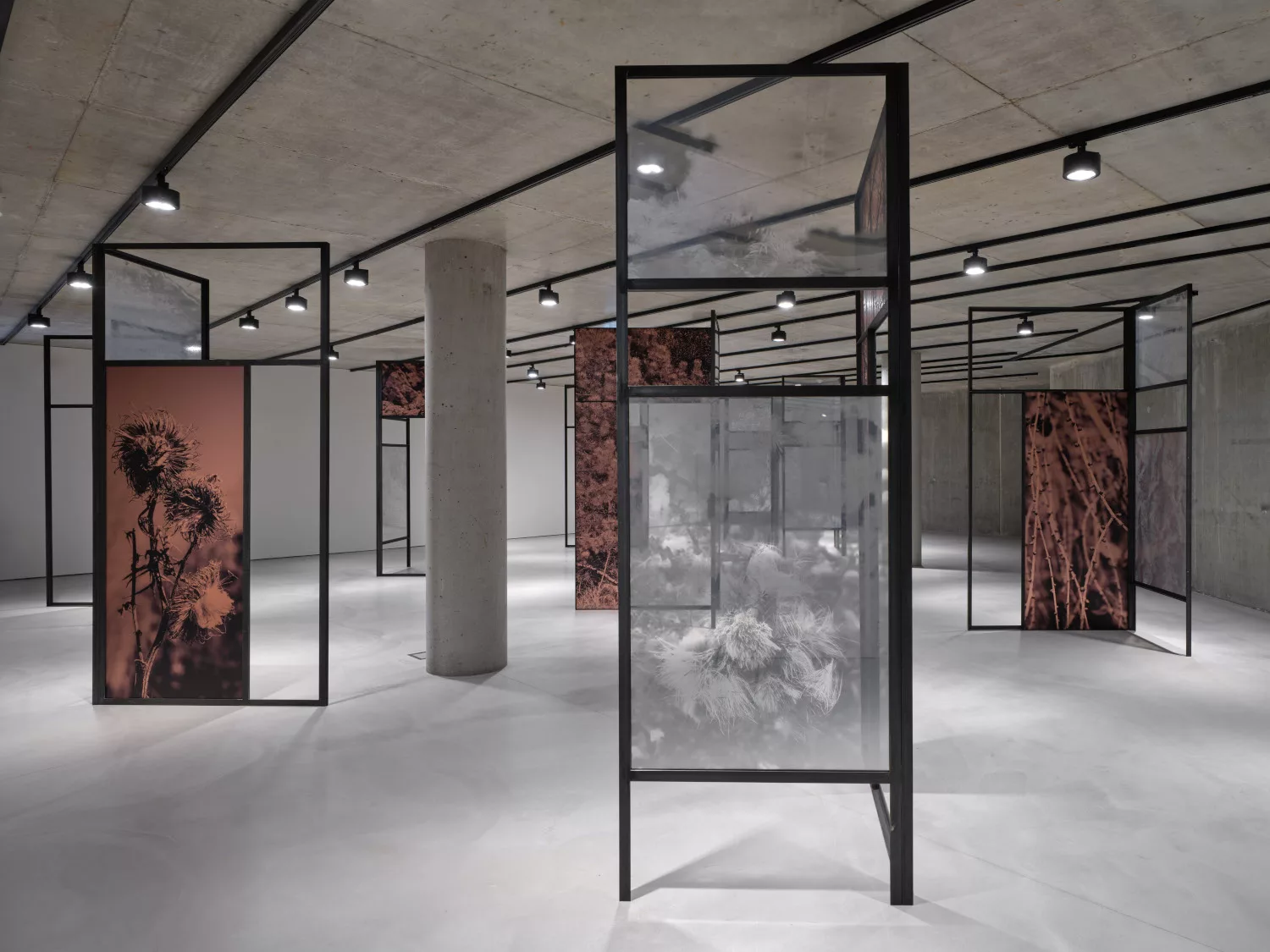
Letizia Romanini, Regno Amicale [Friendly kingdom], 2025, metal structures, UV prints on sandwich panels and screen printing on Plexiglas, Konschthal Esch, photo by Christof Weber © Adagp, Paris, 2026
At the same time, the Casino Luxembourg – Forum d’art contemporain, the Dudelange art centres created in 1973 (Centre d’art Dominique Lang) and 1982 (Centre d’art Nei Liicht) and the Konschthal in Esch-sur-Alzette, opened in 2021, now accompany a younger generation of artists. These include Justine Blau (1977–), Letizia Romanini (1980–), Krystyna Dul (1980–) and Neckel Scholtus (1982–), artists whose works navigate between themes of ecology, image, territory, politics, feminism and identity.
To conclude, it is clear that in Luxembourg, in a highly patriarchal context, women artists have suffered from delayed recognition in comparison to their male colleagues. Only those from a certain social and economic class have been able to study, especially abroad, or to devote themselves almost exclusively to their art. Being a women and an artist has generally involved a certain professional adaptability, notably with regards to teaching.
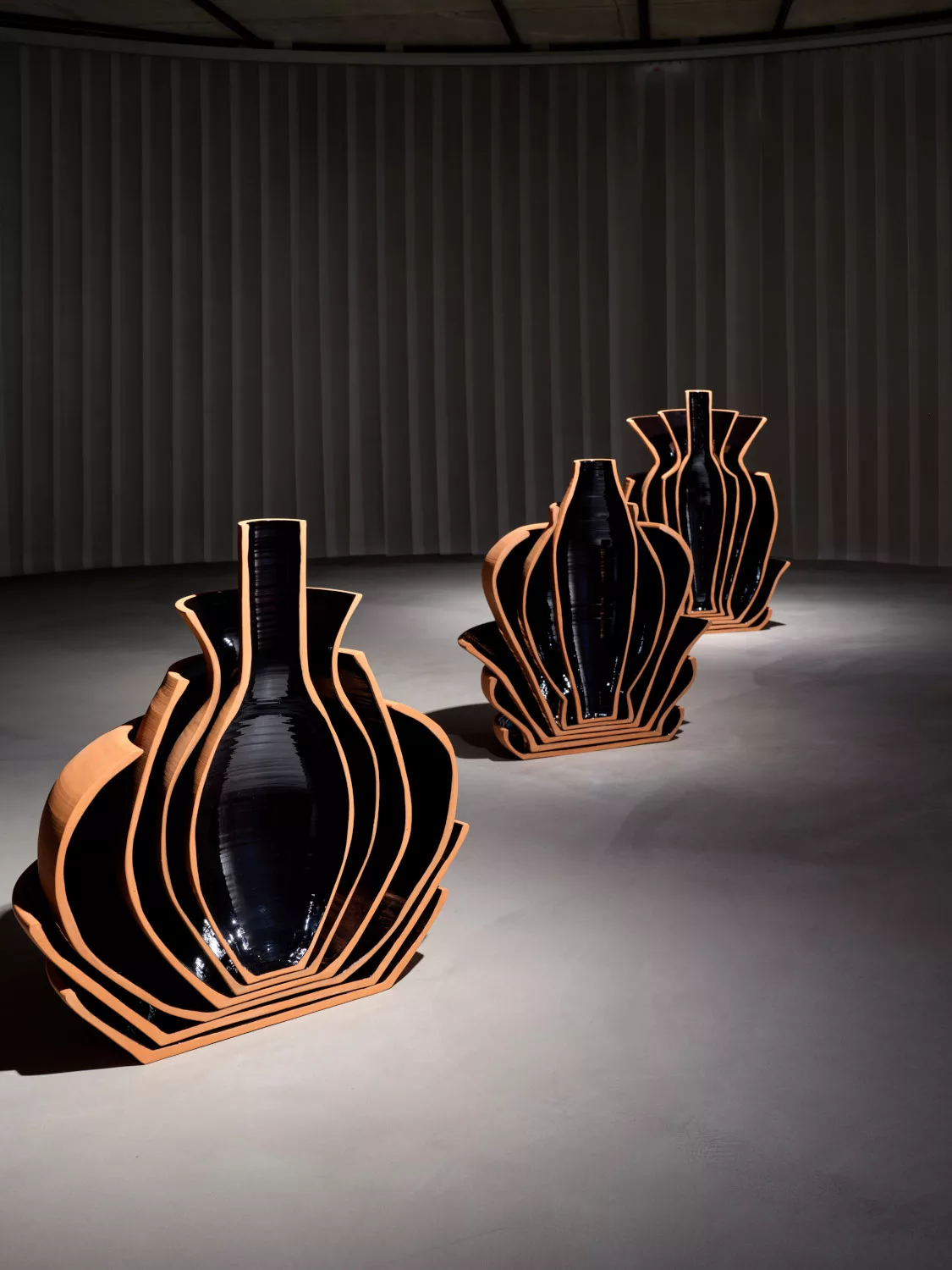
Hisae Ikegana, Black Artichokes I, II, III, 2024, glazed half vases, 70 x 100 x 35 cm each, produced with the support of the Konschthal Esch, photo by Christopher Weber © Courtesy Hisae Ikegana
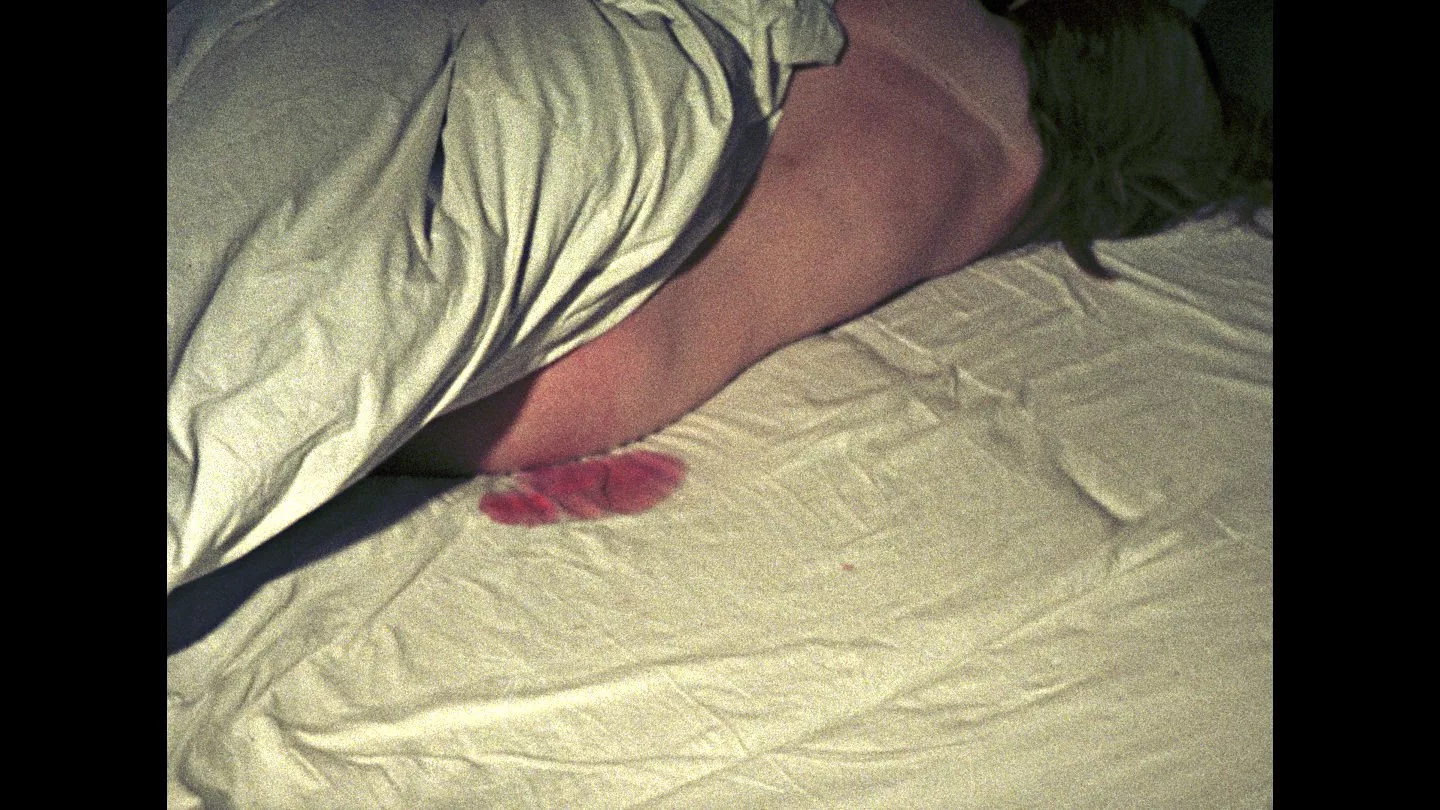
Bady Minck and Angela Summereder, Blood in the Spoor, 1979, video still © Courtesy the artists
Without setting out an exhaustive list of Luxembourgish women artists since the end of the First World War, and as well as the names already cited, numerous figures emerge: some are older, such as Marie-Thérèse Glaesener-Hartmann (1858–1923), the first woman artist to study abroad, and Ger Maas (1931–2020); more recent examples include Bady Minck (1956–), Catherine Lorent (1977–), Hisae Ikegana (1977–) and Sophie Jung (1982–), as well as Jil Lahr (1991–), Rozafa Elshan (1994–) and Anne Speltz (1996–).
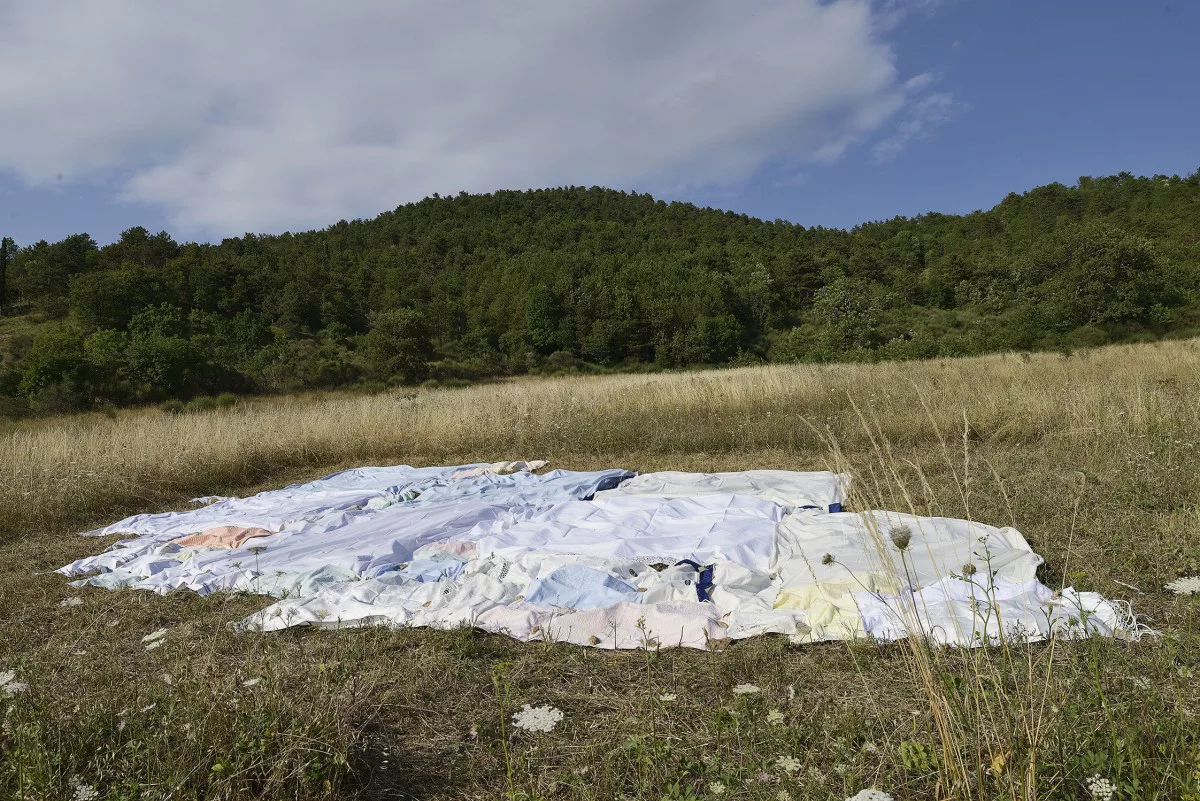
Claudia Passeri, Campetto [Small Field], 2019 © Courtesy Claudia Passeri
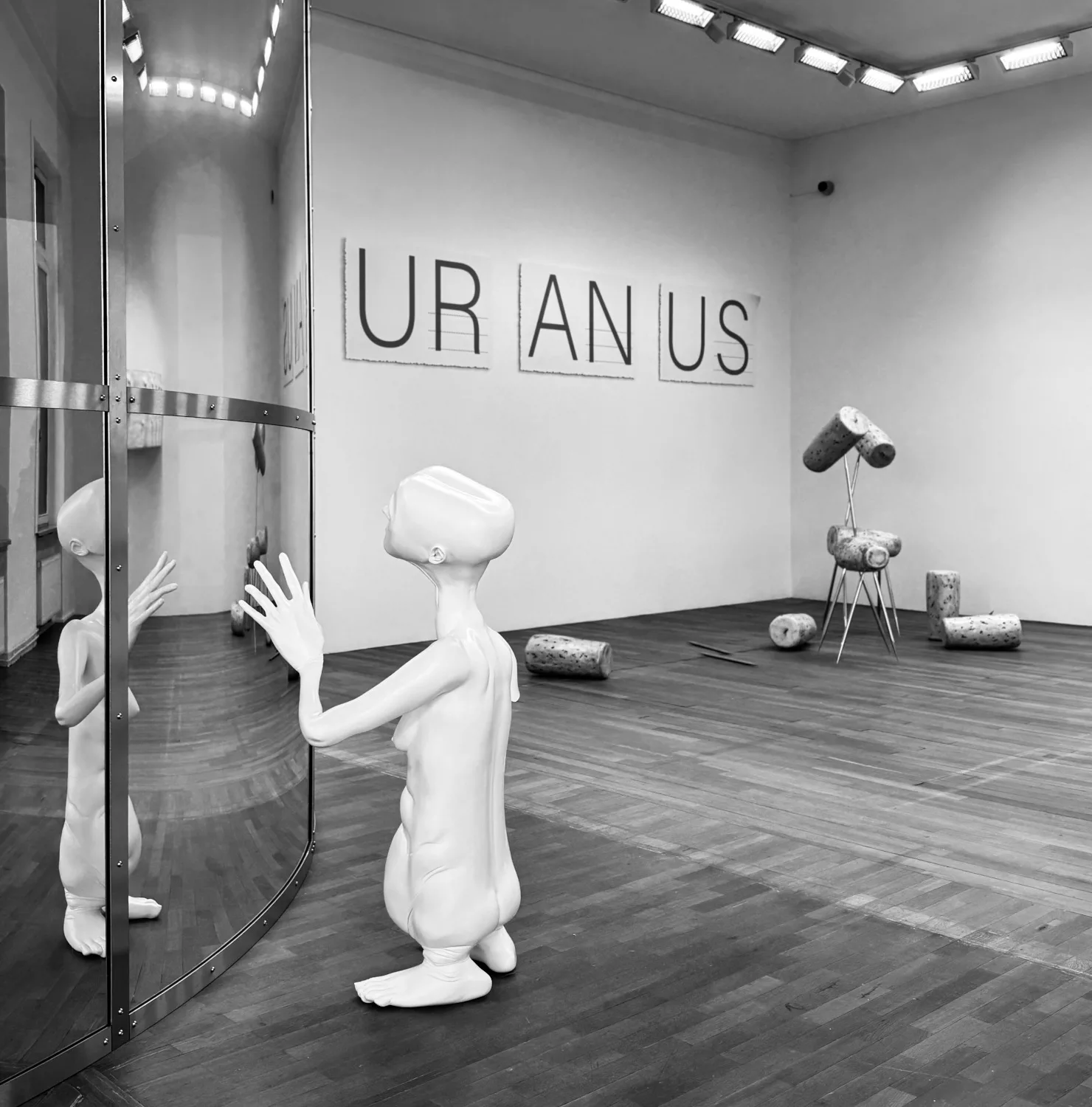
Aline Bouvy, Hot Flashes, 2025, exhibition view, Casino Luxembourg – forum d’art contemporain, photo by Karolina Markiewicz © Courtesy Aline Bouvy
The history of women artists in Luxembourg reads first and foremost as a story of the successive conquest of increasingly flexible spaces, a conquest enabled by the creation of tools such as specific programmes, public grants and various residencies. These have in some way compensated for a limited art market (though this is now supported by the Luxembourg Art Week fair) and encouraged international development with initiatives such as Lët’z Arles, part of the Rencontres internationales de la Photographie, which presented the work of Laurianne Bixhain (1987–) in 2018, Claudia Passeri (1977–) in 2019 and Lisa Kohl (1988–) in 2021. It is a history nourished by a local imagination that revolves around notions of industry, steel manufacturing, borders and multilingualism, transformed into a plastic language by artists who have understood how to make of their country a launchpad rather than a limitation. A proactive public policy of nurturing creation now allows us to imagine this history written by women as much as by men. Since the beginning of the country’s regular participation in the Venice Biennale in 1988, ten women have represented Luxembourg: in addition to those already mentioned they include Marie-Paule Feiereisen (1955–), Patricia Lippert (1956–) (with Moritz Ney, 1947–), Doris Drescher (1960–), Nadine Hilbert (1961–) (with Gast Bouschet, 1958–) and Jill Mercedes (1964–). 2026 will see another woman representative: Aline Bouvy (1974–) will present her singular vision in the Luxembourg pavilion. She is accompanied in this development by a woman curator, Stilbé Schroeder.
Karolina Markiewicz holds a degree in social and political sciences and is a director, author and teacher. As a director she has worked both alone and in collaboration, including with Silvia Costa, Yuko Kominami, Kevin Muhlen, Ásta Sigurdardottir and Pascal Piron. Her films have been selected for a number of festivals including the Venice Film Festival. She regularly writes reviews and essays for the weekly newspaper d’Lëtzebuerger Land, as well as for magazines such as Mouvement and Salzinsel, of which she is founder and editor. She is the creator of Kulturstruktur video talks, and a member of AICA.