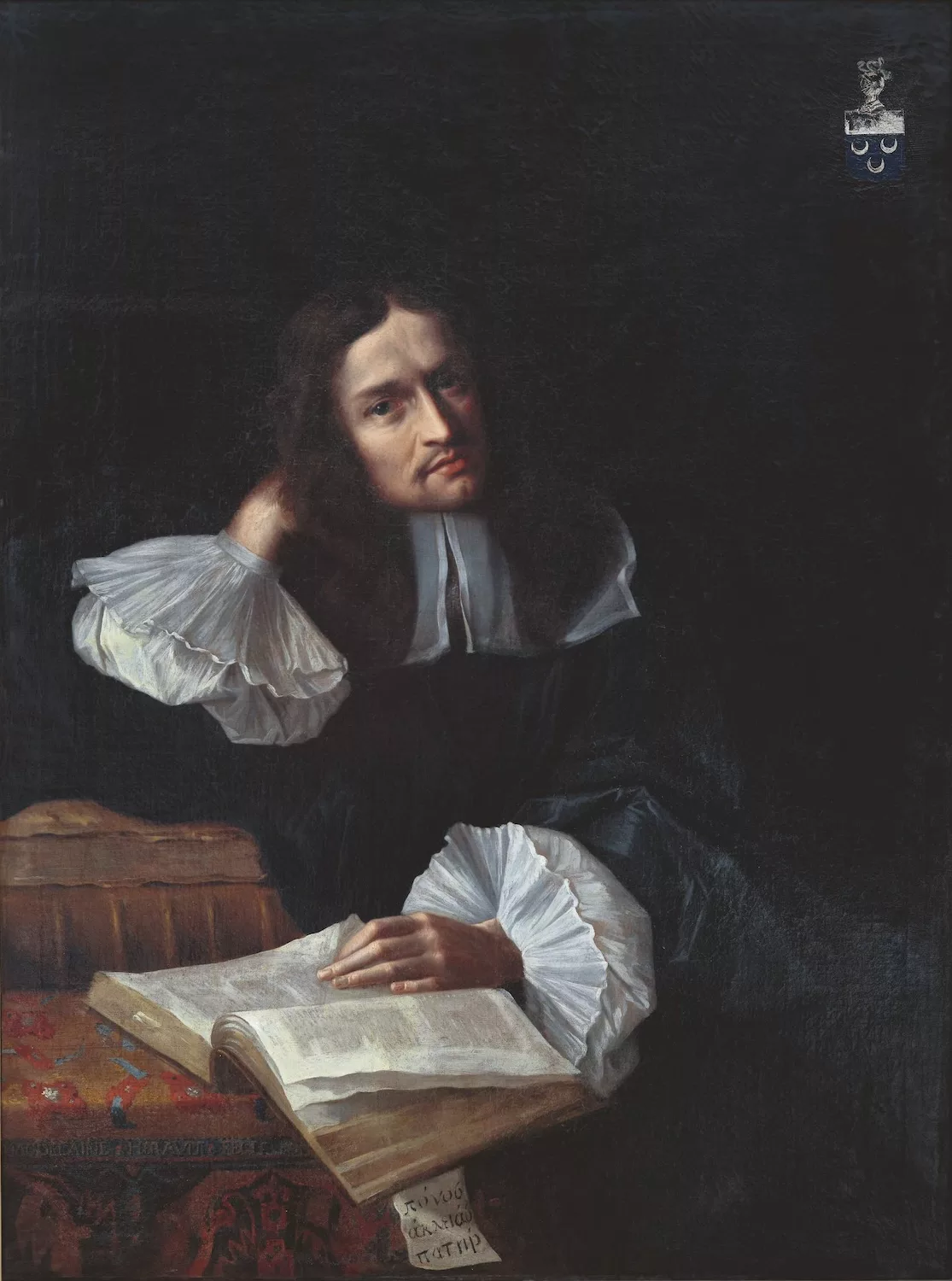
Guillaume Kazerouni, Peintures françaises des XVIe, XVIIe et XVIIIe siècles du musée des Beaux-Arts de Rennes, Grand, 2021, no 66, p. 220-222
→Guillaume Kazerouni in the catalogue Noël Coypel (1628-1707). Peintre du roi, Versailles, musée national des châteaux de Versailles et de Trianon (September 26, 2023 – January 28, 2024) ; Rennes, musée des Beaux-Arts (February 17- May 5, 2024), editors Guillaume Kazerouni and Beatrice Sarazin, n° 4, p. 28-29.
French portrait artist and miniature painter.
Madeleine Hérault was the daughter of painter Antoine Hérault (c. 1600–c. 1655) and Madeleine Bruyant. She had at least eleven brothers and sisters, several of whom became painters like their father, who personally trained all his children, boys and girls alike. At least two of his daughters, namely Madeleine and Antoinette Hérault (1642–1695), gained a reputation as artists during their lifetimes.
Very few details of M. Hérault’s life are known, apart from those contained in a handful of civil-registry records. In a document dated 22 January 1678, officialising a baptism at the church of Saint-Barthélemy, she is named as godmother to the son of her brother Charles Antoine Hérault (1644–1718), a landscape painter and art dealer. The life of their sister, A. Hérault, who on 10 November 1665 married engraver Guillaume Chasteau (1635−1683) and later painter Jean-Baptiste Bonnart (c. 1654–1724), is somewhat better documented due to the considerable renown her miniatures enjoyed in Paris.
M. Hérault married painter Noël Coypel (1628–1707) at the church of Saint-Jacques-de-la-Boucherie in Paris on 29 April 1659. The couple had three children: future painter Antoine Coypel (1661–1722), Charles Coypel and Madeleine Suzanne Coypel. By marrying M. Hérault, N. Coypel aligned himself with a family of artists and art dealers whose social network in Paris was considerable.
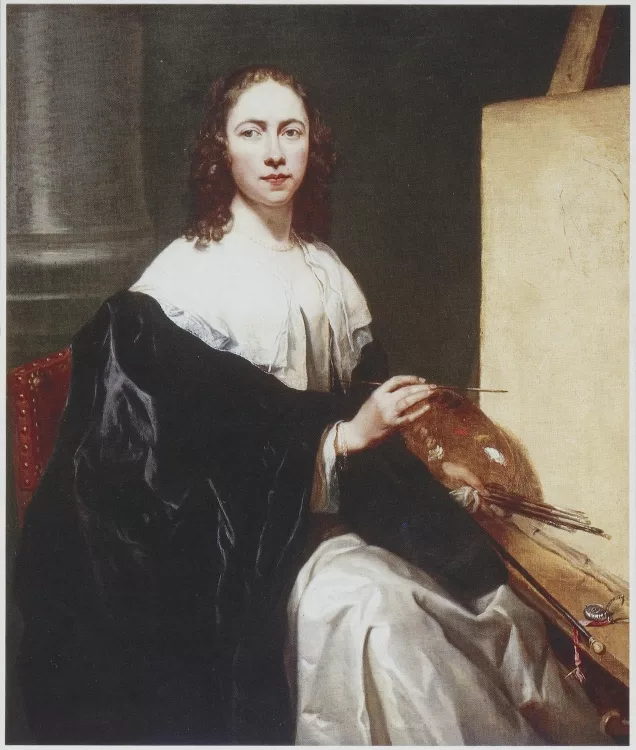
Unlike Louise Moillon (1610–1696), Charlotte Vignon (1639–c. 1700), Catherine Duchemin (1630–1698) and Madeleine Boullogne (1646–1710), M. Hérault was amongst the few women painters in 17th-century France known for a genre other than still life. She showed true talent in the art of portraiture, as evidenced by the praise of her husband’s biographers, Roger de Piles and Antoine Dézallier d’Argenville: “Magdeléne Herault also painted, and copied with the utmost perfection. Several fine copies after Raphael and various other great masters, all executed by her hand, remain in her family’s possession. She had such virtue and piety as placed her even above her talents” (Roger de Piles, 1699); “He married in 1660 Madeleine Hérault, the daughter of a painter named Hérault. This woman combined many virtues with a talent for painting; she painted portraits, a genre to which her husband had likewise applied himself with success” (Dézallier d’Argenville, 1762).
Reappearing on the art market in Lyon in 2003 and acquired by the Rennes museum in 2014, Portrait de Thomas Chanuet, Conseiller au Présidial de Mâcon is currently the only painting attributed with certainty to M. Hérault, since it is signed. It confirms the praise of R. de Piles and A. Dézallier d’Argenville. If we assume that the artist, who signed the piece with her maiden name, completed the work before her marriage, it may be dated to shortly before 1660. This somewhat early date – she would have been only nineteen or twenty – could, however, be pushed into the 1670s, given that the sitter is Thomas Chanuet.
M. Hérault is in full command of her abilities here; in this work’s execution, it is akin to portraits made by contemporaries of Charles Le Brun (1619–1690). Several details, such as the very long, angular fingers and certain strongly delineated contours also recall the art of N. Coypel while retaining a distinctive originality. This painting may one day help bring to light other works by M. Hérault, whose talent here proves comparable to that of Élisabeth Sophie Chéron (1648–1711), the only other French woman portraitist of the seventeenth century, who is known to us through a few surviving paintings.
A biography produced in partnership with the Louvre Museum.
© Archives of Women Artists, Research and Exhibitions, 2026