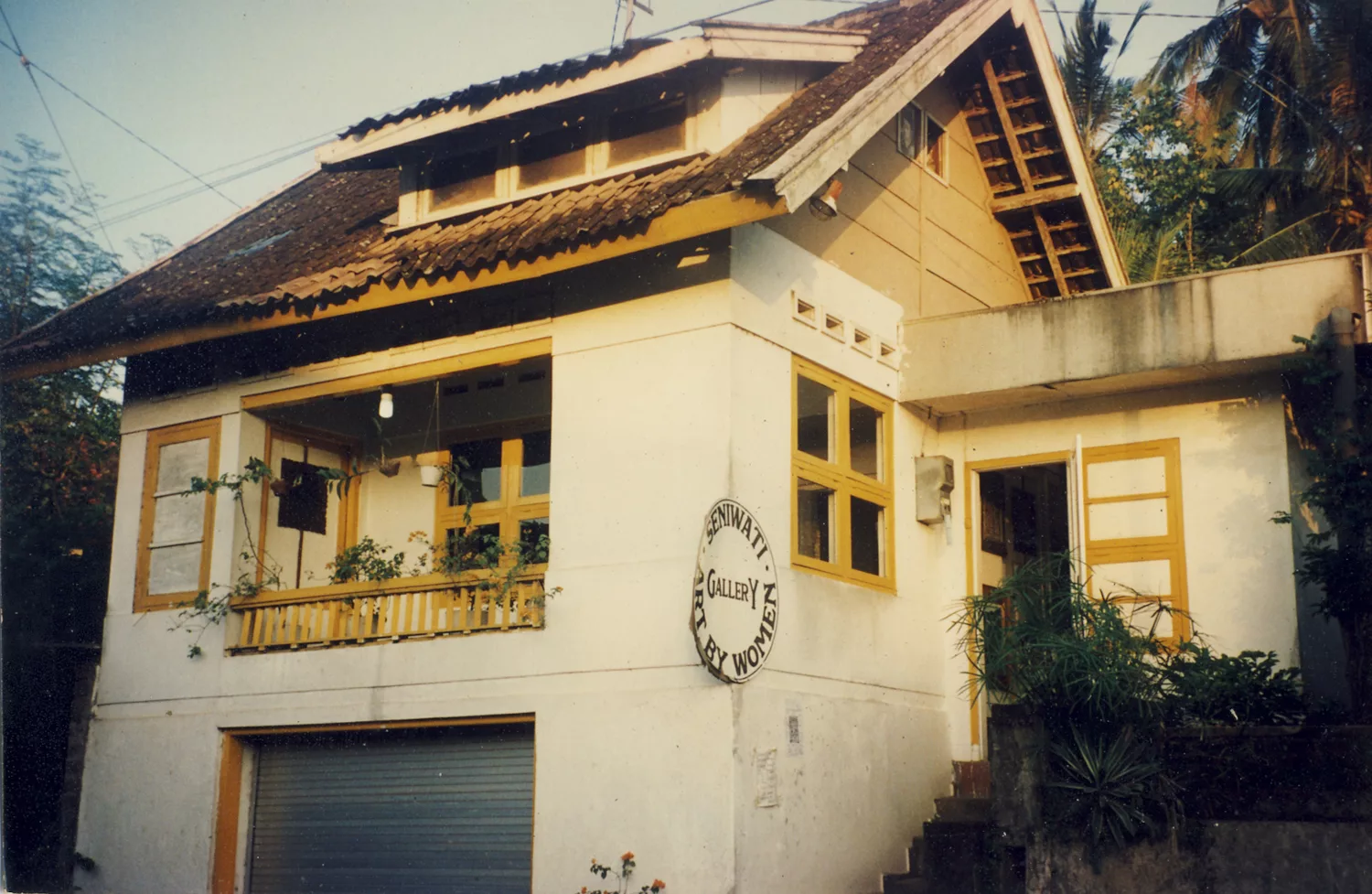
Seniwati’s building on Jalan Sriwedari No. 2b, Banjar Taman, Ubud © Courtesy of Indonesian Visual Art Archive as bequeathed by Mary Northmore
For much of the twentieth century, art in Bali was primarily framed through the contributions of male painters, patrons and critics – a perspective that came to define both its institutional recognition and historiography. Less visible, however, was the parallel emergence of practices that unsettled this framing, practices grounded in collaboration, resilience and the articulation of a distinct creative identity for women. This is the story of The Seniwati Gallery of Art by Women, a pioneering initiative that, from the early 1990s to the early 2010s, nurtured diverse voices and unsettled the gendered boundaries of the island’s art world.
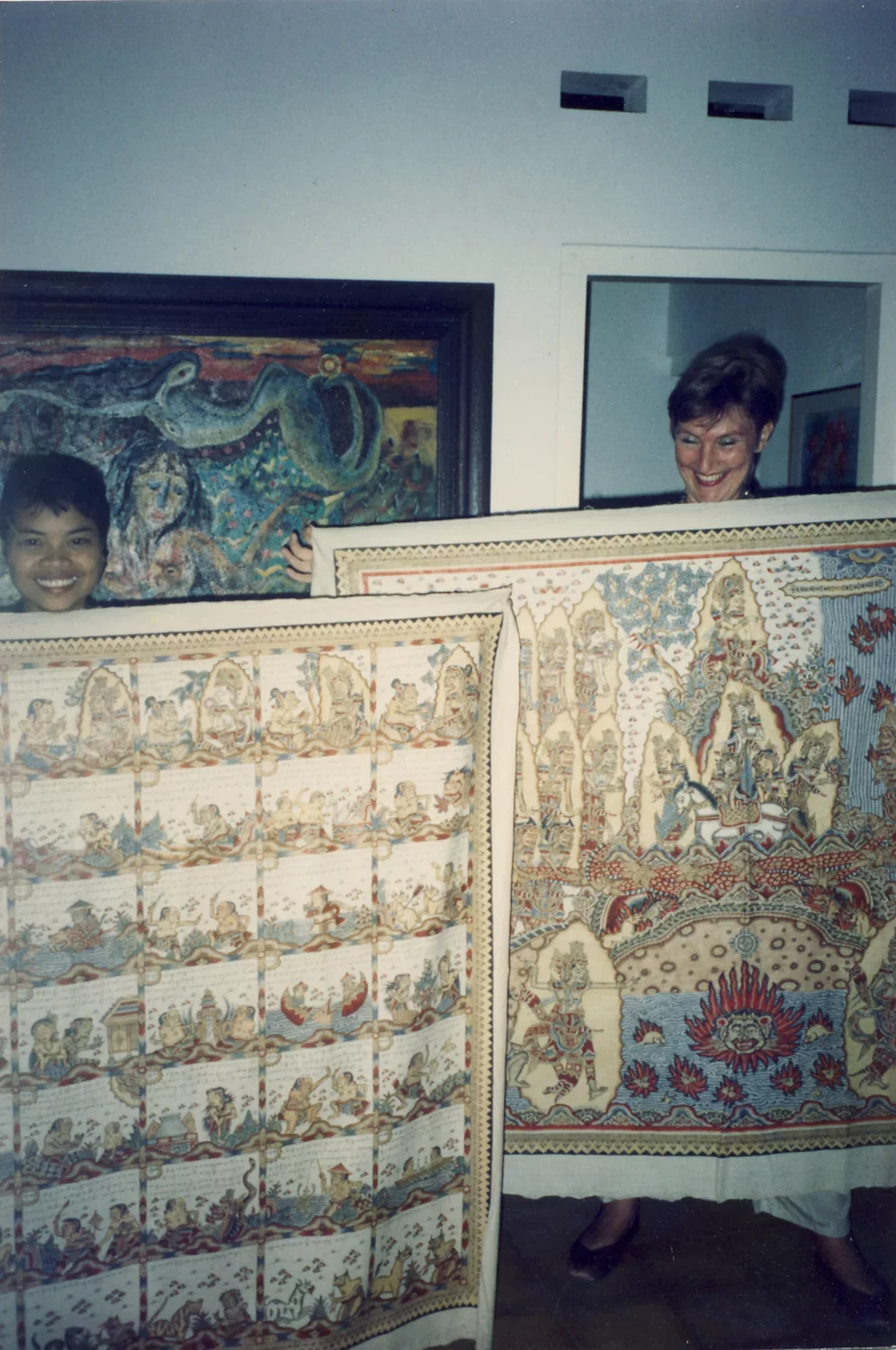
Wayan Suarniti (left) and Mary Northmore (right) presenting a Balinese traditional painting © Courtesy of Indonesian Visual Art Archive as bequeathed by Mary Northmore
Mary Northmore (1949–2025), a British-born former teacher married to the esteemed Indonesian painter Abdul Aziz (1928–2002), was living near Ubud at that time. Her personal exploration of quilting, and the subsequent desire to connect with other women to discuss the creative and professional challenges she faced, set her on a path of discovery. Encouraged by Australian artist Judith Shelley (1961–), Northmore connected with a circle of academically trained women artists who were also seeking solidarity. Out of this shared need, the Association of Women Artists in Bali (Ikatan Seniwati di Bali, or ISWALI) was established, holding its first meeting on the floor of Northmore’s living room on 22 June 1991.
The nine founding members – Anastasia Muntiana Tedja (1938–2007), Cok Istri Mas Astiti (1948– ; former student of Abdul Aziz during his time as a lecturer in Universitas Udayana in the late 1960s), Ni Luh Putu Sugianitri (1949–2021), Ni Made Rinu (1957–), Yanuar Ernawati (1959–2014), Diany Asmina Sinung (1959–), Sri Supriyatini (1958–), Mary Northmore and Judith Shelley – represented a new, organised presence in the Balinese art world. Their momentum was immediate and potent. Within three months, this budding collective curated its landmark exhibition, Ten Women Artists of Bali, at La Luna Gallery, 2–16 September 1991, in Penestanan Kelod, Ubud. The exhibition’s critical and communal success was a resounding affirmation, demonstrating a public appetite for their distinct artistic voices.
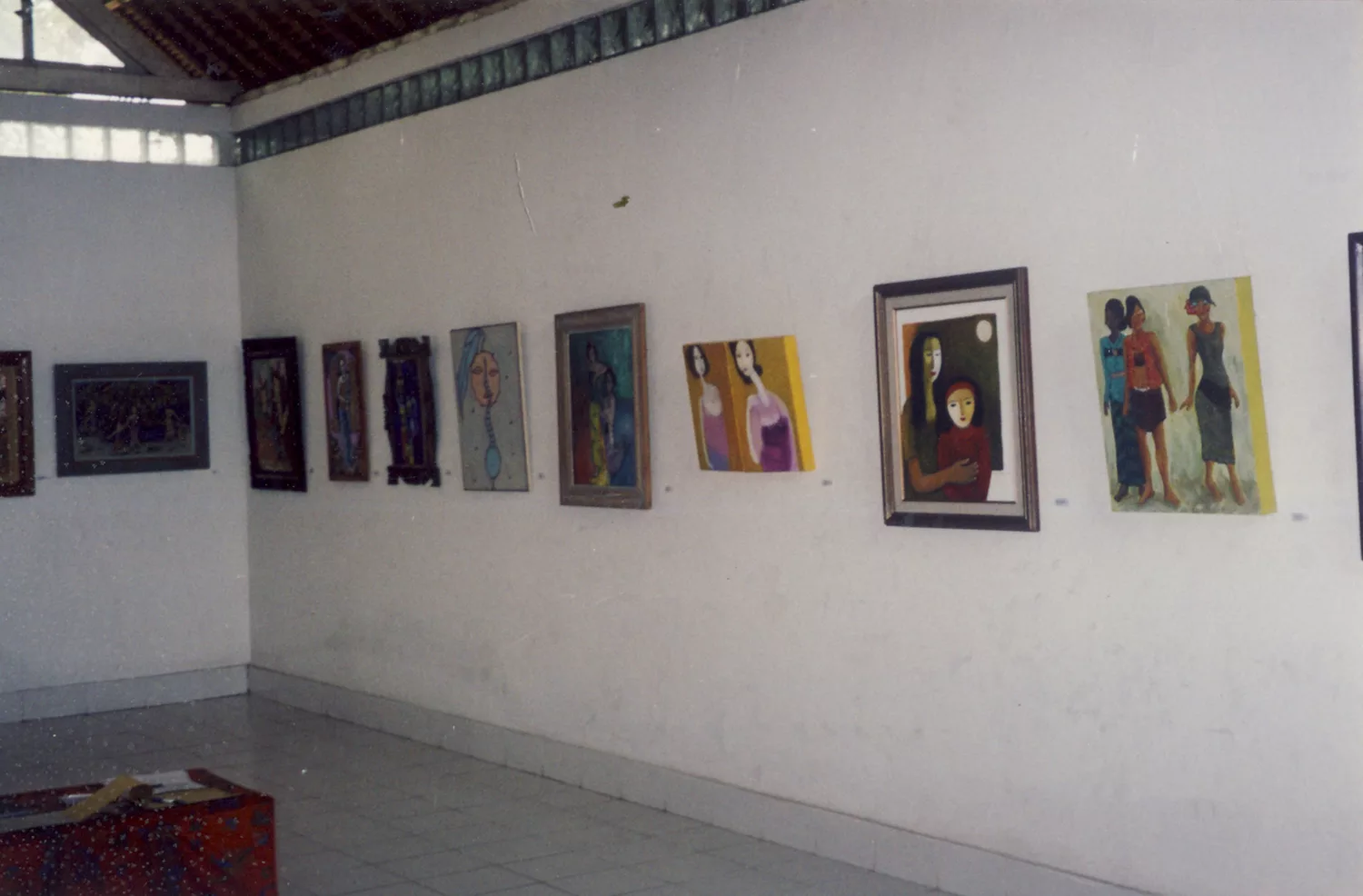
Artist showcase in the Seniwati Shop © Courtesy of Indonesian Visual Art Archive as bequeathed by Mary Northmore
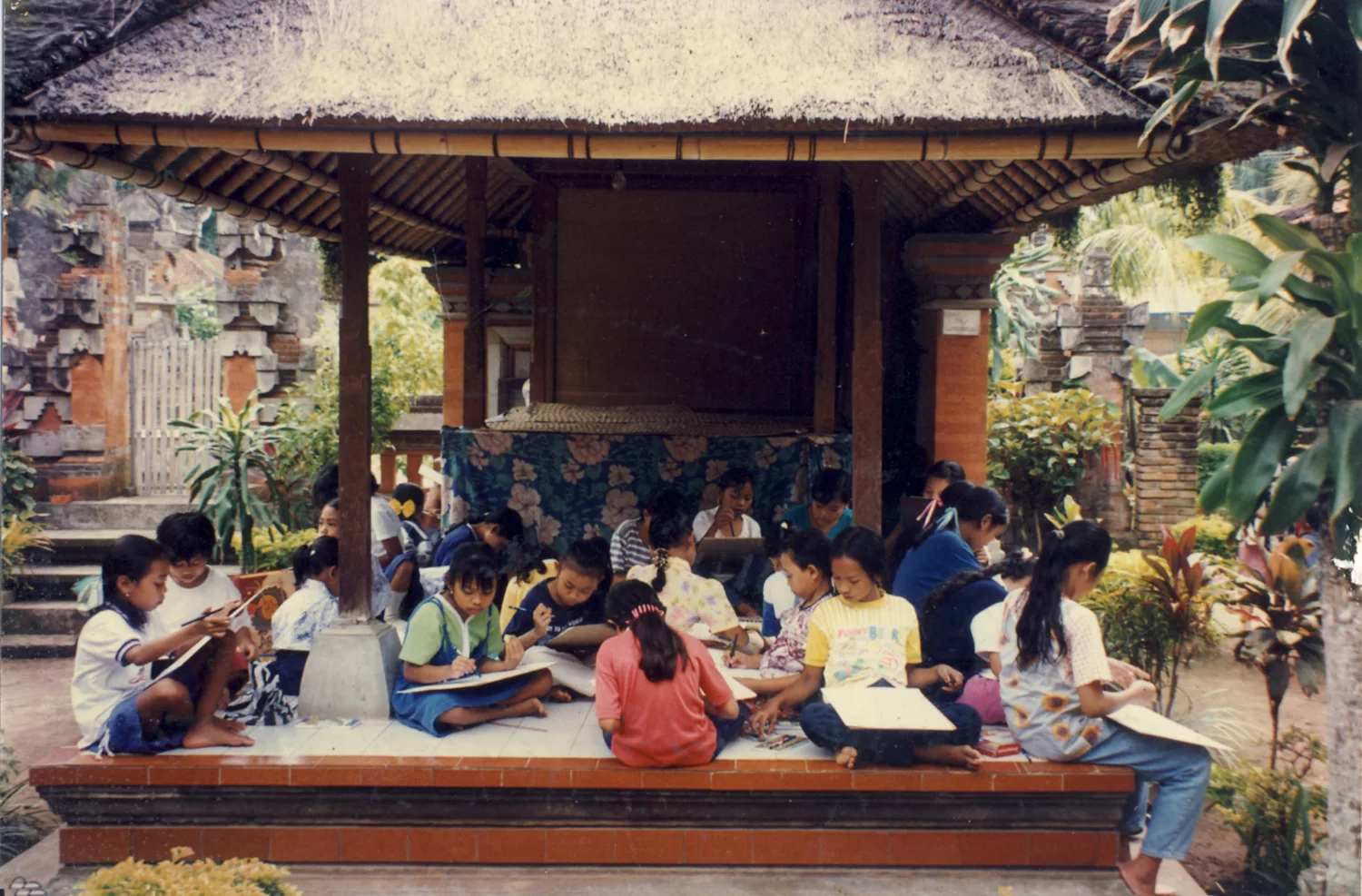
Seniwati Sanggar Muda’s young artists at work © Courtesy of Indonesian Visual Art Archive as bequeathed by Mary Northmore
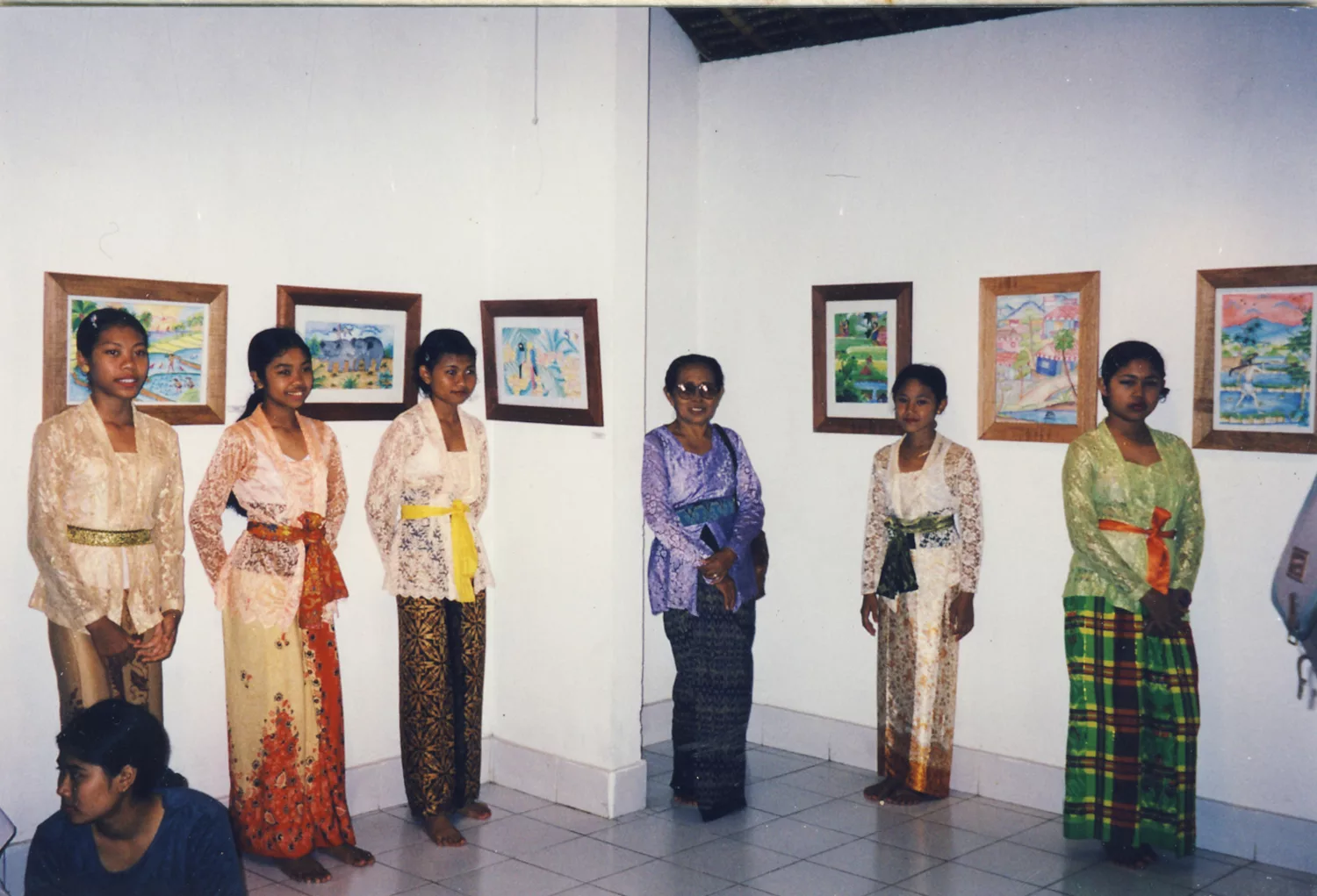
Seniwati Sanggar Muda’s young artists showcasing their works © Courtesy of Indonesian Visual Art Archive as bequeathed by Mary Northmore
This success, however, revealed the absence of a dedicated space for the sustained promotion and recognition of women’s art. In response, Northmore transformed the former residence and studio of A. Aziz into the Seniwati Gallery of Art by Women, located at Jalan Sriwedari No. 2b, Banjar Taman, Ubud. By December 1991, the group had grown to twenty artists, encompassing both academically trained and village-based painters. Institutional legitimacy followed swiftly, and within a month of its founding the gallery staged its first external exhibition at Denpasar’s prestigious Bali Art Center.
In 1992, Ni Wayan Suarniti (1971–) guided the gallery into its next chapter. Trained at the Senior High School of Economics (Sekolah Menengah Ekonomi Atas, SMEA), she assumed the role of gallery manager with a clear vision. Suarniti recognised that artistic passion could only flourish within a stable structural framework and with a sound business plan. She also emphasised the importance of taking care of the artists. To this end, she introduced professional systems previously absent from the gallery: formal contracts, detailed stock records and structured approaches to promotion and income distribution, ultimately transforming Seniwati into a professionally managed institution.
As Northmore herself attested, no one could have predicted the rapidity of Seniwati’s ascent. Within just five years, it had blossomed into a major cultural presence in Ubud. The single gallery gradually evolved into a multi-faceted arts centre, extending its reach through the establishment of a dedicated workshop and gallery space nearby, a gift shop and rental studios designed specifically for women artists. The workshop, Seniwati Sanggar Muda, emerged as a dynamic educational hub, offering art classes for young girls from surrounding villages, organising children’s exhibitions and monthly outings, whether to an artist’s studio, an exhibition, or simply to a scenic location where the children could paint together, broadening their exposure to art and fostering creativity beyond the workshop. Seniwati attracted not only women artists from surrounding villages but also artists, collectors, academics and art enthusiasts from across Indonesia and abroad who were living in or visiting Bali at the time. The artistic practices represented were diverse, ranging from painting and printmaking to textile art and installation. Workshops were also held for both resident artists and visitors, featuring activities such as art from trash, mask-making, papermaking, portrait and self-portrait sessions.
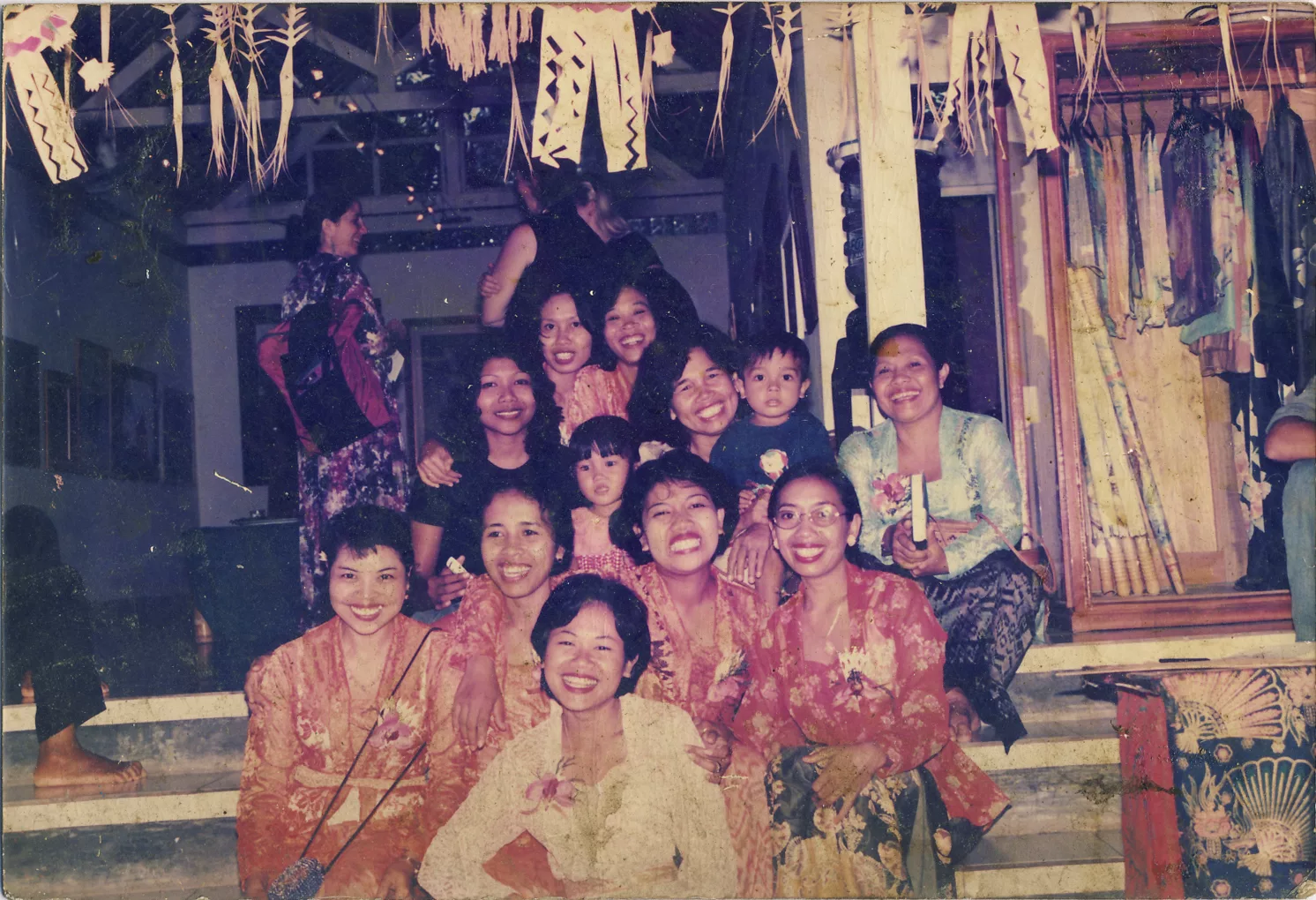
Wayan Suarniti (bottom left) and Seniwati artists © Courtesy of Indonesian Visual Art Archive as bequeathed by Mary Northmore
The gallery’s strength was amplified by the presence of artist-educators such as Cok Istri Mas Astiti and Sri Supriyatini, who were also lecturers at the prestigious Akademi Seni Rupa Indonesia (ASRI, now the Indonesian Arts Institute, Denpasar). In our conversation, they reflected that Seniwati provided a rare and safe space where village-trained artists could engage and converse with those academically-trained, something they felt would not have been possible otherwise.1 In monthly and yearly meetings, academically trained and village-trained artists engaged in a continuous dialogue, sharing technical skills and artistic philosophies. However, the most powerful exchanges often centred not on art, but on life. Wayan Suarniti recalls that she was not only a gallery manager, but was also seen as a friend-in-need when the artists wanted to confide feelings about their complex home lives. They shared the intimate challenges of managing domestic responsibilities and creative ambitions, finding solidarity in their shared identities as women, artists and caregivers.2
From its foundational base in Ubud, Seniwati soon began to transcend local boundaries, accepting invitations to dispatch the works and talents of its artists to the cultural hubs of Jakarta and Yogyakarta, and ultimately, onto the international stage. Through curated exhibitions, artist residencies and collaborative workshops in locales such as Germany, Hong Kong, the United States, Singapore and Australia, Seniwati orchestrated a crucial dialogue between Balinese women artists and a global audience.
This expansion was a direct challenge to the deeply entrenched traditions that had systematically suppressed women’s artistic talents. Within the conventional Balinese painting production process, while both men and women take part in Balinese painting, authorship and recognition remain bound to male authority. The status of “artist” is typically reserved for men who design the composition, while women’s contributions, often central to the painting’s completion, are relegated to supporting roles. Their intellectual and creative labour was absorbed into a collective or male-attributed output, rendering them invisible within the very artworks they helped to create.3
Interestingly, Seniwati never encountered opposition from husbands and families. According to Northmore, they simply didn’t associate women with painting.4 During the peak of Seniwati in the 1990s, some female artists were doing so well they became their families’ main income-earners. Despite these economic blessings, Northmore recalls a major exhibition featuring more than one hundred artists from Bali – with no women included. The organisers, she noted, had ‘simply forgotten’ about them.5
By the 1990s, the Sekolah Menengah Seni Rupa (SMSR, Vocational School of Fine Arts) in Ubud had already produced a generation of academically trained women artists. Yet a gap remained between technical training and professional recognition. Artists successfully marketed their works through local institutions like the Rudana Museum, Tama Art Gallery, Neka Art Gallery, Museum Puri Lukisan and ARMA, finding an audience amongst tourists and art collectors. Commercial success, however, did not translate into critical esteem. While sales were encouraging, recognition was limited; women’s work was often not regarded as conceptually rigorous or culturally significant when compared to that of their male counterparts.
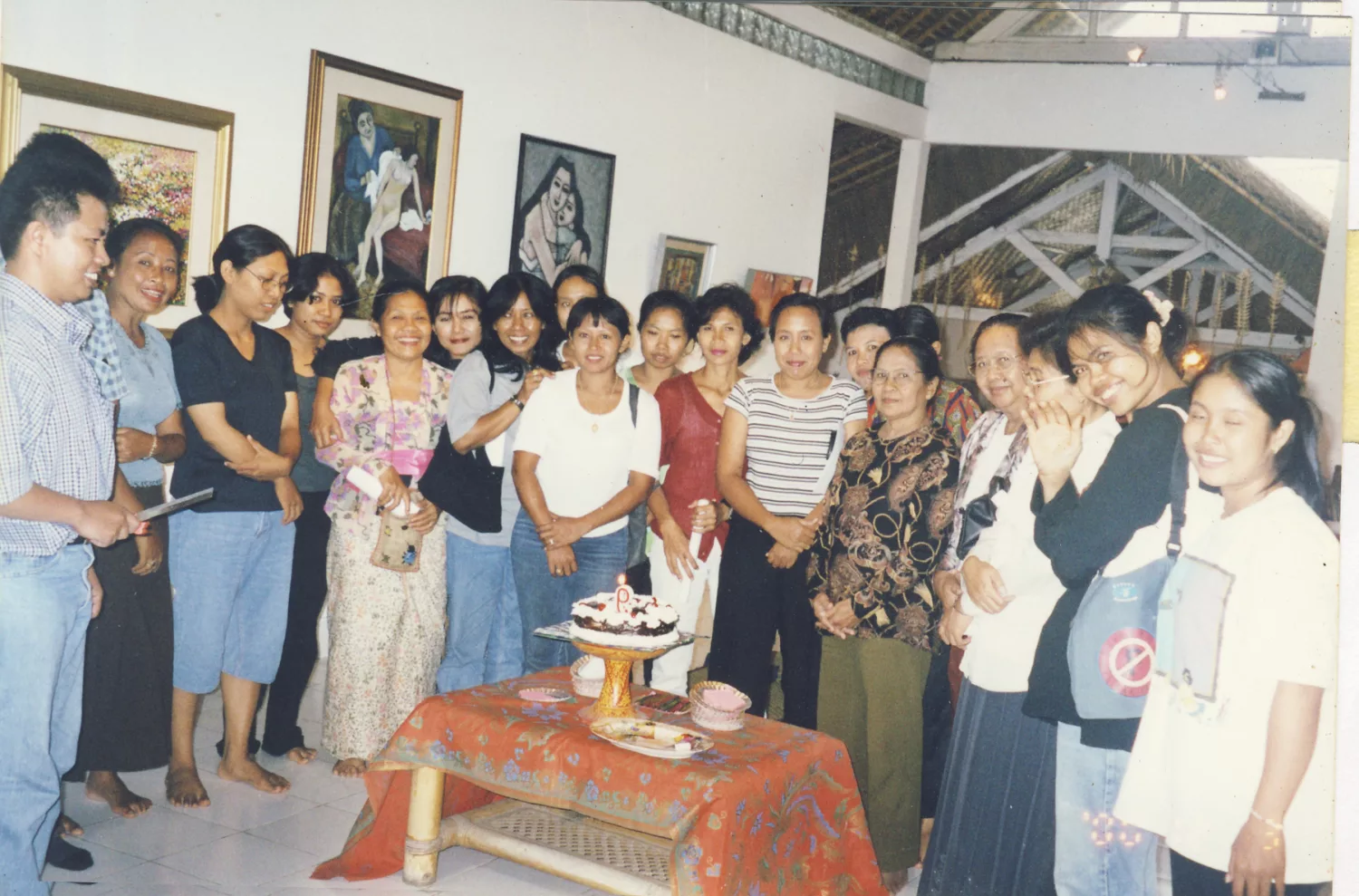
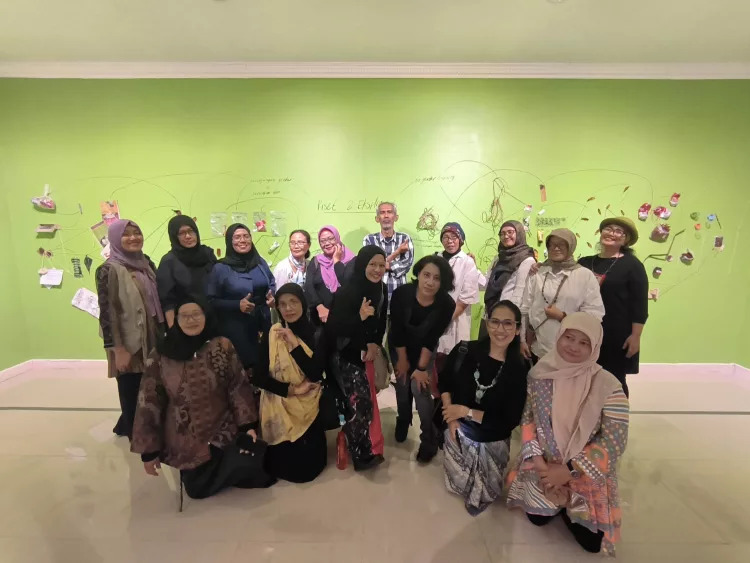
The artists celebrating the birthday of Cok Mas Astiti, fifth from left. I Gusti Ayu Kadek Murniasih is seen waving, second from right © Courtesy of Indonesian Visual Art Archive as bequeathed by Mary Northmore
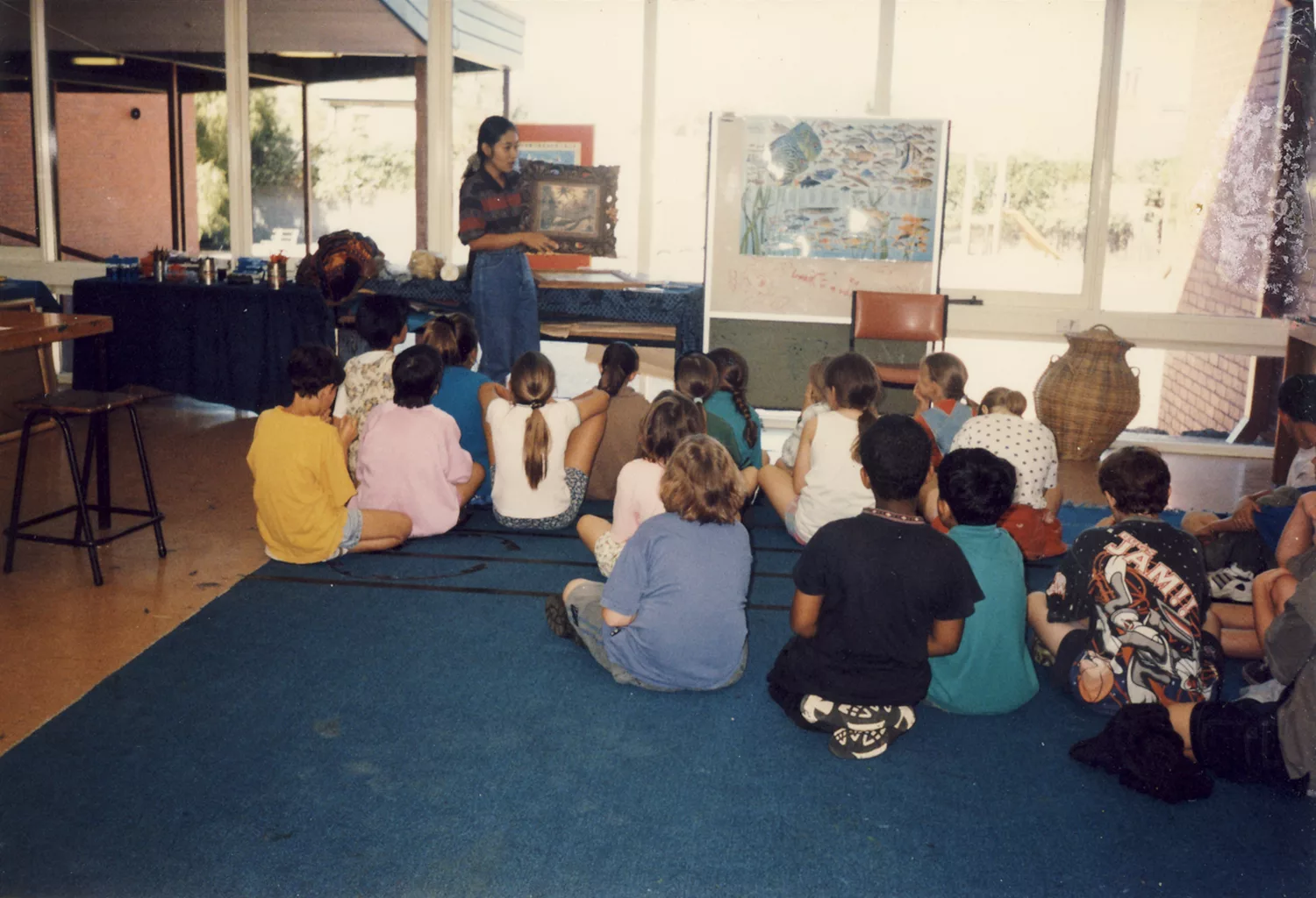
Gusti Agung Galuh delivering a workshop in Australia © Courtesy of Indonesian Visual Art Archive as bequeathed by Mary Northmore
Seniwati’s national and international tours were a powerful rebuttal, asserting the intellectual authorship and creative autonomy of Balinese women. They transformed the narrative, proving that the artist’s hand was not only capable of applying colour but of commanding the whole creative vision, from the first sketch to the final, acclaimed exhibition. As Agung Galuh recalls, she gained recognition from villagers, especially amongst other women, who acknowledged her talent and achievement as she travelled abroad for residencies and exhibitions.6
The gallery’s platform did not homogenise its artists but amplified their individualities, a fact exemplified by the critically acclaimed career of I Gusti Ayu Ketut Murniasih (1966–2006). Murniasih’s work was distinguished by its striking, often visceral, depictions of female sexuality and a surreal, dreamlike imagination. Her canvases, populated by biomorphic forms and symbolic narratives, challenged not only the gender biases of the Balinese art world but also the very boundaries of its aesthetic conventions. Seniwati provided the essential launchpad, hosting Murniasih’s first solo exhibition in 1995.
After Suarniti relocated to the United States in 2006, long-time Seniwati staff member Nyoman Parmini (Jero Jempiring) assumed leadership of the gallery. Suarniti continued to manage aspects of its financial administration from abroad until 2010, when Mary Northmore once again took charge. Following the end of the gallery’s lease, leadership passed to Ni Nyoman Sani (1975–), a Seniwati artist since 1994, who guided the institution into a new phase as Seniwati Art Space. Sani relocated the gallery from Ubud to Batubulan, on the fringe of Bali’s capital, Denpasar, opening the doors to a younger generation of women artists based in the city.
This new space attracted emerging voices such as Ade Ayu Susetya Dewi (1993–), Ni Made Tiartini Mudarahayu (1994–), Ni Putu Citra Sasmita (1990–), Ayu Putu Fenny Abrina Putri (1992–), Ni Luh Gede Widiyani (1990–), Ni Luh Pangestu Widya Sari (1991–), Dewa Ayu Candra Dewi Putri, Ni Wayan Sri Utari and Ni Made Suryati. In 2013, Seniwati Art Space presented two major exhibitions for these younger artists, Me Finding Me and I Love You, Mom, before formally dissolving later in the same year. The initiative later continued as Mother Art Space under Sani’s direction.
From its inception, Seniwati had been a radically inclusive project, embracing diverse styles, ages and nationalities, and allowing women artists living in Bali to emerge from anonymity and assert their own unapologetic visions. Seniwati’s legacy persisted in the networks of artists it cultivated and the ethos of inclusivity it embodied. Against the backdrop of accelerating gentrification, the pressures of global tourism and the erosion of land and resources for Balinese women, Seniwati’s story reminds us that cultural spaces are never merely physical sites but embodiments of collective struggle, survival and reinvention.
Acknowledgments
The author wishes to express gratitude to the late Mary Northmore, founder of the Seniwati Gallery of Art by Women, whose vision and dedication created a vital space for women artists in Bali. Her passing in September 2025 is deeply felt among those whose lives and practices were touched by her support. The author also extends heartfelt thanks to Wayan Suarniti, former Seniwati manager, who generously shared her time, stories and reflections through interviews. Suarniti’s openness and insights have been invaluable in revisiting the history and legacy of the Seniwati Gallery. In addition to Suarniti, the author wishes to thank Seniwati former artists Cok Istri Mas Astiti, Sri Supriyatini, Gusti Agung Galuh, Gusti Ayu Natih Arimini, Nyoman Sani and Citra Sasmita, who have been willing to open space for conversations regarding the gallery and their own personal practices. Lastly, the author acknowledges all those who have contributed, directly or indirectly, to preserving the memory and impact of Seniwati and its community of artists.
List of artists7
Putu Sridiniari (b. Ubud, Bali, 1991) approaches her work as a way of staying close to what is complex, unfinished or otherwise at risk of being forgotten. She previously worked as an assistant lecturer at the Universitas Pelita Harapan, before continuing her Master’s at the Universitas Sanata Dharma, majoring in Cultural Studies. Her research and curation moves across the field of visual art, archives and memory. She is drawn to the life of images and the conditions under which art is made public and made possible in its socio-political context.