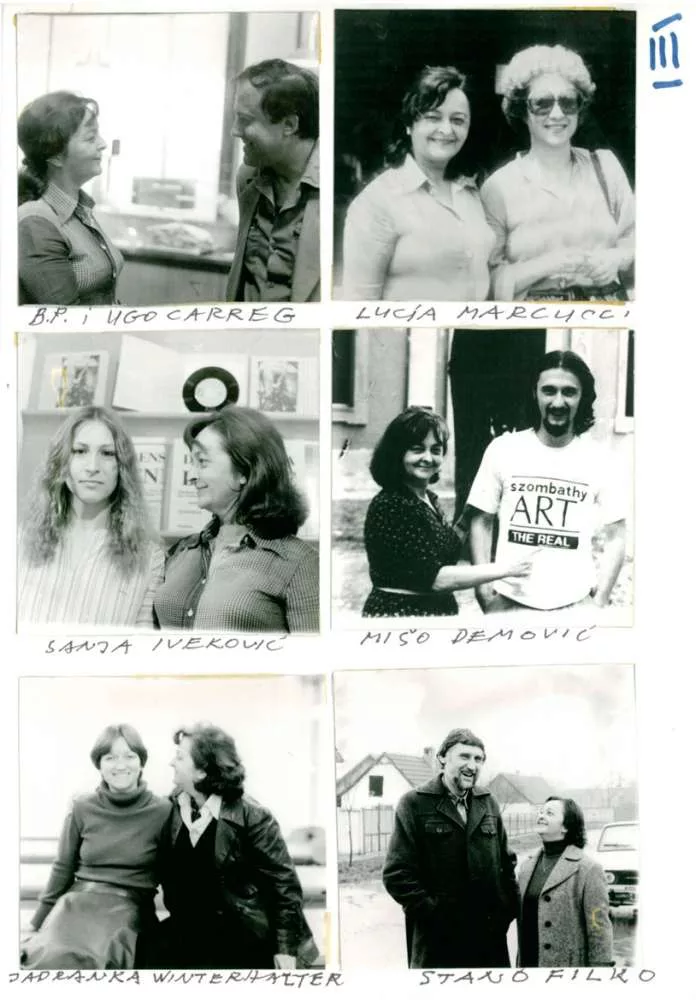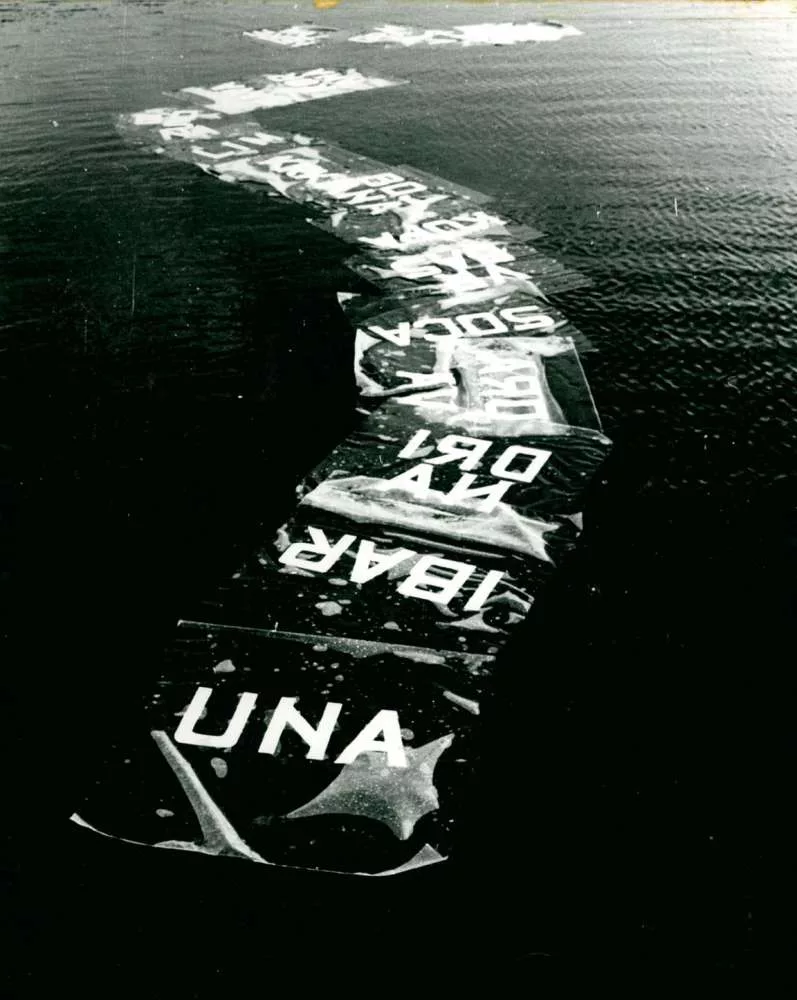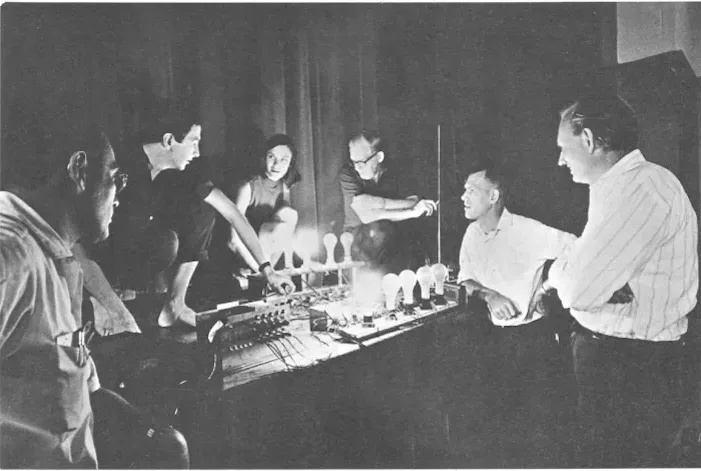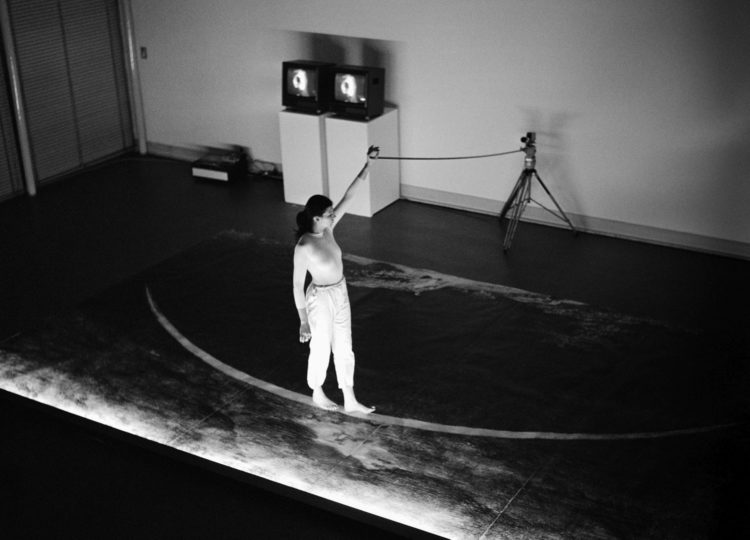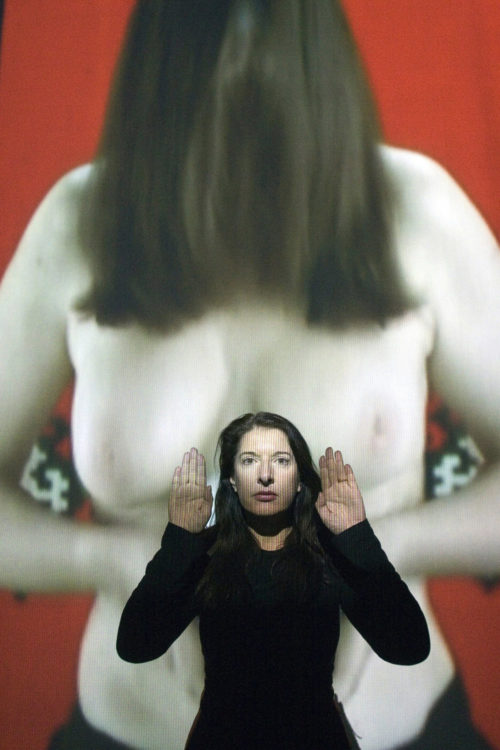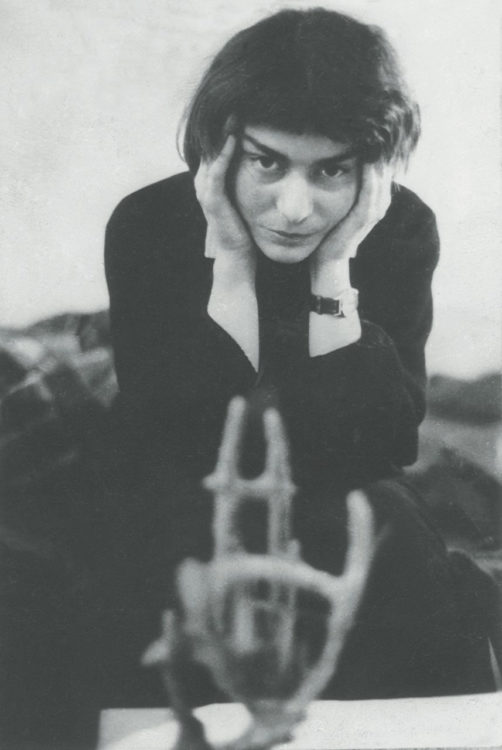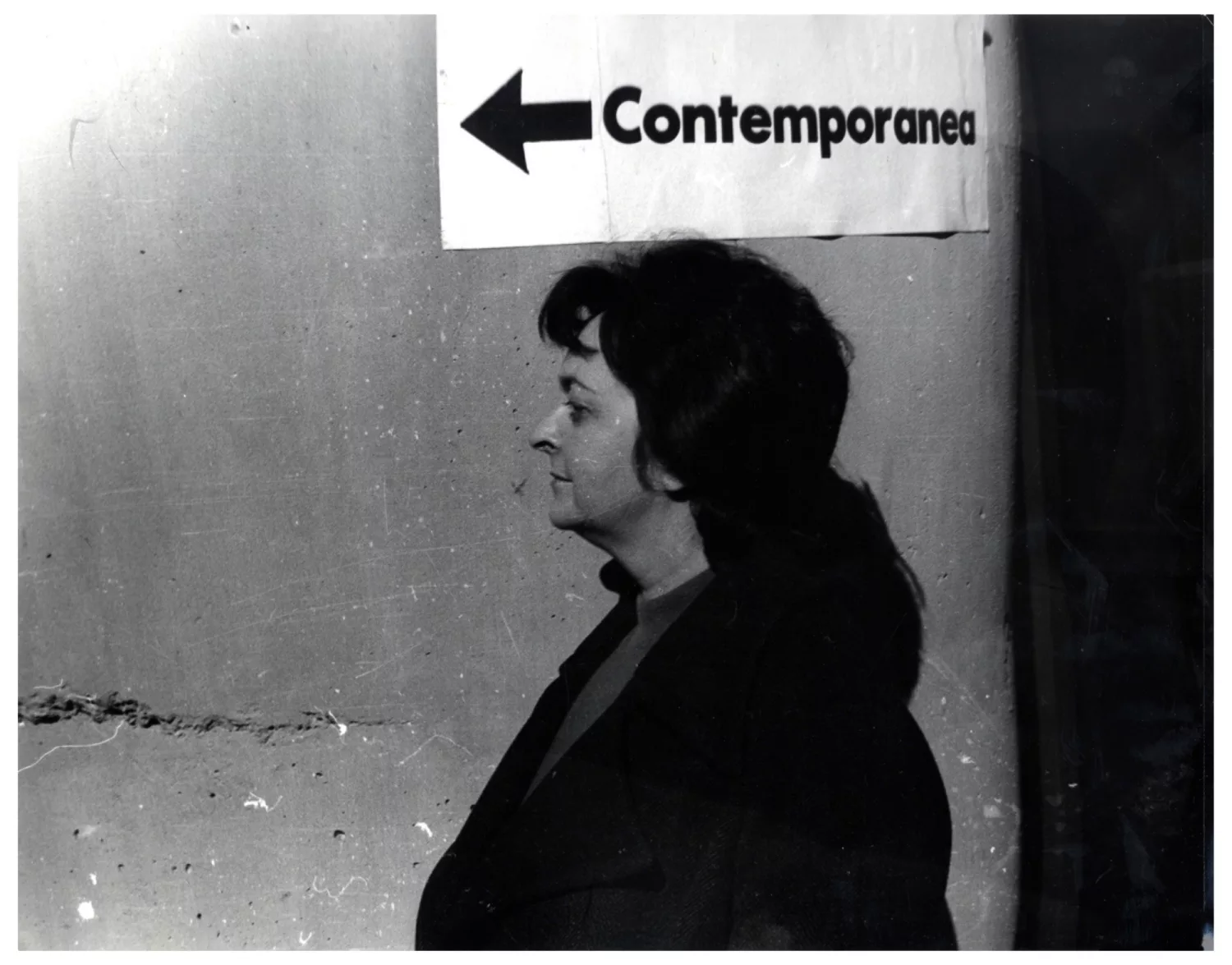
Bogdanka Poznanović, Contemporanea, 1974, black and white photography, 24 × 30.2 cm, Marinko Sudac Collection
Vojvodic Balaz, Violeta, “Bogdanka Poznanović: The Art of Communication and the ‘Mainframe Arte Povera,’” in RE:SOURCE 2023 Proceedings, Venice, the 10th International Conference on the Histories of Media Art, Science and Technology, 2023, p. 205–209
→Kojić Mladenov, Sanja, Bogdanka Poznanović: Contact Art, Novi Sad, Museum of Contemporary Art of Vojvodina, 2016
→Šuvaković, Miško, Bogdanka i Dejan Poznanović: Umetnost, mediji i aktivizam na kraju moderne, Novi Sad, Zagreb, Beograd, Museum Of Contemporary Art of Vojvodina, The Institute for the Research of the Avant-Garde, Orion Art, 2012
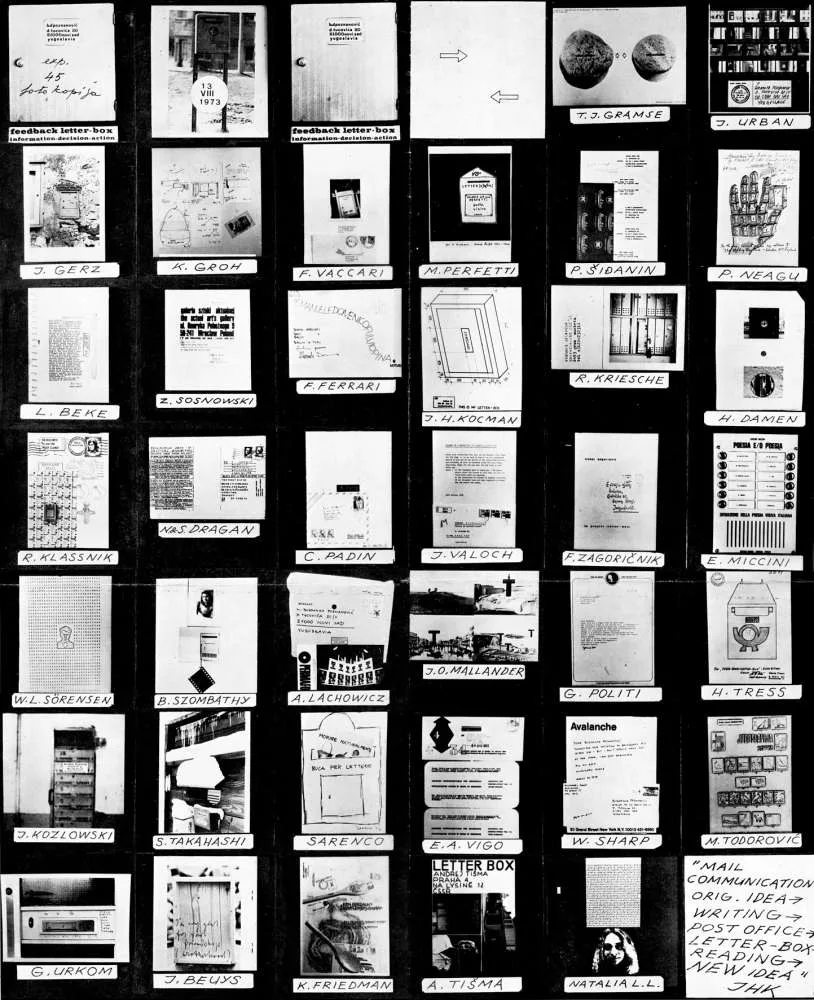
Feedback Letter-box, Studio of the Gallery of Contemporary Art, Zagreb, 1979
→Rivers Transmission, action at Lake Geneva, Espace-Situation Gallery Impact, Montreux, July 1972
→Self-Service Exhibition: Consuming The Complementarities (Konzumiranje komplementara), Tribune of the Youth, Novi Sad, December 1971
Yugoslav media art pioneer, networker, professor.
Bogdanka Poznanović started her artistic career as a painter. The socio-political effect of the Italian revolutionary artmovement and artistic tactics of Fluxus made a crucial impact on her professional development after 1968. B. Poznanović’s practice ranged from art informel and collage to environmental, conceptual, and video art, performance, visual poetry, and mail and communication art, which she called “contact art.” As an international networker, she explored the notion of a media-augmented artist and experimented with various information channels such as the postal and telephone networks, art magazines, walkie-talkie radio, and the TV screen.
B. Poznanović was a distinctive public figure. She graduated from the Faculty of Fine Art in Belgrade (1956). She was a founder and activist of the public organization Tribune of the Youth (1954) and the art and culture magazine Polja (1955), focal points of the Novi Sad neo-avant-garde. As a representative for fine art on the Council for Culture of Vojvodina, she participated in organizing the professional association of fine artists in Vojvodina (1957), aiming to emancipate art practice from the influence of agitprop and socialist realism. She was a member of the board for the Salon of Tribune of the Youth (1969–71) and published texts in Polja, Új Symposion, Student, and Ekran. She built a special connection to Italy: She did specializations in Florence and Rome (1968/69); Venice (1977); Milan, Bologna, and Ferrara (1984); and had a retrospective exhibition of paintings in Verona (1990).
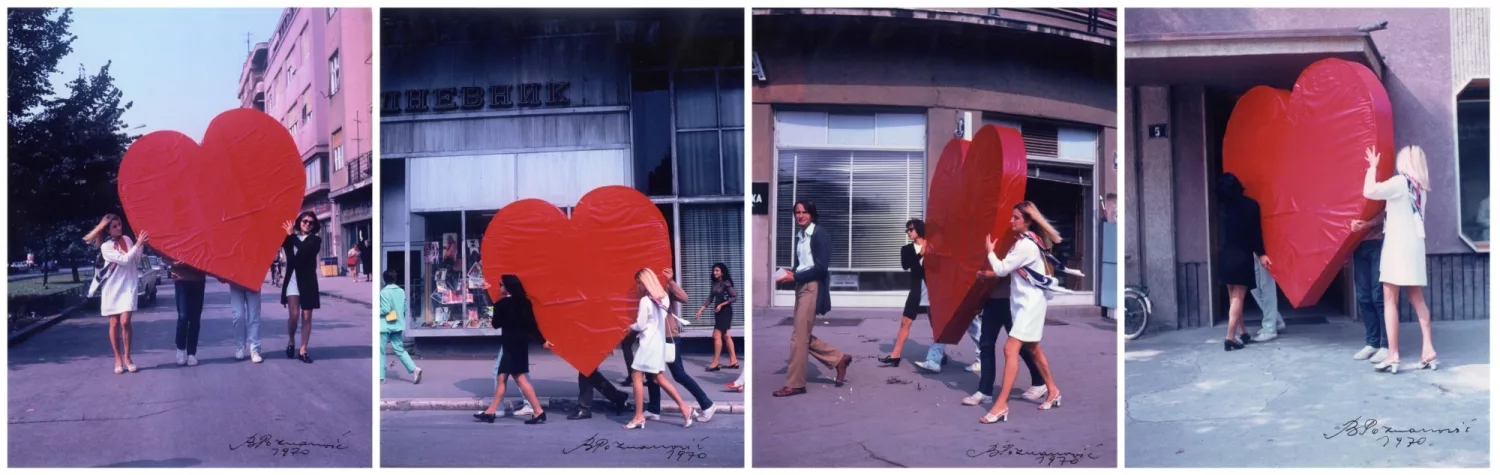
Pioneering work by B. Poznanović encompasses many areas, including art informel from the 1960s; environmental art, specifically the Danube-related projects Cubes-Rivers (1971) and Rivers Transmission (1972); and video art produced as self-documentation of actions, the first of which was Heart-Object (1970), as well as a video realization of POEMIM by Katalin Ladik (1980). Others span the international mail art project Feedback Letter box: Information—Decision—Action (1973/74), to mainframe arte povera performance Computer Tape & Body (1973) or breath-writing on magnetic tape in Conceptus respiratio (1975). Communication artworks included Walkie-talkie communication (1974), realized with Nuša and Srečo Dragan; Bioelectronic Communication (1980), made with Stano Filko; and a continual photo series Art—Interpersonal Communication, which recorded her encounters with artists Klaus Groh, Sanja Iveković, and Vladan Radovanović, among others. “Contact art – Bogdanka” was part of the MIT Cable TV Show (Boston, 1984).
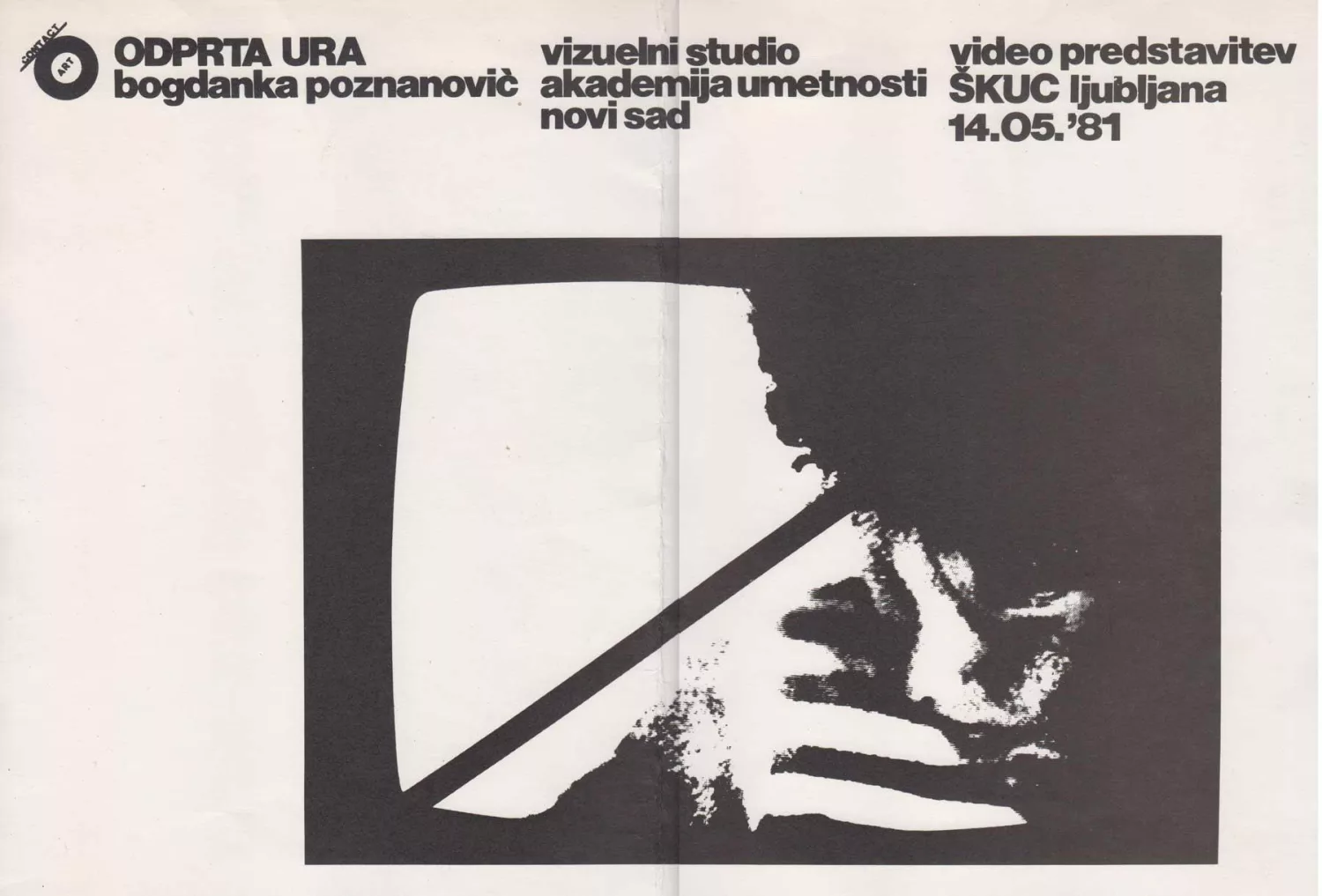
The most significant contribution of B. Poznanović was her pedagogical work (1959–95) dedicated to the upbringing of new generations of artists. At the Academy of Arts in Novi Sad, she founded the Visual Studio for Intermedia Research (1979), which was rooted in the Fluxus-based practice of her academic course “Theory of Shape and Space with Visual Research” (1976). The work of Visual Studio was presented in Paris at the 12th Biennale internationale des jeunes artistesin 1982. B. Poznanović equipped her students with the knowledge of an electronic environment, the cybernetic notion of an “observed observer,” and the position of networked artist.
A biography produced as part of the programme “Living with two brains: Women in New Media Art, 1960s-1990s”
© Archives of Women Artists, Research and Exhibitions, 2026