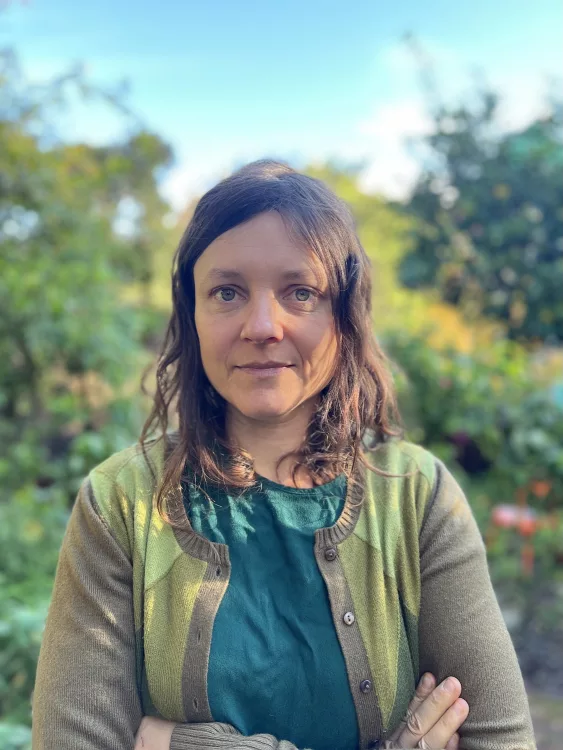
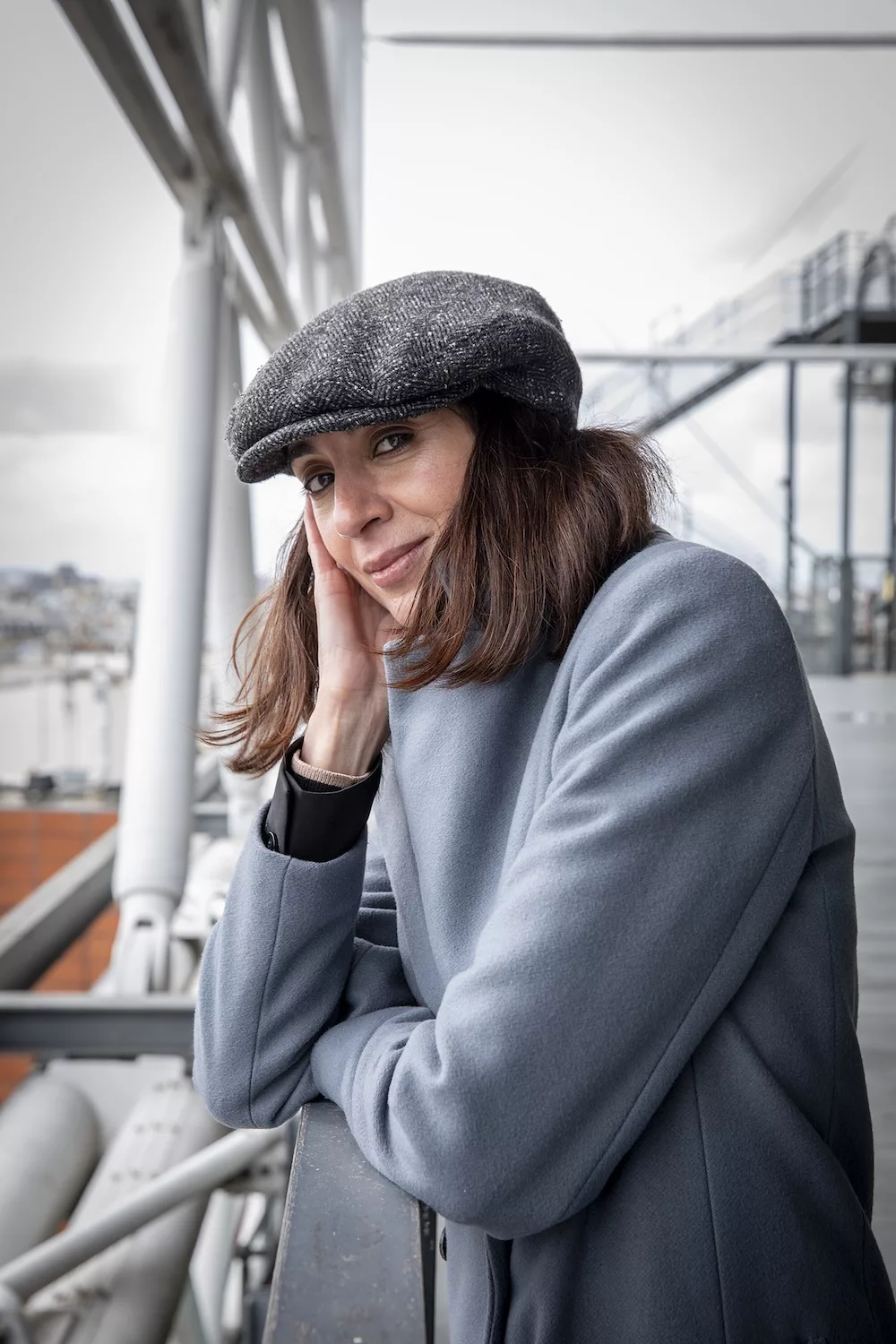
Bouchra Khalili (portrait), courtesy of the artist and mor Charpentier, © Photo: Julie Ansiau
Bouchra Khalili: The Circle – Chronologie pour une constellation, London: Book Works, 2025
→Bouchra Khalili: Entre círculos y constelaciones: = Between circles and constellations, exh. cat., Barcelona: Museu d’Art Contemporani de Barcelona, 2023
→Bouchra Khalili, The Tempest Society, London: Book Works, 2019
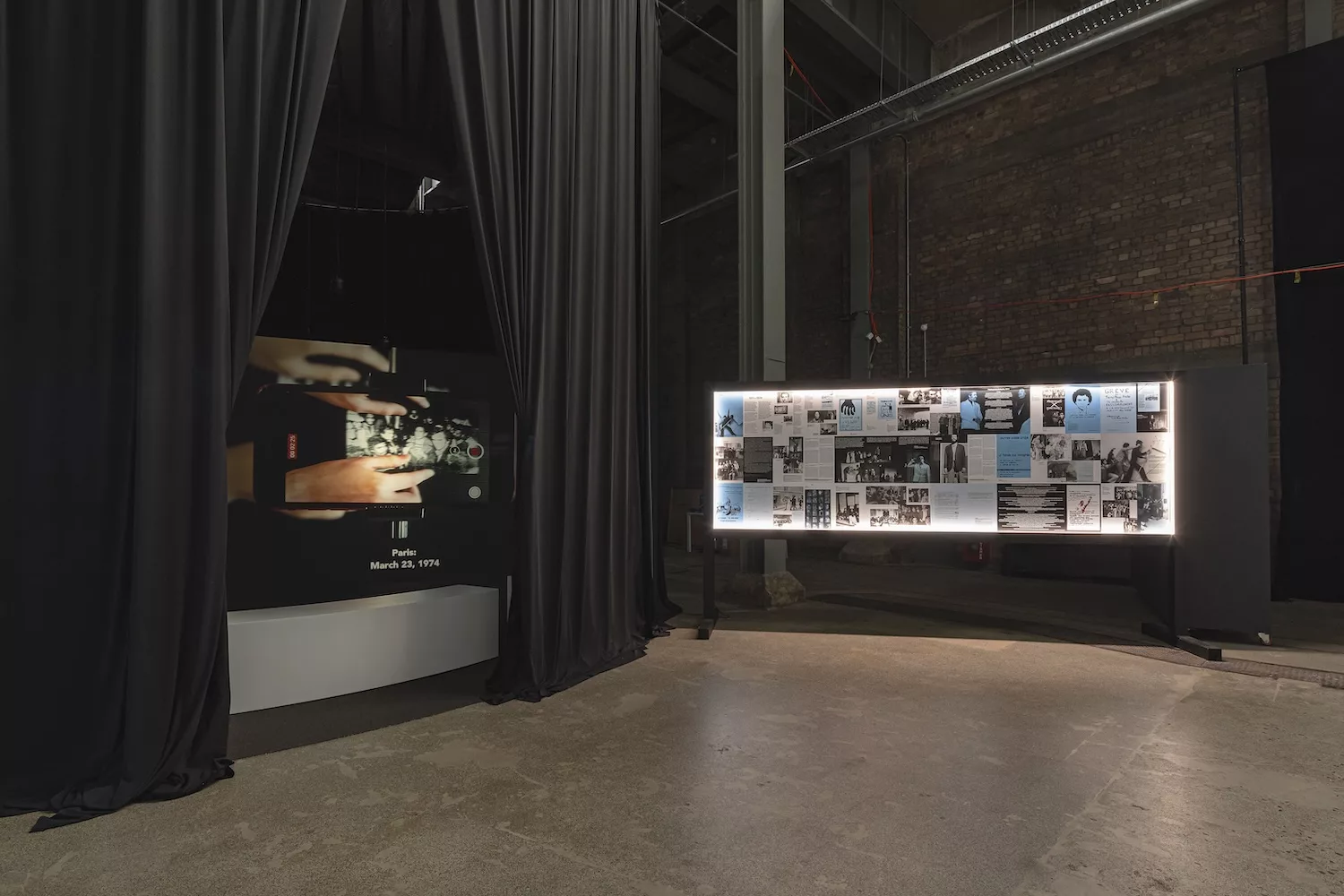
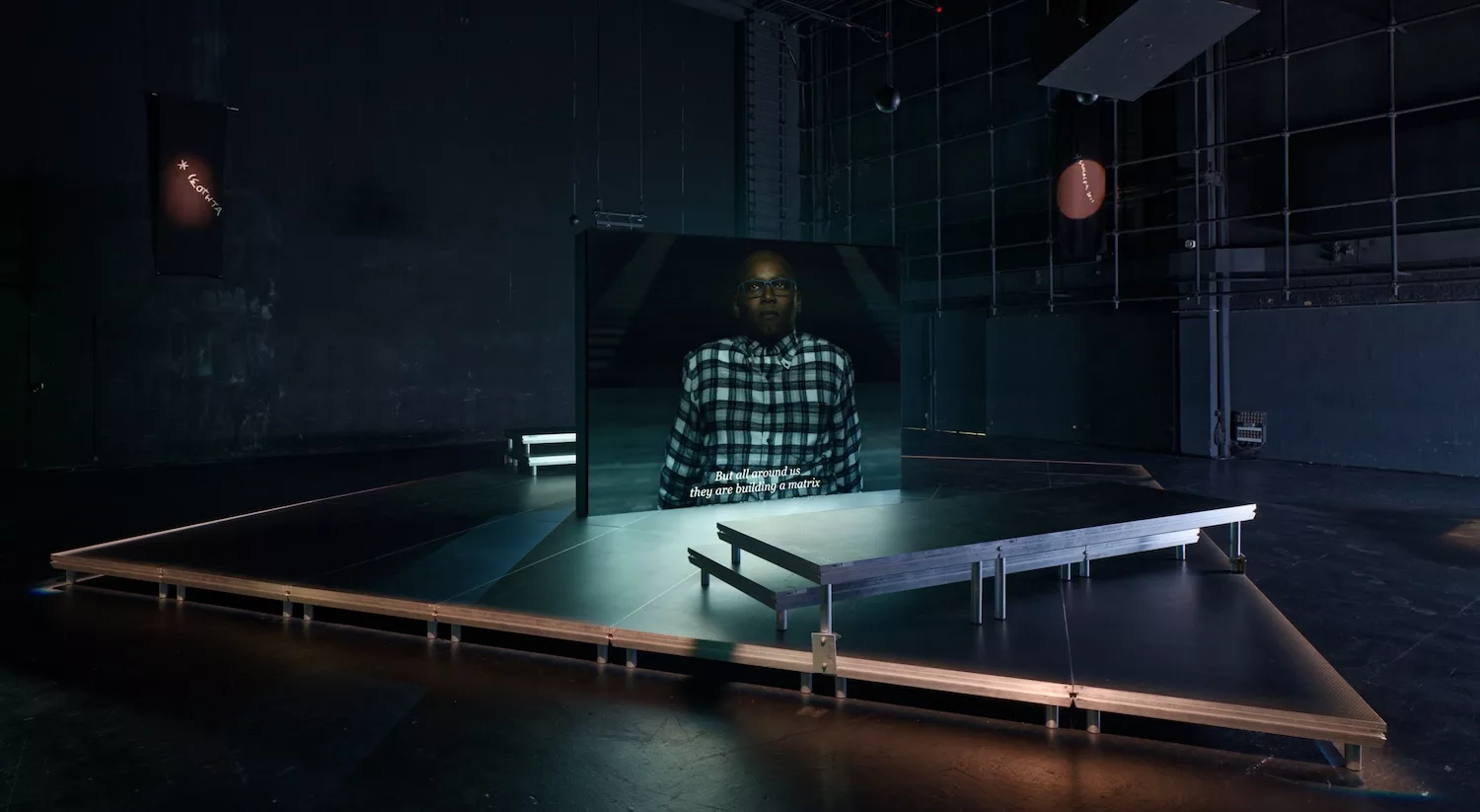
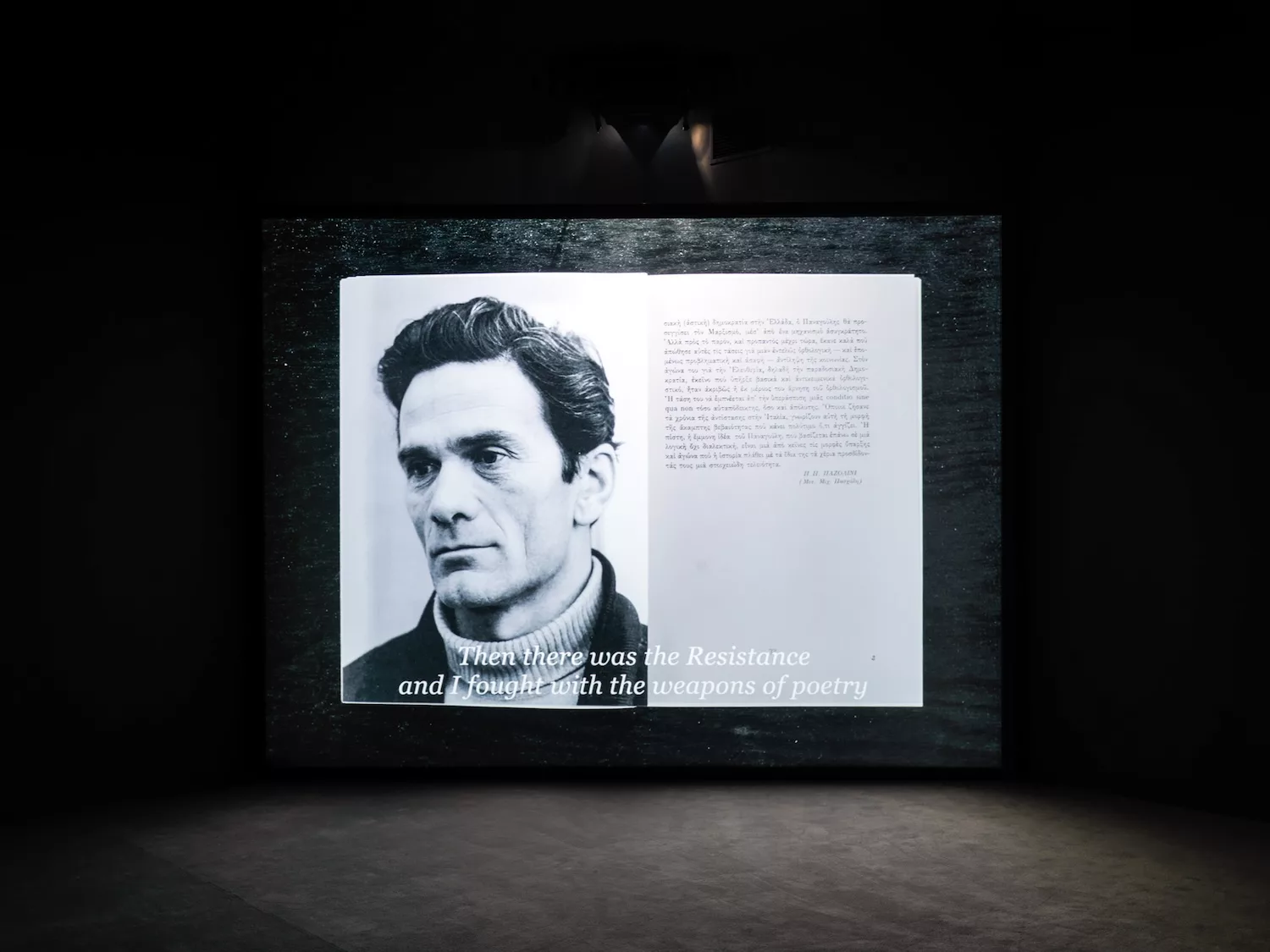
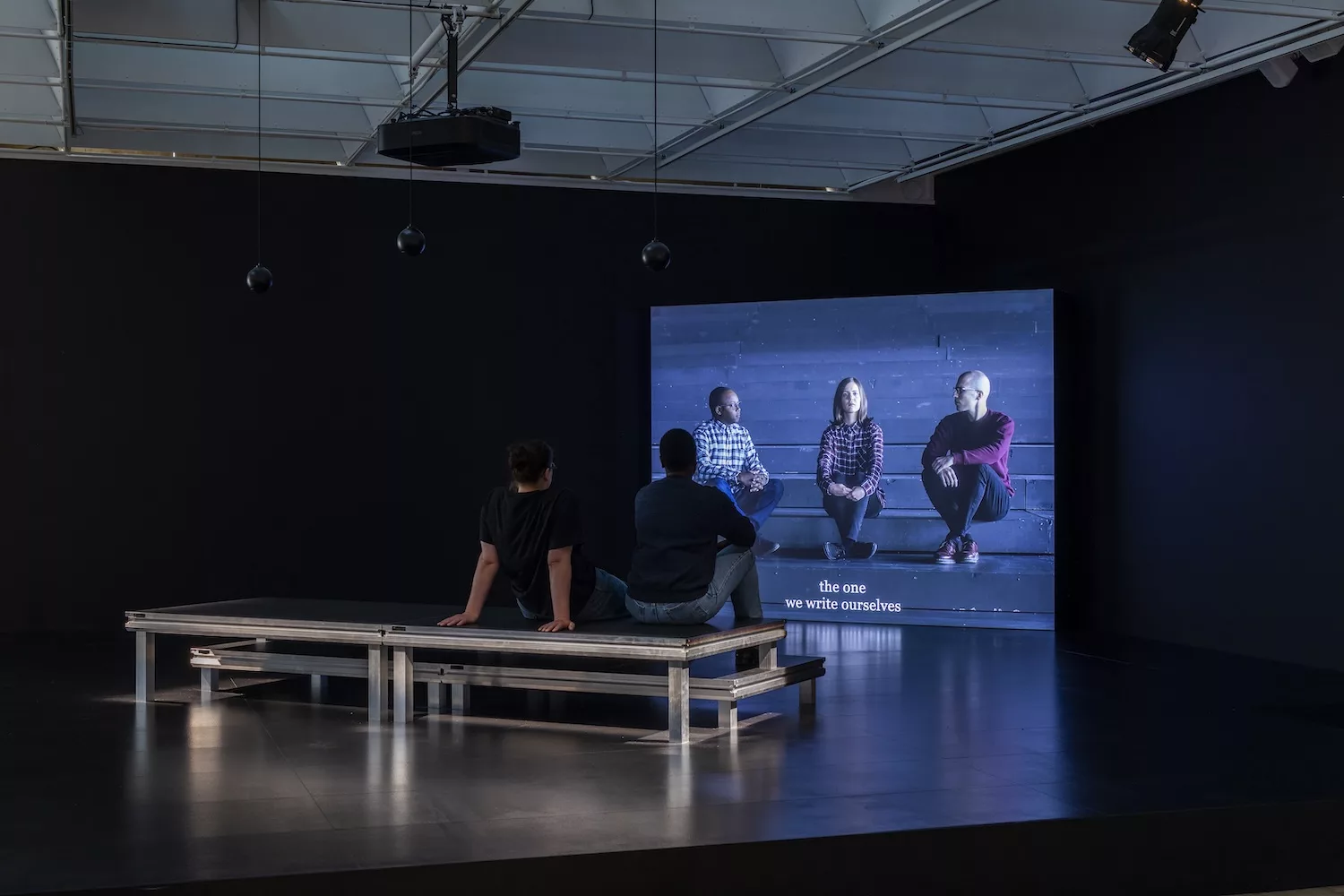
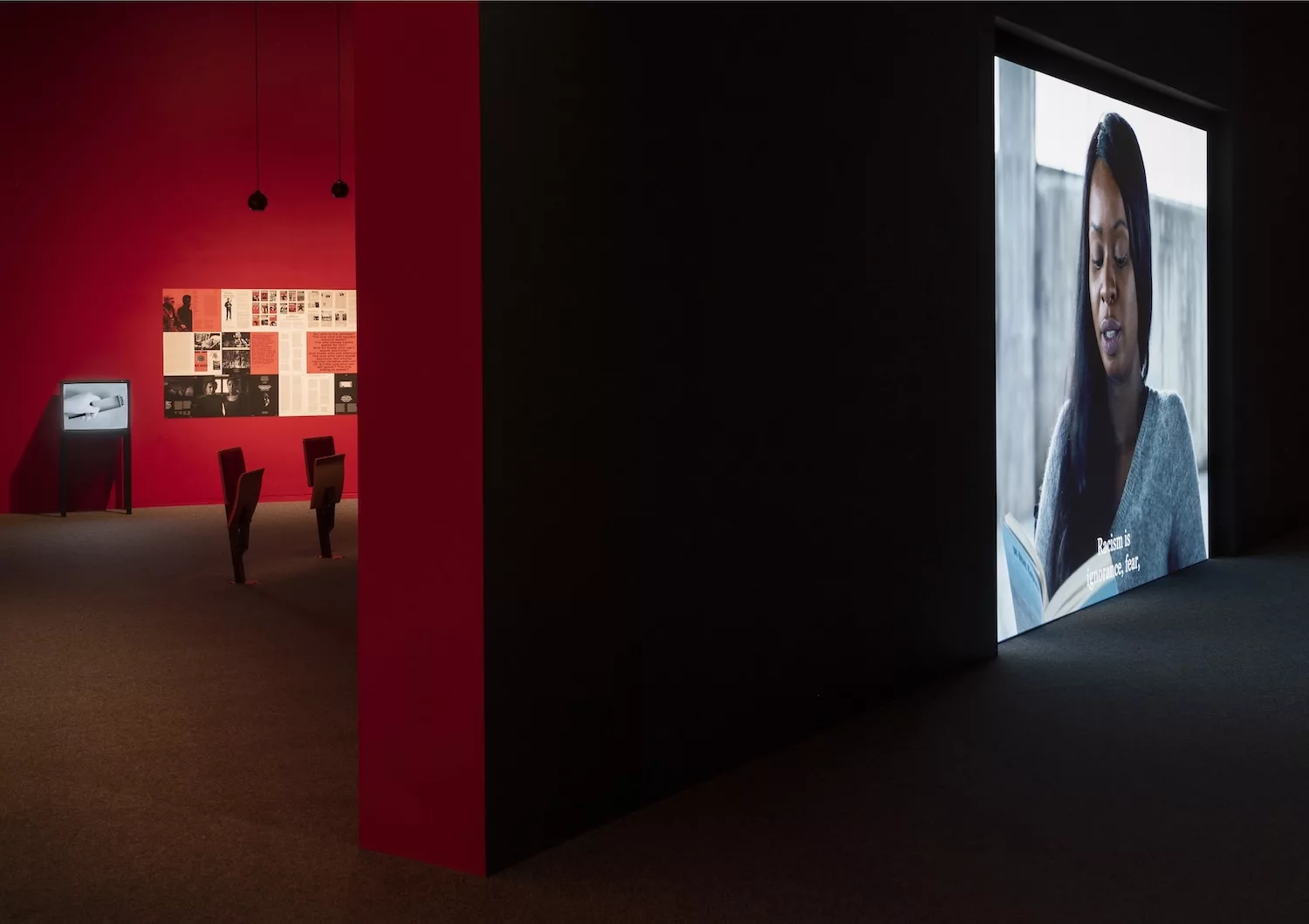
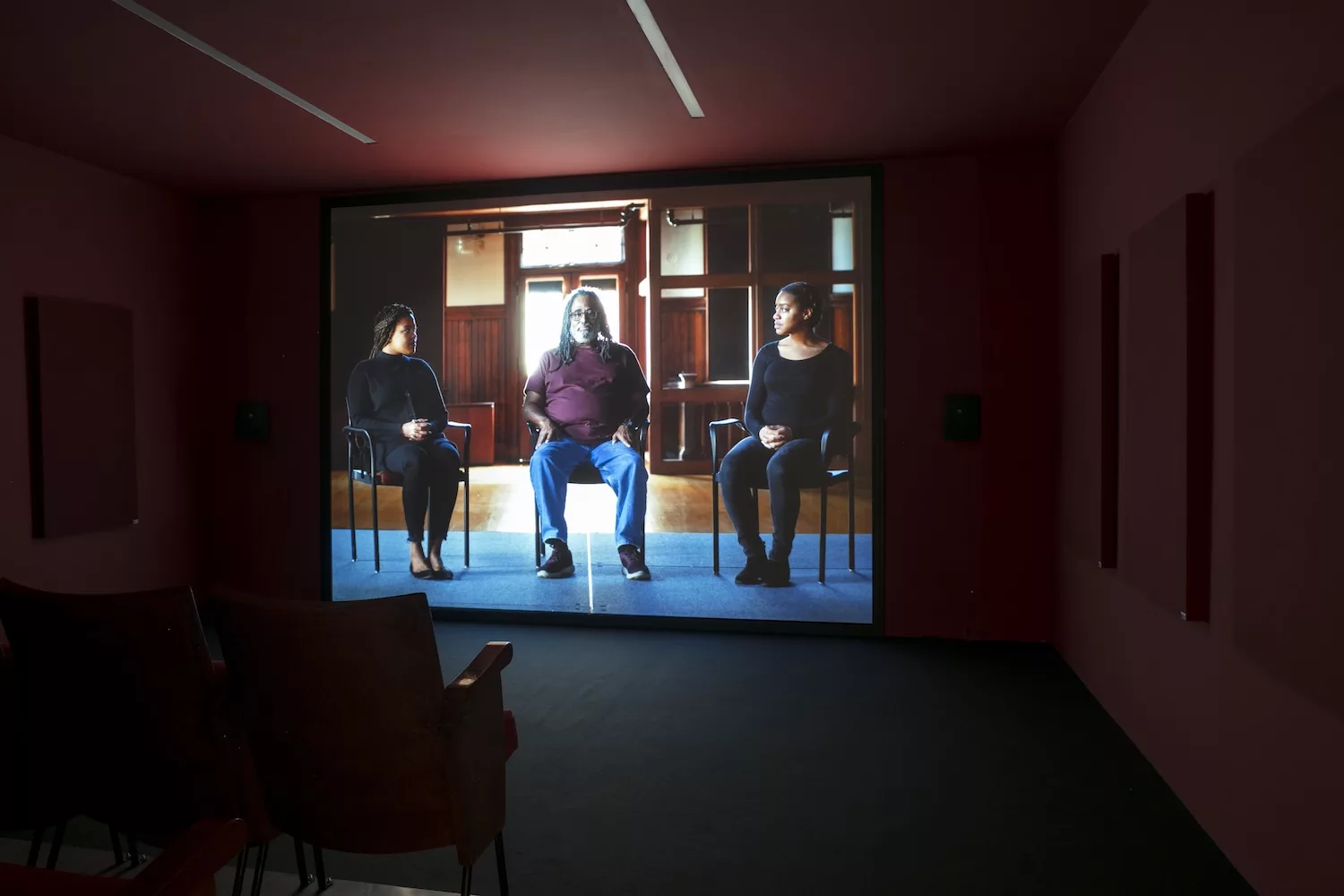
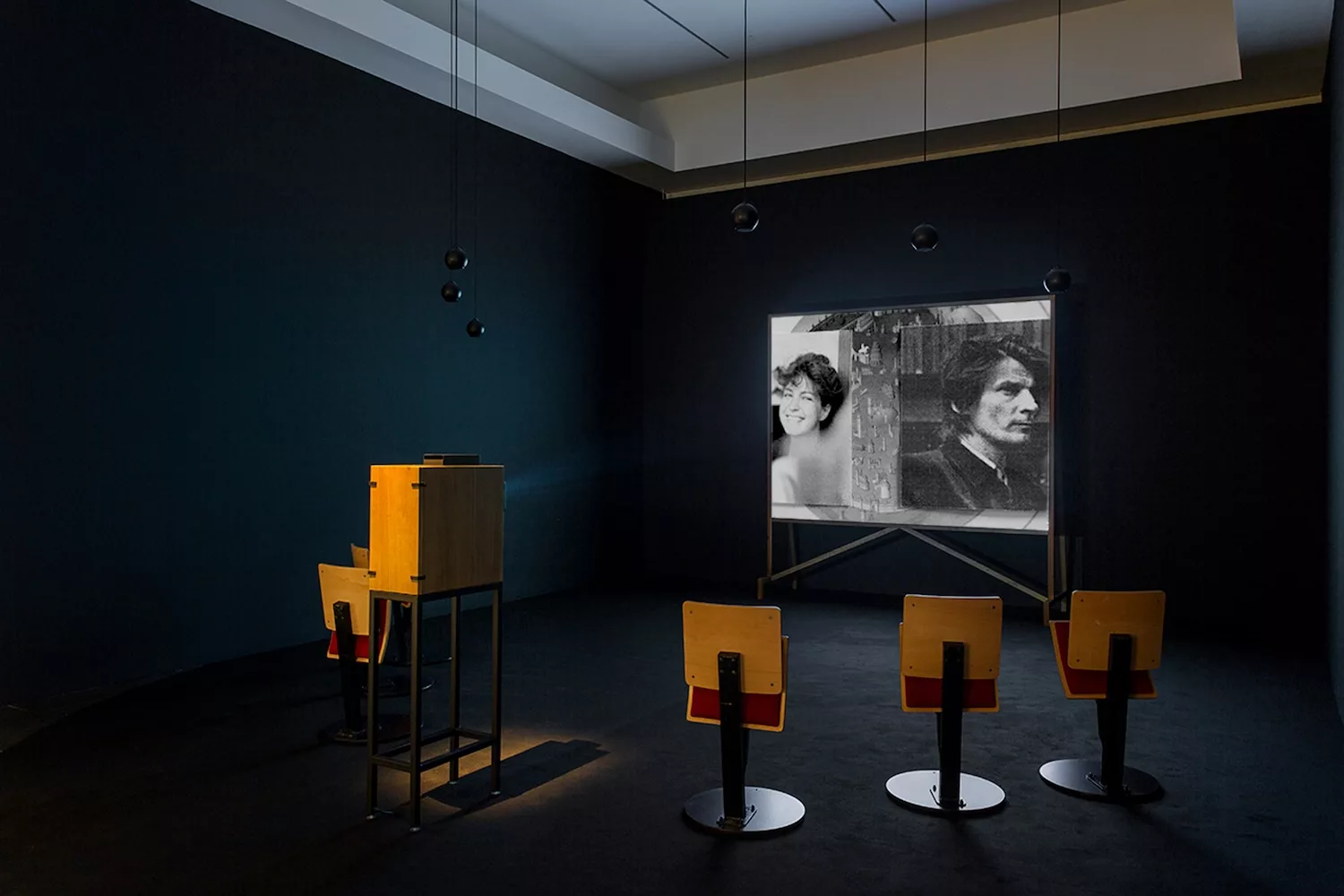
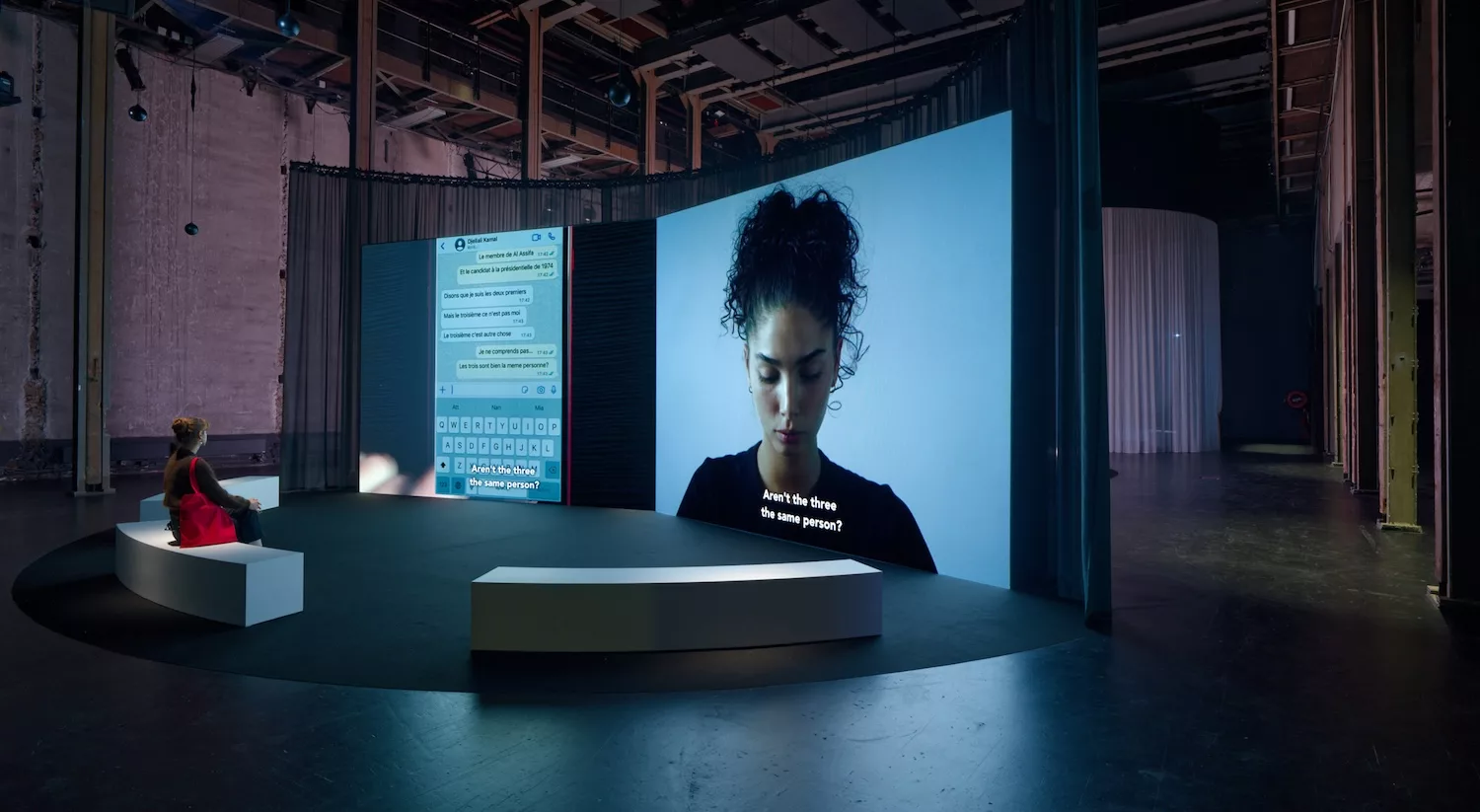
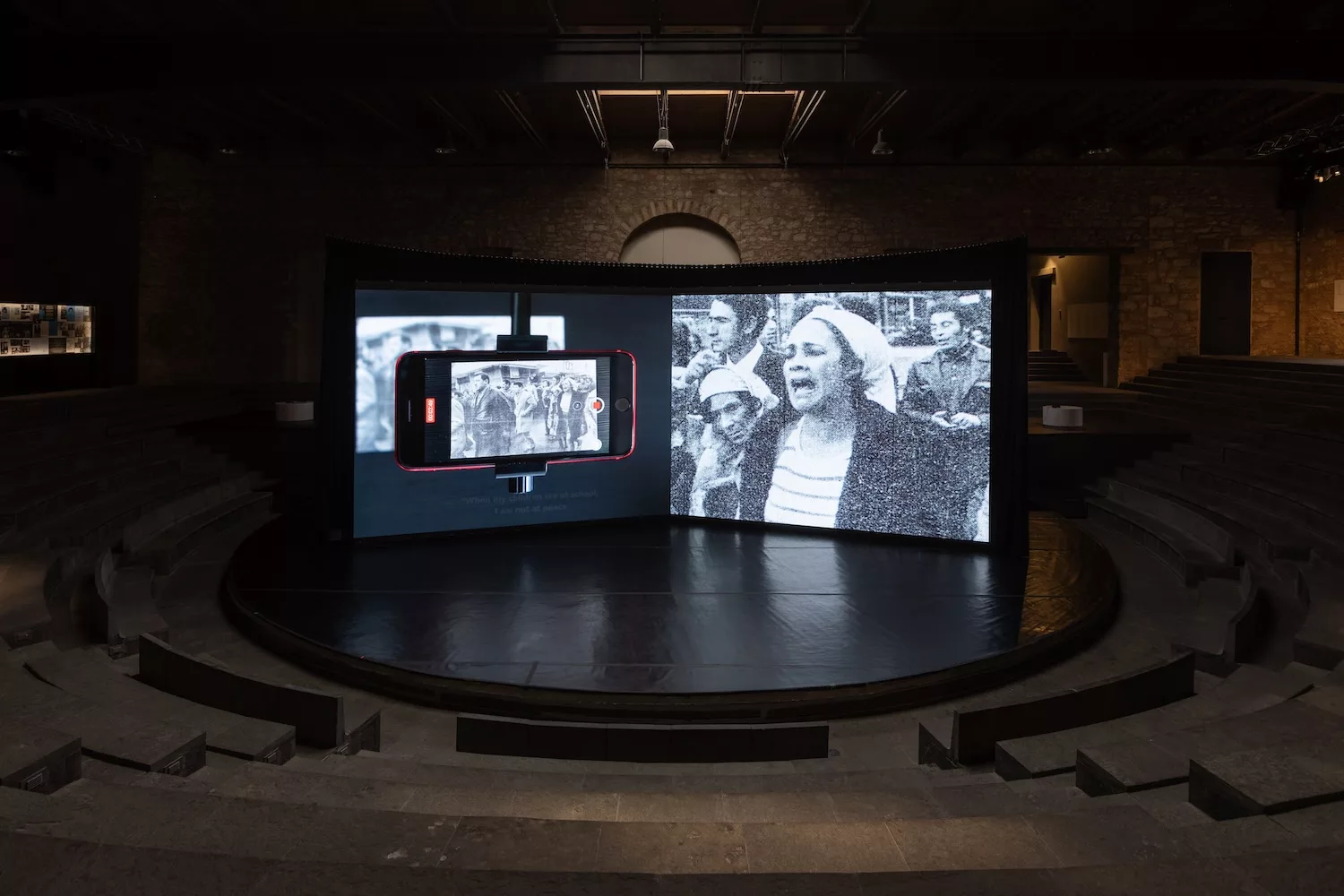
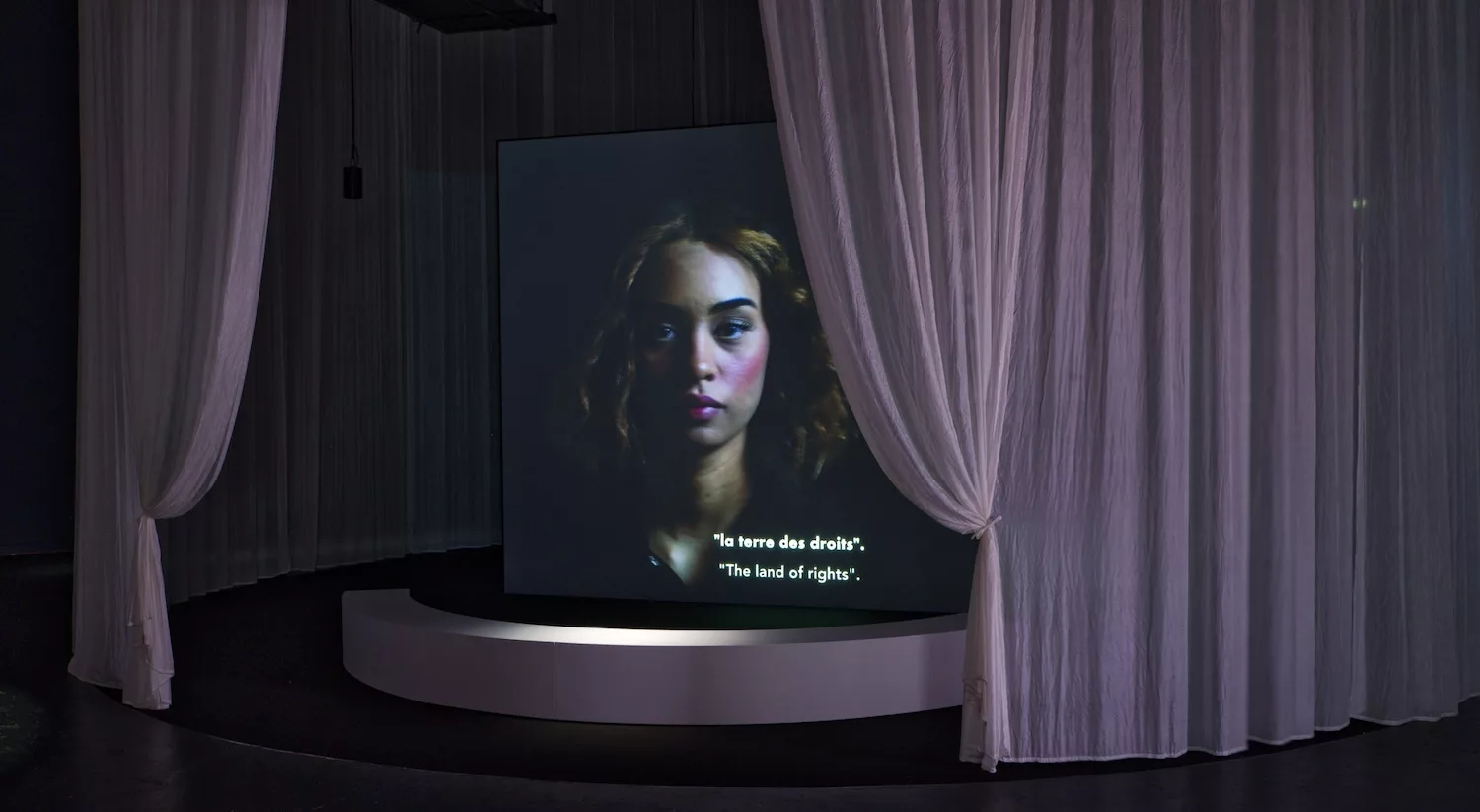
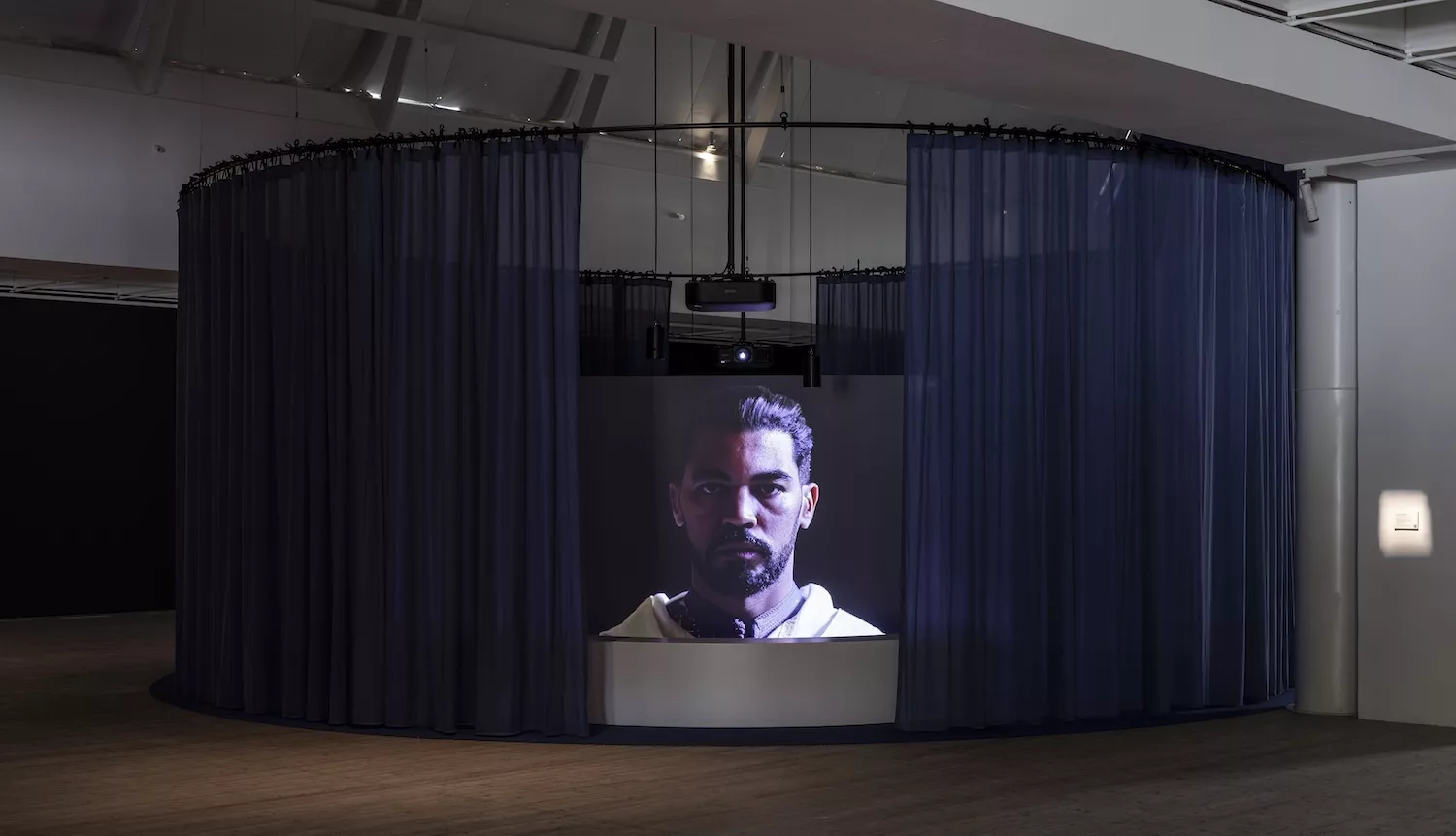
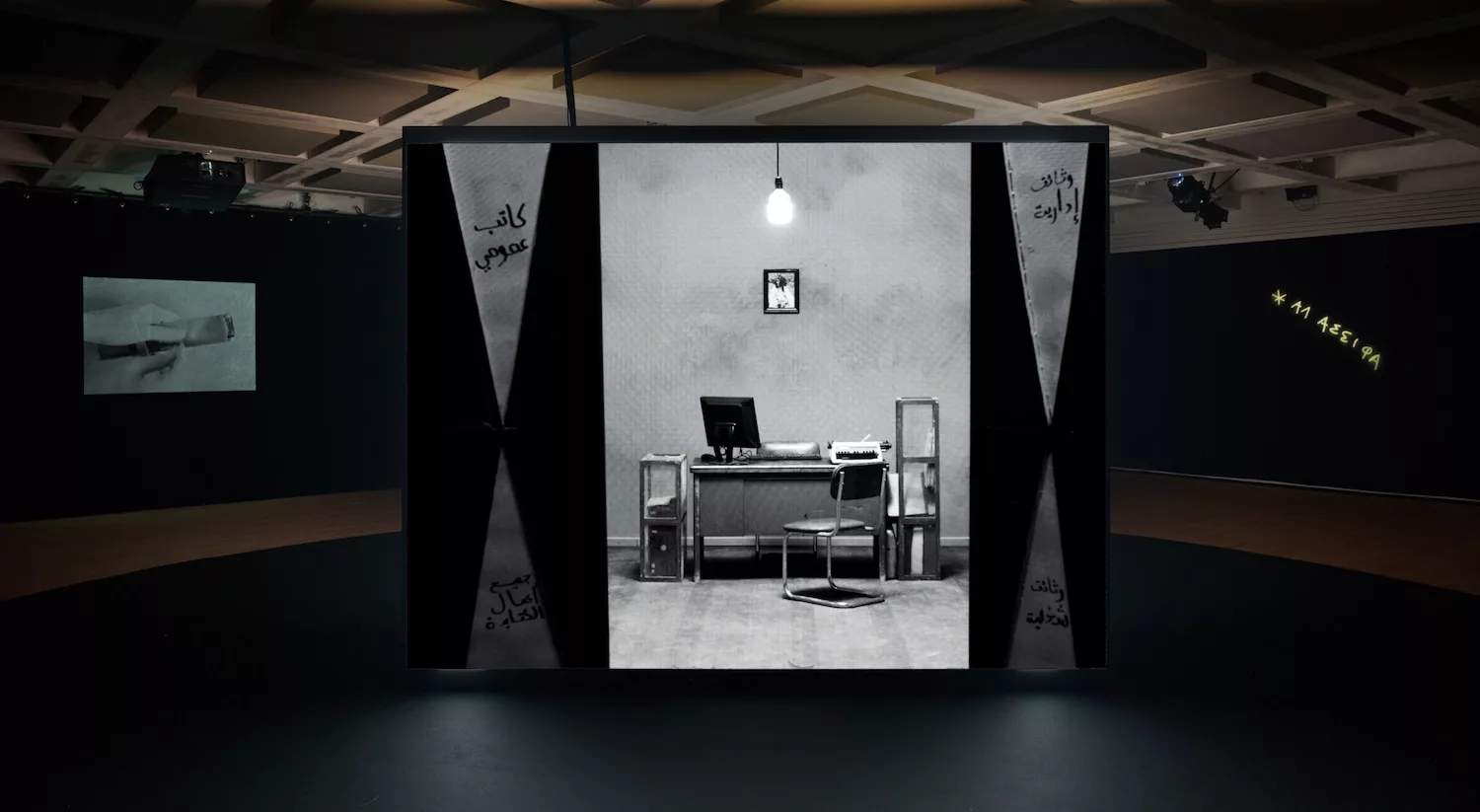
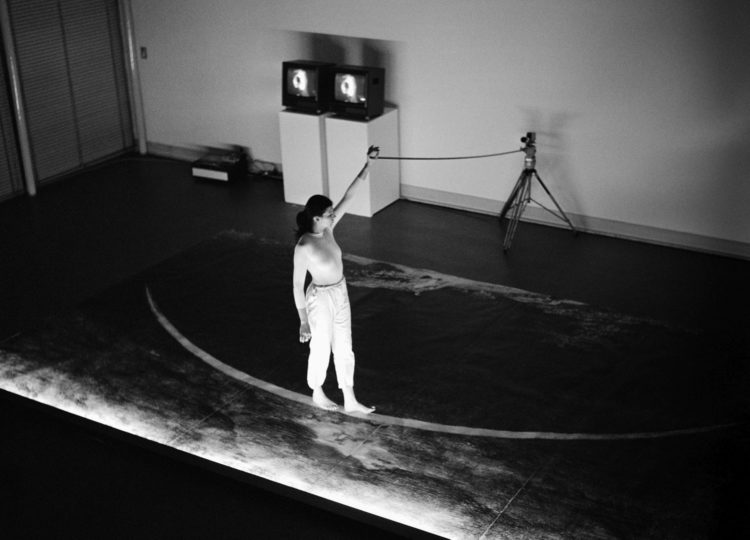
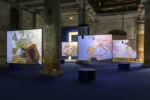
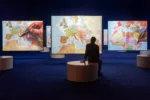
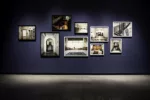
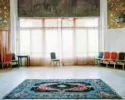
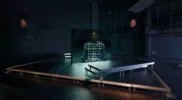
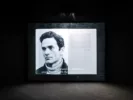
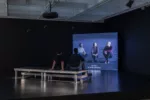
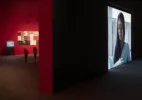
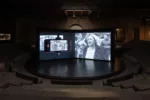
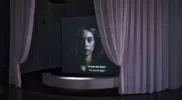
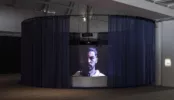
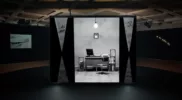
Astérismes (Fig. 1. – 3), Bouchra Khalili at Festival d’Automne 2025, September – October, Various Theatres in Paris
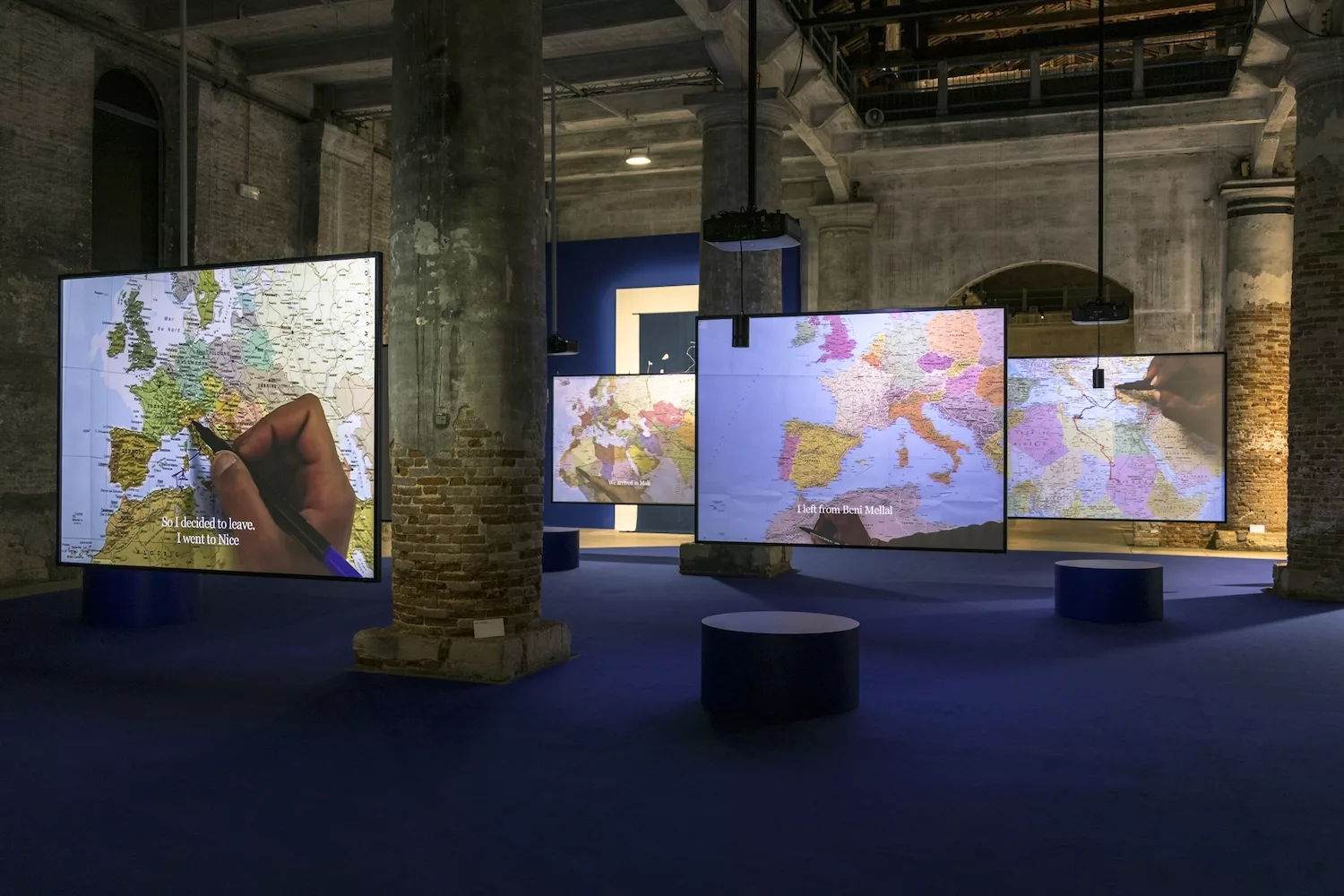
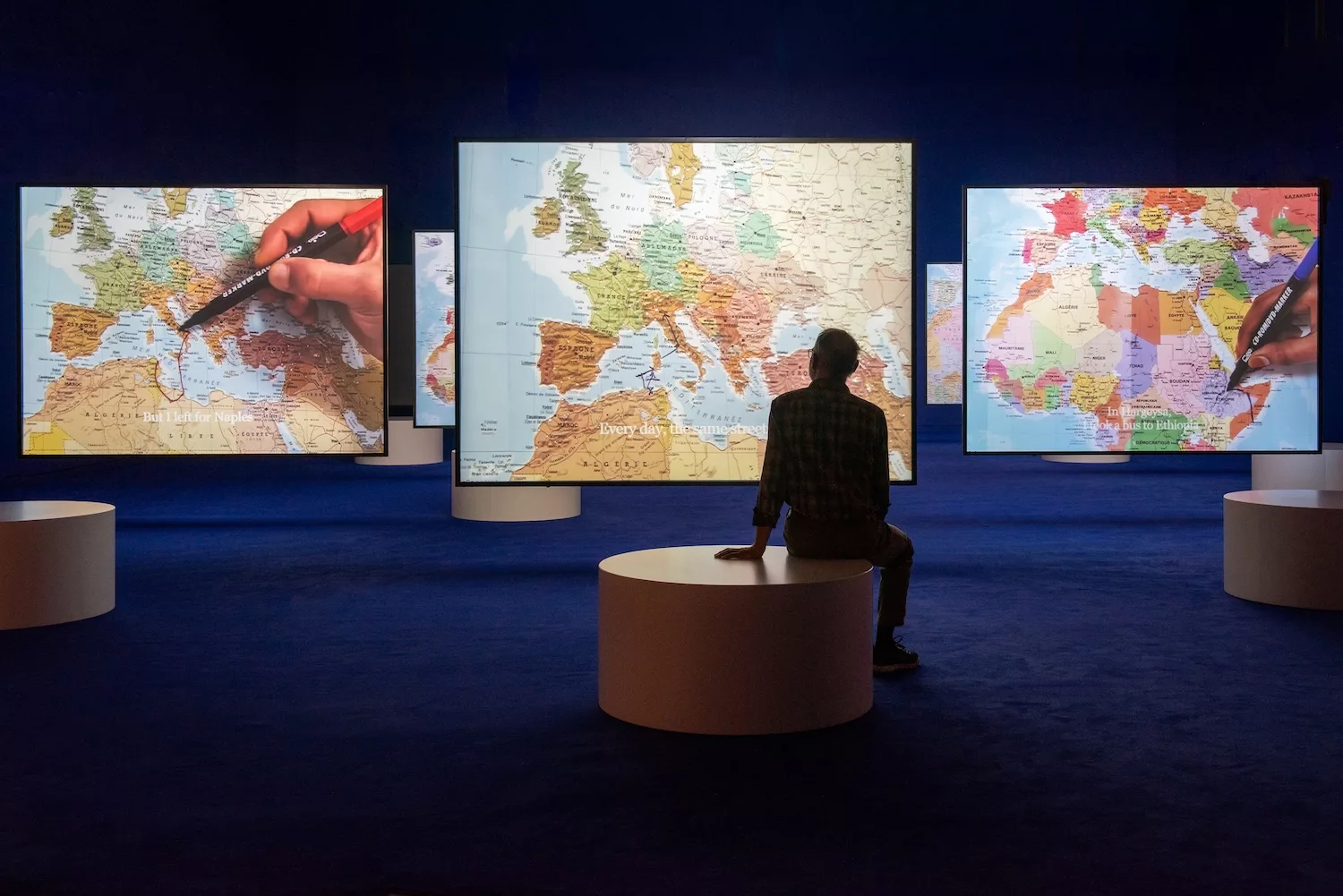
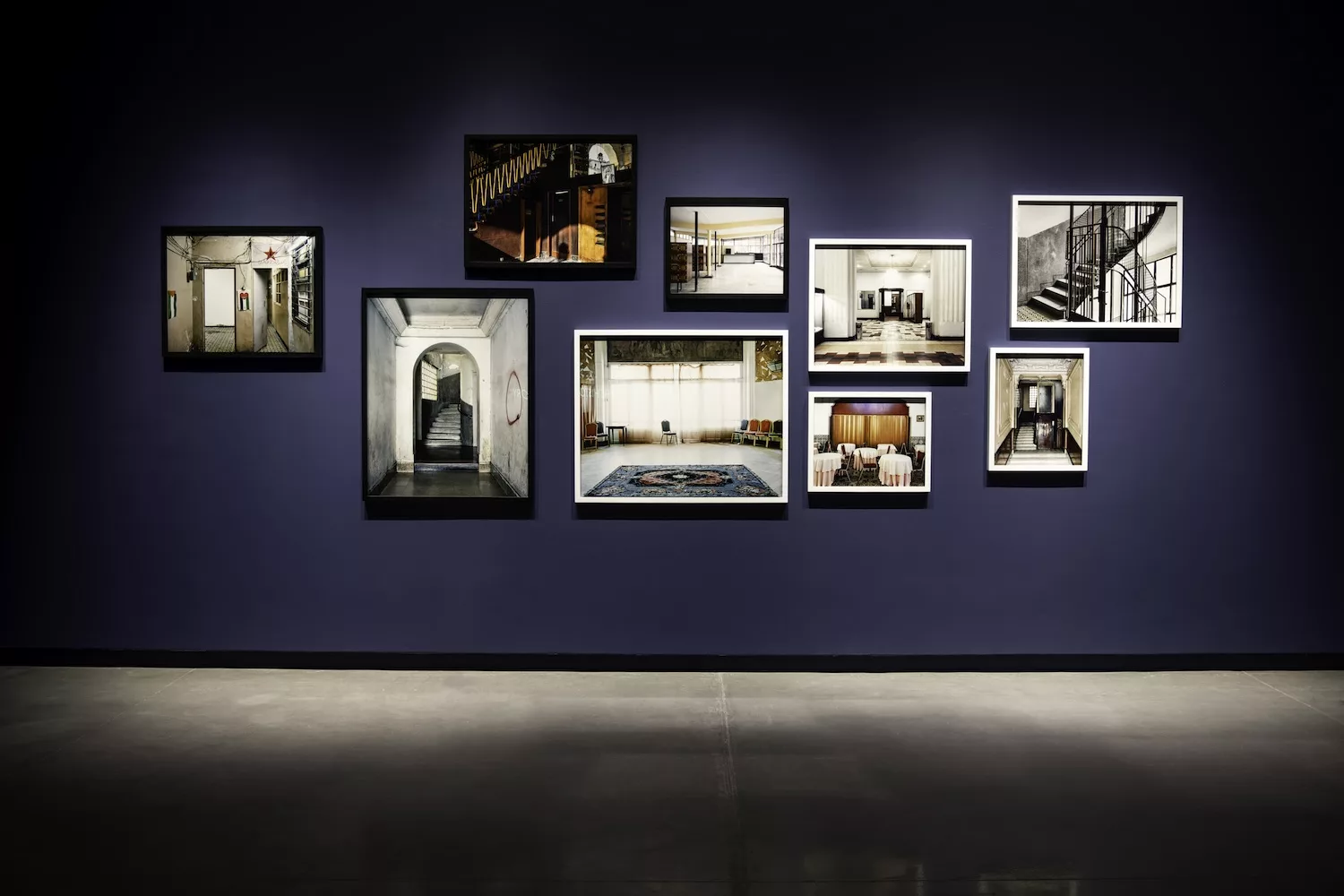
→Bouchra Khalili: Between Circles and Constellations, Sharjah Art Foundation, September – December 2024, and MACBA, February – May 2023
→Bouchra Khalili: Poets and Witnesses, Museum of Fine Arts, Boston, March – August 2019
French-Moroccan multidisciplinary visual artist.
Having been trained in Film & Media Studies at the Sorbonne Nouvelle and in Visual Arts at the École Nationale d’Arts de Paris-Cergy, Bouchra Khalili works across a wide range of media, including film, video, installation, photography, printmaking, publishing and textile. Many of her artistic projects and installations take earlier struggles for emancipation as their point of departure, particularly those connected to anti-colonial and anti-racist movements.
Yet her artistic practice cannot be reduced to artistic historiography or archival work. Instead of representing history, B. Khalili engages in a collective rethinking of these struggles from the perspective of the present. This approach is particularly apparent in her long-term engagement with the legacy of the Mouvement des travailleurs arabes (MTA), which found expression in the works The Tempest Society (2017) and The Circle Project (2023). Both draw on the practices of the militant theatre groups El Assifa [The Tempest] and El Halaka [The Circle], which were active within the orbit of the MTA in France during the 1970s.
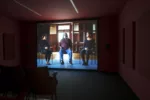
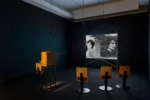
Accordingly, The Tempest Society, first presented during documenta 14 in Athens in 2017, transfers El Assifa’s militant methods, such as that of a ‘theatrical newspaper’, to the context of the movements that emerged in Greece during the 2010s. The protagonists of this film installation are three Athenian militants involved in struggles against austerity and Europe’s racist border regime. Filmed in a theatre in Athens, they use El Assifa’s methods to amplify their own resistance. In a similar manner, B. Khalili works in her mixed-media installation The Circle Project with two young French people of Tunisian and Algerian descent, who ask themselves before the camera how the history of El Halakaresonates with their own life situations. This is intercut with re-enactments of plays from the 1970s performed by former members of the two theatre groups.
This approach of mediating fragments of the past with the present is clearly informed by Walter Benjamin’s method of constellation, to which B. Khalili regularly refers. Her artistic projects therefore cannot be understood as isolated artworks. Taken together, her different installations unfold a complex constellation of resistance across time, space and people. The MTA-related projects are thus part of a constellation created by B. Khalili that repeatedly evokes militants, artists, filmmakers and organisations, including Kathleen and Eldridge Cleaver and the Black Panther Party, Jean Genet, Amílcar Cabral, Mario Pinto de Andrade, Carole Roussopoulos, Mririda n’Aït Attik, Pier Paolo Pasolini and Frantz Fanon, all of whose practices can be regarded as amongst the most important influences on her artistic work.
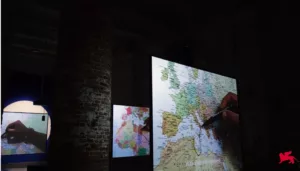
B. Khalili’s formal procedures are highly reduced, relying on static cameras and a limited number of shots. Medium shots featuring frontally filmed faces, hands and historical documents often predominate. Her protagonists recite a script that B. Khalili has previously edited from her own research as well as from their experiences, while hands arrange, display and bring the historical materials into ever-new constellations. The sobriety thereby produced, like the recitative mode of speaking adopted by the protagonists, is clearly informed by Brechtian techniques of estrangement (Verfremdung), which indicates that B. Khalili’s interest is not directed towards creating a living encounter with history.
A biography produced as part of the +1 programme.
© Archives of Women Artists, Research and Exhibitions, 2026


 Biennale Arte 2024 - Bouchra Khalili | BiennaleChannel, 2025
  Natasa Petresin Bachelez présente le travail de Bouchra Khalili | Prix Marcel Duchamp 2023
 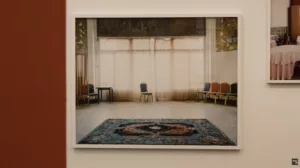 Bouchra Khalili | La veu de l'exposició | MACBA, Barcelona, 2023
  Exhibition talk: Bouchra Khalili and Rike Frank | Vienna Secession, 2019
  Bouchra Khalili au Jeu de Paume, Paris | Jeu de Paume, 2018