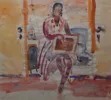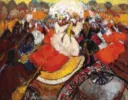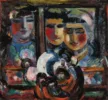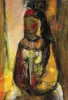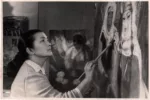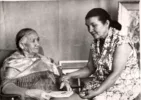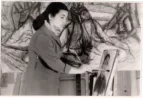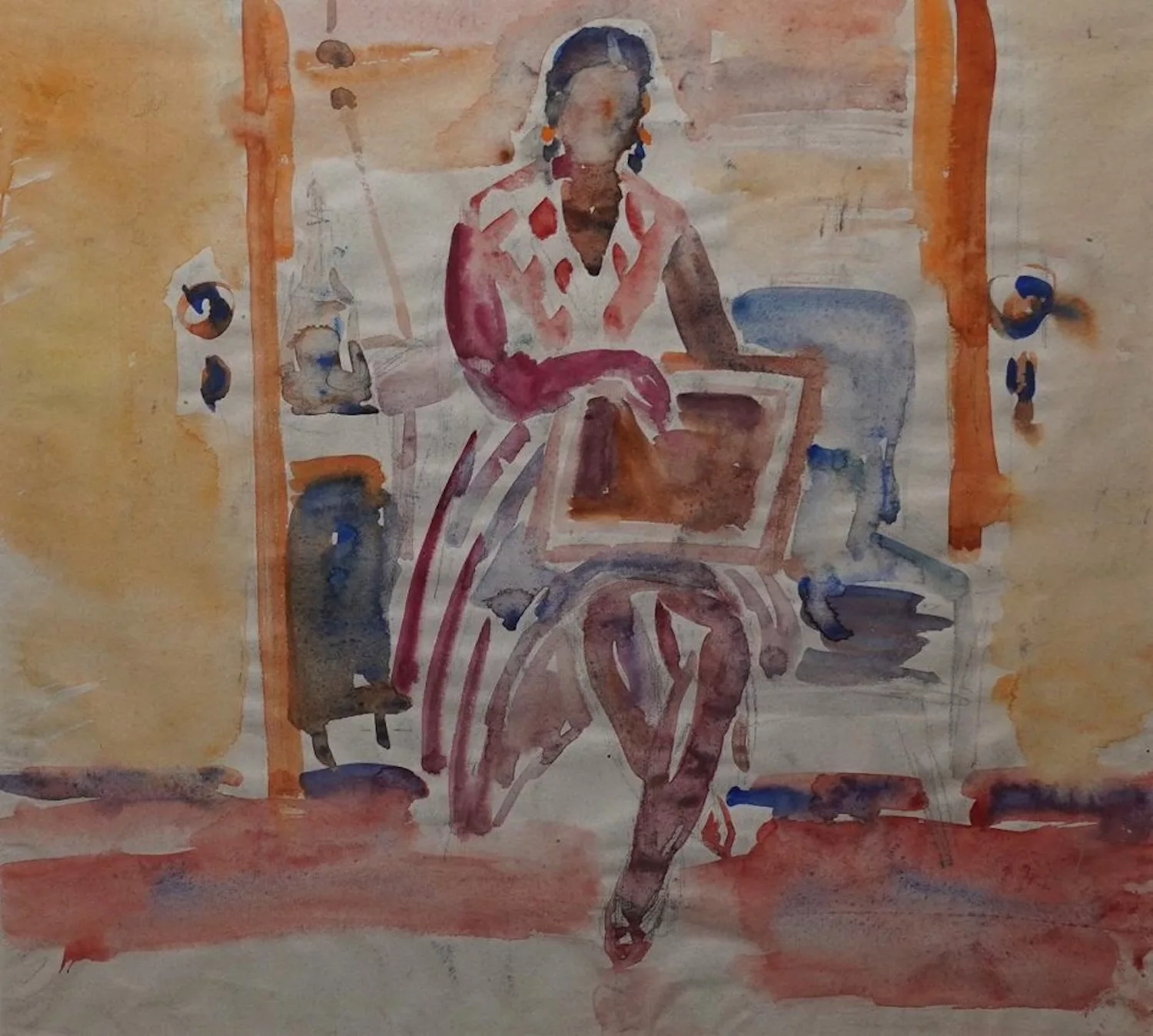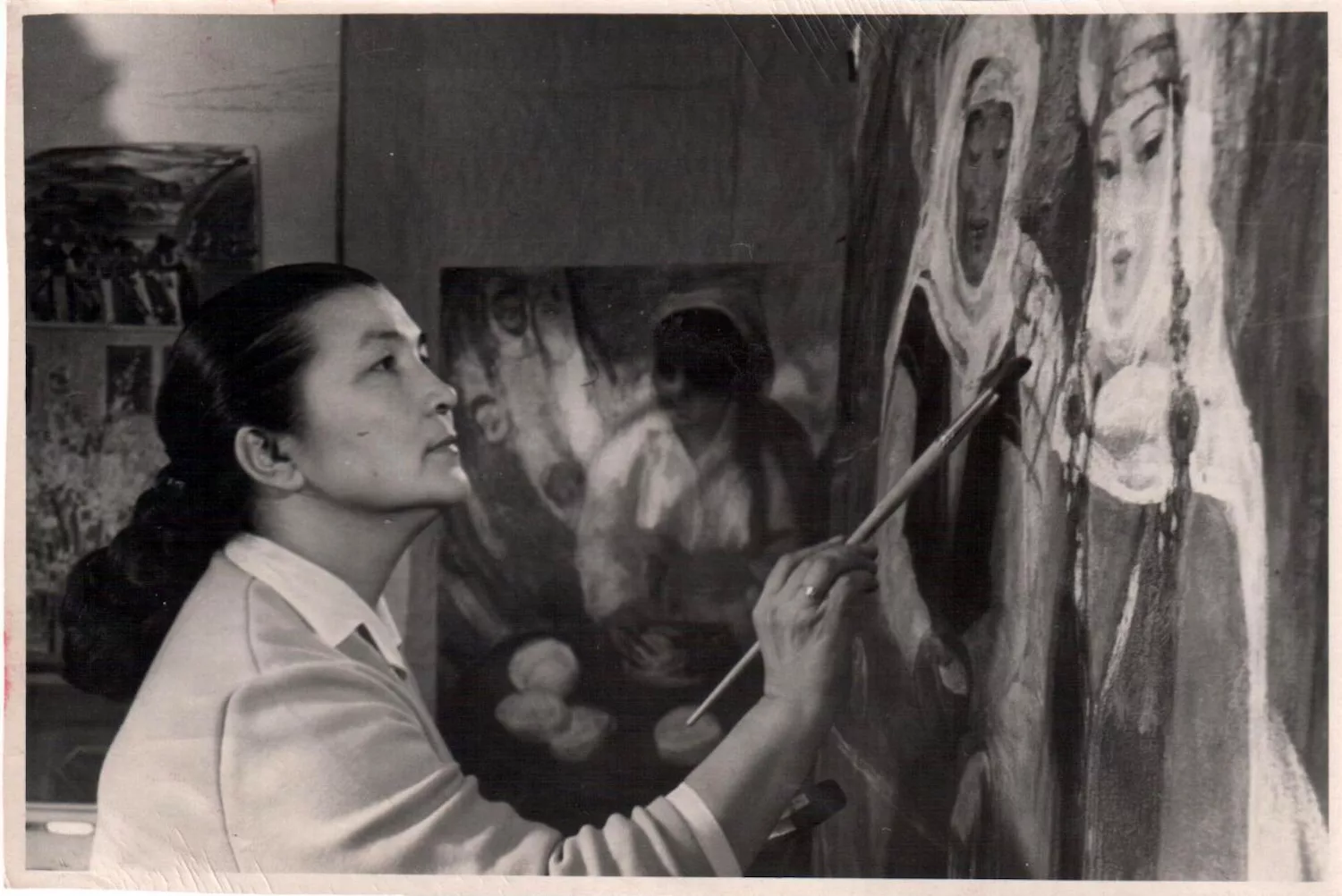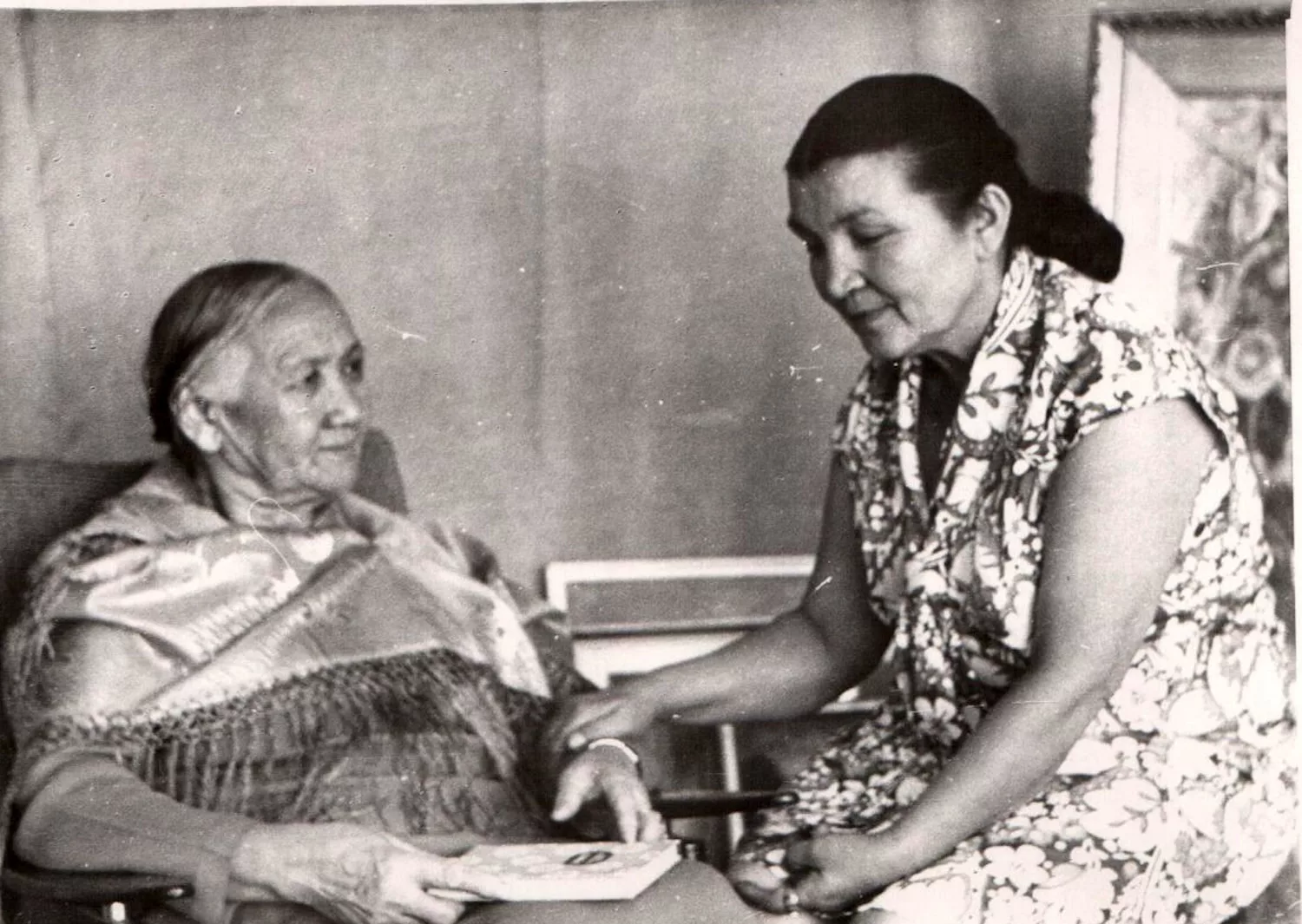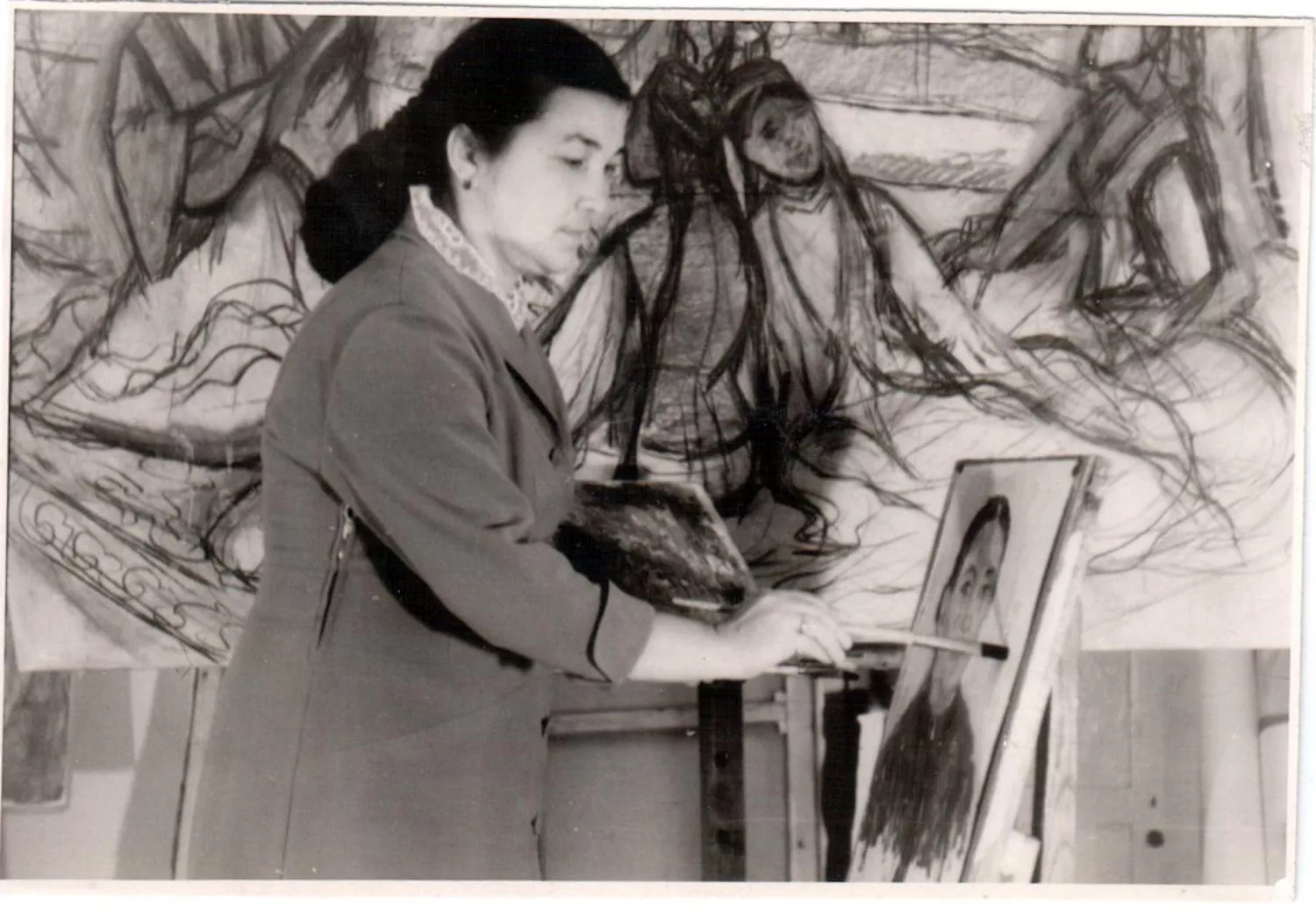
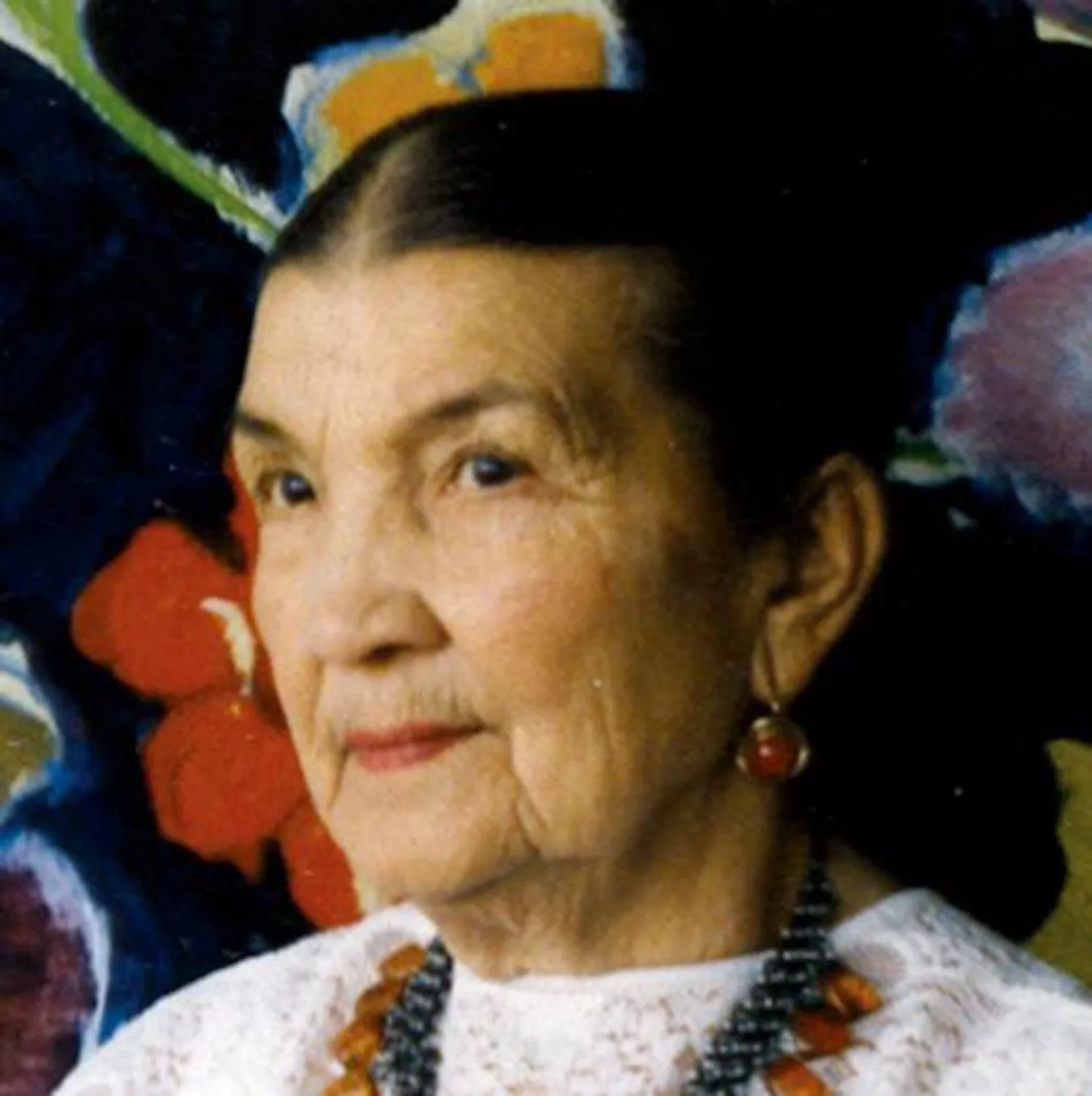
Portrait of Aisha Galymbayeva, Courtesy Reshat Kozhakhmetov
Barmankulova, Bayan, Samal Mamytova, Aisha Galymbayeva, Almaty, RUAN Publishing Company, 2017
→Lee, Kamilla, Aisha Galimbaeva: Illustrated Album, Almaty, 2008
→Rybakova, Inna, Aisha Galimbaeva, Moscow, Sovetskii Khudozhnik, 1970
Kazakh painter, costume and production designer and educator.
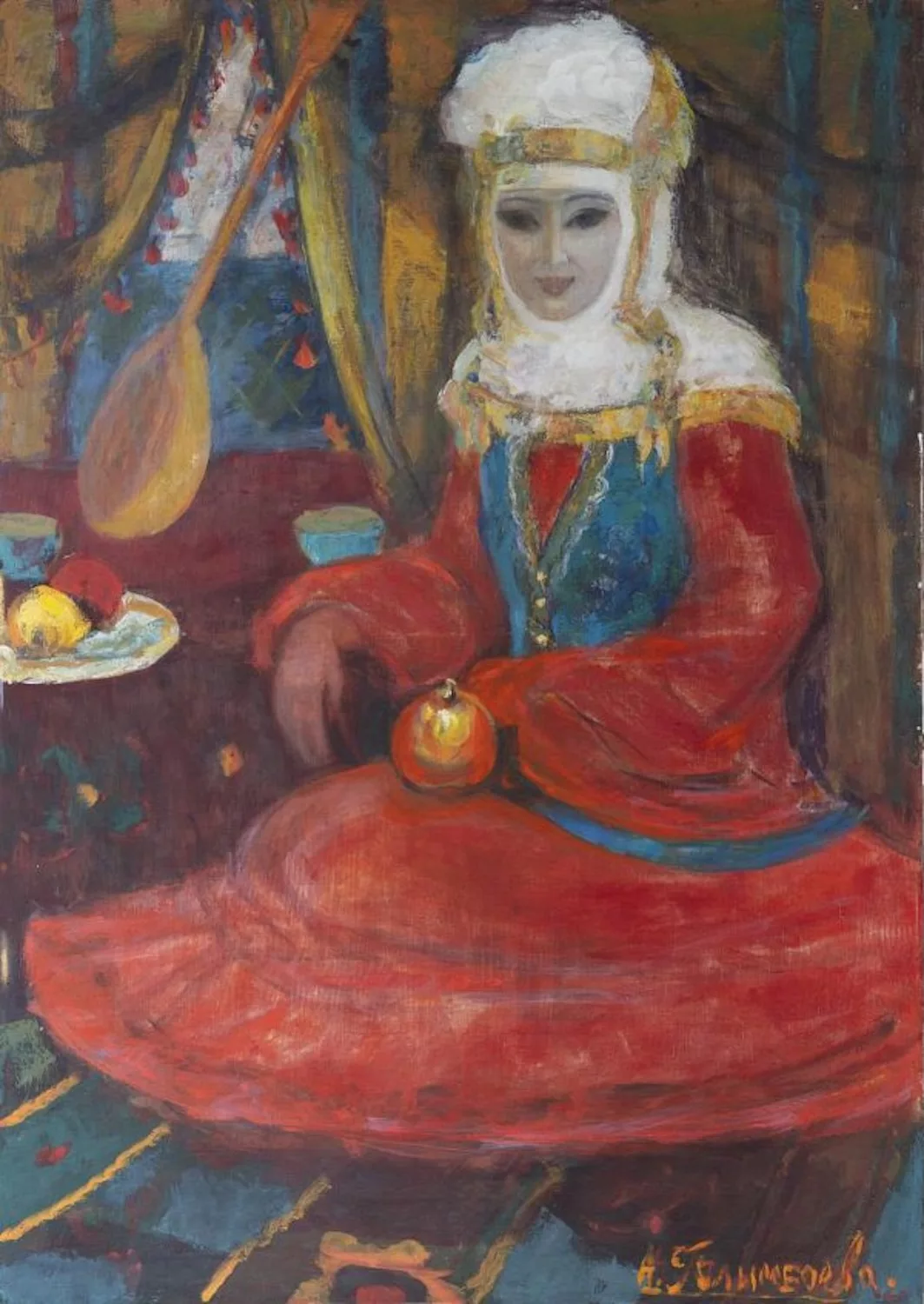
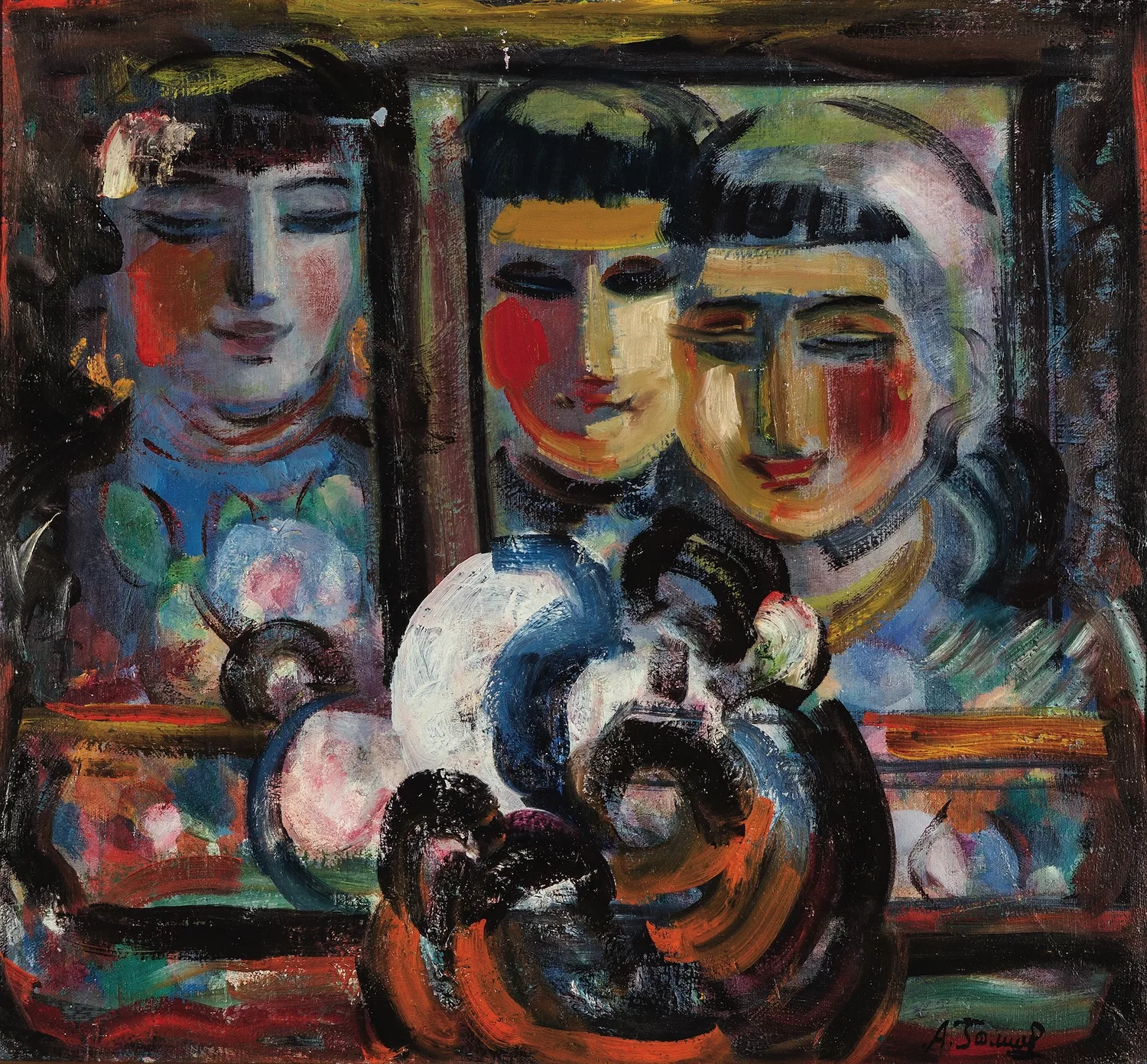
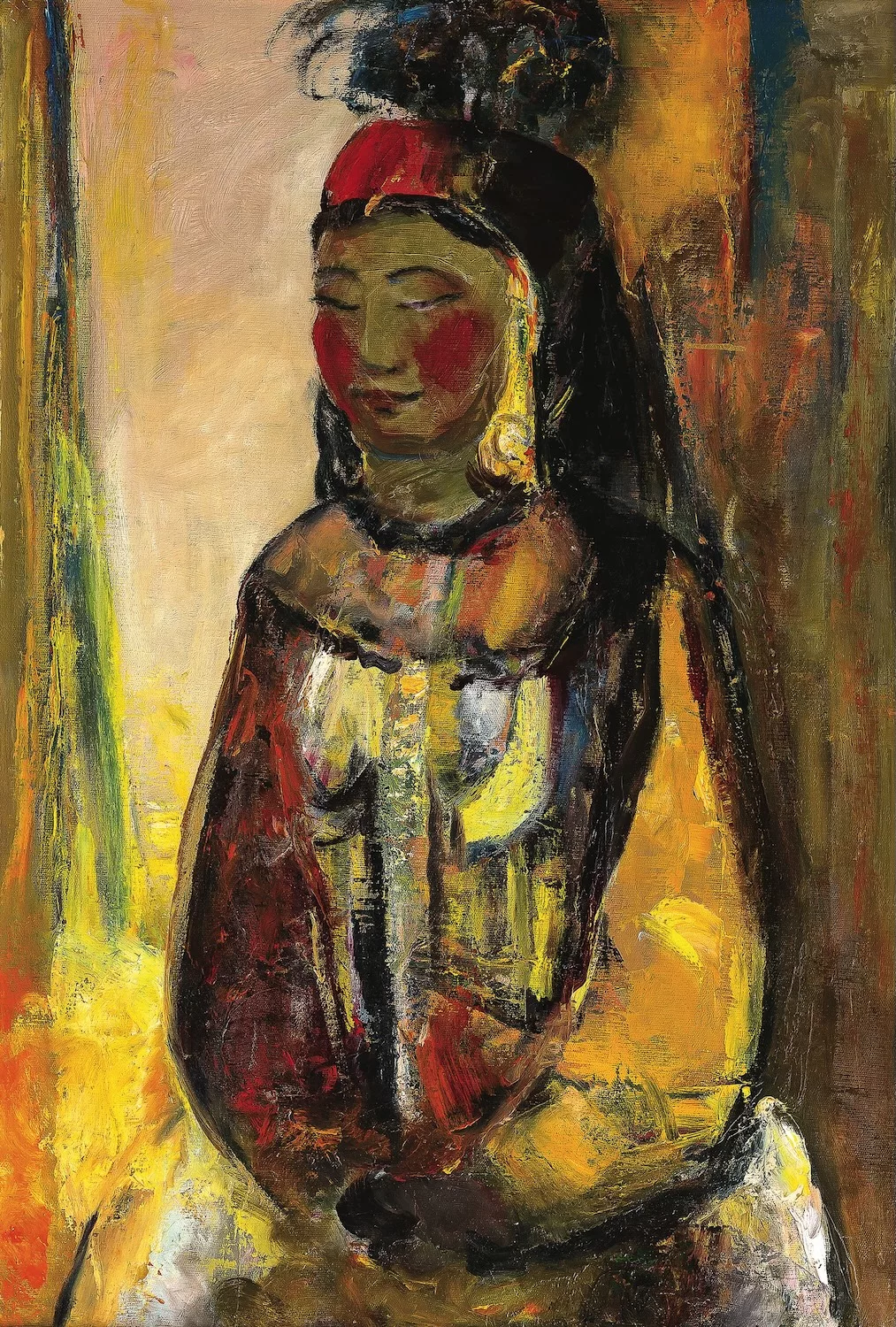
Aisha Galymbayeva is regarded as the first professionally trained Kazakh woman artist, and played a pioneering role in the development of modern art in Kazakhstan. She is best known for opening an insight into the experiences and representations of women. From depictions of everyday and traditional life to women’s participation in industrial transformation, from portraits – including a series of self-portraits – to landscapes and still lifes, her work presents a multifaceted portrait of Kazakhstan in the twentieth century.
A. Galymbayeva was born in Esik, in the Almaty region, where she participated in the daily rhythms of village life and developed an interest in drawing. She also learned traditional crafts from local women, including sewing and the creation of ornaments for felt and chiy reed carpets, experiences that would later inform her artistic practice and lifelong interest in material culture.
In the 1930s, as professional art, theatre and educational institutions were being established in Kazakhstan, A. Galymbayeva enrolled at the Kazakh State Theatre and Art College, where she studied under artists such as Leonid Leontiev (1913–1983) and Alexander Cherkassky (1888–1958). In 1943 she graduated and entered the Art and Decorative Department of the All-Union State Institute of Cinematography (VGIK), which had been evacuated from Moscow to Almaty during the Second World War and later returned to Moscow. Her diploma project consisted of costume, set and storyboard designs based on Mukhtar Auezov’s Song of Abai, dedicated to the celebrated Kazakh poet Abai Kunanbayev for which she conducted research in museums in Moscow and Almaty and travelled to places relevant to Abai in Kazakhstan.
Upon returning to Almaty in 1949, she worked in the film industry as a costume and production designer on films such as Poema o lyubvi (Poem of Love, 1954), Devushka-dzhigit (Jiggit Girl, 1955) and It Happened at Dawn (1955). She also consulted on dress and everyday life for the film His Time Will Come, dedicated to Chokan Valikhanov. Her interest in dress and material culture led to the publication of Kazakh National Costume (1958), an illustrated study based on research conducted across Kazakhstan. The book includes sixty drawings of men’s and women’s costumes, ceremonial and everyday dress, as well as headdresses, belts, jewellery, bracelets and rings. Significant from both artistic and ethnographic perspectives, it documents nineteenth-century dress traditions from different regions of the country.
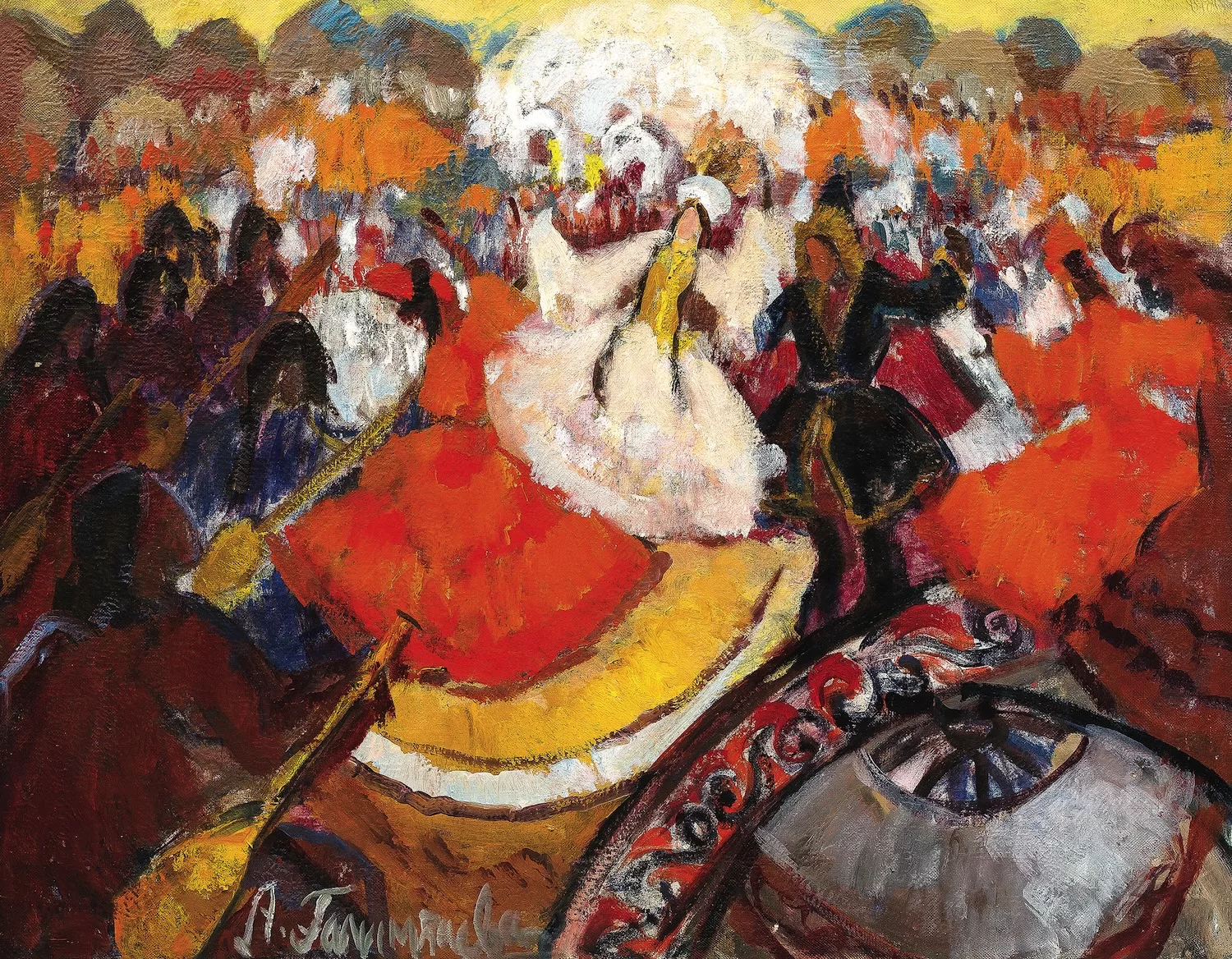
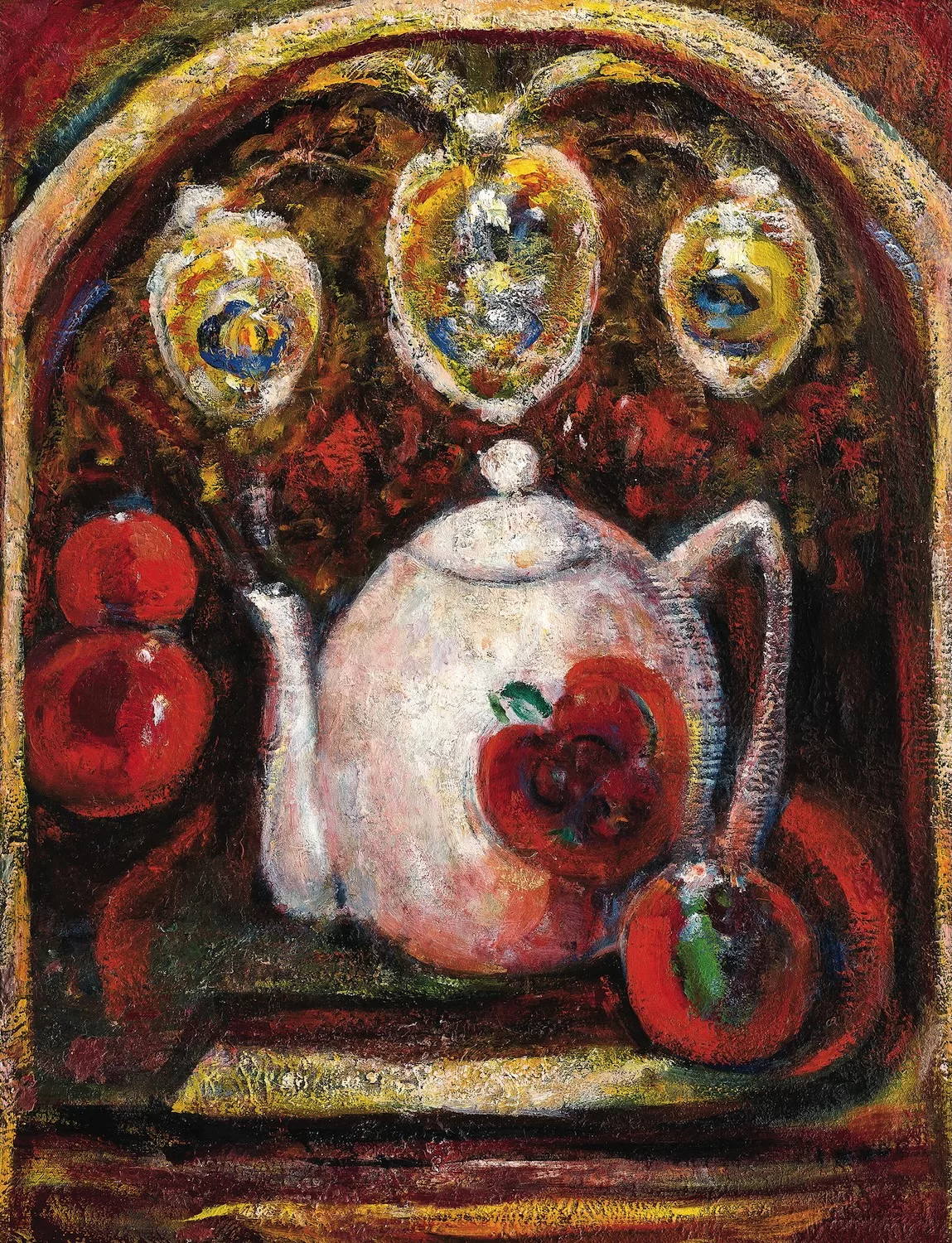
Her work in film remained occasional due to the limited scale of film production in Kazakhstan at the time, and A. Galymbayeva increasingly focused on painting. She began her artistic career with large-scale genre compositions such as Knitters (1951), which depicts three young women examining a piece of textile in a factory. Her painting style reached a distinguished character in the end of the 1950s, characterised by saturated colour, sometimes decorative and almost monumental style and often dynamic compositions – a nod to her work in cinema. Her language combined realism, already distant from socialist realism, with an enduring interest in Kazakh cultural traditions. Portraits, scenes of everyday life, still lifes and depictions of hospitality became recurring subjects in paintings such as Kelin (Bride, 1957), Portrait of the Craftswoman Basenova (1958) and Той чабанов (Shepherd’s Feast, 1965).
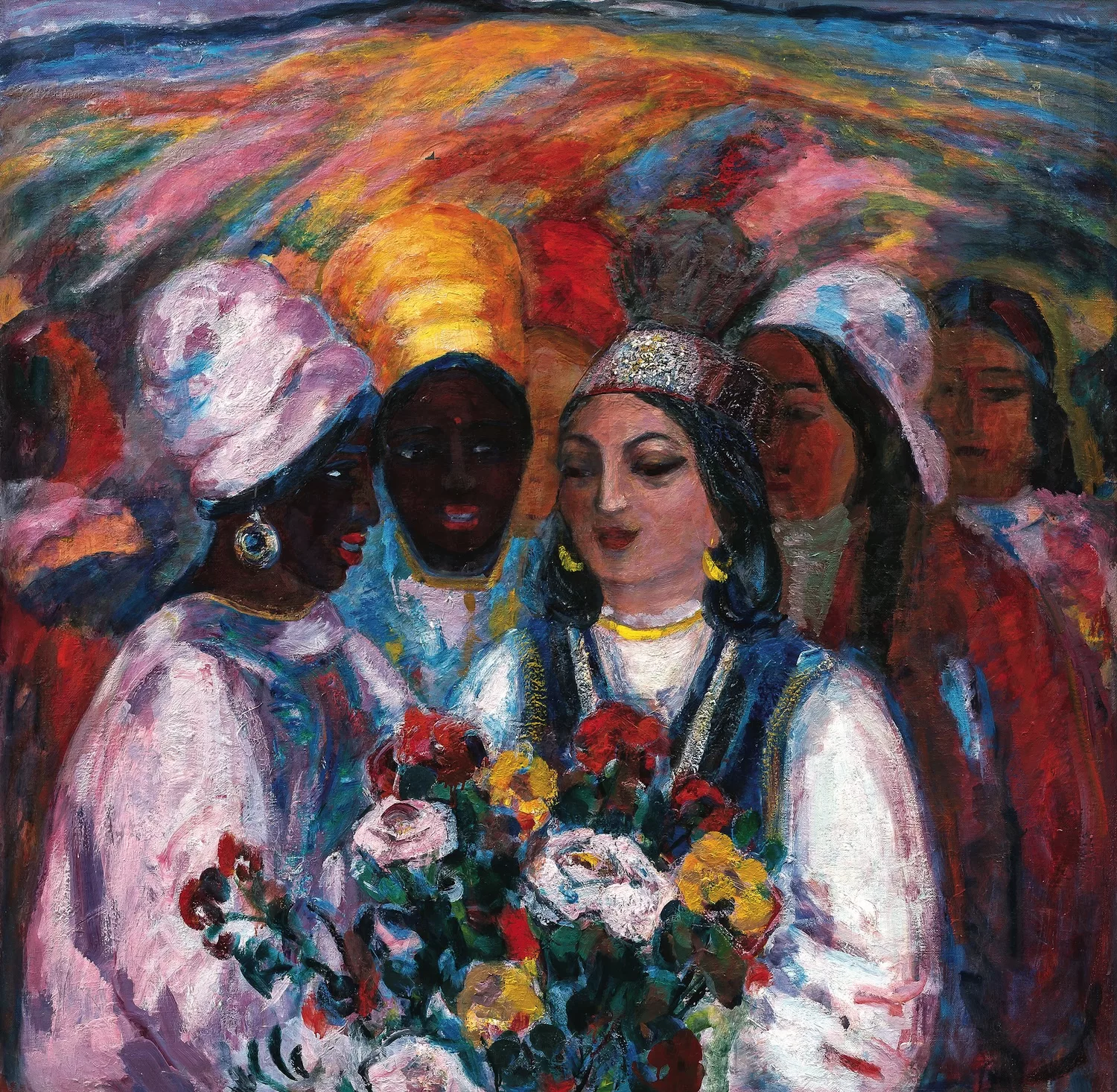
She was also a member of the Society for Friendship and Cultural Relations with Foreign Countries. Her painting Friendship (1978) reflects Cold War-era international solidarity and alludes to several international meetings held in Almaty. These included the Fifth Conference of Writers of Asia and Africa in 1973, where Galymbayeva welcomed delegates, the Conference of Women of Asia and Africa in 1975, organised during the International Women’s Year, and the International Conference on Primary Health Care, convened by WHO and UNICEF in 1978, at which the Alma-Ata Declaration was adopted.
A. Galymbayeva taught at the Almaty Art College between 1949 and 1964, and later at the Pedagogical Institute. Through her paintings, publications, film work and teaching, she helped shape a modern visual representation of Kazakh identity within the cultural conditions of the Soviet period important to the subsequent generations of artists. Her career also demonstrates the interdisciplinary nature of artistic practice in twentieth-century Kazakhstan, where painting, research, ethnography, publishing, cinema and education were closely interconnected.
A biography produced with the support of the French Embassy in Kazakhstan, in collaboration with Almaty Museum of Arts, as part of AMIS: AWARE Museum Initiative and Support.
© Archives of Women Artists, Research and Exhibitions, 2026