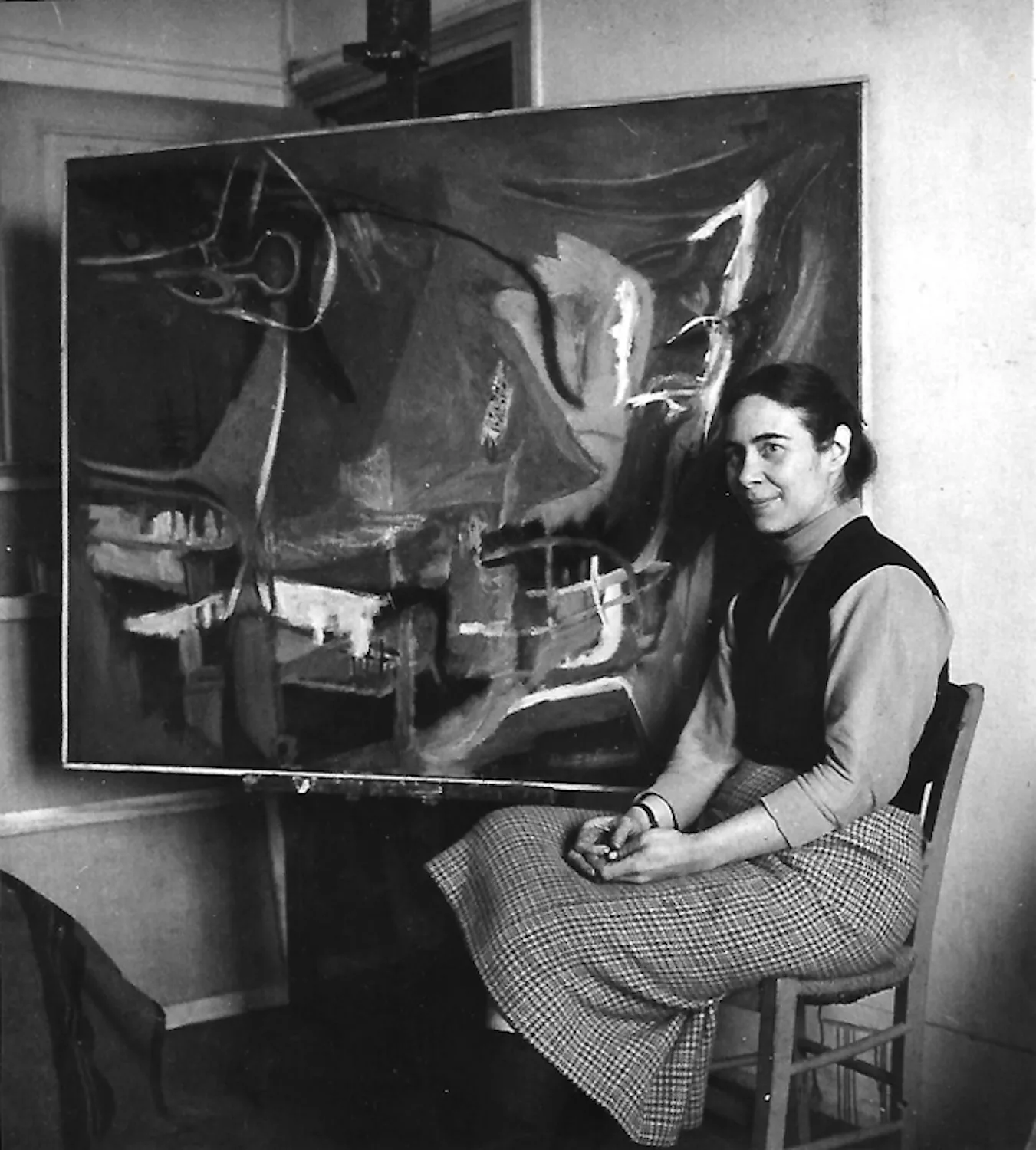
Dadi Wirz, photo of Gail Singer, ca. 1957-58, Richard Nelson, Bozeman, MT
Artists from Atelier 17, The Print Centre, London, 14 April – 23 May 1964
→Gail Singer, Galerie Rive Gauche, Paris, 1962
American painter, printmaker and drawer.
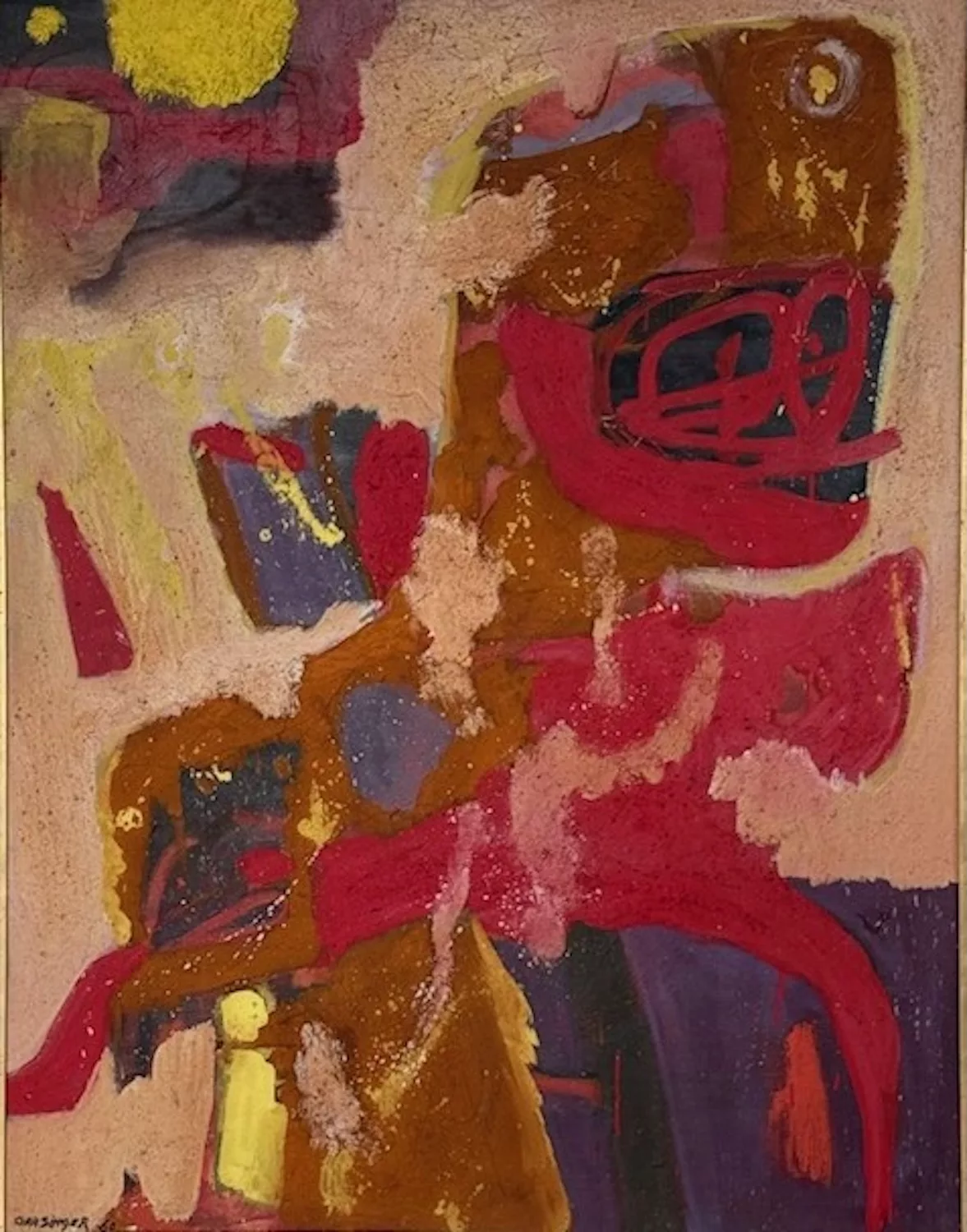
Gail Singer built her adult life and career in Paris, where she developed a distinctive practice as a painter, drawer and printmaker closely affiliated with the well-known studio Atelier 17. G. Singer’s commitment to art took shape early as a young woman growing up in Houston, Texas, where her father was a successful exporter of scrap metals. While in high school, G. Singer pursued evening life drawing classes at the Museum of Fine Arts, Houston. Following her family’s relocation to St. Louis, Missouri after her father’s untimely death, G. Singer studied at the School of Fine Arts at Washington University, training with Paul Burlin (1886–1969), Fred Conway (1900–1973) and Fred Becker (1913–1904). Upon her graduation in 1952, G. Singer received the John T. Milliken Fellowship for travel abroad and spent the 1952–1953 academic year in Paris where she worked at Stanley William Hayter’s (1901–1988) Atelier 17. After this initial sojourn, G. Singer returned to Paris in summer 1955 and adopted the city as her home.
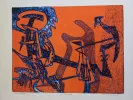
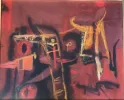
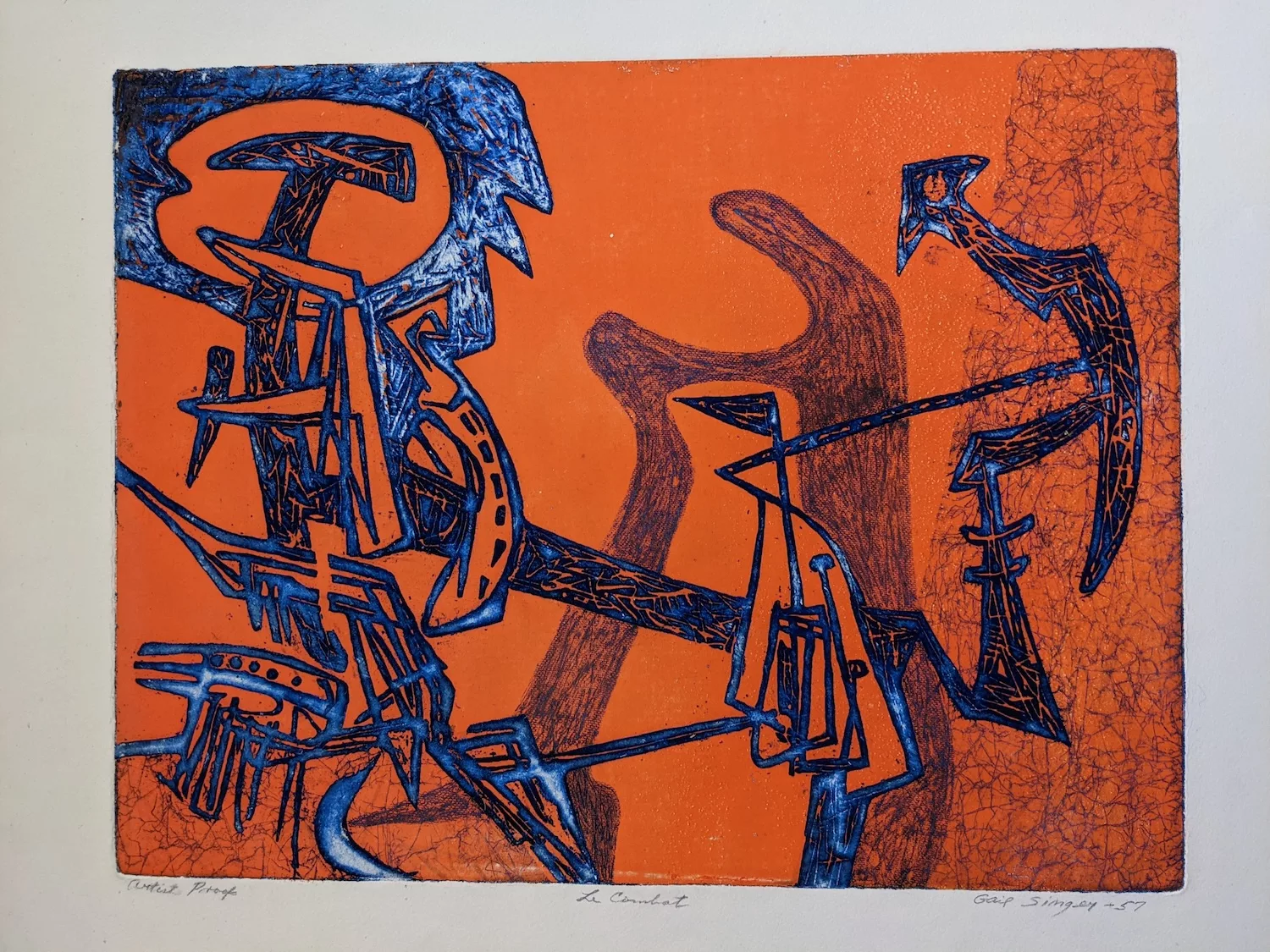
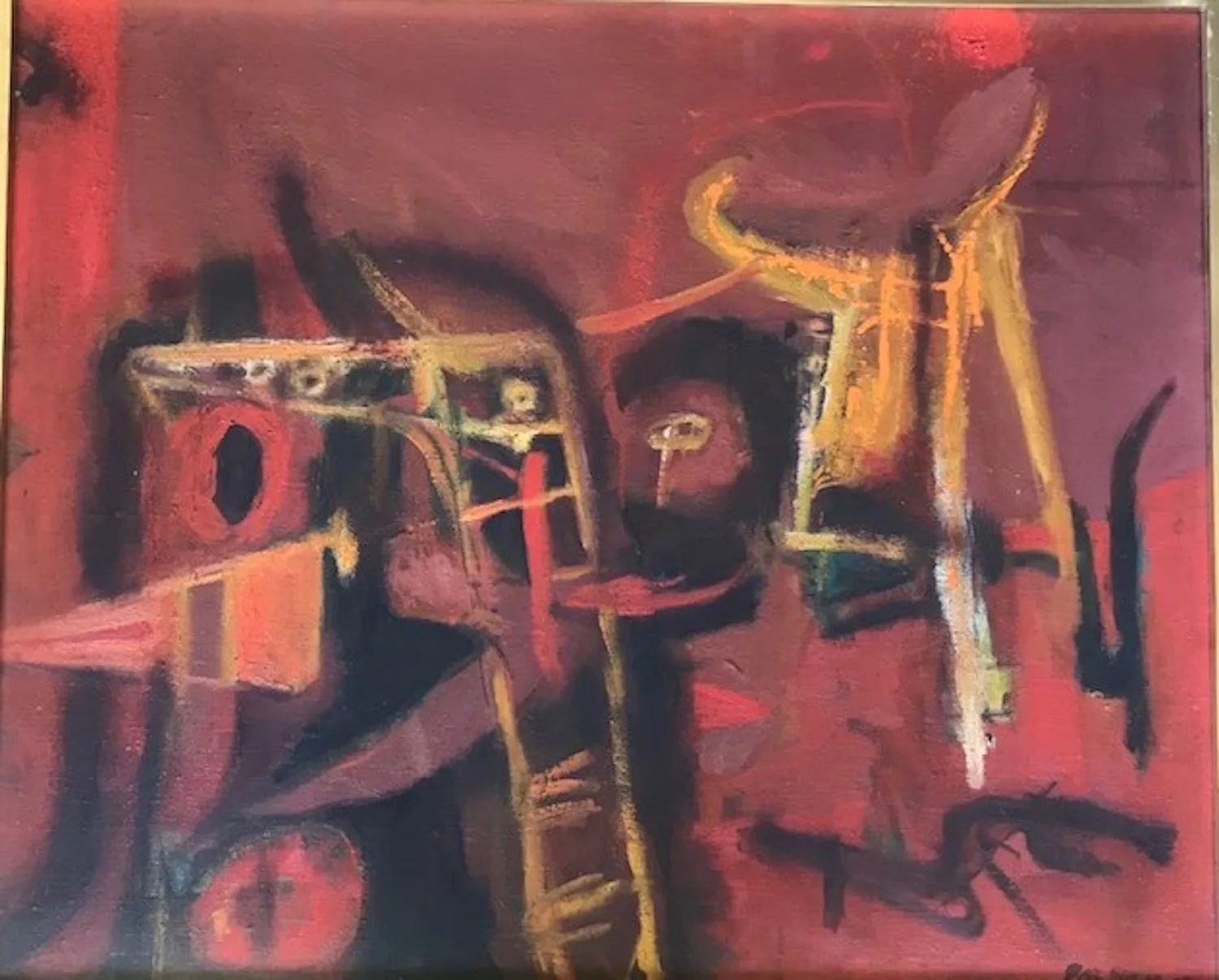
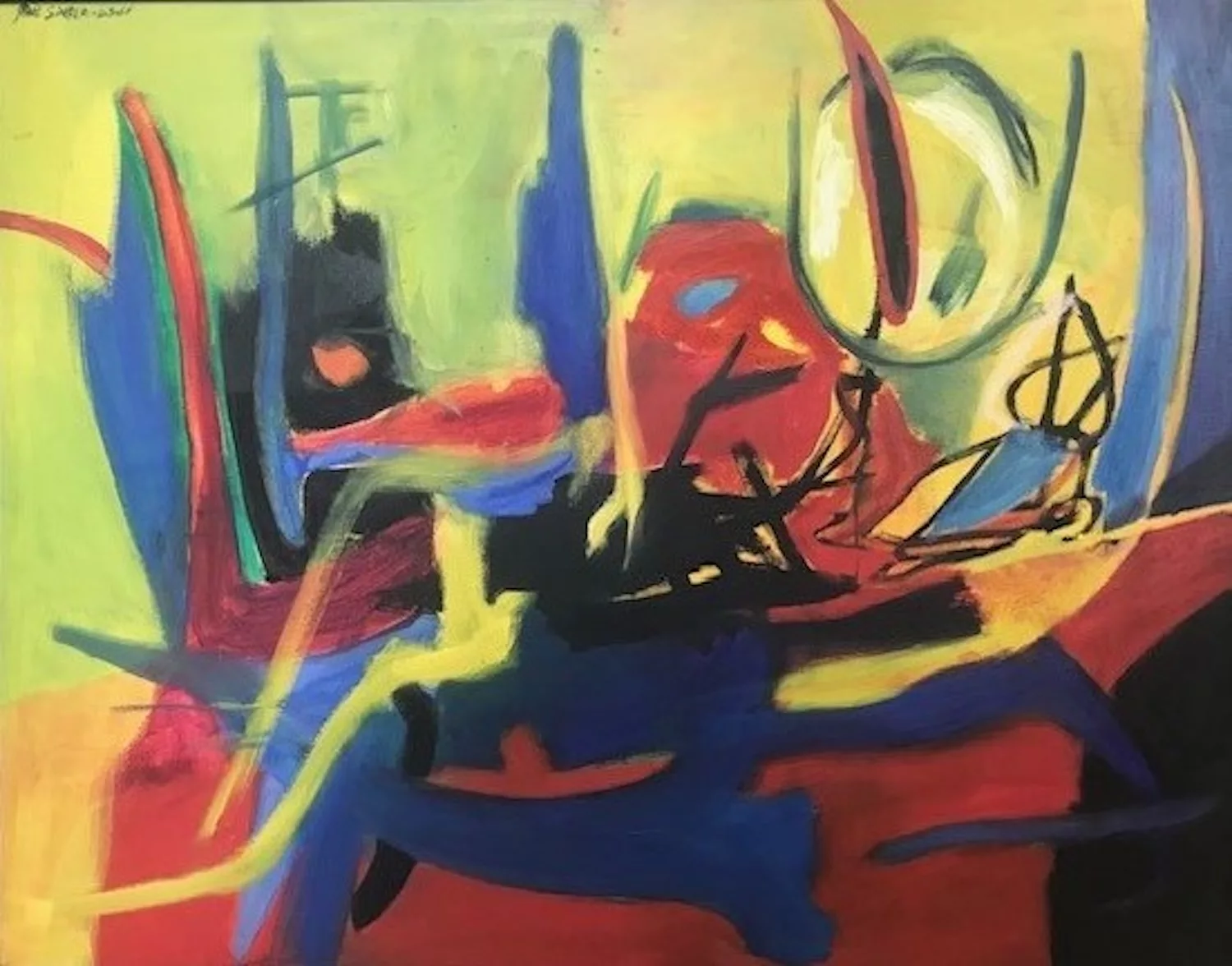
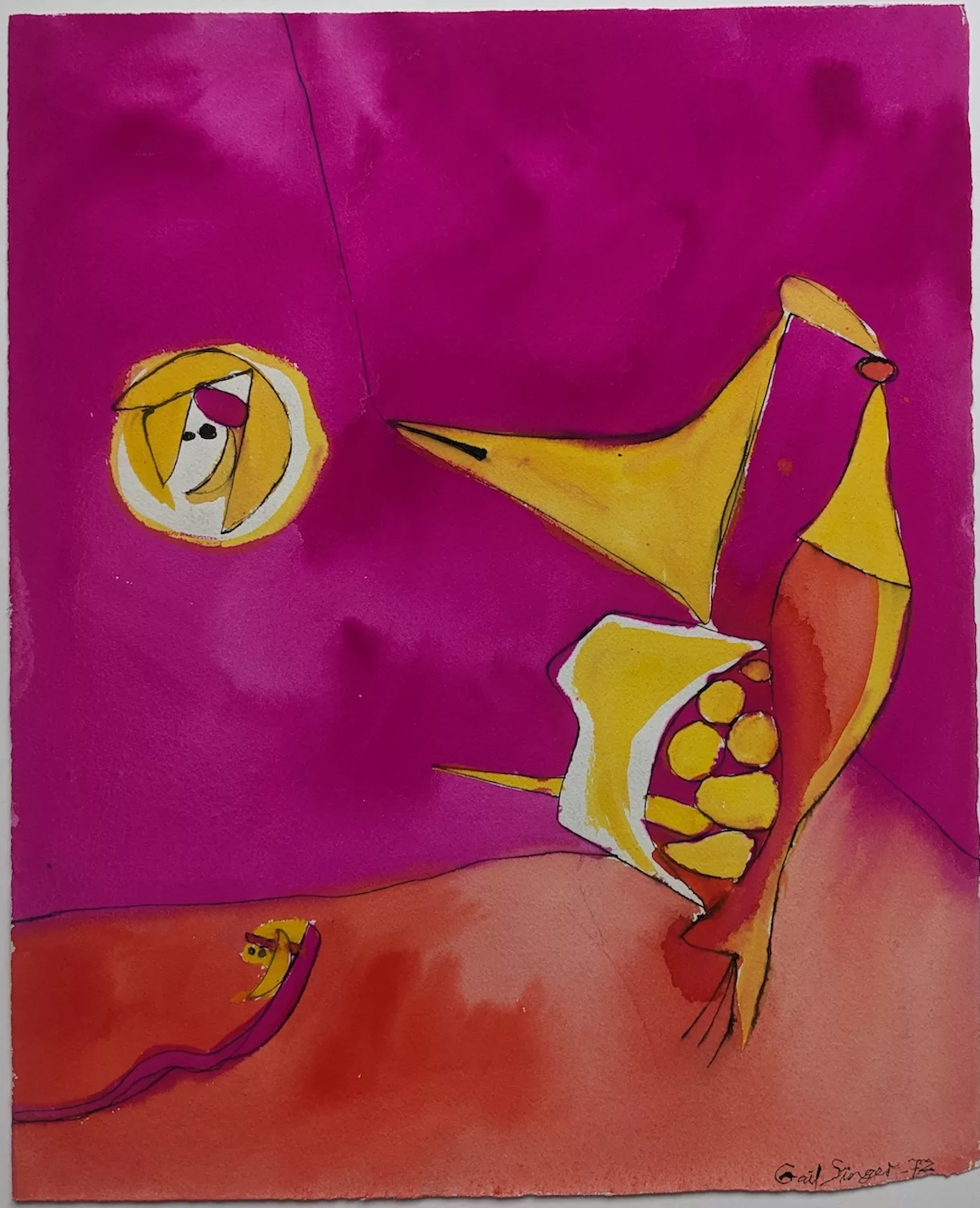
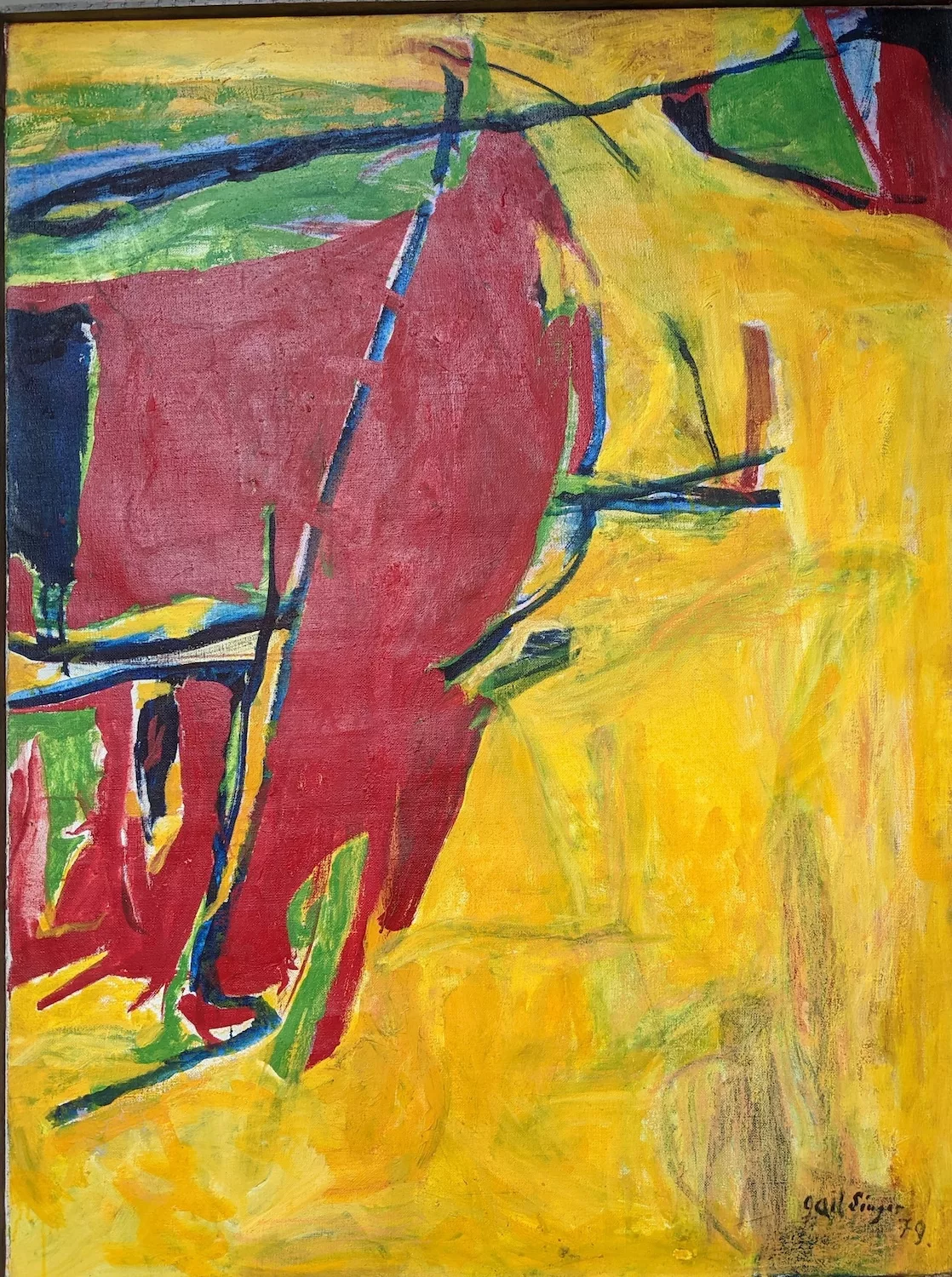
G. Singer’s artistic formation in Paris was closely linked with Atelier 17, where she was a frequent presence from the 1950s up to the 1970s and developed many close social and professional networks. Her prints are exceptionally daring, innovative, and notable for their dense, highly charged colour and for an abstract language that often suggests bodily tension, conflict and psychic intensity. In the face of several challenging health conditions – she battled bipolar disorder and multiple sclerosis, diagnosed in the late 1960s – Atelier 17’s community of artists offered G. Singer support to continue making prints at moments when she was no longer physically capable of all the steps involved with marking her plates, inking them and running them through the press.
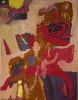
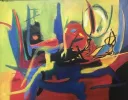
Outside of Atelier 17, G. Singer actively painted in her own studio – she lived at two locations in the 13th arrondissement – and maintained a daily practice of drawing. Initially, her drawings represented portraits of friends or musicians (drummers, accordionists, guitarists and pianists) whom she observed playing in the Left Bank’s clubs, cafés, or on the street. The importance of drawing is evident in G. Singer’s first two solo exhibitions at the Stockstrom and Tuttle Gallery in St. Louis (1954) and the Fondation des États-Unis (1956) where works on paper vastly outnumbered the canvases. As her style developed in the 1970s, the forms in her drawings, paintings and prints become increasingly abstract although their titles reference dreams, violence and psychological rupture, magic and transformation, music, and fantastical beasts and monsters.
G. Singer had several solo shows in her lifetime, and the most important relationship was with Galerie Rive Gauche. From the late 1950s onward, G. Singer participated in major post-war exhibition circuits in both Europe and the United States, such as the Ljubljana Biennale of Graphic Arts, the Salon des réalités nouvelles, the Salon de Mai and USA-based graphics annuals at the University of Kentucky and Madison Art Center, Wisconsin. Her association with Atelier 17 also provided opportunity to exhibit in several of the workshop’s group shows in the USA, the UK and France.
Singer died in 1983 in Paris, followed the next year by her devoted partner Erich Schmidt (1908–1984). Though long overlooked, G. Singer is increasingly recognized as a vital contribution to post-war print culture and to the history of abstract painting in post-war Paris.