Szewczyk, Mieczysław (ed.), Włókno i przestrzeń, Radom, Muzeum Sztuki Współczesnej im. Jacka Malczewskiego, 2007
→Owidzka, Jolanta, Jolanta Owidzka. Tkanina i przestrzeń. Fibre and Space, exh. cat., Galeria Studio im. Stanisława Ignacego Witkiewicza, Warsaw (December 2006–January 2007); Muzeum Sztuki Współczesnej im. Jacka Malczewskiego, Radom (February–March 2007); Central Museum of Textiles, Łódź (March–April 2007), Warsaw, Galeria Studio, 2006
→Wróblewska, Danuta, “Tkactwo artystyczne Jolanty Owidzkiej”, Stolica, n° 47, 1962, p. 7
Jolanta Owidzka. Nie ważyłabym się chodzić po dziele sztuki, Fundacja Arton, Warsaw, 7 December, 2024–18 January, 2025
→Jolanta Owidzka. Tkanina i przestrzeń, Galeria Studio im. Stanisława Ignacego Witkiewicza, Warsaw, December 2006–January 2007; Muzeum Sztuki Współczesnej im. Jacka Malczewskiego, Radom, February–March 2007; Central Museum of Textiles, Łódź, March–April 2007
→Wystawa tkaniny Jolanty Owidzkiej, Centralne Biuro Wystaw Artystycznych Zachęta, Warsaw, 16 November, 1960–6 December, 1960
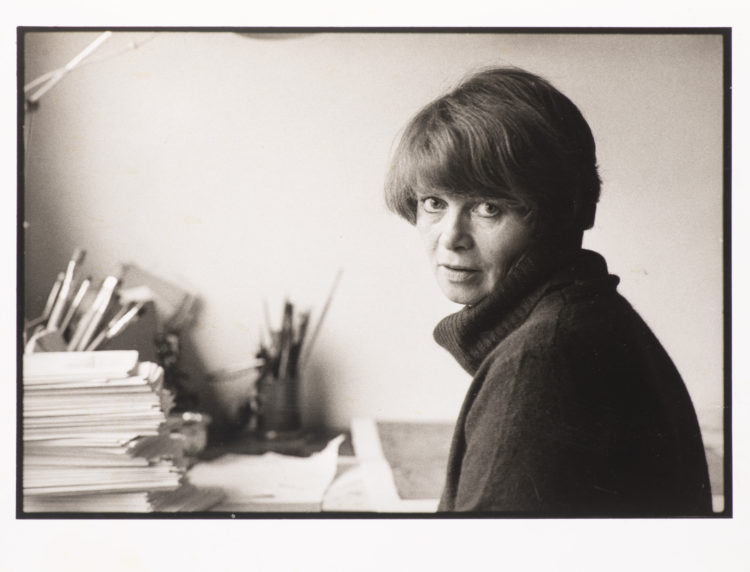
Polish textile artist.
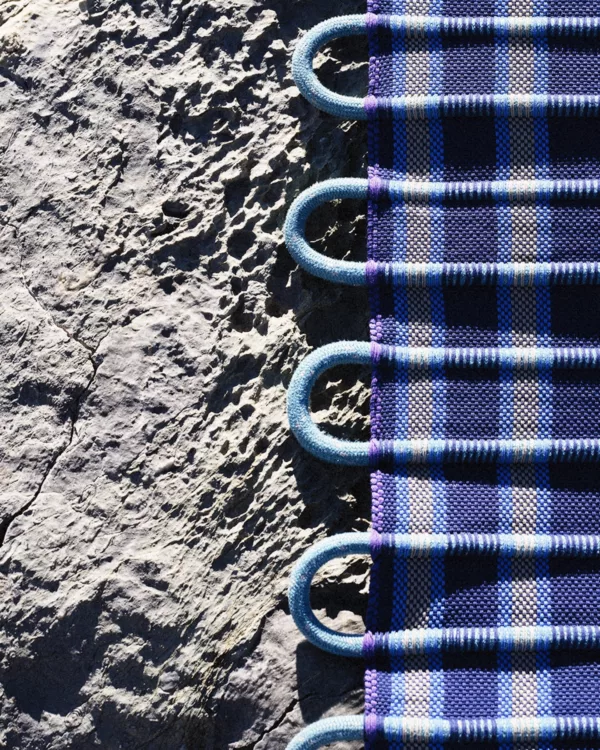
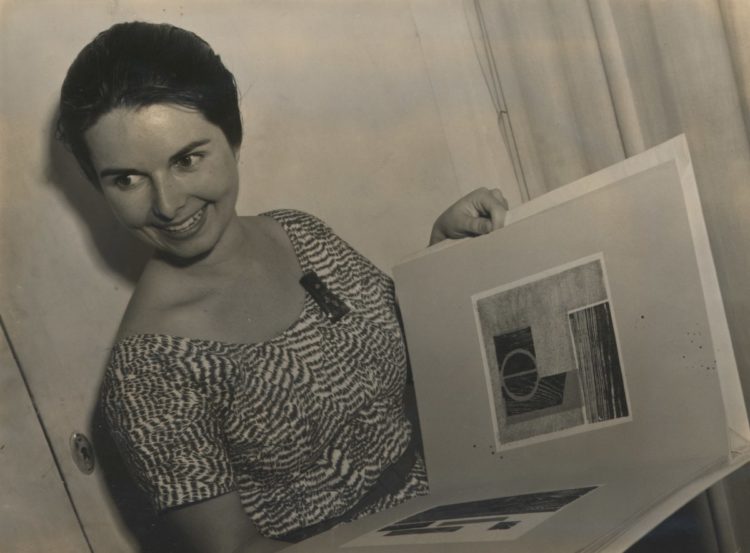
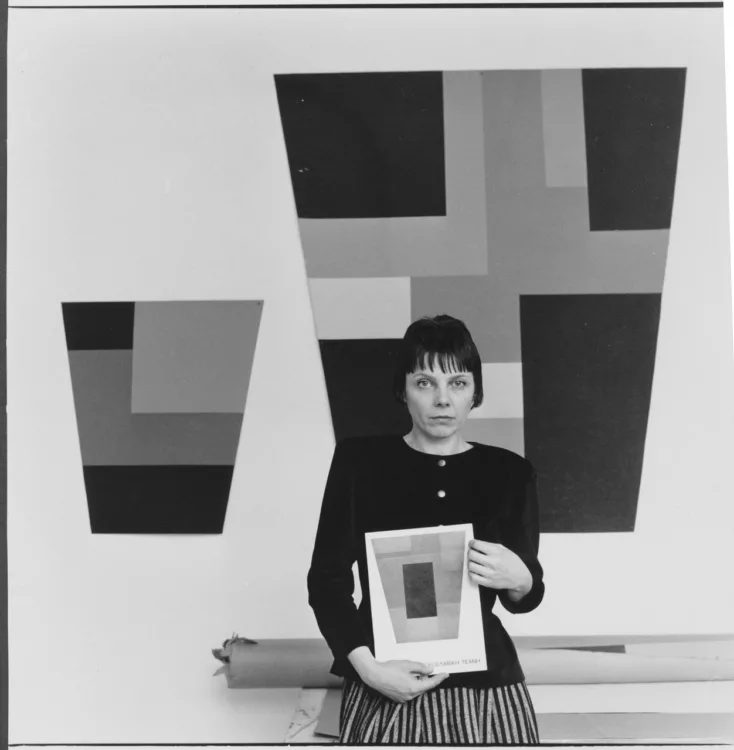
Jolanta Owidzka was one of the most significant Polish textile artists of the 20th century. She belonged to the first generation of the Polish School of Textile Art (PSTA), a key part of the broader La Nouvelle Tapisserie (New Tapestry) or Fiber Art movement. J. Owidzka’s oeuvre is diverse, consisting of tapestries, kilims, rugs, textile installations, assemblages and theoretical texts on the functions of textiles in living spaces, and art criticism. Her practice was marked by outstanding technical mastery, which served as a foundation for continual experimentation and the creation of compositions of striking visual and textural richness. Throughout her career, she boldly experimented with natural and synthetic fibres and unconventional materials like wood and leather.
Between 1946 and 1948, J. Owidzka studied at the Kraków Academy of Fine Arts, where she trained in textiles under Stefan Gałkowski (1912–1984) and in painting under Tadeusz Kantor (1915–1990), before transferring to Warsaw to study under Eleonora Plutyńska (1886–1969) and Marek Włodarski (Henryk Streng, 1903–1960) between 1948 and 1952. From 1952 to 1957, she worked at the Institute of Industrial Design in Warsaw as a designer and researcher, applying her artistic training to interior design, particularly in terms of how tapestry could function within domestic spaces. Her academic writings from this time reveal a nuanced understanding of how fibre can serve both expressive and formal purposes – how it can be shaped to convey emotional depth, and how its structure and materiality engage with spatial, architectural and functional concerns. For J. Owidzka, textiles were more than decoration – they were a means of expression, through which she sought the most fitting form to convey human experience.
In 1960 she held her first solo exhibition at Zachęta – National Gallery of Art in Warsaw, a landmark event in the formation of the PSTA. Designed by Oskar Hansen (1922–2005) and his wife Zofia Hansen (1924–2013), central figures in the experimental artistic and architectural milieu linked to the Warsaw Academy of Fine Arts, the show offered an immersive display: tapestries and rugs were installed vertically, horizontally and even overhead, challenging conventional modes of presentation. While the spatial arrangement was probably conceived by the Hansens, it resonated with J. Owidzka’s interest in textiles as elements of architectural space.
J. Owidzka gained global recognition at the first International Tapestry Biennale in Lausanne, where her monumental abstract tapestry Cisza [Silence, 1962] was deemed revolutionary, along with Magdalena Abakanowicz’s (1930–2017) and Maria Łaszkiewicz’s (1891–1981) works. She later participated in the second (1965) and fifth (1971) editions of the Biennale. In 1969 she was included in the seminal Wall Hangings exhibition at MoMA, which expanded her career into the United States. Between 1963 and 2000, J. Owidzka realised around fifty monumental tapestries for theatres, concert halls, banks and hotels, amongst them Biele [Whites, 1976] for Hotel Victoria in Warsaw.
A gifted educator, J. Owidzka trained dozens of students in her Warsaw studio and conducted lectures and courses worldwide, including the United States, France, the Netherlands, Israel and Japan. She participated in several solo and group exhibitions, and her works are in collections in Poland, the United States, Canada, Switzerland, and in numerous private collections.
A notice produced as part of the TEAM international academic network: Teaching, E-learning, Agency and Mentoring