Abboud, Jumana Emil, “Hide Your Water from the Sun: A Performance for Spirited Waters”, in Yıldırım, Umut (ed.), War-torn Ecologies, An-Archic Fragments: Reflections from the Middle East, Berlin, ICI Berlin Press, 2023, p. 121–138
→Sherwell, Tina, “Bodies in Representation: Contemporary Arab Women’s Art”, in Lloyd, Fran (ed.), Contemporary Arab Women’s Art: Dialogues of the Present, London, Women’s Art Library, 1999, p. 62–63
→Sherbany, Anna (ed.), Story time: An Exhibition by Artists Living in Israel / Palestine, exh. cat., Candid Arts Trust, London (20 November–12 December, 1998), London, Arts Council England, 1998
The Unbearable Halfness Of Being, Cample Line, Thornhill, 7 October–17 December, 2023
→The Pomegranate and the Sleeping Ghoul, Jumana Emil Abboud, Darat Al Funun – Khalid Shoman Foundation, Amman, 10 October, 2017–11 January, 2018
→Jumana Emil Abboud / The Horse, the bird, the Tree and Stone, Bildmuseet, Umeå University, Umeå, 20 May–17 September, 2017
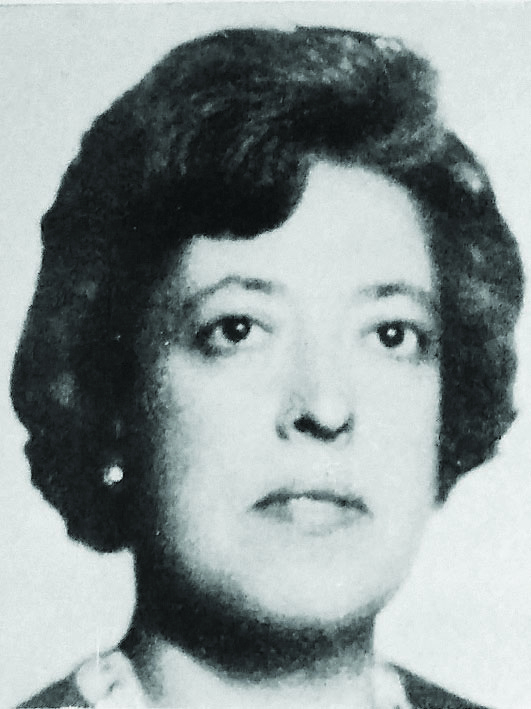
Palestinian multidisciplinary artist.
Jumana Emil Abboud explores memory, loss and resilience through various artistic mediums. Her work is connected to Palestinian culture, highlighting the struggle to preserve heritage within a challenging political context to address indigenous rights.
J. E. Abboud was born in Shefa-Amr, near Haifa City. She grew up in Canada, where she developed her passion for art. In 1989, she enrolled at the Ontario College of Art in Toronto but attended for only two years before returning to her hometown. She resumed her education at the Bezalel Academy of Art and Design in Jerusalem, where she completed both her bachelor and postgraduate degrees in Fine Arts (1999). In 2019, she enrolled at the Slade School of Fine Art, University College London to pursue a PhD.
J. E. Abboud engages with both personal and collective narratives, intertwining folklore with modern stories of memory and displacement. She reinterprets traditional stories through her own visual language, interweaving themes of loss, longing and the impact of enforced territorial control. J. E. Abboud’s Rapunzel series (1998–), consists of drawings and mixed-media works incorporating torn book pages in Arabic. Text becomes a mere surface as she layers symbols and visual interpretations, reimagining the Grimm Brothers’ fairytale. Rapunzel’s story of captivity and isolation transforms into a metaphor for fragmented memories, a lost homeland and childhood landscapes. By identifying with a Western heroine, J. E. Abboud highlights the complexities of her own Palestinian-feminine identity.
Over time, her work has integrated drawings, video, performance, text and objects to explore the invisible ties between people and their environment. She examines oral traditions and the ways narratives connect to landscapes and natural sites. In her installation of twenty-seven works on paper, Ballad of The Lady Who Lives Behind Trees (Connect The Dots) (2005–2010), her figures appear almost transparent, placed within barren landscapes or seascapes –capturing a sense of waiting, absence, and longing. Here, J. E. Abboud redefines storytelling as a tool for cultural and personal reflection.
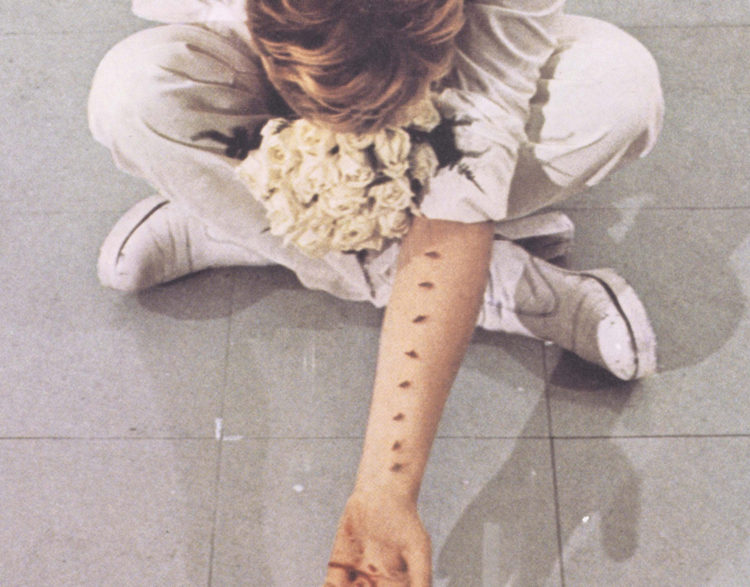
In The Pomegranate (2005), a two-screen 17-minute video installation shown at Sharjah Biennale 7, J. E. Abboud documents her attempt to place pomegranate seeds back into their shell, which inevitably causes the fruit to burst and splash its red juice onto her hands. This work explores the human quest for a perfect fit and a return to origins, driven by the fundamental desire to belong, and illustrates not only the absurdity and ritualistic nature of our search for belonging but also the paradox and unique torment inherent in the pursuit of fitting into social, cultural or territorial structures.
J. E. Abboud’s work has been presented in numerous solo and group exhibitions, such as the Venice Biennale (2009, 2015), the Sharjah Biennale (2005, 2011, 2013, 2017) and documenta fifteen (2022). She was awarded the Arab Fund for Arts and Culture (AFAC) grant (2017) and the Pernod Ricard Fellowship (2020), in addition to the Sharjah Art Foundation production grant (2020). Her works are part of various collections such as the Khalid Shoman Collection (Amman); Magasin III Museum for Contemporary Art (Stockholm); the Isabelle & Jean-Conrad Lemaître collection; and Seoul Museum of Art (SeMA).
A notice produced as part of the TEAM international academic network: Teaching, E-learning, Agency and Mentoring