Reid, Stuart (ed.), Mary Anne Barkhouse: Settlement/Regency, exh. cat., Brock University, St. Catherines (21 June–8 September, 2013), St. Catherines, Rodman Hall Arts Center, 2014
→
Dysart, Jennifer, Bob, Tanya, Barkhouse, Mary Anne, Old Punk Rockers Never Die, They Just Do Installation Art: A Profile of Artist Mary Anne Barkhouse, Vancouver, University of British Columbia, 2012
→Everhart, Heather, “Mary Anne Barkhouse: Sovereign,” in Ahlberg Yohe, Jill, Greeves, Teri (eds.), Hearts of Our People: Native Women Artists, exh. cat., Minneapolis Institute of Art, Minneapolis (2 June–18 August, 2019); Frist Museum, Nashville (27 September, 2019–12 January, 2020); Renwick Gallery, Smithsonian American Art Museum, Washington, D.C. (21 February–2 August, 2020); Philbrook Museum of Art, Tulsa (7 October, 2020–3 January, 2021), Minneapolis, Minneapolis Institute of Art, 2019, p. 202–203
Mary Anne Barkhouse: Le Rêve aux loups, 16 September–22 December, 2017, Esker Foundation, Calgary
→Sakahàn: International Indigenous Art, 17 May–2 September, 2013, National Gallery of Canada, Ottawa
→Boreal Baroque, Mary Anne Barkhouse, The Robert McLaughlin Gallery, Oshawa, 20 April–17 June, 2007; Gallery Stratford, Stratford, 9 September–28 October, 2007; Art Gallery of Sudbury, Sudbury, 24 November, 2007–13 January, 2008; Canadian Clay & Glass Gallery, Waterloo, 30 March–8 June, 2008; Agnes-Jamieson Gallery, Minden Hills, 2 July–31 August, 2008; Thames Art Gallery, Chatham, 12 September–19 October, 2008
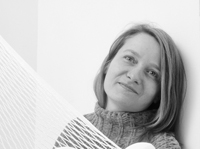
Canadian, member of the Nimpkish band of the Kwakiutl First Nation, sculptor, installation artist and jeweller.
Mary Anne Barkhouse was born into a family of Kwakwaka’wakw artists in Vancouver, British Columbia. Her family members included Ellen Neel (1916–1996), who was a prominent wood carver and one of the first women known to have professionally carved totem poles. Her mother is from the Nimpkish band, Kwakiutl First Nation of Alert Bay, British Columbia, and her father is of German and British descent from Nova Scotia. She graduated from the Ontario College of Art in Toronto in 1991. During her studies, she worked under influential metalsmiths Ken Vickerson (1958–) and Lois Etherington Betteridge (1928–2020). Beginning her career in the 1990s, she has since crafted both small-scale and large-scale artworks that explore ecological concerns and Indigenous land and water stewardship. While she has experimented with jewellery and prints, she is best known for her installation pieces and public sculptures. Her installations are meeting points of European, Indigenous and natural histories and their ramifications on modern life.
Early in her career, M. Barkhouse crafted jewellery such as earrings, pendants and bracelets to make an income. These were often inspired by family stories involving whales and other sea life. By the early 2000s, installation and public sculptures had become her primary focus. Still, her family history and animal motifs feature heavily in her works. Her installations typically combine Baroque furniture pieces with sculptures of wildlife. She often uses birds, coyotes and beavers to symbolise the natural world but also as reminders of Indigenous resilience. The opulent chairs, tablescapes and other furniture serve as references to wealthy colonisers at the time of North American settler and Indigenous contact in the 17th and 18th centuries. One of her most well-known artworks, Harvest (2009) reflects on the colonisation of the Hudson Valley in New York state and the environmental consequences of settler colonial economies. The table features references to plant, animal and human life that were devastated by European colonisation. The coyote sculpture threatens to break the scene and can be read as a symbol of resistance to settler colonialism or the continuing effects of colonisation in the 21st century. M. Barkhouse has also used her installations, such as Tapestry (2017), to examine the violent history of residential schools in Canada. The installation features a bronze beaver, a symbol of both historic colonial economies and nature’s resilience, overlooking a scroll of the Canadian government’s executive summary of the Truth and Reconciliation Commission’s final report splayed on red fabric. The beaver, who is also a survivor of European settlement, bears witness to the shameful history of the residential school system in Canada.
Notably, M. Barkhouse has been commissioned for numerous outdoor public art works. Her animal sculptures are included in public parks, universities, and gallery and museum spaces across Canada. These sculptures often reference family stories and histories and assert an Indigenous presence in spaces that have historically obscured Indigenous existence. M. Barkhouse’s artworks have been exhibited both nationally and internationally and are included in the permanent collections of institutions throughout Canada, including the National Gallery of Canada and the Archives of Ontario.
A notice produced as part of the TEAM international academic network: Teaching, E-learning, Agency and Mentoring
© Archives of Women Artists, Research and Exhibitions, 2026