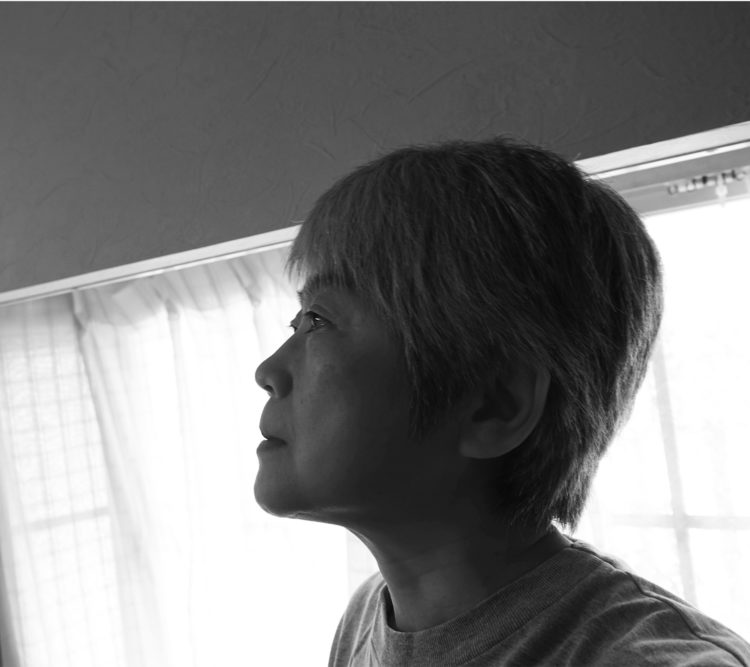
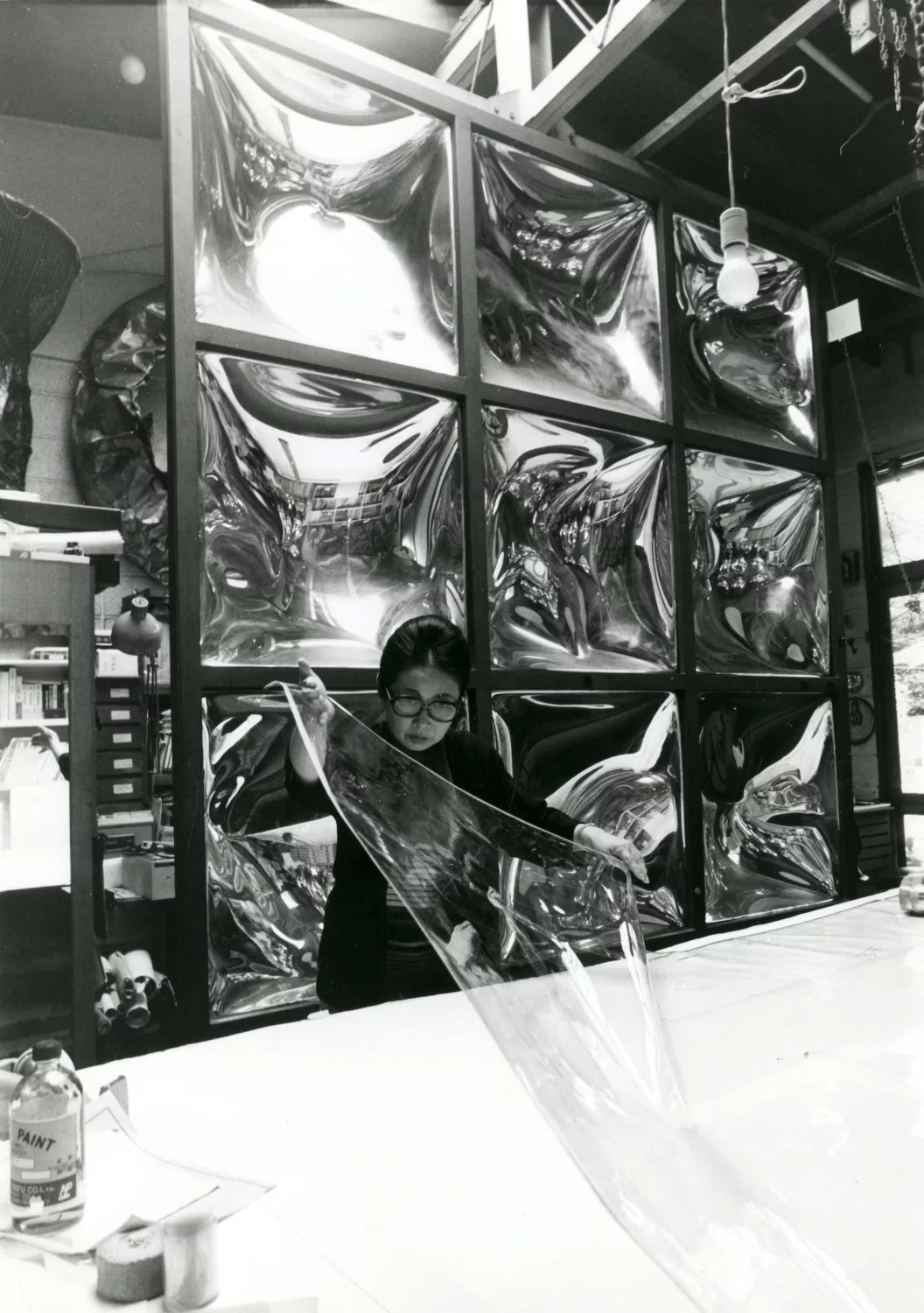
Portrait of Minami Tada, 1978 © Photo: Naruse Tomoyasu, Photo Courtesy of Sekaibunkasha
Nakajima, Izumi, “Tada Minami no ‘shiwa’: ‘Posuto akushon’ no hyōgen toshite [Minami Tada’s “Wrinkles” as an Expression of “Post-Action”]”, Anchi akushon: Nihon sengo kaiga to josei no gaka [Anti-action: Postwar Japanese Art and Women Artists], Tokyo, Chikuma Shobō, 2025
→Hikari o atsume, iro o hanatsu: Kenchiku o irodoru Tada Minami no zōkei [Gathering Light, Radiating Color: The Works of Minami Tada in Architecture], cat., INAX Museums (7 October 2023 – 26 March 2024), Tokoname, 2023
→Tada Minami ten: Hikari o atsumeru hito [40th Anniversary Exhibition: Minami Tada], exh. cat., Hakone Open Art Museum (3 October – 6 December 2009), Hakone, 2009
→Tokubetsuten Tada Minami: Hikari no meikyū [Special Exhibition Minami Tada: Maze of Light], exh. cat., Mie Prefectural Art Museum (3 August – 8 September 1991); Shibuya Shōtō Bijutsukan, Tokyo (26 November 1991 – 26 January 1992), Tokyo, 1991
→Tada, Minami, Tada Minami, Tokyo, Heibonsha, 1990
Tada Minami: Hikari, rin to yureru [Minami Tada: Still, Shimmering Light], Museum of Contemporary Art, Tokyo, 29 August – 6 December 2026
→Hikari o atsume, iro o hanatsu: Kenchiku o irodoru Tada Minami no zōkei [Gathering Light, Radiating Color: The Works of Minami Tada in Architecture], INAX Museums, Tokoname, 7 October 2023 – 26 March 2024
→Tada Minami ten: Hikari o atsumeru hito [40th Anniversary Exhibition: Minami Tada], Hakone Open Art Museum, 3 October – 6 December 2009
→Beyond Time & Space, Kaohsiung Museum of Fine Arts, 3 November 2001 – 27 January 2002; Taipei Fine Arts Museum, 9 February – 21 April 2002
→Tada Minami, Mie Prefectural Art Museum, 3 August – 8 September 1991; Shōtō Art Museum, Shibuya, Tokyo, 26 November 1991 – 26 January 1992
Japanese artist.
Born in Japanese-occupied Kaohsiung, Taiwan, in 1924, Minami Tada passed her youth in Keijo, Korea (present-day Seoul), having travelled alongside her father following his appointment to the area. She received private instruction in Western-style painting (seiyōga) from a teacher there, and her work was selected for inclusion in the Chōsen Art Exhibition. M. Tada and her family returned to Japan before the end of the Second World War, and she graduated with a degree from the Western Painting Department of the Teacher’s Training Course at the Private Women’s School of Fine Arts in 1944.
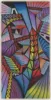
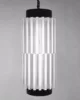
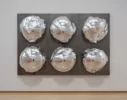
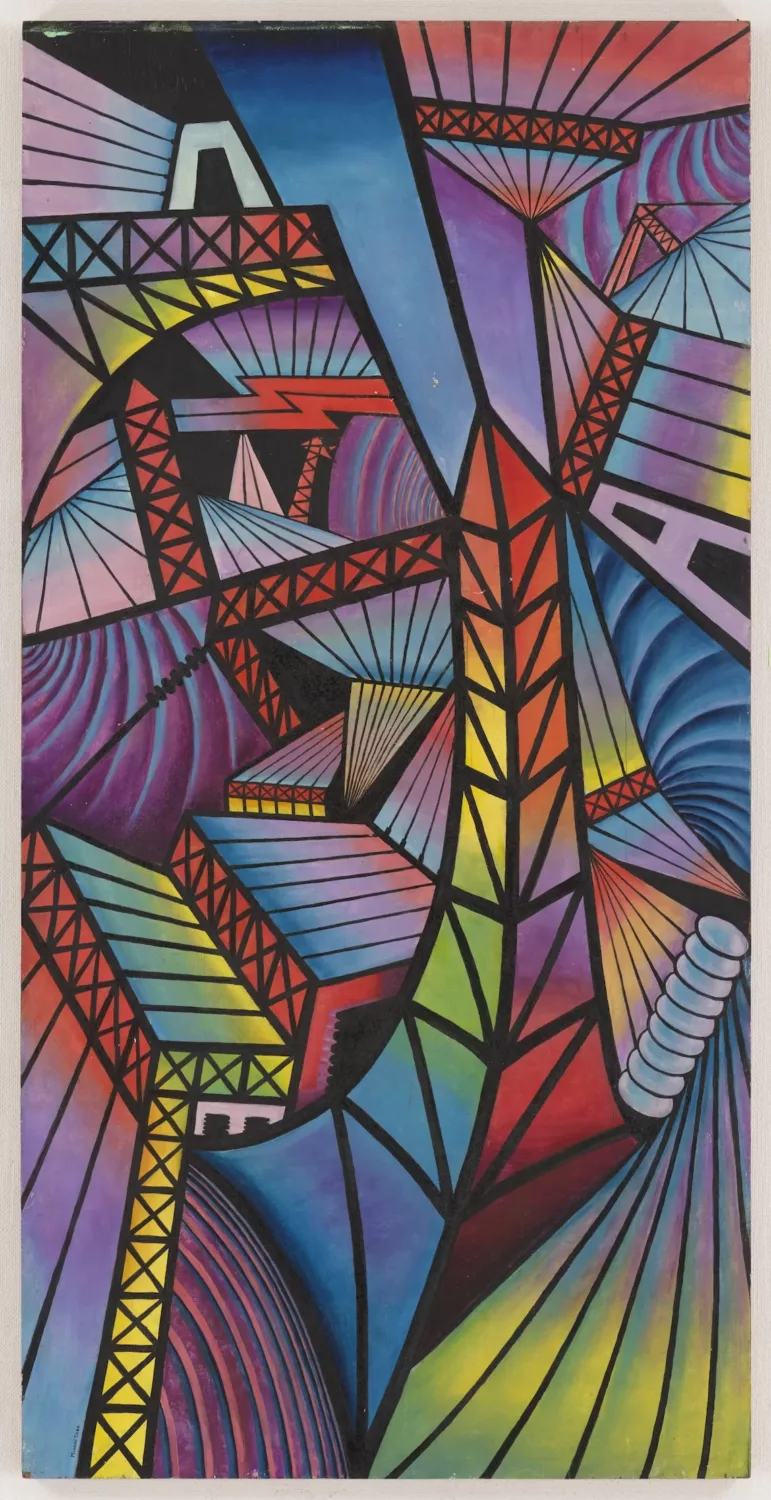
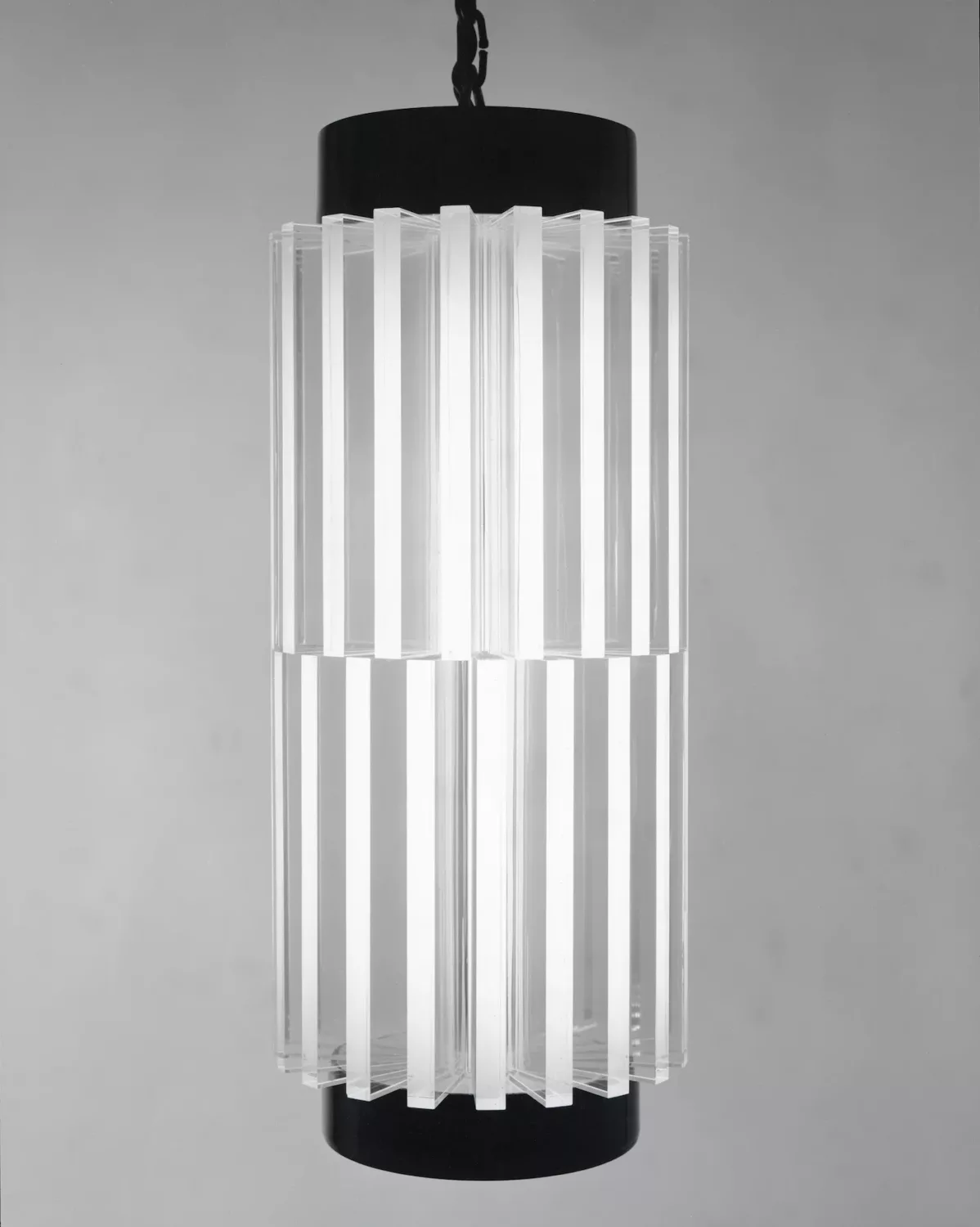
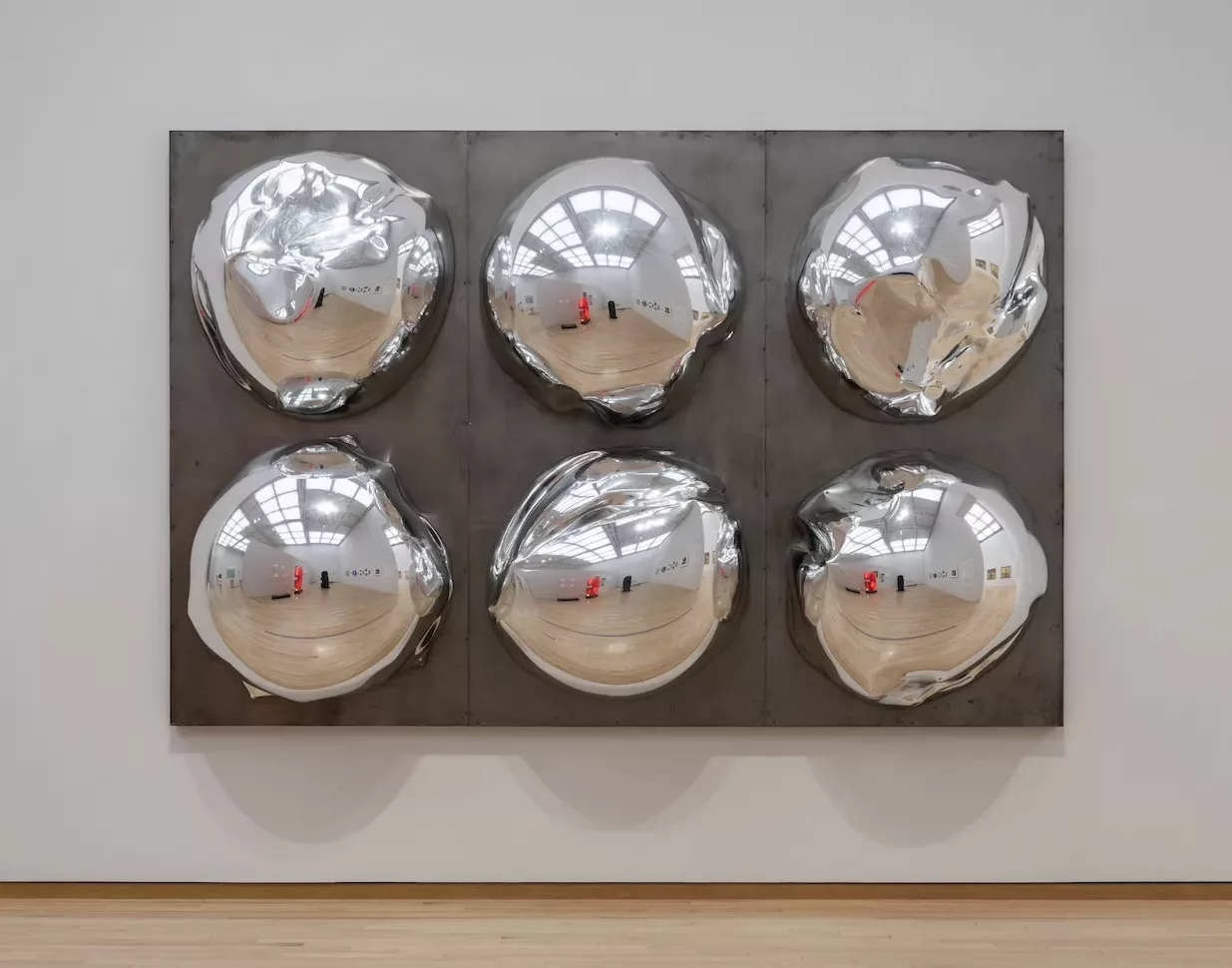
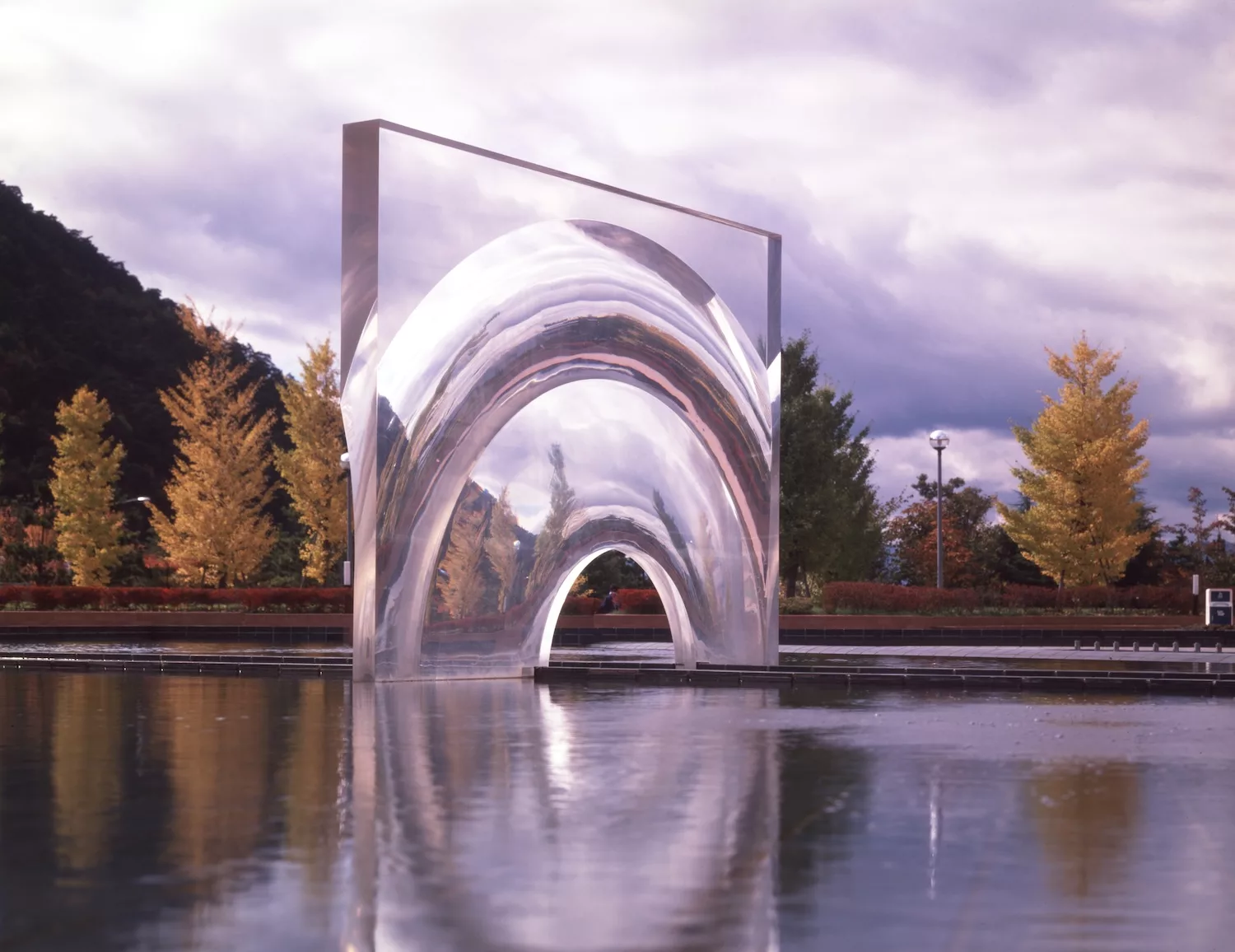
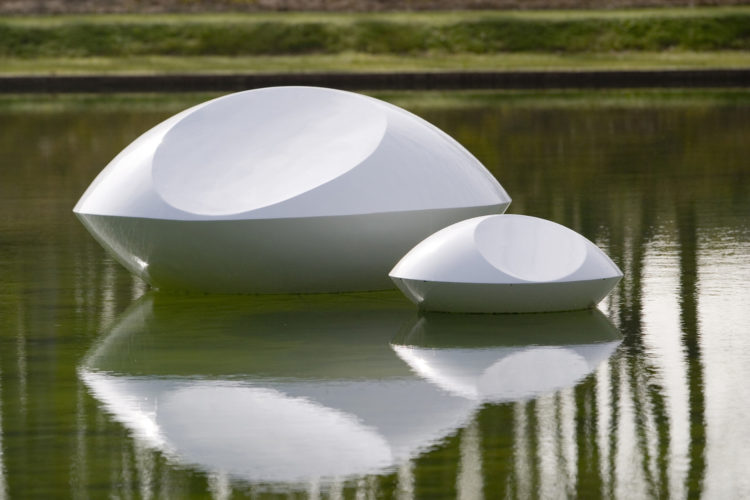
In 1956 M. Tada submitted an oil painting to the 41st Nikaten (Nika Association Exhibition) held at the Tokyo Metropolitan Art Museum for the first time and was selected. Following this, she intermittently participated in the Nikaten and the Yomiuri Independent Exhibition, both held in the same venue, until the early 1960s. Of these works, paintings in the series Hendensho [Transformer Substation] share vigorously interlaced lines reminiscent of electrical wires and transmission towers, and a colour composition that recalls prisms, already hinting at M. Tada’s interest in immaterial phenomena like energy and light. In 1957 her work Tankō [Coal Mine] was selected for the Japan Coal Miners’ Union Building Relief Sculpture Competition, in which the painter Kakuo Shinkai (1904–1968) also participated. For M. Tada, this work represented her first three-dimensional construction and her first work integrated with architecture. Thereafter, following various experiments – such as sculptures that combined plastic and iron and abstract paintings made using unconventional materials – she submitted bronze sculptures to the 45th Nikaten in 1960 and the one of them won a special prize. While continuously moving back and forth between painting and three-dimensional expression and continuing to explore materials and techniques, M. Tada also joined the ‘Kaku’ women’s sculpture group. In 1962 she established the Minami Tada Associates in Kugayama in Tokyo and began researching the use of new industrial materials, starting with acrylic. In the same year, she exhibited lighting fixtures at various design exhibitions, including the 8th Plastic Goods Exhibition (held at the Ginza Matsuya) and received critical acclaim. In the following year, 1963, she began creating large sculptural works in aluminium, using hammers and heating techniques in an increasingly clear attempt to erase the ‘traces of the hand’. She also began working on the ceiling-mounted lighting works known as Hikari zōkei [Lighting Sculpture] at around this time. In 1965 she exhibited Shūhasū 37306505 [Frequency 37306505] at the 8th International Art Exhibition, Japan, and received the Award for Excellence. The work, which features distorted acrylic hemispheres coated with vacuum-deposited aluminium that reflect the surrounding environment, represented a critical turning point for the artist that would inform her future artistic style.
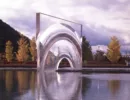
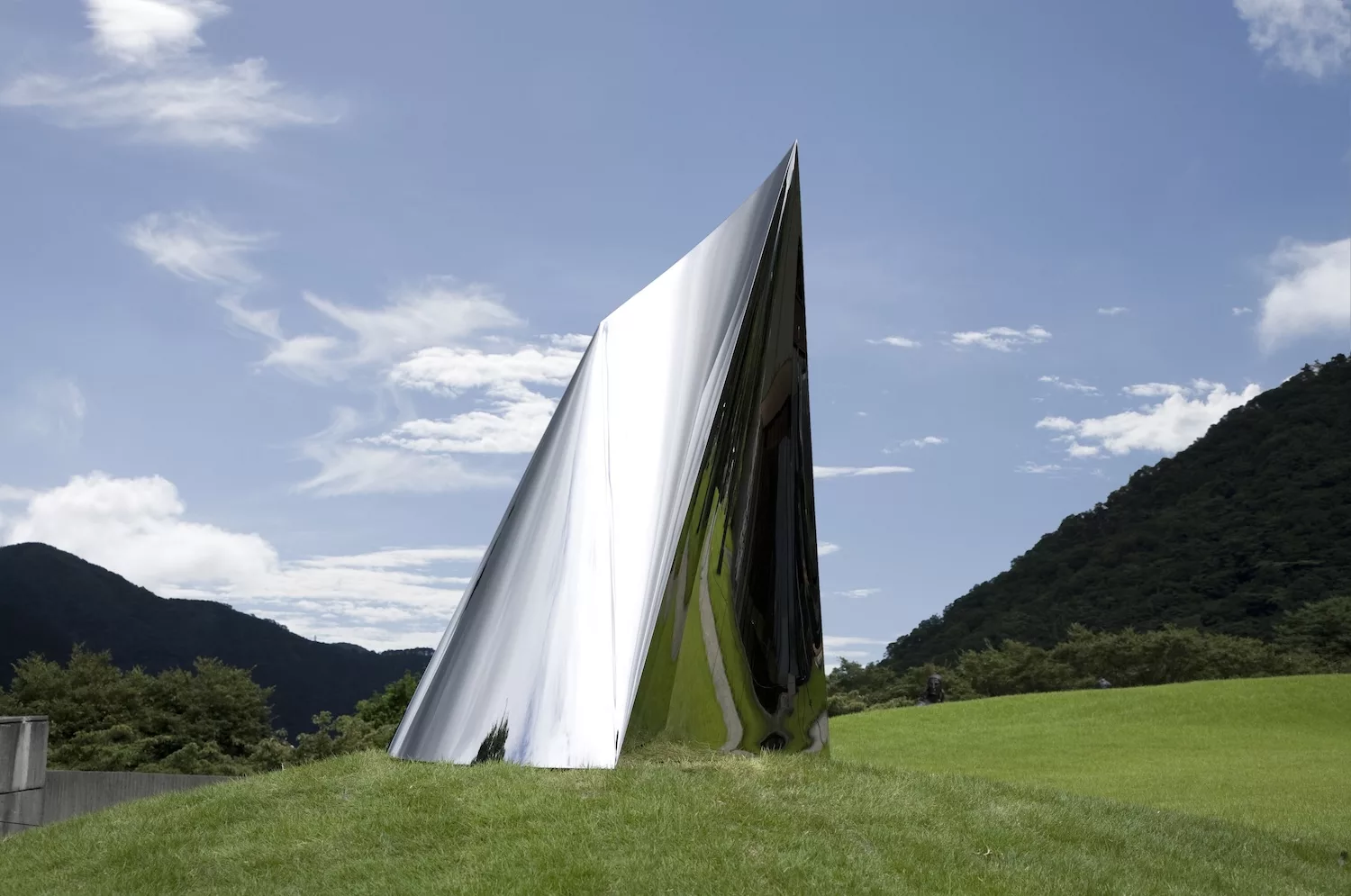
From this period onwards, M. Tada developed her sculptural work and her architectural commissions concurrently, gradually establishing her reputation for such pieces. In particular, she participated in the outdoor sculpture exhibitions of the Ube City Open-Air Sculpture Museum and the Kobe Suma Rikyū Park on an intermittent basis until the early 1980s, winning various awards for her work. She also participated in important exhibitions during this period, such as Kūkan kara kankyō e [From Space to Environment] (1966, Ginza Matsuya). In 1979 she won the Grand Prize at the 1st Henry Moore Grand Prize Exhibition (held at the Hakone Open-Air Museum) for Kyoku [Pole]. That same year, she won the Tokyo National Museum of Modern Art Award at the 8th Contemporary Japanese Sculpture Exhibition for Chiaroscuro.
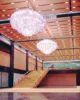
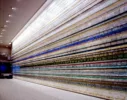
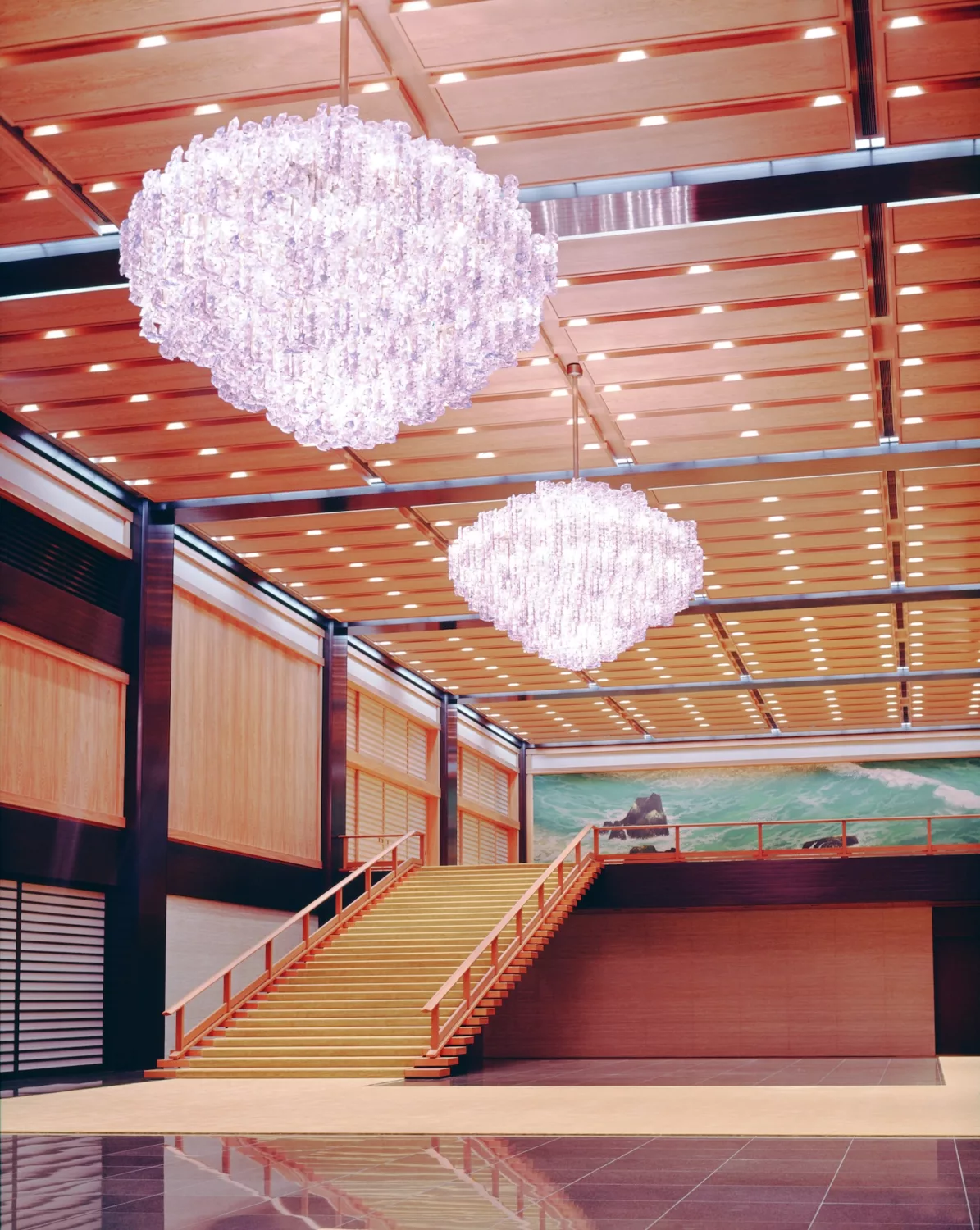
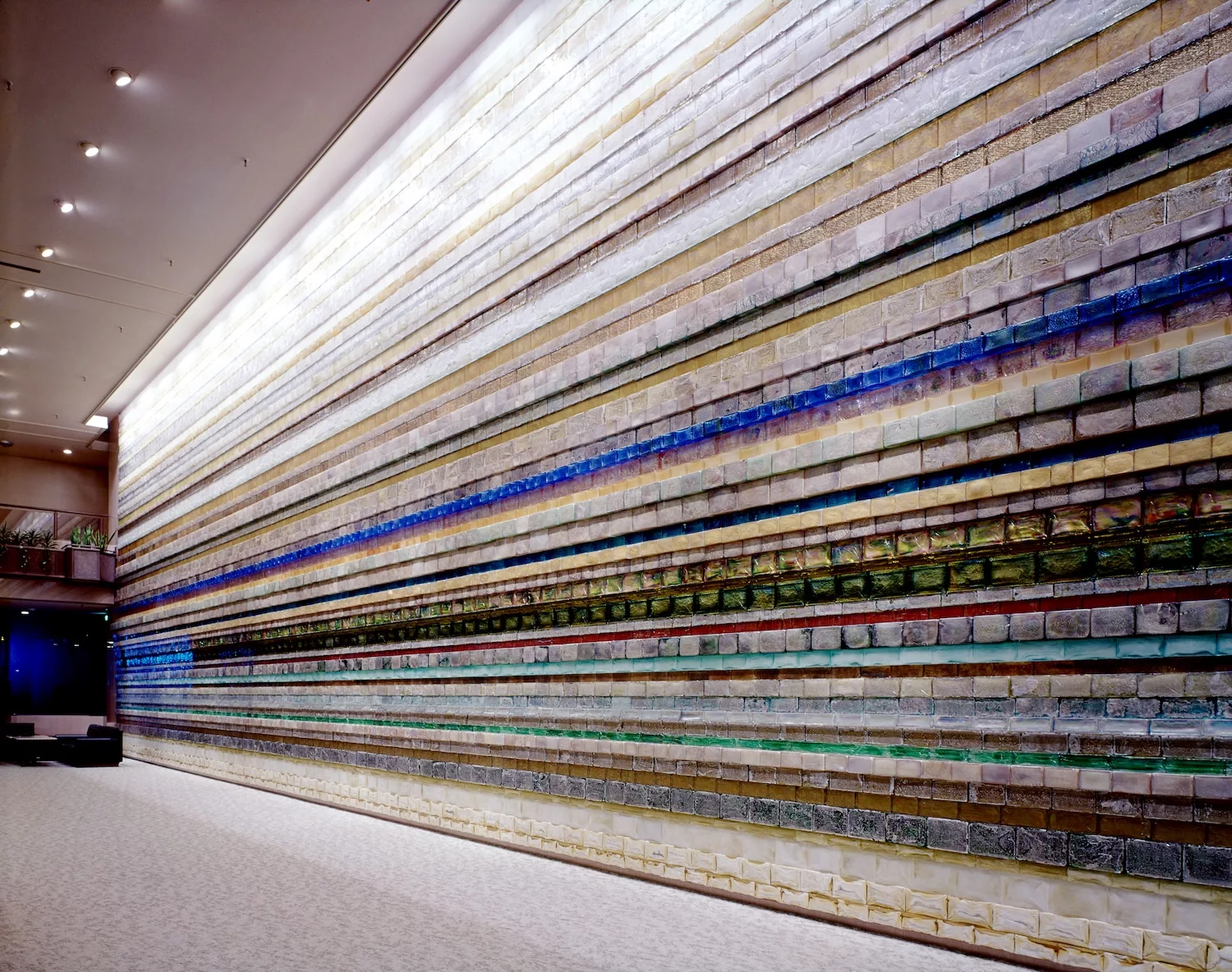
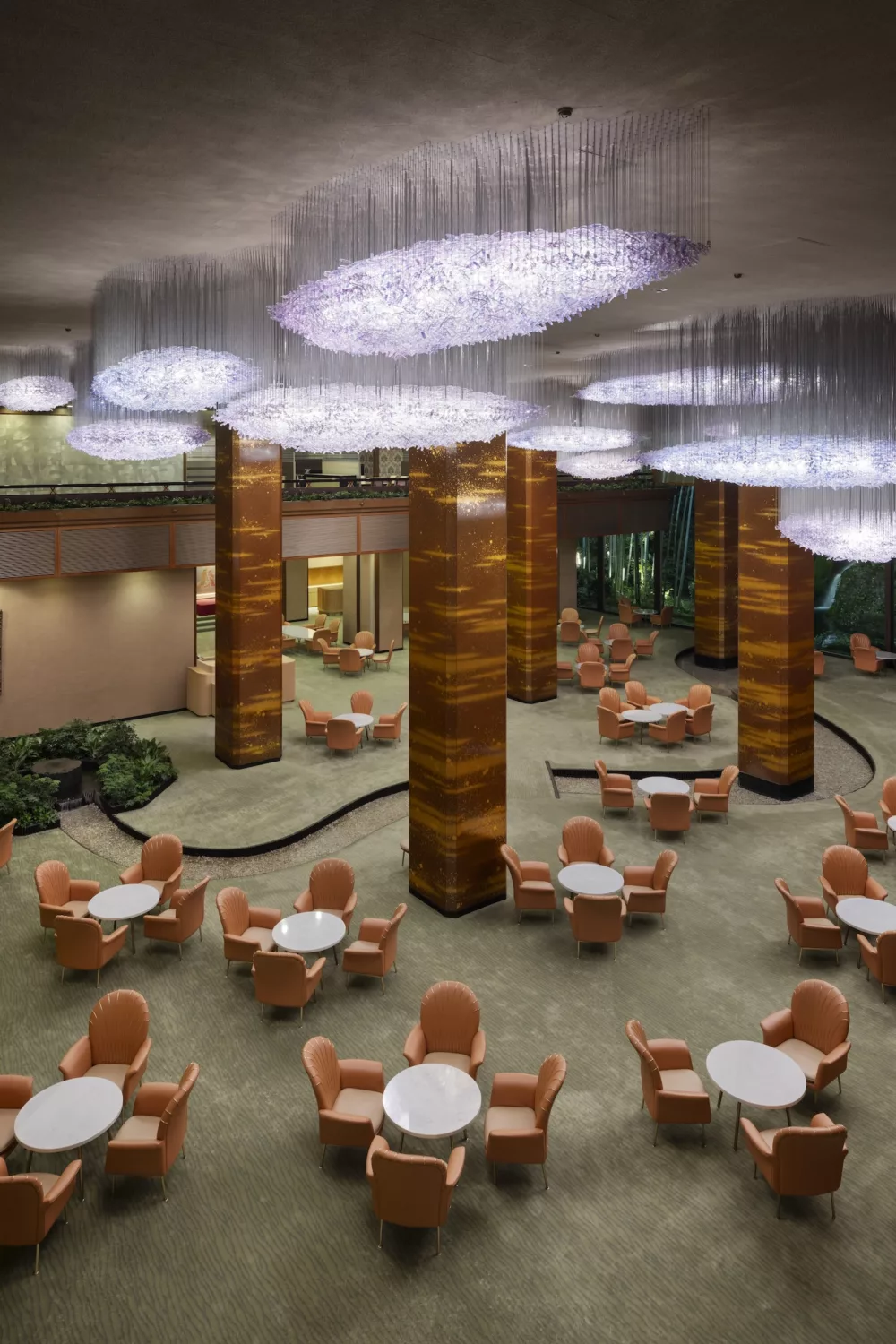
In her architectural work, M. Tada’s 1968 Lighting Sculpture at the New Imperial Palace constituted a major turning point that brought her widespread recognition. From there, she took on multiple large-scale architectural commissions in succession: Reimei [Illuminated Wall: Dawn] (1970) at the Imperial Hotel Tokyo, Space Terminal (1971) at the Keio Plaza Hotel, Hikari zōkei: Zuiun [Lighting Sculpture: Auspicious Clouds] (1973) at the Royal Hotel Osaka (present-day RIHGA Royal Hotel Osaka, Vignette Collection) and the façade of the Lee Building in Ginza (1974).
From the 1980s onwards, M. Tada extended the breadth of her colour expression, producing works that made use of new materials and techniques like colour-anodised aluminium sheets and lustre-glazed ceramic panels. In 2013 she completed her final commission, a relief sculpture for the Olive Bay Hotel in Nagasaki. She died in Tokyo in 2014. Her major awards include the 21st Mainichi Art Award (1980), the 6th Isoya Yoshida Award (1981), the Minister of Education’s Art Encouragement Prize (1983), the Medal of Honor with Purple Ribbon (1988) and the Order of the Precious Crown, Fourth Class (1994).