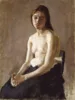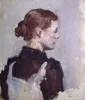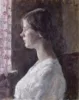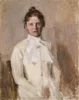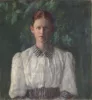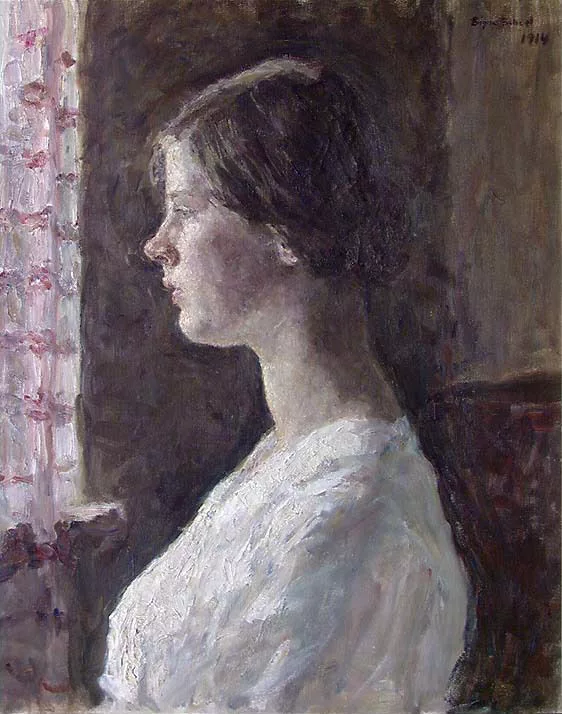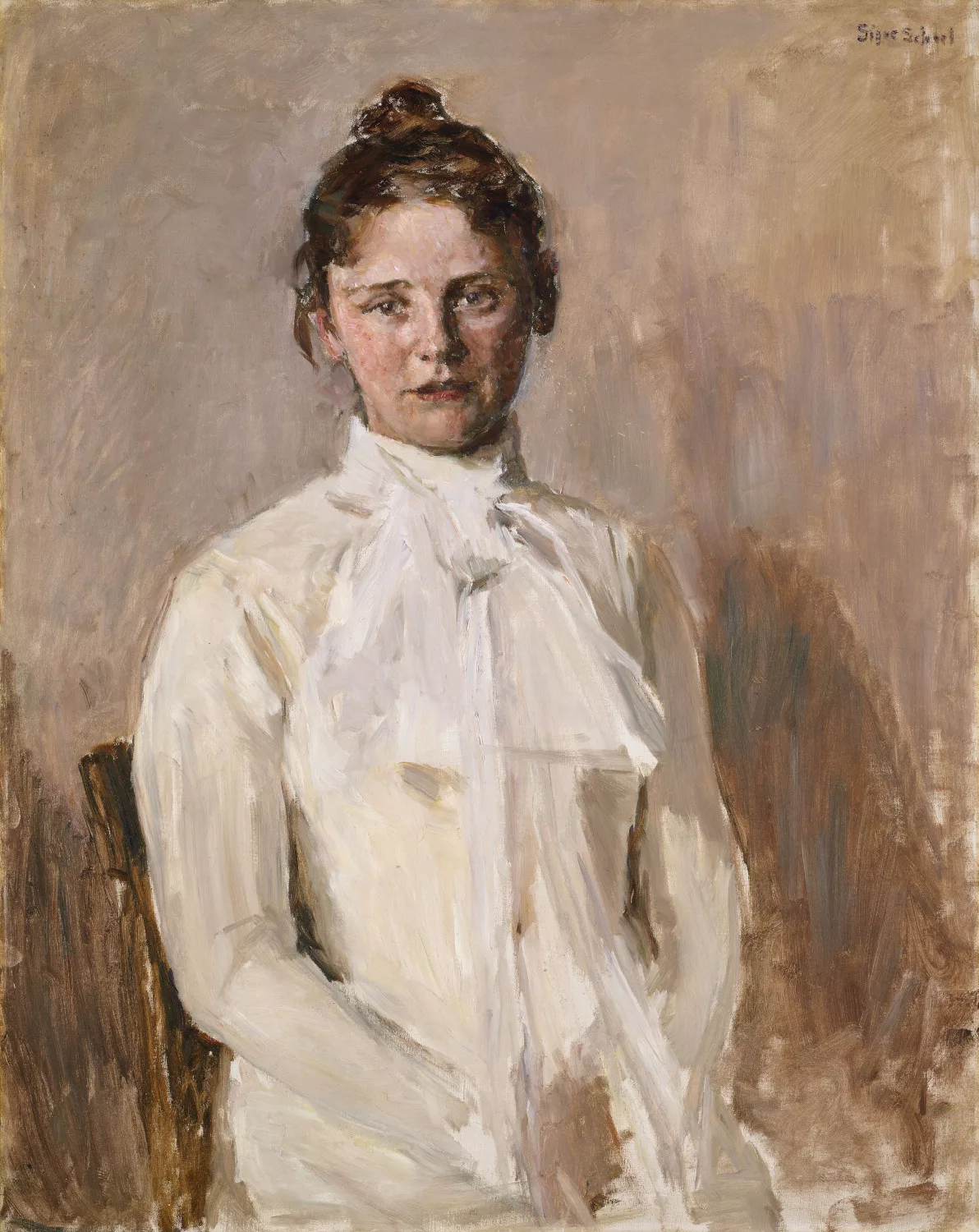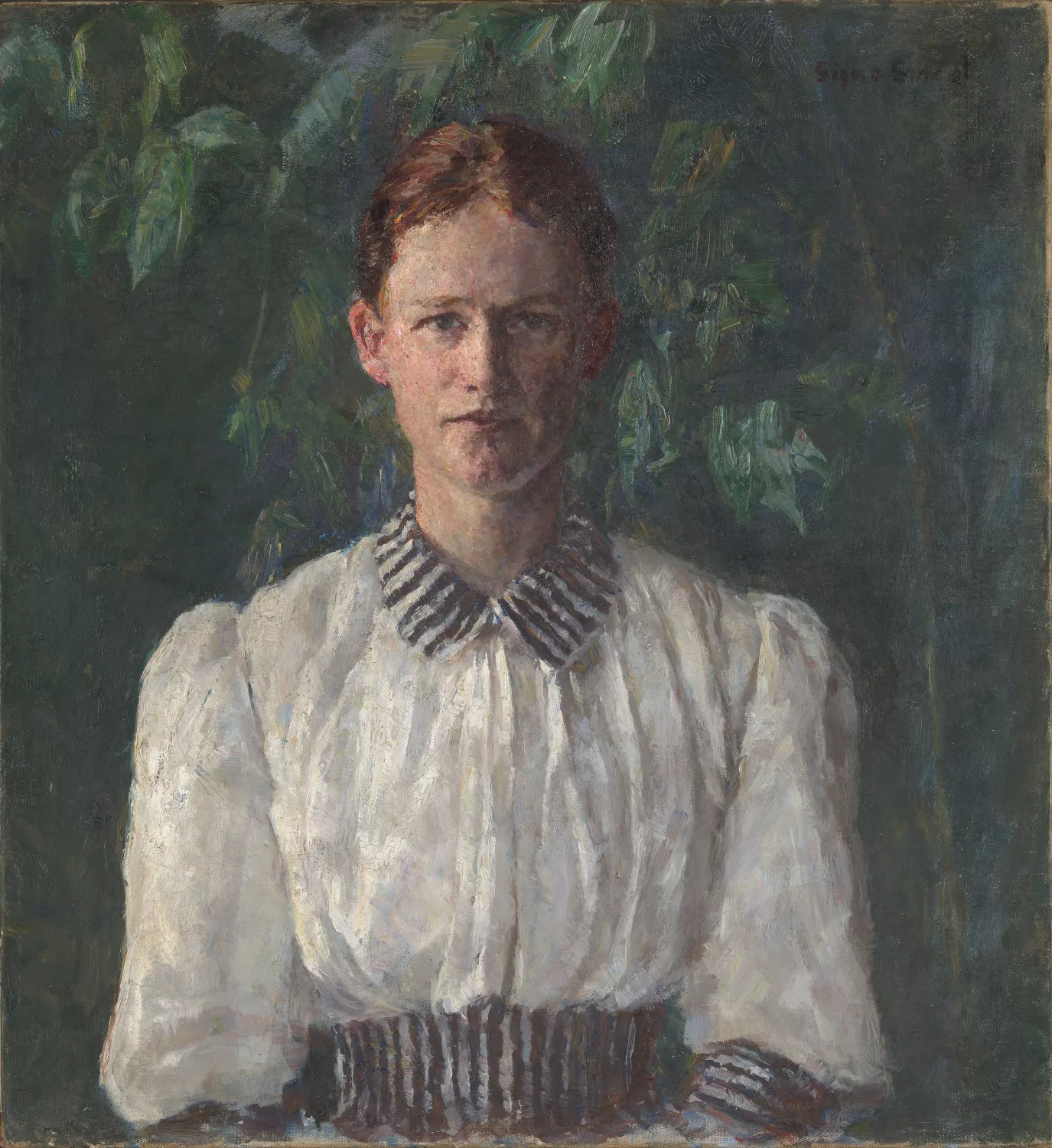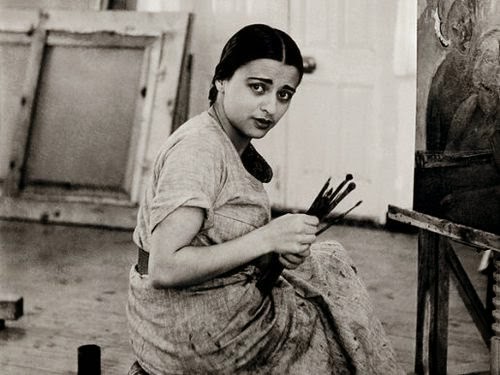
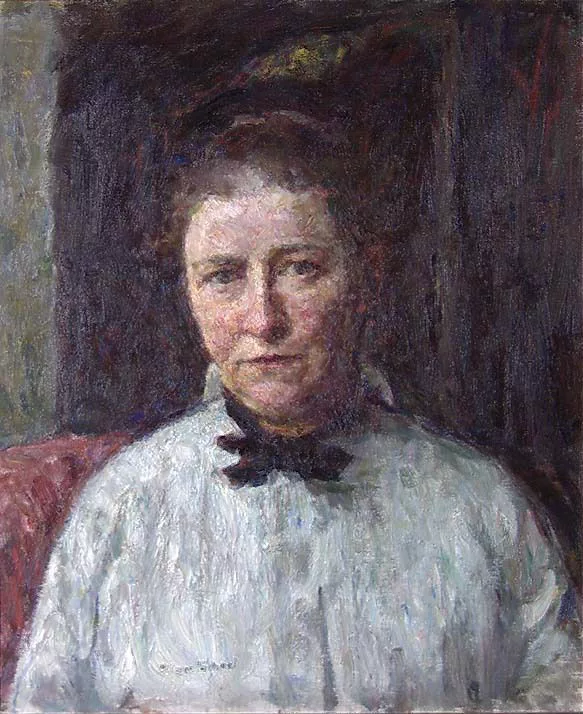
Signe Scheel, Self-Portrait, 1916, oil on canvas, 38 x 45.5 cm, photo: Nasjonalmuseet
Aaserud, Anne, De nære ting, Oslo, University of Oslo, 1993
→Wichstrøm, Anne, Kvinner ved staffeliet. Kvinnelige malere i Norge før 1900, Oslo, Universitetsforlaget, 1983
→Sørensen, Henrik, Signe Scheel, Oslo, Kunst og Kultur, 1936
Signe Scheel. Minneutstilling/Memorial Exhibition, Kunstnernes Hus, Oslo, 19 November – 11 December, 1960
→Signe Scheel, Retrospective Exhibition, Kunstnernes Hus, Oslo, 21 Feburary–15 March, 1936
→Signe Scheel, Kristiania Kunstforening, Kristiania, 1894
Norwegian painter.
Signe Scheel grew up in Hamar and Kristiania (now Oslo). In 1877 her family moved to the farm Undesløs at Toten, located an hour and a half north of Kristiania, where her father had been appointed district court judge. The farm and her siblings would later become recurring motifs in her production.
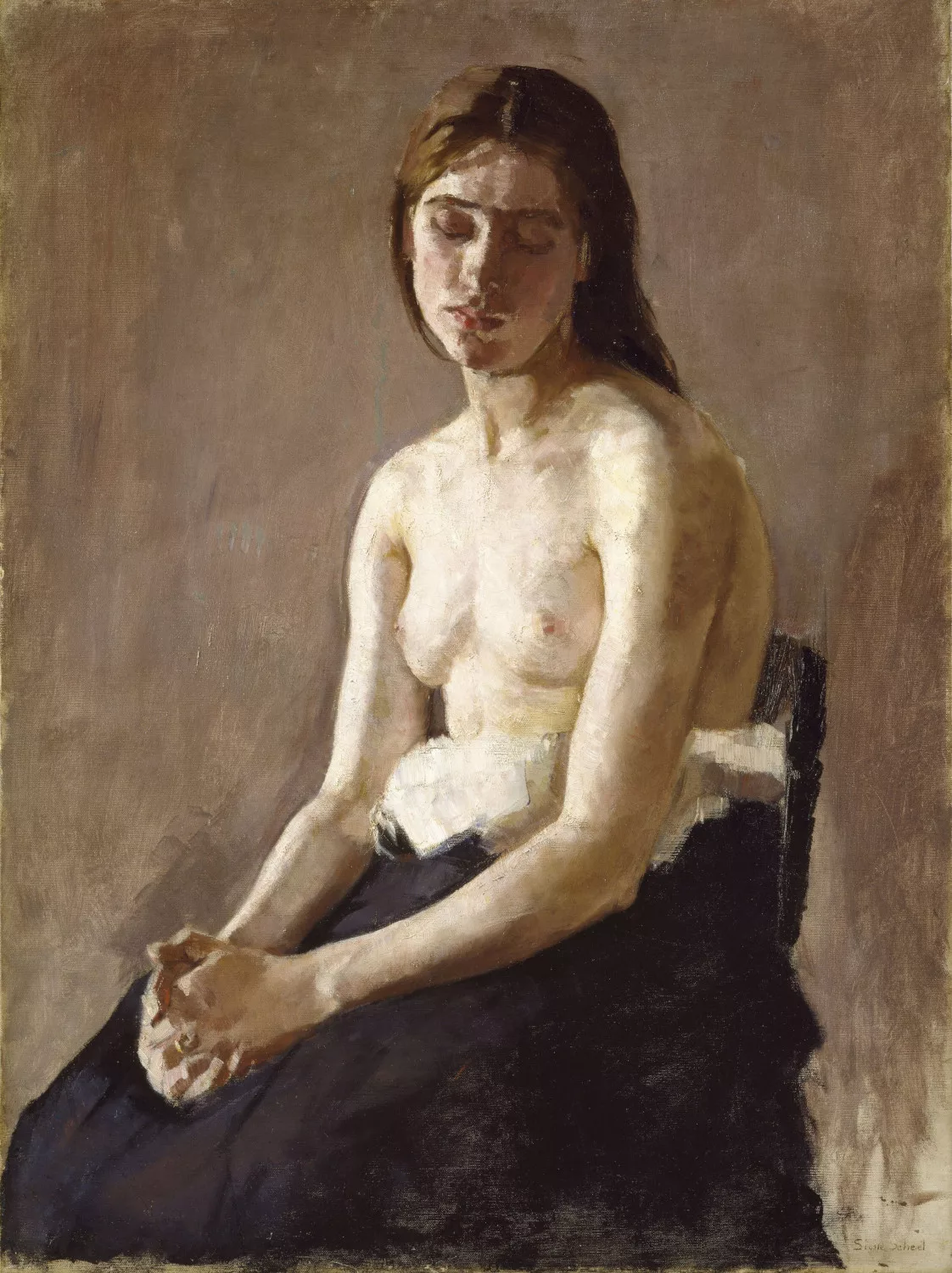
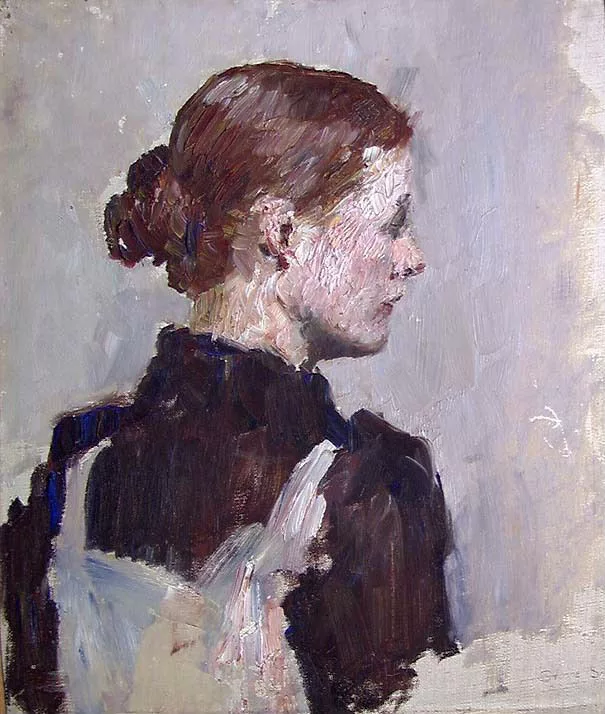
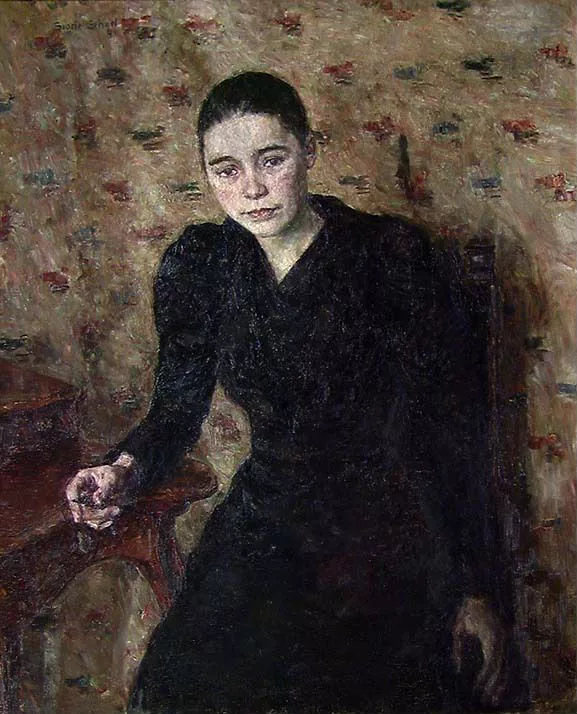
In the summer of 1881, she became a pupil of Christian Krohg (1852–1925) as part of the Norwegian painter’s newly established women’s class in Oslo. C. Krohg recommended S. Scheel to study further with the German painter Carl Gussow (1843–1907) in Berlin. Her eight month stay in Berlin in 1881 was financed by her father. S. Scheel returned to Berlin on several occasions. In a written recommendation for a scholarship from 1883, C. Gussow highlights S. Scheel’s talent as a colourist and urges that she should be supported in pursuing further artistic training. Several of her portrait sketches from this period show the influence of C. Gussow’s strong and dark colours. However, the portrait of her sister Valborg (1883) features more restrained colours and a refined light. Lysstudie [Study of Light, 1884], one of her best works, reflects S. Scheel’s long-lasting interest in soft, diffused light and a limited range of colours used in the face of the young woman.
S. Scheel had her debut in 1884 at Høstutstillingen [The Autumn Exhibition], where she exhibited regularly (1884–1889, 1891, 1895, 1896, 1898, 1899, 1903, 1905–1910, 1915–1917 and 1930). In 1930 she was invited without being assessed by a jury.
In 1887, S. Scheel moved to Copenhagen in Denmark where she worked on Psyke [Psyche, 1888] and the landscape Lindevangen, Fredriksberg (1888). In 1888 she travelled again to Paris where she became a pupil of Pascal Dagnan-Bouveret (1852–1929) at Academie Colarossi. During a short stay of ten weeks, financed in part by her uncle, she met the French plein air artists and visited the Paris Salon.
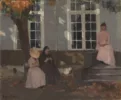
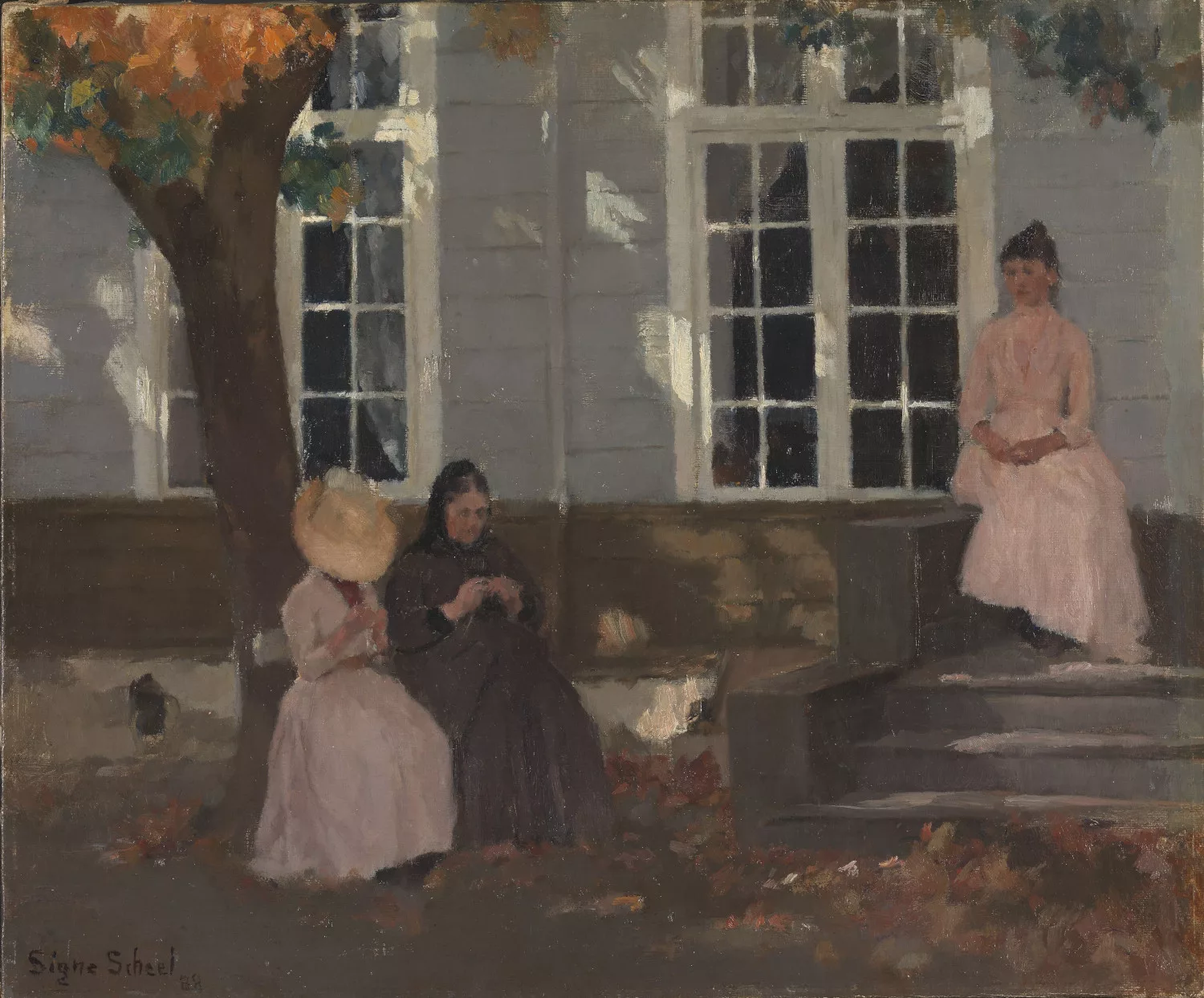
Upon her return to Norway, S. Scheel painted her main work depicting her family’s residence, Skrivergården, Undesløs på Toten [The Magistrate’s House, Undesløs at Toten, 1888]. Two women sit in the shade of a large courtyard tree, occupied with their needlework, while another young woman sits on the steps, leaning against the grey wall – a peaceful afternoon represented through a controlled colour palette and a shimmering light. In 1892 S. Scheel returned to Paris for four months as a pupil of Pierre Puvis de Chavannes (1824–1898). She held her first solo exhibition in 1894 at Kristiania Kunstforening [The Art Association in Kristiania], where she presented a small selection of drawings and paintings.
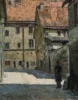
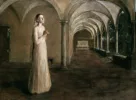
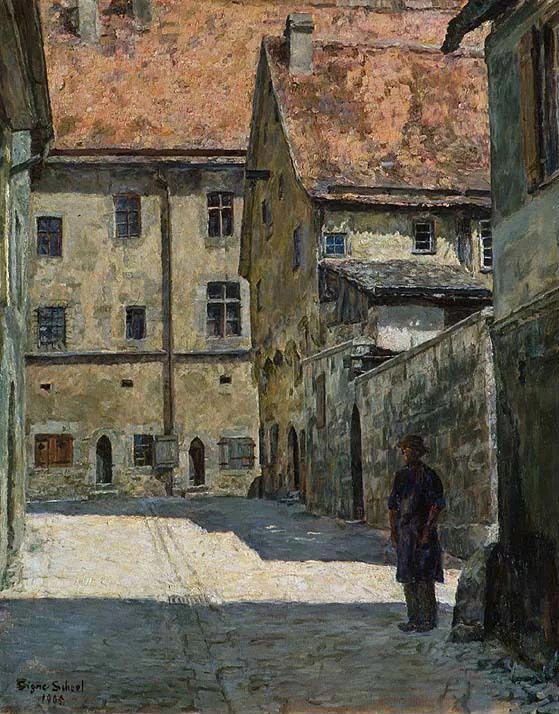
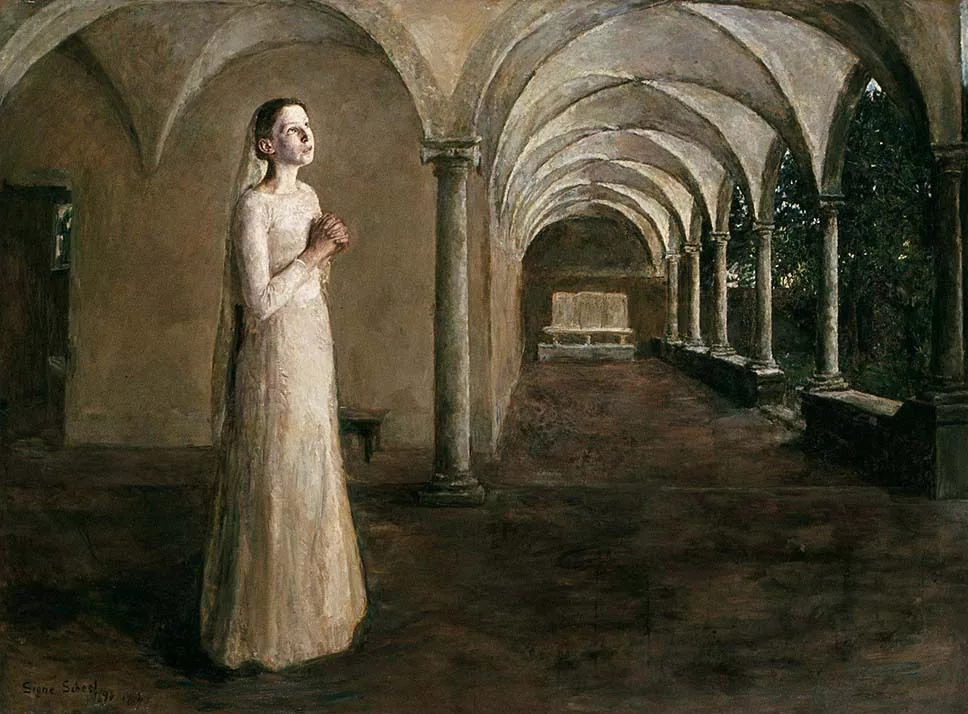
Around the mid-1890s, S. Scheel began to produce larger religious compositions such as Herrens tjenerinne [God’s Servant, 1903], painted at San Marco monastery near Florence, where she spent several months in 1900. She also used motifs from old German towns such as Rothenburg and Lübeck.
S. Scheel suffered from poor health which limited her production, while also employing a time-consuming painterly technique with fine brushstrokes in several layers. Nevertheless, she continued to paint landscapes and portraits, and travelled to Italy and Germany. She had a particular fondness for depicting houses and portraying members of her own family, such as her niece Lili. One of her works from this period is Kastanje i gårdstun [Chestnut Tree in the Farmyard, 1910]. The painting is a quiet scene of a woman crossing a farmyard. The light is filtered through the leaves of a large tree, creating areas of both shade and soft sunlight. Her last painting, titled Hustak, Firence [Rooftops, Florence], was made in 1927.
S. Scheel’s works are held in private collections, mostly within her own family. She is also represented in public collections such as Oslo Bymuseum and Gothenburg Art Museum. Nasjonalmuseet in Oslo holds over 200 works by S. Scheel, on both canvas and on paper.
A notice produced as part of the TEAM international academic network: Teaching, E-learning, Agency and Mentoring
© Archives of Women Artists, Research and Exhibitions, 2026