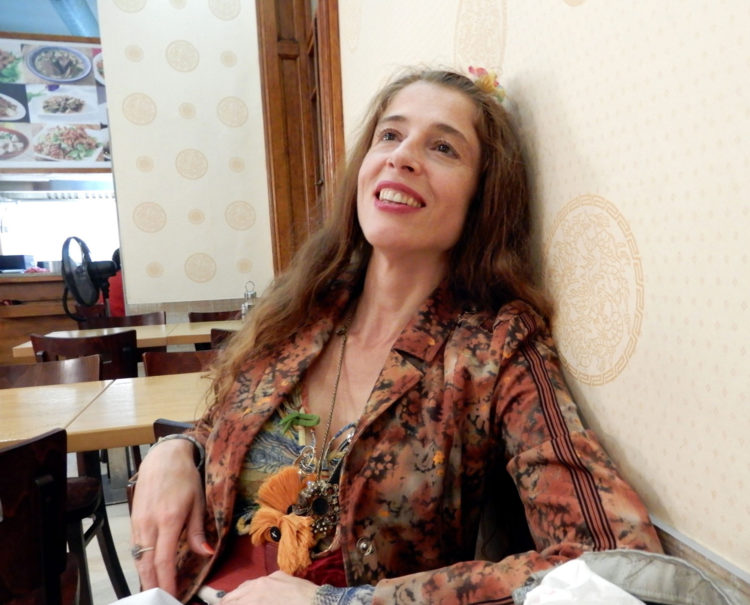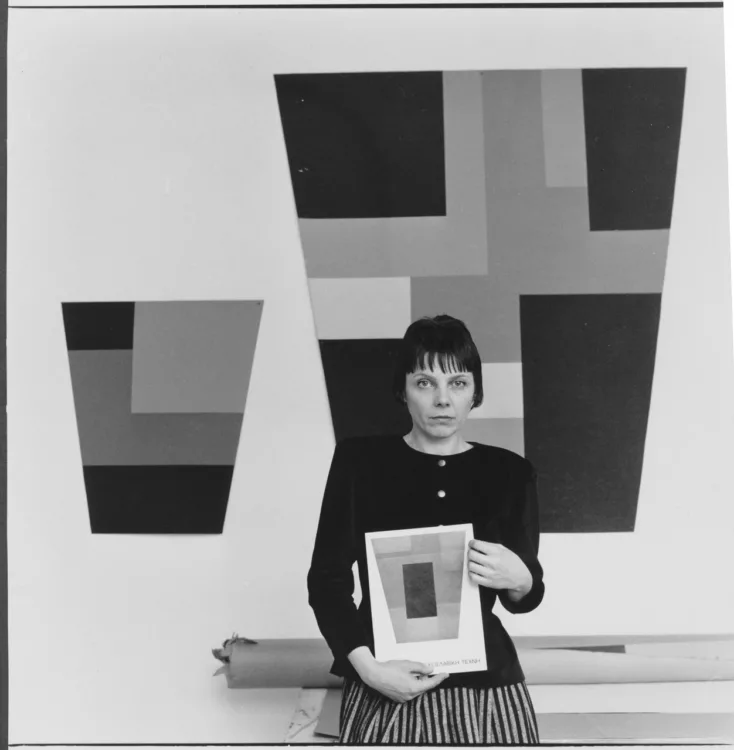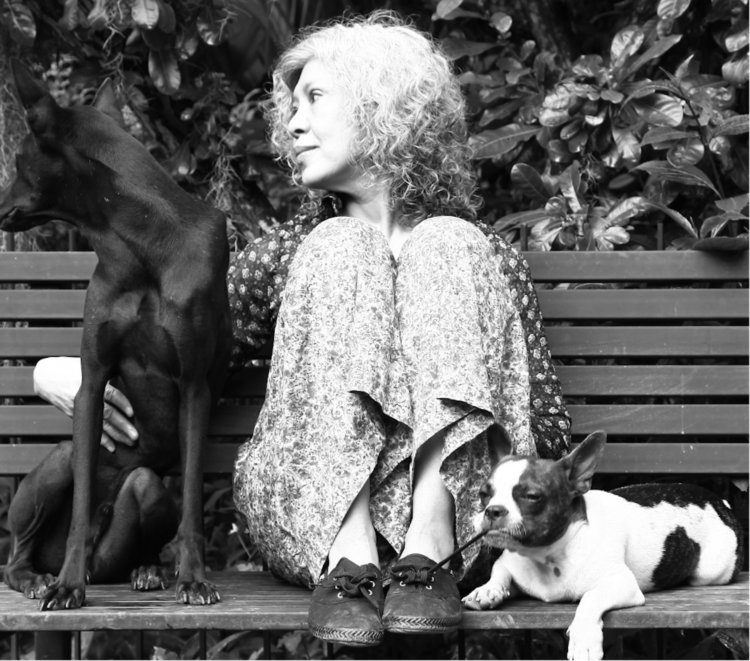
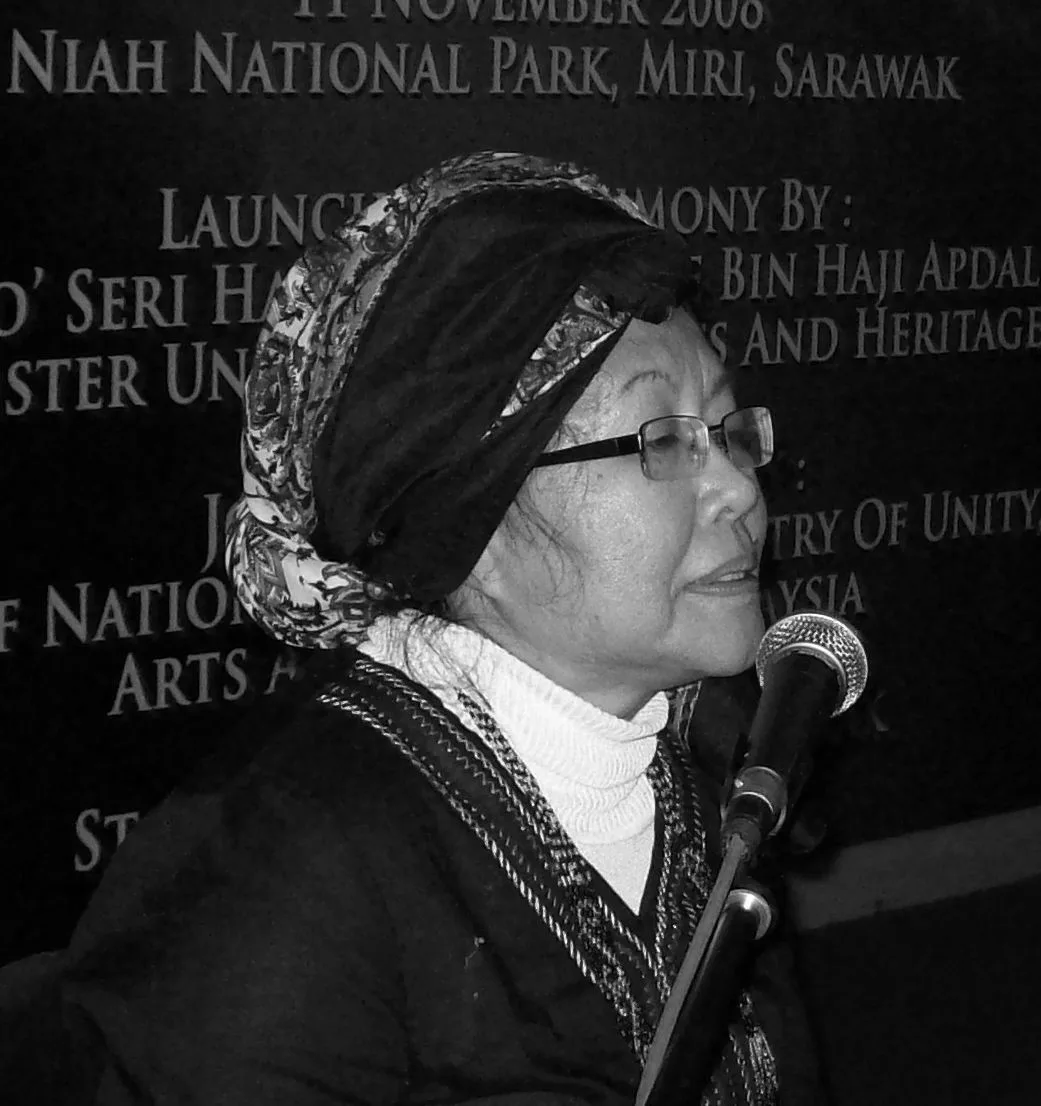
Portrait of Siti Zainon Ismail
Ismail, Siti Zainon, Alam Puisi, Kuala Lumpur, Dewan Bahasa dan Pustaka, 2015
→Ismail, Siti Zainon, Kasih Bonda: Kampung Paya Kami, Kuala Lumpur, Dewan Bahasa dan Pustaka, 2015
→Ahmad, Said A., Musa, Mahzan, Haji Salleh, Muhammad, Zikir Pelangi – The Rainbow: Siti Zainon Ismail, Bangi, Galeri Melora, 2000
Siti Zainon Ismail – Dari Jogja Ke Bawah Bayu: Karya Pilihan dari Tahun 1970 hingga 2016, Universiti Pendidikan Sultan Idris, Perak, 10–30 April, 2017
→Gelora Gelombang Jugra – Pameran and Rima Puisi: 30 Tahun Siti Zainon Ismail Dalam Warna, Galeri Shah Alam, Shah Alam, 1997-1998 (travelling exhibition that covered some states in Malaysia and Jakarta)
→Pameran Lukisan, Arca dan Sketsa Sarjana Muda Seni Rupa, ASRI, Jogjakarta, 1973
Malaysian academic, writer and painter.
Siti Zainon Ismail was born in a small Malay village – Kampung Bandar Dalam – in Kuala Lumpur in 1949. She is the second child of four siblings and spent her early childhood between Kuala Lumpur and Kelantan. S. Z. Ismail started to sketch during her early years when she travelled to Kelantan by train. She finished her primary education in Sekolah Setapak, Kuala Lumpur, and her secondary education in Sekolah Aminuddin Baki, Kuala Lumpur. Upon completing sixth form, she was helped by the Indonesian Embassy to continue her tertiary education at Akademi Seni Rupa Indonesia (ASRI) in Jogjakarta in December 1969. During her stay in Indonesia, she met the prominent painter Affandi (1907–1990) and his daughter Kartika (1934–). Affandi took S. Z. Ismail as his protégé and she would form a close relationship with him and Kartika.
S. Z. Ismail completed her bachelor’s degree in Fine Art in 1973, graduating as the best student from her cohort. She was then sponsored by two local galleries in Jogjakarta to exhibit her works. She returned to Kuala Lumpur and volunteered at the Ministry of Culture from 1973 to 1976. It was during this time that she came in contact with the then Mayor of Kuala Lumpur and suggested that Pasar Seni [Central Market] – a small mall promoting arts and cultural activities – should be set up in the heart of the city. In 1977 S. Z. Ismail enrolled at the Universiti Kebangsaan Malaysia (UKM) to pursue her masters degree in Literature, specifically focusing on theories and knowledge to revive the arts. Upon completing her masters in 1980 she became a lecturer at UKM on a full-time basis, in the Department of Malay Studies, where she taught culture and the philosophy of aesthetics. During her tenure, S. Z. Ismail established Galleri Seni at UKM. In the meantime, she continued painting and had two solo exhibitions after completing her masters. She also served as a professor at Universiti Malaysia Sabah from 2014–2016. She retired from UKM at the age of 62.
In 1992 S. Z. Ismail completed her PhD, which focused on the aesthetics of Malay traditional textiles. Her deep interest in the Malay culture and heritage is reflected in her works Perca Kain Limar II [Limar Fabric Patch II, 1981] which evokes Malay traditional textiles with its warm colours and distinguished patterns, and Hikayat Beringin Tenggarong [Tenggarong Banyan Tales, 1997] which captures the history of Tenggarong, a Malay kingdom at the south of Borneo in the 17th century. She continued to sketch, paint, and write poetry and short stories, inspired by her love of nature and the intention of safeguarding the cultural heritage. In Jentayu Terbang ke Awan Biru [Jentayu Flies Towards the Blue Sky, 2008], she depicts Jentayu – a bird from the Ramayana epic – using expressionist strokes of colour and Arabic calligraphy to connect the epic to the Malay culture.
S.Z. Ismail is also an established novelist, and received the National Laureate Award from Malaysia in 2019. Her inspiration for her writing practice comes first through sketching, although she has not received any formal recognition for her contribution towards the visual arts.
A biography produced as part of the programme The Flow of History. Southeast Asian Women Artists, in collaboration with Asia Art Archive
© Archives of Women Artists, Research and Exhibitions, 2026