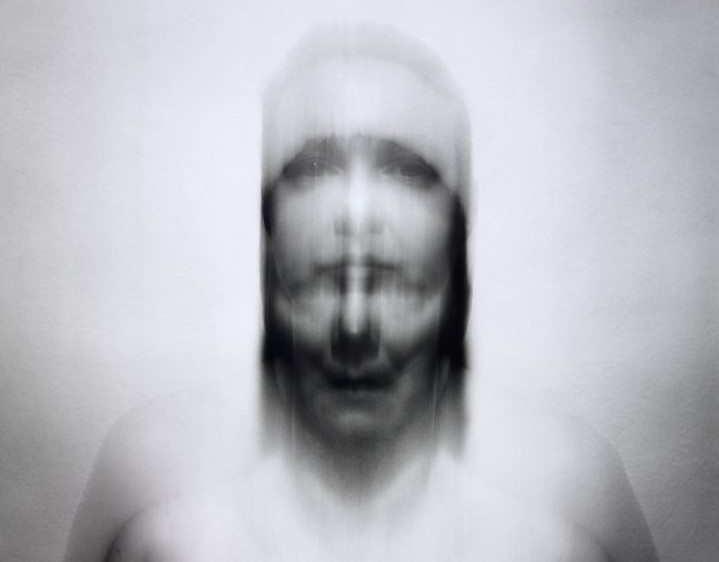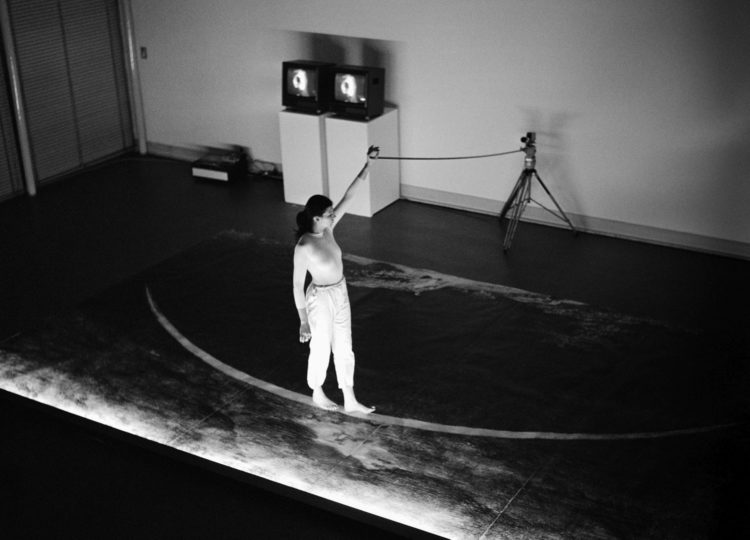
Analivia Cordeiro, 1989, © Photo: Bob Wolfenson, Courtesy of the artist, © Analivia Cordeiro
Corpografias, Centro Atlántico de Arte Moderno – CAAM, Spain, 2024
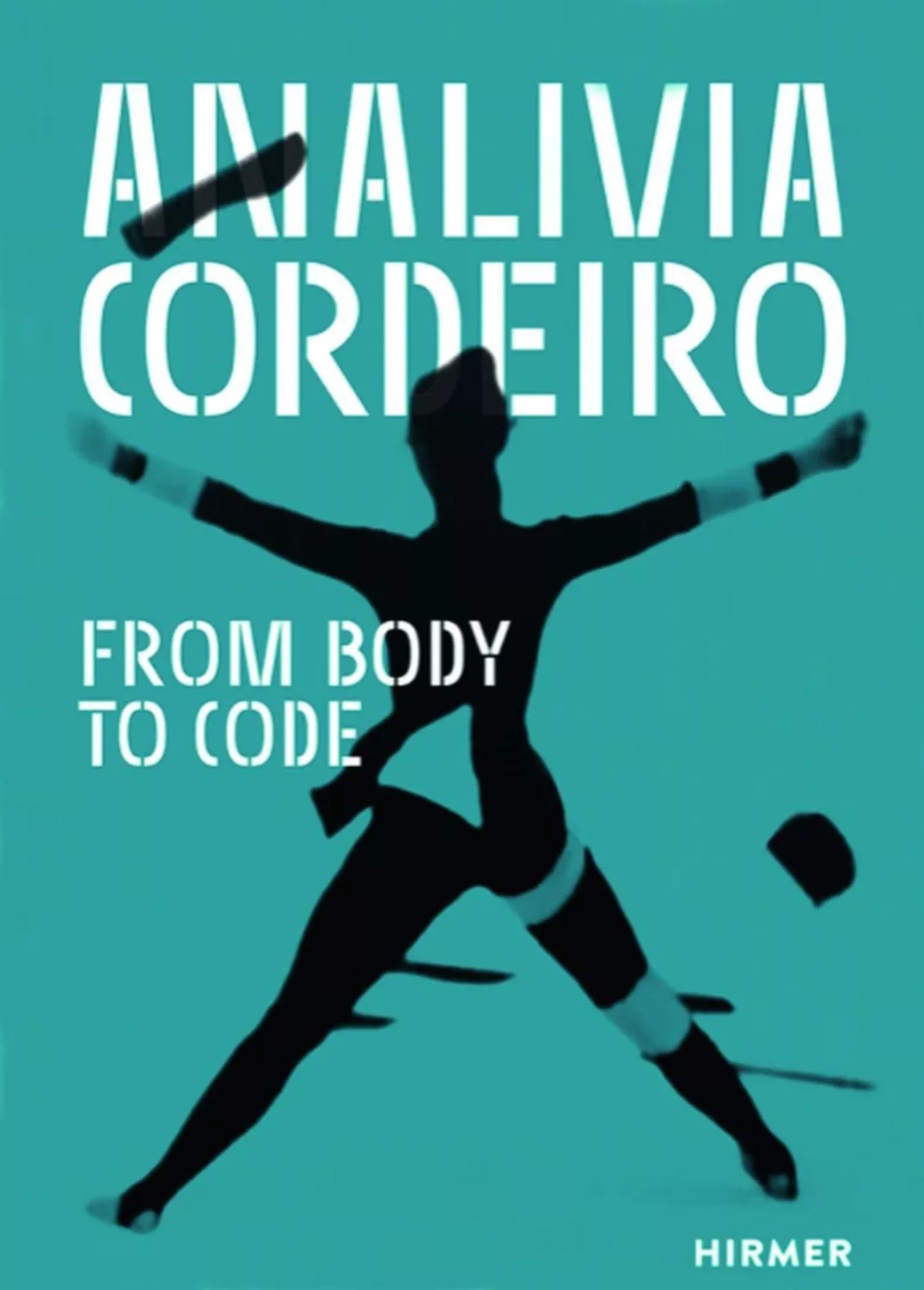
→Analivia Cordeiro – From Body to Code, ZKM and Hirmer Verlag, Germany, 2023
→Waldemar Cordeiro, Fantasia Exata, Itaucultural, São Paulo, Brazil, 2014
Analivia Cordeiro – From Body to Code, ZKM | Center for Art and Media Karlsruhe, Germany, 2023
→M3x3 at Code 1950-1980 When Art Entered Computer Age, LACMA Los Angeles County Museum of Art, Los Angeles, USA, 2023
→Analivia Cordeiro – Corpographies, Centro Atlántico de Arte Moderno – CAAM, Las Palmas de Gran Canarias, Spain, 2023
Brazilian dancer, choreographer, and media artist.
Analívia Cordeiro has been at the forefront of artistic experimentation in Brazil since the early 1970s, reshaping how movement, technology, and visual language intersect. A dancer, choreographer, artist, and researcher, she describes her practice as a continuous process of inquiry. With a background that spans dance, art, architecture, multimedia, computer science, and semiotics, she developed a body of work that has profoundly influenced both video art and the digital analysis of movement.
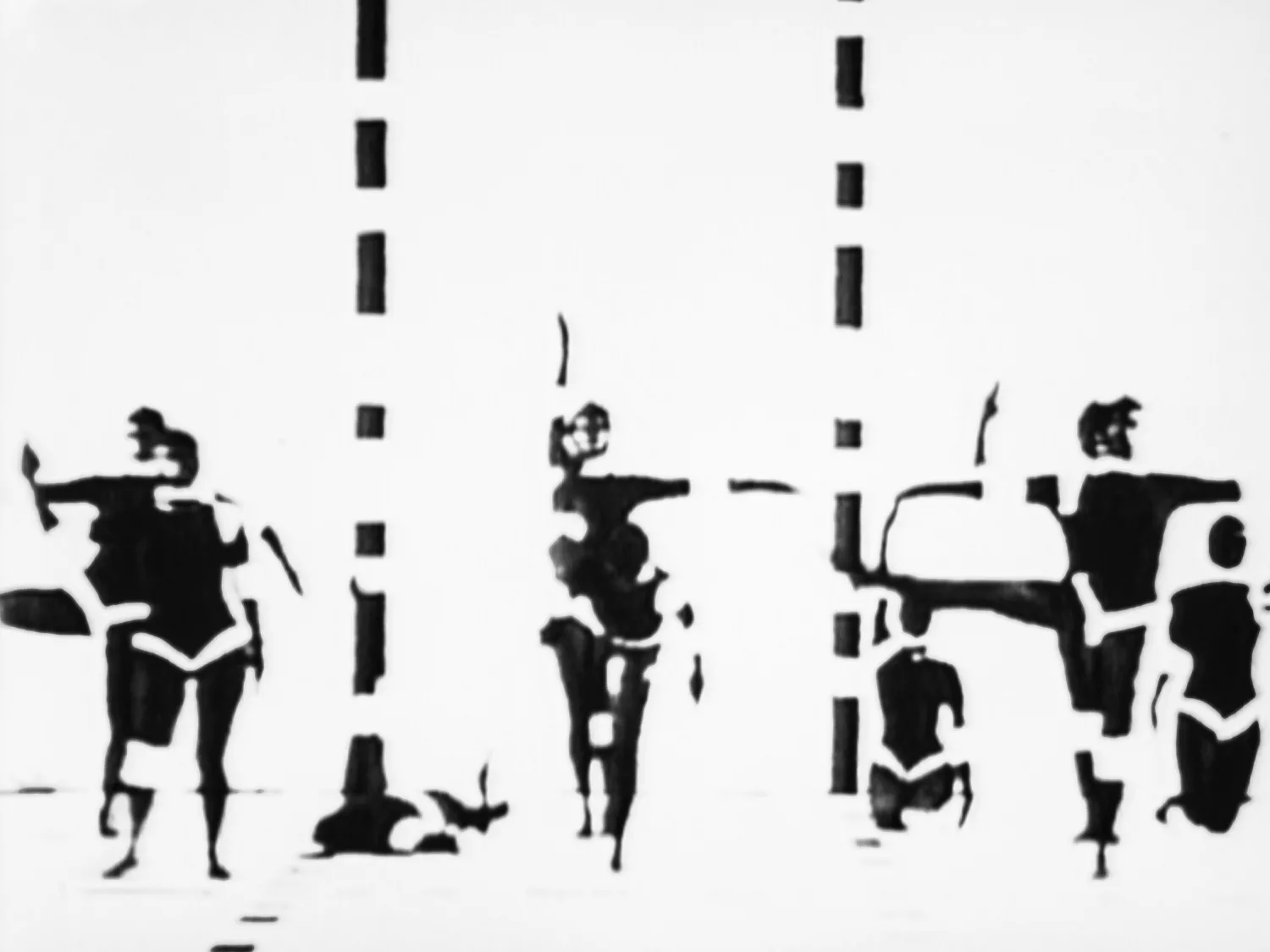
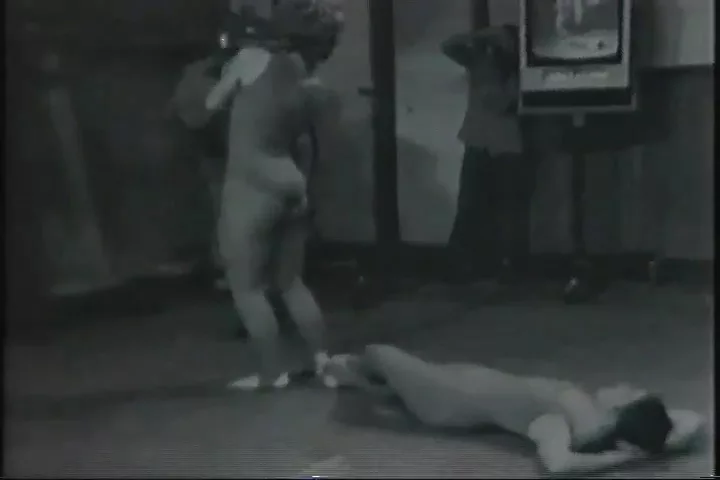
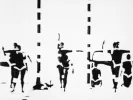
Daughter of Waldemar Cordeiro (1925–1973)—a seminal figure in Brazilian concrete art and one of the first artists to experiment with computers—A. Cordeiro grew up immersed in an environment where art and technology intertwined. In 1973, as a young student, she was among only a handful of artists worldwide using computer graphics to notate dance. Her landmark work M3x3 (1972–1973) exemplifies this early exploration. Combining choreography, spatial design, and data processed by computers, M3x3transformed human movement into a kinetic video installation. Filmed in a television studio with three synchronized cameras and projected into architectural space, the piece blurred boundaries between body, image, and environment. Its radical fusion of modernist influences—from constructivism to conceptual art—carried deeper political resonance, as scholar Edward Shanken has observed: A. Cordeiro’s use of “post-colonial female bodies” questioned the dynamics of control and freedom under Brazil’s military dictatorship.
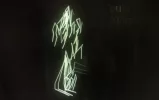
A. Cordeiro continued to expand this pioneering work through subsequent projects—such as 0°‹—›45° (1974–1989), Gestos (1975), Cambiantes (1976), and e (1979)—as well as through live performances and the development of Nota-Anna, her original dance notation system. Her research also ventured into anthropology: in the 1970s, she lived with Indigenous communities in the Amazon, documenting their rituals and storytelling in film and photography, which informed both her movement vocabulary and her archival practice.
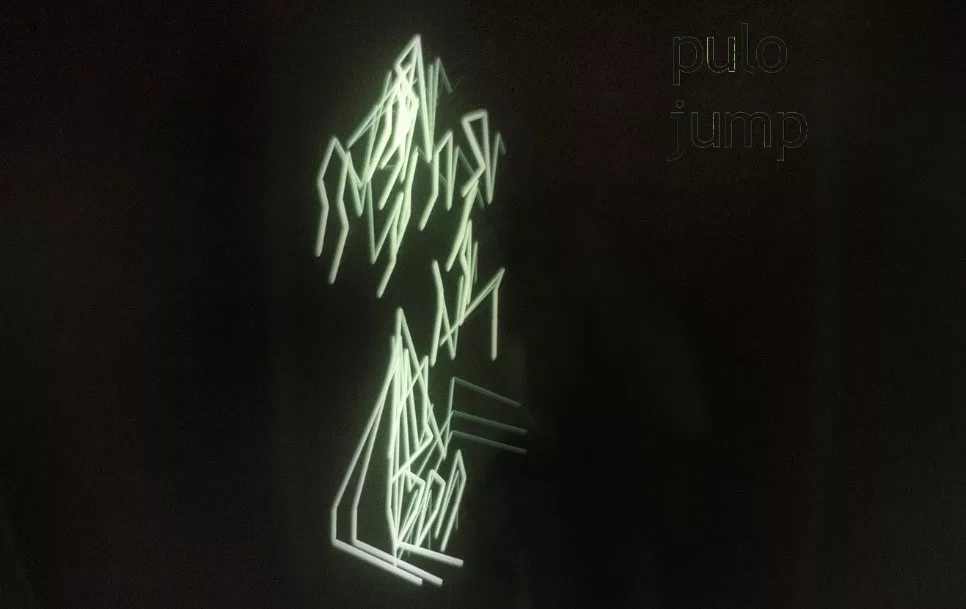
A. From the 1980s onward, A. Cordeiro deepened her exploration of computer-assisted dance notation. Working with engineer Nilton Lobo, she created three-dimensional recordings of bodily movement by plotting 24 key points of the body and tracking their trajectories over time. This technique offered unprecedented analytical precision and new possibilities for preserving cultural heritage—from traditional dances, such as a nearly extinct Yemenite choreography, to experimental contemporary works. Her method also transformed choreographic creation itself, allowing artists to test and refine movement sequences digitally before staging them physically.
A. Cordeiro’s pioneering contributions have been recognized internationally. M3x3 received the BEEP Electronic Art Prize at ARCO Madrid in 2015 and was featured in major exhibitions such as Coded: Art Enters the Computer Age, 1952–1982 (LACMA, 2023). Her work remains a touchstone in media art history, not only for its technical innovation but also its poetic investigation of the human body as both subject and data. Through her fusion of movement and code, A. Cordeiro invites us to rethink embodiment, memory, and the ways art can shape the technological futures it inhabits.
A biography produced as part of the programme “Living with two brains: Women in New Media Art, 1960s-1990s”
© Archives of Women Artists, Research and Exhibitions, 2026