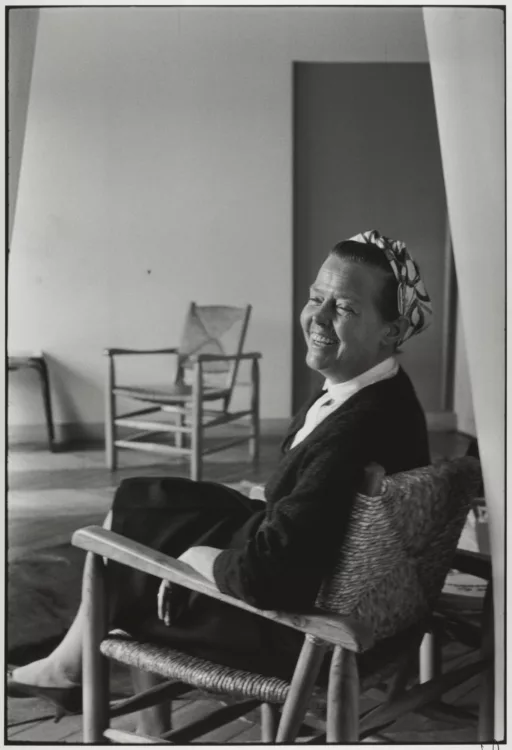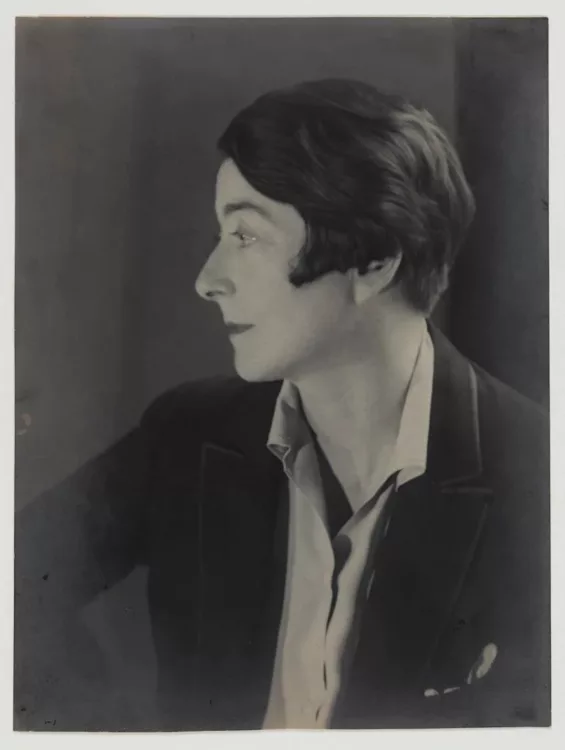
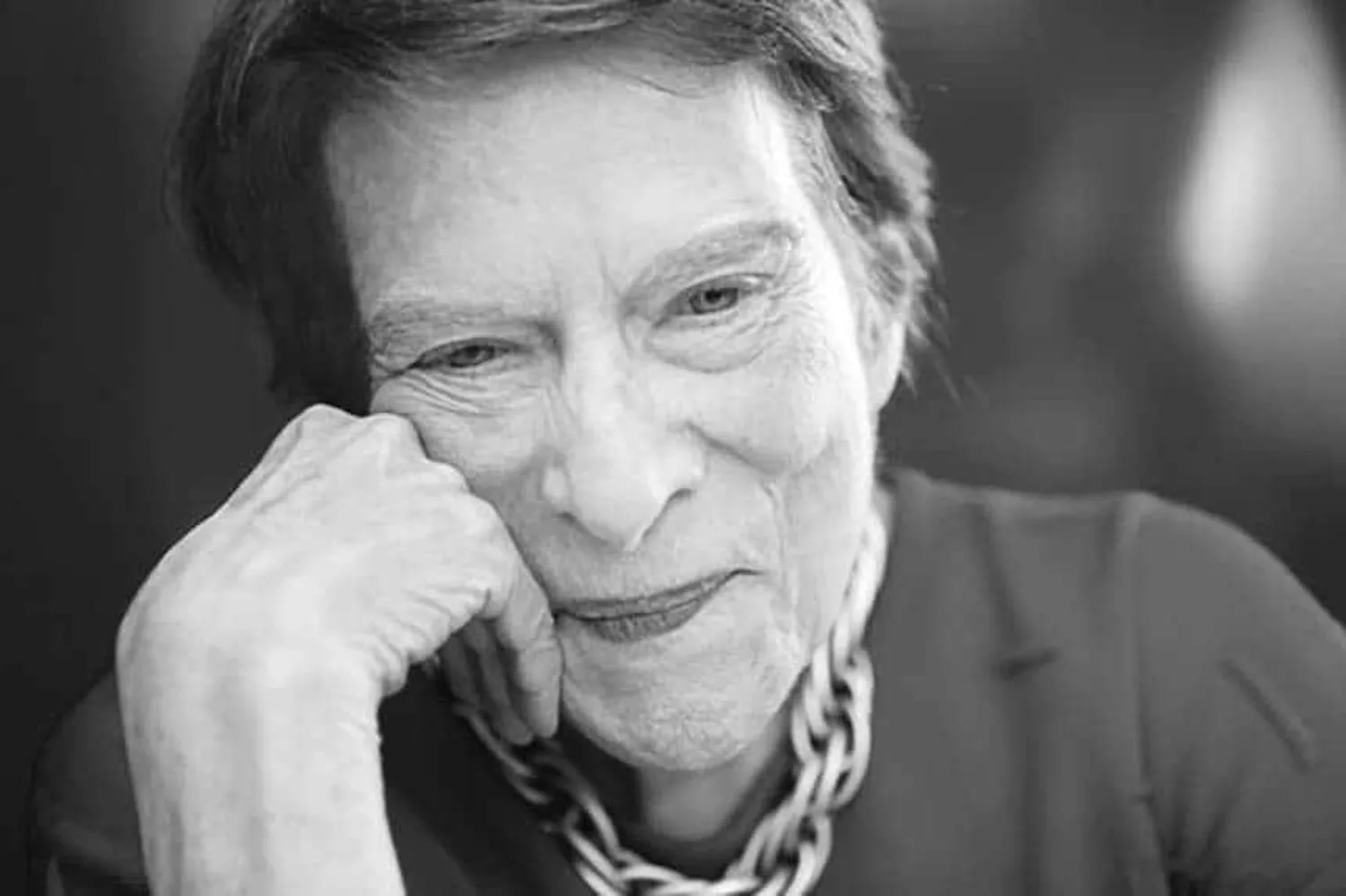
Portrait of Janette Laverrière
Kraus Karola, Entre deux actes – loge de comédienne, exh. cat., Staatliche Kunsthalle Baden-Baden, (July 25 – October 11, 2009), Cologne, Walther König, 2009
→Badetz Yves, Janette Laverrière, Paris, Norma, 2004
French interior architect and industrial designer.
Janette Laverrière was born into an artistic milieu steeped in modernist ideas. After completing her studies in drawing at Basel’s Allgemeine Gewerbeschule, she undertook an apprenticeship in Paris in 1931 under interior decorator Jacques-Émile Ruhlmann (1879–1933). There, she met Maurice Pré (1907–1988) and married him that same year. Together, they produced a line of furniture branded M. J. Pré, and exhibited pieces at the Salon des Artistes Décorateurs (SAD) from 1936 onwards.
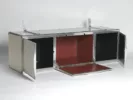
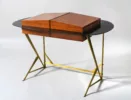
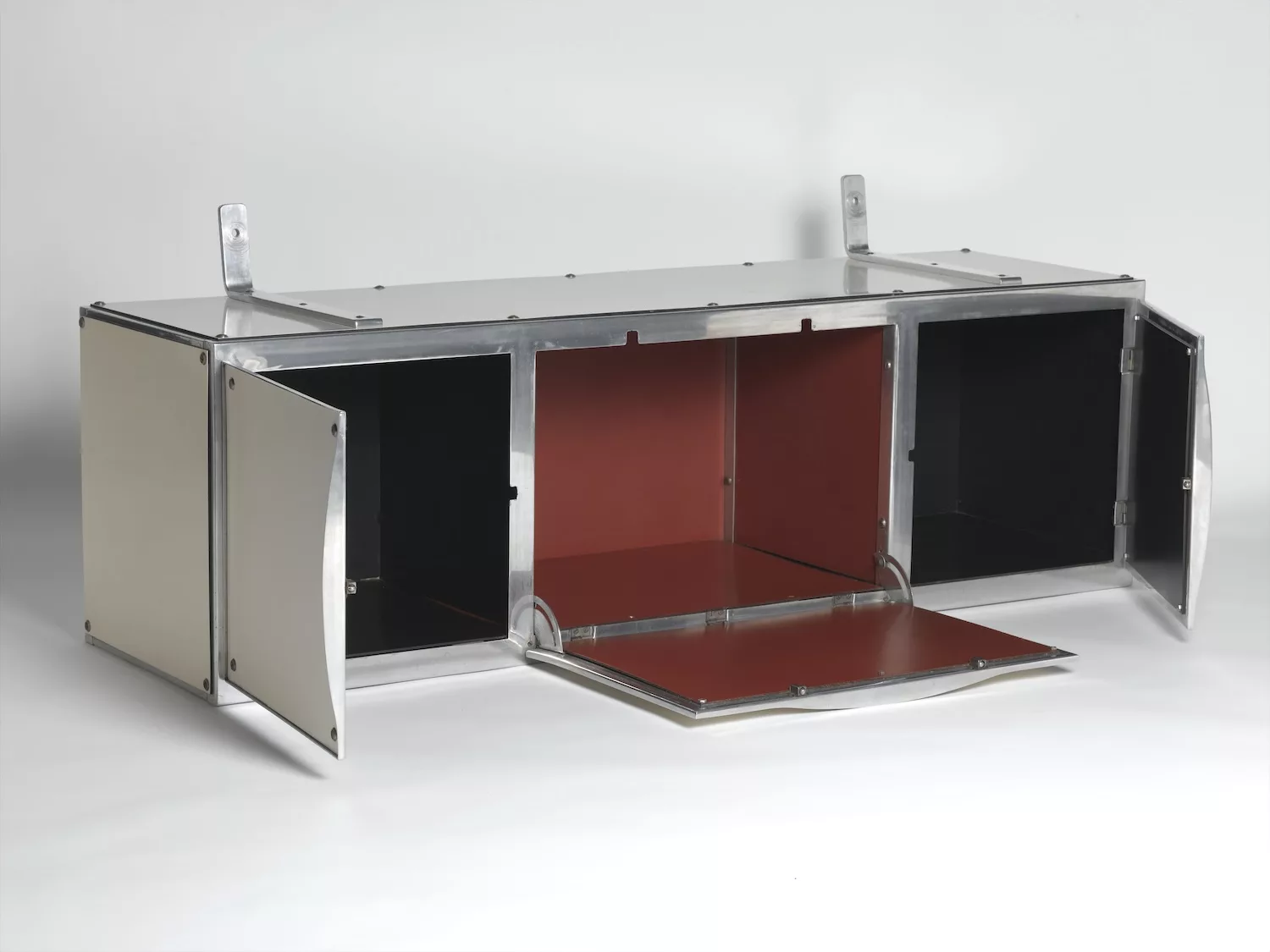
The war marked a turning point in J. Laverrière’s personal and professional paths. Following her divorce from M. Pré, she exhibited independently at SAD, showing painted wooden toys at its 1943 edition. In 1944 she joined the French Communist Party and founded the Front National des Artistes Décorateurs, a trade union for interior decorators who had taken part in the Resistance, with the goal of achieving recognition of their practice as a specialised profession. Emerging in the war’s aftermath, her signature style was marked by the use of low-cost materials like wrought round iron, as much due to financial constraints as for the purpose of creating budget-friendly furniture for working-class households. J. Laverrière’s furniture stands out for its modular and occasionally playful quality, expressed via the inclusion of swivelling, hinged or foldaway components – examples of this include her wall-mounted vanity for an actress’s dressing room, shown at SAD in 1947, and the rotating bookcase she designed for artist Pierrette Bloch in 1950.
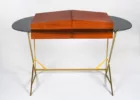
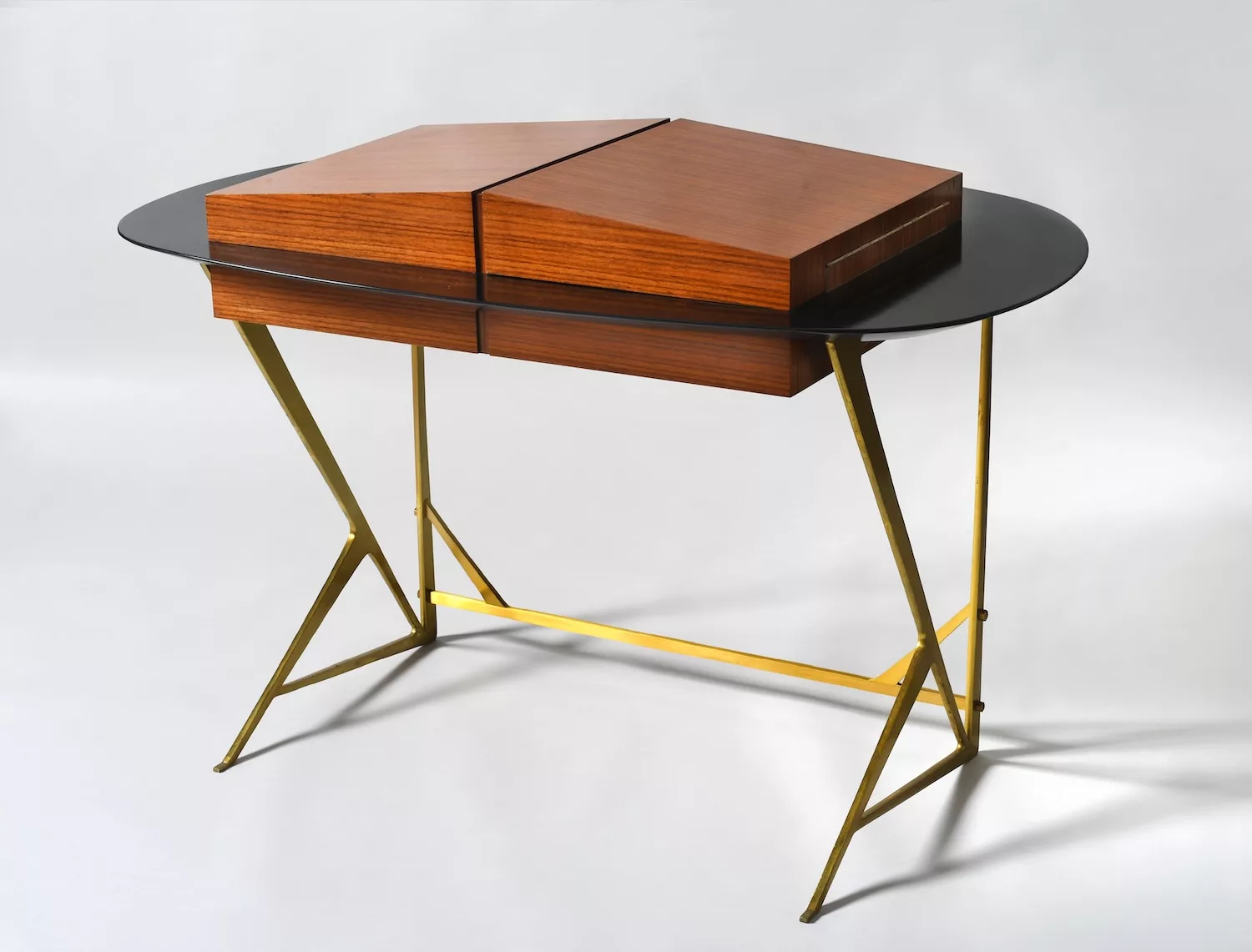
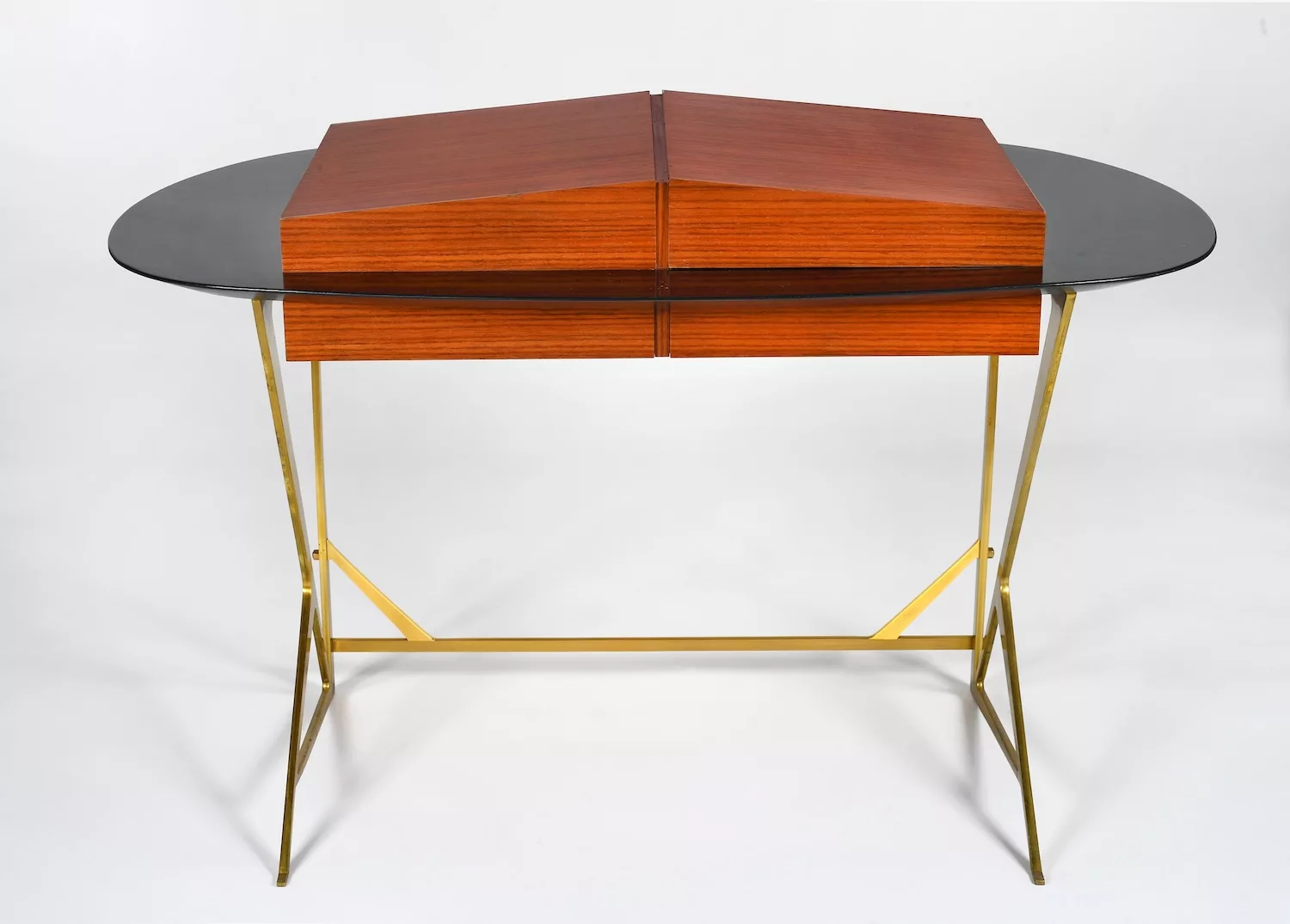
In the 1950s she received several commissions from Mobilier National, including Cabinet de Travail d’une Femme d’Ambassadeur, exhibited at the 1956 SAD, whose theme was the modern setting of women’s lives. From 1961 to 1963 she designed the furnishings and décor of the presidential palace in Niamey, Niger’s capital, after the nation gained independence. In France, she was notably commissioned to design the interiors of residences for young workers and of the Hôpital Suisse in Paris.
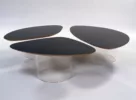
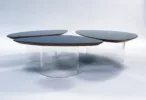
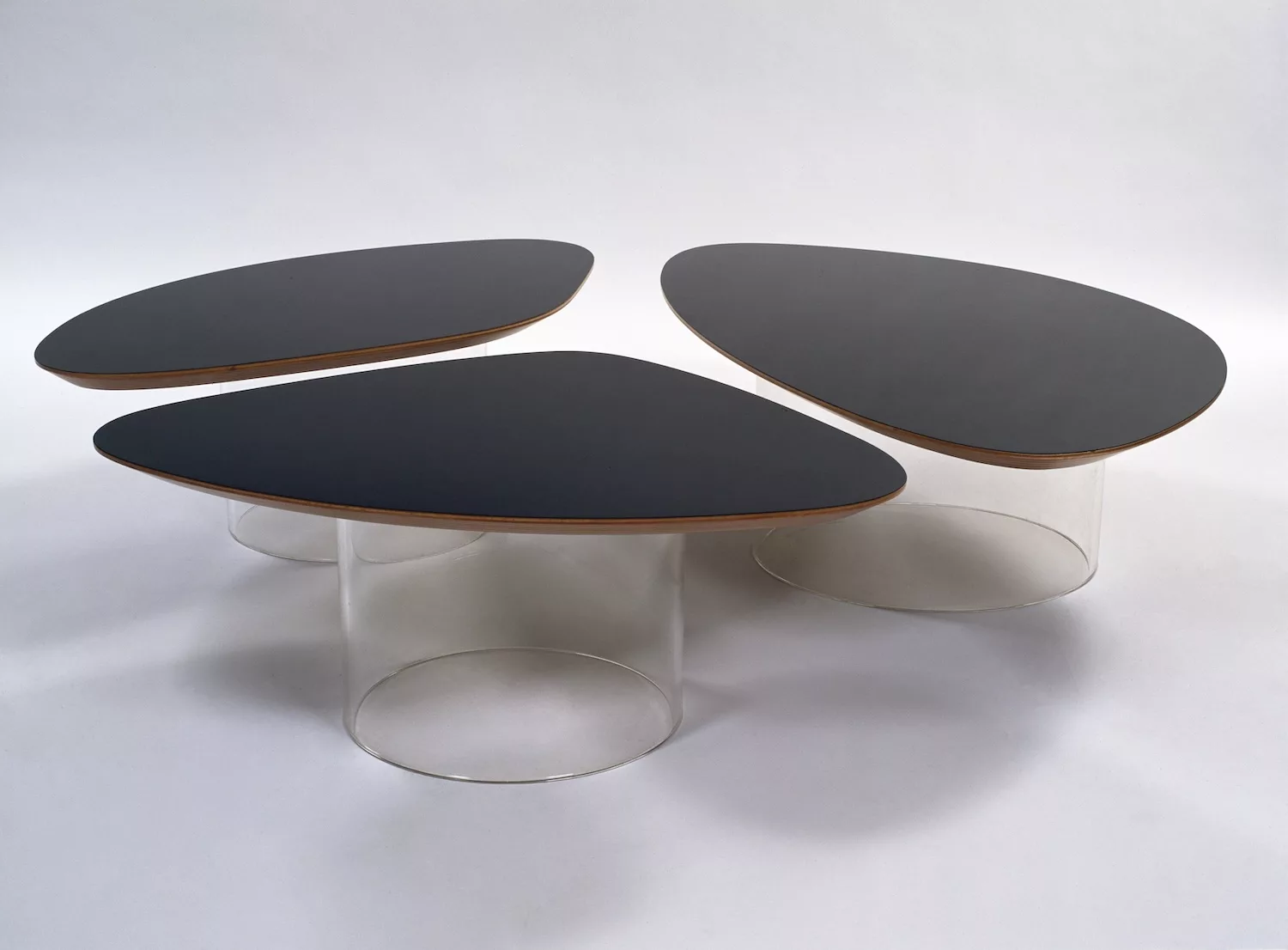
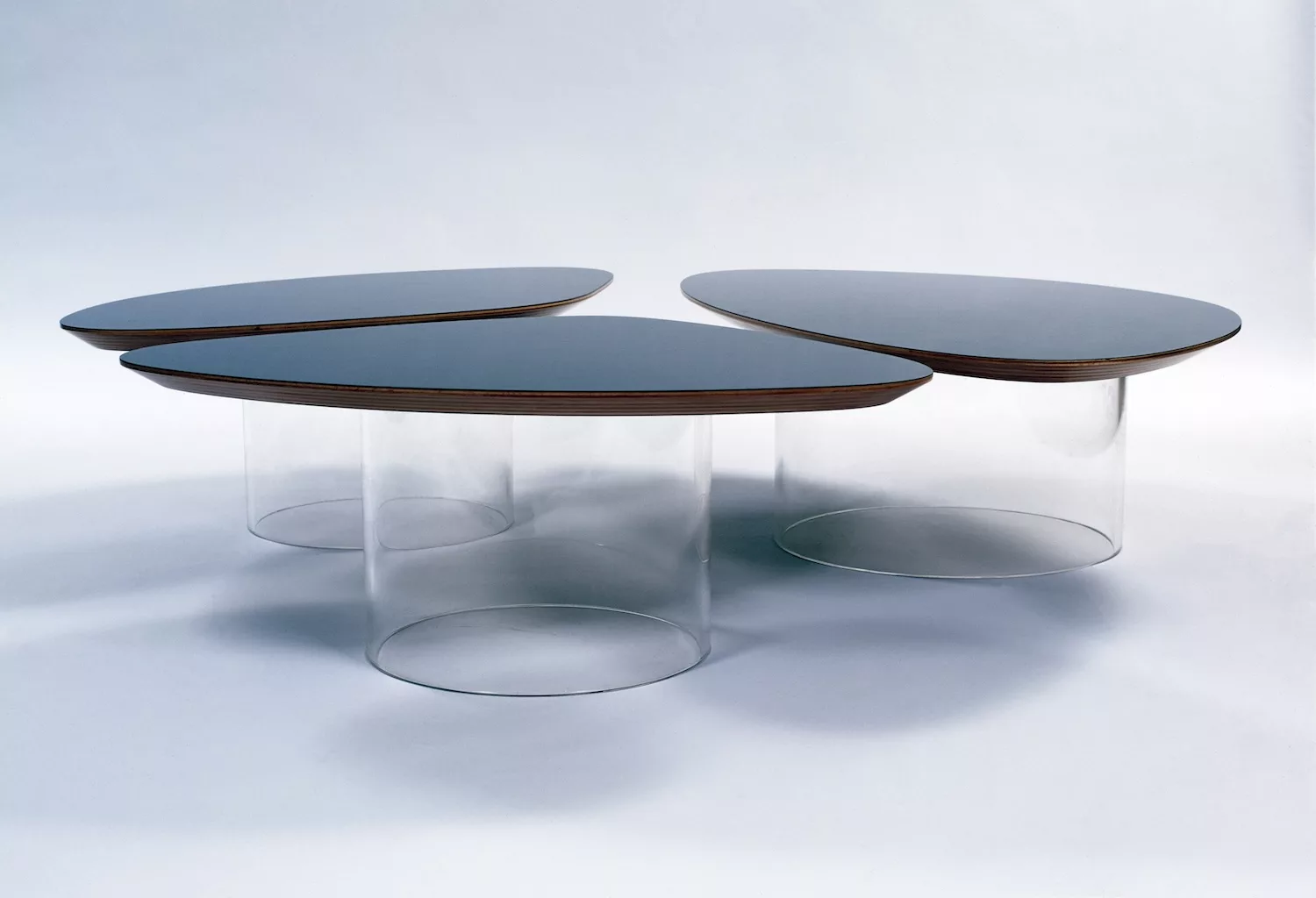
Between 1954 and 1964, she exhibited kitchen designs featuring removable built-in elements at the Salon des Arts Ménagers. These creations are emblematic of J. Laverrière’s approach, with details tailored to the daily experiences of the space’s female user and clever combinations of colour design and functionality. The plywood furniture she began designing in the late 1950s is modular and colourful, characterised by a poetic quality evident in the names she chose for her pieces (including the Coccinelle and Nénuphar coffee tables and the Arbre bookcase). From 1989 until her death in 2011, J. Laverrière worked on the Évocations series of sculptural mirror objects, each serving as a tribute to a figure from her socially conscious intellectual landscape, such as Louise Michel, Victor Hugo and Gustave Courbet.
Very few of J. Laverrière’s creations were manufactured during her career, and recognition of her talent came only late in life. A retrospective of her work was staged at the 1987 SAD. Her designs were also highlighted in the exhibition “Elles@centrepompidou” (2009), and recreations by artist Nairy Baghramian (1971–) have been shown at the Kunsthalle Baden-Baden and the Walker Art Center in Minneapolis.
A biography produced in partnership with the Centre Pompidou.
© Archives of Women Artists, Research and Exhibitions, 2026