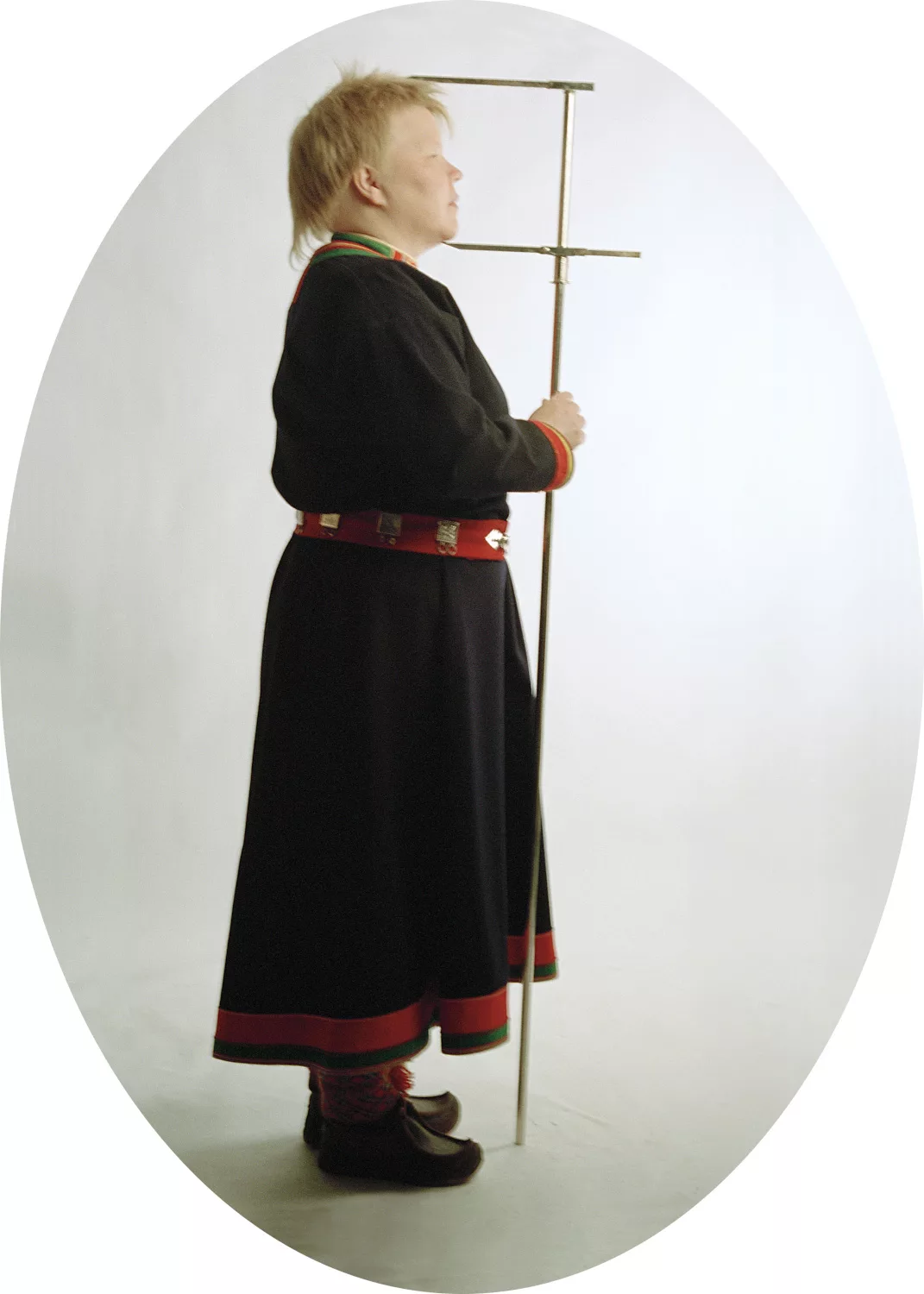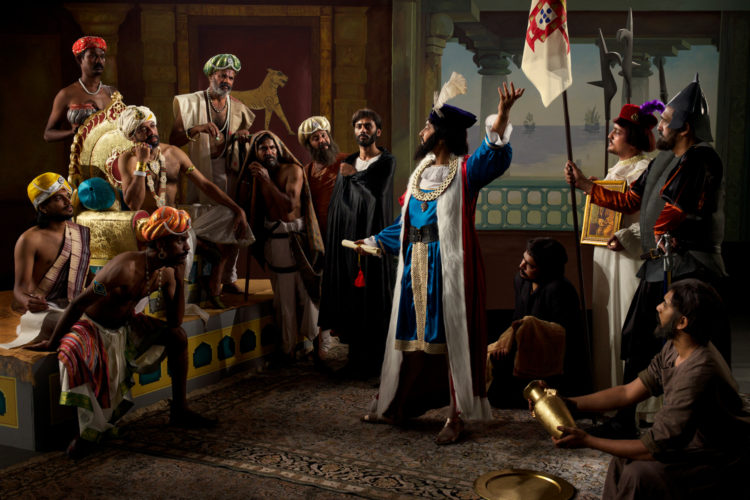
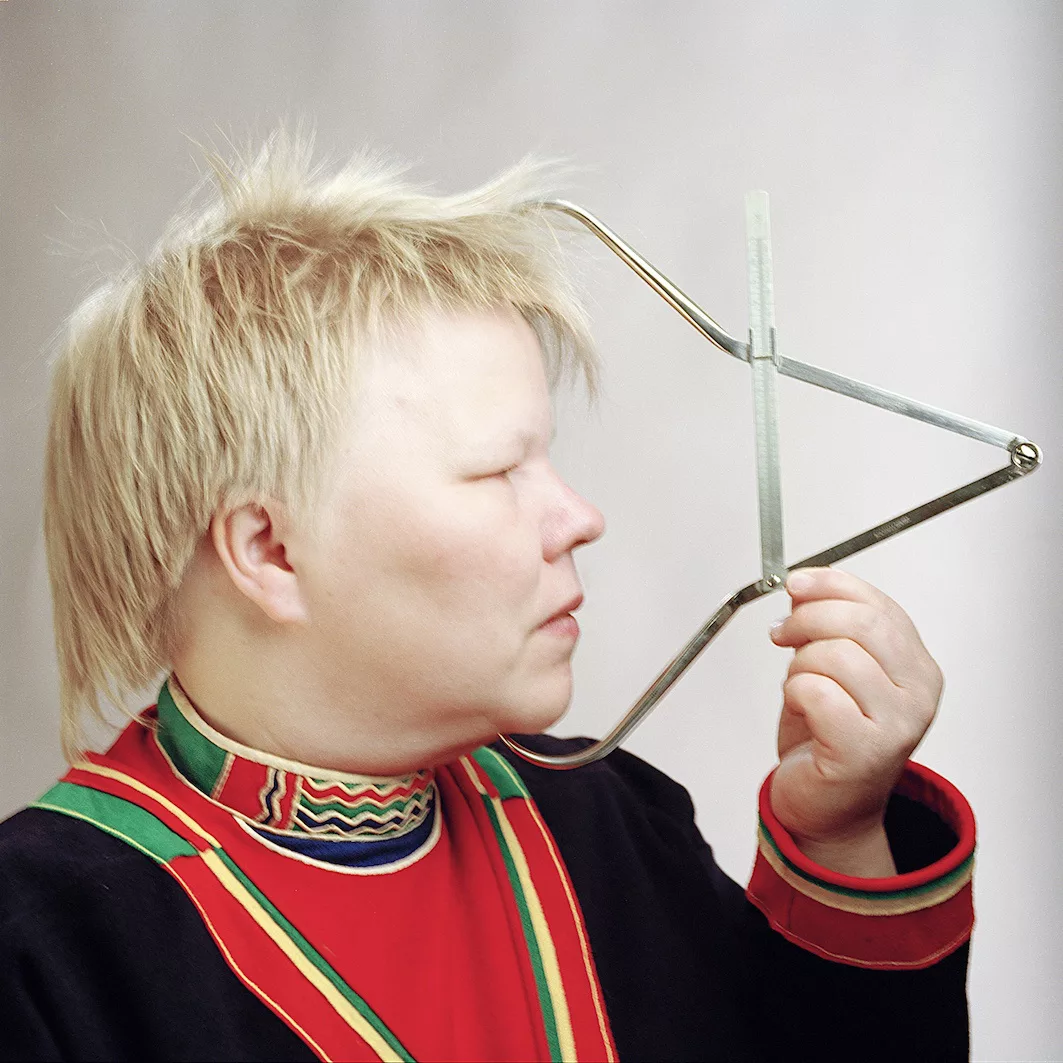
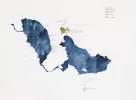
Katarina Pirak Sikku, Dollet I, 2006, colour photography, dimensions variable © Eija Mäkivuoti and Katarina Pirak Sikku. Courtesy of the artist
Pirak Sikku, Katarina, Sikku, Niels-Henrik, Torvkåtornas torvkåta och renägarinnan från Skåne, Stokholm, KulaCultura publishing – Sámi girjelágádus, 2020
→Griffin, Gabrielle, Pirak Sikku, Katarina, “My Body, My Self’: Indigeneity, Bioprecarity and the Construction of the Embodied Self – An Artist’s View”, in Griffin, Gabrielle, Leibetseder, Doris (eds.), Bodily Interventions and Intimate Labour: Understanding Bioprecarity, Manchester, Manchester University Press, 2020
→Heith, Anne, “Enacting Colonised Space. Katarina Pirak Sikku and Anders Sunna”, Nordisk Museologi, no. 2, 2015, p. 69-83
Tevetrampolinen, Norrtälje Konsthall, Norrtälje, 3 June–9 September, 2023
→Dollet Almmiravdii. Towards the Edge of the Sky, Havre Magasinet, Boden, 25 February–14 May, 2023
→Nammaláhpan, Bildmuseet, Umeå, 31 January–20 February, 2014
Interdisciplinary Sámi-Swedish artist.
The daughter of Lule Sámi artist and duodjar [craftsman] Lars Pirak (1932–2008), Katarina Pirak Sikku is engaged in archival research and employs drawing, sewing, embroidery, photography, video, painting and installation in her artistic practice. She obtained a master’s degree from Umeå Academy of Fine Arts in 2005.
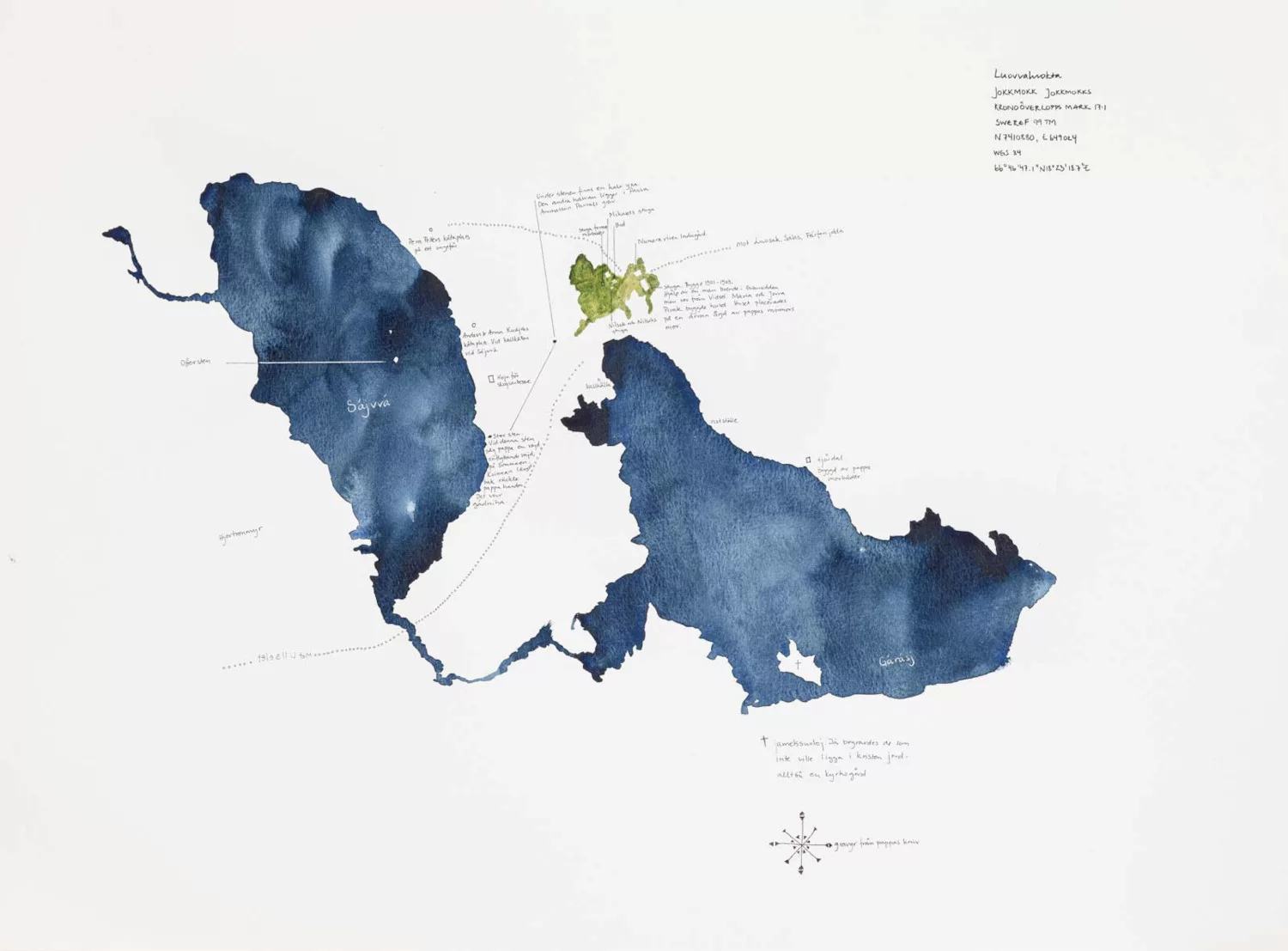
Her work is deeply concerned with Sámi history and developing cultural resilience strategies in response to historical and ongoing oppression. Her oeuvre challenges the dominant historical narratives that portray modernity as a seamless process of progress, instead drawing attention to the struggles faced by the Sámi – such as sustaining reindeer-herding traditions (Jåhkåmåhkke/Jokkmokk, 2021), resisting land enclosure and confronting both the erasure and the commodification of Indigenous culture.
Her early project, Here Begins Sámiland, Here Ends Sweden (2004) imagined the Sápmi region as an ethnic state, questioning cultural essentialism and the boundaries of nationhood. While studying in Umeå, she began researching Sweden’s early twentieth-century racial policies. Archival documents revealed that her father-in-law had been subjected to skull and body measurements by the Swedish Institute for Racial Biology in 1923, in the name of ‘science’ rooted in eugenics. This discovery informed Grasp (2006), exhibited at Bildmuseet, Umeå, whose central photograph depicts the artist in profile, wearing a traditional Sámi kolt and holding a measuring instrument once used in these studies.
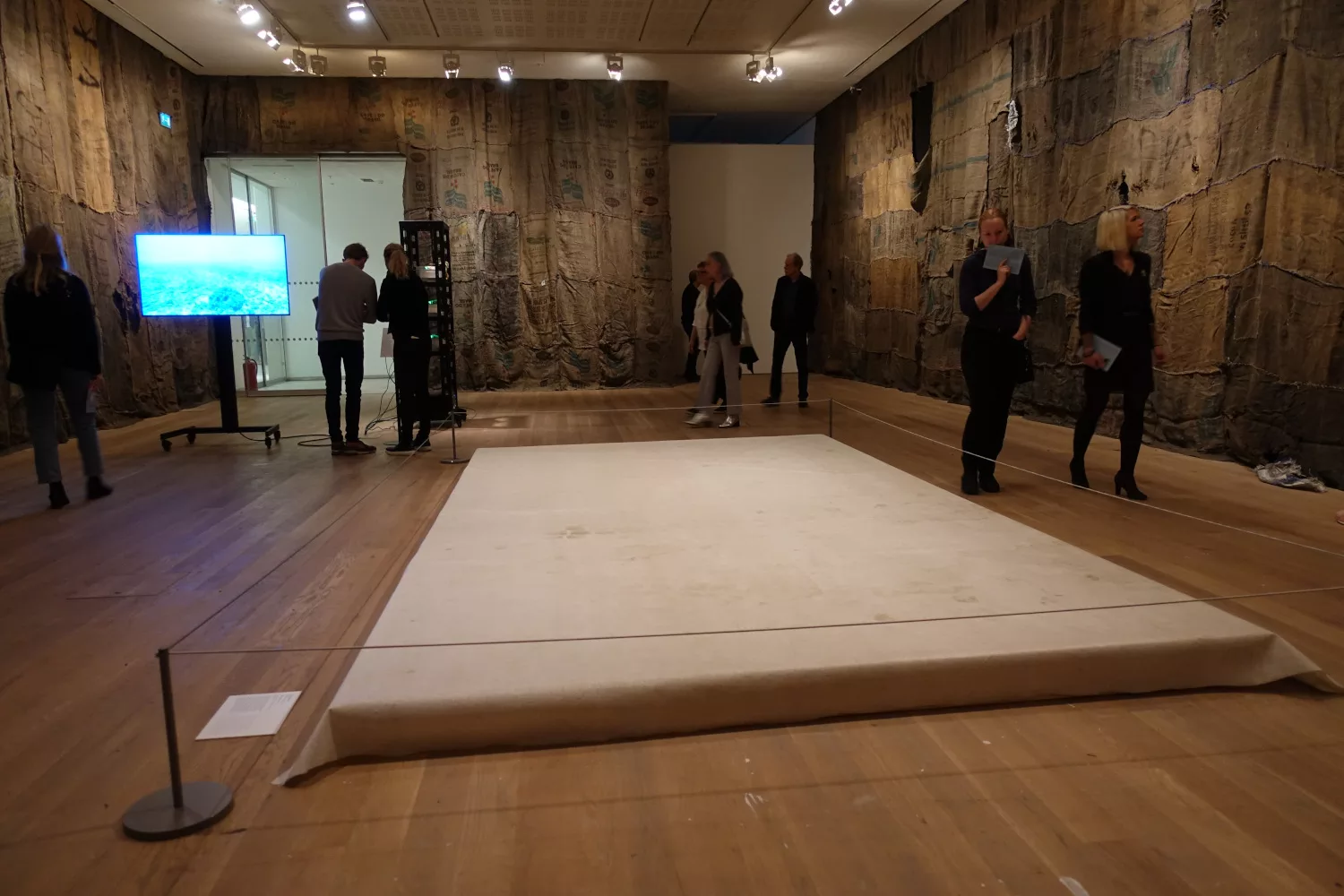
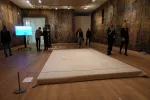
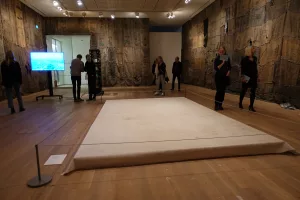
Her installation Gállok (2013), named after the Lule Sámi site near Jokkmokk (Kallak in Swedish) – the artist’s home and a central area of Sámi cultural history – functions as a document of an event that revealed processes usually hidden from the public sphere, including the restructuring of land, enforced ownership and the entanglement of governance and identity. It consists of geotextile material laid on the soil during a local protest against mineral prospecting in the area, which captured imprints of protesters’ and workers’ foot and tyre tracks, as well as the notable absence of trails from those unwilling to leave marks. By transforming these fragile imprints into a historical document, the artist counters narratives written by historically dominant actors. In 2017 it was displayed as part of the exhibition Manipulate the World at Moderna Museet, Stockholm, and acquired for the museum’s permanent collection.
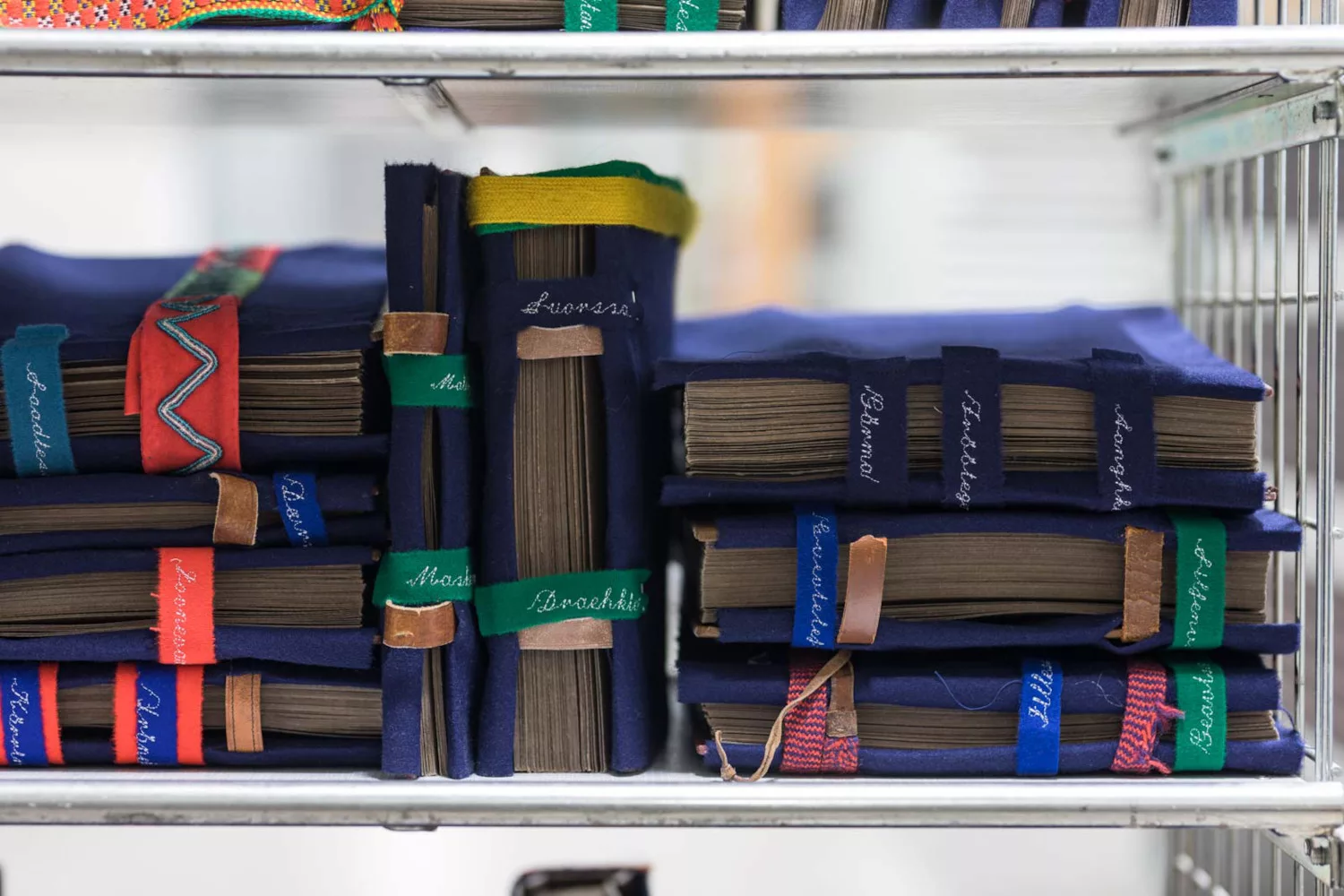
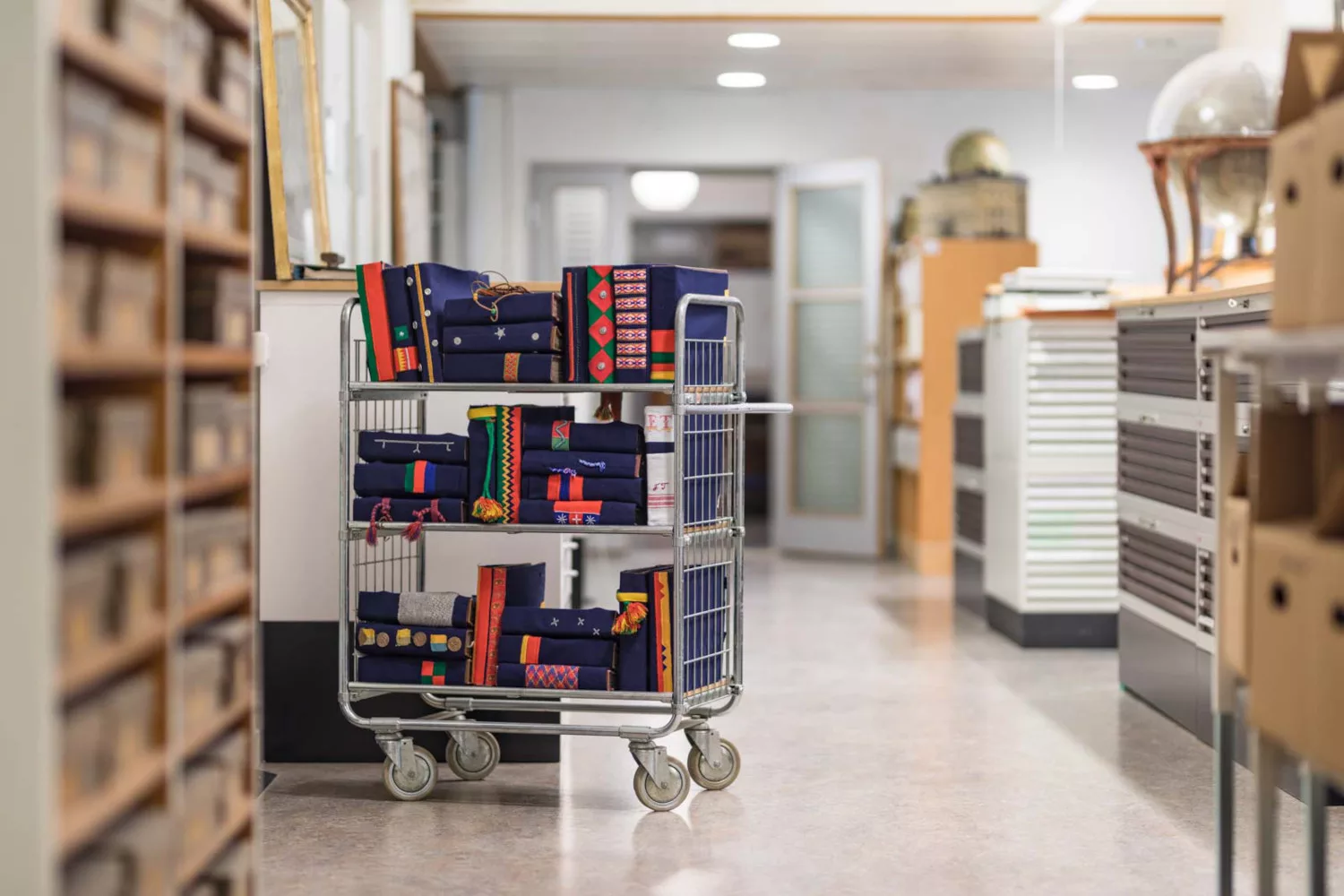
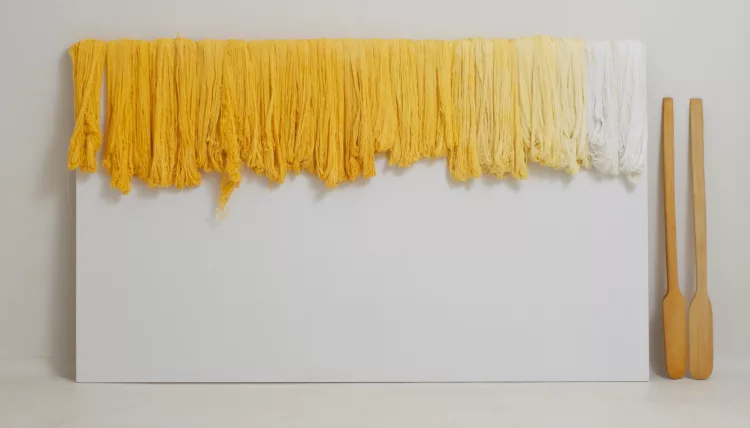
Her threefold installation Walk on Campus (2019) was acquired by the Mid-Sweden University campus. Perpetually Wound in the Colours of the Ancestors (2021), comprising photographic albums of Sámi made under the auspices of the Racial Biology Institute and encased by K. Pirak Sikku in materials found in Sámi traditional dress and material culture, is held in the Carolina Rediviva Library at Uppsala University.
K. Pirak Sikku makes the Sámi presence in the public sphere visible and tangible, situating Sámi history and experience within broader anti-colonial struggles and shared experiences of exclusionary state policies and corporate power. In 2022 K. Pirak Sikku was awarded the Culture Prize by the Sámi Council of the Church of Sweden.
A notice produced as part of the TEAM international academic network: Teaching, E-learning, Agency and Mentoring
© Archives of Women Artists, Research and Exhibitions, 2026
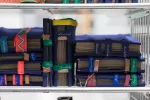


 Manipulate the World - Katarina Pirak Sikku (in-depth), Moderna Museet, 2017