Yves Badel, « Du Nouveau sur le peintre Rémi-Fursy Descarcin (Chauny 1747 – Nantes 1793), un talent décapité », in Bulletin de la Société de l’histoire de l’art Français, 2011, p. 37-53
French portrait artist.
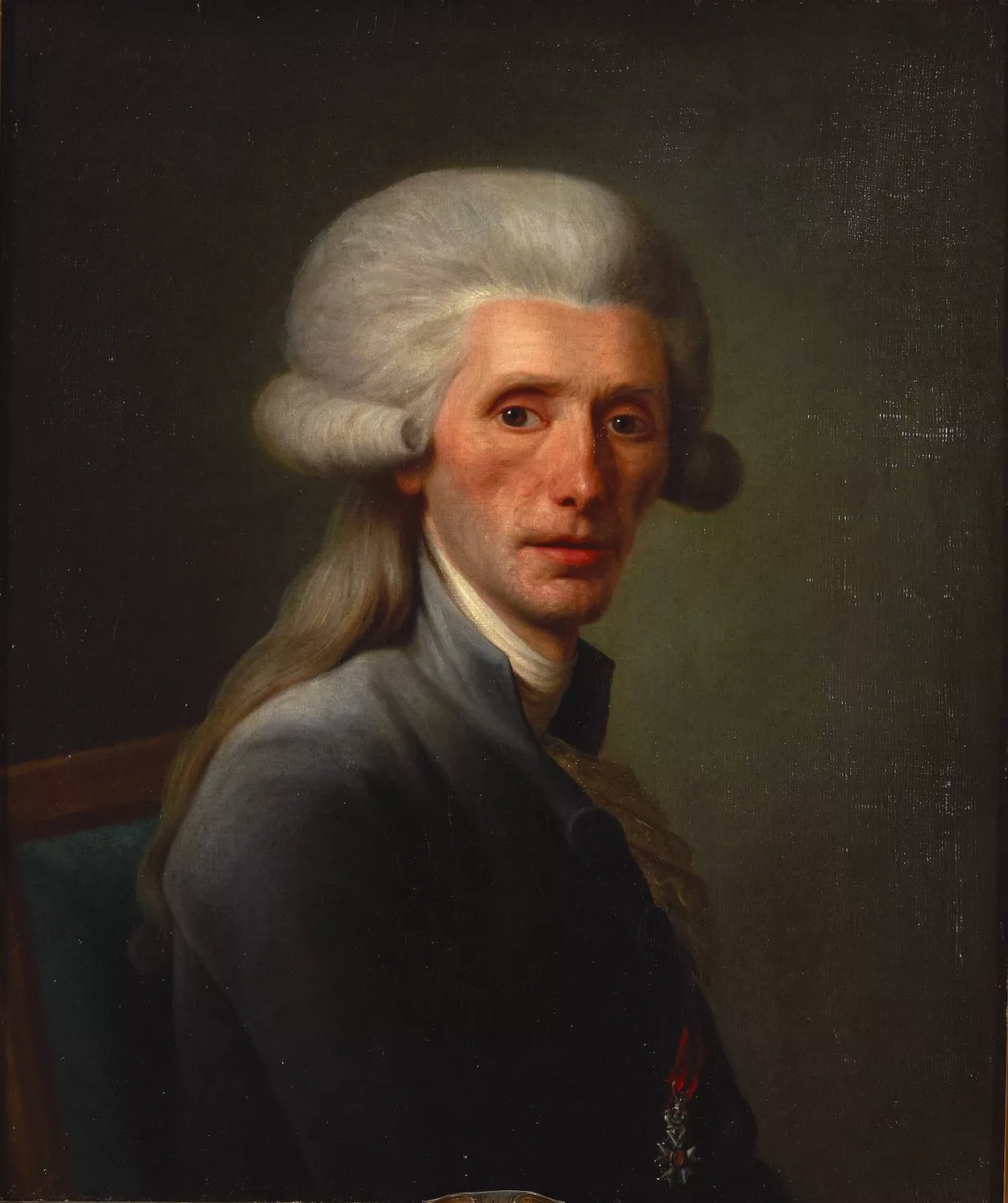
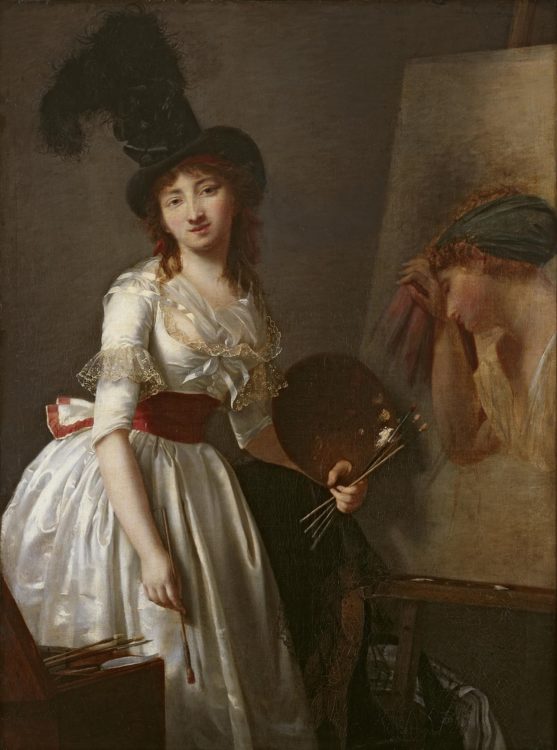
In 2022 the Musée des Beaux-Arts in Rennes acquired Portrait d’Antoine Vieillard de Boismartin, the first painting authenticated as the work of Marie Caroline Descarsin. The acquisition brought fresh attention to this portrait painter, active around 1800, whose life and oeuvre remain to be reconstructed. She was the eldest daughter of painter Rémi Fursy Descarsin (1747–1793), who trained her in the techniques of drawing and painting. A very gifted child, she was first noticed for her talents as a virtuoso musician. Indeed, from the age of eleven she gave harp concerts, accompanied by her younger sister Sophie: in 1785, under their father’s guidance, they performed at the Salon de la Correspondance in Paris for the first time. Later, they would give other concerts “for their benefit”. From 1786 to 1789, they performed not only in Paris but also in Rouen and Bordeaux. Some of these concerts gave R. F. Descarsin the opportunity to display a selection of his paintings.
During the Reign of Terror (1793-1794), he was arrested and sentenced to death as a rebel leader and counterrevolutionary; he was guillotined in Nantes on 24 Brumaire of Year II (14 November 1793). His wife and both their daughters were imprisoned for a time in connection with his arrest and found themselves in dire poverty upon their release. Sometime later, however, the court that had tried R. F. Descarsin was discredited, a development that allowed his widow to recover his property and residence. In her petitions to the departmental administrators, she mentioned her daughter Caroline’s artistic activity, requesting the return, for her use, of the paintings her father had given her, explaining that “without these objects, she cannot continue this art, the only asset she possesses that will allow us to survive” (Loire-Atlantique Departmental Archives, Q471, folio 252).
Most of what we know today about M. C. Descarsin’s life and career comes from art historian Yves Badel’s 2011 study of her father. Although the archives and documents this researcher references essentially concern the patriarch, there are also several mentions of his daughter’s painting activities. The study thus contains leads which, if followed, could help expand the biography of this woman artist, who from 1808 on is referred to as “M. C. Pringent, née Descarsin”. For the time being, her body of work and eventful life are still largely unknown.
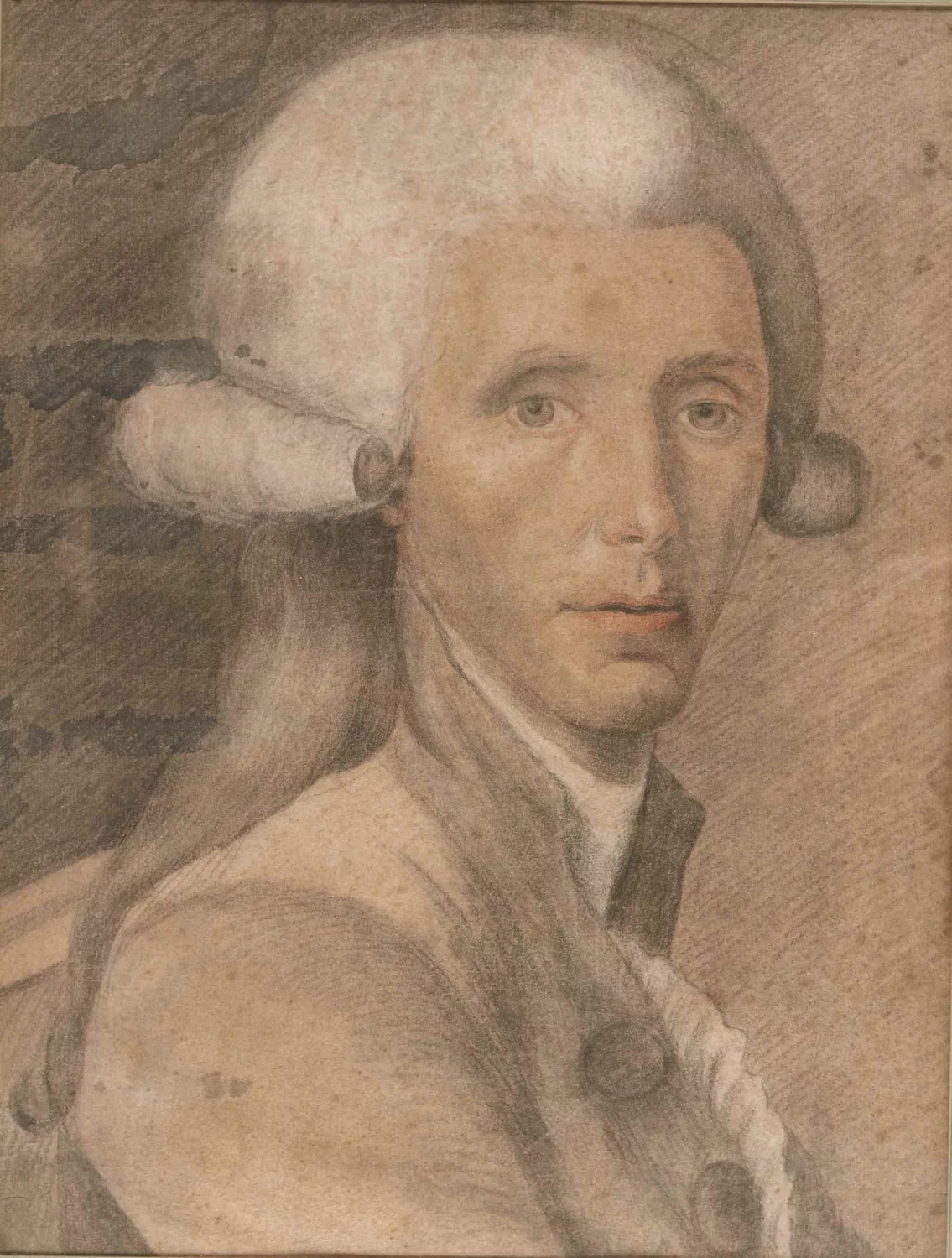
The painting Portrait d’Antoine Vieillard de Boismartin is attributed to her due to a handwritten annotation the sitter’s son added to the back of the canvas, specifying that the artist executed this painting in 1791 (she would have been seventeen at the time) and that she was a family friend. The acquisition of the painting was accompanied by a donation of her preparatory sketch for this work. In contrast to this study, which is somewhat rudimentary – the artist may have focused on capturing only the main traits of her sitter’s face in a brief session – the painting demonstrates her talents as a skilled and sensitive painter. With the great simplicity of its layout, the work draws the viewer’s eye to the face and expression of A. Vieillard de Boismartin, whose arresting presence is captured perfectly. Its execution includes a particularly successful rendering of the damaged skin around the sitter’s mouth and on his chin. When this portrait is compared with those done by her father, the young woman’s pictorial approach reveals greater sensitivity.
A. Vieillard de Boismartin was a playwright but is best known as a leading figure in the legal field, both for the positions he held and for his writings. He was decorated during the First French Empire with the Chevalier’s cross of the Légion d’Honneur. Since this decoration was not instituted until 1804, its inclusion – awkwardly positioned on a portrait incontestably dating to 1791 – is anachronistic and clearly dates to a later year. The fact that it does not appear in the preparatory sketch further confirms this.
A biography produced in partnership with the Louvre Museum.
© Archives of Women Artists, Research and Exhibitions, 2026