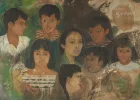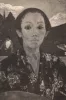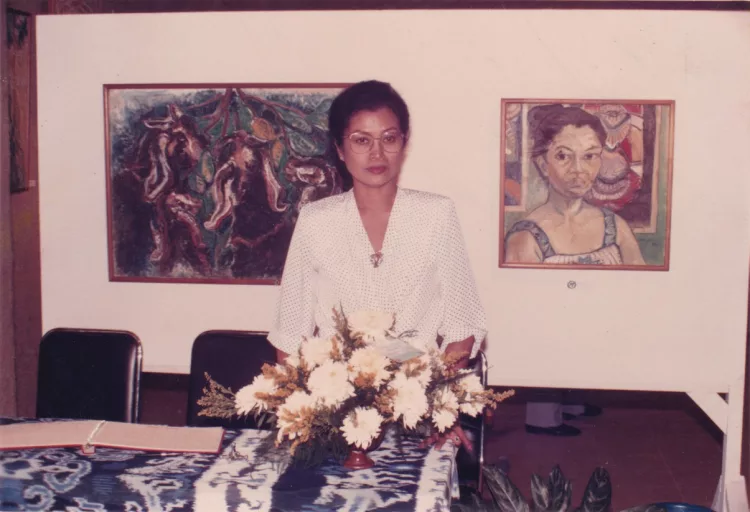
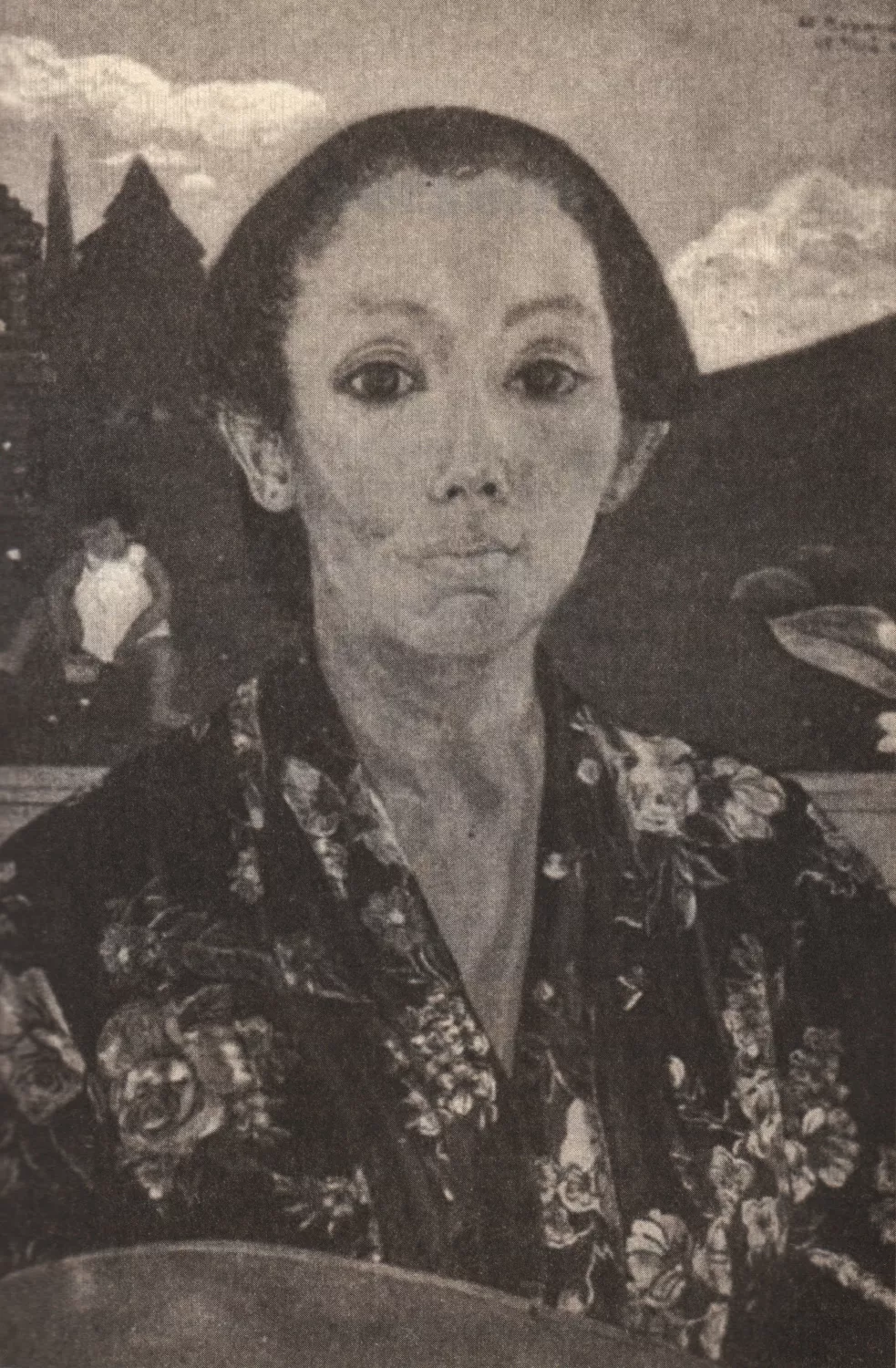
Mia Bustam, Potret Diri [Self-Portrait], 1959, oil on canvas, unknown dimension, missing (lost during the riot masses which burned down Lekra office in Jakarta during the aftermath of 1965 Genocide), the original painting was done in color, the only remaining remnants was this photo in black and white, conserved by Marah Djibal. Exhibited in the Eastern Bloc countries by Lekra, in 1964–1965, also at the 45th Year of Indonesian Communist Party Exhibition on 23rd May 1965 in Jakarta, Indonesia © Mia Bustam
Isabella, Brigitta, “Who Are We Writing For? A Feminist Counter-Public Inside and Outside Open Letter” in Laru-an, et al (eds.), Soft Spots (Biennale Matter of Art Reader), Prague, Spector Books & tranzit, 2022, p. 303–315
Isabella, Brigitta, « Who Are We Writing For? A Feminist Counter-Public Inside and Outside Open Letter » in Laru-an, et al (dir.), Soft Spots (Biennale Matter of Art Reader), Prague, Spector Books & tranzit, 2022, p. 303–315
Low, Yvonne, “Mia Bustam and Her Memoirs: Speaking for Herself”, Southeast of Now: Directions in Contemporary and Modern Art in Asia, vol. 5, no. 1 & 2, October, 2021, p. 335–338
Low, Yvonne, « Mia Bustam and Her Memoirs: Speaking for Herself », Southeast of Now: Directions in Contemporary and Modern Art in Asia, vol. 5, no. 1 & 2, octobre 2021, p. 335–338
Isabella, Brigitta, “Who Are We Writing For? A Feminist Counter-Public Inside and Outside Open Letter” in Laru-an, et al (eds.), Soft Spots (Biennale Matter of Art Reader), Prague, Spector Books & tranzit, 2022, p. 303–315
→Low, Yvonne, “Mia Bustam and Her Memoirs: Speaking for Herself”, Southeast of Now: Directions in Contemporary and Modern Art in Asia, vol. 5, no. 1 & 2, October, 2021, p. 335–338
→Dirgantoro, Wulan, “Haunting in the Archipelago: Emiria Sunassa and Mia Bustam” in Feminisms and Contemporary Art in Indonesia: Defining Experiences, Amsterdam, Amsterdam University Press, 2017, p. 77–118
102 Years of Mia Bustam, Goethe Haus Jakarta – Indonesia, 21st August 2022
→Collective Exhibition to Eastern Bloc Countries Tour with Lekra, various European countries, 1964–1965
→Collective Exhibition With Seven Women Artists, Sanggar Seniman Alun-Alun Utara [Artist Studio of the North Square], Yogyakarta, 1957
Indonesian painter, embroiderer, writer and translator.
Mia Bustam studied at the Van Deventer School in Surakarta to be a kindergarten teacher (1933–1936). However, she was unable to complete her education, due to her father being fired from his position as a Dutch colonial officer. Later she became a student at Universitas Rakyat (UNRA) [People’s University] and was named its best student in 1963.
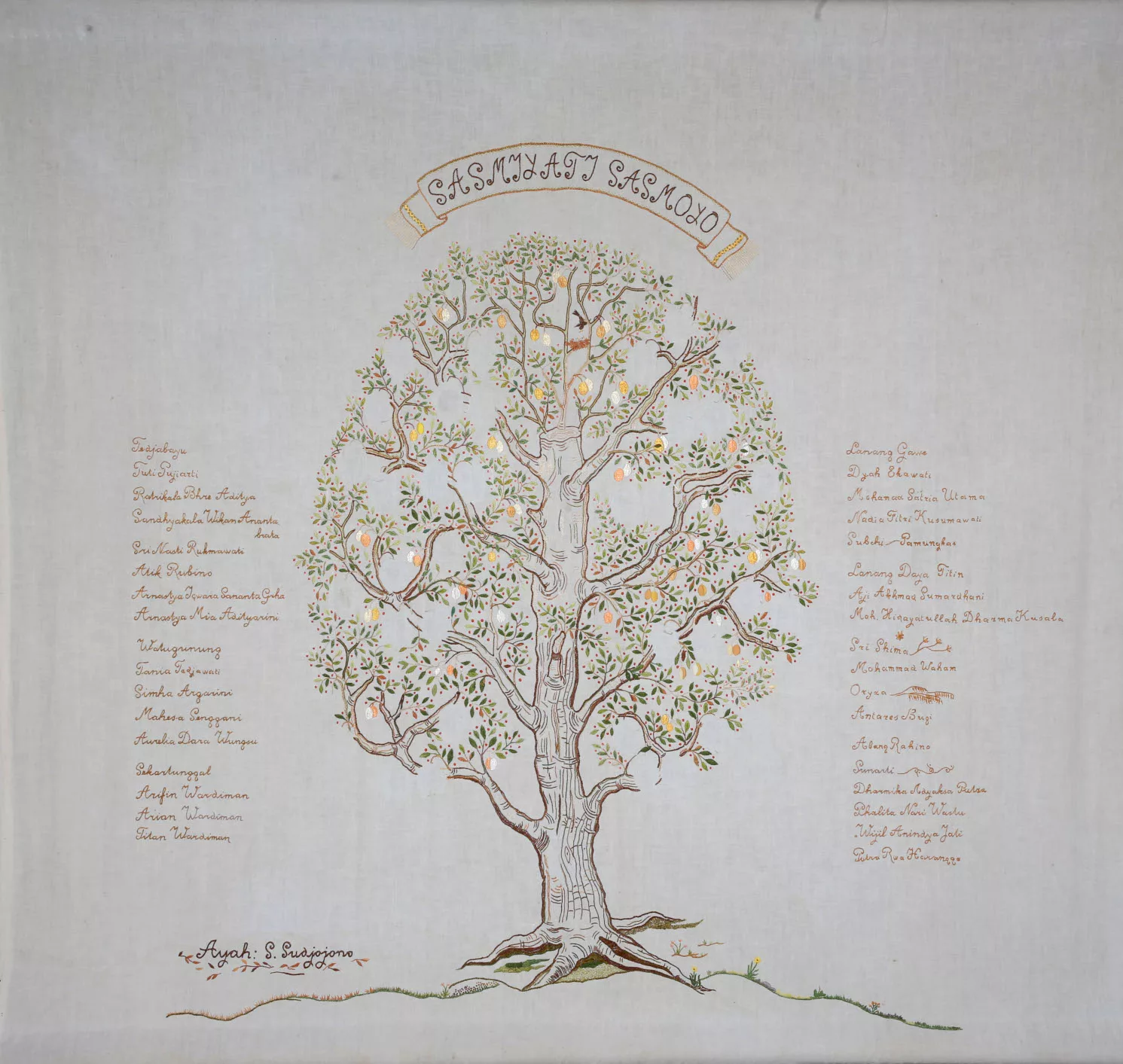
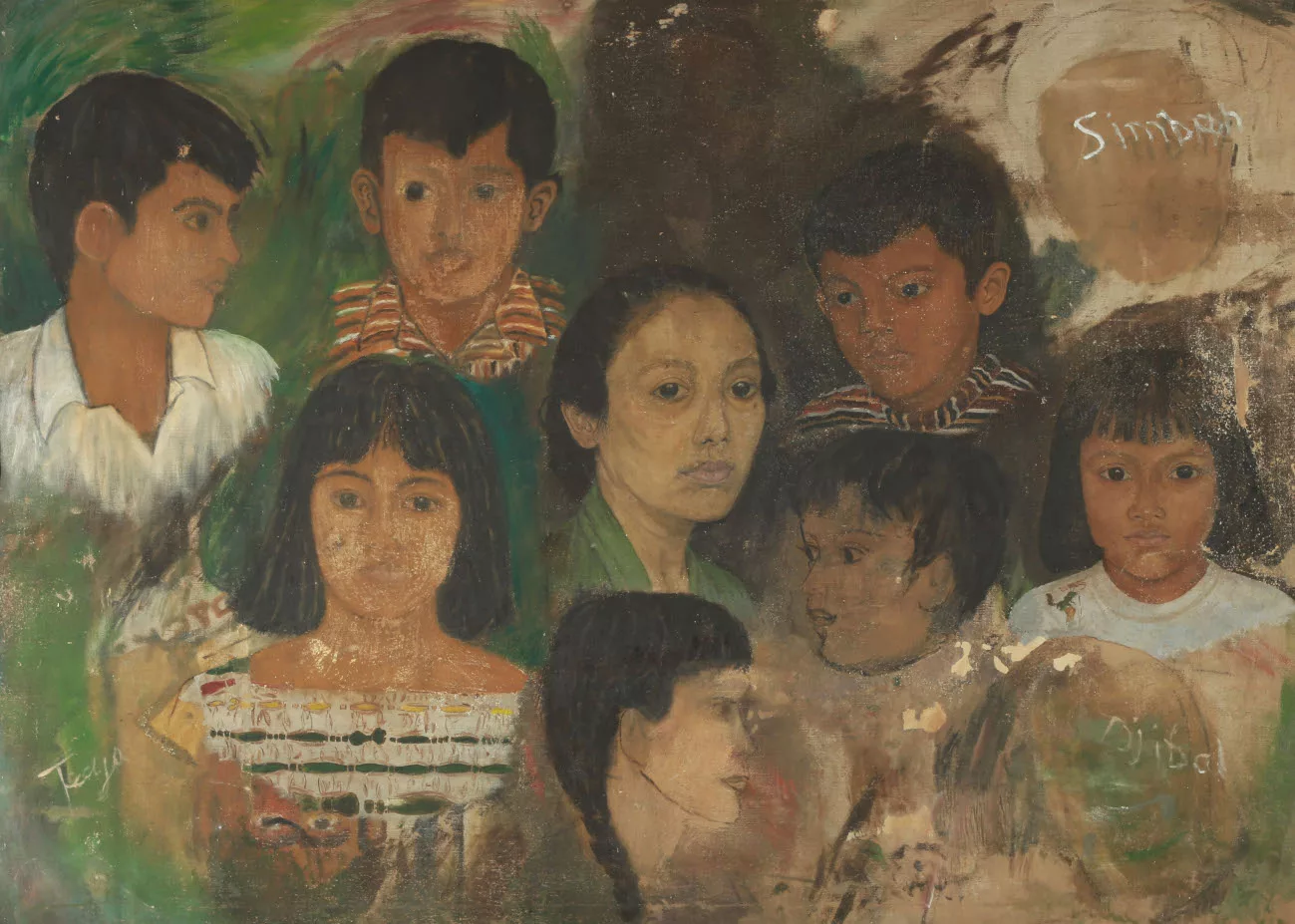
In 1943 she married Sindoedarsono Soedjojono (1913–1985), an Indonesian communist painter, with whom she went on to have eight children. However, her marriage ended when her husband had an affair – a public scandal that caused him to be ejected from the Indonesian Communist Party. She refused to be involved in a polygamous relationship, proceeding with a divorce in 1959.
After the separation, her artistic life flourished. She started painting seriously and joined Seniman Indonesia Muda [SIM, Indonesian Young Artists]. In 1959, she became a member of Lembaga Kebudayaan Rakyat [Lekra, Institute for the People’s Culture], a left-leaning artist organisation, and in 1963 became the head of Lekra Yogyakarta. Her oil Potret Diri [Self-Portrait, 1959] was exhibited in the Eastern Bloc countries by Lekra (1964–1965), and at the 45th Year of Indonesian Communist Party Exhibition on 23 May 1965, in Jakarta. This painting was lost when rioters stormed Jakarta’s Lekra office during the 1965 mass killings, and the only remnant of it is a black and white photo conserved by her friend Marah Djibal (1935–?).
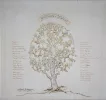
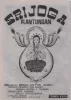
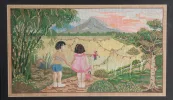
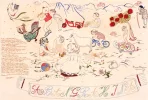
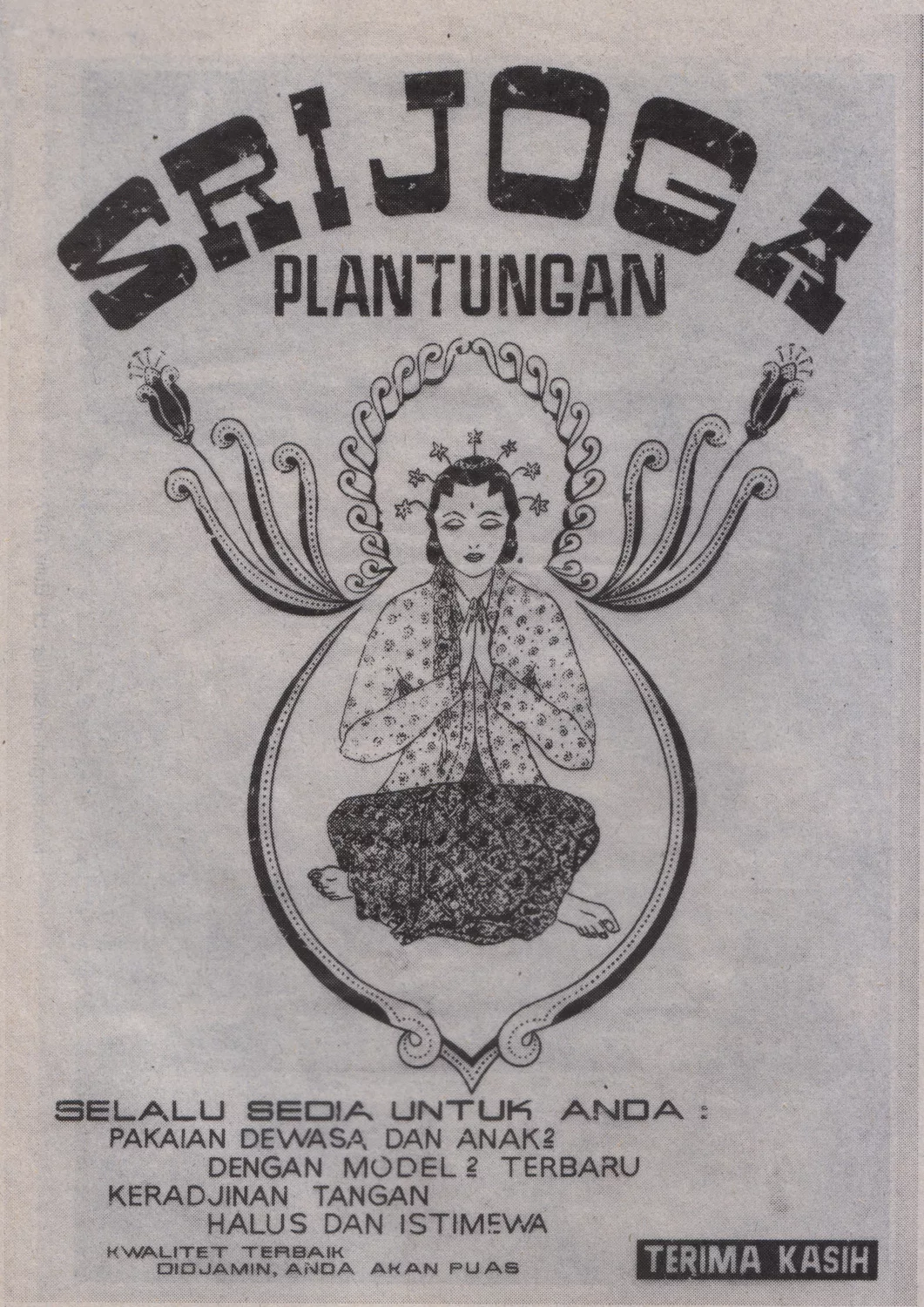
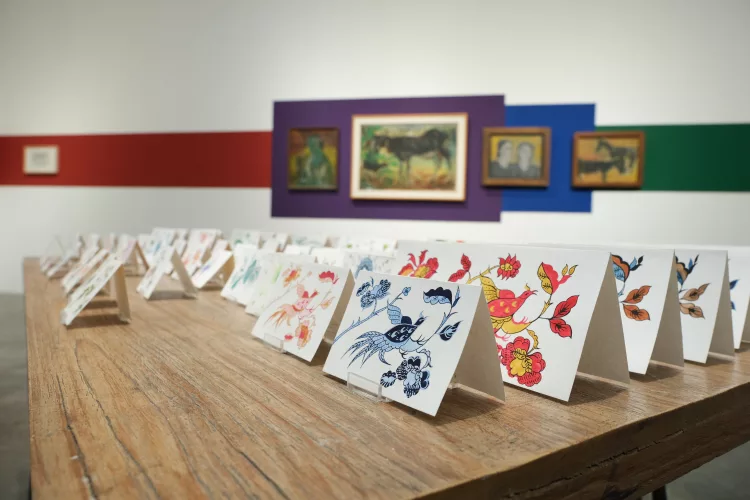
On 23 November 1965, M. Bustam was detained by the army at her house, in the presence of her seven remaining children – the eldest had already been seized a month before. For the following thirteen and a half years, she was imprisoned by the New Order military without trial, moving from one women’s prison camp to another across Java. She was released in July 1978. M. Bustam executed a few works during her imprisonment, such as Sriyoga Plantungan [Meditating Woman at Plantungan, c. 1971–1976], made inside the women’s prison camp of Plantungan. This portrait of her activist friend Ibu Werdoyo Deksono was screen printed on the plastic used to wrap their craftwork for sale from the prison. M. Bustam was also a skilled embroiderer; in her Untitled (c. 1976–1978) cross-stitch, done during her imprisonment in Bulu Prison, Semarang, she imagined her grandchildren visiting her at Plantungan Camp.
She later published her memoirs Sudjojono dan Aku [Sudjojono and I, 2006], Dari Kamp ke Kamp: Cerita Seorang Perempuan [From Camp to Camp: The Story of A Woman, 2008] and, posthumously, Kelindan Asa dan Kenyataan [The Entanglement of Hope and Reality, 2022] and Mutiara Kisah Masa Lalu [Pearls of Stories from the Past, 2024].
Most of her artworks were lost during Indonesia’s 1965–1966 mass killings and are still missing. She dreamed of having a solo exhibition, but her artistic career was aborted due to her long imprisonment, and later because of her status as an ex-political prisoner during the period of the New Order Regime.
A biography produced as part of the programme The Flow of History. Southeast Asian Women Artists, in collaboration with Asia Art Archive
© Archives of Women Artists, Research and Exhibitions, 2025