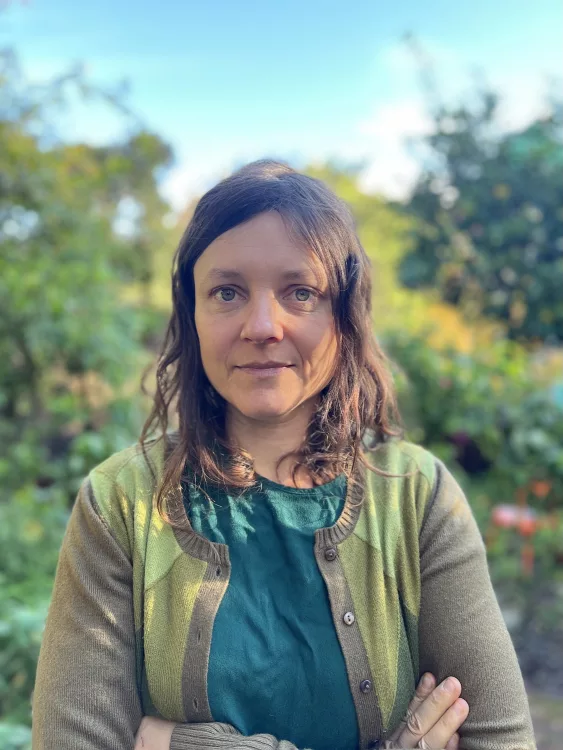

Portrait of Nina Beier
Nina Beier, Charlottenborg, exh. cat., Kunsthal Charlottenborg, Copenhagen (October 7, 2011 – January 22, 2012), Copenhagen, Kunsthal Charlottenborg, 2011
→Joanna Fiduccia, Mihnea Mircan, and Chris Sharp, Nina Beier, art statements, exh. cat., Art [41] Basel (June 16 – 20, 2010), Mexico, Proyectos Monclova, 2010
Real Estate, BOZAR, Palais des beaux-arts, Brussels, October 4, 2025 – January 4, 2026
→Nina Beier, Goods, Albuquerque Foundation, Sintra, September 27, 2025 – January 4, 2026
→Nina Beier, Auto, Capc et Kiasma, Helsinki, March 8 – September 8, 2024
Danish sculpture and performance artist.
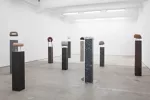
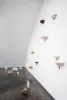
Symbolic and materially precise, the works of Nina Beier can be read across multiple registers and are frequently ambiguous in their intent, yet she consistently returns to seemingly unresolvable problems: poking at the power dynamics that govern human and non-human relations, and revealing how systems of value, labour and gender become inscribed in material forms. Objects exude meaning like restless bodies, refusing to be still. They are saturated with information about the latent structures of power and circulation, which emerge in N. Beier’s practice in oblique, symbolic and often contradictory forms, echoing the enigmatic allure of the Surrealist object. Similarly, the objects N. Beier collects and assembles – luxury goods, domestic items, organic remains – are not neutral: they are quietly complicit and charged with the psychic residue of domestication, global trade and consumption.
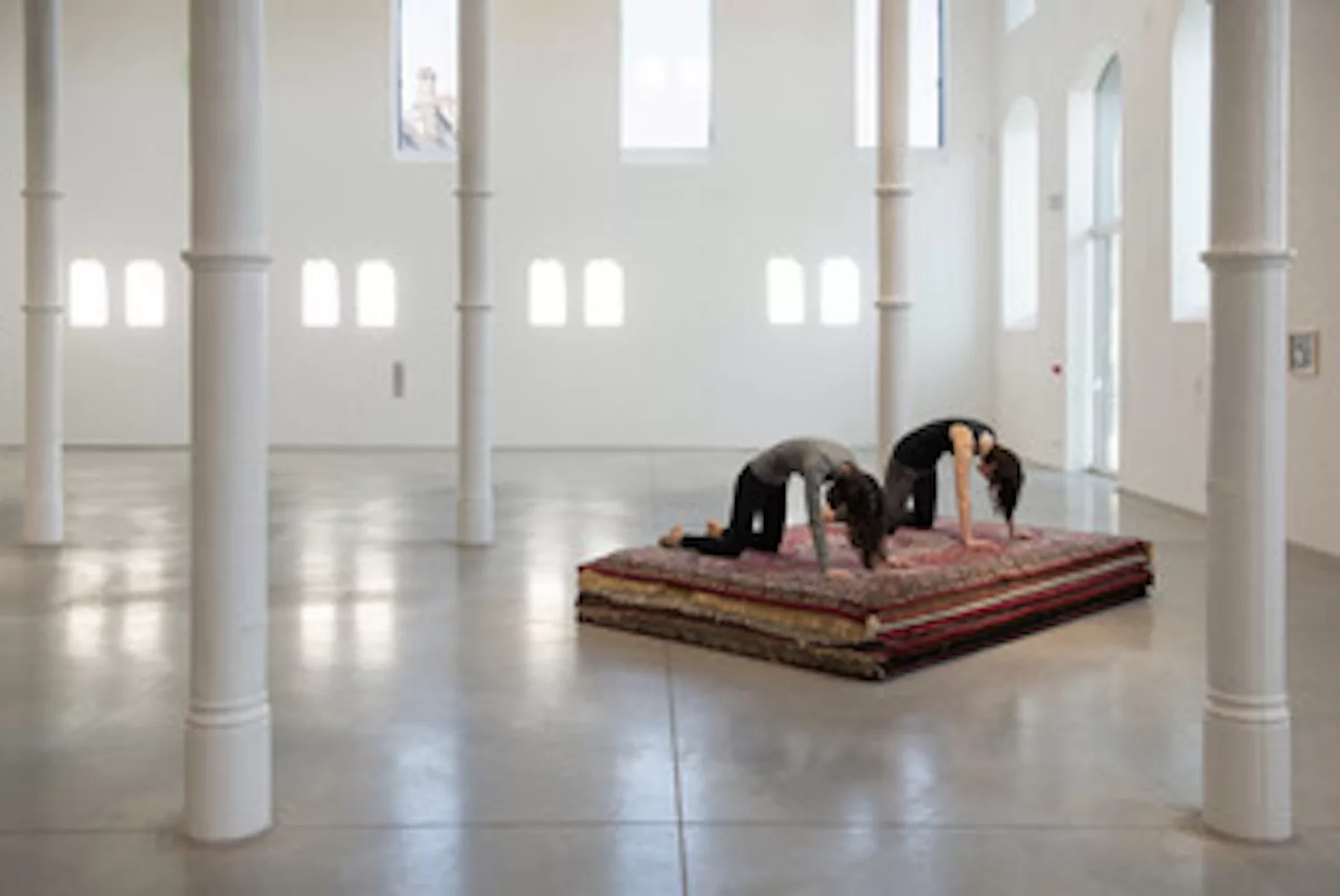
N. Beier grew up in Denmark and spent her early childhood in Mozambique. In 2002 she moved to London to complete her studies at the Royal College of Art. For over fifteen years, her practice has moved between sculpture and performance, often situated in both at once. In 2011, for her first institutional solo exhibition at Kunsthal Charlottenborg, Copenhagen, N. Beier presented Tragedy (2011), which marked a shift in her approach – not just in form, but the tensions it refused to resolve. It was one of the first works to introduce animal motifs into her practice. What the viewer encounters is simple and unsettling: a real dog “playing dead” on a Persian rug. The combination of dog and rug gestures towards the quiet violence of domestication; the rug itself becomes a pedestal – perhaps an emblem of global trade and labour. However, N. Beier chooses not to dissolve the moral unease that the representation of an animal “dying” for its own image produces. She creates works that gently probe normative boundaries, becoming charged with the very conflicts or contradictions they reveal. These are not passive critiques, but active confrontations, where the violence under scrutiny lingers in the familiar materials themselves, unresolved and uncontained.
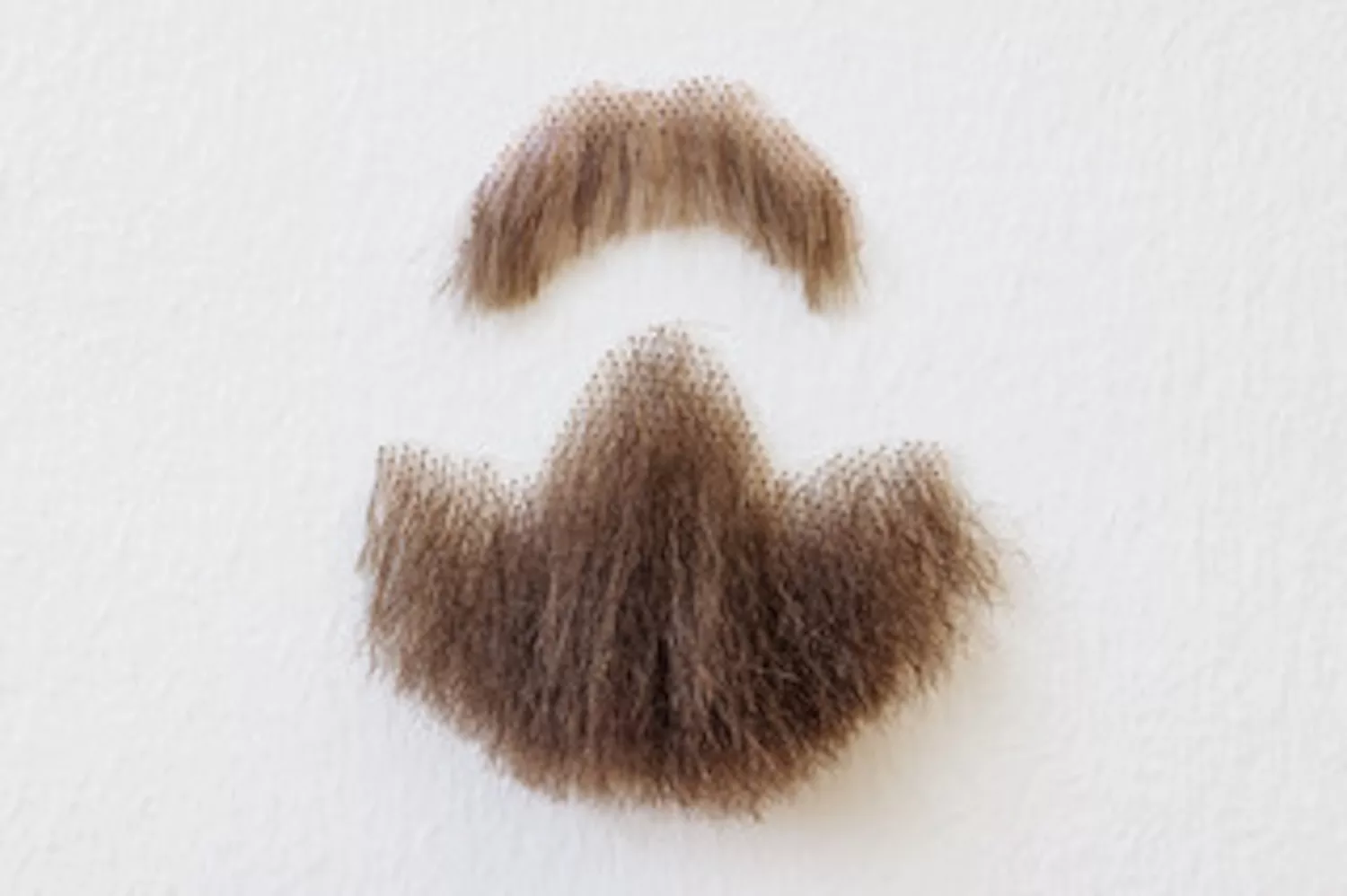
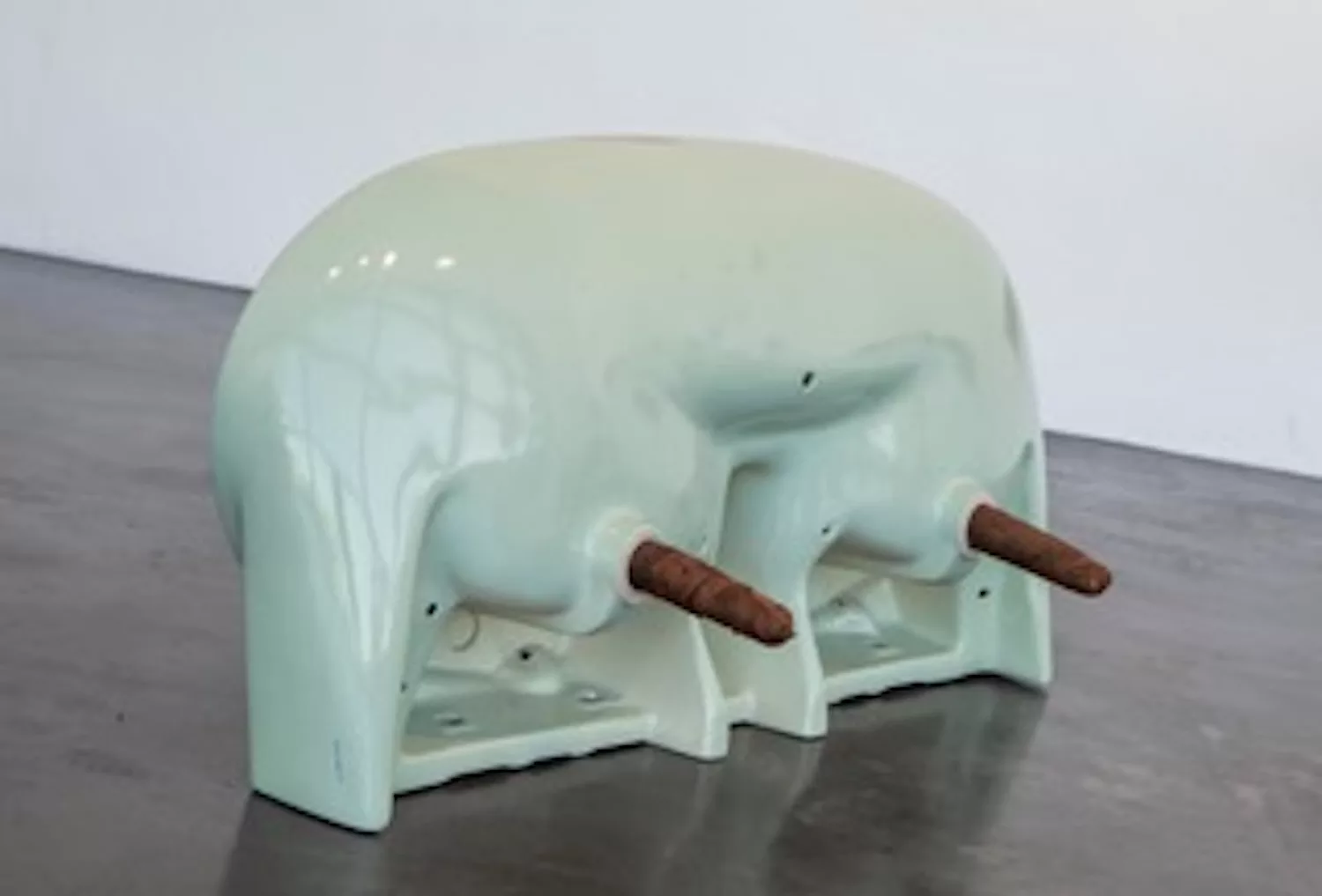
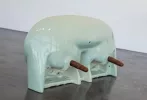
Although oozing with symbolism, N. Beier’s sculptures are anchored in the found material detritus of commodity culture – remote-controlled luxury cars, animal print clothing, human-hair wigs, Persian rugs, porcelain sinks and architecturally-informed birdcages, to name a few. Yet it is not just what these objects signify that interests her, but how they behave. N. Beier pays close attention to the formal language of materials and how they physically respond to one another when brought into unlikely proximity. For her survey exhibition at Spike Island, Bristol in 2018, she produced Plug (2018). In this work, a mid-century bathroom sink with soft curves and pastel tones – a housewife’s altar? An art historical reference? – is stuffed with absurdly large hand-rolled cigar: a symbol of phallic pride? An icon of wealth? The pairing, like many of N. Beier’s sculptures, resists resolution. Her works do not declare their meanings; each form carries fragments of something else – cultural signs, residues of labour, codes of gender – waiting to be read, or at times, even misread, but always certainly open to interpretation.
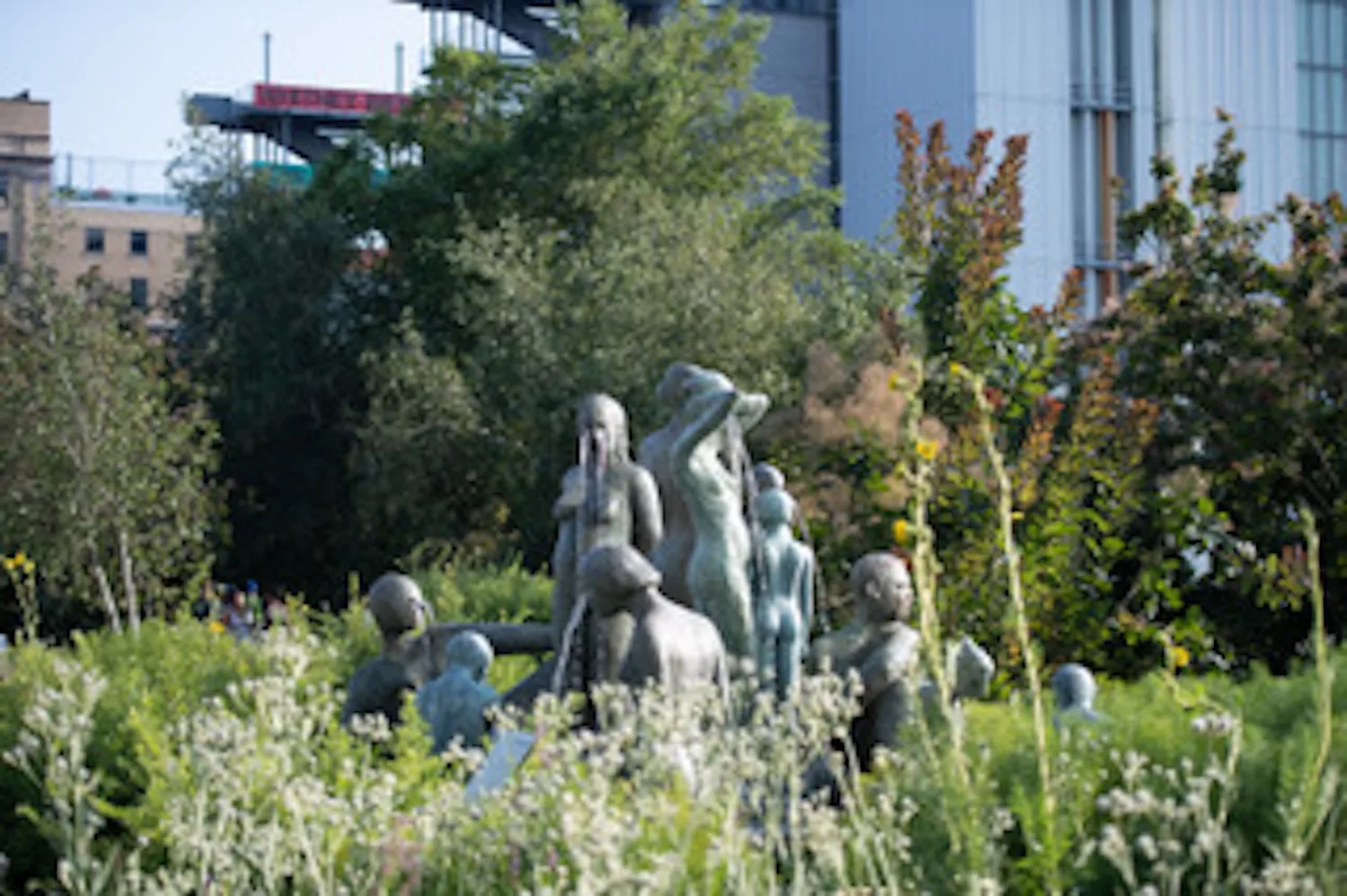
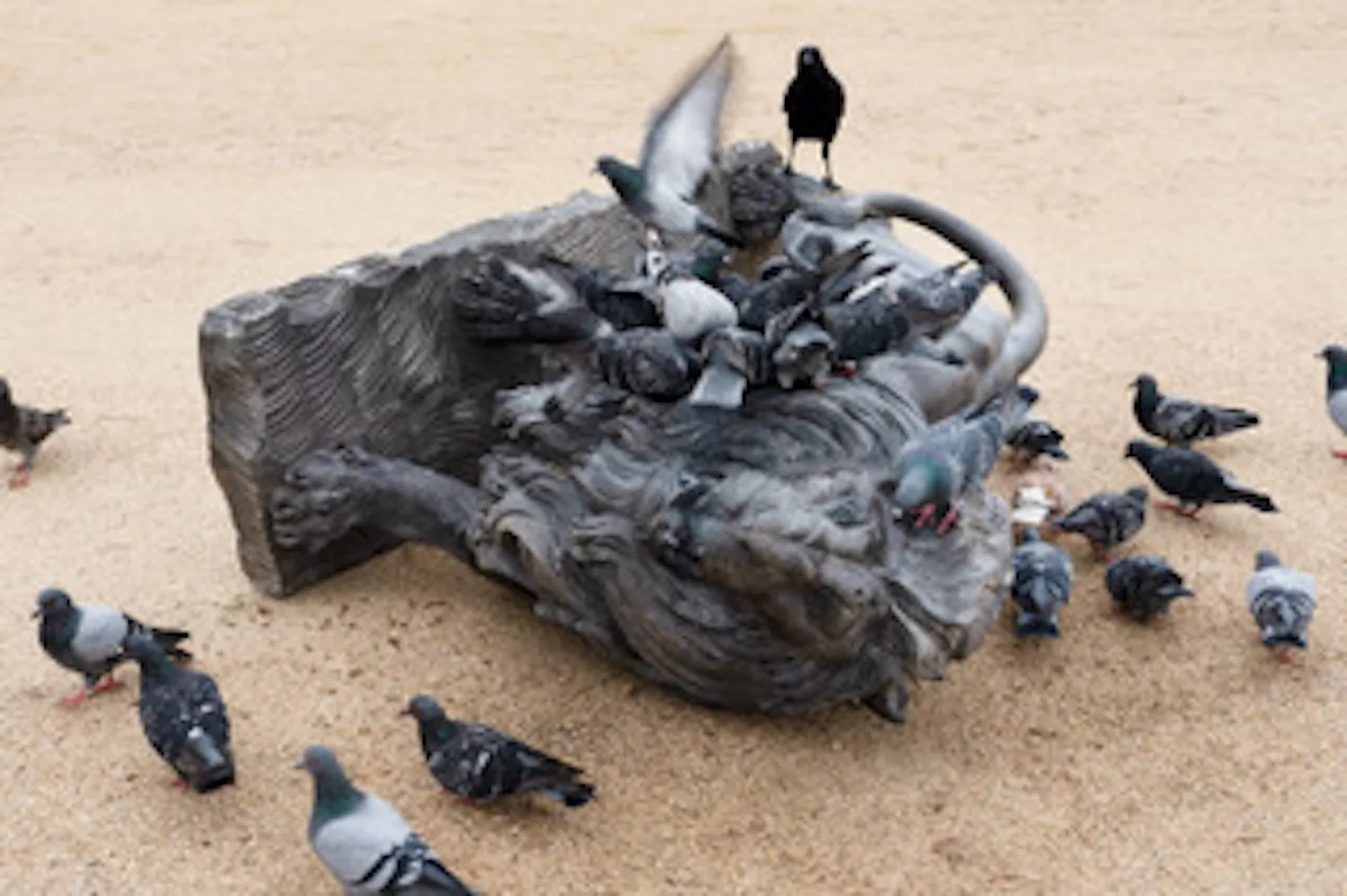
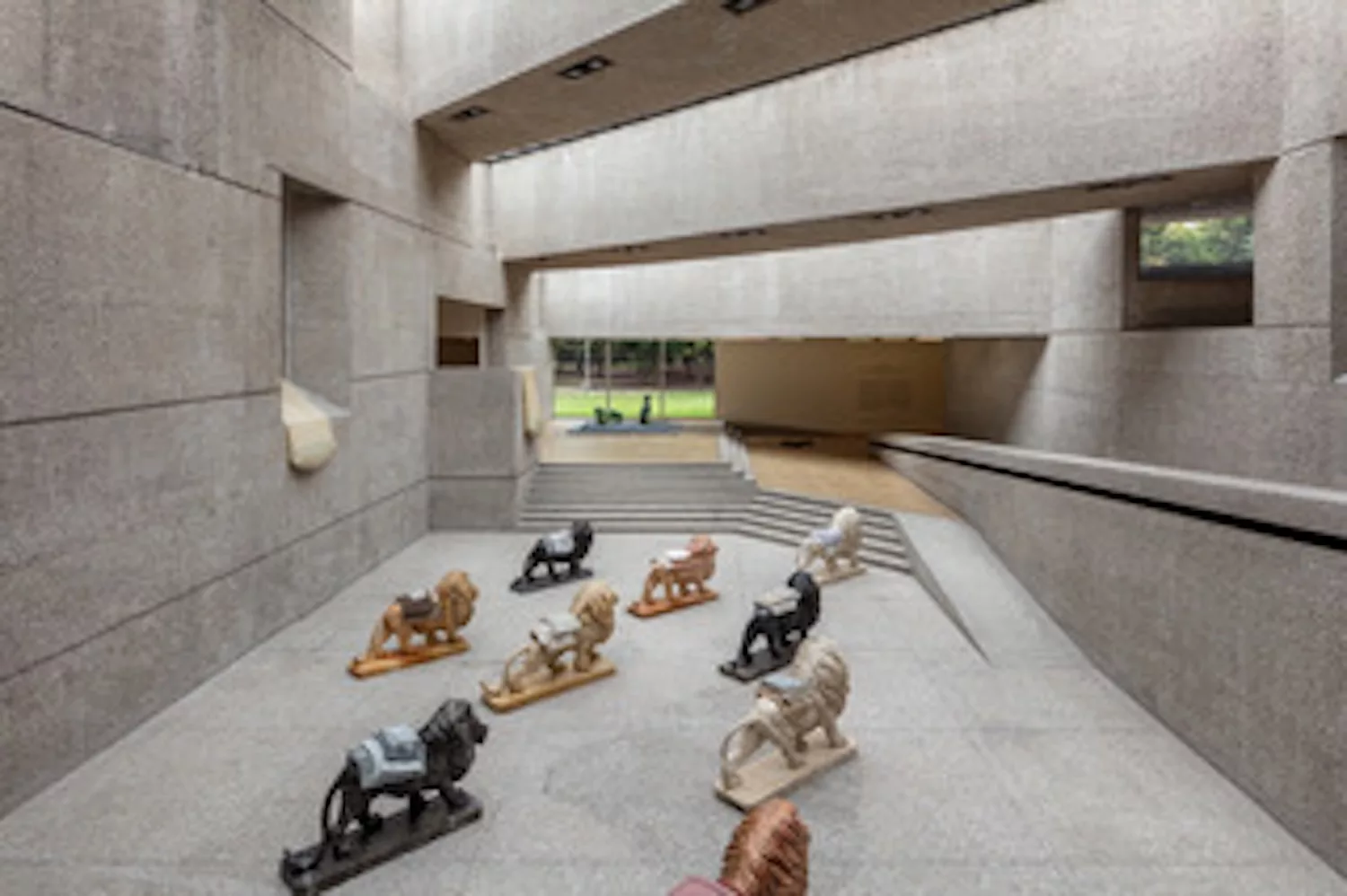
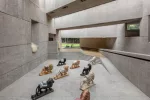
N. Beier is known for her public artworks incorporating found bronze statues such as Men (2018) for the Beaufort Biennale, Belgium, and Women & Children (2022) for the High Line, New York. At first glance, Women & Children – a fountain composed of nude youngsters and female figures – might appeal to a feminist perspective. Yet the work complicates such assumptions. Rather than reclaiming these bodies, N. Beier turns our attention to the very frameworks through which such representations are understood and consumed. The gaze is not simply reversed, but foregrounded, held up for inspection: the statues’ eyes stream water, turning the act of looking into a kind of weeping. This transformation does not resolve their objectification: instead, it amplifies it.
A biography produced as part of the +1 programme.
© Archives of Women Artists, Research and Exhibitions, 2026










 Rencontrez l’artiste : Nina Meier | Palais des beaux-arts de Bruxelles (French)