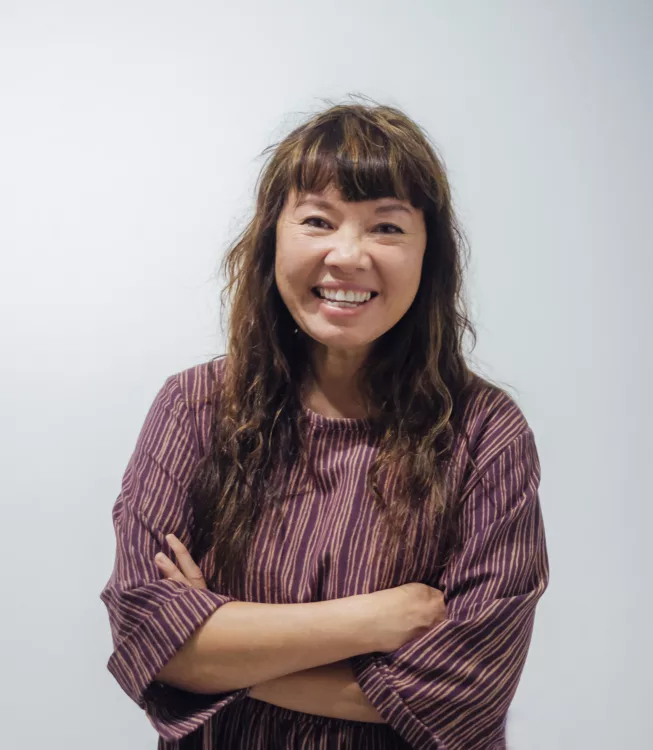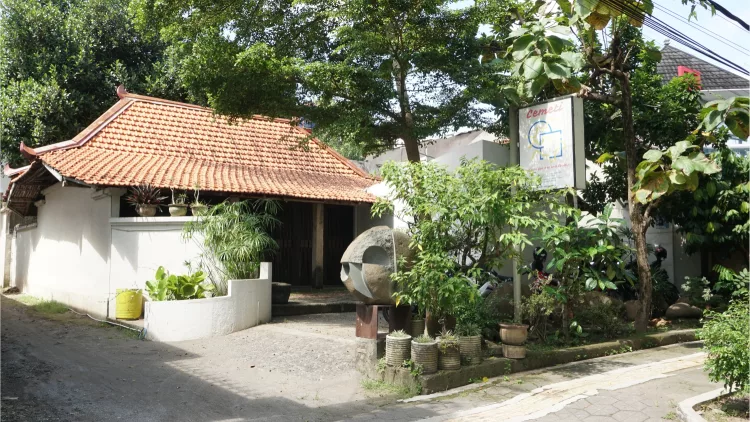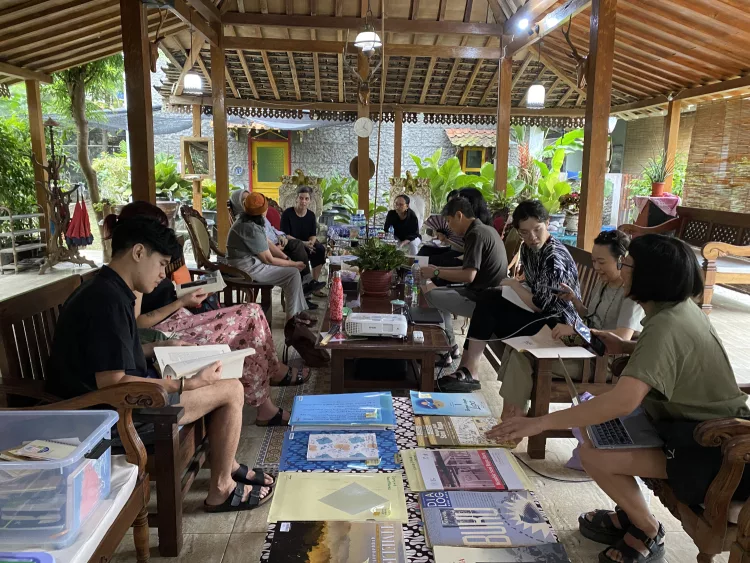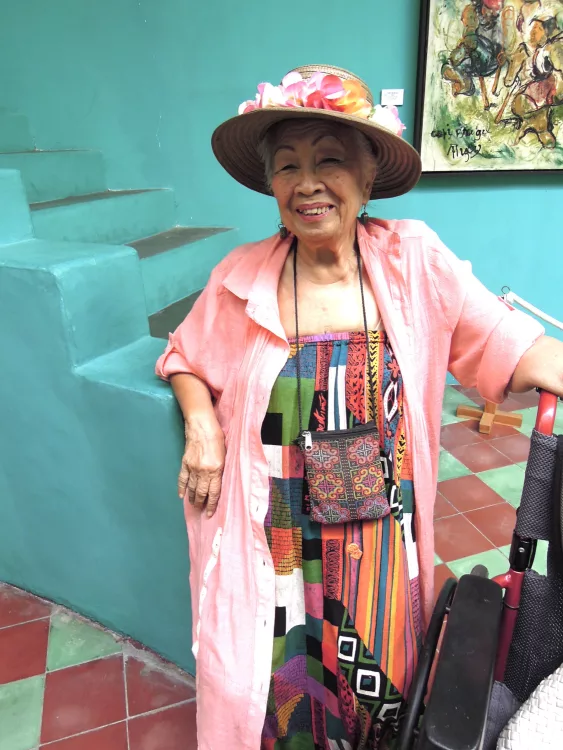
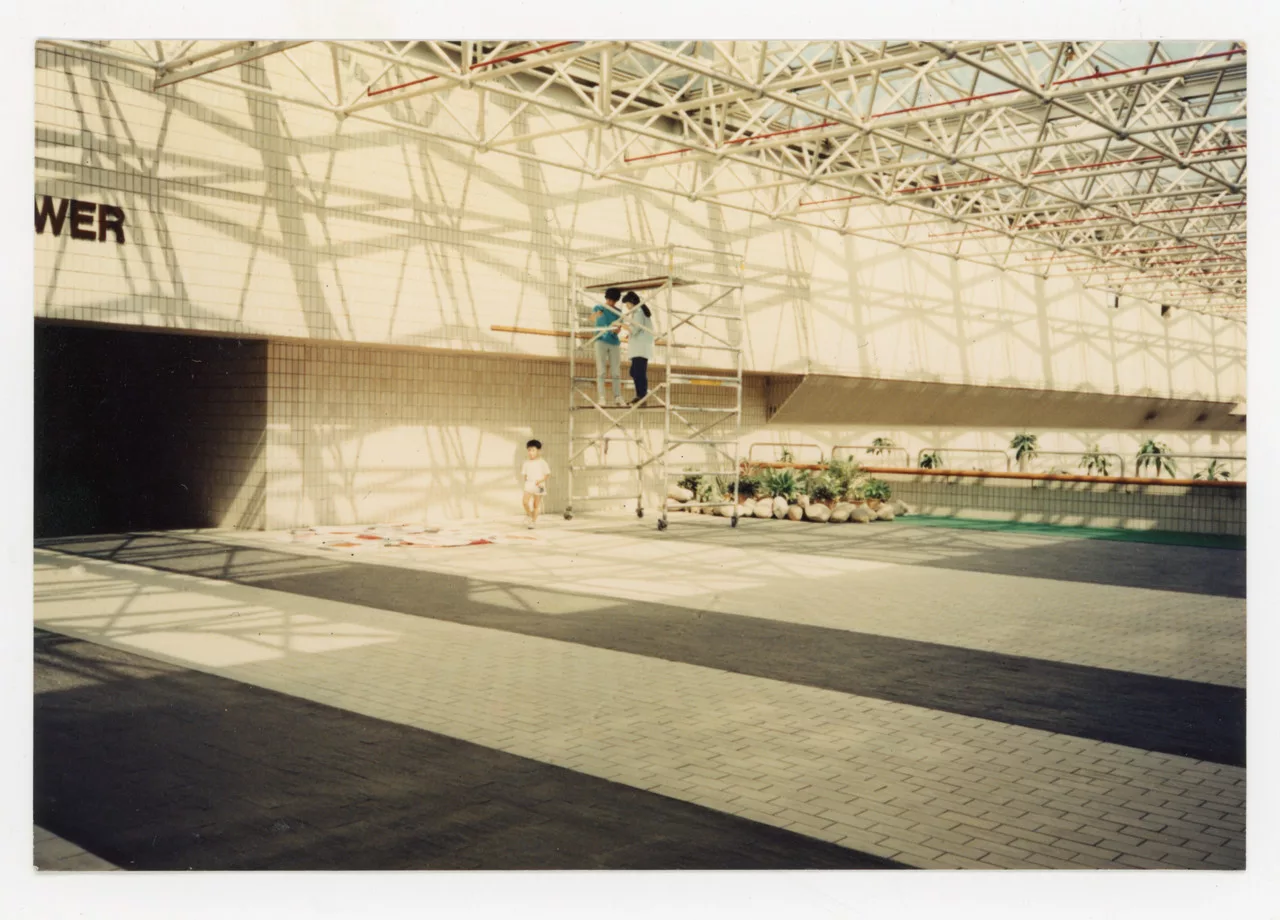
Co-Founder Han Ling and supporter Catherine Tan working on ceiling artworks at 5th Passage’s Performance Space between the car park and the 5th floor lobby which was turned into 5th Passage’s gallery at Parkway Parade, 1991, photo: 5th Passage Archives
In 1991, returning from exhibition-hopping across Singapore’s museums, galleries and the rural studios of The Artist Village (TAV) at Lorong Gambas, I was struck by a shared operating logic: audiences were ushered through these sites in a unidirectional flow. Passing the surging crowds at Parkway Parade Shopping Centre, I felt a counter-image forming. This convergence of human and traffic jams became the unlikely spark for a group of young women artists to generate new art publics by challenging institutional power and visibility. This inquiry became 5th Passage1, Singapore’s first corporate-sponsored artist-run space. We recontextualised art practices by sharing the nation’s uncredited de facto community space, the shopping mall, making socially-conscious art relevant within such a milieu.
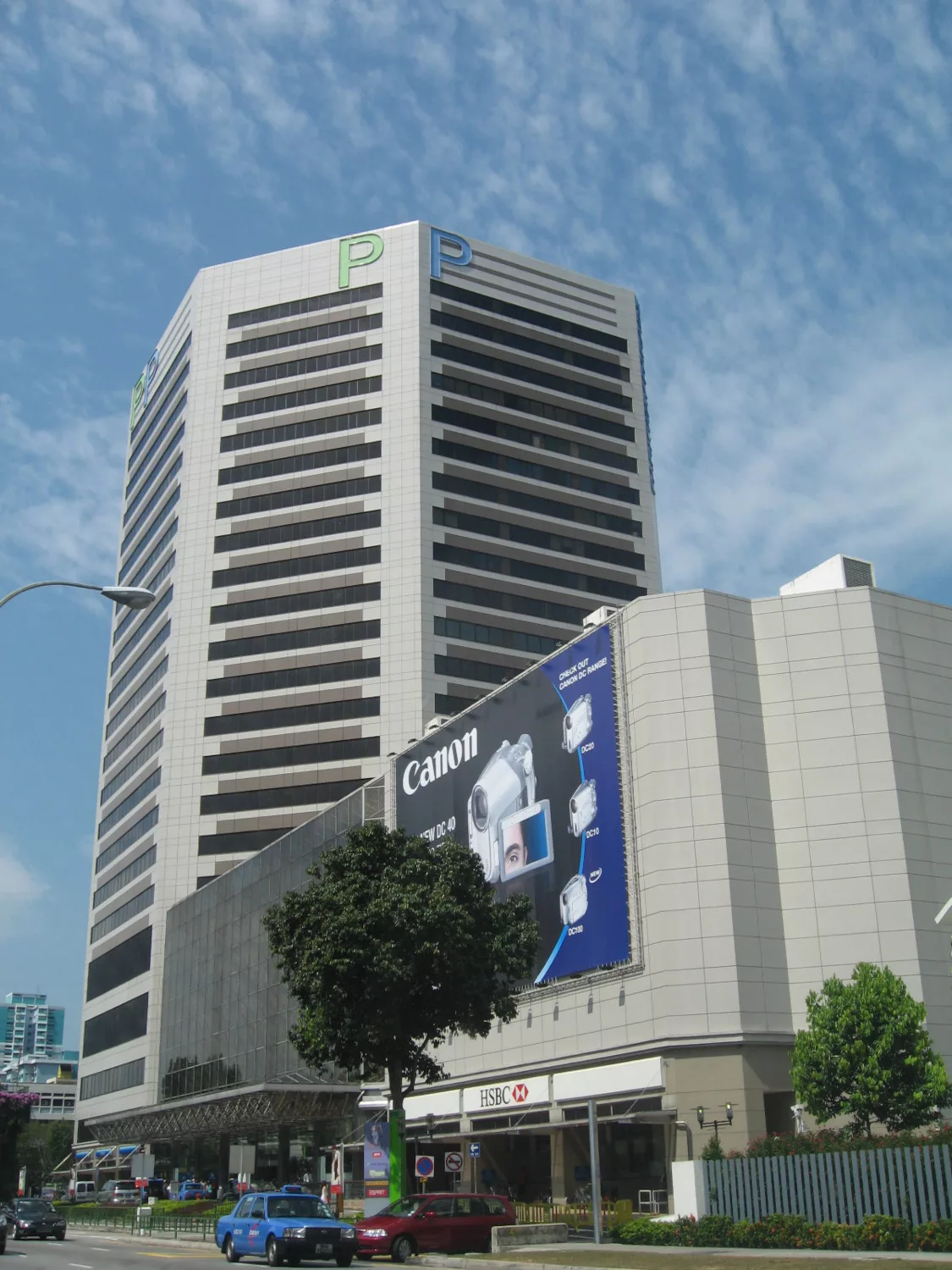
Terence Ong, Exterior view of Parkway Parade’s front, Wikimedia Commons CC BY-SA 3.0
5th Passage offered a site to develop, test and present ideas in a city with nowhere to hide from the state’s all-seeing paternal glare. As Artistic Director, I saw this as a necessary deviation, from both the institutionalisation of art and TAV’s own idealised retreat from capitalism on the outskirts. Located in the Marine Parade Constituency of then Deputy Prime Minister Goh Chok Tong, 5th Passage redirected attention from the formal halls of museums, the polished interiors of commercial galleries and the distant repurposed farmhouse studios of TAV towards its artist-run environment. However, its achievements from 1991–1996 were overshadowed by misleading reporting bias and journalistic trolling that sensationalised the social critiques of artists Vincent Leow (Body Fields, 1993), and more adversely, Josef Ng (Artists General Assembly, 1994). The fallout produced personal and collective trauma and the occlusion of 5th Passage’s contributions to Singapore’s art history.
During the initial meeting with Parkway, I was expediently shown the space the representatives envisaged for such a partnership. On the 5th floor, there was a spacious passage between the car park and the lift lobby. No space could be more readymade than this for a readymade public, I thought at first sight – an architectural black box bounded by high ceilings and dark grey slate walls. A two-year rent-free lease was later signed and agreed upon as a reasonable time frame to establish and develop such an exciting artistic precedent in Singapore.
I invited ceramicist Han Ling and artist Susie Lingham to join me. 5th Passage Gallery & Performance Space was inaugurated on 19th April 1991. Its inclusive agenda began with Image and Medium, curated by eminent art historian T.K. Sabapathy, who joined 5th Passage’s panel of founding advisors alongside Dr Kenson Kwok, Tay Tong (Theatreworks), Penny Low (Singapore Broadcasting Corporation) and Juliana Lim (National Arts Council, NAC).
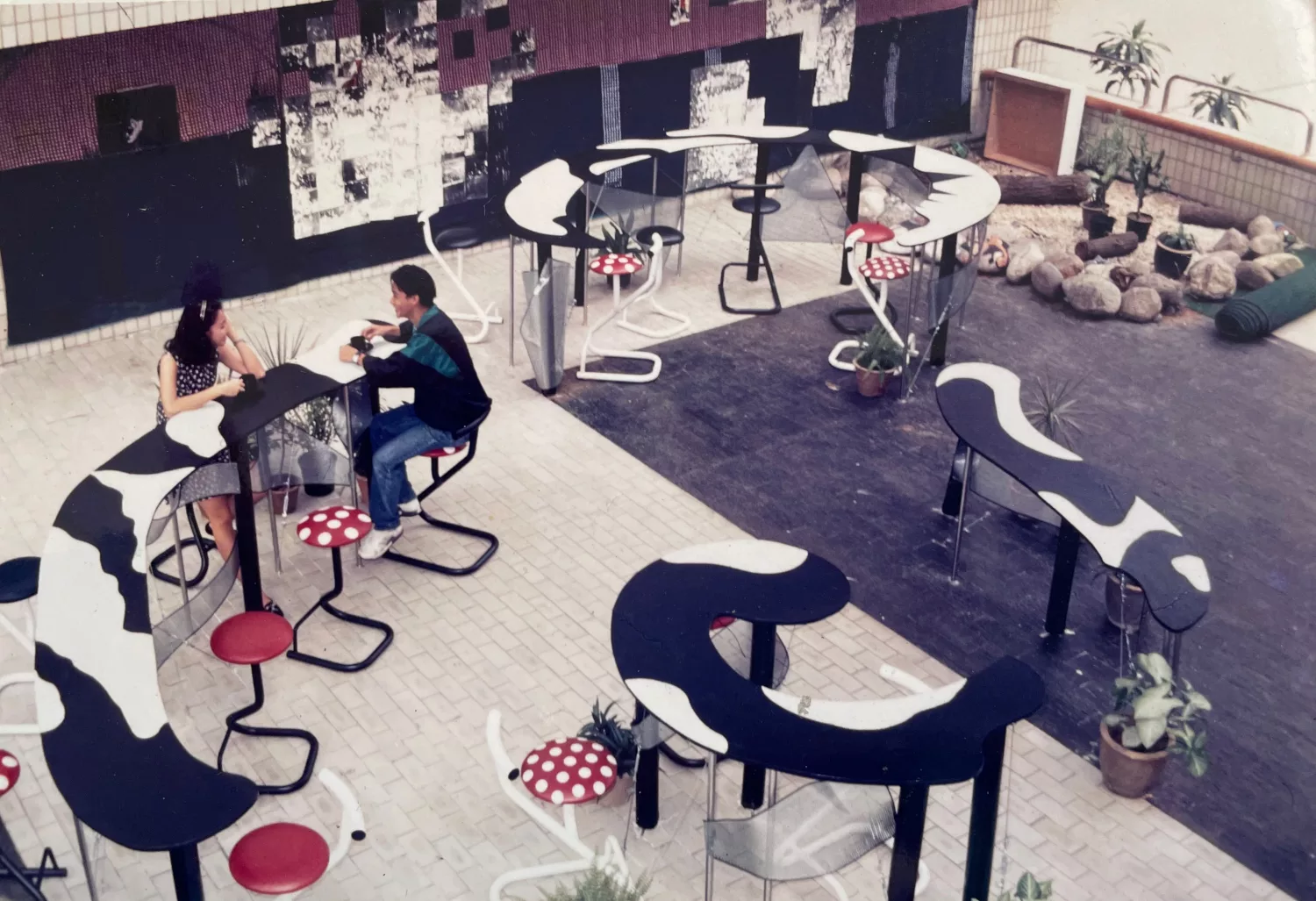
Top view of 5th Passage’s open atrium performance space featuring Daniel Wong’s composite screen prints on the wall and organic shaped bar tables created by Lasalle’s Product Design students in the foreground, 1991, photographer unknown
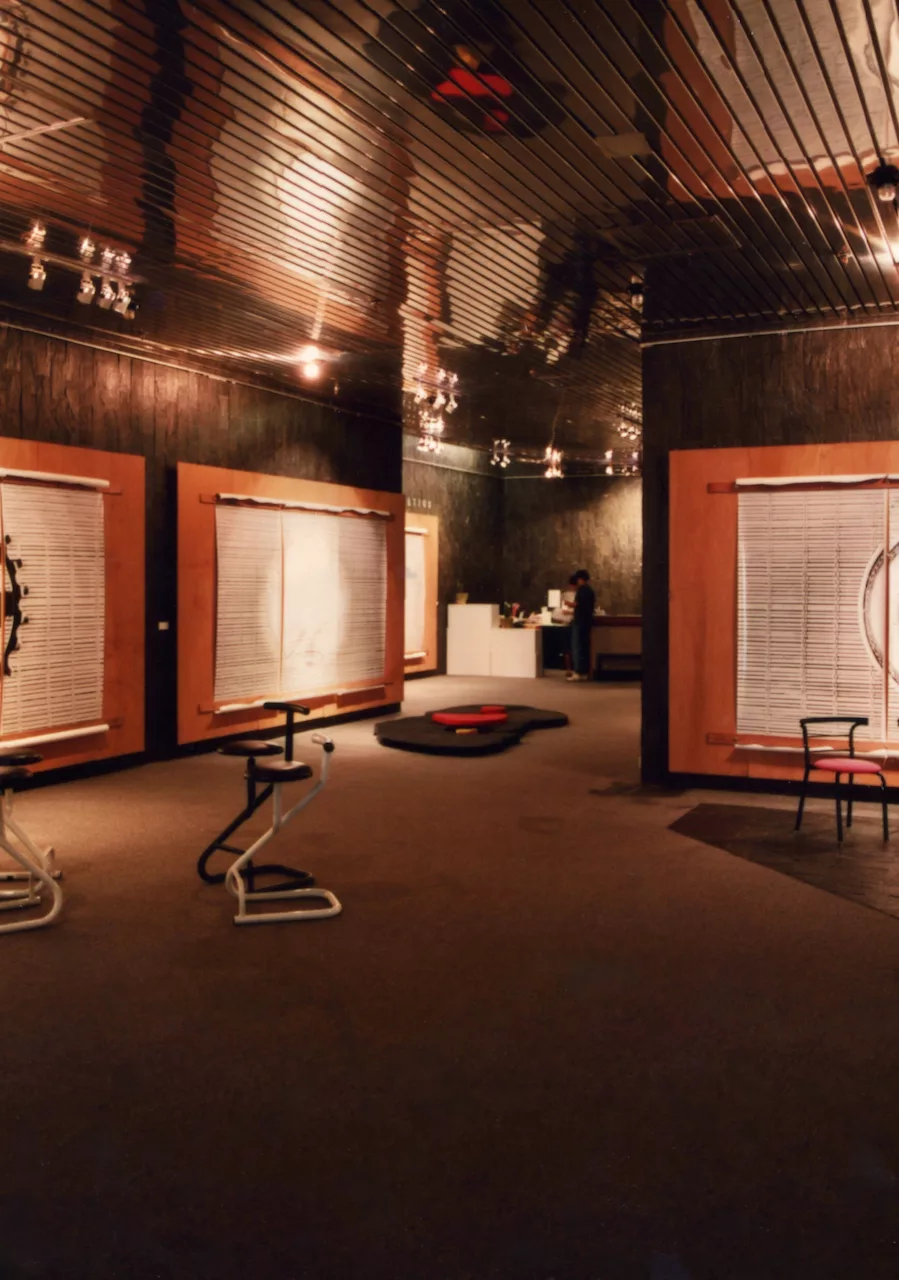
View of 5th Passage during Siew Kee Liong’s photography show Objects, 1992 © Courtesy Siew Kee Liong
5th Passage cultivated a collaborative ethos informed by social causes and transformed a neglected passageway into a counter-site to reimagine art, space and meaning-making, community, collective identity and place in the world. Its events and activities drew across disciplines, sustained largely through unpaid labour and personal financial support from its founders.
5th Passage maintained a plurality of artistic voices, methodologies, genres and design shows that ran parallel to fulfilling government contracts for art public campaigns around Singapore. These efforts attracted much attention, bolstering our first unexpected but successful $9000 grant, enabling projects, including Body Fields, a 12-hour event, and the subsequent week-long event entitled Artist General Assembly (AGA). Similar to its predecessor, it culminated on 31 December 1993 with performances from 6 pm through to the early hours of 1 January 1994.
Over the first days of event week, the press unleashed catastrophising headlines that targeted Shannon Tham and Josef Ng’s performances. To stem these media attacks, I took the decision to bar all news coverage of final performances scheduled for 31 December 1993. Unfortunately, this did not prevent The New Paper’s Ng Li San from gaining access to the space with her photographer, who captured the image of Ng in mid-performance. The widely disseminated photo was subjected to editorial graphical manipulation, fuelling the government and public furore that led to a decade-long proscription of performance art in Singapore. The subsequent persecution and prosecution of 5th Passage’s manager Iris Tan and Josef Ng were not only conducted in the high courts but also on the front pages of the tabloids, the broadsheets, televised reports and parliamentary proceedings. A disquieting climate of collective trauma and abject punishment ensued, as did the impact of social expulsion and exile for those involved.
The New Paper altered a twenty-six minute performance into a perceived transgressive act. Ironically, this ruse was mirrored by Ng’s performance where he had sought to give voice to twelve gay men whose rights to privacy were violated when they were name-shamed and caned after falling into a police honeytrap for soliciting sex at a beach in Tanjong Rhu on 23 November 1993.
The repeated naming, shaming and denunciation of Josef Ng and 5th Passage (myself, Han Ling, Lingham, Henry Tang and Iris Tan) was widely expressed in the media and in interviews with random members of the public who did not witness the performance, while letters of support remained unpublished. 5th Passage was evicted from its premises by its Parkway landlords. A decade-long defacto ban on performance art came into effect between 1994 and 2004, where fixed scripts became compulsory for submission to the police, or a security deposit of $10,000 was required where no script was available. Following the controversy, 5th Passage members and participating artists were interrogated by police, and manager Iris Tan was prosecuted in court,2 defended pro bono by lawyer Philip Jeyaratnam, with the unwavering support of artist/writer Ray Langenbach as an expert witness.
In this climate, Langenbach observed how government funding became tied to institutional survival through avoidance of “contamination”. He recalls the anxiety of his British colleague, Dr Jane Chia (National Institute of Education’s Head of Division of Art, who had previously inaugurated one of 5th Passage’s exhibitions), recounting how Chia “specifically spoke of the possible loss of NAC funding for faculty research, and indicated that Suzann Victor and Susie Lingham from 5th Passage were to be barred from the University campus, as any association with them might endanger NAC funding”.3
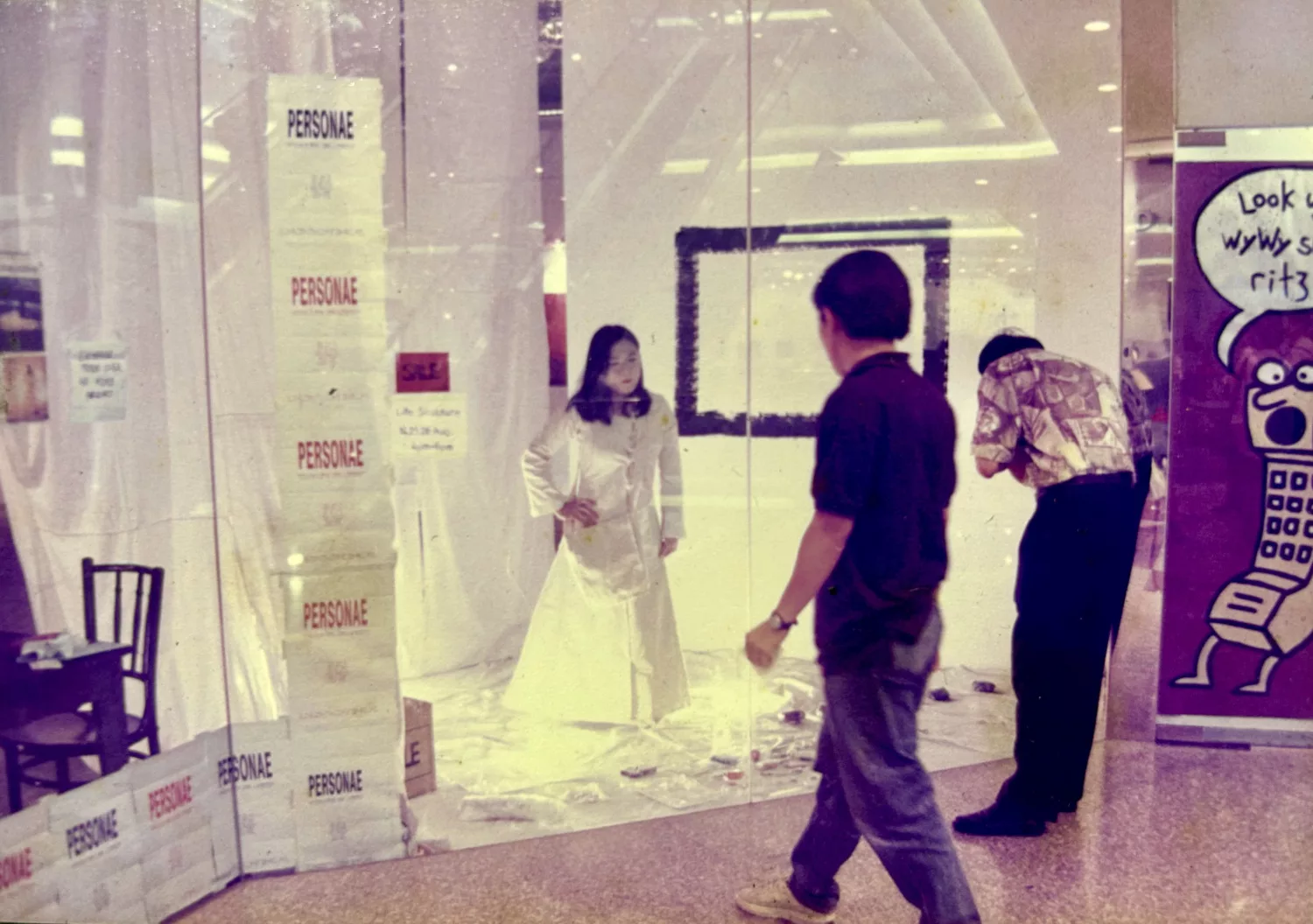
Eve Tan, For Sale, 1994, performance art live sculpture, presented on 16, 21, 28 August, 1994, 4–6 pm, at 5th Passage, as part of Personae I organised by 5th Passage Artists Ltd., Pacific Plaza, Singapore © Eve Tan, unidentified photographer, courtesy of Eve Tan
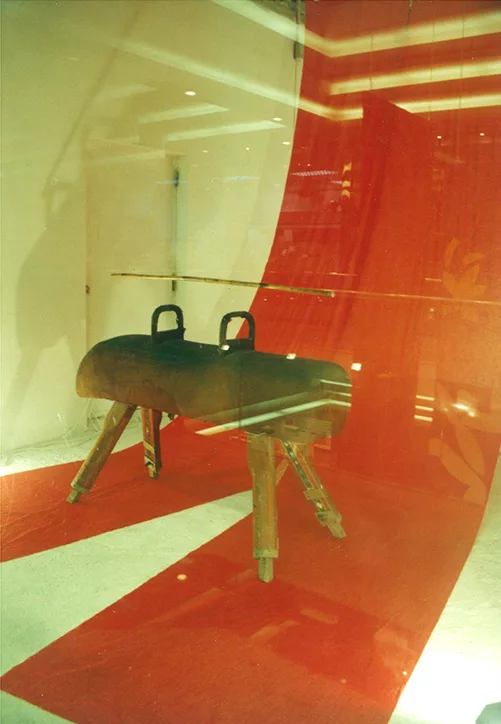
Ray Langebach, Zone of Consumption, 1994, site-specific installation presented in a single shop lot as part of Surrogate Desires organized by 5th Passage Artists Ltd. Pacific Plaza, Singapore, 26 March – 26 April, 1994 © Courtesy of Ray Langebach
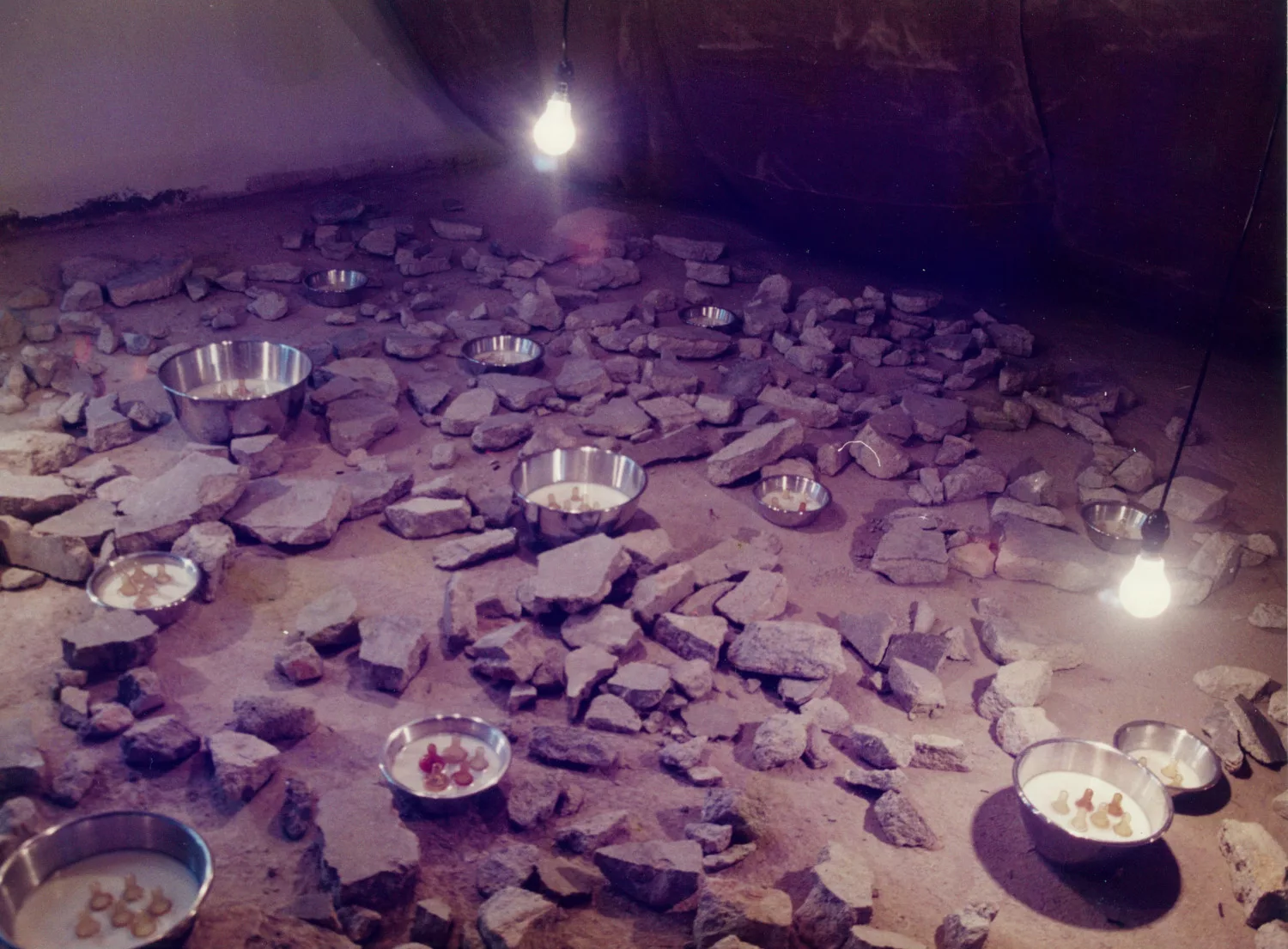
Chu Chu Yuan, Preservation, 1994, site-specific installation as part of Surrogate Desires organized by 5th Passage Artists Ltd., Pacific Plaza, Singapore, 26 March– 26 April, 1994 © Courtesy of Chu Chu Yuan
Through Lingham’s job as a copy-writer at public relations consultancy DNC Advertising (formerly known as Dailey, Naidu and Chan), 5th Passage was promptly offered a second “home” at Pacific Plaza where five empty shop lots were allocated for our use on a one-year rent-free lease. Ensconced in the city centre this time, we immediately continued to share the spaces with many other artists. At times we dedicated an entire space (a single shop lot) to a single artist for experimentation and to develop their practice for a short stint, even to mount solo shows of their own – an unusual model in land-scarce Singapore where group shows were the default exhibition model. 5th Passage’s rotating art programmes at Pacific Plaza integrated into yet another shopping centre. This time, the works remained in full view through the glass shop windows even after closing hours, generating another “readymade public” of urban shoppers.
As the public unexpectedly encountered artworks at 5th Passage’s second site, they witnessed how artists were responding to and processing the proscription of performance conceptually and professionally. Eve Tan’s For Sale presented the artist herself as a ‘living’ sculpture, passing as a mannequin in an allocated shopfront for two hours every Sunday throughout the show’s duration. In her prompt reply to the State, she deployed the very object/subject of censure – the body – to create a performance of stillness. Her courage to present a performance during the ban was an action that few female artists would have risked in the midst of such tension with the State and police. Ray Langenbach’s Zone of Consumption re-situated discipline and punishment of the body from the prison and gym into his assigned shop space which featured an apparatus of extreme conditioning – the rotan cane. An instrument of corporal punishment in Singapore’s judicial, prison, reformatory and military systems to inflict pain, not only for breaking the law, but also for breaking the spirit (a poignant reminder of Josef Ng’s wielding of a cane in his performance at 5th Passage, entitled Brother Cane), it was suspended above a pommel horse, a piece of equipment for building bodies with the pain of inhuman feats of strength and gravity-defying agility. These artworks presented an altogether unsettling vision of disruption in a site for consumerist pleasure.
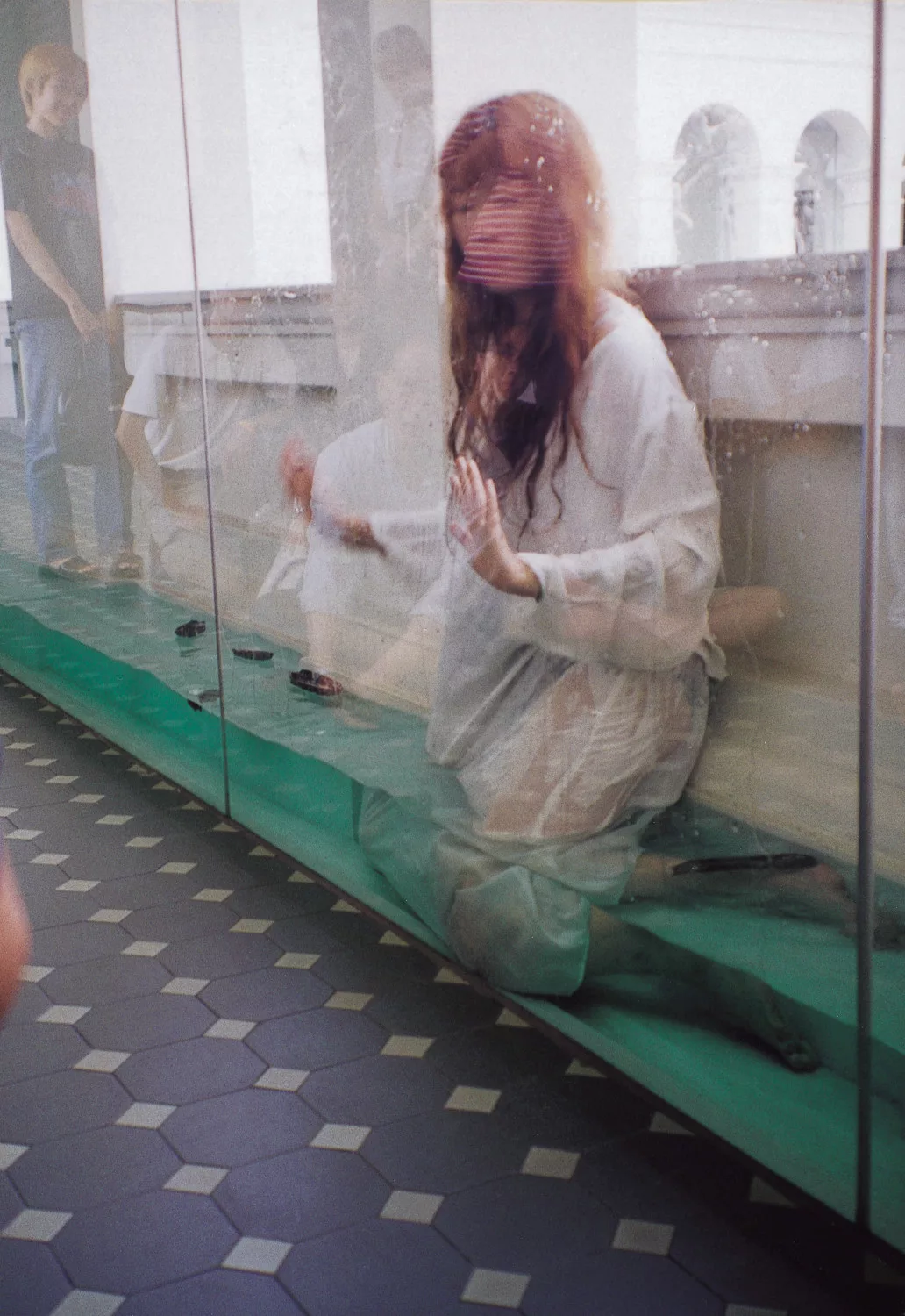
Suzann Victor, Still Waters, 1998, piece in contravention of Singapore’s ban on performance (1994–2004) that used the very architecture of the Singapore Art Museum to critique itself by inverting the drain on the second floor into a receptacle for water, presented at the Singapore Art Museum as part of ARX 5, the final iteration of a major exhibition and residency project linking Perth, Singapore, and Hong Kong, 13 September–1 November, 1998, photo: Jason Lim © Courtesy Suzann Victor
In 1998, during the ban, I performed Still Waters in the drain on the second-floor of the Singapore Art Museum. My body spoke to the psychosocial relevance and importance of art and cultural production as a valid means of responding to public crisis and turbulent times, mindful of the provisional nature of boundaries, and in traversing them, to bring into view the issues of abjectness imposed – the lived realities of elision, expulsion, rejection and punishment. The violence of tabloid photography unleashed untold harm, injustice and trauma to 5th Passage. While it raised the previously obscure profile of performance art to a nation-wide scale, it also engendered new critical discourse. A matter of moral and ethical dimensions that should have been addressed with facts and clarity was met with an ever-tightening ring of silence amongst individuals, institutions and art circles over the course of twenty-eight years, a deafening that constituted the shame, humiliation and taboo that 5th Passage was to bear, but which also inadvertently lent to the suppression (and control) of any sustained conflicting commentary and responses thus far, professional or otherwise.4
The story of 5th Passage exposes a hegemony of perception. When art historians write, they may write you out of history; when archivists present facts, omission may privilege preferred mythologies, and when institutions build futures, they may construct you outside of it. Yet I have learned to believe in a morality to memory: what we remember matters as much as how we remember. It calls for an ethics of recognition, for remembering and bearing witness.5
Suzann Victor’s practice is known for its critical engagement with the colonial aftermath in Southeast Asia, female disembodiment and the inversion of the abject. Her works prospect the contours of human sensorial experience, perception and phenomena. Using lenses, light, sound and water to create sense-rich environments, they activate the body as an investigative tool for apprehending the world up close and afar. Singapore’s first female representative at the 49th Venice Biennale and 6th Havana Biennial, Victor helped establish 5th Passage (1991–1996), one of Southeast Asia’s earliest feminist art initiatives. She completed her doctorate at UWS, supported by the Australian Postgraduate Award, in 2009.