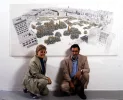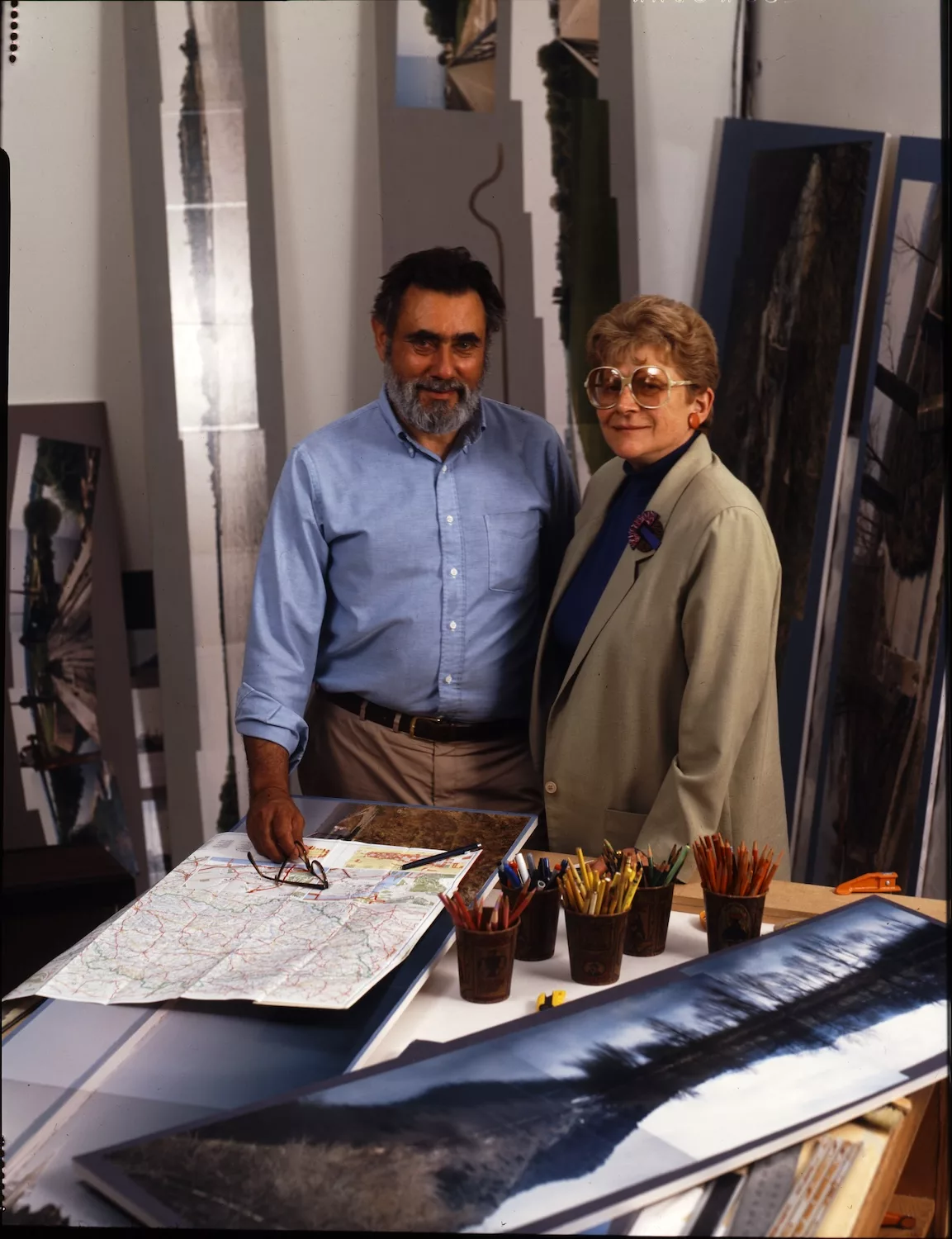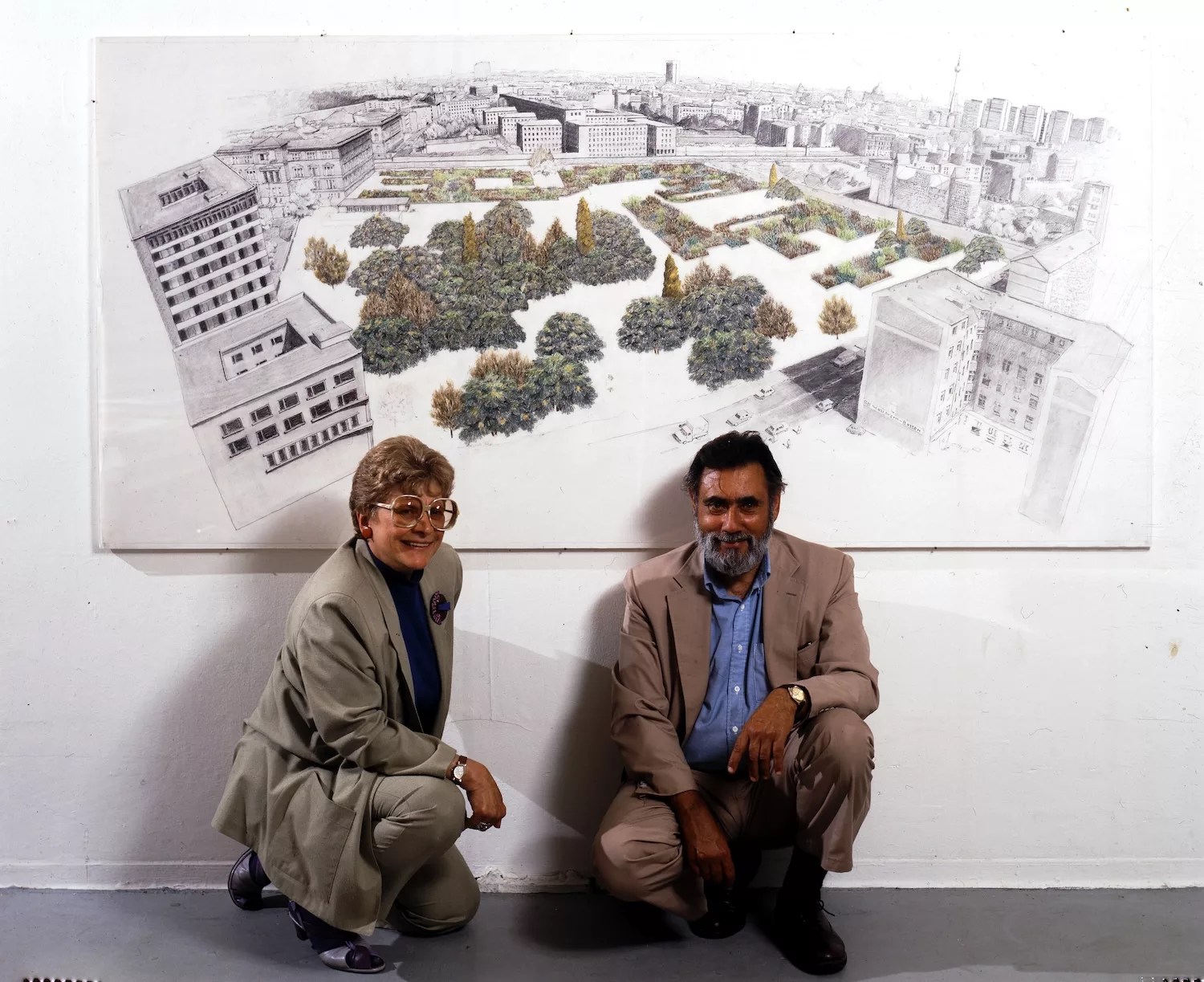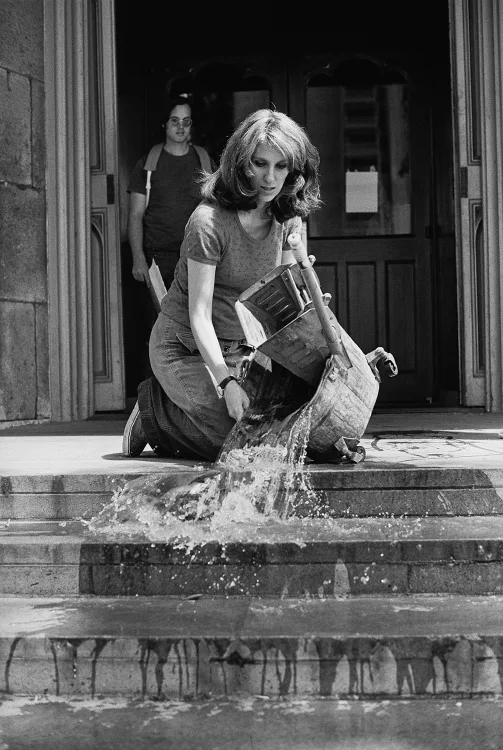
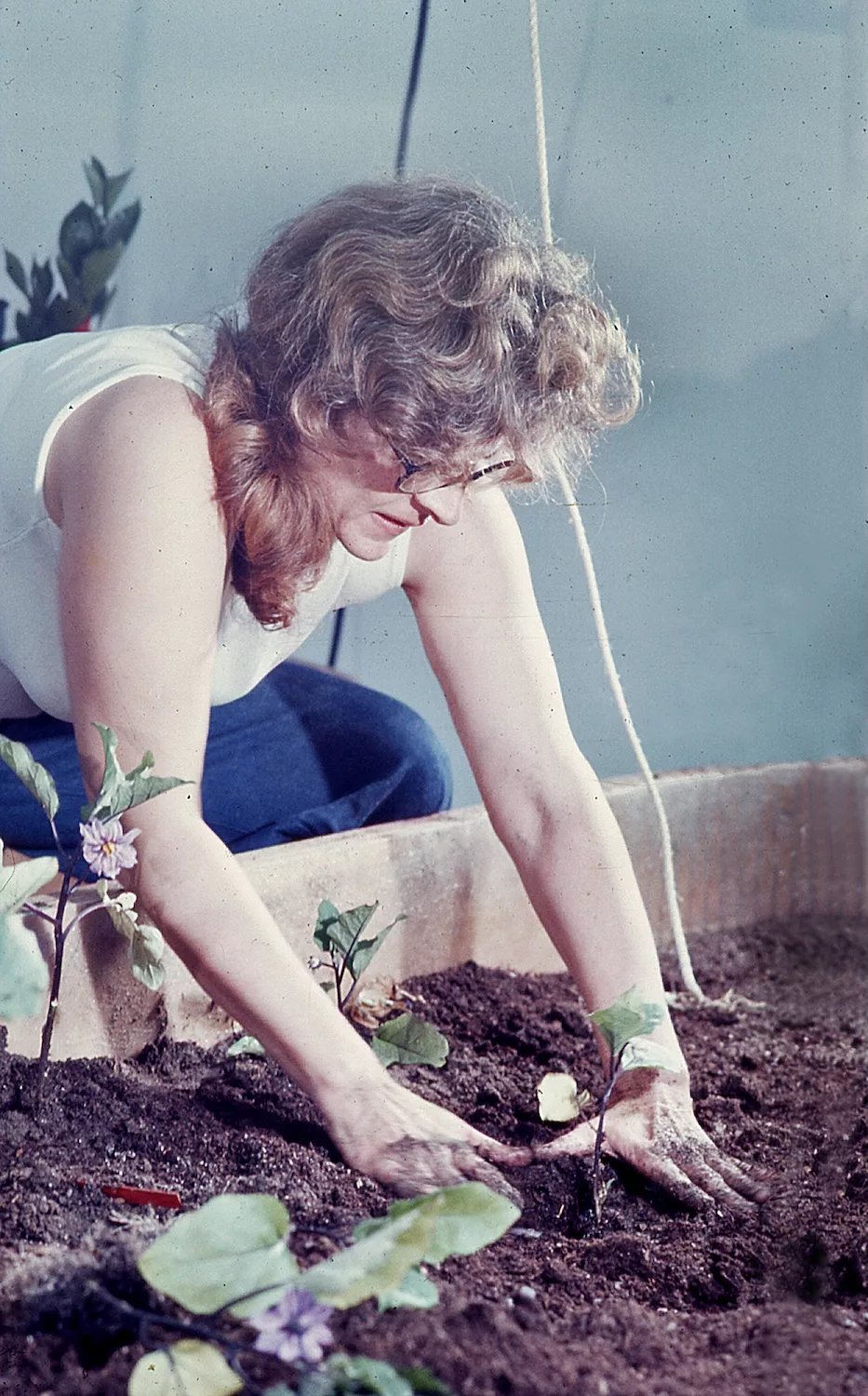
Helen Mayer Harrison planting, © Photo: The Harrison Studio, Courtesy of the artists estates
Helen and Newton Harrison: California Work, the La Jolla Historical Society; the California Center for the Arts, Escondido; the San Diego Public Library Gallery, San Diego and the Mandeville Art Gallery, UCSD, September 19, 2024 – January 19, 2025
→The Time of the Force Majeure, Munich, London, NY, Prestel Verlag, 2016
→Péninsule Europe, Les terres hautes, Toulouse, Les abattoirs, 2001
→The Lagoon Cycle, Ithaca, Cornell University, Herbert F. Johnson Museum of Art, 1985
The Harrison Studio: On Mixing, Mapping and Territory, Sesnon Art Gallery, University of California Santa Cruz, Santa Cruz, CA, 2013
→Greenhouse Britain: Losing Ground Gaining Wisdom, London, Manchester, Bristol, Lancaster, 2008
→The Lagoon Cycle, Los Angeles County Museum of Art, Los Angeles, CA, 1988
American eco-artist.
Helen Mayer Harrison played a significant role in the development of US ecological art with an innovative approach that combined science, narrative discourse and pragmatic problem-solving and was able to spatialise complex systems for analysing, understanding and anticipating climate change. Trained in John Dewey’s philosophy of education at New York University, she earned a master’s degree in English literature in 1949, which she supplemented earning a PHd in Clinical Psychology in San Diego. After marrying sculptor Newton Harrison (1932–2022) at the age of twenty-five, she kept on working as a teacher in New York’s public school system. She was also active in the Women Strike for Peace group in the early 1960s, that played a significant role in the signing of the 1964 Nuclear Test Ban Treaty. In 1967, after she taught at the University of New Mexico for two years, the family settled in San Diego. At the University of California San Diego, H. Mayer Harrison ran the UC Educational extension program, where, drawing on her field experience, she established classes specifically for Native American children with the aim of preserving their traditional way of life. In 1970, she became the first woman to be nominated for the position of vice chancellor, which she declined to pursue her creative partnership with Newton Harrison.
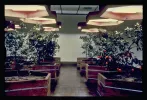
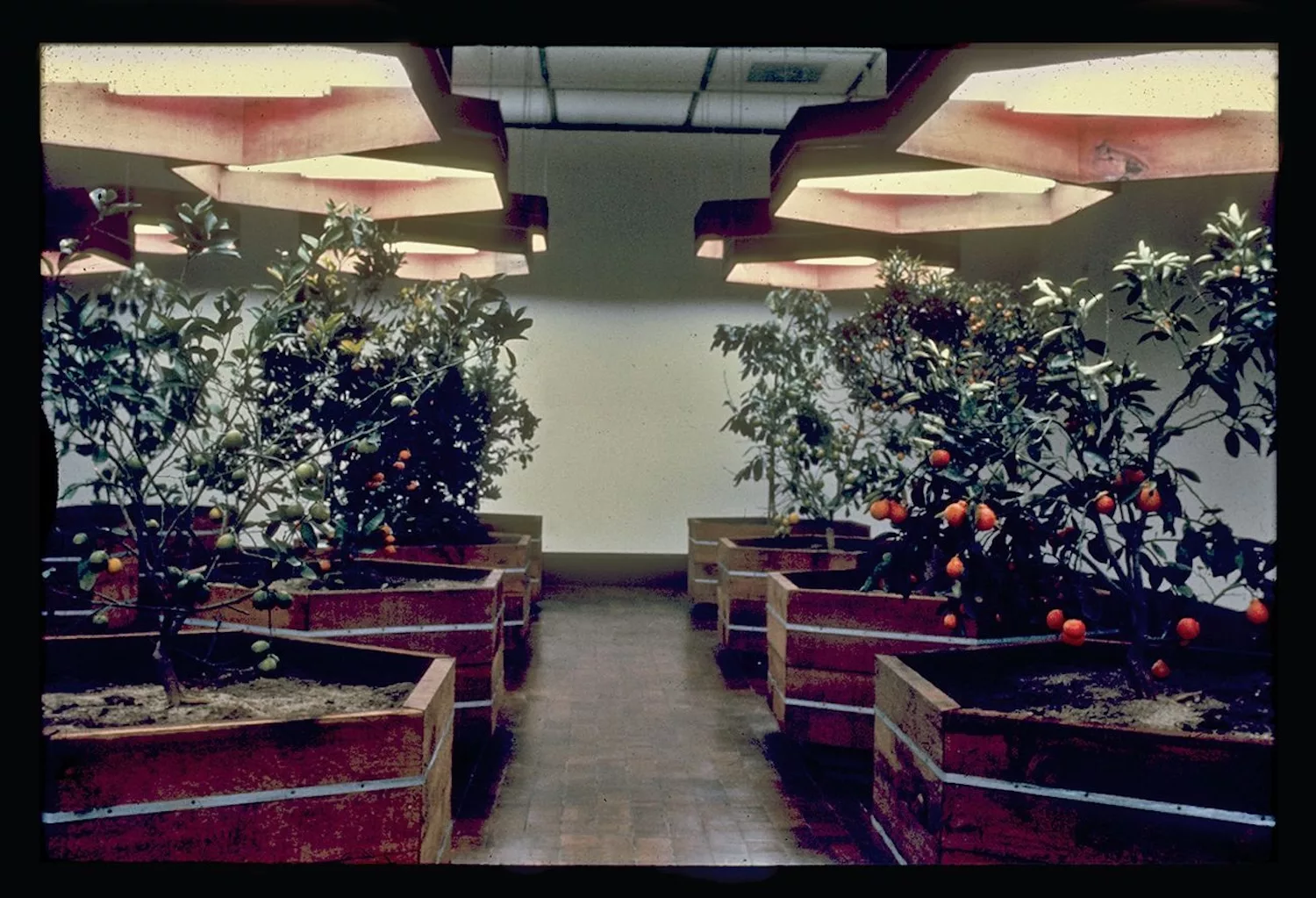
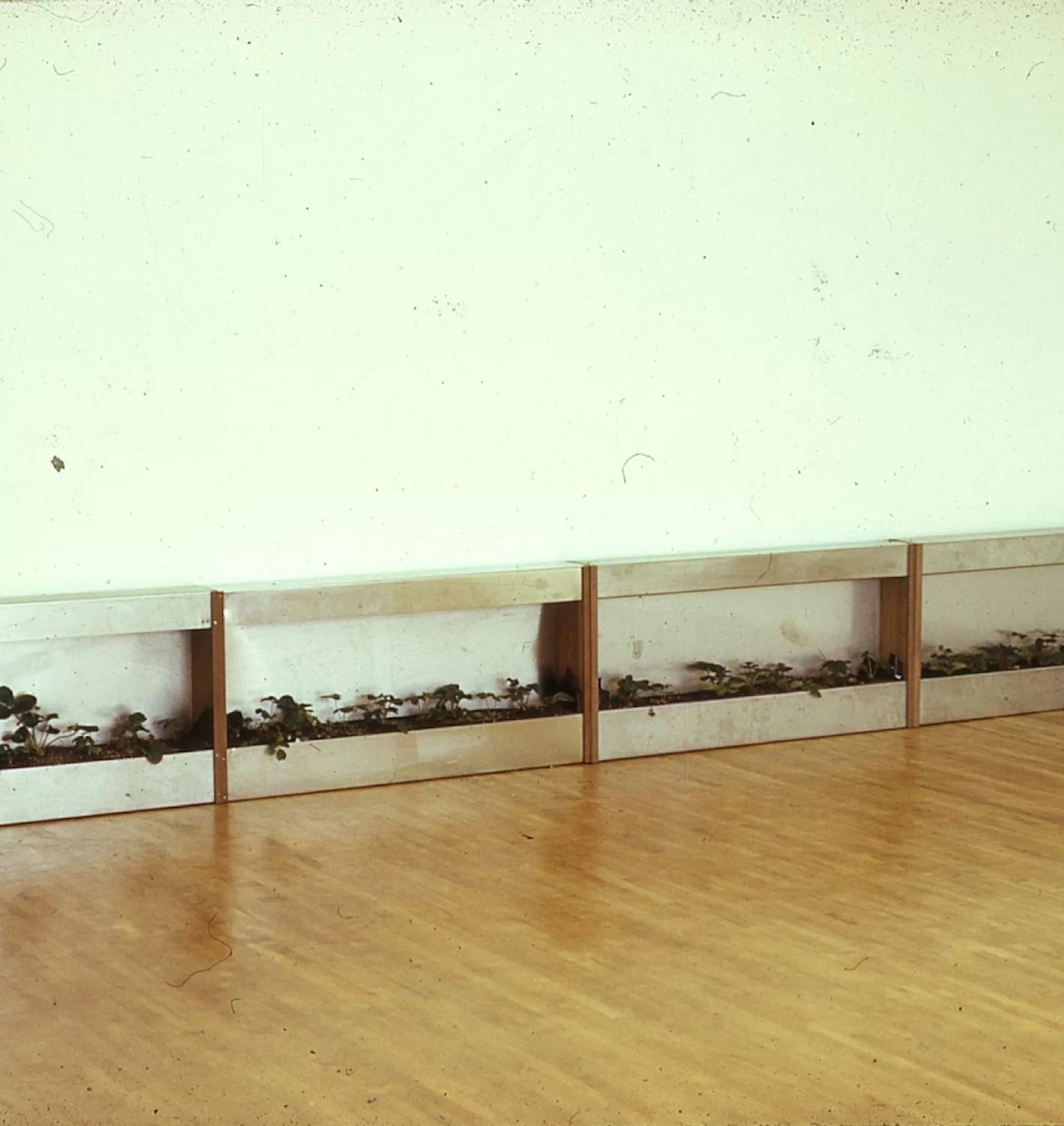
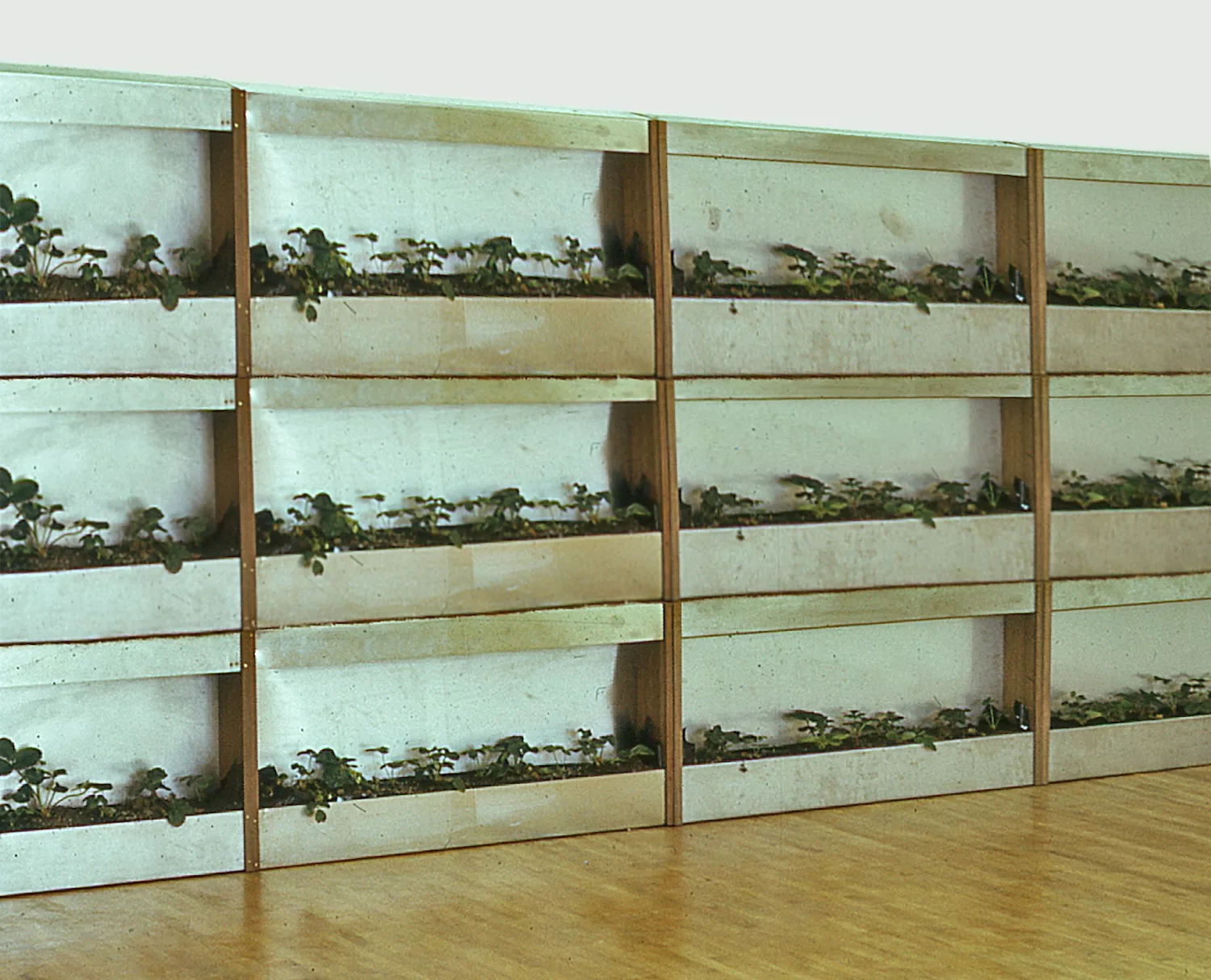
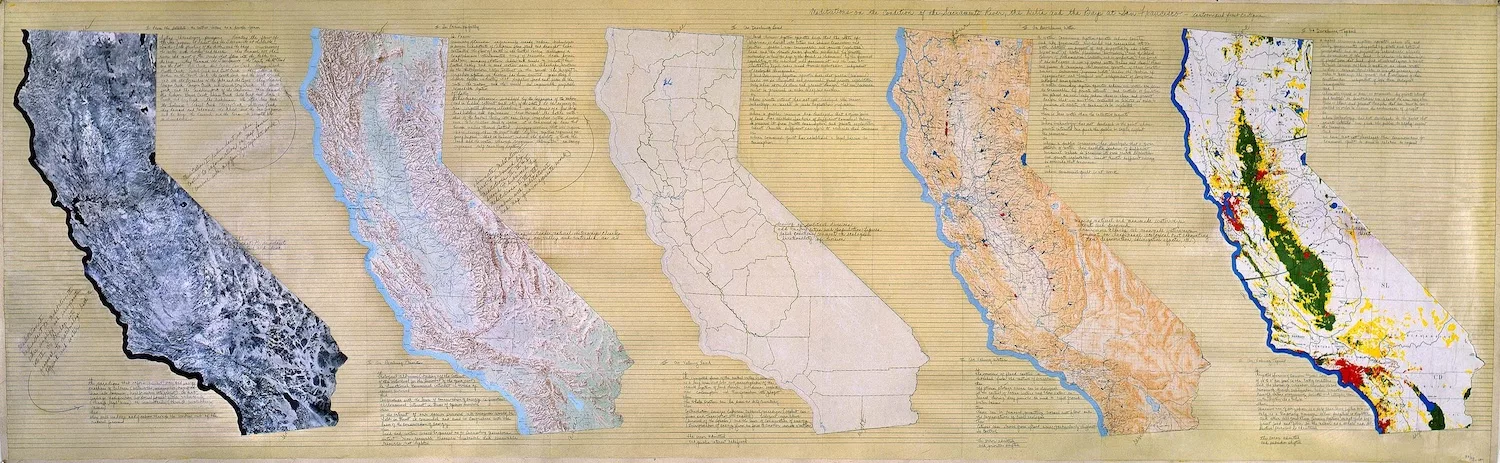
Reading biologist Rachel Carson’s Silent Spring (1962), a foundational work of American environmentalism, convinced H. Mayer Harrison to resign from her teaching position and devote herself fully to the cause alongside her husband; over time, their continued collaborations rendered their work inseparable. N. Harrison was then in the midst of developing a project involving portable indoor farms, which they completed together (Survival Pieces, 1971–1974). Rather than pursuing political activism, H. Mayer Harrison set out to develop an exceptional, interconnected global vision. At a time when the idea of nature as something to protect still dominated discourse, she understood the fundamental necessity of practising “ecology without nature” long before the concept was articulated by British philosopher Timothy Morton (2007). The Harrisons methodically correlated the study of ecosystems with the effects of capitalism – from agribusiness to soil artificialisation – drawing upon their in-depth knowledge of scientific principles, governance structures and historical contexts.
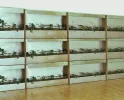
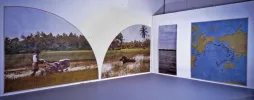
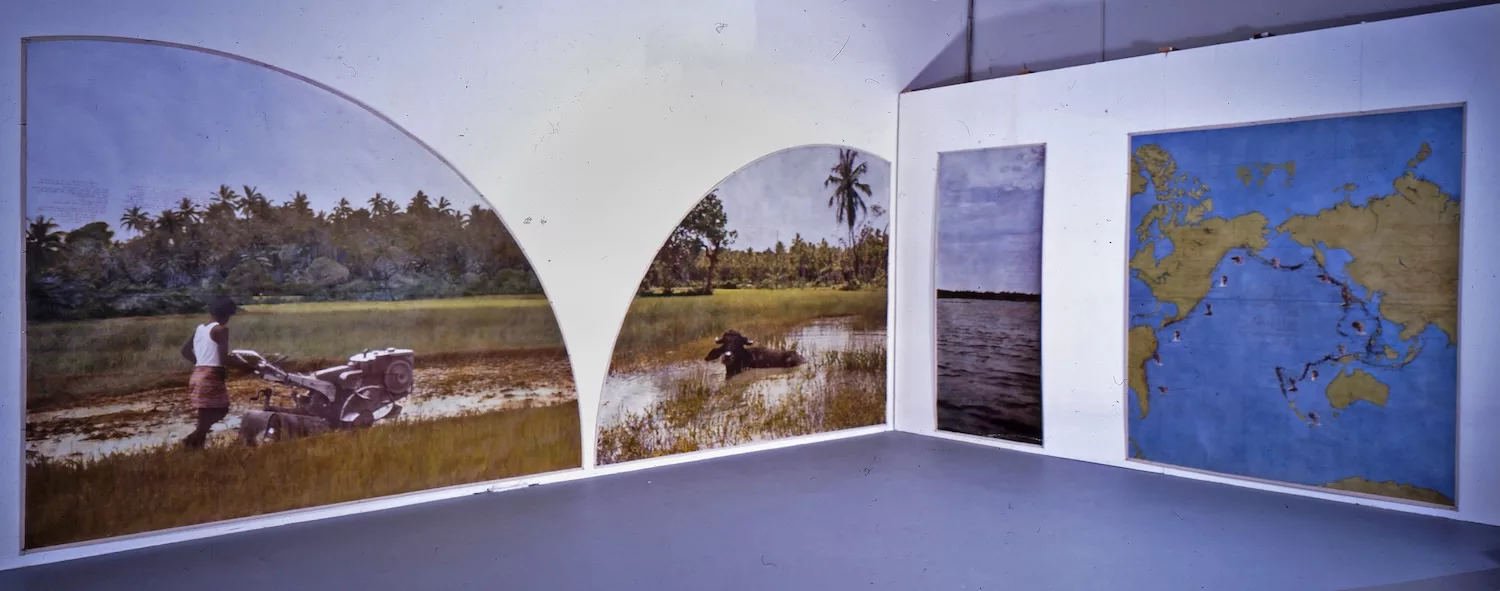
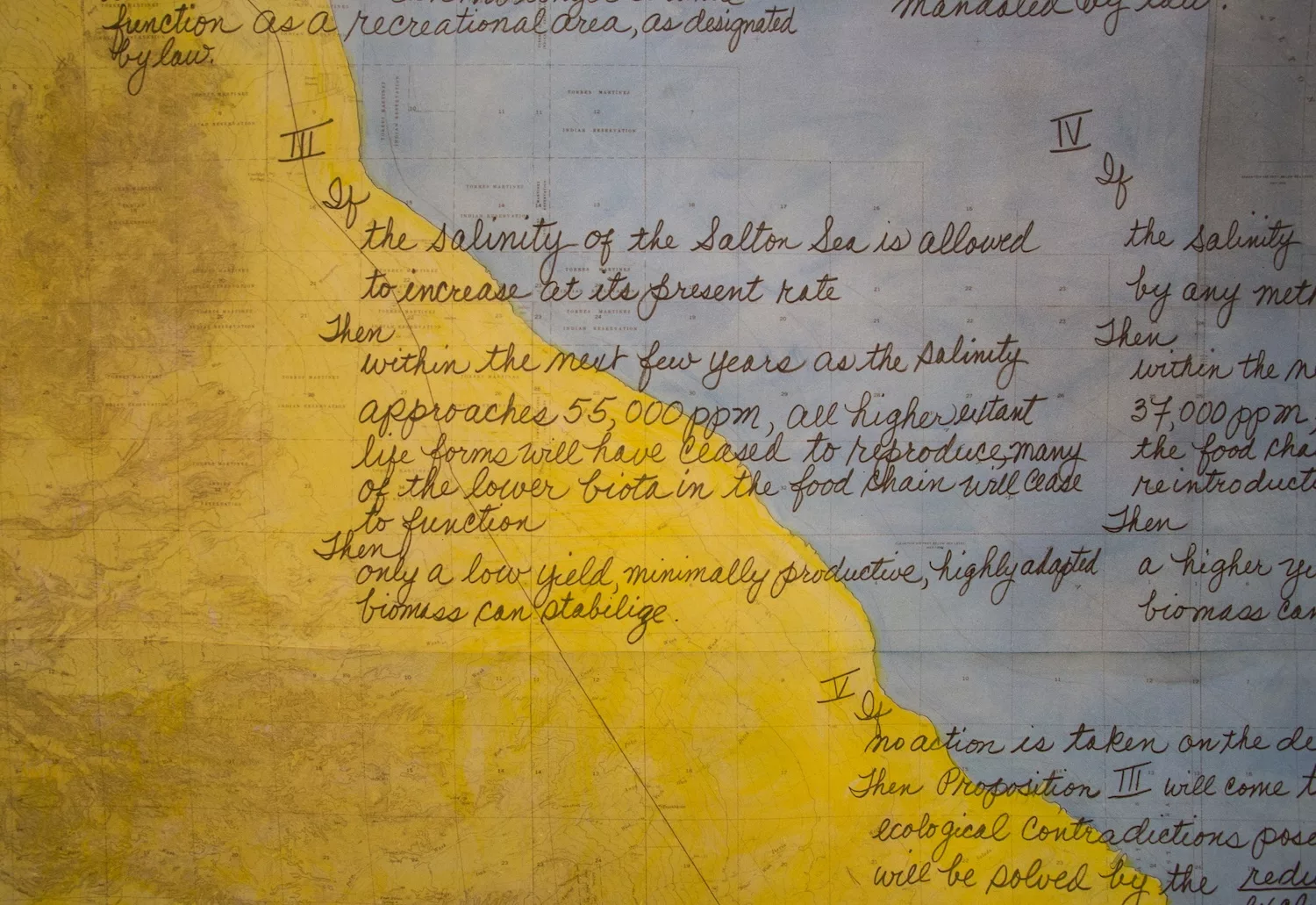
With their first major work, The Lagoon Cycle (1974–1984), a mural as spectacular in size (over forty-nine metres long, formed of sixty parts) as in its combined data, the two artists established their own unique working process. Assuming the role of the “witness”, H. Mayer Harrison entered into dialogue with the “lagoon maker” (N. Harrison), writing seven chapters through which, in a looping script that viewers can read in the installation, the story of the Scylla serrata, a Sri Lankan crab, unfolds. This ecosystemic analysis of the mangroves is illustrated with photographic collages and handwritten texts (H. Mayer Harrison’s contribution), as well as maps and drawings. It presents both the technical methods of mud crab aquaculture and a critique of the underlying geopolitical and postcolonial strategies. Last shown in Paris in the 1996 exhibition “Villette-Amazone” before entering Musée National d’Art Moderne – Centre Pompidou’s collections, this “Sistine Chapel” of ecological art is considered the epitome of the Harrisons’ collaboration.
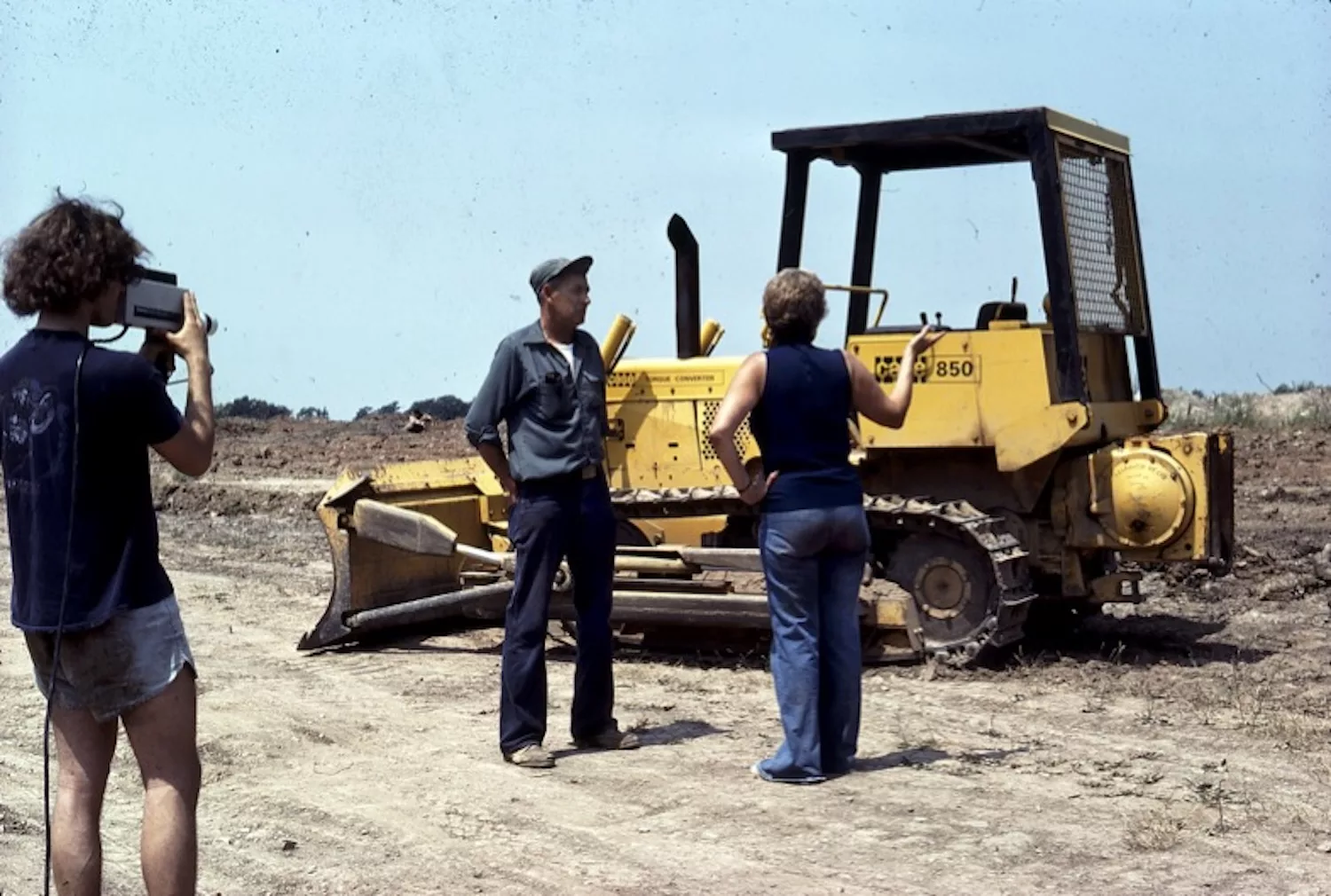
Since then, large-scale projects around the world have combined land management, installations, publications and performances, culminating in the creation of the Center for the Study of the Force Majeure in San Diego in 2009. H. Mayer Harrison often read aloud in public, an activity that demonstrated her academic interest in oral traditions and embodied the couple’s concern for caring for ecosystems and their communities. The artist died in 2018 from complications related to Alzheimer’s disease.
Lagoon Cycle was (re)shown in its entirety in 2024 as a part of a major retrospective included in the Getty Foundation’s PST ART: Art & Science Collide initiative.