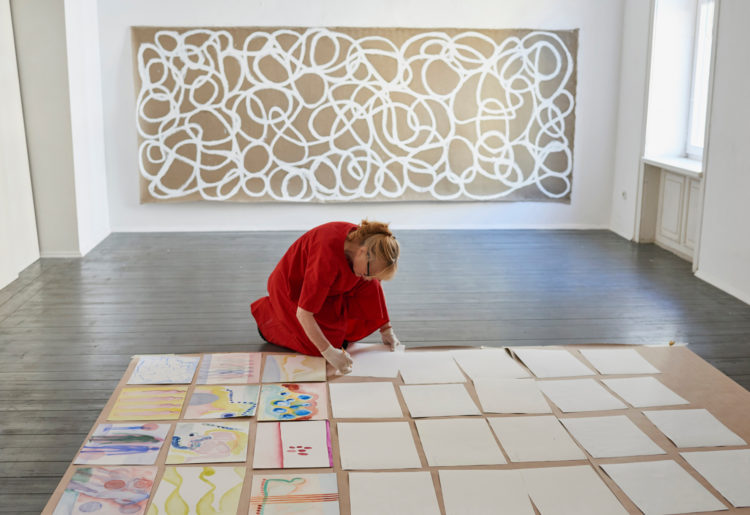
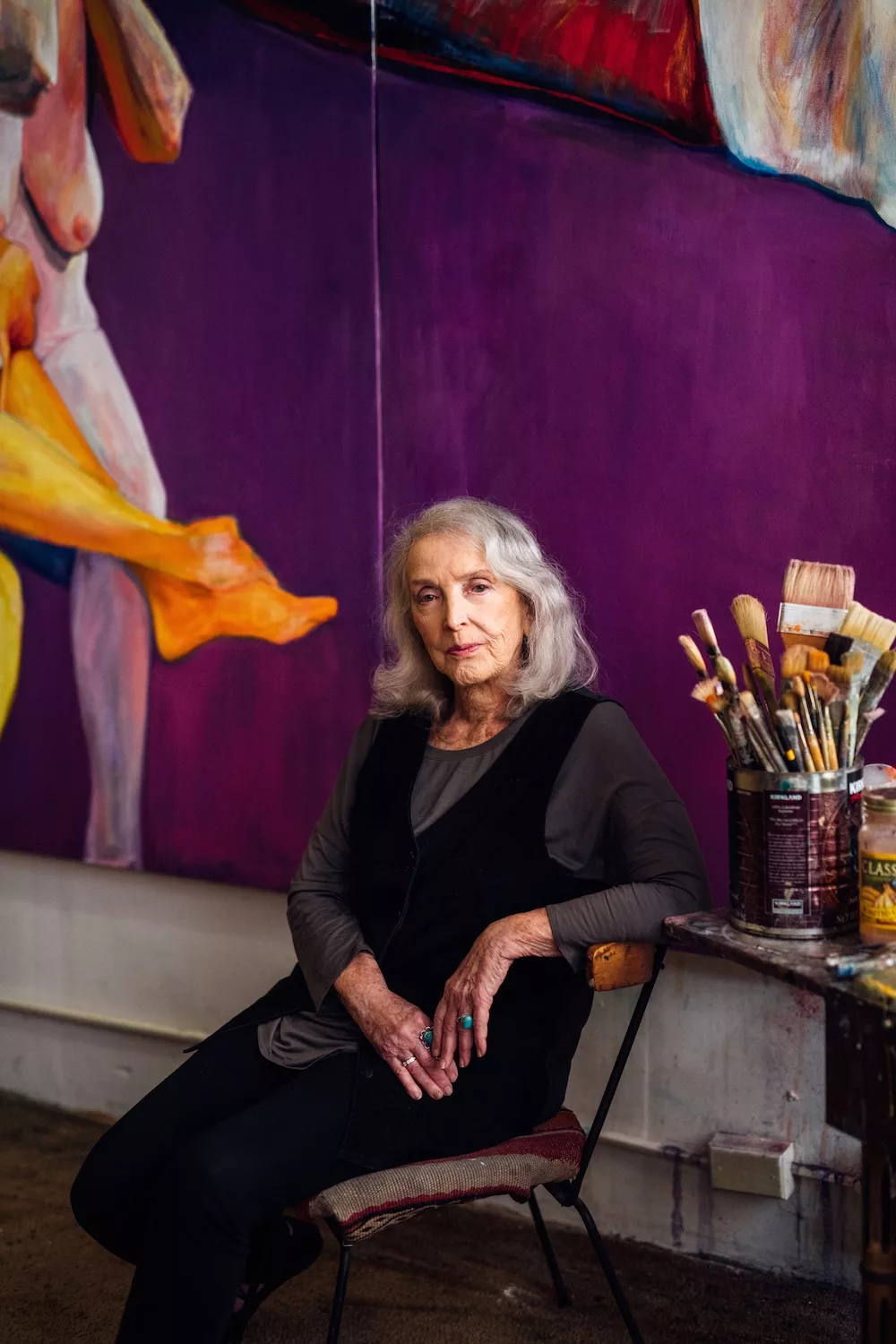
Joan Semmel, 2019, © Photo: Taylor Miller
Emily Watlington, “Painting Pleasure: In Her Prismatic Portraits, Joan Semmel Builds Feminist Worlds,” Art in America (Spring 2024), p. 62-69
→Rachel Middleman, “Aging and Feminist Art: Joan Semmel’s Visible Bodies,” in Women, Aging, and Art: A Crosscultural Anthology, eds. Frima Fox Hofrichter and Midori Yoshimoto (New York: Bloomsbury, 2021), p. 167-181
→Richard Meyer, “Not Me: Joan Semmel’s Body of Painting” in Solitaire: Lee Lozano, Sylvia Plimack Mangold, Joan Semmel, ed. Helen Molesworth, Wexner Center for the Arts, Ohio State University, Columbus, OH, February 2 – April 13, 2008 (Columbus: Wexner Center for the Arts, 2008), p.109-129
Joan Semmel: Skin in the Game, Pennsylvania Academy of Fine Arts, Philadelphia, PA, October 28, 2021-April 3, 2022
→Joan Semmel—A Lucid Eye, Bronx Museum of the Arts, Bronx, NY, January 27-June 16, 2013
→The Mannequin Series: Recent Work by Joan Semmel, Jersey City Museum, Jersey City, NJ, April 5 – June 3, 2000
American painter.
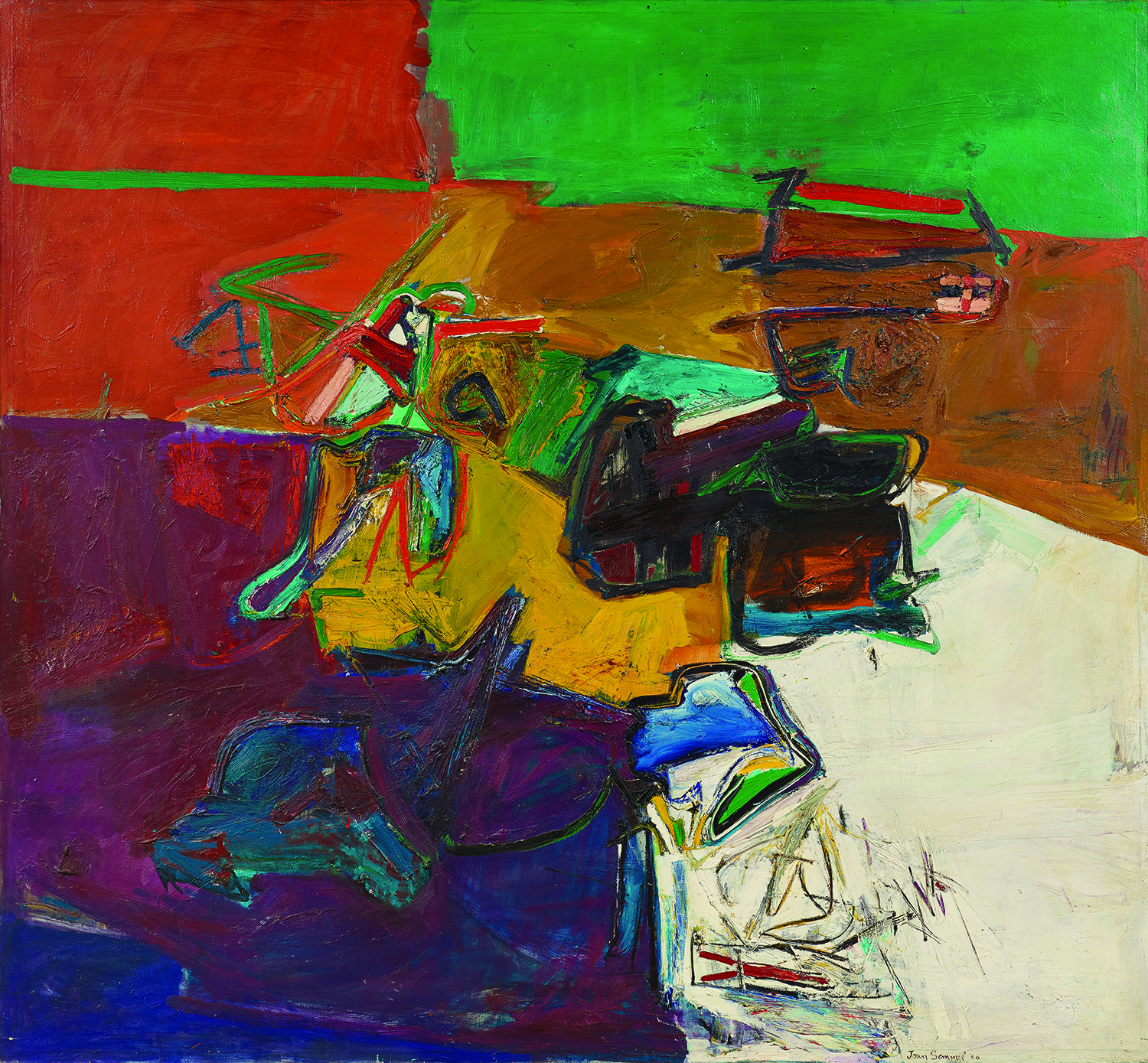
Joan Semmel, one of the foremost contemporary painters of the figure in the United States, has revamped the genre of the nude using her own image. Her painting practice is distinguished by its brilliant colours, dynamic compositions and painterly expression that defies polarities of abstraction and realism. J. Semmel was born and educated in New York, graduating from Cooper Union in 1952 and earning her BFA and MFA from Pratt Institute in 1963 and 1972 respectively. She moved to Spain in 1963, where she enjoyed recognition for her abstract expressionist paintings in solo exhibitions at galleries in Madrid and museums in South America. Her experiences living in Spain under fascism were formative, priming her see her own culture through a political lens when she returned to the USA in 1970, divorced her husband and moved with her two children into a loft in Soho.
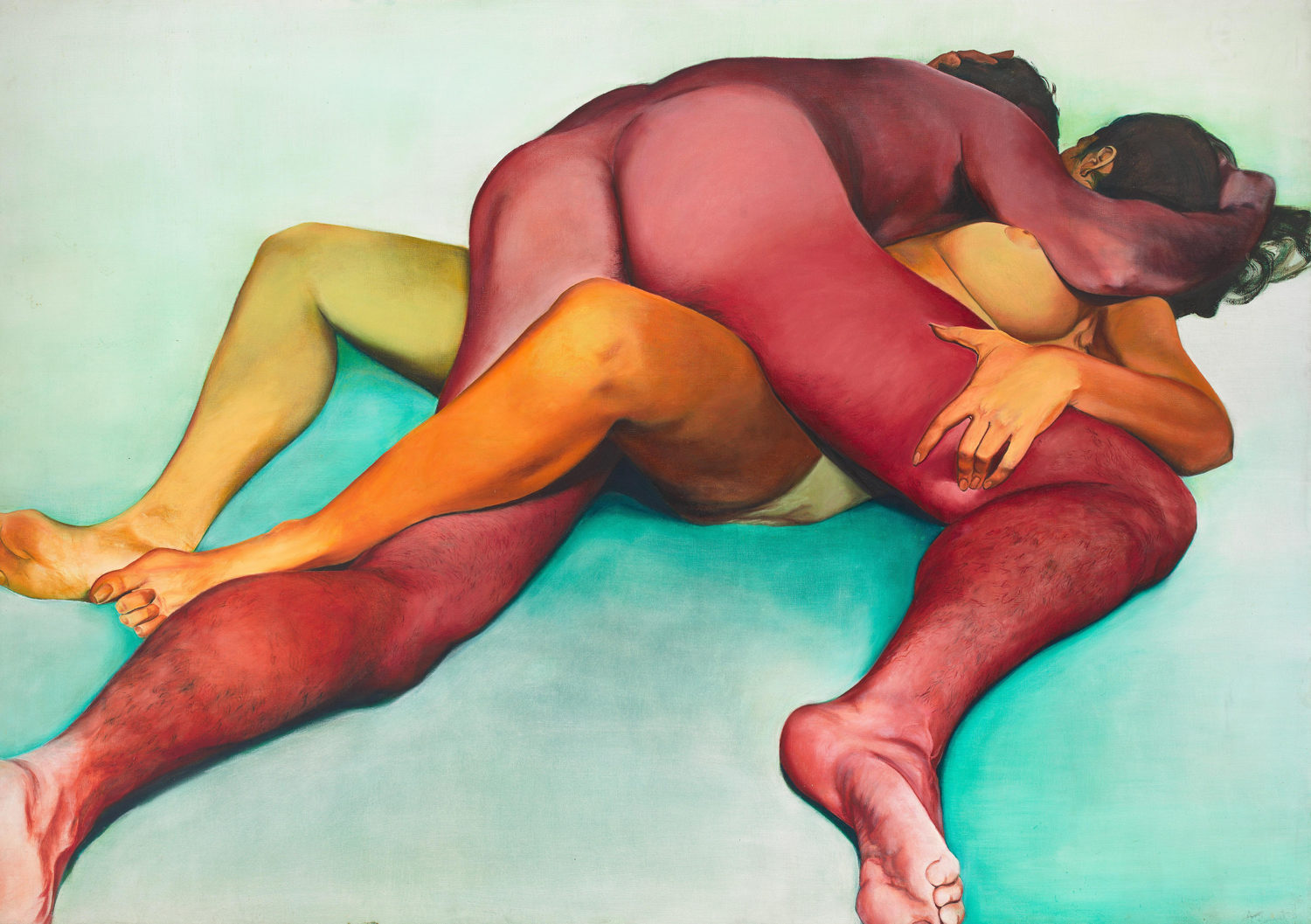
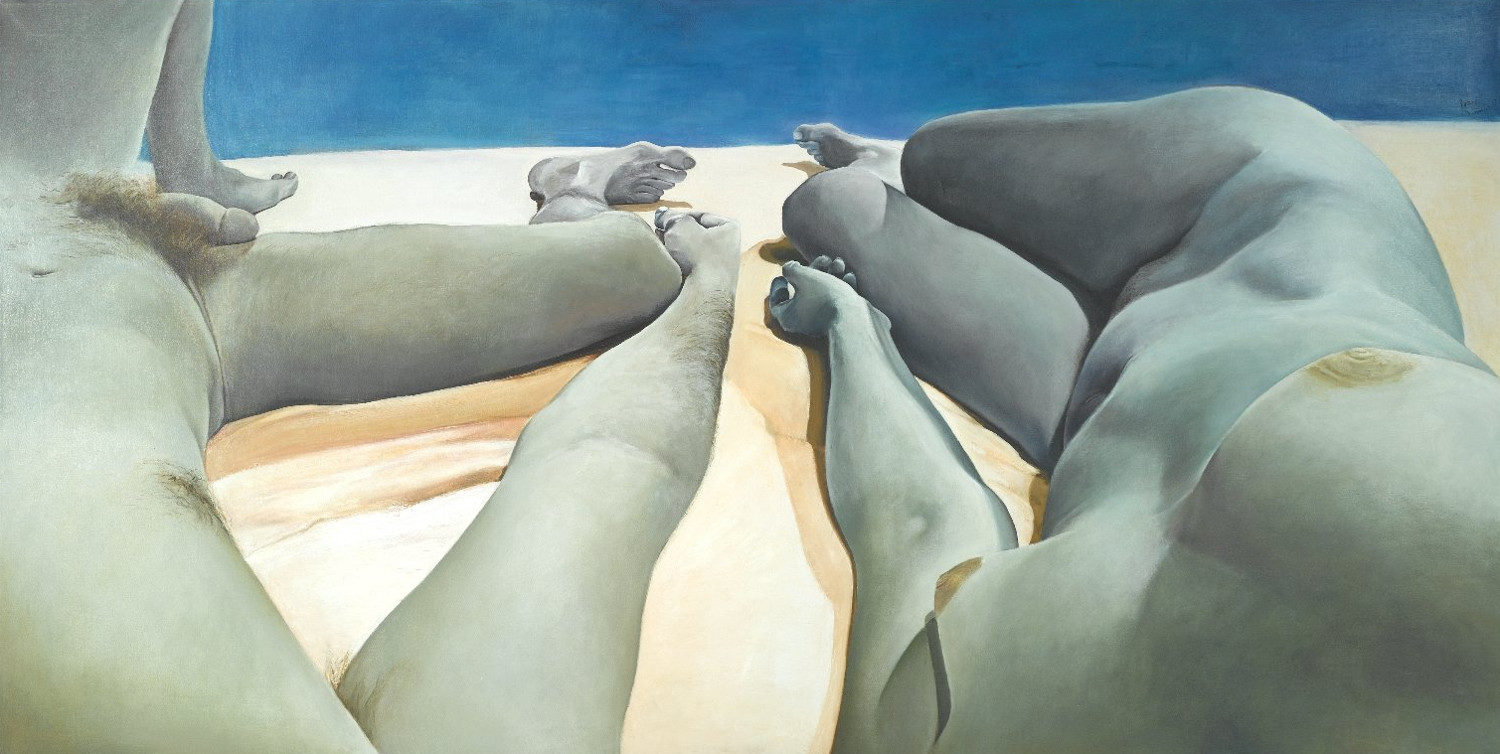
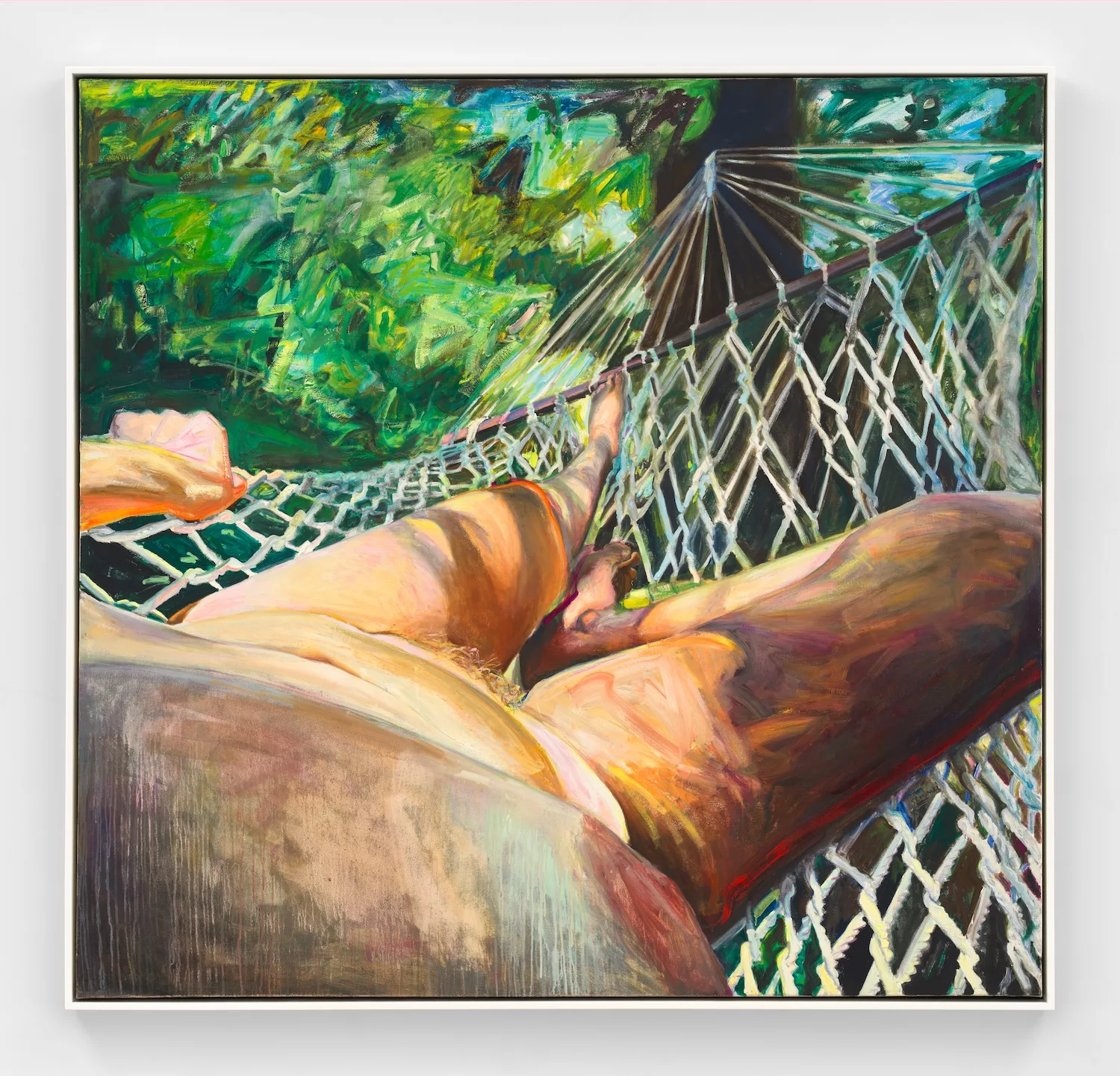
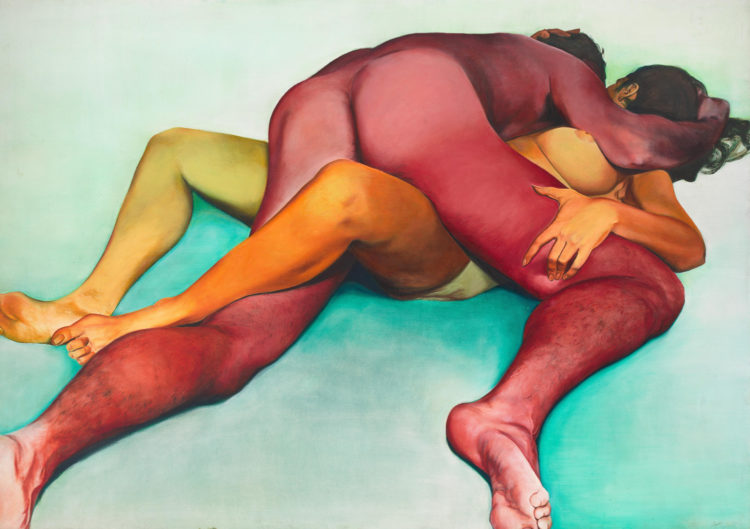
In her Sex Paintings (1971) and Erotic series (1972–73), J. Semmel turned to realism to express her feminist politics, reclaiming the nude figure from a history of idealisation and objectification in art and pornography. Considered too risky for a gallery to exhibit, J. Semmel mounted her own exhibition of the work in 1973. She then began using photographs of herself as source material in her Self-image (1974–79) paintings, such as Me Without Mirrors (1974), which depicts the body as if looking down from the model’s perspective. Featured in many solo and group exhibitions, her work became a focal point in the discourse about contemporary realism and the figure. A major painting of the decade, the triptych Mythologies and Me (1976), symbolically situates a self-image painting between parodies of Playboy and Willem de Kooning. A key figure in the American feminist art movement, J. Semmel advocated for women’s visibility and equality and worked with the Ad Hoc Women’s Committee, Women in the Arts, and Fight Censorship. She was the first woman hired as tenure-track faculty in art at Douglas College (now Rutgers University) in 1978. In 1987 she bought a house in East Hampton where she established a summer studio. She was recognised with a mid-career survey exhibition, Through the Object’s Eye (1992), organised by SUNY Albany.
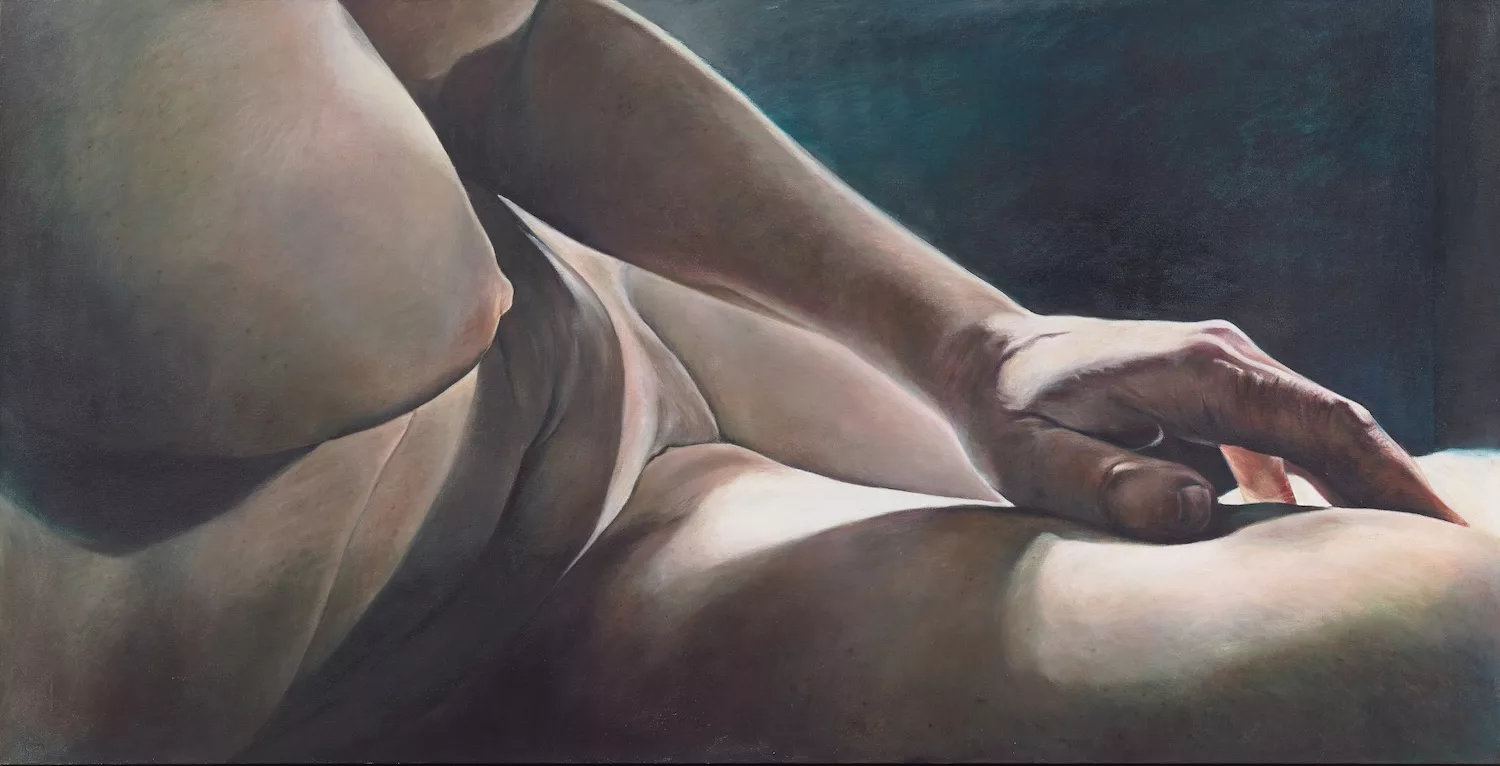
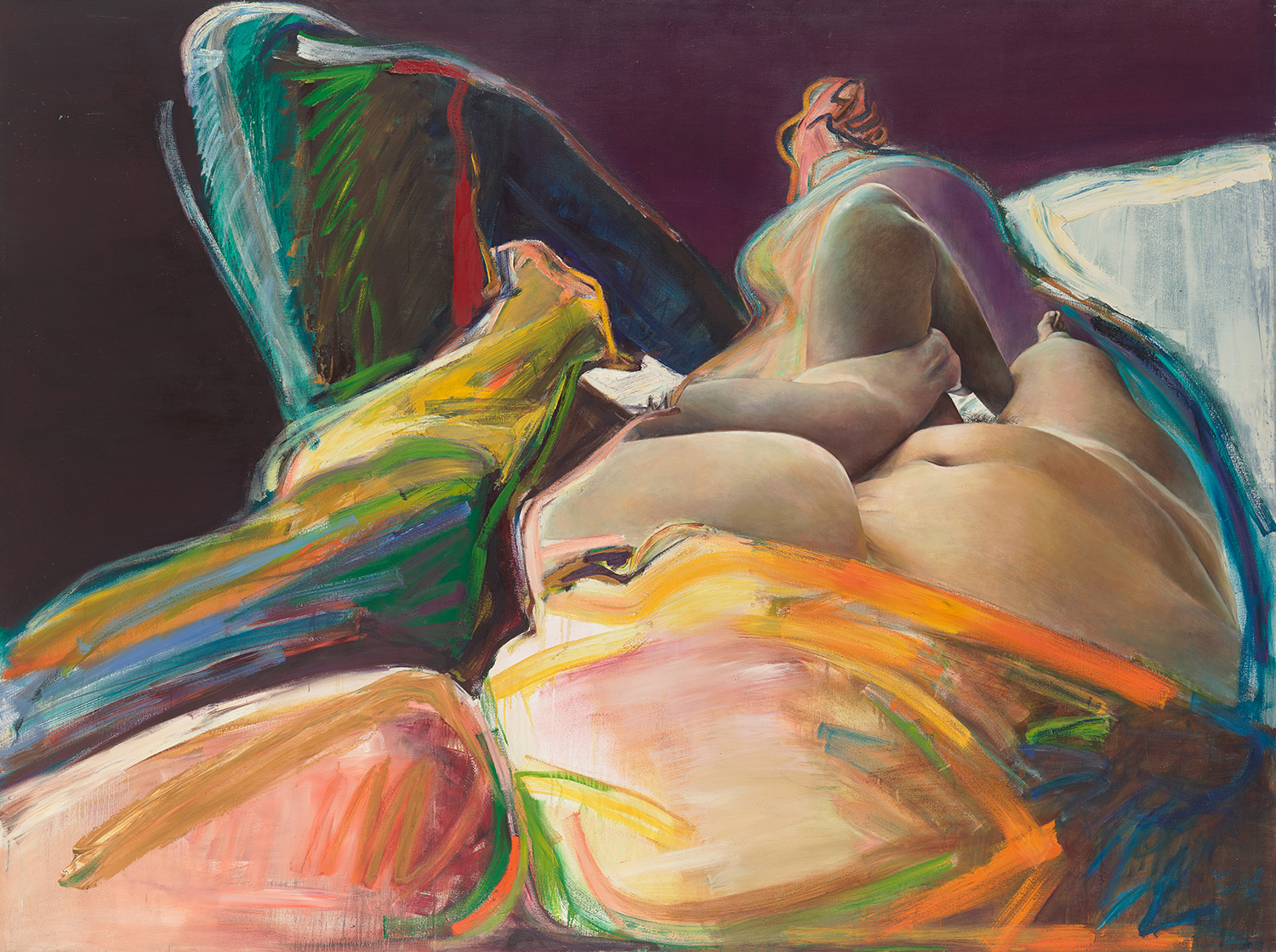
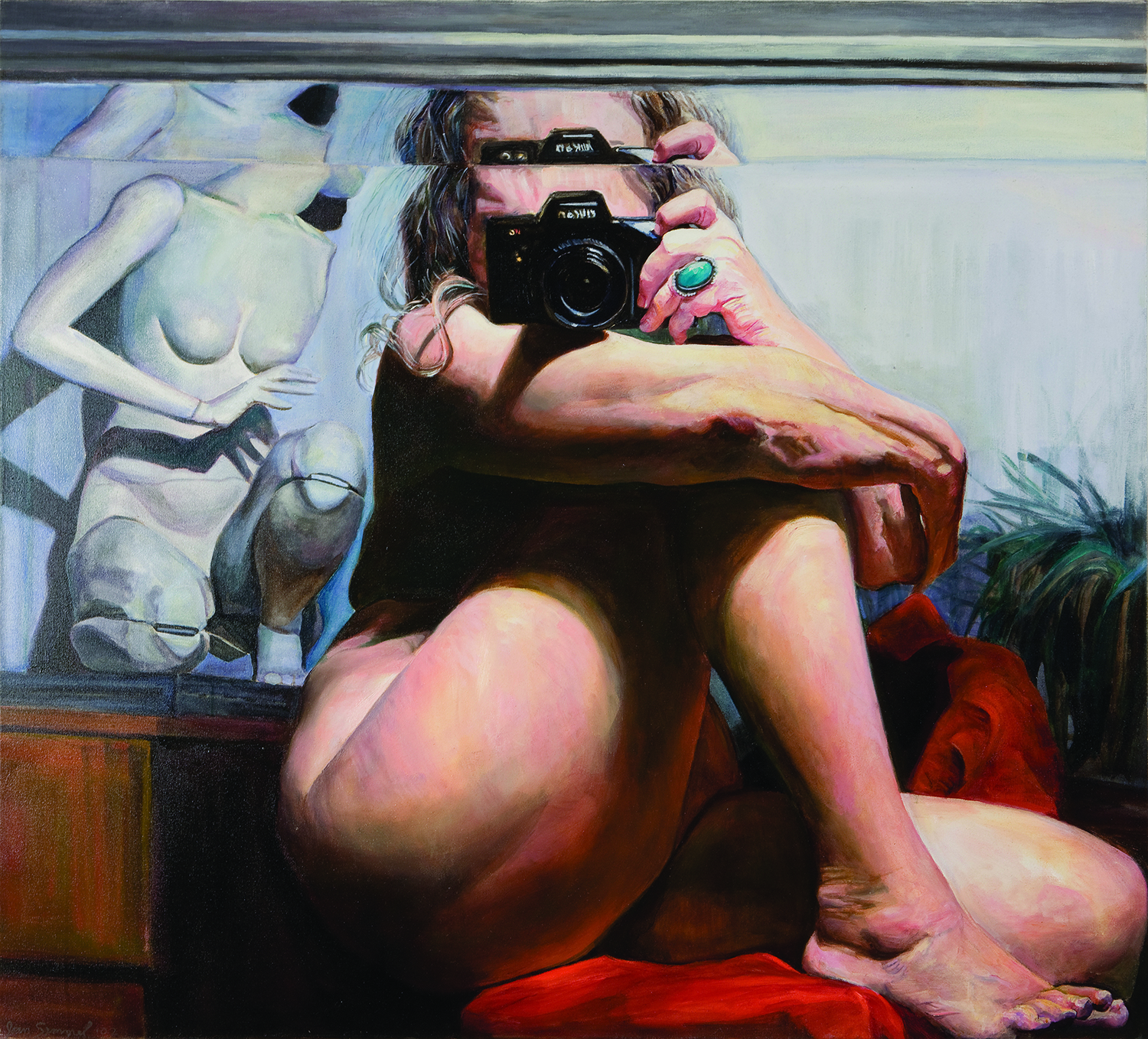
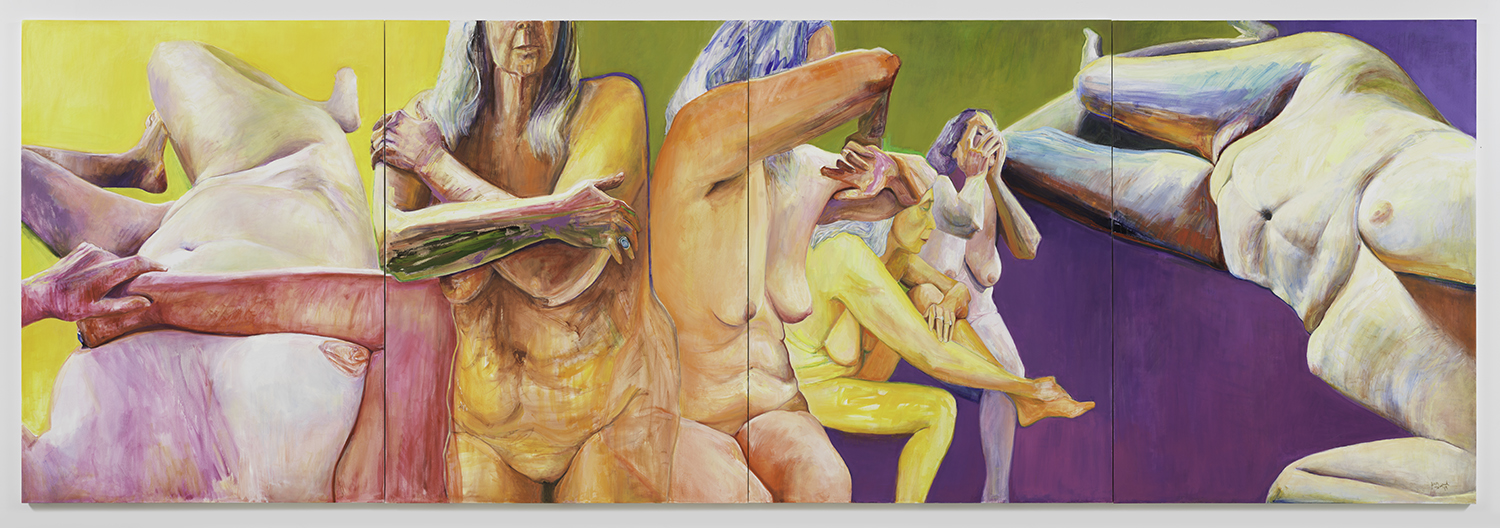
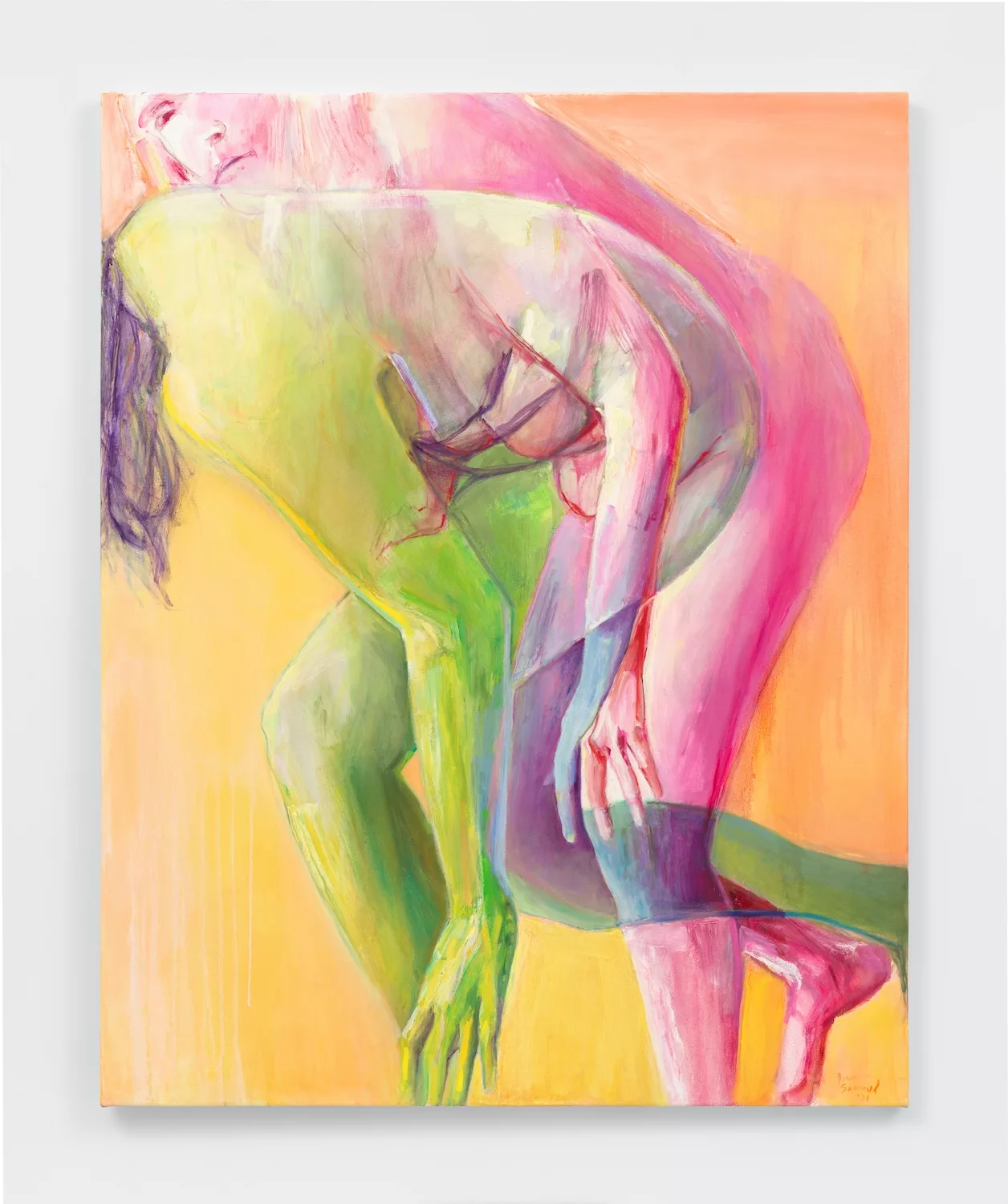
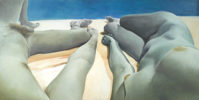
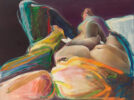
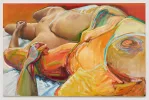
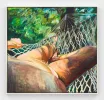
J. Semmel’s Locker-Room series (1988–91) brought the theme of aging to the forefront of her work, using source photographs taken at the gym that captured women in mirror reflections. She continued to confront social perceptions of aging and beauty in her With Camera series (2001–06). In Recline (2005), for example, the artist holds a camera pointing directly back at the viewer, registering their gaze. Her later work represents aging as an embodied yet potentially alienating experience. She transitioned from a naturalistic palette to return to bold, vibrant colours in works like Pink Lean (2019) and Morphing (2022). These large-scale paintings vividly display the taboo subject of older bodies, expressively and sensually painted in the flesh.
Numerous museum exhibitions in the USA and Europe have featured J. Semmel’s work, including the ground-breaking retrospective WACK!: Art and the Feminist Revolution (2007). In 2022, the Pennsylvania Academy of the Fine Arts organised the major retrospective Joan Semmel: Skin in the Game, and, in 2025 her work appeared in Ordinary People: Photorealism and the Work of Art since 1968 at the Museum of Contemporary Art, Los Angeles, further solidifying her legacy in contemporary American painting.

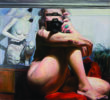
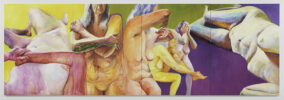
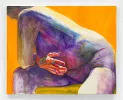


 Joan Semmel and Diana Campbell in Conversation | Xavier Hufkens, Brussels, 2024
  Virtual Tour of Joan Semmel: Skin in the Game | Pennsylvania Academy of Fine Arts (PAFA), 2022
  Artist Joan Semmel on Painting the Aging Body | Artist Interviews, Artforum, 2013