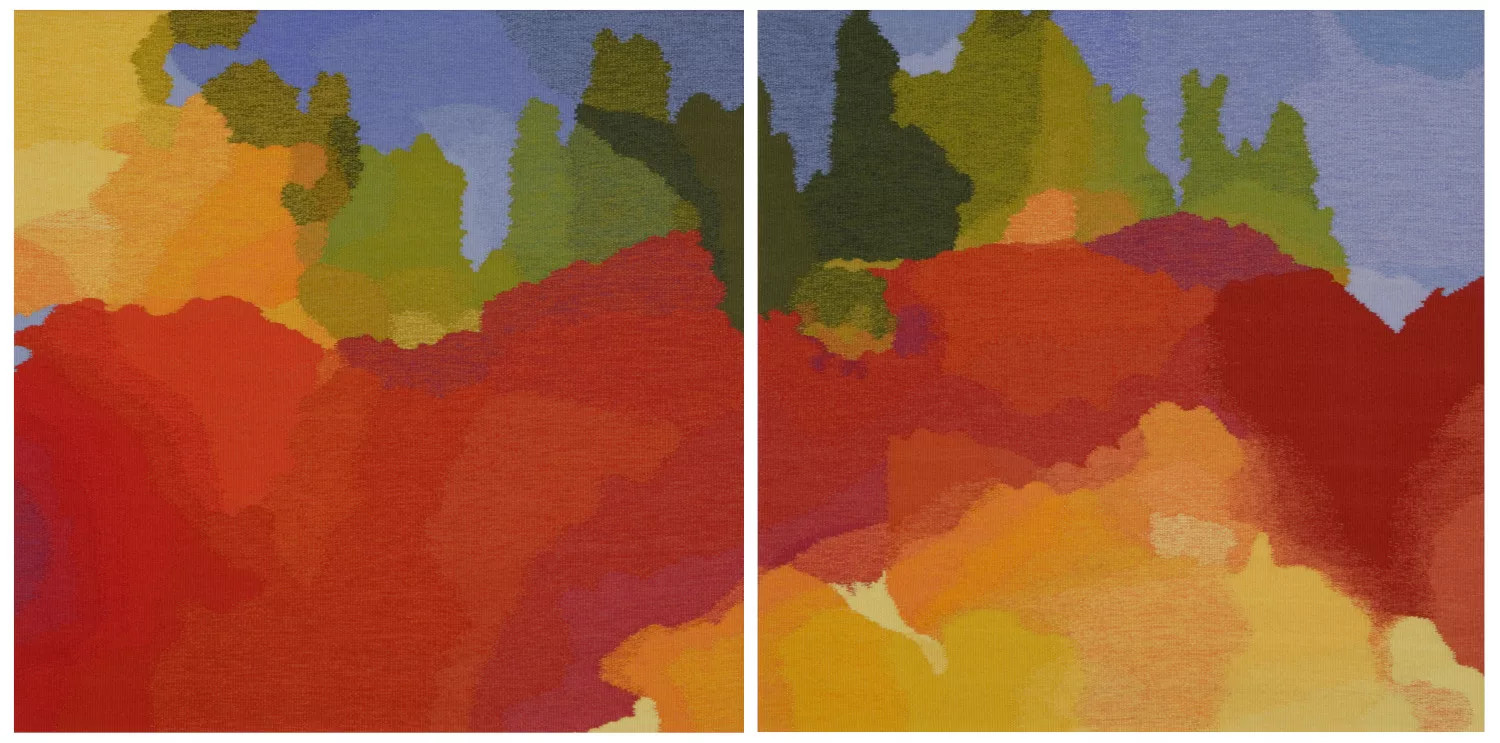
Ramona Sakiestewa, Nebula 22 & Nebula 23 (diptych), 2009, tapestry, wool warp and dyed wool weft, 34.75 x 35.125 in / 88.26 x 89.21 cm (each), Collection of Carl and Marilynn Thoma © Ramona Sakiestewa, courtesy of Eight Modern
The American Southwest has long been a source of inspiration in American art and culture. In the early to mid-twentieth century, locations like New Mexico became hubs of intellectual and artistic exploration with artists, authors, anthropologists and social reformers flocking to the area for both extended and short periods of time. Artists like Georgia O’Keeffe (1887–1986), Marsden Hartley (1877–1943), Ansel Adams (1902–1984) and others came to the area in search of artistic inspiration outside of cities, which were increasingly associated with the ills of industrialisation and conformity. These artists sought to create a supposed ‘true’ American art form that drew inspiration from not only the unique landscape of the Southwest but also the artforms of the Indigenous and Latino communities who inhabited the area.1 Despite non-Native Americans’ fascination with Indigenous’ cultures and homelands, Indigenous artists of the era were rejected by the mainstream art world and relegated mainly to the tourist art market. Nevertheless, Native Americans sustained their art practices as both a mode of economic survival and for ceremonial or utilitarian purposes. The establishment of the Institute of American Indian Arts (IAIA) in Santa Fe in 1962 produced generations of groundbreaking Indigenous artists. Since then, the city of Santa Fe has become a hub for cutting-edge Indigenous art.
This article provides a brief overview of contemporary Native American women artists whose tribal nations are based in the American Southwest, such as D.Y. Begay (1953–) (Navajo), Ramona Sakiestewa (1948–) (Hopi), Roxanne Swentzell (1962–) (Santa Clara Tewa) and Linda Lomahaftewa (1947–) (Hopi and Choctaw), amongst others. The article highlights the diversity of art practices from weaving to pottery and painting. Additionally, I examine how these artists have continually found inspiration for their work from their traditional homelands as well as the ways in which they renewed traditional Indigenous art practices.
For contextual background, the American Southwest is culturally diverse, with over a hundred federally recognised tribes in the area – including Navajo, Apache, Hopi, Pueblo and many others – with each tribal nation having their own distinct art and cultural practices. Throughout history, these cultures have not only interacted with one another but with other Indigenous peoples from other parts of the Americas, Latino and Euro-American cultures, amongst others. Because of this, the very idea of ‘traditional’ Indigenous art practices is complex. Indigenous art has always been open to adaptation and cross-cultural influences and therefore cannot be relegated to an idealised or pristine past. However, specific Indigenous communities have developed their own unique techniques and often ascribe cultural and spiritual significance to their artforms. A belief in innovative art rooted in Indigenous heritage was at the core of the founding of the IAIA in 1962. Throughout its history, it has encouraged students to create works inspired by both their Native American cultures and contemporary art movements.2 The result has been generations of groundbreaking artists as graduates and faculty members, including Fritz Scholder (1937–2005) (Enrolled member of the Luiseno Tribe), T.C. Cannon (1946–1978) (Enrolled member of the Kiowa Indian tribe of Oklahoma), Joy Harjo (b. 1951) (Muscogee), Marie Watt (b. 1967) (Seneca Nation of Indians) and countless others. As of 2025, IAIA remains the only educational institution in the world dedicated to the study of contemporary Native American and Alaskan Native art. Given the Southwest’s history and Native-led initiatives to promote contemporary Native American art, the area has become a leader in modern Indigenous art movements.
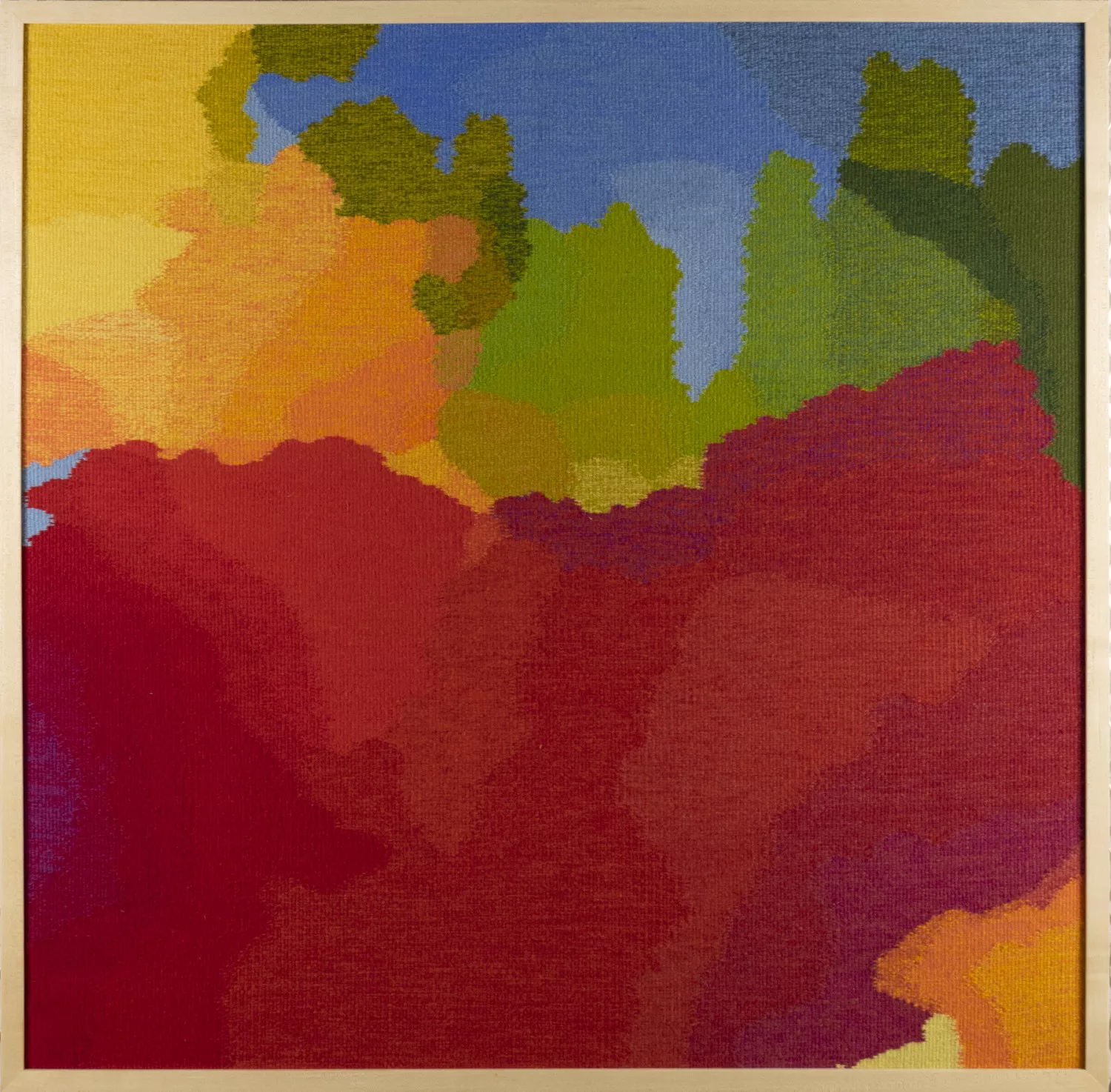
Ramona Sakiestewa, Nebula 22 (diptych), 2009, tapestry, wool warp and dyed wool weft, 34.75 x 35.125 in / 88.26 x 89.21 cm, photo: Kate Weinstein © Ramona Sakiestewa, courtesy of the Carl and Marilynn Thoma Foundation
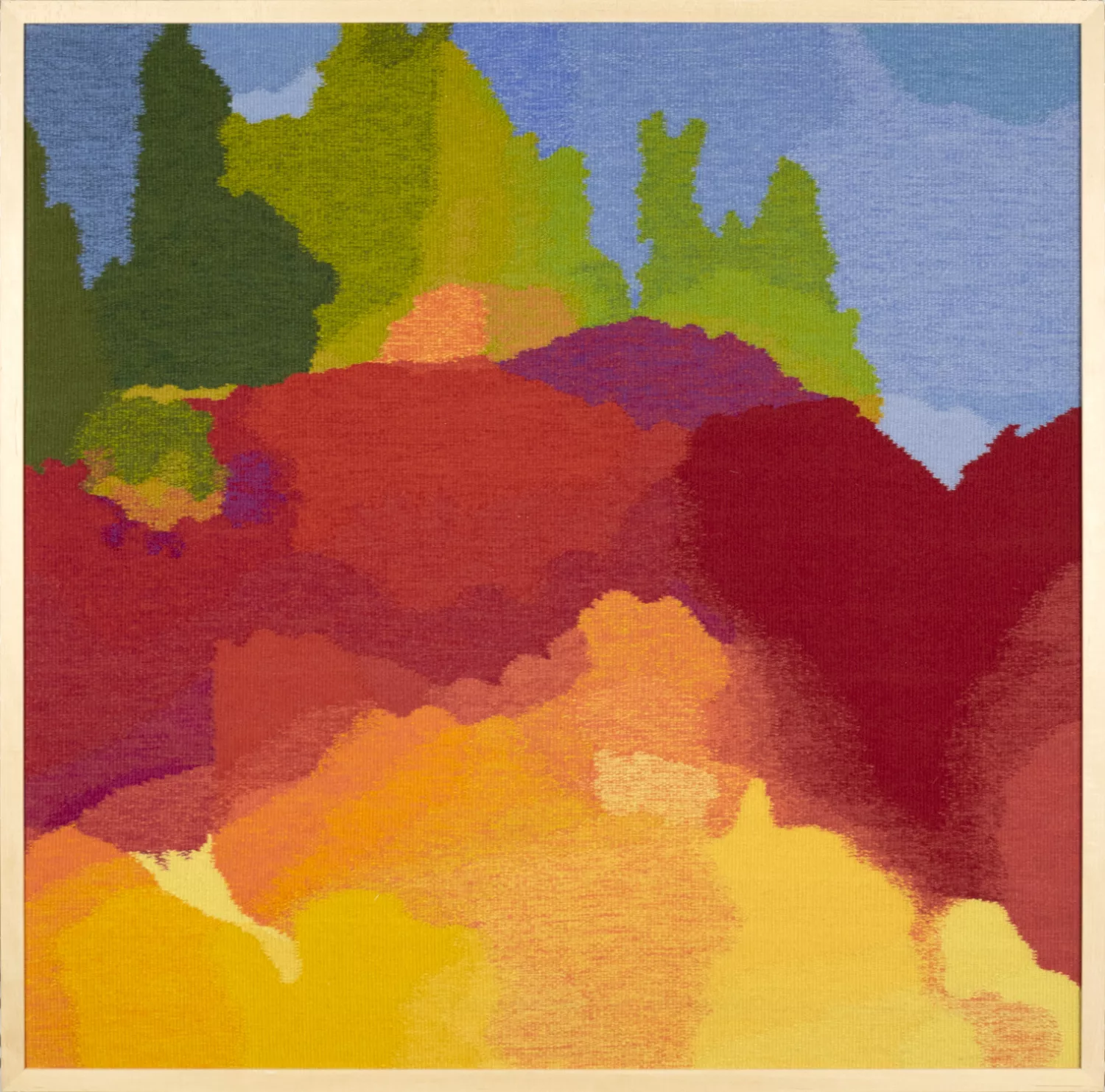
Ramona Sakiestewa, Nebula 23 (diptych), 2009, tapestry, wool warp and dyed wool weft, 34.75 x 35.125 in / 88.26 x 89.21 cm, photo: Kate Weinstein © Ramona Sakiestewa, courtesy of the Carl and Marilynn Thoma Foundation
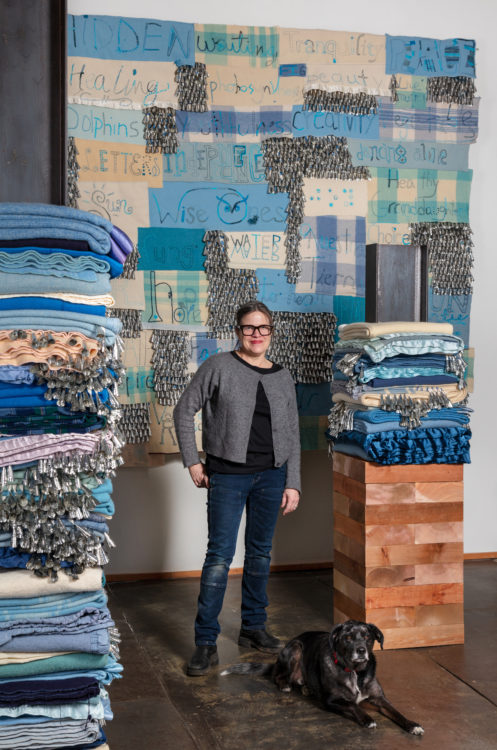
One of the leading artforms associated with the Southwest is textiles, with long histories of Pueblo, Navajo, and Spanish weaving. By the late nineteenth century, textiles had become staples in trade and the tourist market. In the latter half of the twentieth century, Indigenous weavings gained greater recognition in the mainstream art world. Artists like D.Y. Begay, an innovative Navajo weaver, come from generations of women tapestry makers. As a result, Begay is involved in every step of her weavings – from caring for and shearing sheep, to carding wool and dyeing yarn with materials gathered from the Navajo Nation. Her artworks contain yarn dyed with juniper berries, sage, various roots and cochineal – as such, her weavings contain literal parts of the land she and her people have inhabited for generations. The tapestries themselves are inspired by the landscape of her homelands, with both abstract and more figurative depictions of mesas, vistas and desert sunrises. While she uses traditional Navajo weaving techniques, she also draws inspiration from other textile artists like the Swedish artist Helena Hernmarck (1941–) and Indigenous weavers of Central and South America. Given these inspirations, her works are often more free form in their compositions than utilitarian Navajo rugs of the past.3 Other artists innovating traditional textile art include Ramona Sakiestewa who uses traditional Pueblo techniques to capture abstract scenes related to ceremonial practices and the landscape of the Southwest. One of her most well-known artworks, Nebula 22 & 23 (diptych) (2009) honours the cosmos and serves as an ode to Hopi creation stories. Her colour palettes burst with bright colours and layered textures, signalling inspiration from modernist abstract expressionists like Mark Rothko (1903–1970).4
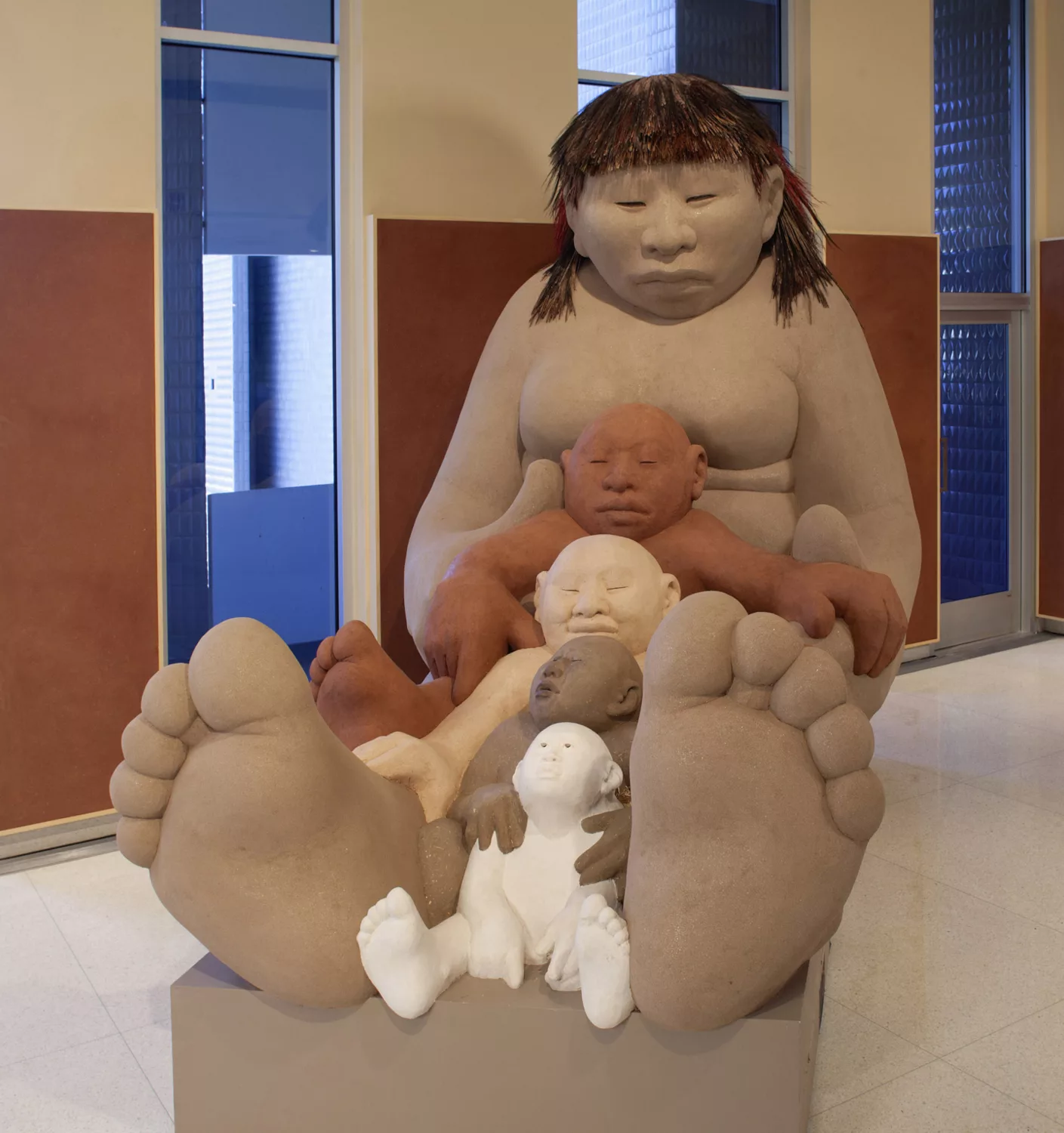
Roxanne Swentzell, Mud Woman Rolls On, 2011, unfired and fired clay, and plant fiber, dimensions unknown, Collection of the Denver Art Museum © Courtesy Roxanne Swentzell
Those of Pueblo descent, such as Roxanne Swentzell, have utilised and adapted traditional forms of Pueblo pottery. Throughout her fifty-year career, she has crafted both small- and large-scale figurative ceramics and sculptures inspired by autobiographical experiences. Her work often examines gender roles, family and cultural identity. All her works are inspired by her Santa Clara Tewa identity and often incorporate references to Pueblo philosophies. She draws on traditional Pueblo methods of coiling clay and occasionally hand collects clay from her homelands, emphasising her people’s connection to the earth. Coming from an estimated seventy generations of Pueblo potters and ceramists, her art practice is deeply connected to her community and the land they have lived on for time immemorial.5 Works like Mud Woman Rolls On (2011), an eleven-foot permanent sculpture at the Denver Art Museum, honour both the concept of earth as a mother and matrilineal generational knowledge. She also passed on the artistic tradition to her daughter, Rose B. Simpson (1983–), who herself is a renowned ceramist and sculptor.
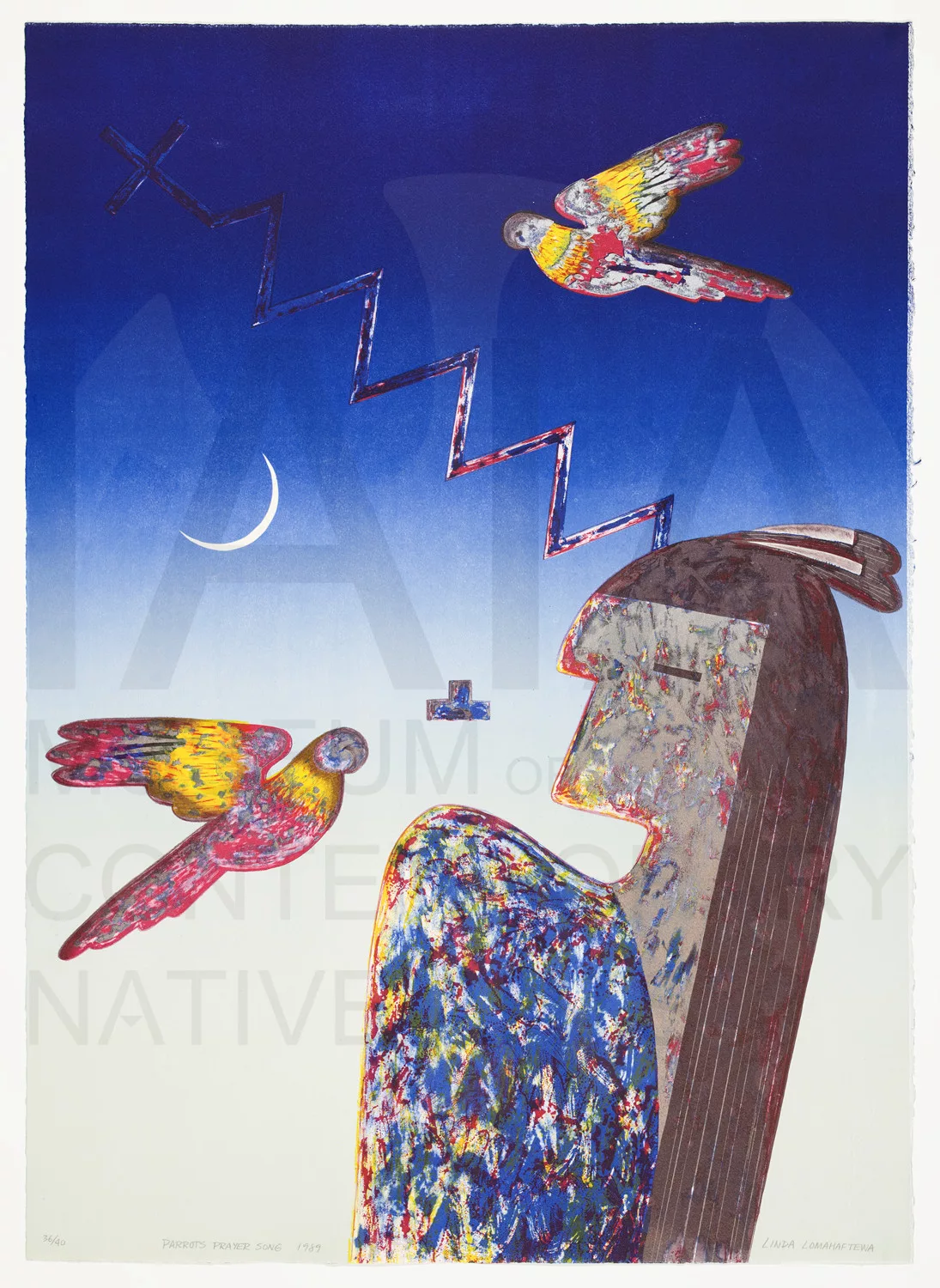
Linda Lomahaftewa, Parrots Prayer Song, 1989, color offset lithograph on wove paper, 30 x 22 in / 76.2 x 55.88 cm, Gift of the Brandwine Workshop, Philadelphia, Pennsylvania, 2013, courtesy of the Institute of American Indian Arts Museum of Contemporary Arts, Santa Fe, NM: H-412, photo: Jason S. Ordaz © Linda Lomahaftewa
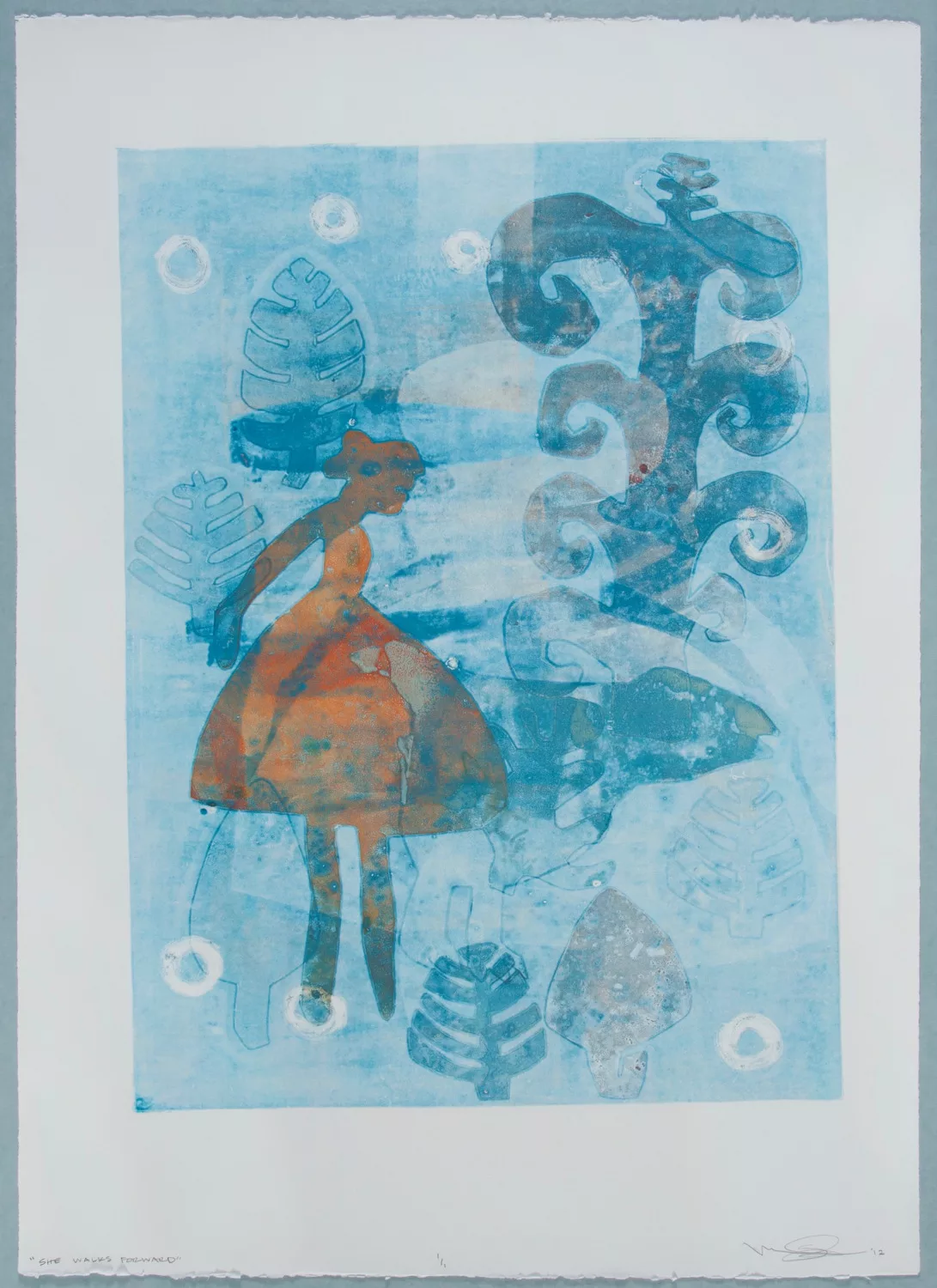
Melanie Yazzie, She Walks Forward, 2012, monotype, 42 x 30 in / 106.68 x 76.2 cm © Glenn Green Galleries
Indigenous women artists like D.Y. Begay, R. Sakiestewa, and R. Swentzell have both preserved and revolutionised weaving and ceramics, which are both Indigenous artforms that have long been associated with the Southwest. Other Native American artists have also turned to painting, printing and photography to express their cultures and connections to the land. Linda Lomahaftewa, a Hopi and Choctaw multi-media artist and influential educator, has combined modernist abstractionist forms to reference Hopi and Choctaw ceremonies, creation stories and landscapes. Throughout her over sixty-year career, she has experimented with colour field oil paintings, surrealist compositions, and lithograph and monograph print making. As a lifelong resident of the Southwest, her work is rooted in her homelands of Sungopovi at the Hopi Second Mesa in northern Arizona. She often incorporates significant Hopi ceremonial symbols like parrots, corn and petroglyphs into her works. Another influential printmaker, Melanie Yazzie (1966) (Navajo) also utilises abstract depictions of animals, plants, cultural symbols and female forms to explore her Navajo heritage, family and personal history. Her work embodies the Navajo saying to ‘walk in beauty’, which is rooted in the human aspiration to seek out and create both beauty and harmony in the world.6
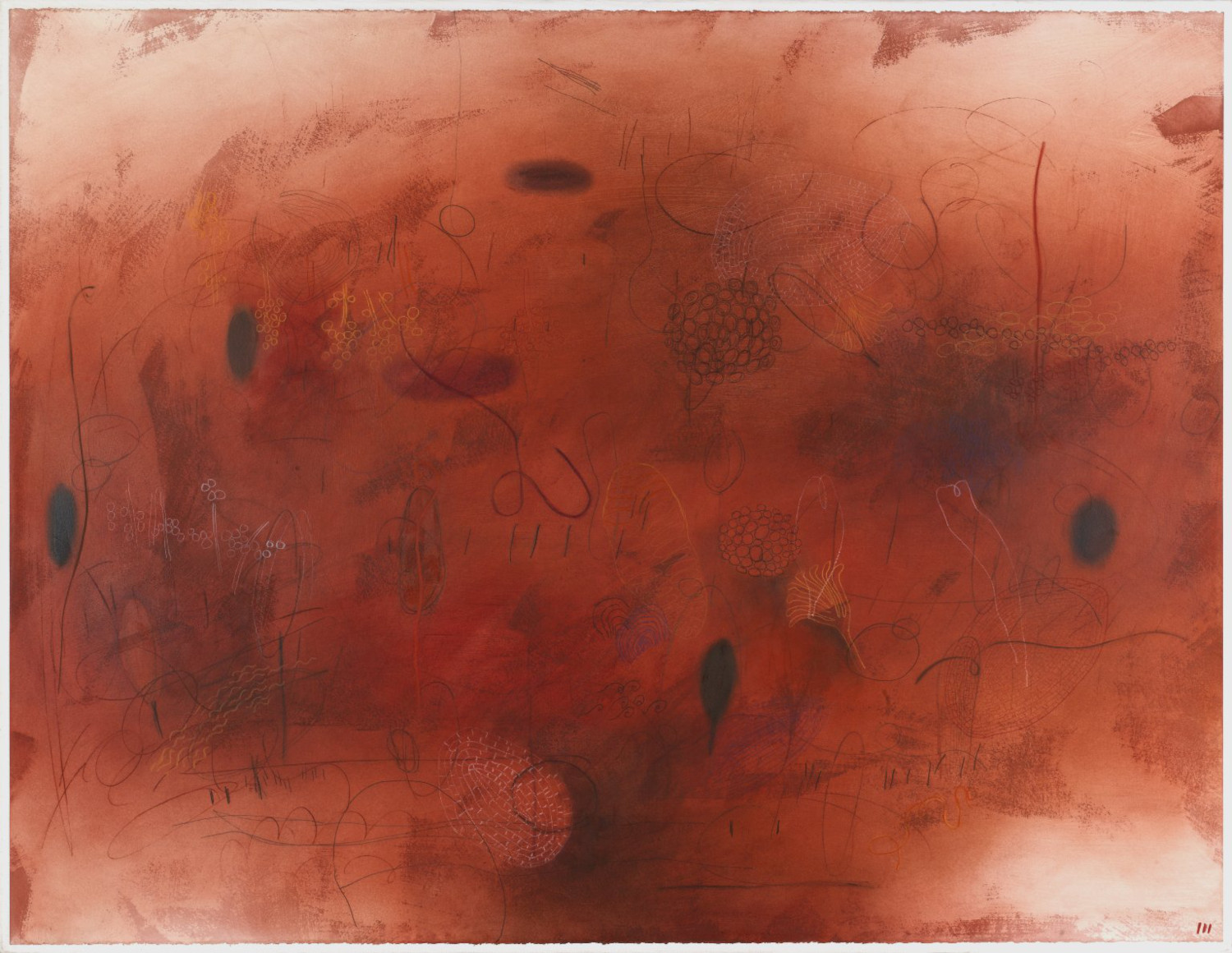
Emmi Whitehorse, Fire Weed, 1998, chalk, graphite, pastel and oil on paper mounted on canvas, 38 1/2 x 50 in / 97.8 x 127 cm, Brooklyn Museum, New York, gift of Hinrich Peiper and Dorothee Peiper-Riegraf in honor of Emmi Whitehorse © Emmi Whitehorse’s estate
One of the leading contemporary painters of the Southwest is Emmi Whitehorse, whose family has been rooted in eastern Arizona for centuries. Over the course of her over forty-year-plus career, she has crafted abstract and meditative mixed-media landscape paintings. Drawing inspiration from the lands of the Navajo Nation, her landscapes are filled with abstraction, blooms of colour and pastel or graphite line drawings. Her compositions pick up on the minute details of land observed closely over time. Those details include the activity of plant life, the shifting of sand and tracks left behind by animals. Her work is grounded in the Navajo philosophy of Hózhó, or aspirations of a harmonious balance between nature and humanity. In addition to Cy Twombly (1928–2011) and Mark Rothko, she cites her grandmother, a traditional Navajo weaver, as an inspiration. Works like Fire Weed (1998) and Water Gap (2022) exemplify her use of vibrant colour palettes and layers of texture.7
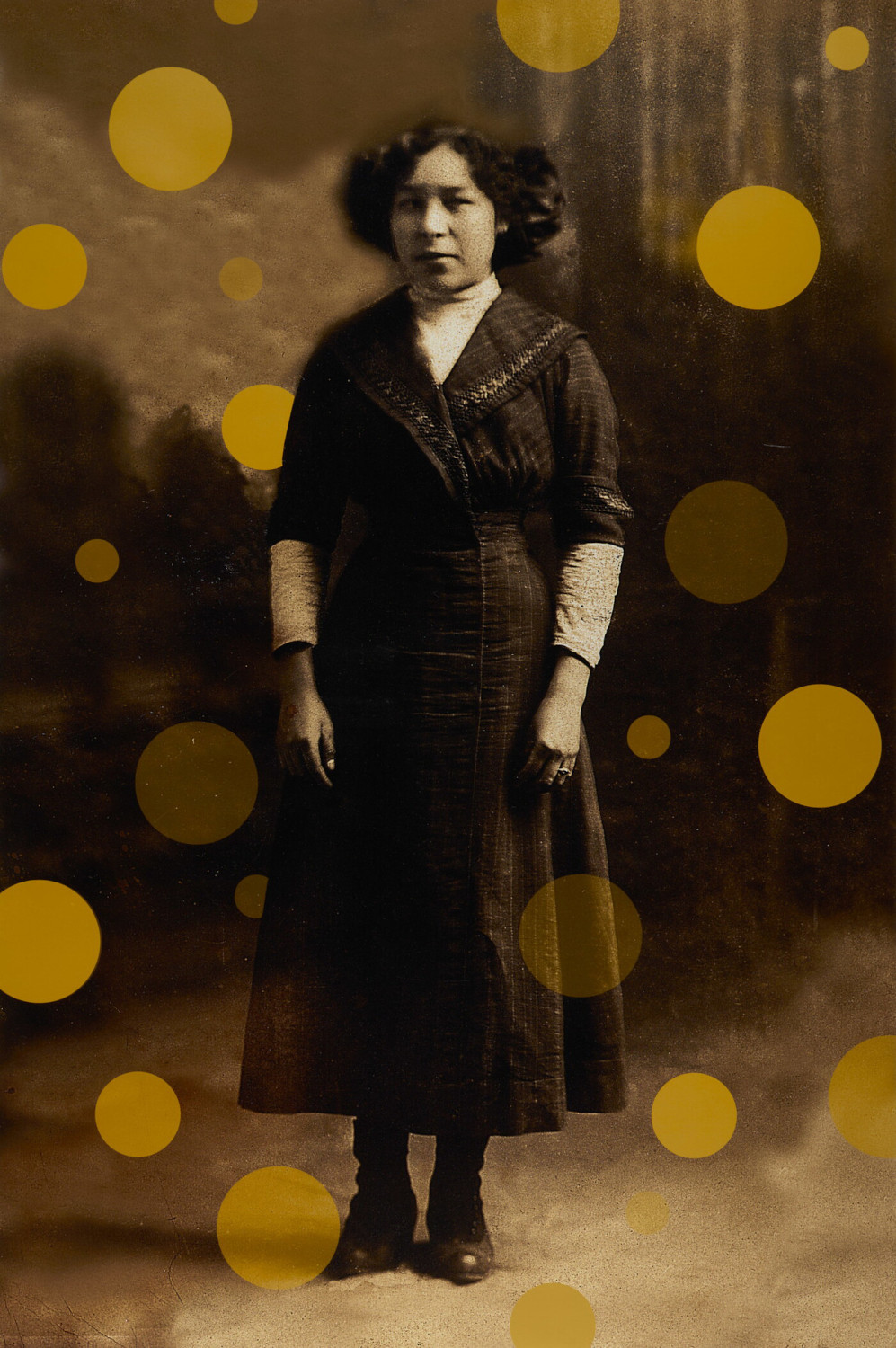
Hulleah J. Tsinhnahjinnie, Grandma, 2003, inkjet print, 30 x 20 in / 76.2 x 50.8 cm, Amon Carter Museum of American Art, Fort Worth © Hulleah J. Tsinhnahjinnie
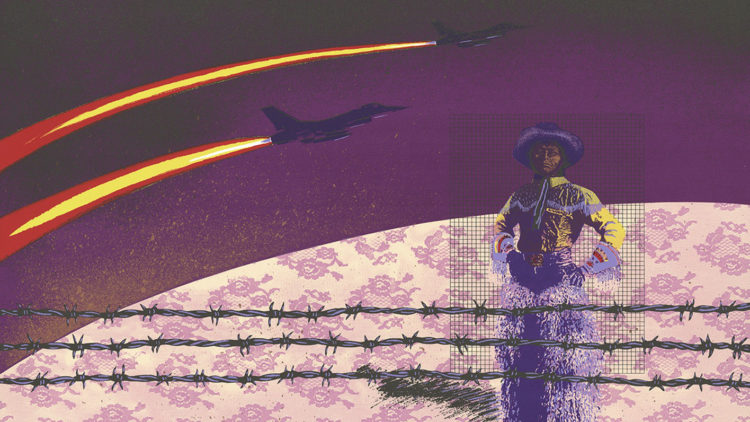
Hulleah J. Tsinhnahjinnie has also turned to photography to reclaim photographic narratives perpetuated by anthropologists and non-Native fine art photographers. Her work is rooted in what she refers to as Native American visual sovereignty or the creation of photographs for the Native American gaze which serve as a tool of historic and contemporary reclamation of various visual expressions of art.8 H. Tsinhnahjinnie utilises both original photographs and retooled historical photographs of Indigenous peoples. In her Portraits Against Amnesia series (2003), which includes Grandma (2003) and Idealia (2003), she recycled family photographs and appropriated images taken by white ethnographers and reconstructed them through collage. The images were digitally enlarged and manipulated in order to greater assert her subjects’ presence to the viewer. Younger Indigenous artists based in the Southwest, like Cara Romero (1977–) (Enrolled Citizen of the Chemehuevi Indian Tribe), signal the growing potential of the medium to further confront the tangled history of Indigenous peoples with the medium of photography.
Given the dominant culture’s fascination with the Southwest, it is important to acknowledge the artistic innovations of the Indigenous people who have inhabited and activated the space since for millennia. The artists examined here have endlessly drawn inspiration and cultural revitalisation through their connections to their homelands. They have honoured that connection through their weavings, pottery, sculptures, paintings, prints and photographs. Artists like D.Y. Begay, R. Sakiestewa and R. Swentzell have even incorporated literal pieces of the land into their works. Throughout the last seventy plus years, Native American women artists, like their ancestors before them, have continued innovating their art by incorporating outside influences, experimenting, and expressing themselves through a variety of mediums. With institutions like IAIA and mentors like the artists examined in this article, Native American women artists of the Southwest will continue to expand our collective understandings of Indigenous art and what it means to inhabit the land of the American Southwest.
Raven Manygoats is a Diné and Bilagáana History PhD candidate at Rutgers University. Her research focuses on Native American women’s activism in the era of Red Power. Her work examines radical and grassroots efforts made by Native American women to ensure both land and bodily sovereignty in the late 20th century. In her work, she draws on Indigenous feminist theory, Native cosmologies, oral tradition and materials produced by organisations like the American Indian Movement (AIM).