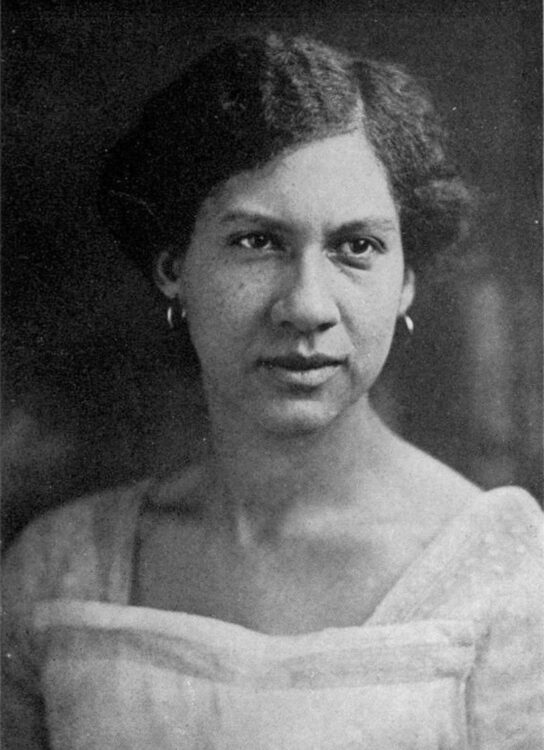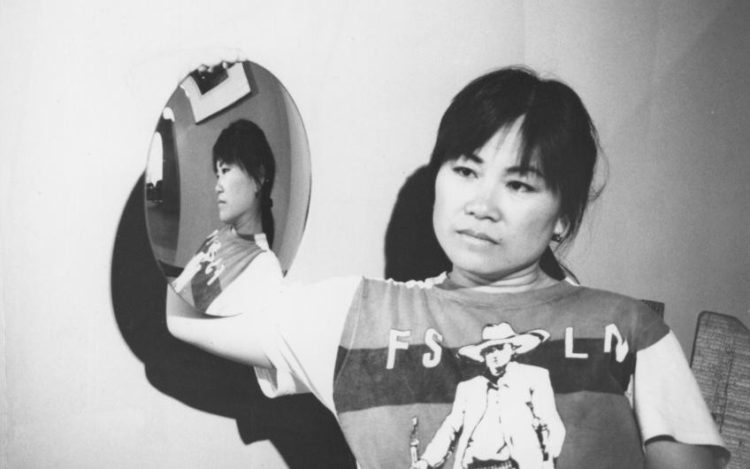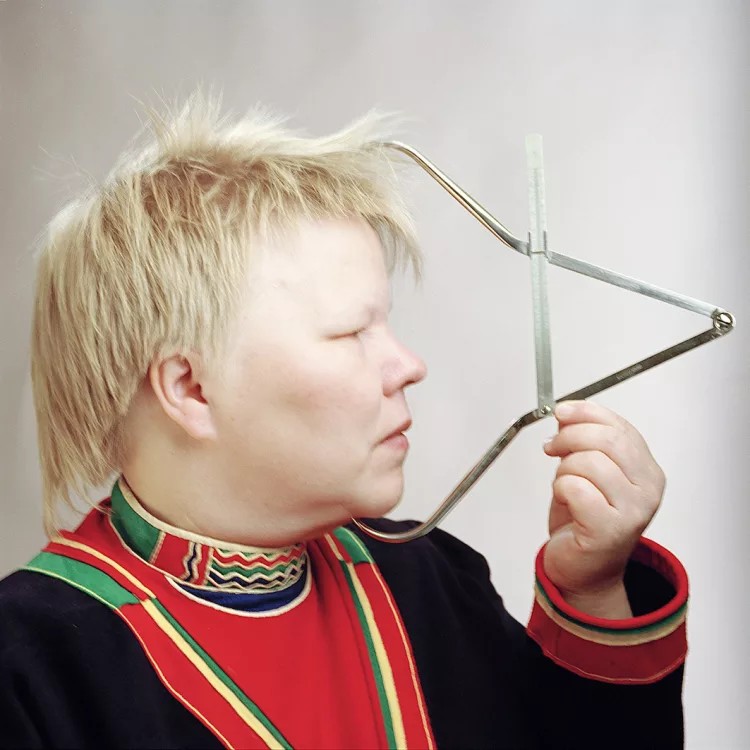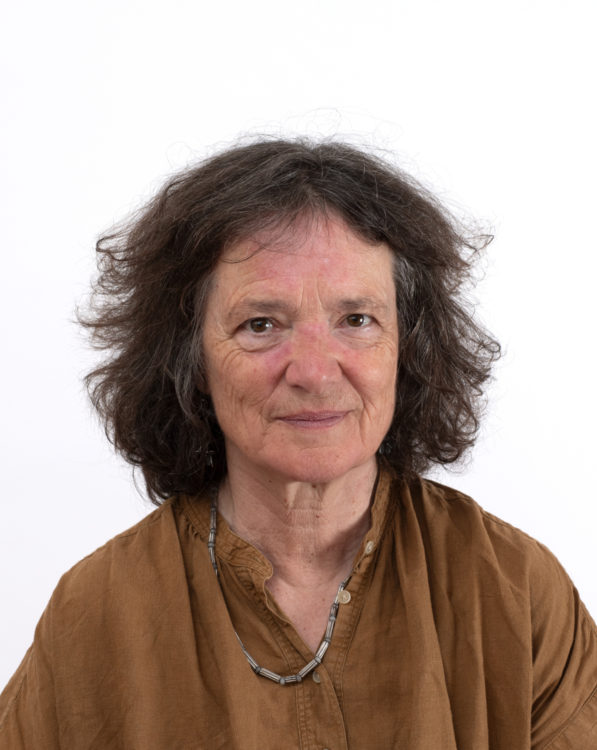
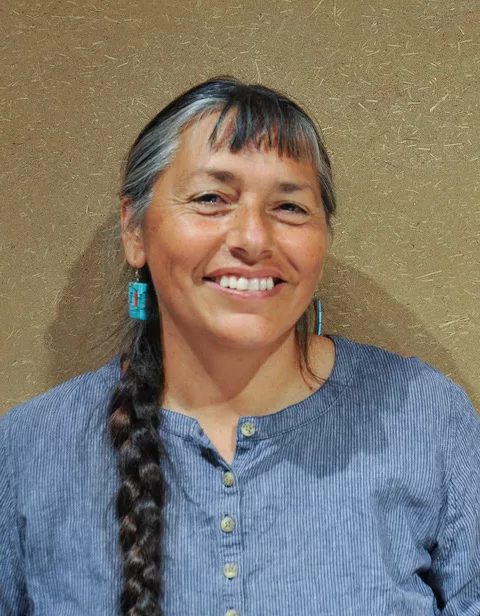
Portrait of Roxanne Swentzell
Simpson, Rose B., “My Mother, The Builder,” New Mexico Magazine, 17 June, 2020, https://www.newmexicomagazine.org/blog/post/my-mother-the-builder-rose-simpson-roxanne-swentzell/
→Naranjo, Tessie, “Those Naranjo Women: Daughters of the Earth,” in Ahlberg Yohe, Jill, Greeves, Teri (ed.), Hearts of Our People: Native Women Artists, exh. cat., Minneapolis Minneapolis Institute of Art, Mineapolis (2 June–18 August, 2019); First Art Museum, Nashville (27 September, 2019–12 January, 2020); Renwick Gallery, Smithsonian American Art Museum, Washington D.C. (21 February–17 May, 2020); Philbrook Museum of Art, Tulsa (27 June–13 September, 2020), Minneapolis, Minneapolis Institute of Art, 2019, p. 202-203
→Swentzell, Roxanne, “Hearing with Our Hearts,” in Crozier-Hogle, Lois, Babe Wilson, Darryl (eds.), Surviving in Two Worlds: Contemporary Native American Voices, Austin, University of Texas Press, 1997, p. 215–224
Hearts of Our People: Native Women Artists, Minneapolis Institute of Art, Minneapolis, 2 June–18 August, 2019; First Art Museum, Nashville, 27 September, 2019–12 January, 2020; Renwick Gallery, Smithsonian American Art Museum, Washington D.C., 21 February–17 May, 2020; Philbrook Museum of Art, Tulsa, 27 June–13 September, 2020
→Recent Works by Roxanne Swentzell, Heard Museum, Phoenix, 2002
→Juggling Worlds: Roxanne Swentzell, Poeh Center, Pojoaque, 2003
American, Santa Clara Tewa sculptor and ceramic artist.
Roxanne Swentzell was born into a long line of Santa Clara Pueblo potters at Taos Pueblo in New Mexico. Her mother and her mother’s extended family were all artists who worked in sculpture and ceramics. As a child, inspired by her family members, she began experimenting with clay. Due to a childhood speech impediment, her experimentations with clay became a tool for emotional expression. At a young age, she apprenticed in printmaking in the early 1970s and then studied sculpture with Michael Naranjo (1944–) in 1976. She attended the Institute of American Indian Arts from 1978 to 1980, followed by the Portland Museum Art School from 1980 to 1981. In 2019 she received an Honorary Doctorate from the Institute of American Indian Arts.
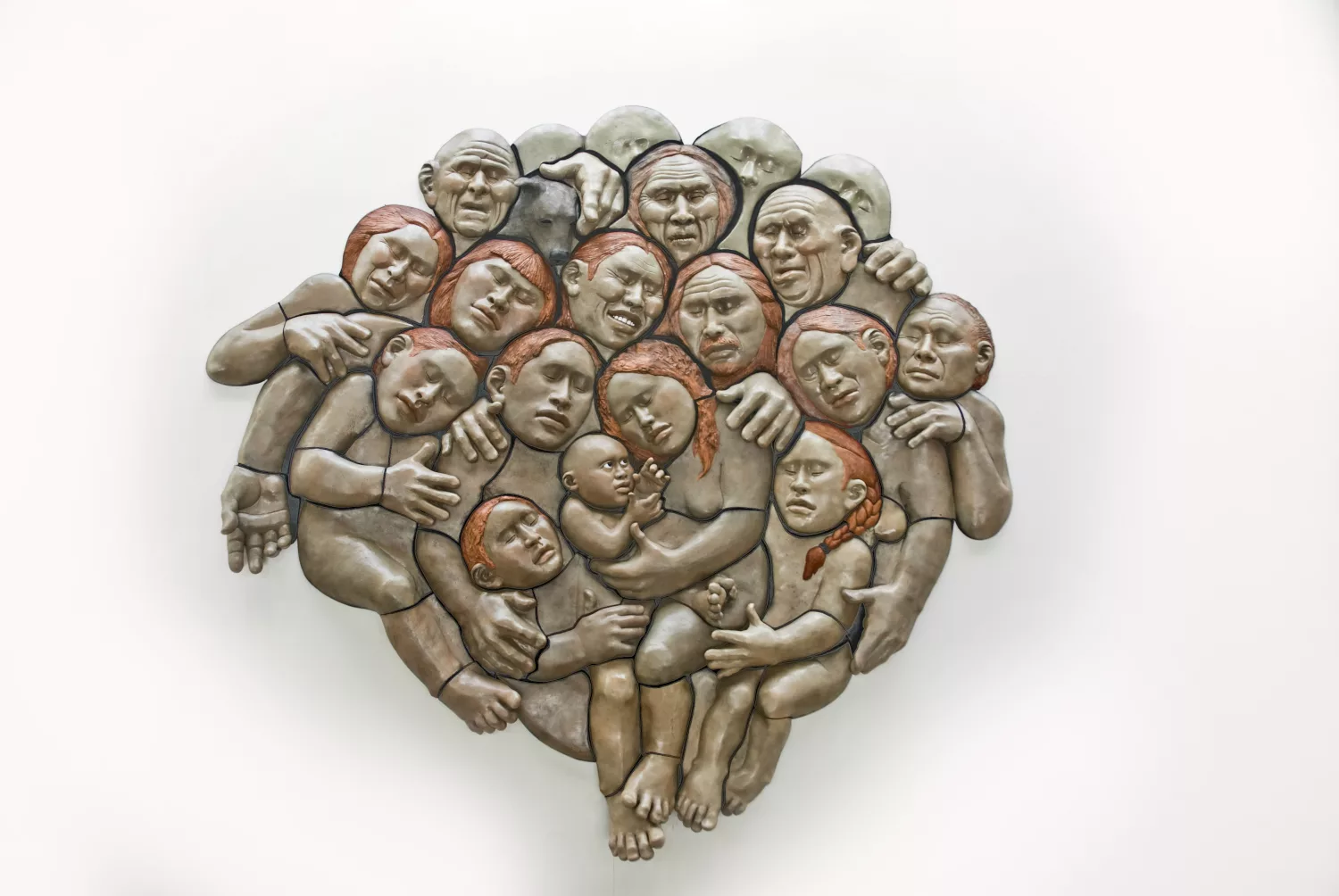
Throughout her over fifty-year career, she has primarily crafted figurative ceramics and sculptures, which are often inspired by autobiographical experiences. Her work examines gender roles, family and cultural identity. Apart from her artistic practice, in 1987 she also founded the Flowering Tree Permaculture Institute, which is an organisation devoted to sustainable agricultural practices and Indigenous food sovereignty. She is also the mother of renowned artist Rose Bean Simpson (1983–), who is known for her sculptures and ceramics.
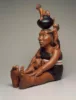
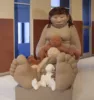
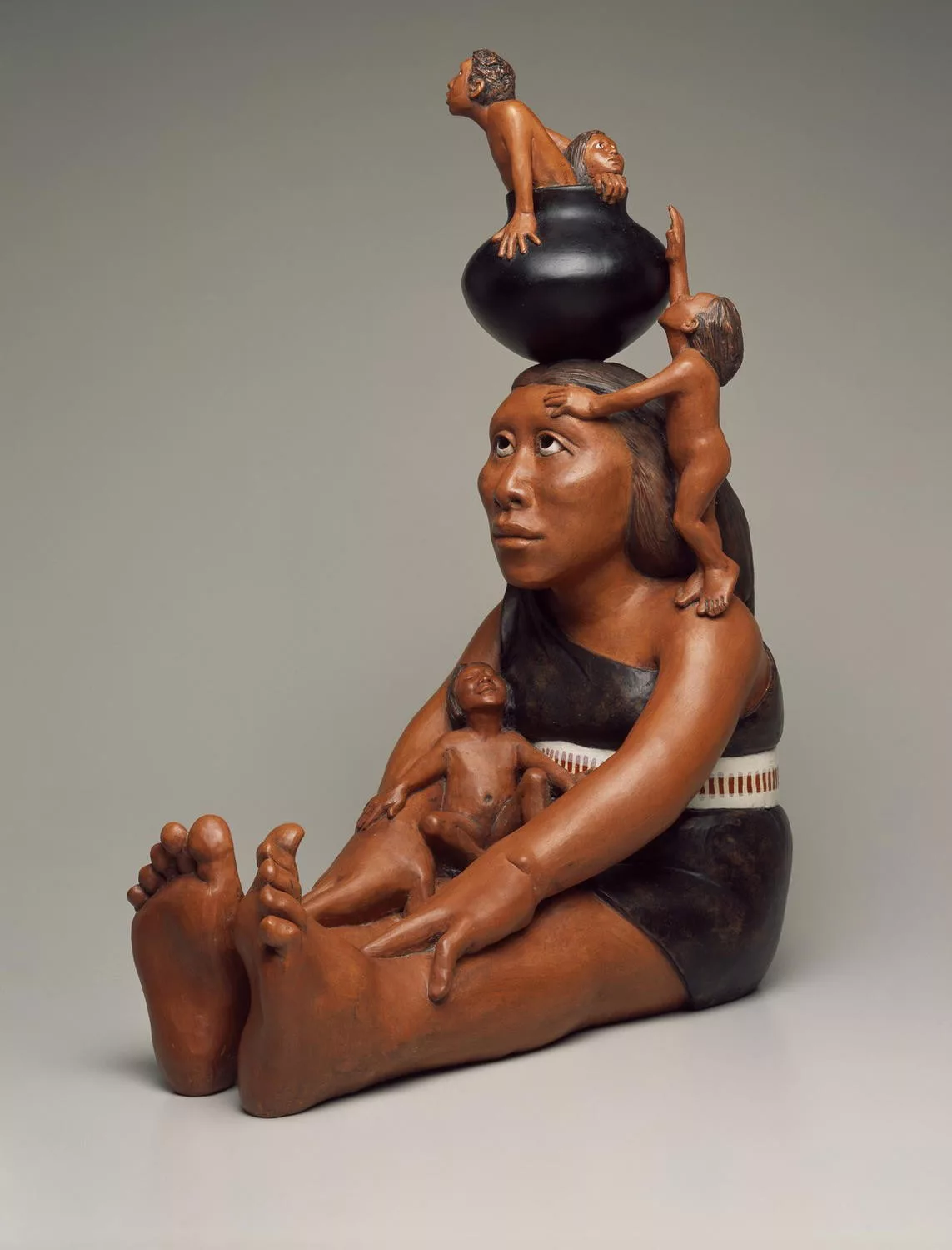
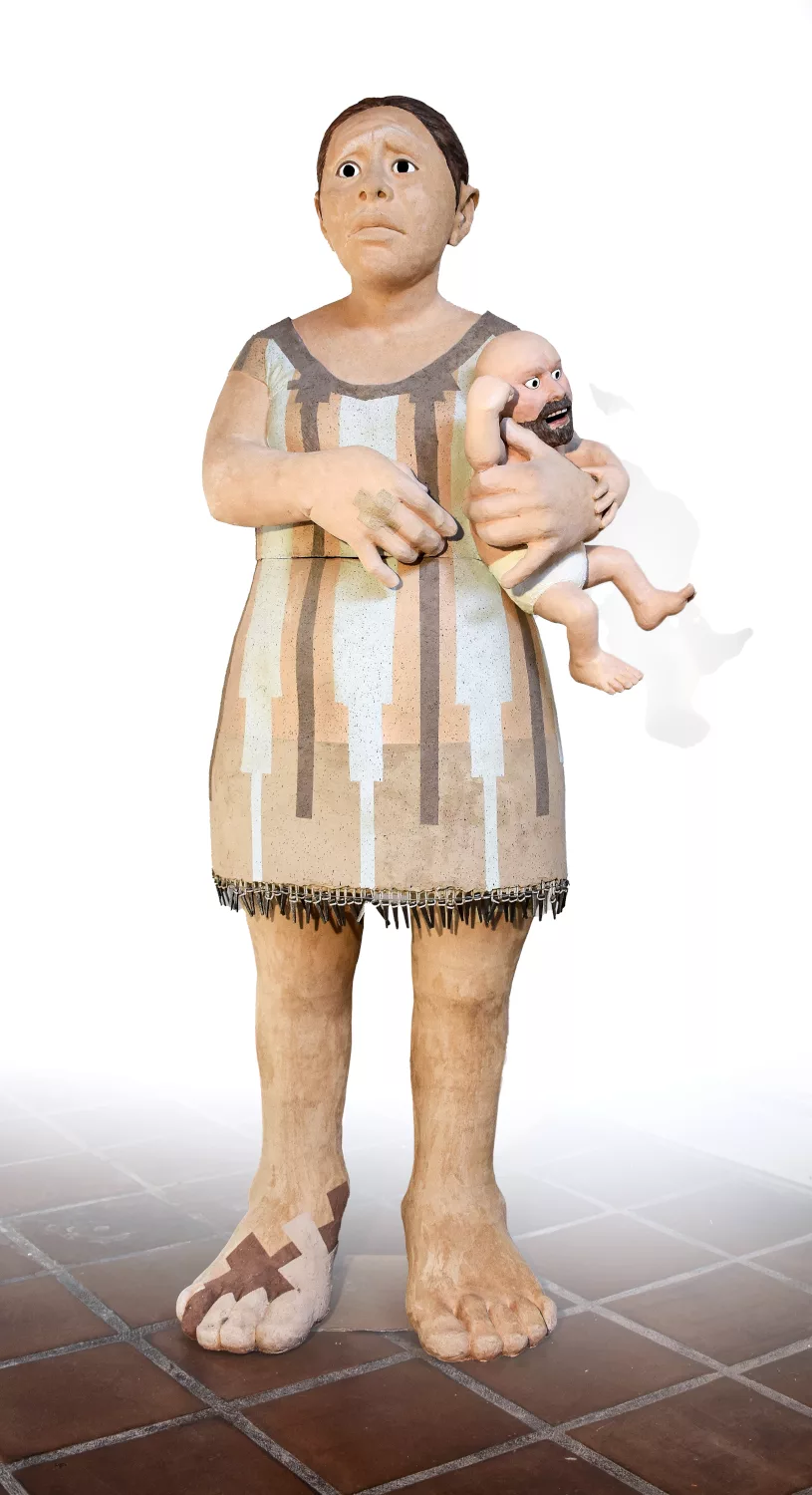
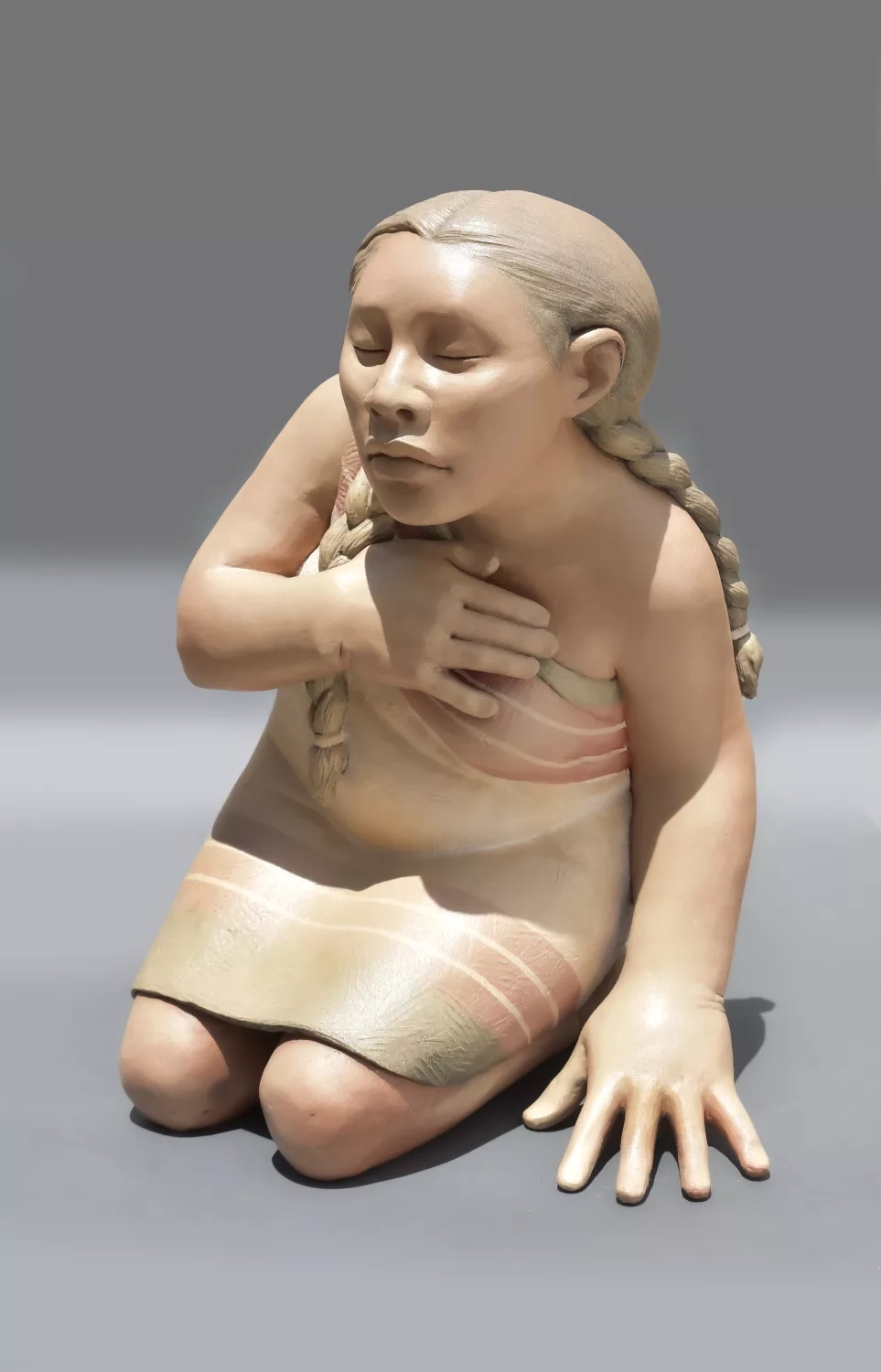
R. Swentzell crafts her clay figures using the traditional Pueblo method of coiling clay. She typically crafts hollow figures, which vary in size, and often paints facial and clothing details onto the figures. She first began selling works as an artist in the early 1980s with her participation in the annual Santa Fe Indian Market. By 1986, she began winning prestigious awards from the event and receiving institutional recognition. All of her sculptures are rooted in her Santa Clara Tewa identity and often incorporate cultural figures or references to Pueblo philosophies. One such work, The Things I Have to Do To Maintain Myself (1994), features a kosha or Pueblo clown figure deep in concentration in sewing their broken ear. The artwork represents quotidian tasks of preservation and features emotive facial and body expressions that are characteristic of the artist’s compositions.
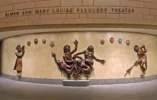
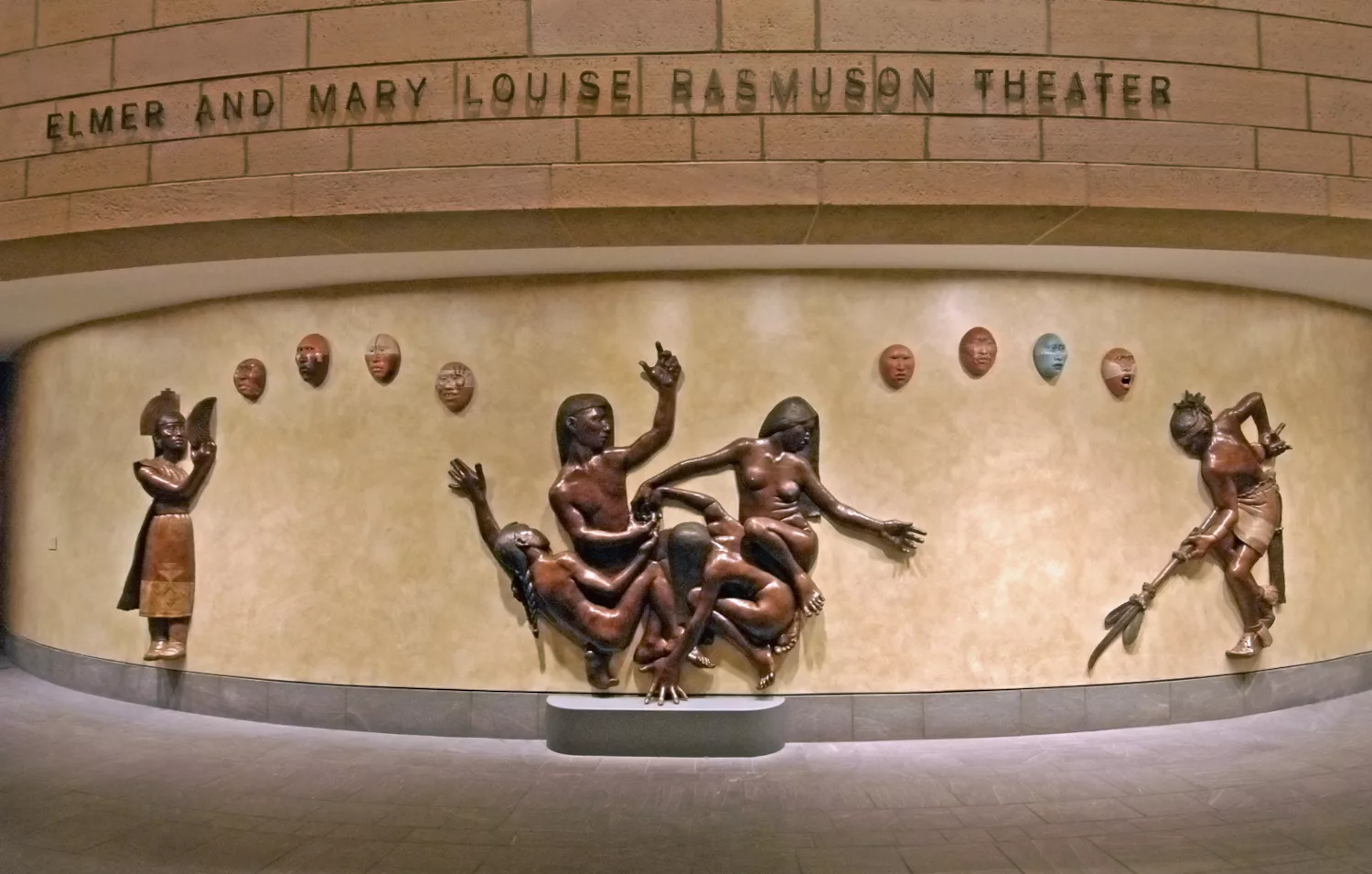
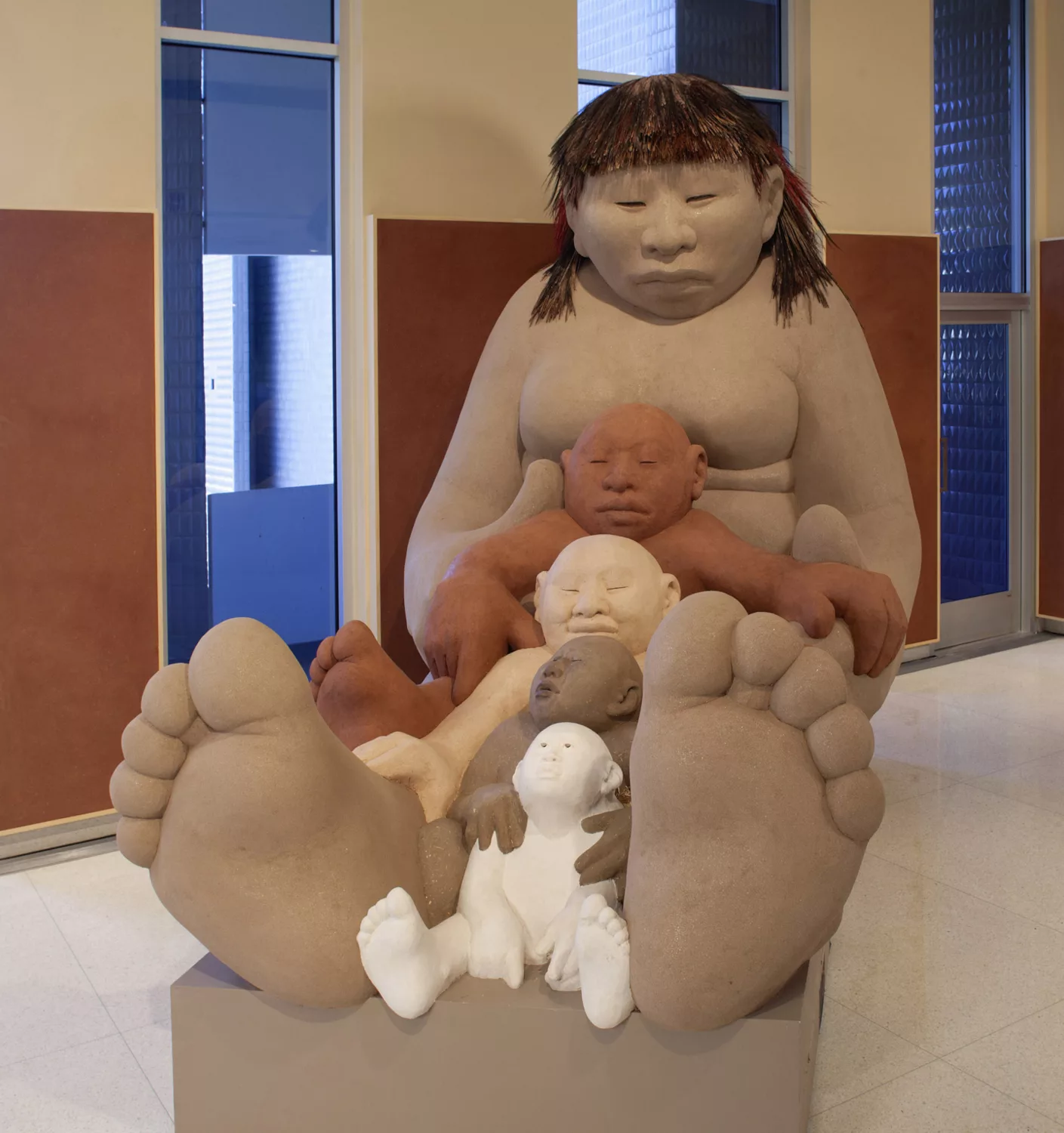
Beginning in the early 2000s, R. Swentzell started producing works on a larger scale with public art commissions by the National Museum of the American Indian and the Denver Art Museum. One such sculpture, Mud Woman Rolls On (2011) is on permanent view in the Denver Art Museum’s Indigenous Arts of North America gallery. The sculpture stands nearly 3.5 metres high and was crafted out of both fired and unfired clay that was gathered from various locations in Colorado and New Mexico. The artwork features a large female figure and a grouping of children, representing motherhood and generational knowledge. The use of hand collected clay, which differs from the artist’s typical use of store-bought clay, emphasises people’s connection to the earth.
Throughout her career, R. Swentzell has won numerous awards, including Best of Sculpture at Santa Fe Indian Market and the Spirit of the Heard Award from the Heard Museum. Her artworks can be found in the collections of institutions such as the Smithsonian National Museum of the American Indian in Washington D.C., the Cartier Foundation for Contemporary Art in Paris, the Brooklyn Museum and the Denver Art Museum, amongst others.
A notice produced as part of the TEAM international academic network: Teaching, E-learning, Agency and Mentoring
© Archives of Women Artists, Research and Exhibitions, 2026