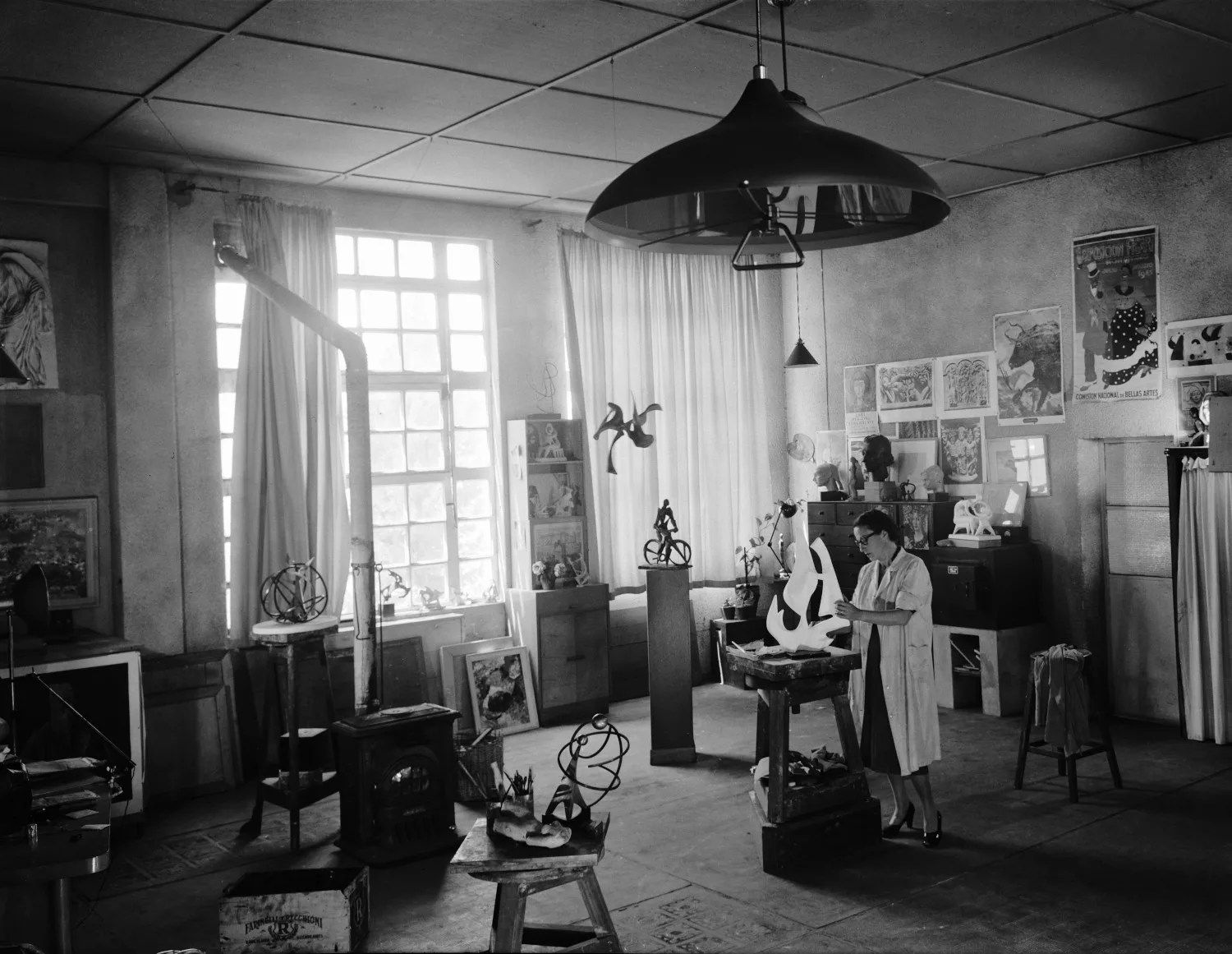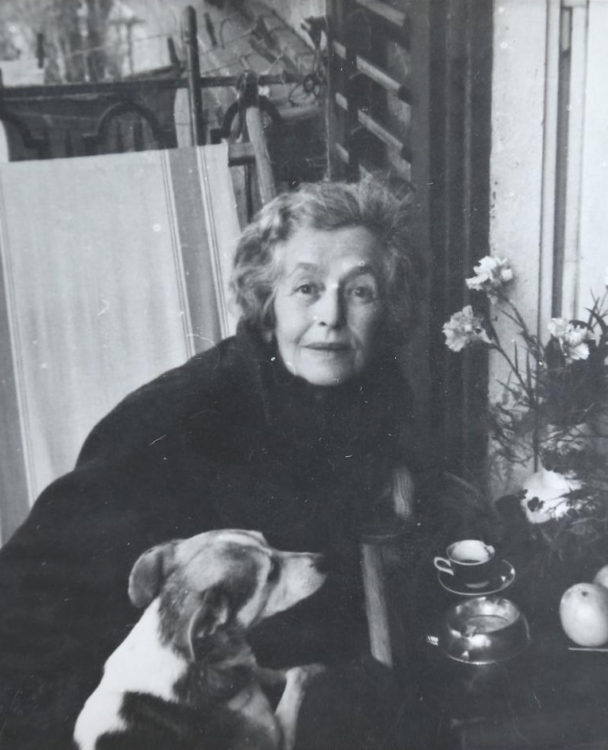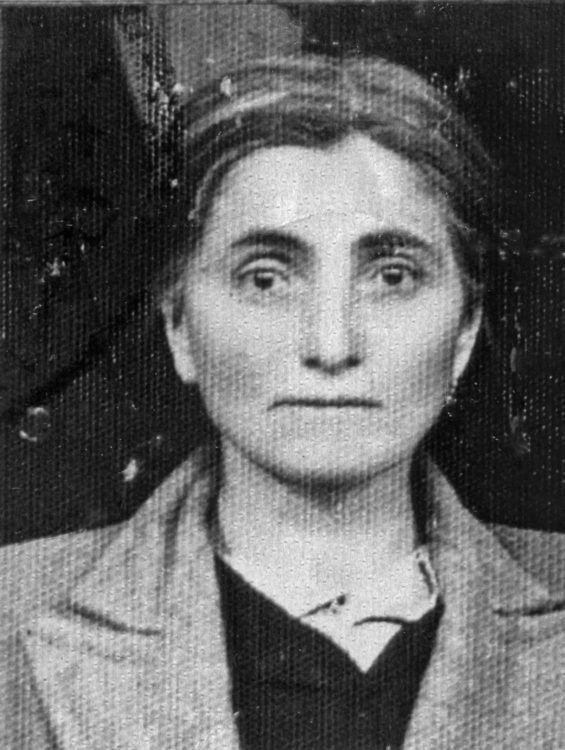
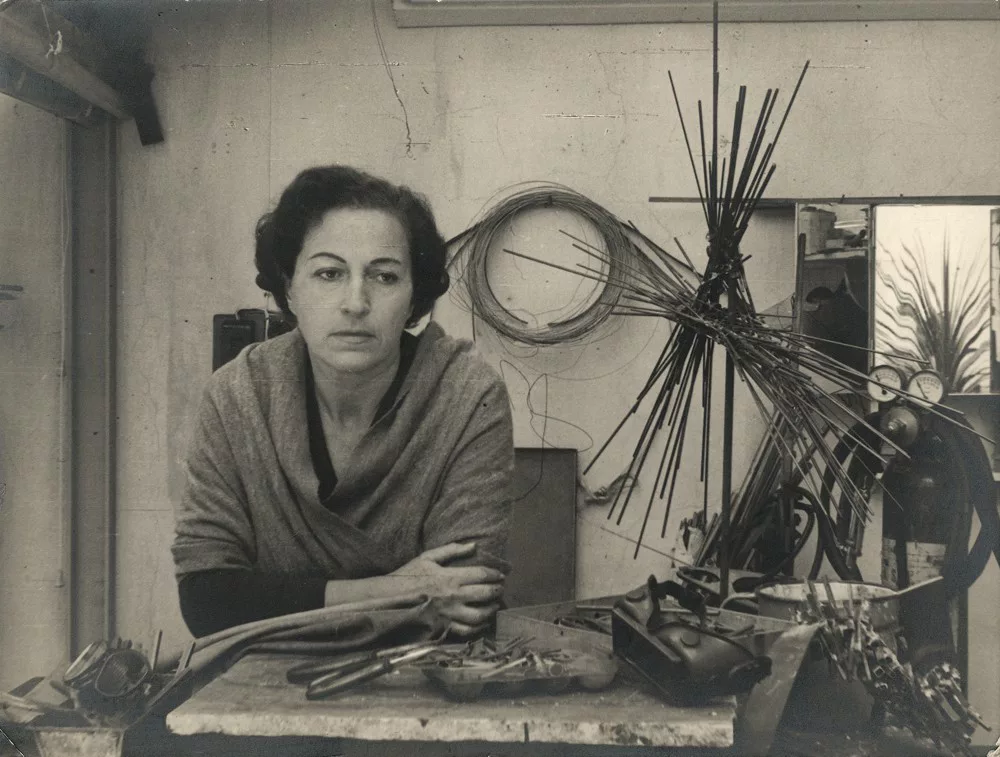
Portrait of Noemí Gerstein by Horacio Coppola, c. 1965, gelatin silver print, 13.5 x 17.5 cm © Colección Museo Nacional de Bellas Artes
Melgarejo, Paola et al., Bellas Artes, nuevas adquisiciones 2022: Noemí Gerstein. Marejada, Buenos Aires, Asociación Amigos del Museo Nacional de Bellas Artes, 2022
→Mujica Láinez, Manuel, Varela, Lorenzo, Noemí Gerstein, exh. cat., Art Gallery International, Buenos Aires (28 July–16 August, 1969), Buenos Aires, Art Gallery International, 1969
→Svanascini, Osvaldo, Noemí Gerstein, Buenos Aires, Ediciones Culturales Argentinas, 1966
Una artista experimental. Noemí Gerstein en el FNA, Fondo Nacional de las Artes, Buenos Aires, 23 August, 2024–27 February, 2025
→Noemí Gerstein, Centro Cultural Recoleta, Buenos Aires, 21 November–15 December, 2002
→Noemí Gerstein, Art Gallery International, Buenos Aires, 28 July–16 August, 1969
Argentine abstract sculptor.
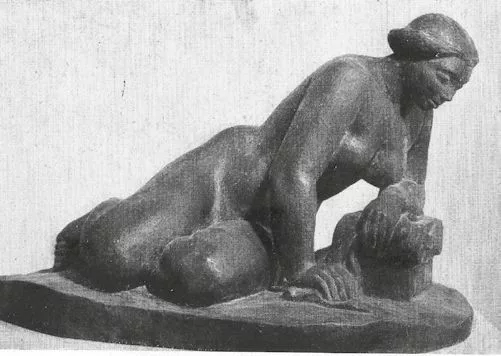
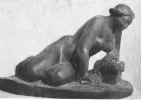
Noemí Gerstein was trained as a science teacher – a profession that paid for her art studies. She attended the Escuela Superior de Bellas Artes and the Club de Mujeres de Buenos Aires, one of the first local feminist groups, where she began to take up sculpture. Starting in 1934 she studied at the studio of Alfredo Bigatti (1898–1964). She continued under the influence of her teacher’s aesthetics in her first works, many of which won awards in local and provincial salons, making human figures in bronze, such as Nausicaa (1939).
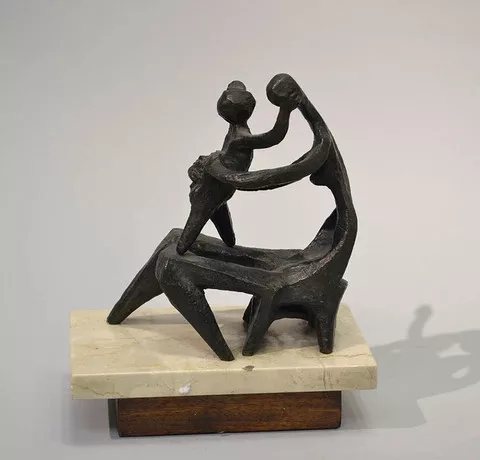
After a solo show at the Galería Peuser in 1948, she travelled to Paris on a scholarship from the French government (1950–1951). She attended the Académie des beaux-arts and the sculpture studio lead by the Cubist Ossip Zadkine (1888–1967) at the Academie de la Grande Chaumière, which resulted in the series Maternidades (1952–1954), where she opened up and refined her forms.
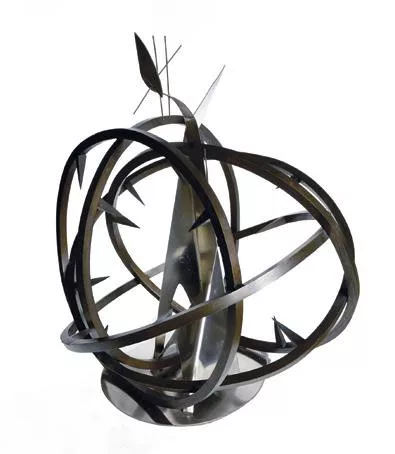
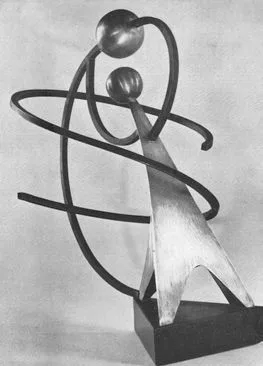
Her first abstract metal piece brought her international acclaim: she won the competition for Monument to The Unknown Political Prisoner organised by the London Institute of Contemporary Arts; the maquette was shown at the Tate Gallery (1953). At that point she fully positioned herself as a non-figurative artist. In 1955 she joined the Asociación Arte Nuevo, founded by Carmelo Arden Quin (1913–2010) and Aldo Pellegrini (1903–1973), and consecrated her poetics to metal materials like aluminium, iron, bronze, stainless steel, brass and silver, in the form of sheets, wires and pipes.
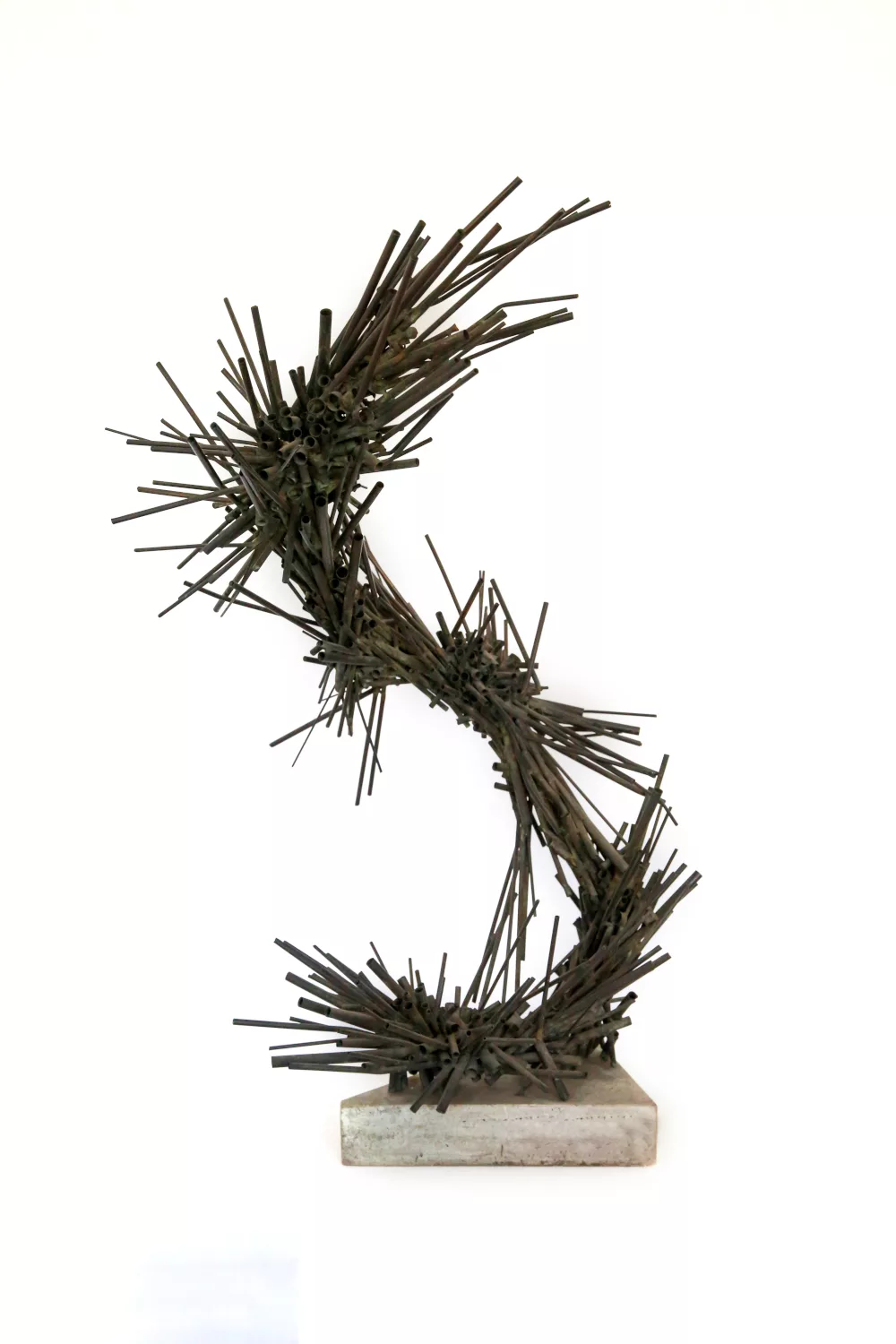
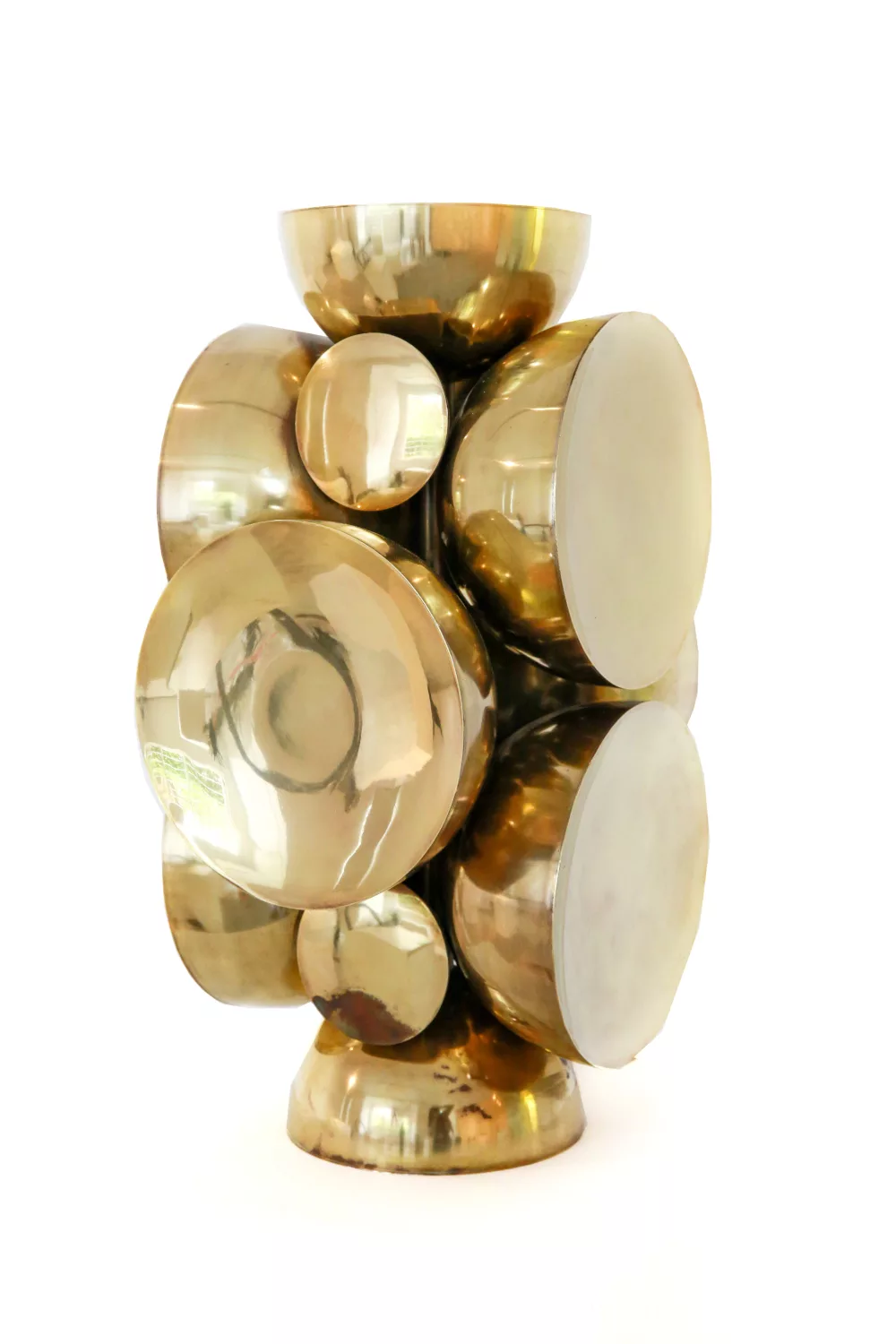
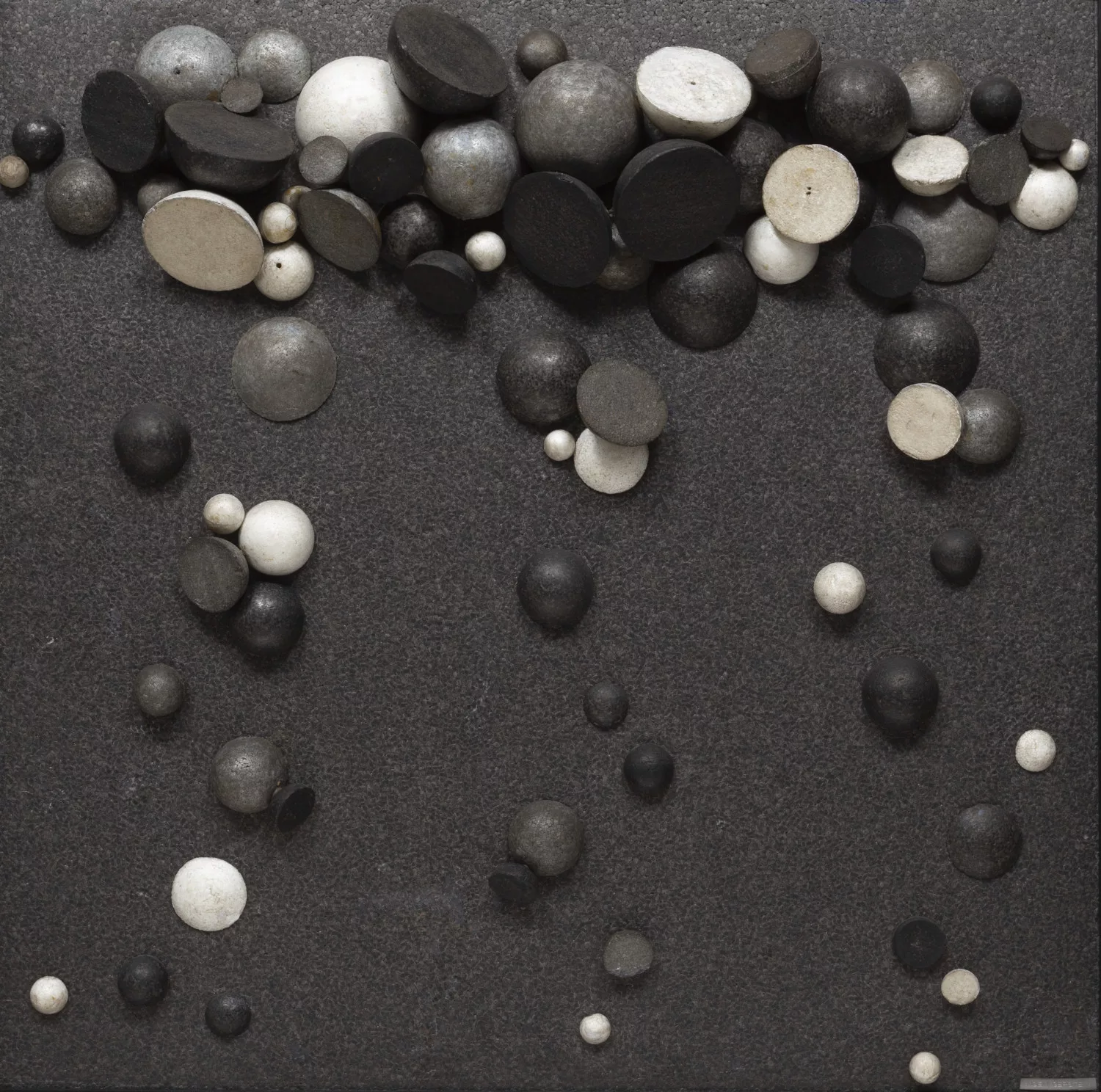
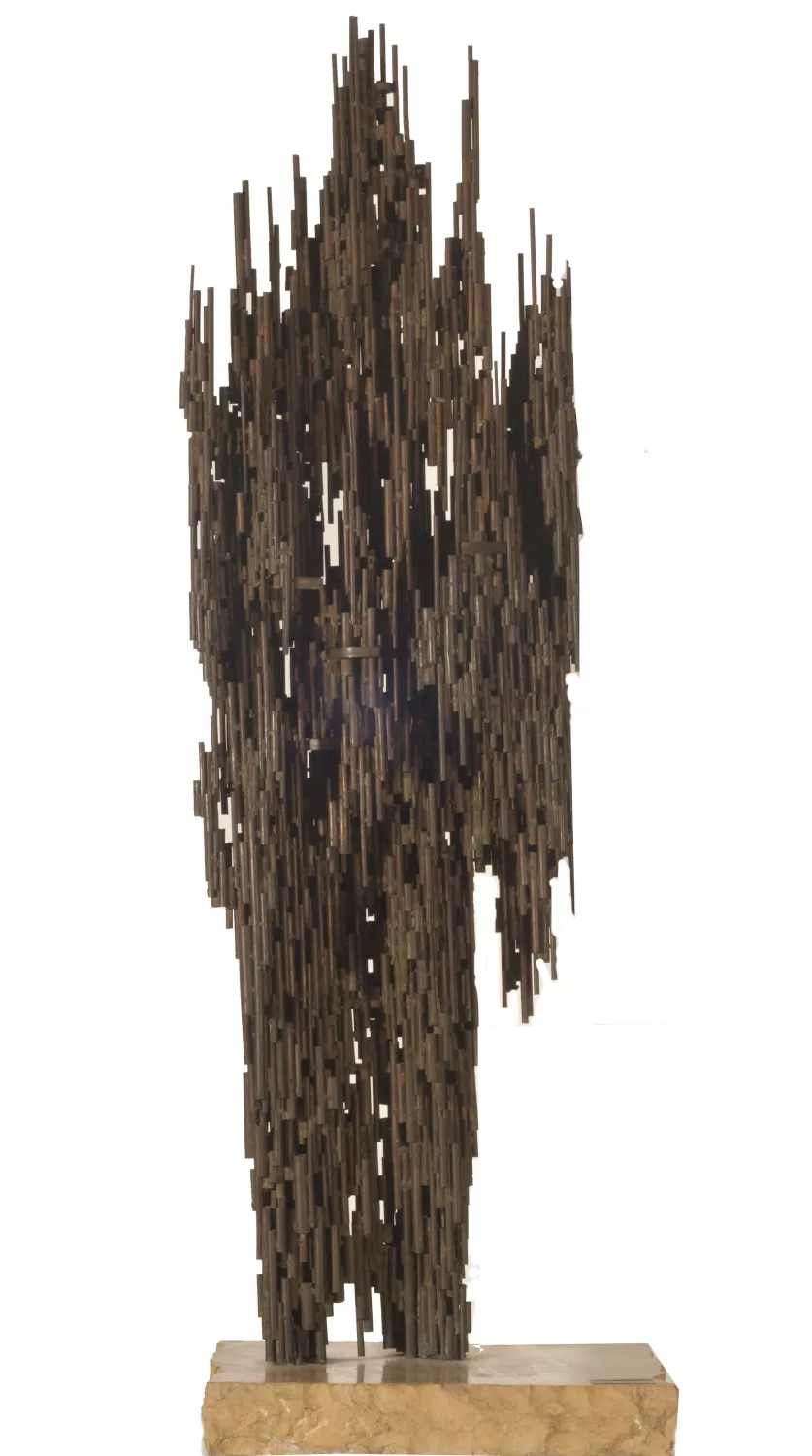
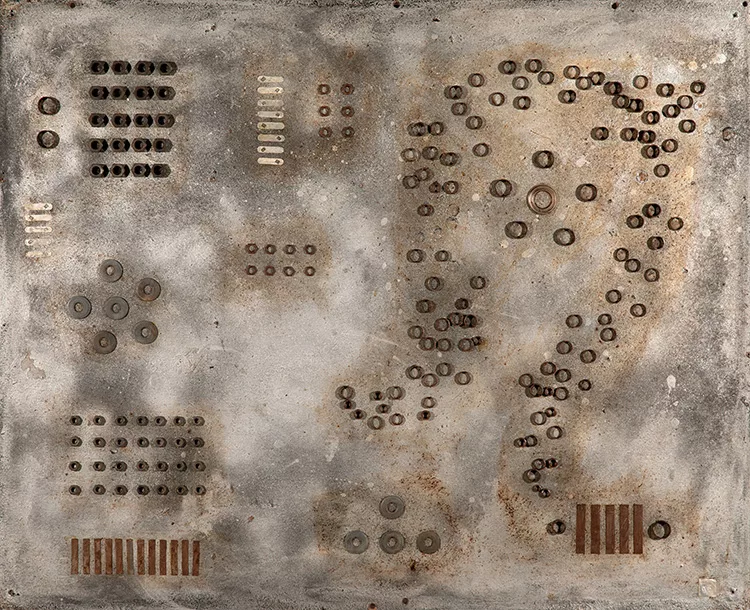
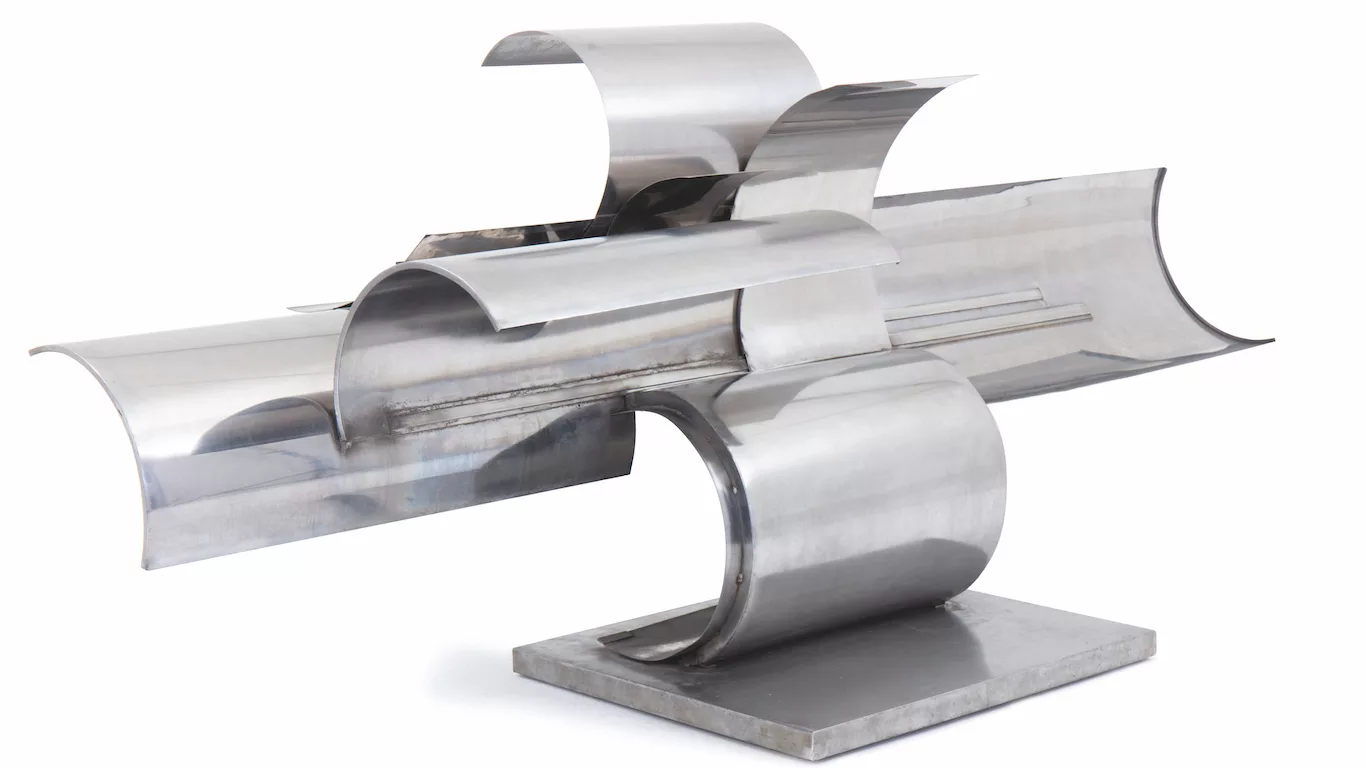
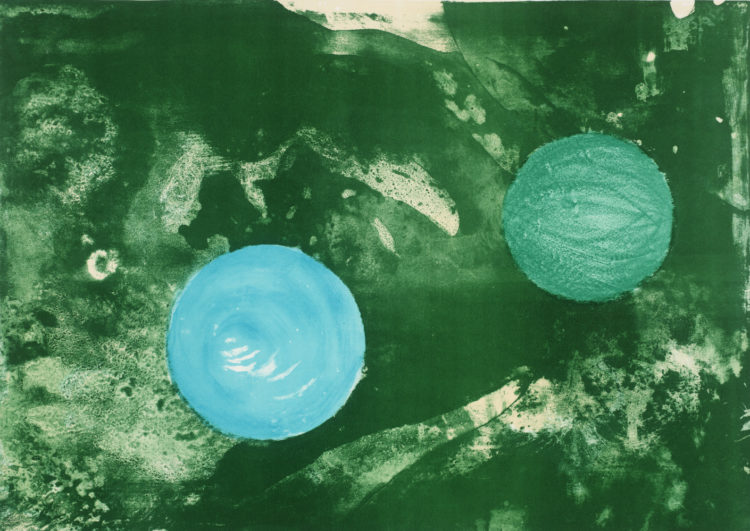
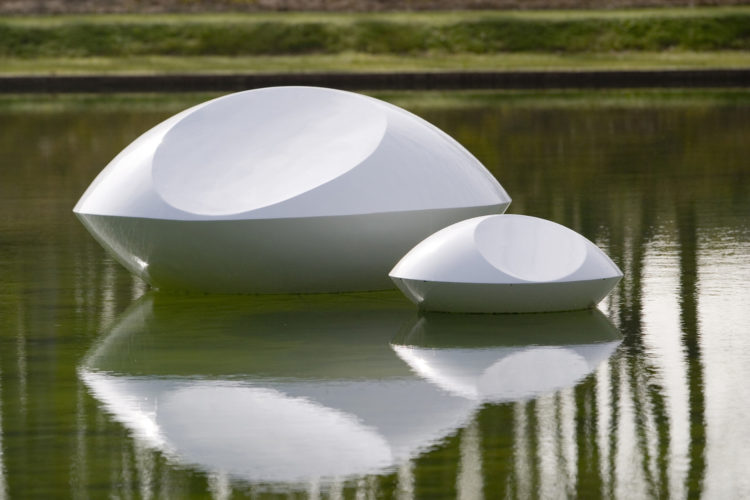
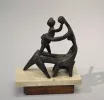
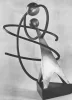
From the mid-1950s to the late 1960s she used factory-finished and welded metals using tools borrowed from her husband’s home workshop. She assembled thin iron and bronze bars into large compact, vertical structures. The compositional dynamism of her compositions and the literality of her materials contrasted with the lyrical forms and titles often based on fictional or allegorical references, such as El Samurai (1961). Occasionally she opened up the volumes into radial lines or assembled large sheets of curved stainless steel into vertical or horizontal structures, as in Marejada [Turbulence, 1970]. At the same time she experimented with small-scale sculptures and jewellery, and made relief pieces using foundry by-products, nuts and washers set on styrofoam or fibreboard. In the 1970s she used polished bronze to make modular pieces with clean volumes, often in spherical shapes, like Soles y lunas [Suns and Moons, 1975], articulating contrasting effects such as brightness and opacity, and profusion and synthesis.
N. Gerstein achieved international recognition with the exhibition of her work at the Venice Biennale (1956, 1962 and 1964), the New York Museum of Modern Art (1959 and 1967), the Roland de Aenlle Gallery in New York (1960), the Paris Musée Rodin (1961), the Organization of American States in Washington (1960) and the Musée d’art moderne in Paris (1962). The state of Israel named her one of the world’s twelve most influential artists (1969). She showed at the eleventh open air sculpture biennial in the Middelheim Museum in Antwerp (1971) and donated a piece to the Museo de la Solidaridad Salvador Allende de Chile (1973). In Argentina she won the sculpture competition of the Instituto Torcuato Di Tella (1962). She became the first woman member of the Academia Nacional de Bellas Artes (1975) and was awarded the Premio Konex de Platino and the Gran Premio de Honor del Fondo Nacional de las Artes (1982).
A notice produced as part of the TEAM international academic network: Teaching, E-learning, Agency and Mentoring
© Archives of Women Artists, Research and Exhibitions, 2026
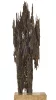
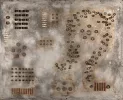

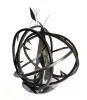
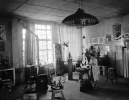


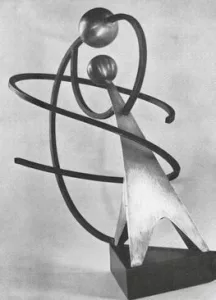 Exhibición "Una artista experimental. Noemí Gerstein en el FNA", Fondo Nacional de las Artes, 2024