Catherine Hall-Van den Elsen, Luisa Roldán, Los Angeles, Getty Publications, 2021
→Catherine Hall-Van den Elsen, Fuerza e intimismo. Luisa Roldán, escultora (1652-1706), Madrid, Consejo Superior de Investigaciones Científicas, 2018
→María Victoria García Olloqui, Luisa Roldán, la Roldana. Nueva biografía, Seville, Guadealquivir ediciones, 2000
Luisa Roldán. Escultora real, Museo Nacional de Escultura, Valladolid, November 2024 – March 2025
→Roldana, Real Alcázar, Seville, July-October 2007
Spanish sculptor.
Luisa Roldán, also known by the nickname La Roldana, was born in 1652 to sculptor Pedro Roldán (1624–1699), who in the second half of the 17th century ran Seville’s most renowned and productive studio. P. Roldán trained his children, including Luisa (his fifth child and fourth daughter), in the trade and employed them in the family studio. In 1671, though her father was opposed to the match, La Roldana married sculptor Luis Antonio de los Arcos (1652–1711), a former apprentice in the studio.
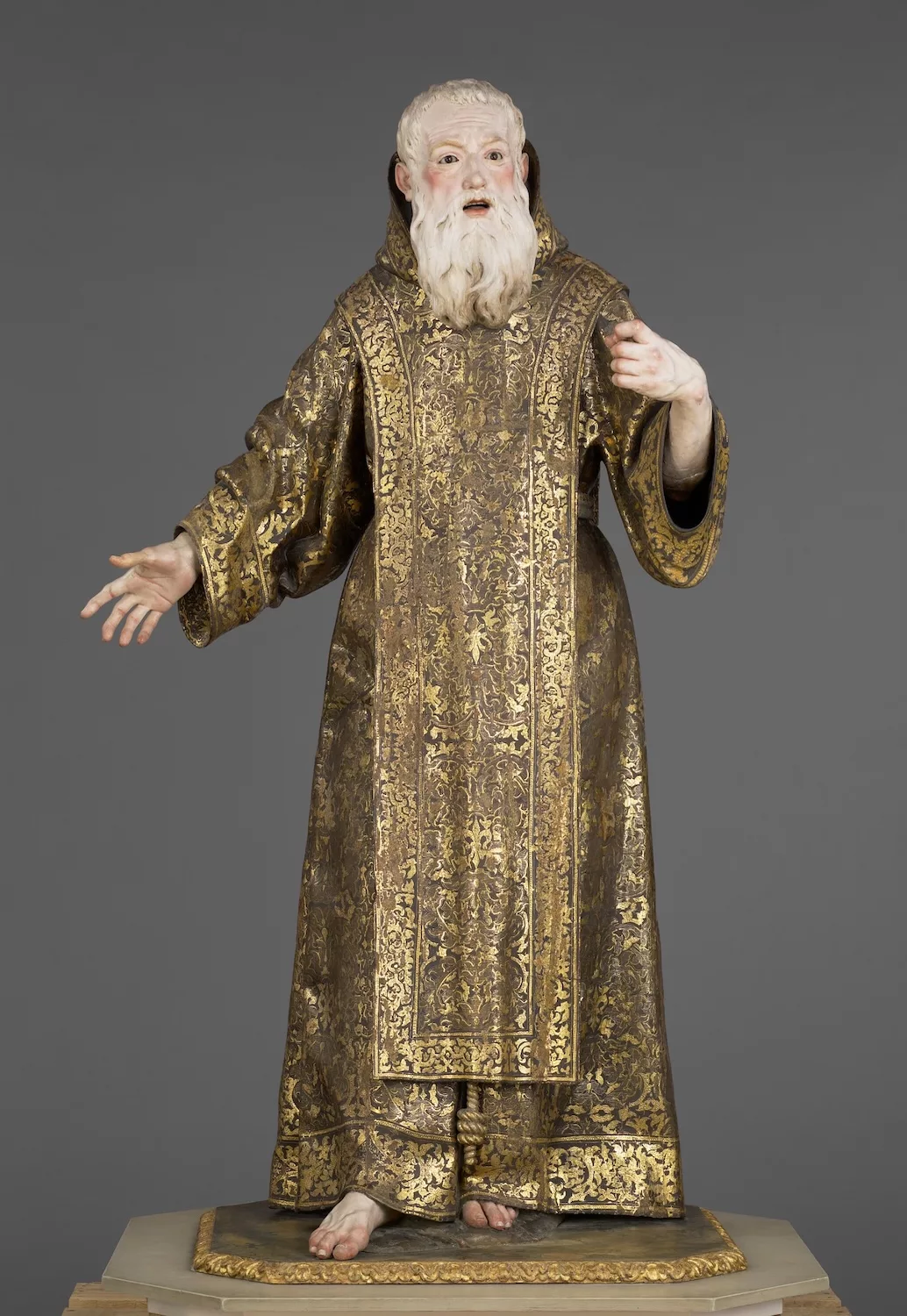
For more than a decade, L. Roldán worked with him in Seville, gradually developing a personal style of her own. During this period, her husband’s name was generally the one appearing on their contracts, for example for the processional paso of the Hermandad de la Exaltación [Brotherhood of the Exaltation] in Seville, for which L. Roldán produced several figures (c. 1678–1682). In the 1680s her reputation as a sculptor grew and spread beyond Seville. The couple moved with their children to Cádiz, where L. Roldán executed works in polychrome wood for the cathedral as well as several churches and convents. The municipality commissioned her to produce effigies of the city’s patron saints, Saint Servando and Saint Germán; she created these in collaboration with her husband, while her brother-in-law Tomás de los Arcos executed the polychromy (Catedral de Cádiz, 1687).
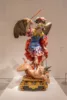
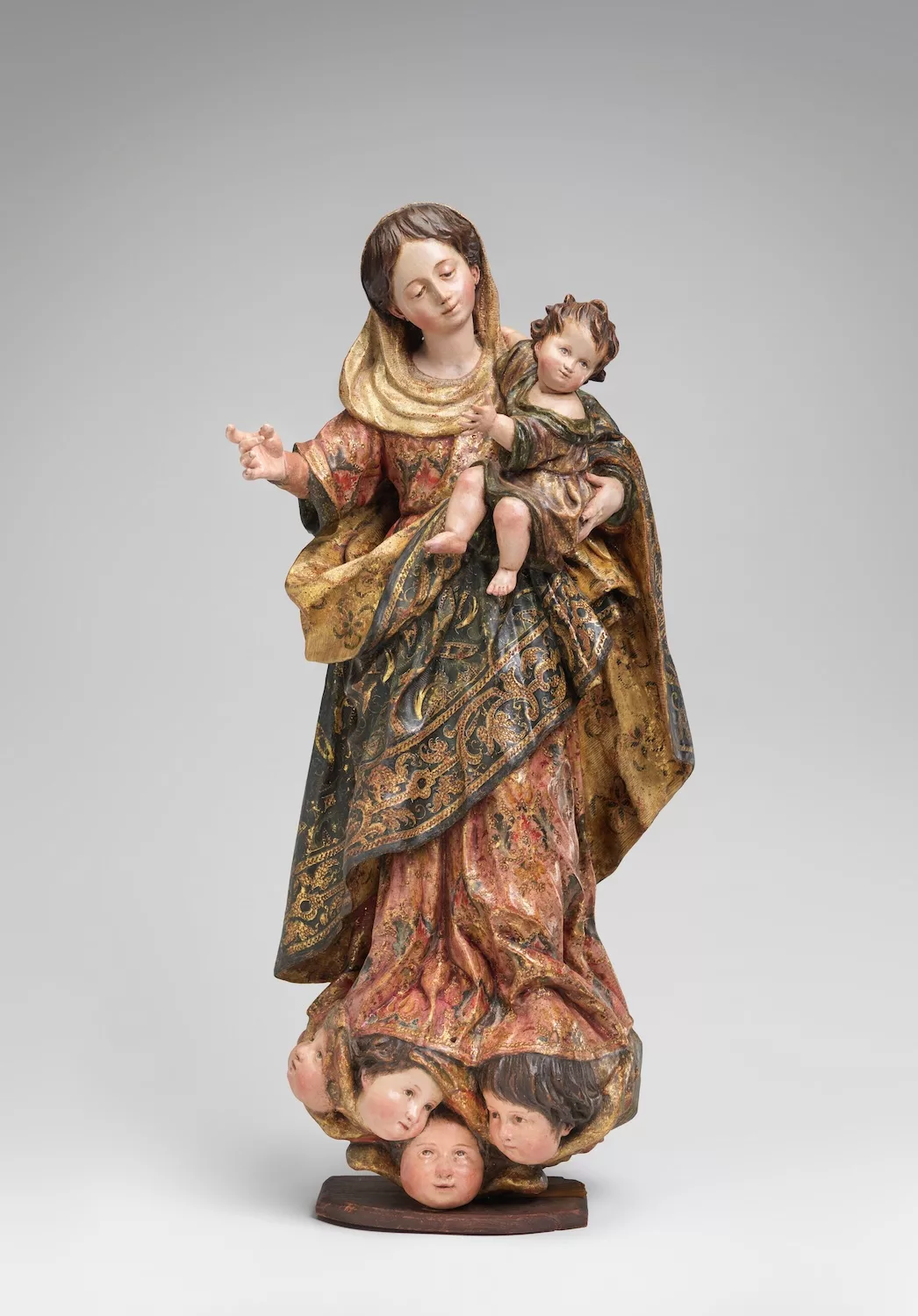
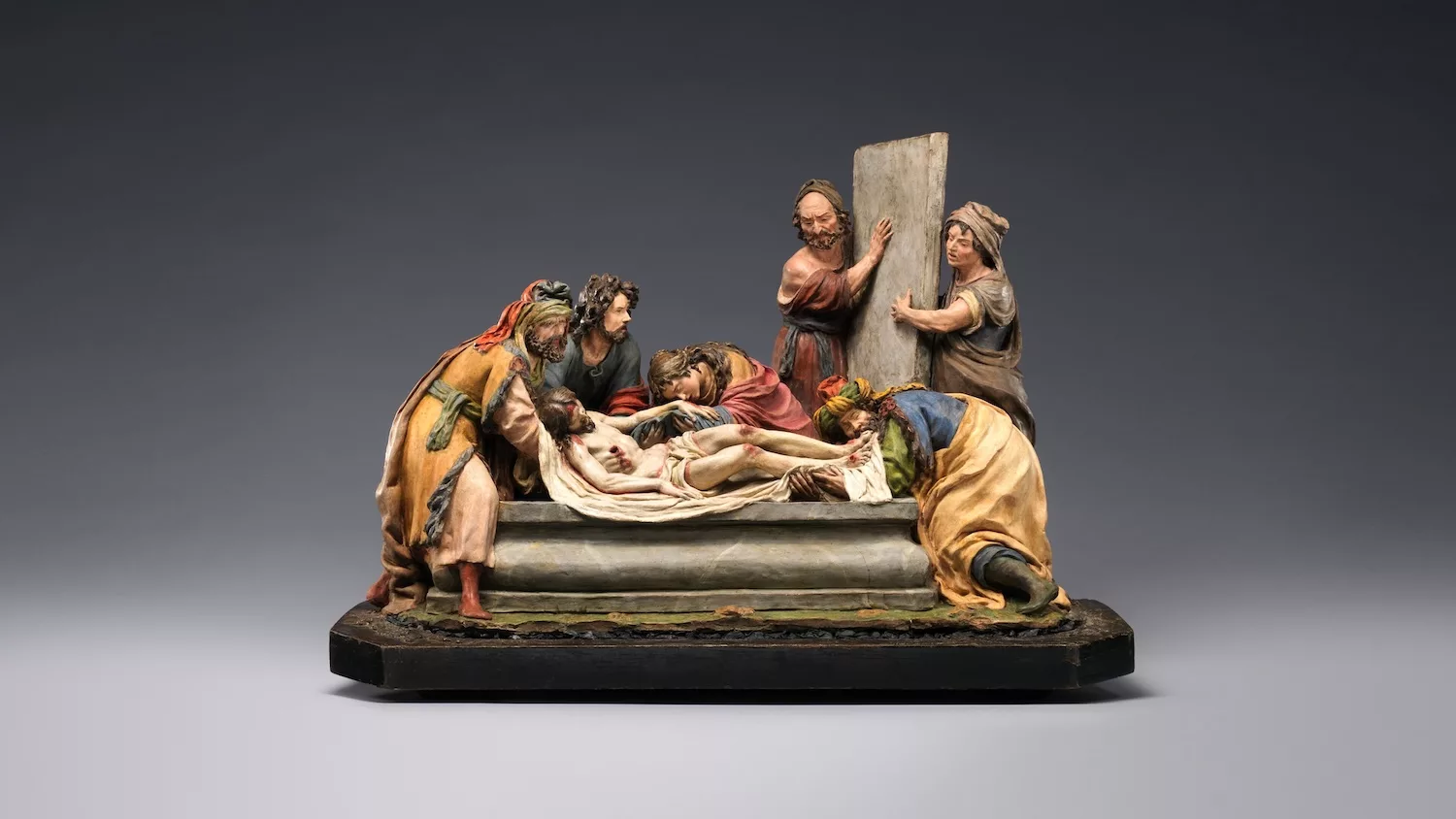
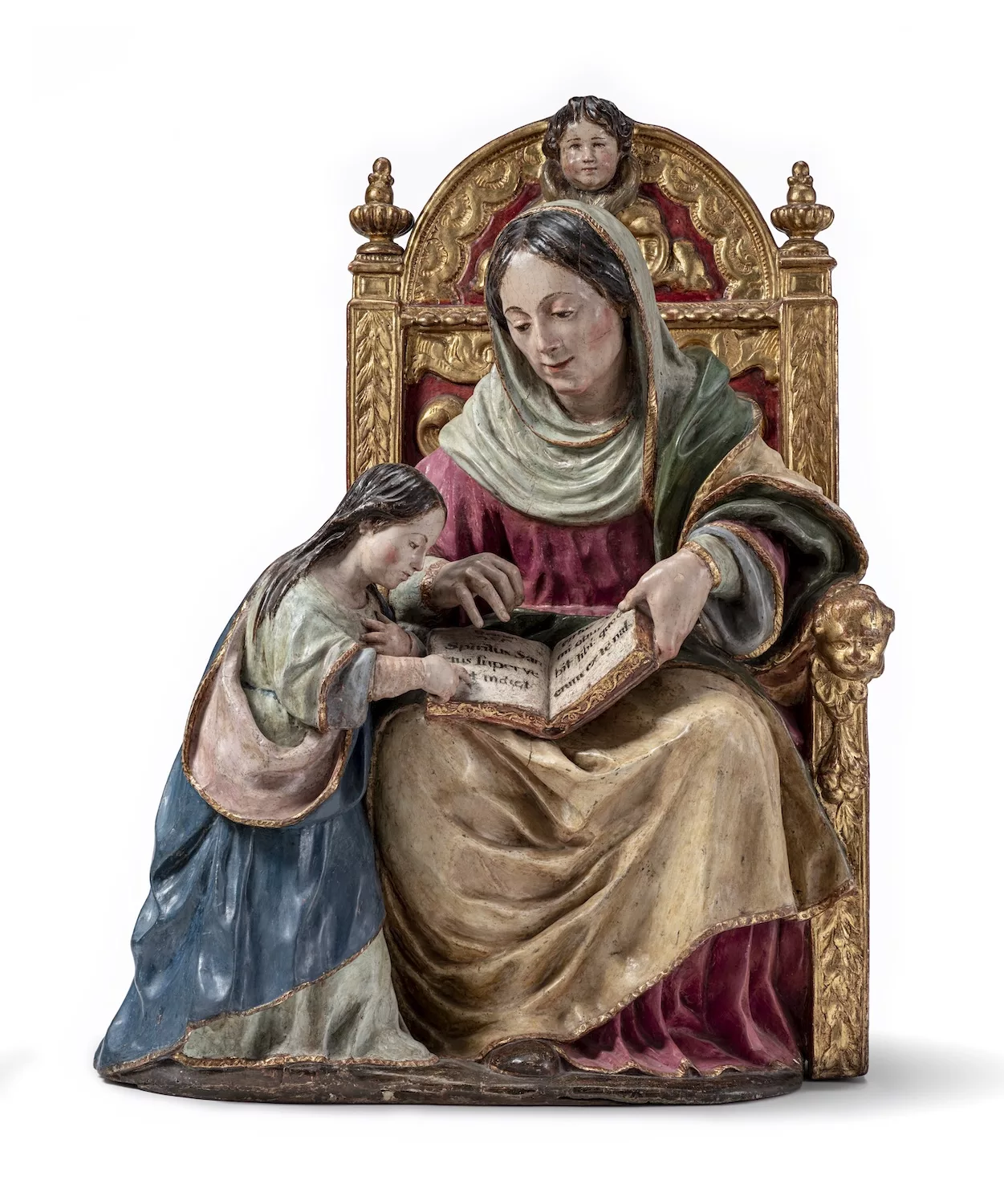
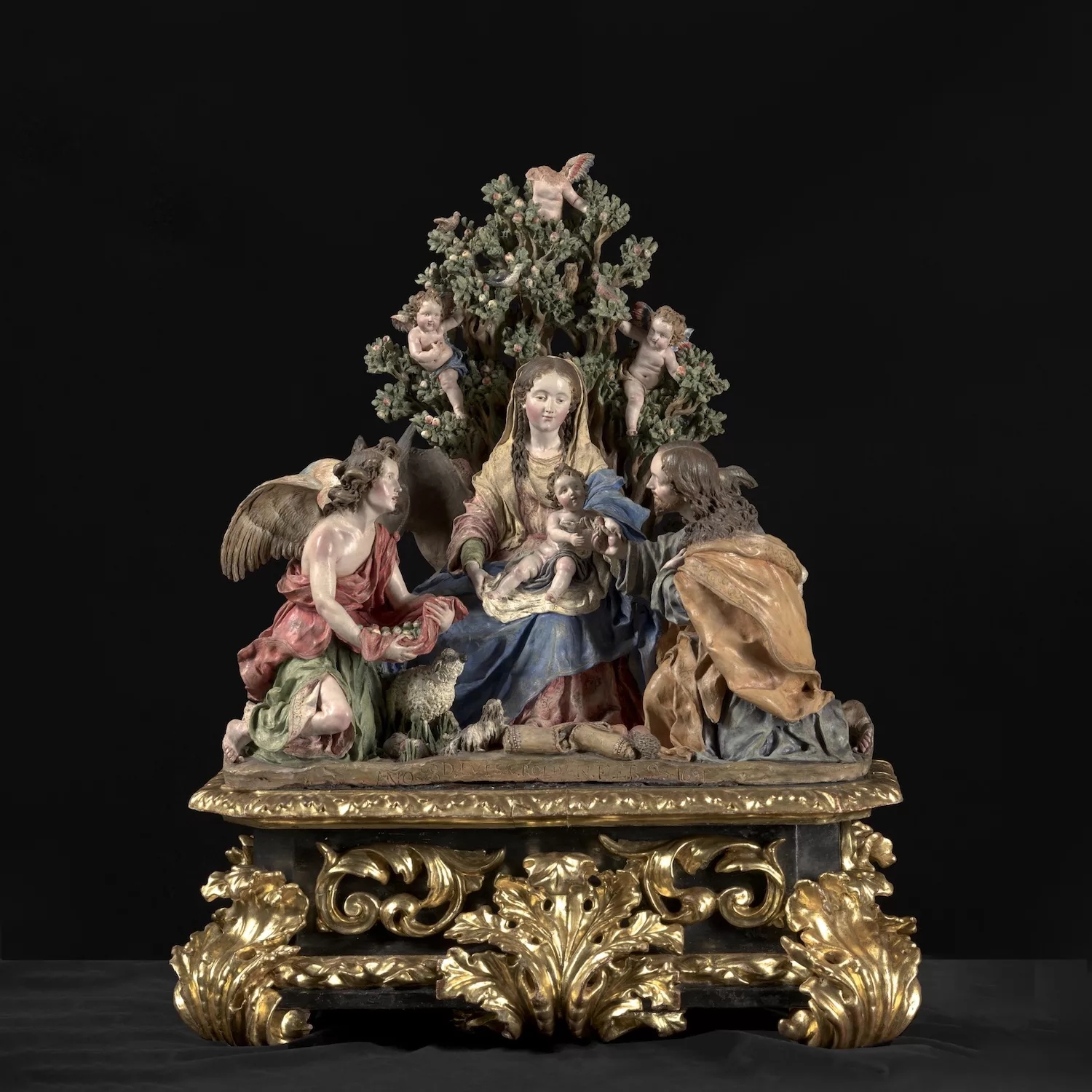
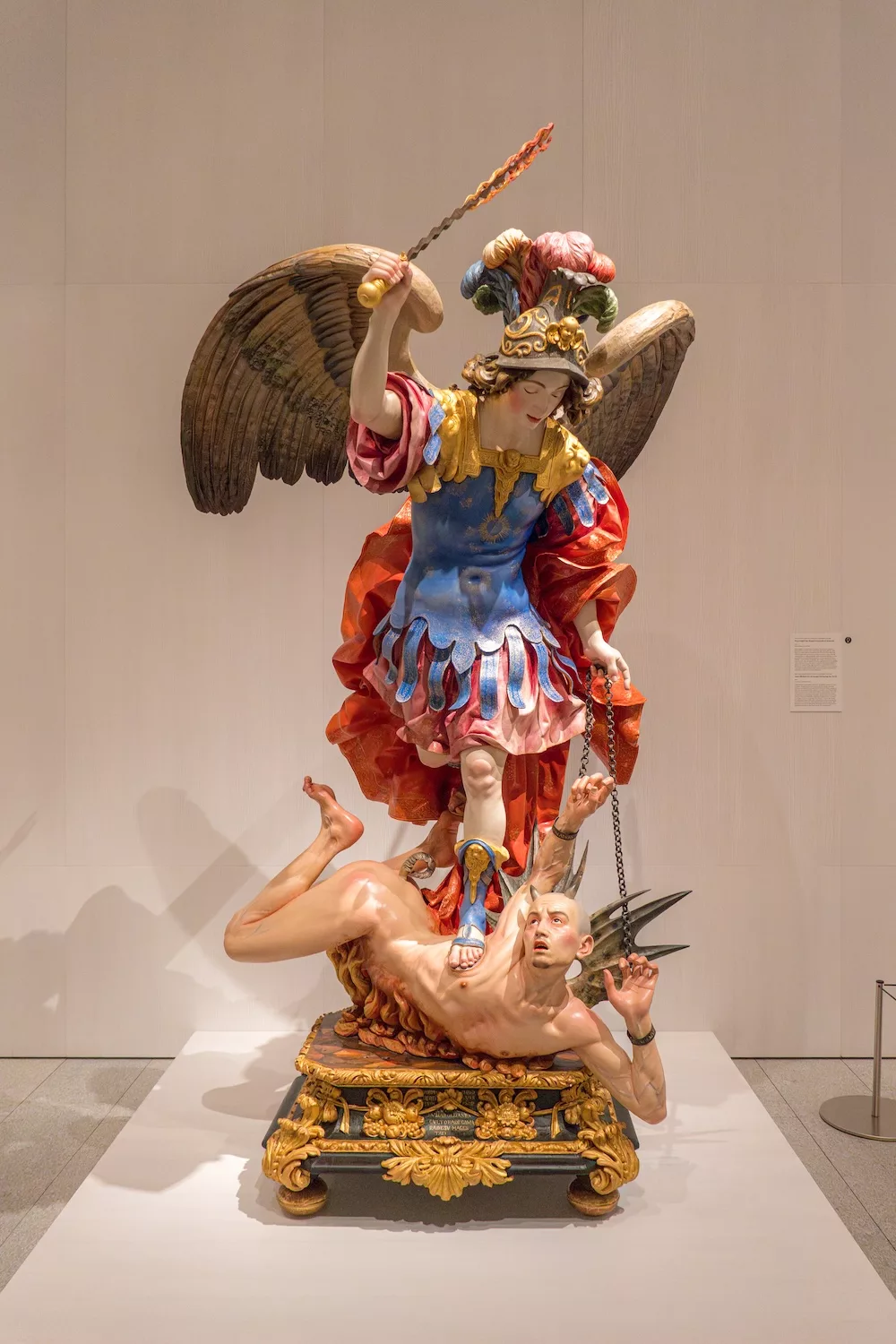
In 1689 L. Roldán settled with her family in Madrid, a move that brought her closer to the royal court. A few years later, in 1692, she was appointed court sculptor (Escultora de Cámara) to King Carlos II – an unprecedented distinction for a woman in Spain – and retained the position until her death. Her spectacular Arcángel san Miguel venciendo al demonio [Archangel Michael Defeating the Devil] in polychrome wood also dates from 1692 and was made at the king’s request for the Escorial (Galería de las Colecciones Reales, Madrid). During her years in Madrid, L. Roldán also produced many small polychrome terracotta sculptures intended for private devotion. These alhajas de escultura or ‘sculptural jewels’, which often depicted the Christ child or the Virgin Mary, were a type of work highly prized at court and helped establish her fame. Amongst this substantial body of work, which has seen several rediscoveries and museum acquisitions in recent years, are Descanso en la huida a Egipto [Rest on the Flight into Egypt], (Museo Nacional del Prado, Madrid), signed and dated 1691; two versions of Tránsito de la Magdalena [The Transit of Mary Magdalene], (Hispanic Society, New York and Museo Nacional de Escultura, Valladolid); Apparition of the Virgin and Child to San Diego de Alcalá, (Victoria and Albert Museum, London); and The Virgin and Child with Saint John the Baptist, (Museo Nacional de Escultura, Valladolid). In many cases, the polychromy of these terracottas was the work of T. de los Arcos.
In 1701, following the death of Carlos II and the accession of Felipe V, L. Roldán’s appointment as court sculptor was renewed. She died five years later, on 10 January 1706, in great poverty, as attested by her will, drawn up five days before her death. At around the same time, she was made an honorary member of the Accademia di San Luca in Rome (Accademica di Merito). In his biographical history of Spanish artists, El parnaso español pintoresco y laureado[Lives of the Eminent Spanish Painters and Sculptors] (1724), Antonio Palomino described her as an eminent sculptor whose name would remain immortal.
A biography produced in partnership with the Louvre Museum.
© Archives of Women Artists, Research and Exhibitions, 2026